
-Louis Rosenberg, co-author of Our Next Reality: How the AI-powered Metaverse Will Reshape the World. He is also an early pioneer in the fields of virtual and augmented reality where he developed the Virtual Fixtures platform at Air Force Research Laboratory, the world’s first mixed reality system enabling users to interact with real and virtual objects in 3D space.
The organizers and volunteers of Boston VR are continuing our monthly socials at TimeOut Market.
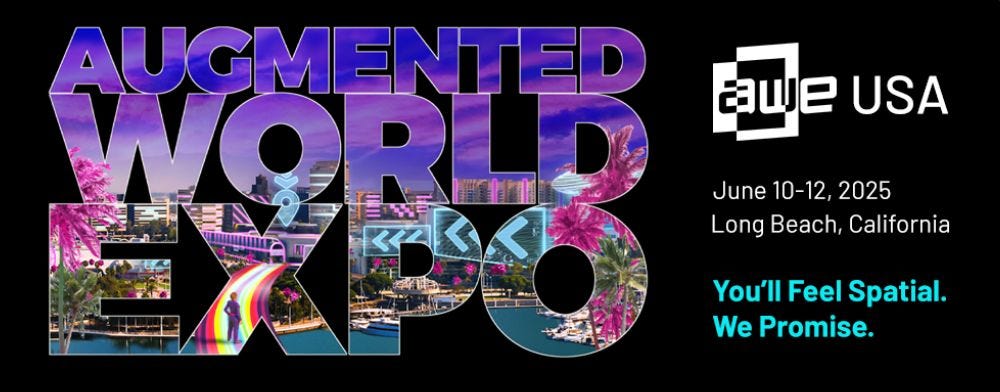
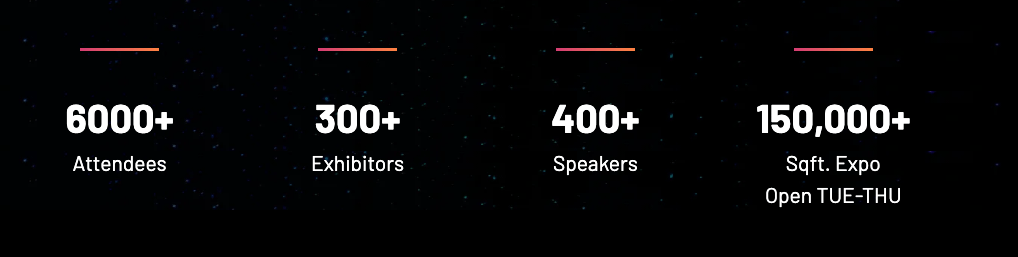
Note: I’ll be going with my wife. If you plan on going, let’s meet up. You can reach me at chris@bostonvr.org
For this month’s newsletter, I had the pleasure of interviewing Jim Susinno—the co-founder of Boston VR and a seasoned software engineer with over two decades of experience in 3D graphics. Jim has been deeply involved with OpenGL, both professionally and as a hobbyist, showcasing his dedication to the field. We discussed the origin story of Boston VR, his journey in 3D graphics, and his perspectives on the future of virtual reality.
Chris: Thank you so much for this time. I’ve known you since I first came into Boston VR and you were super welcoming. I still remember when you talked to me about being a developer and described creating a shape for the first time—that moment stuck with me. You were really kind to someone new to the scene.
So to start, what kind of work do you do—or have you done—in XR, and how did you get into the industry?
Jim: So right now, I work at Qualcomm doing competitive analysis of desktop GPUs—mostly DirectX12 gaming stuff. It’s not directly VR right now, but still relevant. The GPU, geometry, pixel processing, shader cores—all that definitely connects.
As of two and a half years ago, I was just finishing a VR job at Verizon. Yeah, Verizon. When the recruiter called, I was like, huh, that’s kind of unexpected, but it made sense. A network company doing XR? Definitely felt like a metaverse play.
And that’s basically what we were working on. Unfortunately, it didn’t turn a profit, but man—it was a fantastic team. Like, lightning in a bottle. We had a vision team, an audio team, graphics folks, technical artists—it was just a beautiful synergy. We threw stuff at the wall, saw what stuck. Grab some hardware, build a demo. Ideas came from everywhere, and if they were good, they got traction.
Honestly, it felt like game development, which is kind of what the metaverse is, technically. Audio, video, physics—all networked. Scaling was the hard part. You know N-squared problems from computer science? That’s what we were dealing with. More users, more data—network bandwidth got saturated fast.
Before that, I worked at a ground-penetrating radar company in New Hampshire. Basically x-ray vision. I really pushed VR for that—it was such a perfect use case. Imagine seeing underground before you dig. Didn’t get much traction though.
Going back further—like 2011—I was at AMD on the DirectX driver team. One meeting we were looking at sales graphs: tablets overtaking desktop PCs. That bummed me out. I love desktop PCs. Tablets? Meh. They’re not cool. Steam is cool. GPUs are cool. Tablets? Not so much.
And yeah, around then, I was checking out Kickstarter a lot. That’s where the wild stuff was. I found a campaign by Neal Stephenson about a sword-fighting game. It didn’t turn out to be that awesome, but I backed it anyway because at least they were trying something bold.
Then I saw Carmack demoing Palmer Luckey’s headset prototype. That was it—I hit refresh on that Kickstarter page daily. When it dropped in August 2012, I was all in.
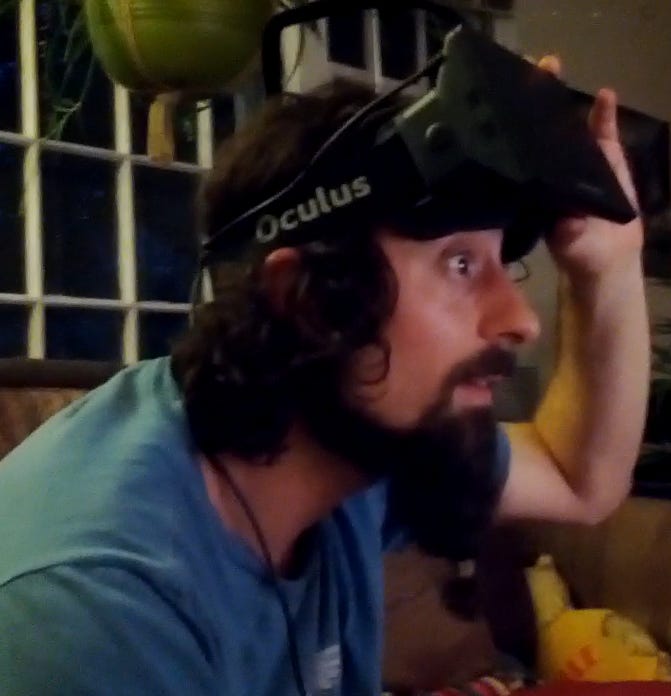
Thanks to Mark Stock for providing the video. Jim is trying the DK1 headset for the first time!
When my DK1 arrived, it was like going back to the 90s. I’d dreamed about this since I was a kid. Later in college, I learned OpenGL and projection math. It was all about turning a 3D world into a flat image—transformations, rasterization, lighting. And the idea that this “other world” on screen is a place—that was profound. If we could create tangible interfaces, gloves, vests—anything—we could bring ourselves into that place. That was the dream.
Chris: Wow! So I’m curious, what’s the origin story of Boston VR?
Jim: So I was working with Mark Stock—he’s a computational fluid dynamist and artist. We were already building cool things with the Kinect and shaders. Then the DK1 arrived. That headset was like the cherry on top.
When Oculus came to town in November 2013, I showed up at the Microsoft Nerd Center with my rig. Palmer Luckey was even there. People lined up to try my demo. It was awesome.
After that, I said to Mark, “We should start a meetup.” He clicked the button on Meetup.com—so technically he’s the founder. But yeah, it was a collaboration.
Our first real meetup was January 2014. LAN party vibes—people hauling big desktops, trying out demos. There wasn’t much software back then, so every demo felt fresh.
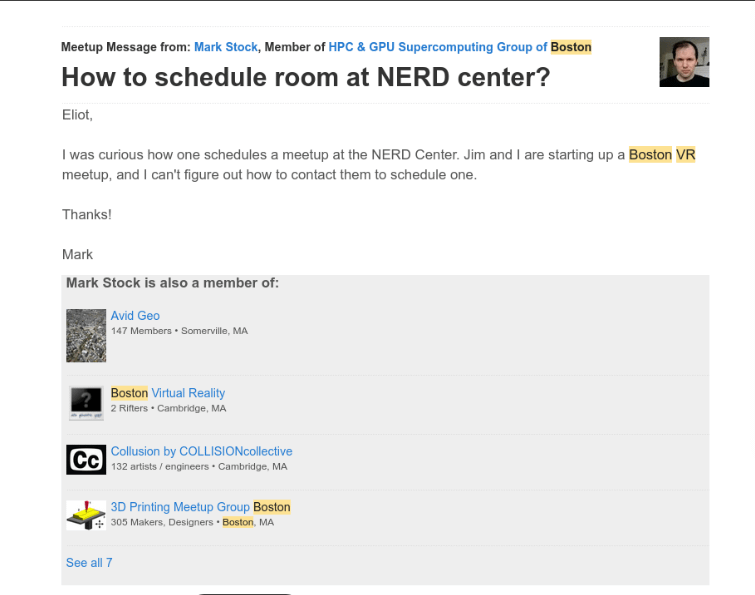
Source: Provided by Mark J. Stock. Past: Two members on Meetup. Now: 6,824!
Things grew fast. We brought in Jeff Jacobson and Jeff Bail. Different venues. More people. It took off. I think Jeffrey once said we were one of the top three VR meetups in the U.S. at the time—maybe behind Silicon Valley and L.A.
Chris: What advice would you give to someone new in XR? And to someone already deep in the field?
Jim: For both: stay flexible. Don’t get locked into a single platform or tool. Companies want you dependent. But if you’re nimble—if you know Unity, Unreal, Godot, whatever—you can pivot. Same with operating systems. Don’t say, “I’m a Mac person” or “I’m Windows-only.” Learn it all.
And yeah, if you’re in it to make money? Honestly, maybe XR isn’t the most lucrative path. Unless you want to go into ethically questionable territory—dopamine loops, microtransactions, that stuff. But that’s not what I’m about.
Chris: What trends in immersive tech are you most excited—or worried—about?
Jim: I’m hyped about tethered VR making a comeback. Quest and Vision Pro are cool engineering-wise, but they sacrifice power. I miss the days of beefy GPUs and one-millisecond latency.
We need fidelity. And not realism, per se—I’m talking about computational freedom. Giant shaders, massive simulations, real immersion. You can’t get that on a one-watt mobile chip.
I’d wear a GPU backpack if it meant I could experience high-powered VR. I want a dedicated VR OS—nothing but your world. No notifications, no app store. Just art, performance, beauty.
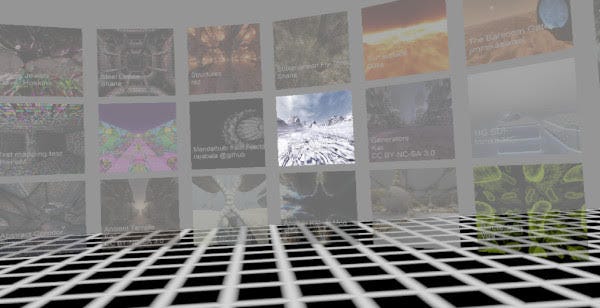
Designed by Jim Susinno for the original Oculus Rift DK-1 through CV-1. Features UI panes for live parameter adjustment, dynamic render target resolution, vertical FOV scaling for fast frame rates, and XBox controller support. Presented at @party 2014 in MIT's Stata Center. GitHub
Chris: So, let’s ask a provocative, fun question. If you were stranded on a desert island with a VR headset (unlimited battery and bandwidth), what experience would you want?
Jim: Great question. Honestly? Forget the apps. Give me a compiler.
Let me code. Let me build. Maybe some ShaderToy. Maybe a game engine. I’d want to make things—my own little universes. Games, shaders, generative art. That’s the magic.
Playing games is fun. Making them is better.
For more info on Jim and his work,
Please visit his Linked-In here
Or visit his website, Jimbomania here
—
For more info on *Mark and his work,
Please visit his Linked-In here
Or visit his website, here
—
*Mark Stock studied computational fluid dynamics at Michigan and is currently a High Performance Computation engineer at HPE. He also uses those skills to make generative artworks and 3D printed landscapes in his studio in Boston.

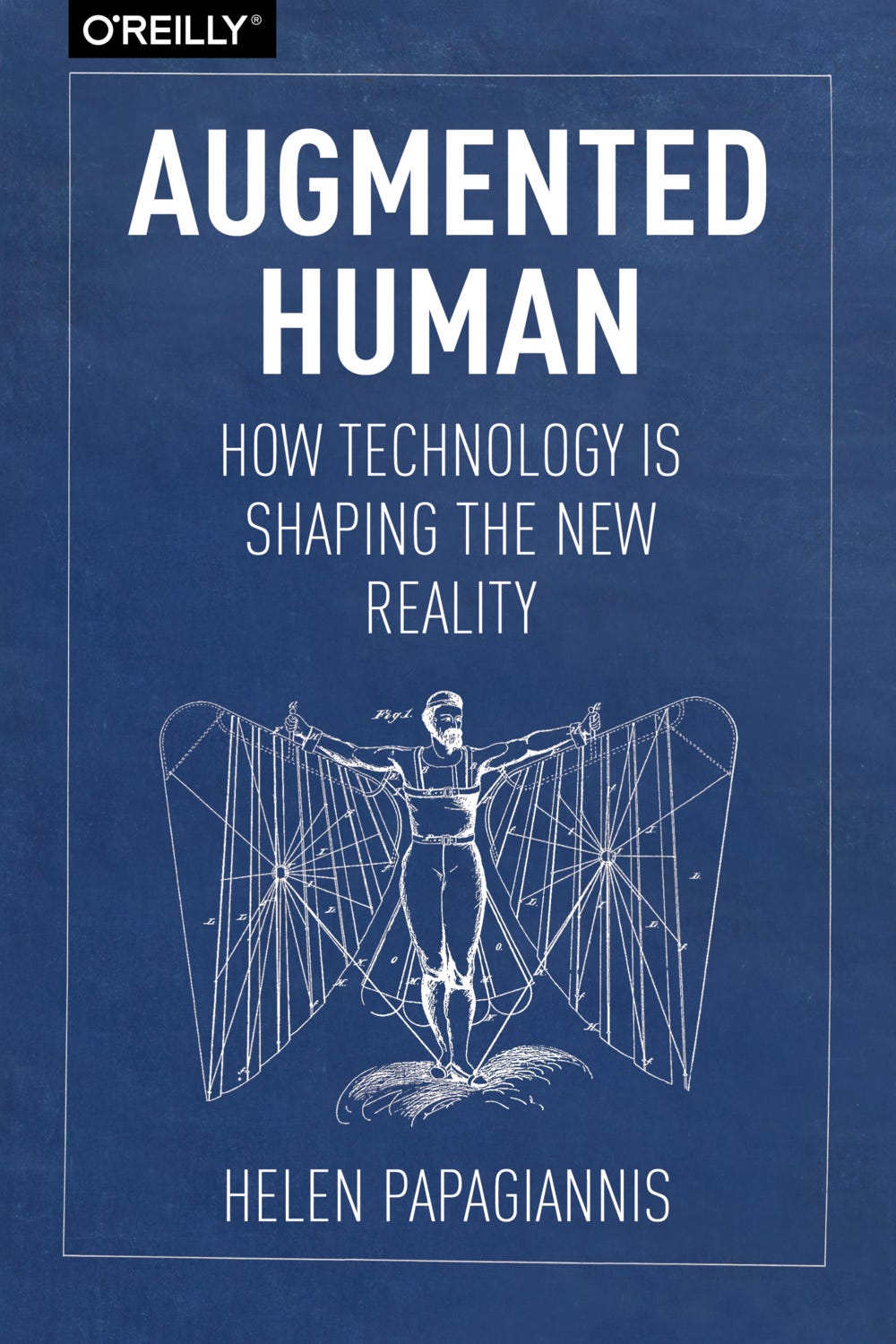
From Amazon.com:
Augmented Reality (AR) blurs the boundary between the physical and digital worlds. In AR’s current exploration phase, innovators are beginning to create compelling and contextually rich applications that enhance a user’s everyday experiences. In this book, Dr. Helen Papagiannis―a world-leading expert in the field―introduces you to AR: how it’s evolving, where the opportunities are, and where it’s headed.
If you’re a designer, developer, entrepreneur, student, educator, business leader, artist, or simply curious about AR’s possibilities, this insightful guide explains how you can become involved with an exciting, fast-moving technology.
You’ll explore how:
Computer vision, machine learning, cameras, sensors, and wearables change the way you see the world
Haptic technology syncs what you see with how something feels
Augmented sound and hearables alter the way you listen to your environment
Digital smell and taste augment the way you share and receive information
New approaches to storytelling immerse and engage users more deeply
Users can augment their bodies with electronic textiles, embedded technology, and brain-controlled interfaces
Human avatars can learn our behaviors and act on our behalf
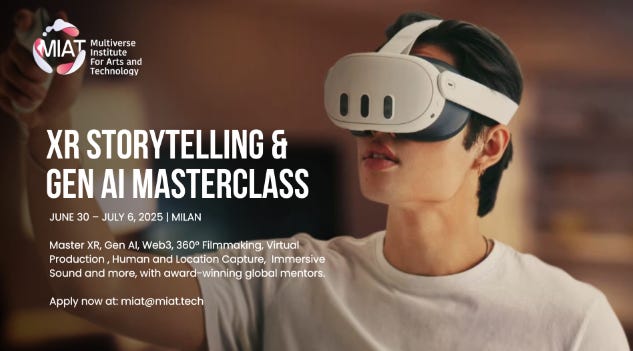
Source: https://www.thevrara.com/events
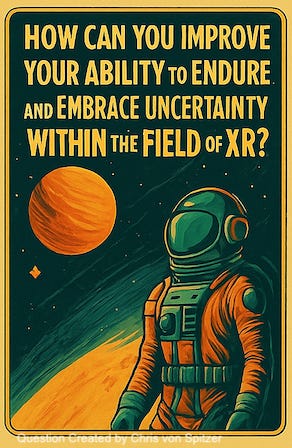
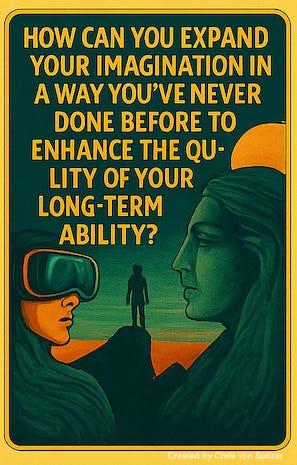
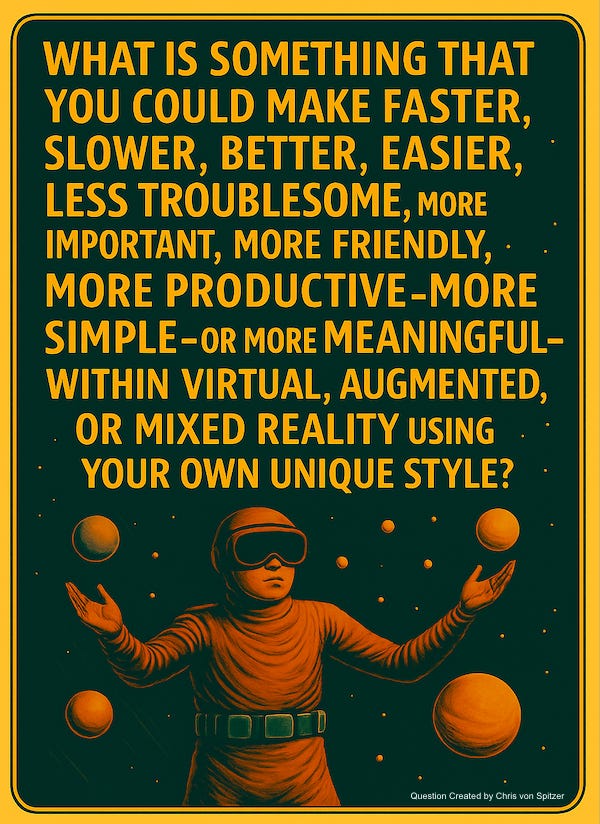
For more QQs to enrich and enhance your creative thinking, follow my X.com experiment @letsaskqqs
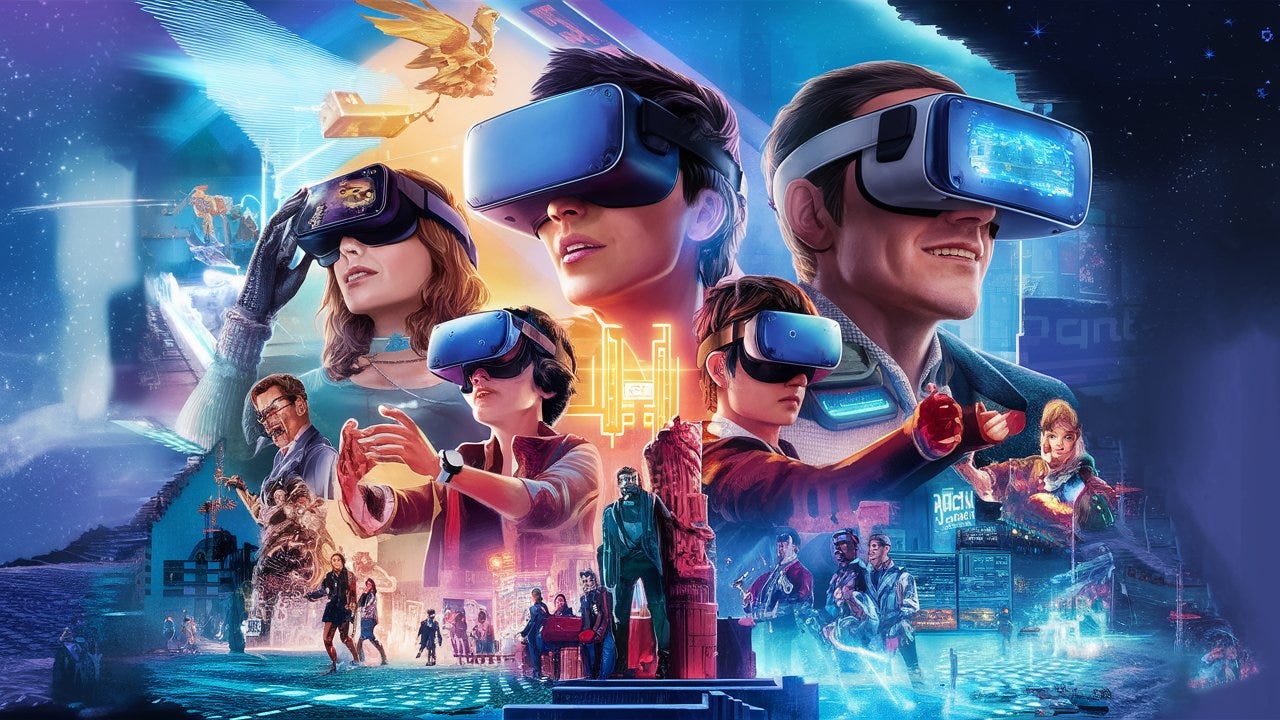
Boston VR is committed to fostering a welcoming and innovative community for XR enthusiasts and professionals.
Whether you're a developer, creator, researcher, or just plain curious, we're excited to explore the future of XR with you.
For more detailed discussions and to share your thoughts or experiences, don't hesitate to join us at our next meetup or reach out through our community channels.
See you in the virtual world!

To join, click here
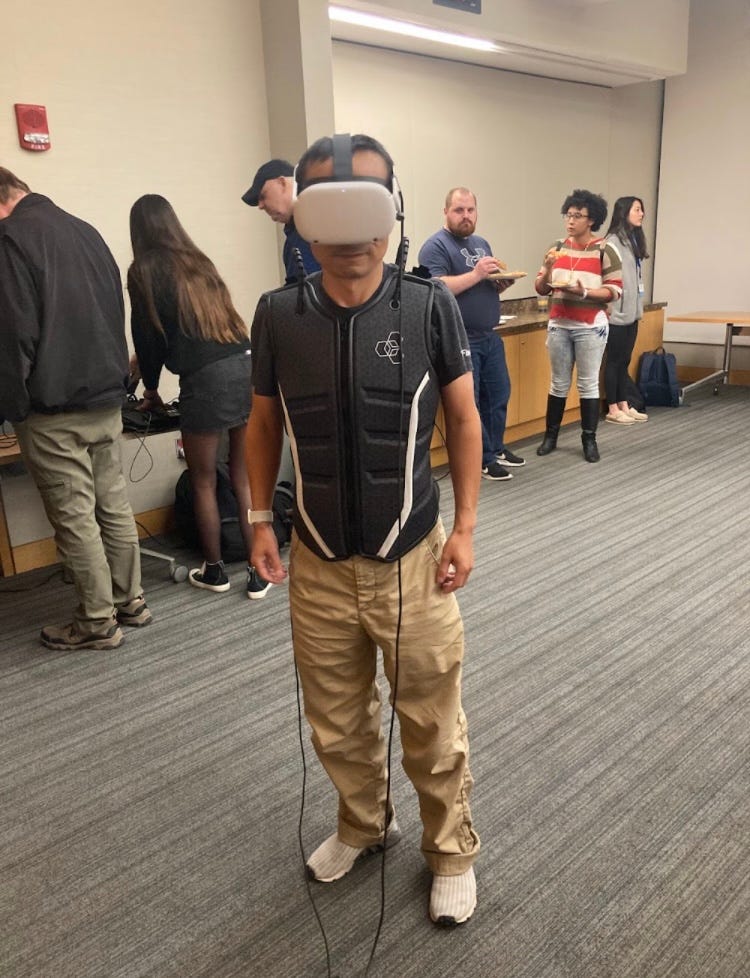
Email Casey We need help with marketing, event planning, dev jams, sponsorship, and more!
AMXRA is the premier medical society advancing the science and practice of medical extended reality, https://amxra.org/.

AMXRA has generously committed to being a premium sponsor for Boston VR over the coming years. We are immensely grateful for their support and partnership in exploring the forefront of XR technology.


No posts
Comments
Nothing yet. Say the first thing.
Sign in to join the conversation.