
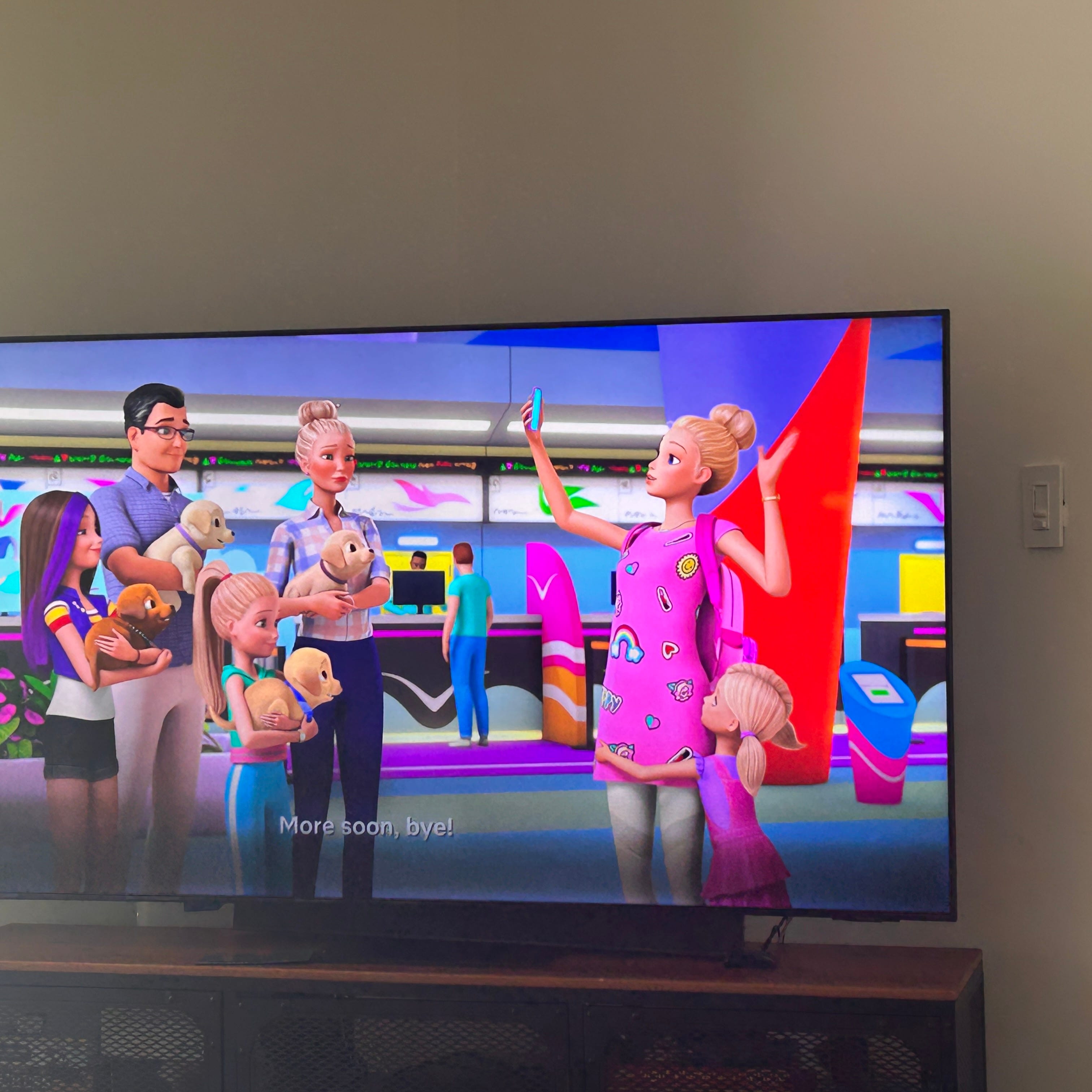
Last week I watched two movies that got me thinking about things I’ve been mulling for some time now: Authenticity and tech use.
I’ll start with the first movie: Barbie: Princess Adventure.
My daughter never gets to pick movies. She’s three, and very sweet, and easily conned by her older brother into watching whatever he wants to watch. So when she was sick late last week–and he was away at summer camp–I set her up on the couch with some Motrin and popcorn and told her we could watch whatever she wanted.
Naturally, she chose Barbie: Princess Adventure on Netflix. I took one look at the thumbnail and fully expected to nap. Maybe even get some reading in if she happened to take a nap. What I did not expect was to find an interesting movie buried underneath some annoying musical numbers.
The premise is simple: A teenager, named Barbie, is a wannabe social media influencer with a modest platform. She has a normal life, normal friends, and hates it. She wants to be Amelia, an influencer with over a million followers who is a princess and lives in a castle–the female Kai Cenat with vague ties to royalty. In a twist of fate, Barbie is invited to Amelia’s castle for a hype house and it turns out Barbie and Amelia actually look exactly alike! How Barbie never noticed this when she’s Amelia’s fan is curious. But it doesn’t matter. It’s merely set up for the real surprise: Amelia is secretly a fan of Barbie’s normie feed and orchestrated the whole hype house as a cover to trade places with Barbie and live her life while Barbie gets her dream of being a mega influencer.
My daughter walked away from the movie at about this point. And eventually she did fall asleep. But I watched the whole thing. The thematic material, I thought, was quite timely.
Barbie stays in the castle and realizes Amelia’s life isn’t all it’s cracked up to be from the vantage point of her screen. It’s all planned and orchestrated. Barbie realizes the normal life she’s been trying to dress up is actually far more interesting and can lead to genuine connections with others. Amelia, meanwhile, ends up finding herself while she’s away from the castle and returns to her throne a changed woman.
Why did this hit for me? I guess because I’ve been interested for a long time now–Victim is about this on some level after all–in the idea of what “authenticity” means in our online age. Lately, I’ve thought about it even more in relation to the changes happening in the publishing industry and in media at large.
Audiences are migrating away from established players and finding all sorts of content from individual creators. Self-publishing is experiencing a healthy boom, and print mags are springing forth left and right. It’s happening in film, too. I read an interesting op-ed, for example, about what the success of indie films like Backrooms and Obsession says about where the film industry is headed.
While, yes, things are rocky for artists these days (I like to argue that they always have been), it’s also true that it’s probably never been easier to create a platform for yourself by leaning into your own specific interests and taste. AI is amplifying all of this. As I’ve argued previously, I really do believe audiences will crave more and more writing and film and entertainment that comes from a weirdness inside of you–that cannot be produced by AI.
Barbie: Princess Adventure, at its core, got me wondering: What would that look like for me these days? But it also got me wondering: How do you go about cultivating the unique bits of you, and sharing it with others in this digital ecosystem we’ve erected, without turning into a monster who only lives “real life” to share it online?
Barbie: Princess Adventure didn’t really have an answer for that last question. But perhaps I was expecting too much.
#
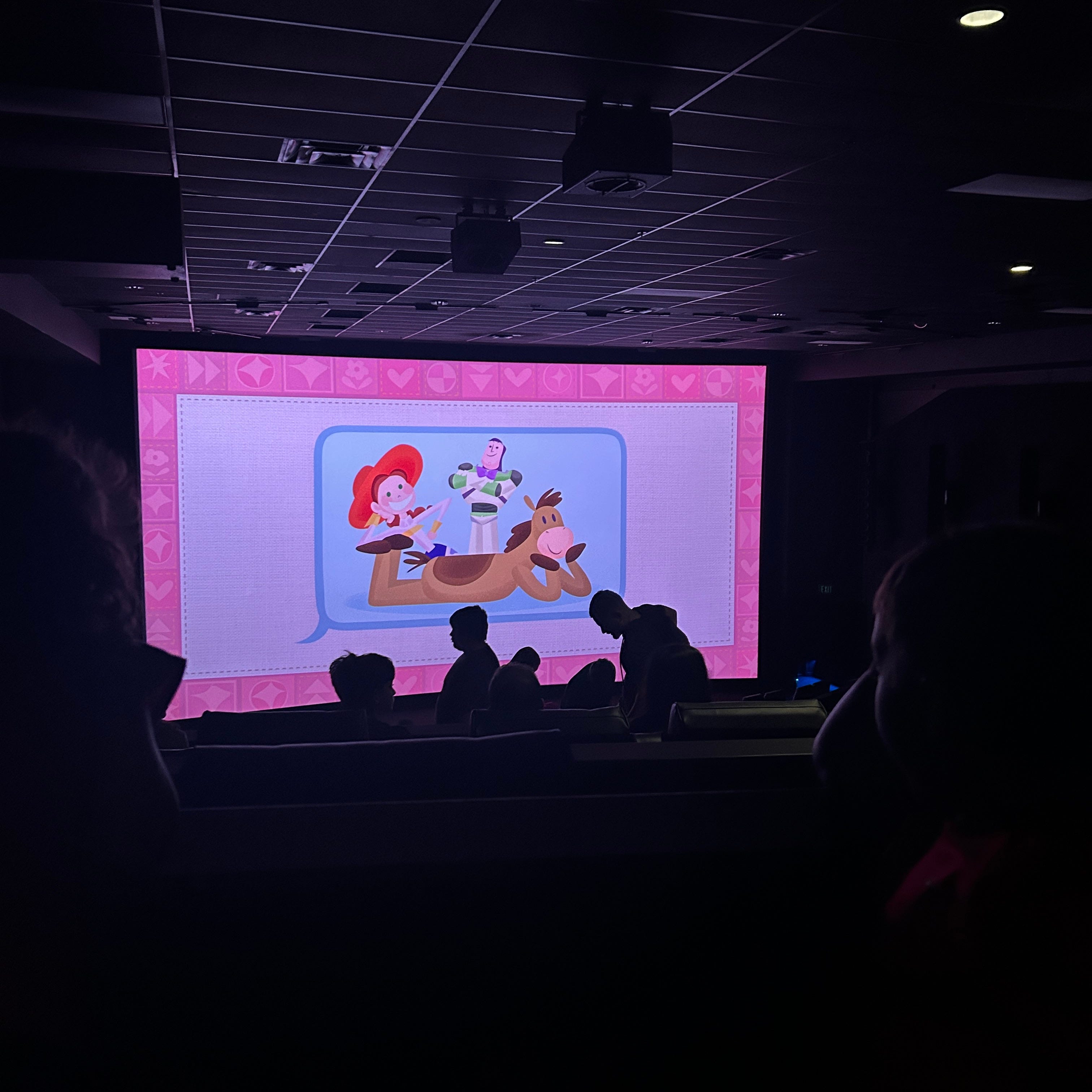
Turns out Barbie: Princess Adventure wasn’t the only children’s movie that got me thinking big thoughts this weekend.
On Father’s Day we went to watch Toy Story 5, which was actually my choice. We had just thrown a big party at the house the night before and I woke up hungover. Doing nothing on Father’s Day felt sad–and two toddlers idle all day is a dangerous setup–so I decided to do the bare minimum: Lunch and a movie.
We went to a nearby Cuban restaurant. The rope vieja and tostada were fire, but the meal didn’t go smoothly. It was late in the afternoon and my kids hadn’t eaten and were cranky and tired. My son did that spaghetti thing, slipping to the floor and playing with whatever was down there. My daughter repeatedly banged her knife on the table. There were threats to throw away toys, to go home, etc. An old man sitting next to me smiled at some point and said: “I remember when mine were like that, it will get better soon.”
There were lots of other families in the restaurant, and at one point my wife and I noticed that every single kid had a device to keep them entertained. We wondered if perhaps we were doing everything wrong by fighting the current. We used to let our kids look at screens in restaurants, too. Then at some point we realized we weren’t even really eating together as a family. It was my wife and I, while our kids were zoned out to another dimension. So for a while now, we’ve been waging battle every time we decide to eat out. I carry around this big ass bag with stuff: Crayons, coloring books, containers full of those little bullshit toys kids get at birthday parties. We whip out each one like a grenade, chucking it onto the table and hoping it will keep them calm until the food arrives.
When things go well, we feel like excellent parents. But when things go bad, as they often do, we end up spending a lot of money, fighting our way through a meal nobody really enjoys, and leave wondering whether we are just creating misery for ourselves by fighting the screens in the first place.
In other words, we were well-primed for Toy Story 5, which if you haven’t heard, is basically analog toys vs. tech.
Kids around the community in which these toys live barely play anymore. They’re all lost behind screens. And their parents are lost, too, working from home on Zoom. A new tablet-like toy is introduced to Bonnie (RIP the OG Andy), who is ostensibly the last kid on her block who actually plays, so Woody, Buzz and the gang go on an adventure to save her from screens and make her a real life friend.
It’s Pixar, so the movie was good. Not outstanding, but a fun watch.
Later that night, after the kids were asleep, my wife and I walked the dog and spoke about the themes of the movie, and about lunch. We asked the question again: Are we just being silly, fighting this fight? Limiting screen time, using it as a last resort, etc. Are we just supposed to find a way to co-exist with tech? Should we just give in?
We reflected on our own upbringings, which included tons of television watching–we turned out fine didn’t we? My mom likes to tell this story about how at age five I could get up on the weekends, make myself cereal, and load my movies into the VCR, which, as a single mom, was a godsend and allowed her to get some real sleep on the weekends.
I’ve thought about that anecdote a lot lately. Partly, I’m proud of it: I’ve been a pretty independent person my whole life. But as a parent now, I think about that and wonder: would I want my five-year-old to do that?
All the reels I see and articles I read tell me no. That this would be a terrible way for a kid to start their day. And partly, I agree. But at the same time, locking the screens away and denying my kids the right to watch Pink Panther or Pokemon seems cruel. Sometimes, I don’t really have a good reason for it, if I’m honest. I’m just saying no because I think I should. Because I like to think I’m protecting their brains or something, when in reality I’m not sure.
They aren’t like the kids in Toy Story 5 at all, thankfully. All the plastic that decorates my floors each day is testament. But do they play enough? Is it possible to balance tech and analog play at all? Does it have to be all or nothing?
These are some of the questions that Toy Story 5 seems to be driving at. Unfortunately, the movie, just like Barbie: Princess Adventure, didn’t really have any satisfying answers. It ended on a pretty kumbaya note, which I thought was a cop out. But then again, this was a movie made for kids.
#
During breakfast yesterday, I was still thinking about all of this. So I tried to talk to members of the intended audience about Toy Story 5 and it’s message. Perhaps they had answers.
First I had to explain to my kids what a message is in art, which was an interesting exercise in itself. I broke down Toy Story 5’s by equating too much screen time with eating too much candy, which I’ve taught my kids to believe will result in all of their teeth falling out–not exactly a lie when you think about it. Too much TV, I said, makes your brain rot. And as I said it, and watched my kids try to understand it, I could already forecast a day in the not too distant future, when they’ll be old enough to call me out for being a hypocrite: “So why do you watch Mets games all day, dad?”
But on this day, they didn’t care. Both of them said they did not like the movie. To be more specific: My daughter said she only liked this pig which makes a few brief appearances in the film. My son said he only liked the horse–the real one, who also made a very brief appearance. Then there was an argument between the two of them about a unicorn in the movie, also a very minor appearance, and whether or not all unicorns have wings.
I decided to leave the discussion alone for now.
Peace,
Andrew
Films Discussed:
Barbie: Princess Adventure (2020)
Director: Conrad Helten
Runtime: 1 hour and 12 minutes
Toy Story 5 (2026)
Director: Andrew Stanton
Runtime: 1 hour and 42 minutes
Comments
Nothing yet. Say the first thing.
Sign in to join the conversation.