
Hello one and all,
It’s hard to believe that we’re approaching the last week of February. Even harder to believe that it’s now officially been a full year for BookGo on Substack. Just twelve months ago we launched the BookGo newsletter with an issue dedicated to the language and literature of love.
Here’s a throwback in case you missed it…!
Since then, it’s been a pleasure to connect with new readers and writers, and we’re proud to have set up an independent publishing house, launched three debut books, held an inaugural writing competition and laid the groundwork for more books to come this year – thank you to everyone who supports our work! 🙏
In keeping with this theme of looking backwards to move forwards, this week we’re exploring the art of reviewing: how do reviews work? What can they can do for you? How can you celebrate the good ones and move on from the bad ones? So, in this issue, Michael takes a deep dive into the many literary classics that were initially met with scorn and bemusement from reviewers, and Nancy explores the secret language of book reviews to help you unpack what’s buried in the code.
We’re also thrilled that several of our authors have received exciting new reviews for their books in recent weeks. 🤩 You can read them all below.
Here’s everything that’s in store this week:
Table of Contents
Reviews: Come Up Big by Charles W. B. Wardell and Redeemed by Bianella Orozco-DeLaHoz and Alain Orozco
Feature: “A reviewer on reviewing or… What are they really writing when they write a review?” by Nancy Merritt Bell
Poetry: “Ode to the West Wind” by Percy Bysshe Shelley
Feature: “Handling Good and Bad Reviews” by Michael McKinley
Next time: The art of the memoir

Reviews: Come Up Big and Redeemed
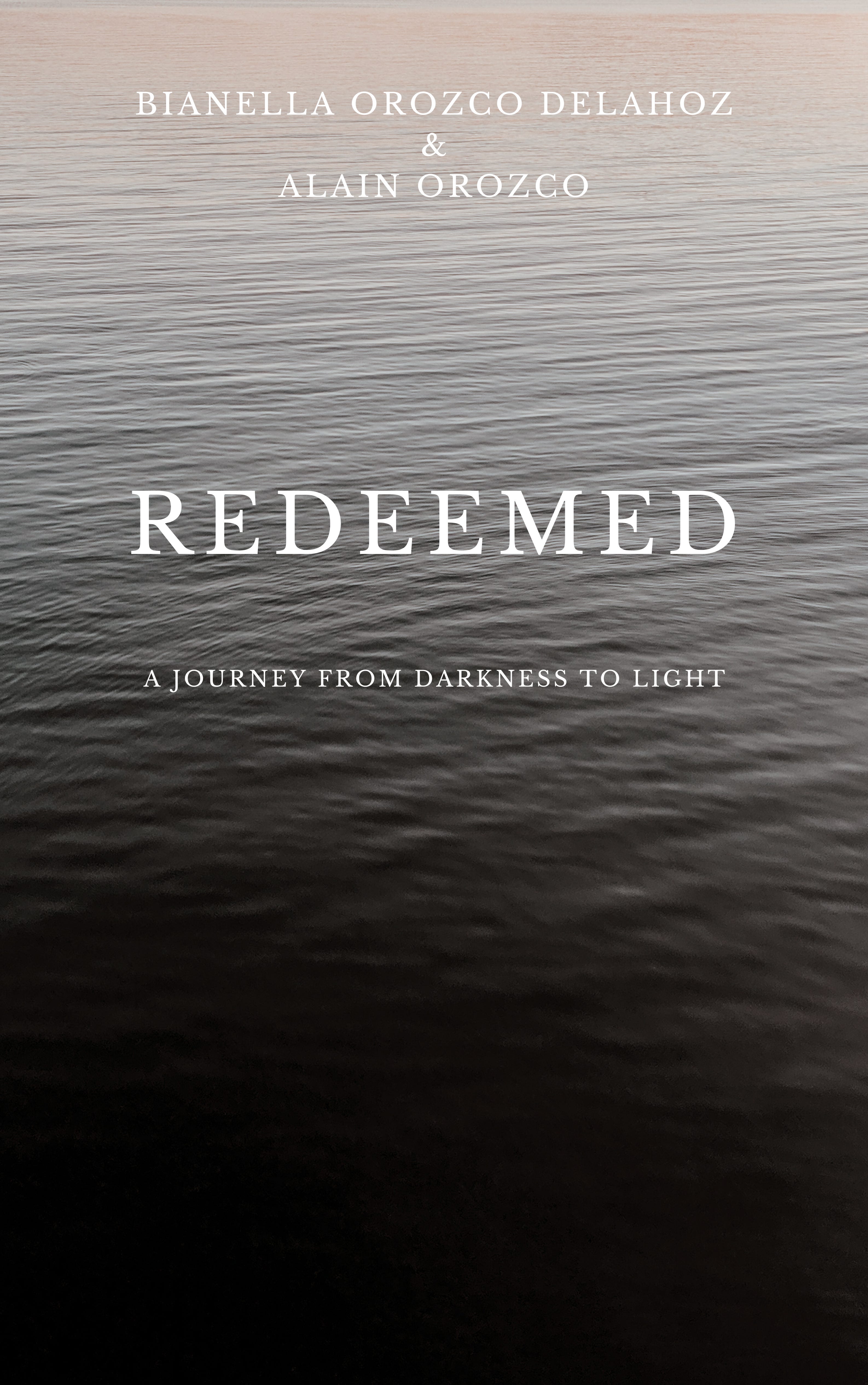
Redeemed: A Journey from Darkness to Light
By Bianella Orozco-DeLaHoz & Alain Orozco
“A heartbreaking and powerful story of loss, survival, and faith. From the very first pages, I felt the shock and pain of that morning in June 1982, when two children say goodbye to their mother, unaware that their lives are about to change forever. The tragedy is sudden and brutal, and its impact lingers throughout the book…”
~ Books Paradise, The Midwest Books Review
“The tender moments between brother and sister consistently shine through, as when Nella first saw her brother after he’d been released from prison and immediately noticed how skinny he was (“I just wanted to feed him”).”
~ Kirkus Review
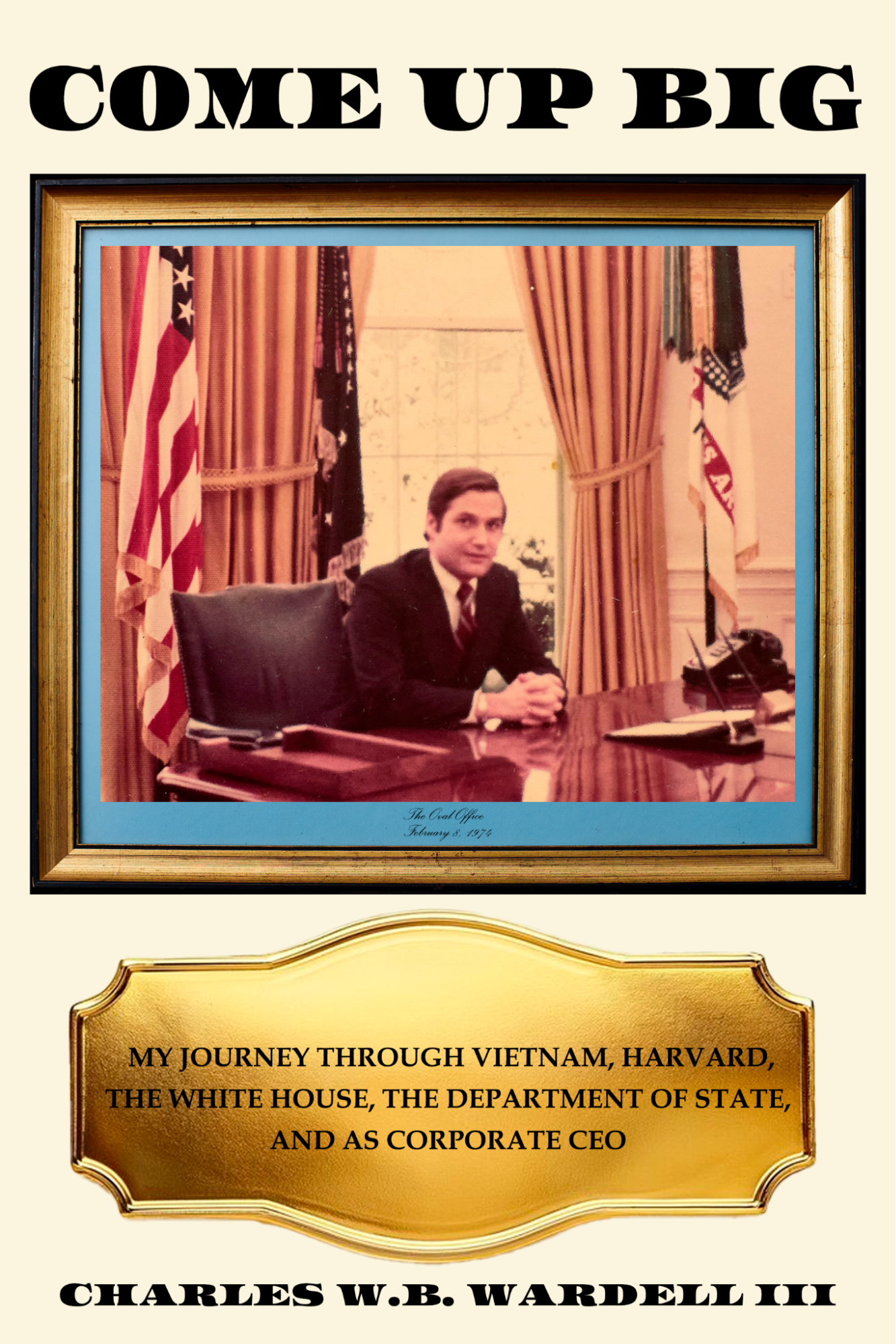
Come Up Big: My Journey through Vietnam, Harvard, the White House, the Department of State, and as Corporate CEO
By Charles W.B. Wardell III
“The author writes humbly but authoritatively about his front-row seat for the action in Vietnam, providing photos of his happy-go-lucky younger self. He strikes the same approachable tone in his memories of the downfall of the Nixon presidency, and he’s equally humble as the narrative moves on to his time as CEO… The cumulative effect is winningly cheerful. A warmly inviting story of a full life.”
~ Kirkus Review (starred)

“A reviewer on reviewing or… What are they really writing when they write a review?”
By Nancy Merritt Bell
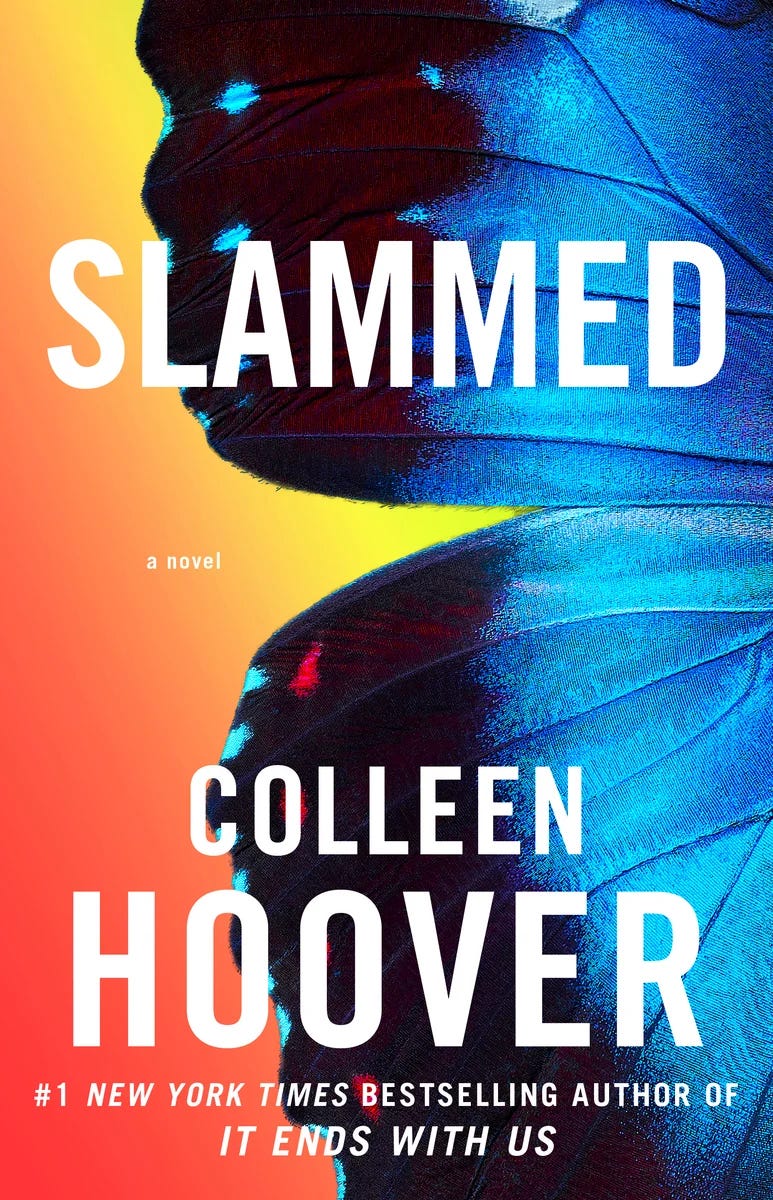
Colleen Hoover’s 2012 debut novel Slammed, a gripping romance written at night while she lived in a trailer park, her days spent working for Child Protection services, was often trashed as a tear-jerker. But Hoover, as we know, wasn’t burnt by the bad reviews and went on to do rather well. As for those reviewers, why read and rip romances if you don’t want your tears touched? Besides, newbie authors of romance or any genre need a critical leg up and more literary love, don’t they?
Conversely, loads more criticism can be blasted at the senior authors. After all, there was too much fluff and fuss over Salman Rushdie’s latest in a trio of memoirs, Knife: Meditations After an Attempted Murder. Isn’t one memoir all an author really needs? I say Knife, Rushdie’s third memoir, was three too many.
And I say that because I’ve worked as a reviewer and I am often in dismay of reviews that gush or bitch to keep readers reading, or worse, they just pander nicely and vaguely. Possibly even worse is group gush slopped over select books in the celebrity book clubs.
But in reviewing dozens of books for the Paris-based Frank International Magazine and Litta in the UK, and newspapers in the US and Canada, I learned there is a lot of vague pandering. It is a kind of safety zone for reviewing with its own code words reviewers must know, but readers and writers don’t.
Or maybe you, dear reader and author, have noticed the code?
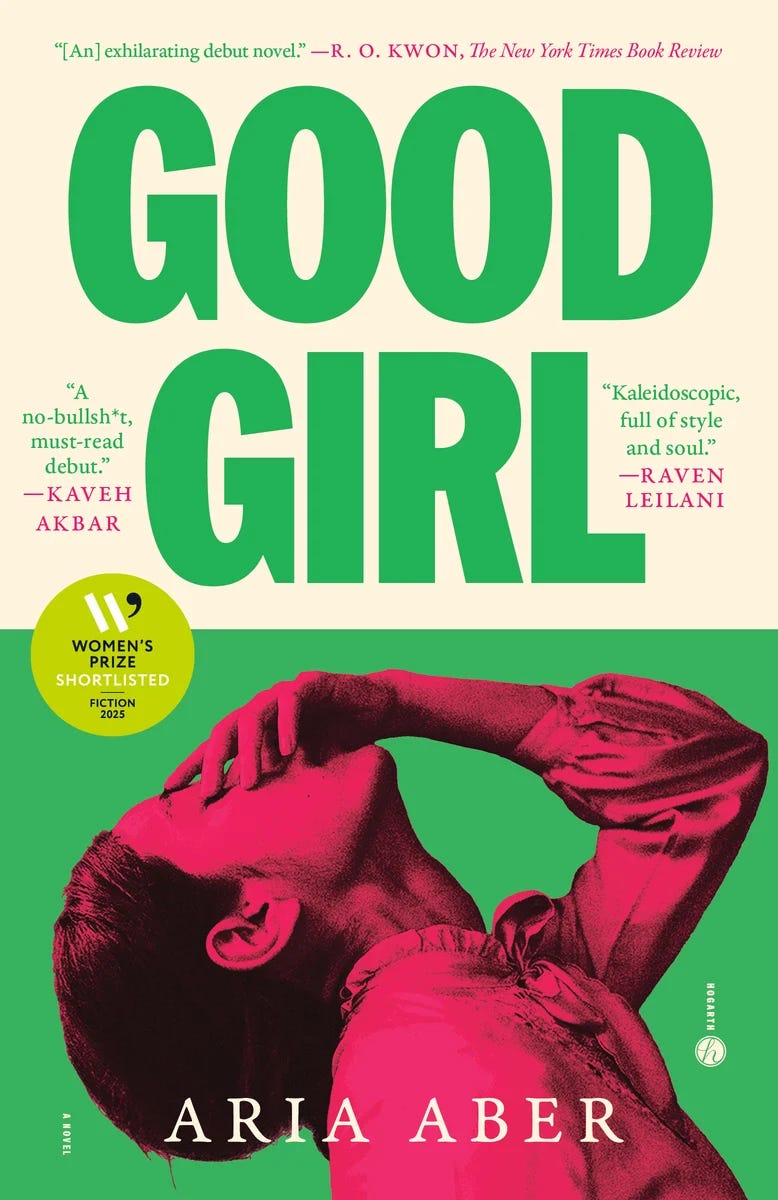
Perhaps you have checked out a new author’s first book and read how it was declared by the reviewer as “a stunning debut”. A lot of debut books are anointed as “stunners”. Not long ago, Good Girl, a first book by poet-turned-author Aria Aber, was deemed “a stunning coming of age story.” Thankfully, Aber’s book did well. But the phrase’s overuse is actually useful to the reviewer who didn’t know what to make of the book and didn’t want to offend Aber’s fans. Thus the code words can seem to flatter a new book without dishing it or giving it true high praise.
Code phrases are popped into reviews for the works of seasoned authors, as well. You might read them in reviews of Dan Brown’s latest, The Secret of Secrets, and how it is “a welcomed addition” to the Robert Langdon cannon (six books in all). Being “a welcomed addition” is faint praise indeed, and intended not to offend the writer, who has 250 million books in print, but his legions of readers.
It’s hard to change the code. I tried it with a newspaper’s book editor, whom I called the Floozie. She liked to talk a lot, wear very little and flirt with every man, woman and teen – and I never saw her work. One day, after the standard welcoming flirt, I submitted my work and the Floozie balked at it. In it, I criticized a new book by Mary Pope Osborn, she of the famed Magic Treehouse, in which she was rather flippant in her use of racists and sexual predators as baddies in a kids’ book. Floozie explained, “We don’t want critical reviews so much as… as…” and she was actually lost for words. “Recommendations?” I suggested helpfully, and in that I helped myself out of a job. My review was not published. (But I’m glad to say the book never sold well.)
Good, honest, insightful, critical reviews are out there and can be a good help to a great book. When J.K.Rowling came out with her first Harry Potter book in 1997, it did not immediately land any winning reviews – at least no one said it was a “stunning debut.” The Sunday Times was glib about the novel and wrote, “this is a story full of surprises and jokes; comparisons with Dahl are, this time, justified.” The book did only OK at first, with 500 copies released in hardback, 300 of them heading right to library shelves.
But that changed when The Scotsman published what I think is the novel’s first substantive review. “Harry Potter and the Philosopher’s Stone has all the makings of a classic,” wrote Lindsey Fraser. “Rowling uses classic narrative devices with flair and originality and delivers a complex and demanding plot in the form of a hugely entertaining thriller.” This kind of deeper reading in the context of world literature for a kid’s book is rare, or any book for that matter. But Lindsey Fraser saw the magical possibilities of Harry Potter, and her review helped announce the arrival of a classic – as the series would become, and an epic one at that. Readers took note and sales took off.
Bad reviews can kill a book. Luckily, some great works survived their initial critical thrashings. Even Wuthering Heights was bitterly trashed when it came out as a “compound of vulgar depravity and unnatural horrors”. Since Emily Brontë’s classic was published in 1847, we have come to love the depravity and millions of copies have been printed. Recently, over 70,000 copies were sold in January 2026 alone, driven by a new movie adaptation – the 36th time since the first adaption in 1920.
One thing that can actually quash the critic’s code, and with it the banality of book reviews, is a great assignment editor, who is also a great writer. Rebecca Wigod of The Vancouver Sun was just that and as gracious and generous as she was wise. She always said she knew had a great review for a book when she could capture her own experience of the book in the first paragraph, how it set her on fire and ruined her for reading anything else that day. She explained, “If the reader connects to your experience, they will connect with the book. And buy it.” Like Lindsey Fraser’s review, powerful, engaging, insightful, educated and code-free.
For book lovers these days there are a gabillion reviewers to pick from, be they writers, influencers, podcasters, or famous actresses with their own book clubs – and Malala, too. As an author, though, you can’t really pick your reviewer -- though I wish. It would almost be like picking your own parents! But you can ask that advance readers’ copies and press material be sent to reviewers, magazines and journals you respect. And you can also request to vet the PR material that your agent and others are sending out about your brand-new book. If you do, make sure that nowhere in the press release does it tout your book as a “stunning debut.”

Poetry: “Ode to the West Wind”
By Percy Bysshe Shelley
Well this one isn’t so much to do with reviewing, unless you count the fact that it’s about the winds of a new year blowing out the frosts of the last year, but I was just reminded this week of Shelley’s incredible ode to the intermingled forces of nature, humanity, and creativity, and so I thought I would share it. It feels a fitting February prelude to the onset of Spring, anticipating how the world will soon hum another tune when the “azure sister of the Spring” blows “her clarion o’er the dreaming earth.”
The poem is often interpreted as an evocation of Shelley’s vision of poetry as the product of humanity’s ability to channel the music of a sublime nature that far exceeds them. When Shelley explicitly calls upon the wind to “make me your lyre” in the poem’s beautiful fifth canto, he allows us to imagine a harmony with the natural world that feels so lacking in our lives today…
I
O wild West Wind, thou breath of Autumn's being,
Thou, from whose unseen presence the leaves dead
Are driven, like ghosts from an enchanter fleeing,
Yellow, and black, and pale, and hectic red,
Pestilence-stricken multitudes: O thou,
Who chariotest to their dark wintry bed
The winged seeds, where they lie cold and low,
Each like a corpse within its grave, until
Thine azure sister of the Spring shall blow
Her clarion o'er the dreaming earth, and fill
(Driving sweet buds like flocks to feed in air)
With living hues and odours plain and hill:
Wild Spirit, which art moving everywhere;
Destroyer and preserver; hear, oh hear!
II
Thou on whose stream, mid the steep sky's commotion,
Loose clouds like earth's decaying leaves are shed,
Shook from the tangled boughs of Heaven and Ocean,
Angels of rain and lightning: there are spread
On the blue surface of thine aëry surge,
Like the bright hair uplifted from the head
Of some fierce Maenad, even from the dim verge
Of the horizon to the zenith's height,
The locks of the approaching storm. Thou dirge
Of the dying year, to which this closing night
Will be the dome of a vast sepulchre,
Vaulted with all thy congregated might
Of vapours, from whose solid atmosphere
Black rain, and fire, and hail will burst: oh hear!
III
Thou who didst waken from his summer dreams
The blue Mediterranean, where he lay,
Lull'd by the coil of his crystalline streams,
Beside a pumice isle in Baiae's bay,
And saw in sleep old palaces and towers
Quivering within the wave's intenser day,
All overgrown with azure moss and flowers
So sweet, the sense faints picturing them! Thou
For whose path the Atlantic's level powers
Cleave themselves into chasms, while far below
The sea-blooms and the oozy woods which wear
The sapless foliage of the ocean, know
Thy voice, and suddenly grow gray with fear,
And tremble and despoil themselves: oh hear!
IV
If I were a dead leaf thou mightest bear;
If I were a swift cloud to fly with thee;
A wave to pant beneath thy power, and share
The impulse of thy strength, only less free
Than thou, O uncontrollable! If even
I were as in my boyhood, and could be
The comrade of thy wanderings over Heaven,
As then, when to outstrip thy skiey speed
Scarce seem'd a vision; I would ne'er have striven
As thus with thee in prayer in my sore need.
Oh, lift me as a wave, a leaf, a cloud!
I fall upon the thorns of life! I bleed!
A heavy weight of hours has chain'd and bow'd
One too like thee: tameless, and swift, and proud.
V
Make me thy lyre, even as the forest is:
What if my leaves are falling like its own!
The tumult of thy mighty harmonies
Will take from both a deep, autumnal tone,
Sweet though in sadness. Be thou, Spirit fierce,
My spirit! Be thou me, impetuous one!
Drive my dead thoughts over the universe
Like wither'd leaves to quicken a new birth!
And, by the incantation of this verse,
Scatter, as from an unextinguish'd hearth
Ashes and sparks, my words among mankind!
Be through my lips to unawaken'd earth
The trumpet of a prophecy! O Wind,
If Winter comes, can Spring be far behind?
“Handling Good and Bad Reviews” — The Agony of Genius
By Michael McKinley
So you have written your masterpiece, be it a novel, a non-fiction work, a poem, a play, or a screenplay. You are delighted to have done it, and proud that you have done it, and you would not change a word. It’s a wonderful feeling, until you realize that now that you’re done, it has to be read by other people. And some of them will be Reviewers. Who will publish what they think about what you have published.
What are you supposed to do with these reviews?
If you’re me, then you embrace the good ones, and look at those that are not as being the product of a dimwitted mind. I’m half-kidding, though I do admit that when I read a review that has missed the point of what I have written, I have to wonder about the reviewer’s state of mind. I also find this kind of negativity has a far greater risk of happening when you write fiction, because the reviewer secretly wants to write fiction, too. Kidding, again, but I think that the landscape of fiction allows more room for a reviewer to take shots, as well as the belief that they need to. They can’t just come out and love everything or they will be considered a suck up, or uncritical. I would consider the “love everything” reviewer honest and astute.
But it’s the idea of criticism that fuels reviews, and so in the end, while I am happy to read reviews of your work, and even of my own, I tend to avoid them. I find the critical impulse often to be misguided, and as I want to keep my blood pressure low, I give that impulse a miss. I do not need to read the thoughts of someone who doesn’t like what I have written because there is no value in that for me. I mean, I am not going to go back and rewrite a 75,000 word book based on their 500 words of dismissal. And that holds true even if they might have made a valid point about something.
As for the good reviews, I read them to see if the reviewer got what I meant. That’s all. It’s not about self-congratulation so much as learning that I got the idea across and the reader liked it.
All of which is to say that reviews are all part of the publishing process, and good reviewers, those without an agenda who take the work on its own terms and then read to see if the author met them, are the kind I respect.
So when you write something, don’t worry about the reviewers. Write it for yourself. Have friends read it, honestly, as they know you and who you are and what you can do. Take their advice, or not. But as for the marketplace, just remember that it is no way foolproof.
The Great Gatsby by F. Scott Fitzgerald, which appeared in 1925, initially baffled the critics. The New York Herald Tribune called it a “glorified anecdote”, and some critics even called Fitzgerald’s masterpiece a “dud”. During World War II, thousands of free copies were distributed to American soldiers, and ta-da, The Great Gatsby became a classic.
More recently, 1985’s The Handmaid’s Tale, by Margaret Atwood, was pummeled by reviewers, who dismissed it as “implausible or overly grim”. As it turned out, Atwood was ahead of her time, as politics caught up with her vision of a dystopian society (hello us) and the book went on to be a classic, and a TV series, as well, perhaps the ultimate accolade.
There are many other classic works that fall into this category of getting a poor reception, only to triumph later. So, if you get a review that makes you want to do all kinds of horrible things to the reviewer, just pause and consider that you, too, may be ahead of your time. And then if you’re feeling generous you might feel sorry for the wretch who missed your point, because I can pretty much guarantee that they will not feel sorry for you. I wrote the work, you wrote your work, and they failed at reading it. I will take that as a win.

Next time: The Art of the Memoir
March for us is memoir month. We’ll be sharing reviews of some of our favourite memoirs, and exploring what the secret ingredients are to telling a rich and compelling personal story. If you know a memoir – your own or somebody else’s – that you think deserves more readers, let us know in the comments. We’d love to feature it next month!
✨FOLLOW BOOKGO ON SOCIAL MEDIA! ✨
We love connecting with authors and readers.
Follow us on Facebook, Instagram, Bluesky, and Linkedin.
Every new follower helps us keep doing what we do. 💛
BookGo is reader-supported. To receive new posts and support our work, consider becoming a free or paid subscriber.
Comments
Nothing yet. Say the first thing.
Sign in to join the conversation.