

Hello all,
So March, it turns out, is the month when everyone decides to tell the truth — or at least a version of it!
In this issue we celebrate memoir in all its forms. First up, Nancy surveys the season’s bumper crop of confessional publishing, from Gisèle Pelicot’s landmark testimony to celebrity tell-alls and a long-overdue Judy Blume biography.
Then, for all you fiction lovers, in honor of the epochal blizzard that engulfed the BookGo offices on the East Coast last week, we have a new piece of flash fiction from the incredible Sara Fym, exploring snow, a white Mercedes, and the slow alchemy of neighbourly grace.
Michael asks the question we hear most often at BookGo and YourBook — does everyone really have a story to tell? His answer, as you’ll see, is yes. And he has an incredible story of hockey legend Willie O’Ree to prove it.
Of course, we’re also celebrating the ongoing success of memoirs by BookGo authors: Come Up Big, the Kirkus-starred debut by Chuck Wardell recounting a life of dyslexia, Vietnam, and the C-suite; and Bianella Orozco-DeLaHoz and Alain Orozco’s Redeemed, a heartfelt journey through the depths of loss to eventual acceptance and peace.
We’re also celebrating any of you who have written memoirs or who dream of writing one someday. So if you have a story to tell about your life or the life of someone you know, we’d love to hear it. So get in touch and share the memoir love!
Feature: “March is Memoir Month All Over” by Nancy Merritt Bell
Books: Memoirs by BookGo authors: Come Up Big by Charles W. B. Wardell and Redeemed by Bianella Orozco-DeLaHoz and Alain Orozco
New Flash Fiction: “The Blizzard and the White Mercedes” by Sara Fym
Feature: “Does Everyone Have a Story to Tell?” by Michael McKinley
Coming Soon: International Women’s Day and the London Book Fair

By Nancy Merritt Bell
Here at BookGo and YourBook, our Author’s Services department, we are celebrating and swimming in champagne since the memoir Come Up Big became our breakout book.
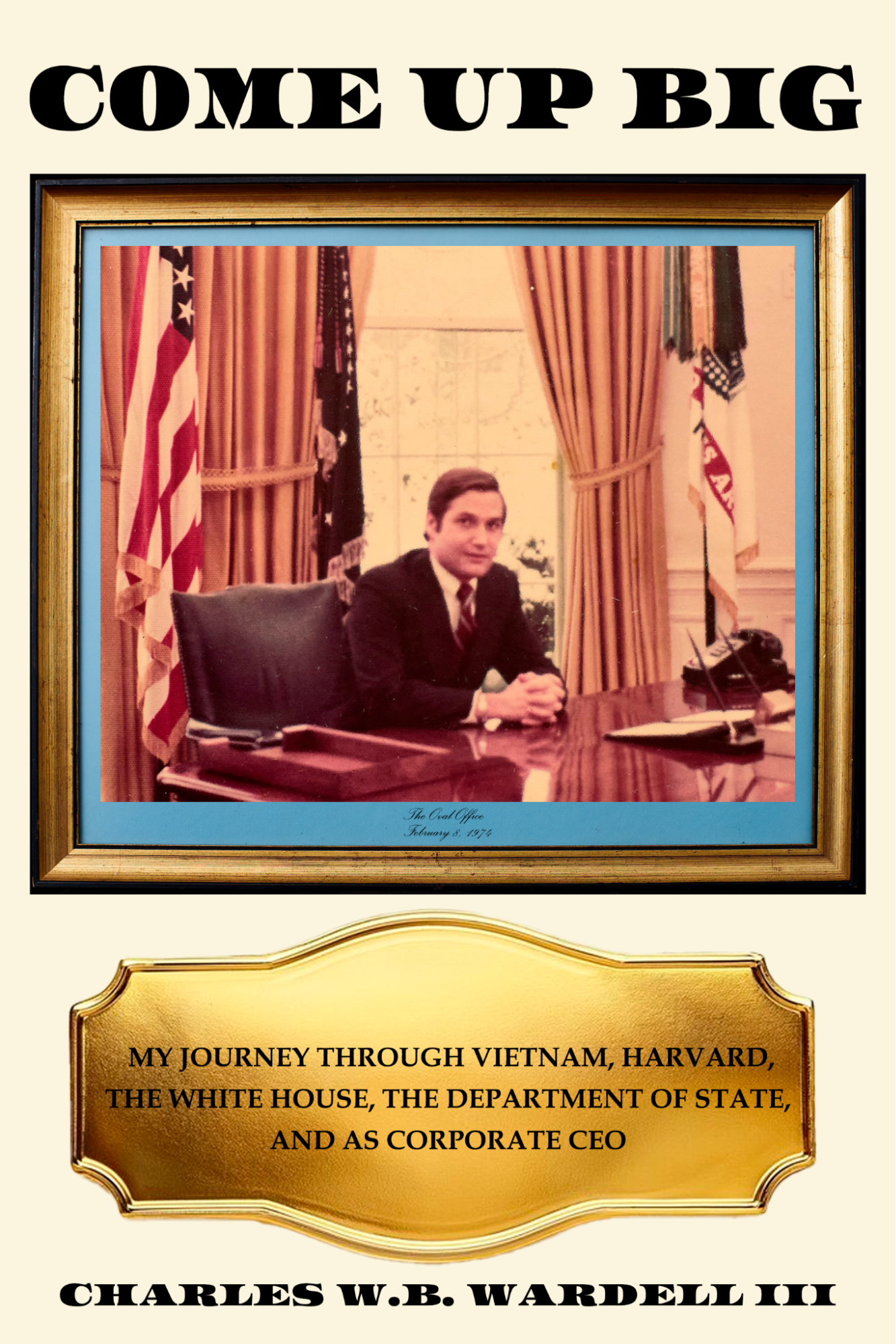
Come Up Big, the memoir by Charles “Chuck” W.B. Wardell III, details with wit and wisdom a life lived well and large while wrestling with dyslexia. Growing up, Chuck was undermined, undercut and undersold for being dyslexic. When he flunked out of college, he was snapped up by the Viet Nam draft. And yet in the army, he triumphed and became a war hero, then went on to Harvard, onto work in the White House and the Department of State, and on into the C-suites of big US companies like Amex. Chuck writes it all with pointed punchlines of wisdom and with self-effacing humor that has you laughing out loud. The memoir easily won a starred review from the wonderful arbiter of literature, Kirkus, and also landed on their Indie Book of the Month list. Hurrah!
Memoirs are also busting out everywhere, like a literary spring fever! This March, we can look forward to a couple of celebrity tell-alls, including one from the original hot-mess siren Liza Minnellie and her memoir, Kids, Wait Till You Hear This! (Grand Central: March 10, 2026) as told to the singer Michael Feinstein.

We also have You With The Sad Eyes by Christina Applegate, who lives with MS, which has retired her from a brilliant acting career (Little, Brown and Company: March 3, 2026).
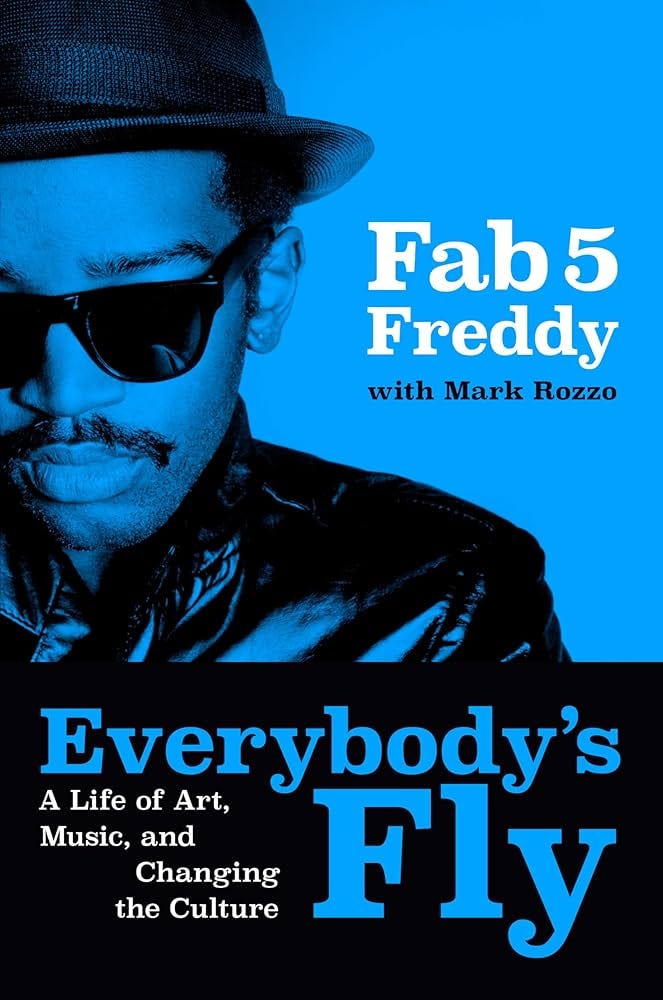
March also has a memoir for hip hop lovers with a new one by the pioneer of the hip-hop revolution, Fred Braithwaite, aka Fab 5 Freddy, Everybody’s Fly, with Mark Rozzo (Viking: March 10, 2026). And for lit fans, this month brings two-time National Magazine Award winner Tom Junod’s debut memoir, In the Days of My Youth I Was Told What It Means to Be a Man: A Memoir (Doubleday: March 10, 2026). It’s sure to be an original kickoff for Junod’s book-writing life, with himself as the subject, as he takes a long literary look at his own gorgeous, womanizing dad, the ultimate cad.
Let’s send love to biographies as well. One of my original heroes, Judy Blume, now 88, who wrote 25 books including the original coming-of-age bible, Dear God, It’s Me, Margaret, and helped hatch generations of bookworms, and who has weathered book bans, attacks, and diehard fans, now has a grown-up biography. It comes from the seasoned journalist and chronicler of Jewish American culture, Mark Oppenheimer (G.P. Putnam’s Sons: March 10, 2026).
Now as ever most memoirs and biographies are by the famous—and their ghostwriters—or by or about authors. Me, I love the extraordinary-ordinary memoir, like Come Up Big, which I also had the honor and pleasure of editing. I need those greatness-lives-among-us stories even more these days when life itself seems so unreal. Yes, I have to slip between the covers of a book with a real human story to warm me.
The hot memoir for me actually arrived early, in February. Gisèle Pelicot’s memoir A Hymn to Life: Shame has to Change Sides, tells her harrowing story for the first time, not as victim, but as a survivor and witness, and also the new face of feminism (Penguin Press: February 17, 2026).
The book begins when Pelicot awakens to her own tragedy, when she gets a call from local police. And so begins the investigation that rips open her life and exposes secrets of years of sexual abuse by her husband and fifty other men, secrets—drugged as she was—Pelicot didn’t even know she had.

Nothing is held back in the telling of her memoir. But the force of the book is in the matter-of-fact quality of its honesty. The physical, emotional and soul wounds are not picked open to score points, but instead offered with frankness, clarity, and in a clear sequence – from investigation to trial to healing – and all in a lyrical language. For this high praise also goes to cowriter Judith Perrignon. The French journalist, also an essayist and novelist, has a talent for making what can be dry reporting highly readable. As a cowriter, Perrignon is a perfect match for Pelicot: her writing regularly explores memory, secrets, and the juncture of history and personal experience. Though a journalist is not the obvious choice for a memoir, often authors elect to work with well-known authors, like Mark Oppenhiemer, or even ghostwriters – or a singer like Michael Feinstein. But Perrignon’s journalist craft and her writing gifts ensures Pelicot’s memoir comes vividly to life without overwhelming the reader with the brutality of years of sexual abuse.
The memoir to me is all the more potent and timely living as I do under the ever-growing shadow of Jeffery Epstein’s evil. In Pelicot’s memoir, she and Perringnon expose abuse and also the abusers, and how fifty men plus Pelicot’s own husband got away with sexual attacks for decades. The exclusivity of the men’s cabal, bonded by wealth and sin and secrecy, was only brought down by a fearless witness, fearless journalism and a fearless justice system. And so it is Pelicot’s memoir, the extraordinary-ordinary memoir, that fortifies me with a story that is real and human, giving me an intimate outline of true courage and the possibility of real justice, even here in the US.
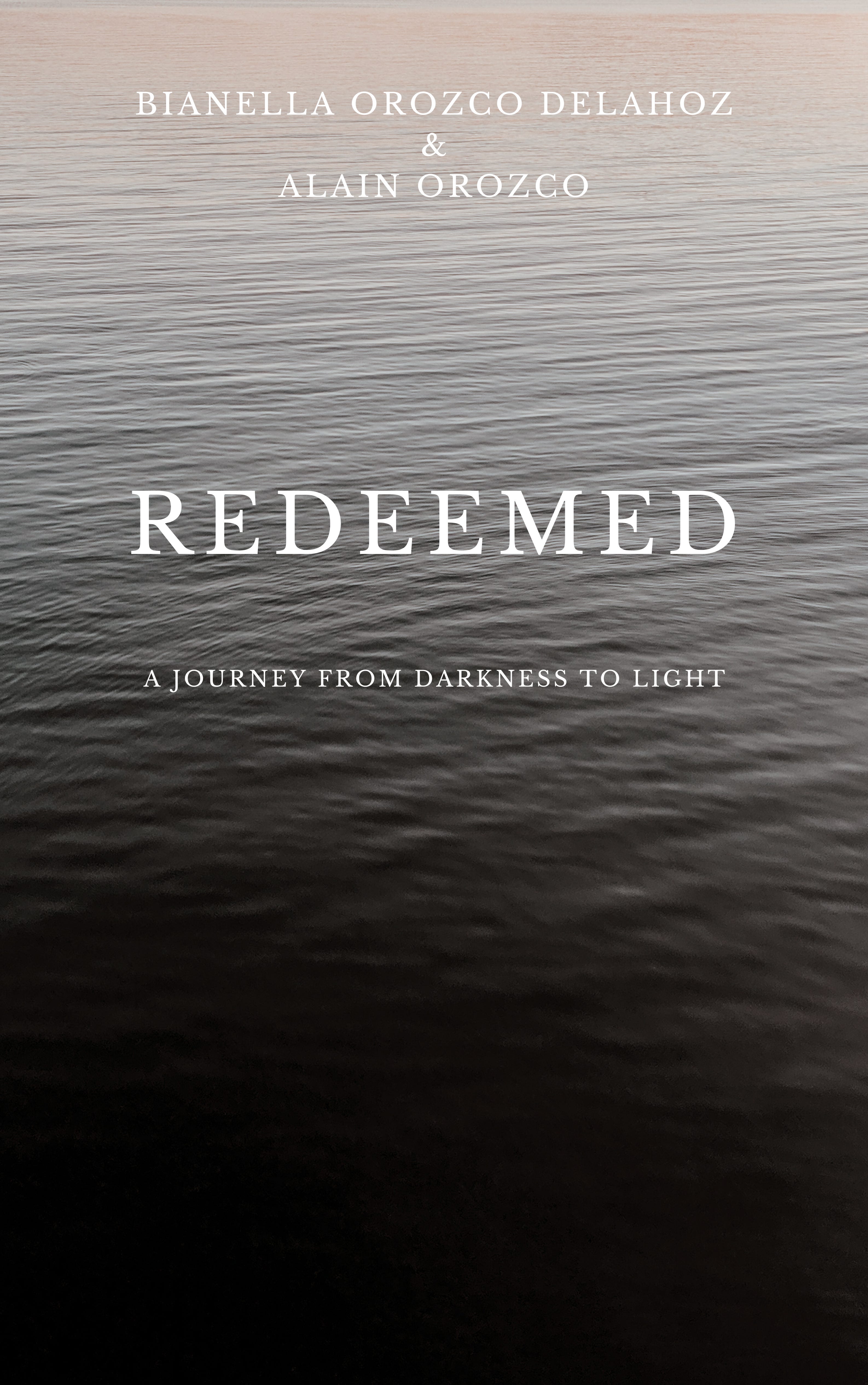
By Bianella Orozco-DeLaHoz & Alain Orozco
“The tender moments between brother and sister consistently shine through, as when Nella first saw her brother after he’d been released from prison and immediately noticed how skinny he was (“I just wanted to feed him”).”
~ Kirkus Review
By Charles W.B. Wardell III
“The author writes humbly but authoritatively about his front-row seat for the action in Vietnam, providing photos of his happy-go-lucky younger self. He strikes the same approachable tone in his memories of the downfall of the Nixon presidency, and he’s equally humble as the narrative moves on to his time as CEO… The cumulative effect is winningly cheerful. A warmly inviting story of a full life.”
~ Kirkus Review (starred)
By Sara Fym
Blizzards today are nothing like the great white dumps of 20 years ago that could blot out entire towns. And there’s nothing like being in them, in a Snow-Nami, when you are 10 and just 4 feet tall and the huge drifts of snow white waves slide upside your house 10 feet high.
Of course that day when I was 10 was a Snow Day. Everyone slept in, but I got up early with Uncle Steve, who lived next door on our small street in Yonkers. I loved him with all my total being because he was the Neighborhood Dad. Uncle Steve fixed your flat bike tire, found your mom’s lost wallet, and gave you a piggyback for hours if you had a bad day.
Today, he was digging out neighbors’ cars buried up to their antennas by the snowstorm and buried again by a brave snowplow. First, we dug out the Lee’s car, a boxy brown Country Squire station wagon. They owned My Fine Chinese Restaurant where the mom, May, cooked, and husband Dan served. And if they weren’t there, there was no My Fine anything. In thanks for freeing their car, before they drove off to work, they gave us a pot of hot and sour soup. That kept us both warm as we went for the next dig out.
“Mine next, please,” so said Rutherford Fogle in his fox fur coat and cashmere beret. He simply had to get to work!
No one liked Fogle, who lived at the end of our street, and me even less. He made props for movies, and was too rich and too single to be living on our middle-class street with in pink-trimmed, sandblasted brick house, with a rose garden in the back and a white Mercedes parked out front.
Only a rich man, spoiled into idiocy would have an expensive white car in winter city like Yonkers, I thought.
But Uncle Steve, kind man that he was, agreed to the dig out.
We set to digging free the giant snowy-square and Fogle even helped. But the white car was not parked out front of his pink-sandblasted house. It was a tired green Toyota Carolla that belonged to a withered old thing, Miss Winthrop. She looked like a grinning prune as she gratefully gave us hot cups of tea—and a shocked look for Fogle for being helpful.
So we went back to shovel out the next car, but it wasn’t the Cadillac, but what emerged next was a blue and rusty sedan. It belonged to the Smiths, who had five kids and the parents needed their car to get food—or just to get away from the kids. For freeing their car we got hot grilled cheese sandwiches and hugs for me and Uncle, but Fogle got a sideways look of suspicion and a mumbled thanks.
Next came the Jonoviks’ gray Pontiac, then the Munis’ Volvo, and on down the street we dug out cars, collecting kids as we went, each dig-out celebrated with thanks and hot drinks and hugs—for us—and maybe a nod or handshake for Fogle.
It was midnight when we dug out the last car which we could not tell apart at first from the snow and the darkness… the white Mercedes. As it emerged from the snow so did our neighbors from their houses, cheering for Fogle and handing out mugs of coco filled with rum, topped with a snow drift of whipped cream.
Fogle fell over, laughing. His car was last! What luck!
Ha, I thought, knowing my kind uncle didn’t like Fogle, maybe this was the way Good People could dislike the Bad. Making them dig out.
The following day was Christmas Eve and Aunt Ruth always invited the neighbors over for a bonfire and a singalong, and Fogle never came. But he did. With a box of Godiva chocolates and a fine tenor voice.
By Spring, he was getting dirty, helping Miss Winthrop clean up her rose garden.
That Halloween he let us parade down our street with his movie prop mummies and Draculas.
Next blizzard, Fogle was the first, shovel in hand, ready for what had become our street’s Big Dig Out.
It was only last week, at a Valentine’s supper party with Uncle Steve, I finally dared to ask if 20 years ago after the big blizzard, was it luck that Fogle’s car was the last to be dug out? Or was that Uncle Steve’s idea of luck? Or what?
“That’s an ‘Or What’!” Uncle laughed, his lined face folding in, worn by age but not his goodness had not been worn down at all. And yet he admitted he loathed that smug-assed Fogle, but dammit if dig-out by dig-out and car by car, he actually came to like that fancy-pants man. So, it was not luck but the snow had worked its magic on uncle, on Fogle, and on the car, hiding it until the last, until the awful Fancy Man Fogle became likeable.
“Snow magic?”
Uncle nodded and me, being 30-something, all-adult and not easily huggable, he still throttled me in a hug. He held me close to whisper… “Sometimes you have to dig to help the magic along. Then, sometimes the magic is there to meet you.”
By Michael McKinley
How many times have you heard the saying “Everyone has a story to tell?” How many times have you asked yourself whether or not that is true? It’s okay if you haven’t, because I have, and I agree with the idea that we all have a story to tell. Everyone on the planet does, because our lives are a story. And when you tell that story about yourself, you have written a memoir.
Now memoir writing is not as simple as saying everyone has a story, because you have to choose what parts of your story you want to share with the world. Where do you start? What’s the middle? How does it end?
These questions, and especially the last one, usually make the memoir a “late in life” book, as who wants to read the memoir of a ten year old? I don’t know, I might. They could have an amazing story. And many more memoirs in them. As Graham Green said, “There is always one moment in childhood when the door opens and lets the future in.”
That’s the point of memoir. It can be about any part of your life at any time. And for me, that is the pleasure of working with authors to help them write their memoirs, because that’s the other piece of the puzzle. You may have a story but are not a writer.
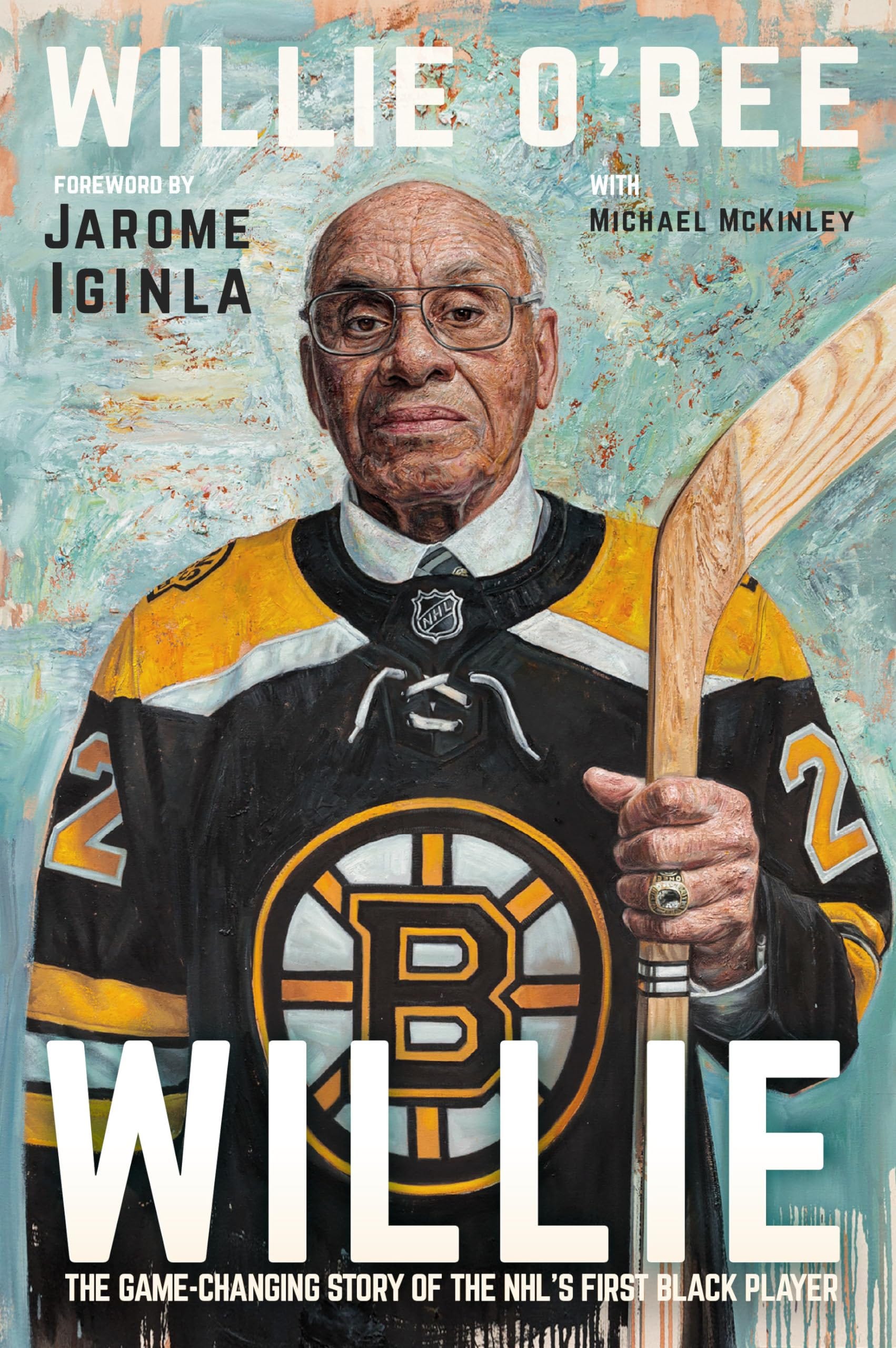
One of the memoirs I helped write that illustrates this point is Willie: The Game Changing Story of the NHL’s First Black Player. It’s the one that I wrote with Willie O’Ree, the first Black man to play in the NHL. When Willie stepped onto the ice for the Boston Bruins in Montreal on January 18, 1958, he broke the last remaining so-called color barrier in professional sport. However, his story is about much more than that historic moment. It’s about how since he was a little boy, Willie wanted to play in the NHL, and it’s about the extraordinary journey he made to get there. He even did it with only one good eye, as he got hit in the face with a puck during a junior hockey game, and was subsequently blind in his right eye. He kept it a secret and went on to live his dream. For me, it was a kind of dream to work with him, and to be allowed to help him tell his story so the world would hear it from him. The book, which was nominated for the NAACP Image Award – alongside a book by Barack Obama – I think helped the world know about Willie. He is 90 years old now and will receive the Congressional Gold Medal next month, on April 16.
Listening to stories is how 99% of most memoirs get written, by a writer they mistakenly call a ghost, as there is nothing eerie or otherworldly about helping someone tell their story. It is, 99% of the time, the beginning of a friendship, because the writer (me) has to get to know the author (you) and that process inevitably leads to friendship. And I am glad to say that I’ve been invited to Congress next month and will see my friend Willie get his medal, which he more than deserves.
That’s because the writer has to learn the story that you want to tell and get the best parts of it out of your head and onto the page. That’s what we do at YourBook. We hear what you think your story is, and then we begin.
We talk. The writer and the author, who listens to the story, and asks questions, and records the conversations and then we have them transcribed
It takes a few months to put together a draft of a memoir, assuming we work in a straight line, meaning we speak each week, for an hour or so, for ten weeks, and then we write the outline and a sample chapter, so that you can see if we have captured your voice. Once we have your thumbs up, we then write the draft of the memoir and have that draft back to you for your review, and we find that in this process you will remember other forgotten stories and find photos you want in the book. It’s like digging for even more treasure! We take your notes and suggestions and make the revisions, as often you will see things in your own story that remind you of parts that you might have missed, so this organic approach works at making the story the best that it can be.
Once you, the author, are happy with the story that you have told, then we design a book cover for you. In the Willie book, we used a painting of him that is wonderful, and it shows a side of him that combines his youth and where he is now. Then we get your manuscript edited and proofread, and also read by outside readers who do not know you or your story. We take their notes back to you, to take or leave, and they can provide a useful snapshot of your audience by showing us how the people “out there” might respond, whether you have written the memoir for your family, or for the world.
Either way, we will then publish your book, and if you have written it for the world, we will then market it to the world for you. So that people will learn your story and maybe realize that they, too, have a story that they want to tell. And we at YourBook will help you tell it. Your story, your book.

With International Women’s Day on the horizon, in our next issue we’ll be showcasing works by women writers. We’re also excited that BookGo will be heading to the London Book Fair next week. So stay tuned for more updates soon!

Comments
Nothing yet. Say the first thing.
Sign in to join the conversation.