
Svalbard is a Norwegian archipelago close to the north pole, where for nearly 3 months of the year the sun disappears below the horizon, leaving the landscape in complete darkness. They call this the ‘Polar Night’.
Just outside the town of Longyearbyen, Svalbard’s main settlement and the world's northernmost town, stands the darkest cabin on the arctic tundra in that polar night.
It is the Svalbard Global Seed Vault.
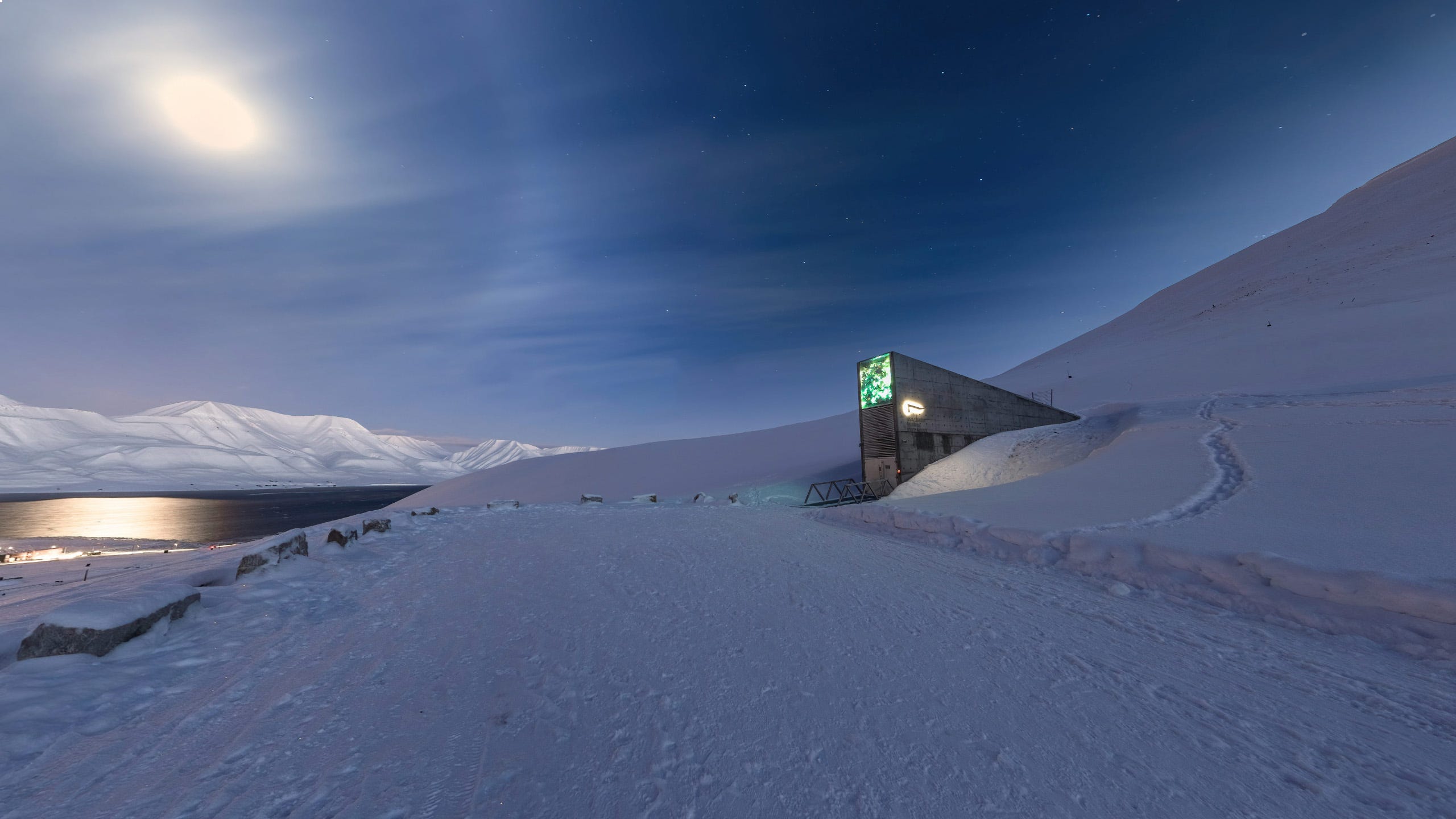
Overlooking fjords, glaciers, auroras, passed by polar bears, and entered by humans only a handful of times a year, the location is uniquely safe from tectonic and climatic shifts, threats of human conflict, and rising seas. Once through the entrance, and after clambering down a tunnel 100 meters beneath the permafrost,
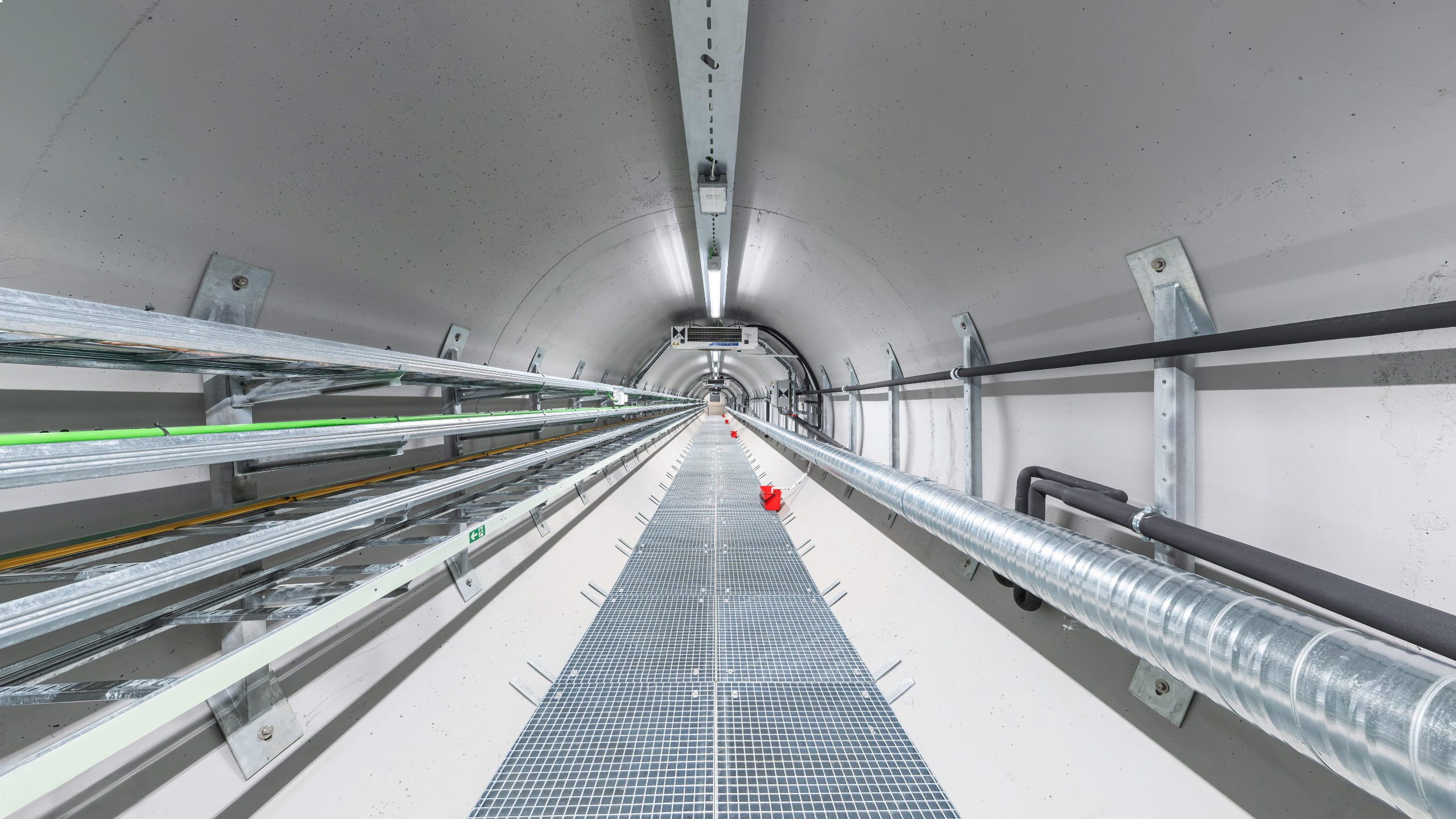
what you will find is a beautiful example of a benevolent global collaboration between almost every country on earth.
The Global Seed Vault contains 'duplicates of 1,301,397 seed samples from almost every country globally’, naturally frozen below -18 degrees celsius.1
A maximum of 2.5 billion seeds may be stored in the Seed Vault, in this white chamber behind airlocks, reinforced concrete, and heavy steel doors.
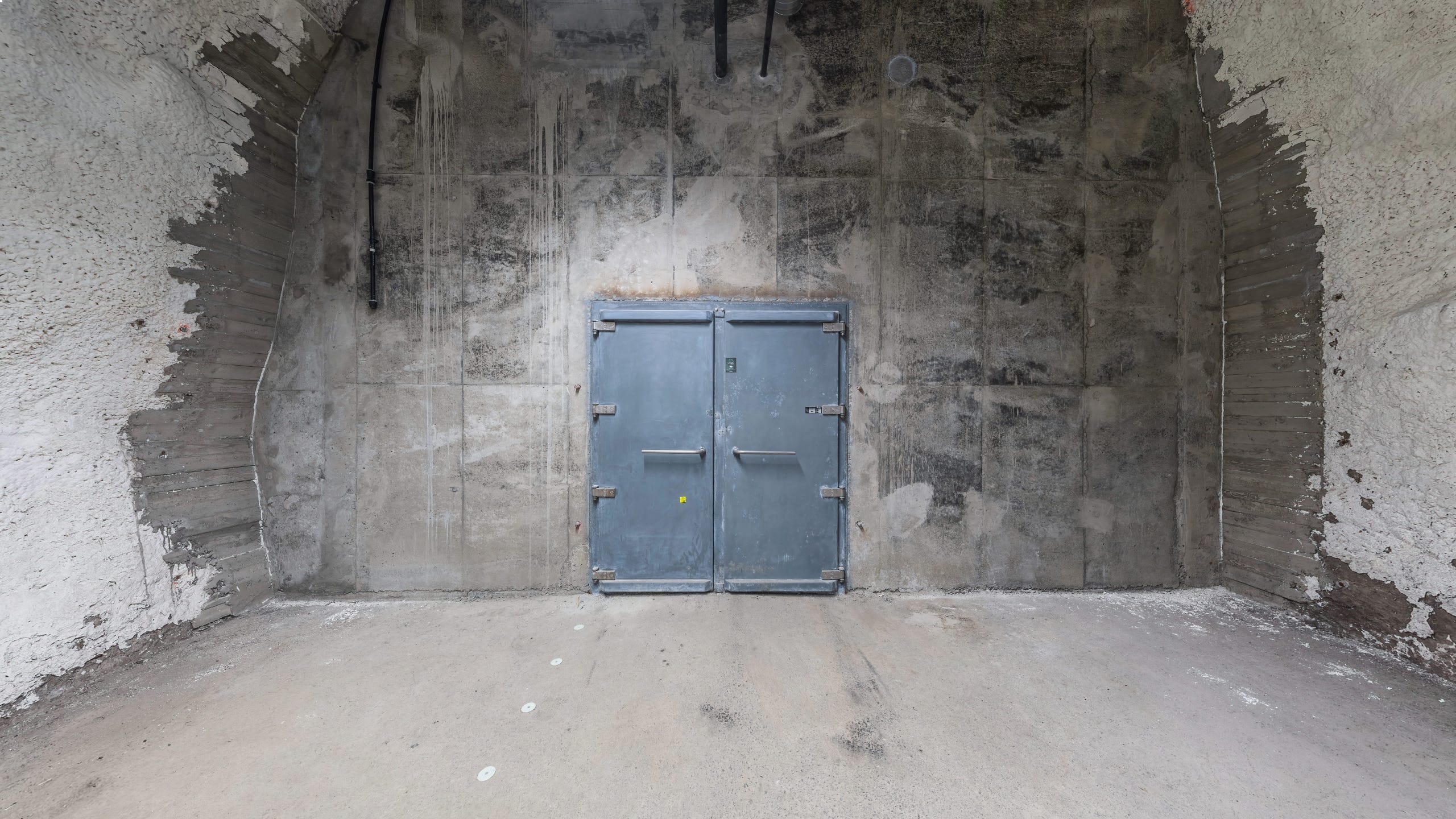
It is an impenetrable crypt, entangled with distant cultures and ecologies world wide. It is accessible through a virtual tour that allows you remotely slip through its aisles of genetic information, and explore the vault in 360 degrees.
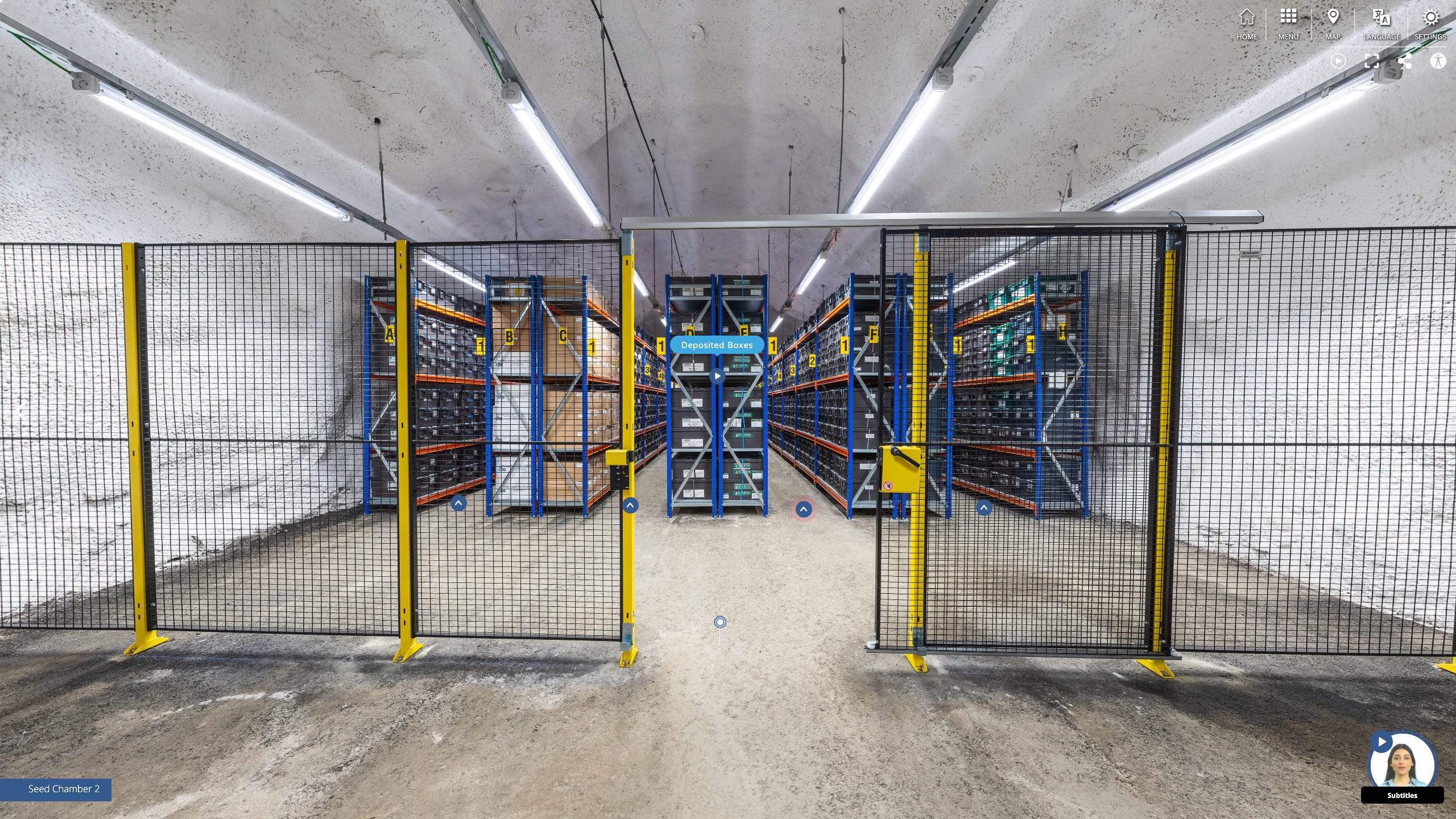
The Global Seed Vault is a master backup for the world's seed banks. It isn't just an agricultural safe, but a museum of human-plant relationships. It’s like a data centre for plants, with some strikingly similarities in form.
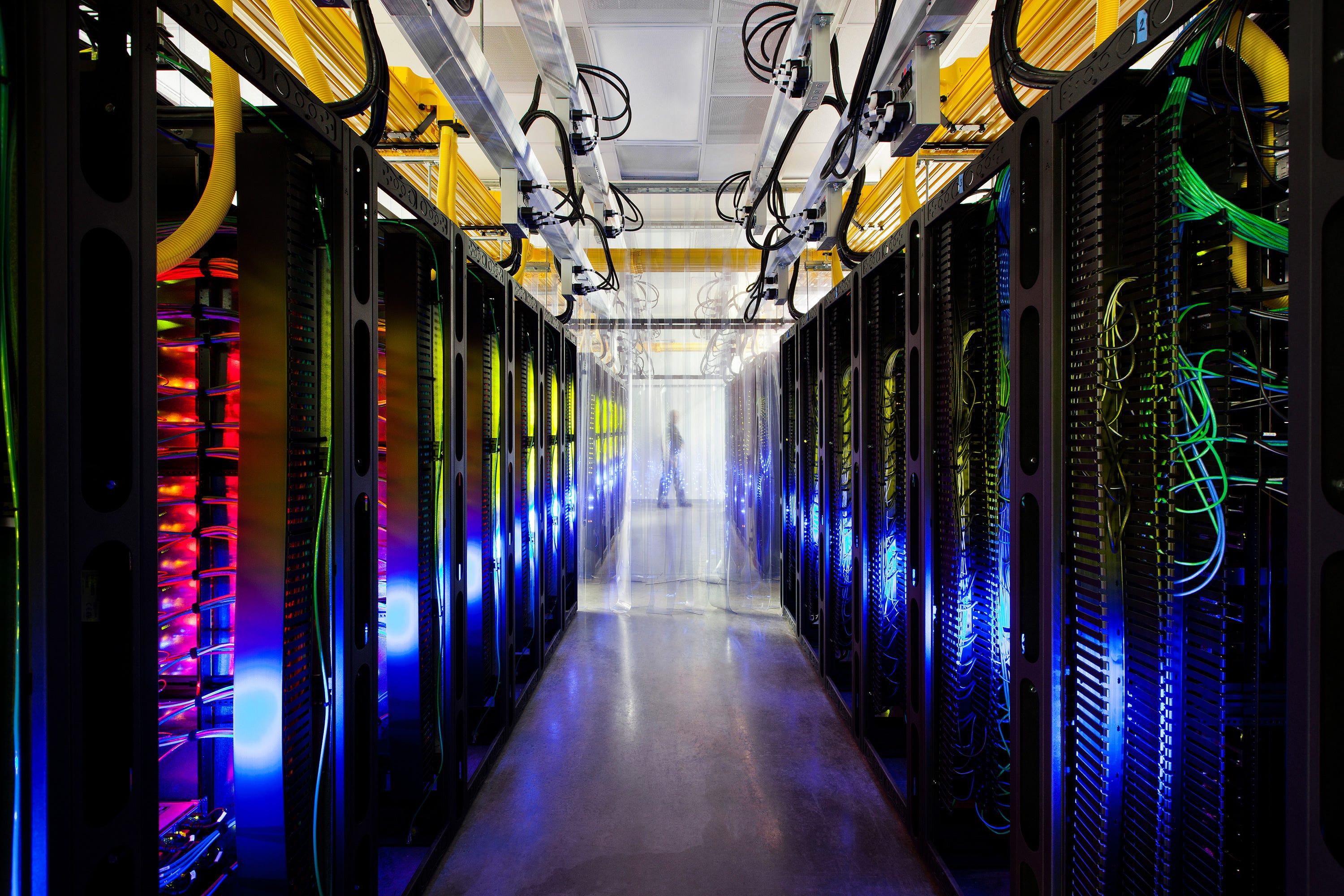
In the clashing of climate change, global conflicts, chemical pollution, industrialised monocrop agriculture, and the erosion of biodiversity, we start to lose one of the things that makes us human, that has driven culture, connection, and identity across generations; that is the variety of plants, vegetables, and fruits we have cultivated in place over 10 thousand or more years.
"The introduction of industrial methods in the 1960s turned sun-and-soil based agriculture into a system that required the use of pesticides and sterile seeds that could not be saved and used again."2
Some of those homogenised crops might be susceptible to the effects of a changing climate, and thus might struggle to sustain human populations into the future.3
Some of those crops at risk of being lost to this industrialisation could hold genetic adaptations that would make them invaluable in responding the climate induced food insecurity across the world.
“Ba’al” crops, which have been bred for thousands of years in Palestine to grow in summer without irrigation, are being called on by farmers in California to deal with increasing droughts.4
The erasure of plant diversity doesn’t just make the agricultural industry susceptible to environmental change, drought, and flooding, but also erases millenia of histories of human cultures and their plant companions.
Vivien Sansour, who has established an heirloom seed library for the ancient crops of Palestine, describes how "heirlooms, which have been carefully selected by our ancestors throughout thousands of years of research and imagination, form one of the last strongholds of resistance to the privatization of our life source: the seed."5
Seed banks allow this vast genetic diversity to be retained and protected against the industrial homogenisation of agricultural practices, climate change, and human conflict.
In 2015, Svalbard’s Global Seed Bank was called to action sooner than anticipated.
When the Syrian War broke out in 2011, The Aleppo seed bank, a vital repository of crop diversity from the Fertile Crescent, home to some of the most ancient crops and histories of human agriculture, was threatened. Staff were forced to leave and the facility has since been occupied by armed forces. The state of the seeds is unknown, but they are likely damaged or lost due to extended power cuts.
In 2015 a mission to rescue the seeds lost was launched.6 Nearly 80% of the seeds had been ‘backed up’ in the Svalbard Global Seed Vault, so they were able to be restored, and staff have since rebuilt their collections in Morocco and Lebanon.
The article published in Nature jounal which outlines the rescue efforts draws a deep reverence for those workers and governments who coordinated across continents to save the ancient seeds;
“These efforts by the local staff of the Genetic Resources Section (GRS) team at Tel Hadia during this period will be remembered in the history of genebanking together with the history of the staff of the Vavilov Institute of Plant Industry (VIR), who safeguarded the famous genebank during the Nazi siege of Leningrad in the winter of 1941–1942.”7
This reverence reflects the capacities of global infrastructures, both physical and organisational, to do good. The practices of making seed banks tells the story of humans protecting plants from humans, of humans protecting humans from humans. They are stories of the entanglement of time, genetics, cultures, foods, and collaboration across continents.
Their seeds tell the story of their journey from growing in the soils of ancient mesopotamia to being meticulously processed, labelled and stowed away 100 meters below the permafrost near the north pole, to being revived and saved from the military turmoils of our contemporary world.
The Global Seed Vault holds a library of our (at least) 10,000 year history of cultivation and co-evolution with plants. It holds a history of humans thinking about the future. It traces stories of humans feeding and nourishing civilisation throughout the holocene, to confronting the entangled planetary threats of today; threats of war, famine, climate change, biodiversity loss, and the loss of deep cultural knowledge, cuisine, and history.
We find an entanglement of distant lives, cultures, foods, ecologies, and histories in this frozen vault deep under the permafrost. We find a planetary architecture of human-plant collaboration and co-evolution.
Whether or not we have entered a new geological epoch of the ‘Anthropocene’ or ‘Capitalocene’, our relationship to plants is changing. What was a highly localised practice of collecting seed year after year through generations, co-evolving human culture and plant genetics, now informs our responses to planetary conditions like droughts in distant parts of the world. We see a great migration of genetic material, a re-calibration of earth systems, while global infrastructures and systems of governance emerge to make sense of it all.
In the darkest cabin on the arctic tundra in the polar night, we find a new planetary kind of architecture. It is a library of stories about humans and plants collaborating through the holocene, and it is a weapon for fighting planetary threats of the so-called ‘Anthropocene’. It also presents an opportunity to imagine new kinds of human-plant relationships; to honor the knowledge and wisdom of these vegetal diasporas, to acknowledge that those seeds hidden away under the ice may have secrets yet to tell, maybe 100s or 1000s of years from now. The Global Seed Bank is an architecture of deep-time; it is an opportunity to continue the story of collaboration between humans and plants into our distant future.
Crop Trust, Svalbard Global Seed Vault, https://www.croptrust.org/work/svalbard-global-seed-vault/
Tessa Fox, The Woman Saving Palestinian Heirloom Seeds, BBC, (2021), https://www.bbc.com/travel/article/20210908-the-woman-saving-palestinian-heirloom-seeds
Jacques PJ, Jacques JR. Monocropping Cultures into Ruin: The Loss of Food Varieties and Cultural Diversity. Sustainability. (2012); 4(11):2970-2997. https://doi.org/10.3390/su4112970
Bauck, W. ‘They kept us alive for thousands of years’: could saving Palestinian seeds also save the world?, The Guardian, (2024); https://www.theguardian.com/environment/ng-interactive/2024/mar/29/palestinian-seeds-conservation-climate-crisis
Vivien Sansour, https://viviensansour.com/Palestine-Heirloom
An International Rescue Mission from Syria to Svalbard, Crop Trust, (2020), https://www.croptrust.org/news-events/news/an-international-rescue-mission-from-syria-to-svalbard/
Westengen, O.T., Lusty, C., Yazbek, M. et al. Safeguarding a global seed heritage from Syria to Svalbard. Nat. Plants 6, 1311–1317 (2020). https://doi.org/10.1038/s41477-020-00802-z
No posts
Comments
Nothing yet. Say the first thing.
Sign in to join the conversation.