
A child's obsession with the garbage man is a reflection of a naively poignant understanding about the world absent in most adults.
Where does he take all the rubbish? What is this mysterious land where all life's discards and detritus goes after its time with us? The garbage man is a mysterious and magical creature, visiting on a rigid schedule, collecting his motley crew of rotting messes, crinkly packaging, and leaky milk bottles, and taking them on a journey to the unknown. The child sees him with eyes of wonder.
The adult is blind to the magic of their technological infrastructures. They have learnt over the years that things 'go away' and it’s best not to know more. Things go away to mysterious and imperceivable elsewheres. There are everyday portals to those elsewheres all around us.
Toilets. Sinks. Bins. Routers. Screens. Power points. Pipes. Post boxes. Shops.
Every time you use these things you open up little passageways. Most of them have lids, plugs, off switches, locks or doors that can be safely closed.
We close them because the unknown is scary, and because fear is a great paralyser. If we don't know about it, there is nothing we can do. Technological infrastructures are often designed to make materials, data, and waste disappear into functional opacity.
Infrastructures are put underground or out of sight, casting away the unsightly, the problematic, the toxic. What results from this obscurity are misplaced feelings of guilt, confusion, paranoia, or even madness.
Elsewhere Ecologies: Synthetic Biotopes of the Plastisphere
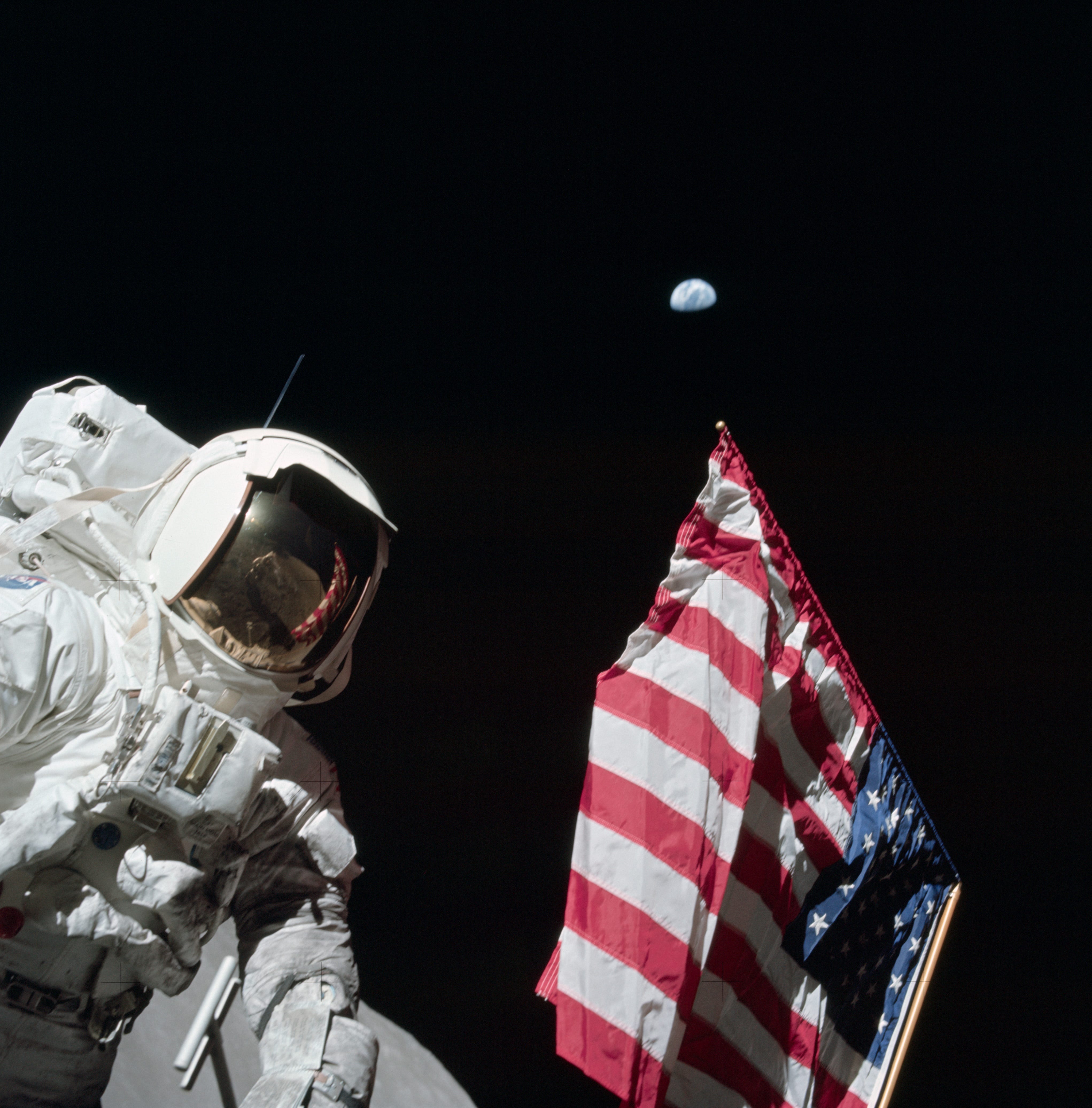
From our everyday portals, synthetic materials journey to the furthest reaches of our 'pristine' 'wilderness'. The Pacific Gyre is a giant swirling current in the pacific ocean. In it, the mass of plastic is approximately six times that of plankton1. These materials have even journeyed beyond Earth; a polyamide flag was planted on the moon in 1969.
We keep carting it all off to ‘the away’, until suddenly ‘the away’ turns up in our brains, or our testicles. Like a new Silent Spring, scientists are writing books which sketch the horrors of the widespread impacts of plastic pollution, of How Our Modern World Is Threatening Sperm Counts, Altering Male and Female Reproductive Development, and Imperiling the Future of the Human Race.
Unanticipated ecosystems and agential forces beyond human control emerge from the technological elsewheres. The more we ignore them, and close them off from sight, in ignorance or fear, the more surprised we are when they come knocking on our windows.
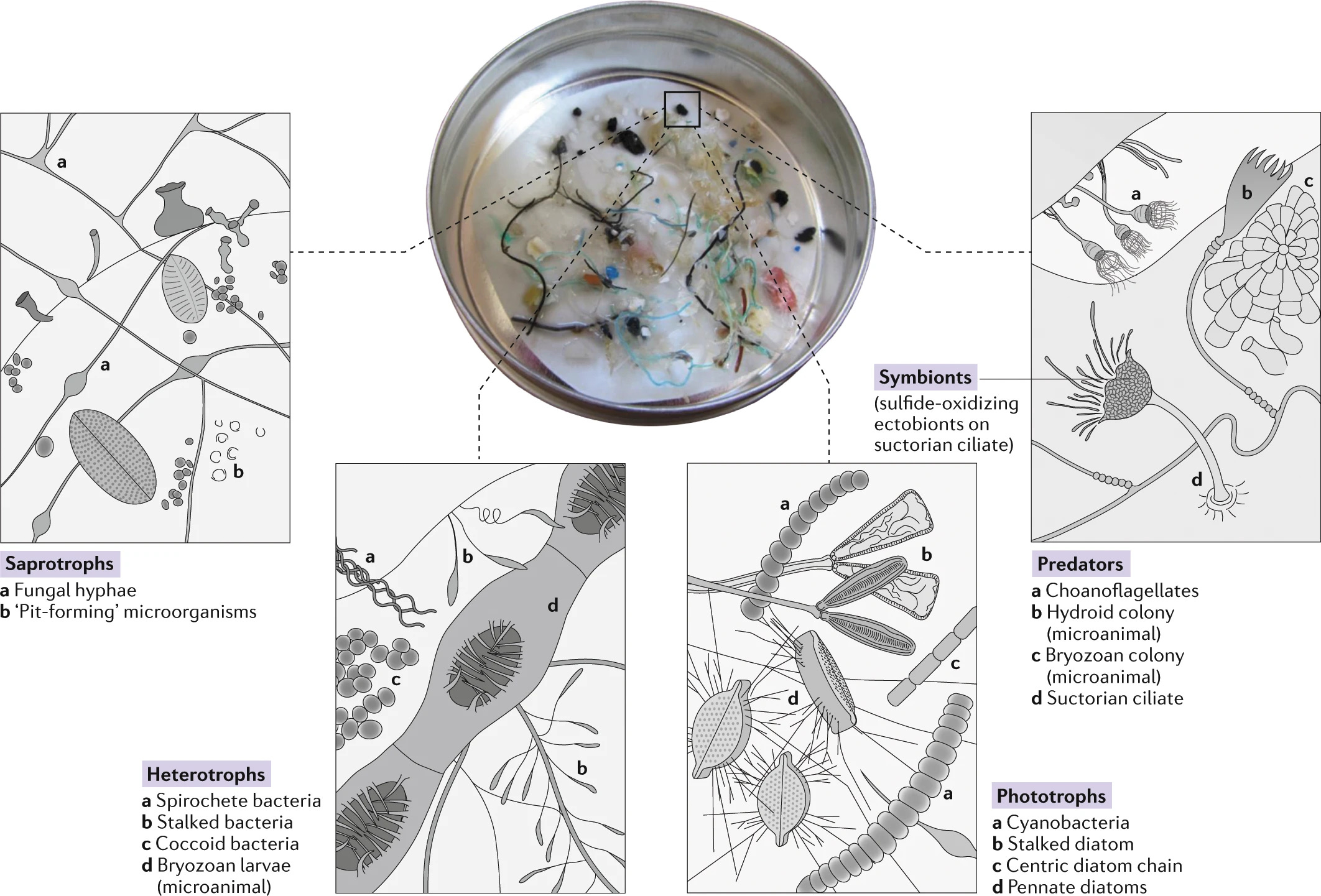
Within the masses of plastic in the North Pacific Gyre, new ecosystems are forming. There is a synthetic wilderness where tiny organisms produce and populate 'biofilms’ on their plastic houses, forming human-made ecosystems that have been named by scientists as ‘plastispheres’.2 Diatoms and microalgae inhabit monofilament line as pathogens take rides on flotsam across vast oceans, colonising distant coral. Now these synthetic microbial ecologies are being researched by scientists for the development of enzymes that can effectively break down the plastics that made them in the first place.3 Synthetic materials are now part of the ‘Natural’ ecosystem. Part of our oceans. Part of our bodies.
There is a wilderness where no plastic exists, it is called the past.
Powers of the Technological Elsewhere: AI & the Black Box of Latent Space
Just as garbage infrastructures cart waste off into distant and obscured elsewheres like the Great Pacific Gyre, internet data is funnelled into obscurity and controlled by patented algorithms. From this digital ‘away’, agential forces beyond human control emerge.
Our most recent and arguably most mysterious everyday portal comes in the form of a ChatGPT subscription (or Claude, Gemini, LlaMA, and so on). It’s techno-elsewhere is poetically named Latent Space; a series of 0s and 1s that constitutes the reasoning engines of Large Language Models. It is essentially a 'black box’ of mechanisms which are unexplainable, uncontrollable, and hidden. Often this black box is accused of imparting bias and inflicting harm in the form of false information. AI’s are often obscured by fine tuning and human feedback, causing them to express as sickeningly sycophantic. But AI’s latent space is in many ways incomprehensible even to those who obscure it.
We arrive at an interesting situation in which human technology has become so complex and unknowable that whole disciplines of science emerge to study it, like they used to study ‘Nature’. “For the first time in history, we can create and study artificial minds with a level of access and control that is simply not possible in biological systems”.4
AI interpretability research has emerged to help understand the ‘alien’ behind the ‘human mask’ with which we tend to cloak AI. While it was developed as an emulation of human thinking, what it has become is something else. It is an ‘Alien’ which reasons in ways qualitatively and quantitatively different to how humans reason. Reason, traditionally conceptualised as the unique capacity of the human brain, the thing which sets us apart in the esteemed category of Human, is now expressed by machines which in some ways now far surpass us.
There is Power in the Incomprehensibility of Technosystems.
Incomprehensible elsewheres of technology are not new. The technology of telegraphy, beginning with Morse, has run parallel with spiritual telepathy, where electronic devices were believed to be connected to the spiritual aether. When people in the 19th century believed they could communicate with spirits via electronic devices, technology both privileged the non-human ‘spectre’ and challenged the white, male, human position of specialness and authority. The agency of this technological ‘other’ was so powerful that oppressed women of the 19th century were able to employ it to give themselves a voice. Using the seance to call in messages from the spirits via electronic devices, women were able to put forward ideas with an authority not beget by a female voice at the time.5
In a seance-like ritual, prompt-engineering acts like some kind of spell casting, calling on this voice from the techno-aether. Personally, I find it helps remove some of the people pleasing tendencies I have, a sense that I lack authority of my own, as I call on this ethereal voice, like those women with their telegraphic machines in the 19th century. There is emmense power in the way AI displaces the dominant human figure. This is a condition which deserves attention and contemplation, as much as those dangers of how it entrenches already existing ‘biases’, a problem already so heavily critiqued.
AI’s elsewheres are also made of data centres and power stations which are haunted by distant ecosystems. Undersea cables get nibbled by sharks. Satellites lodge themselves in orbit, turning to space junk, or occluding the stars.
If we are to explore the ecological elsewheres of data and computation, we must also contemplate the elsewheres of “organic” sapience. How many cups of water and acres of agriculture does a human need to do intellectual work, and how many peripherals are needed to support the white-collar lifestyle that allows them that capacity in the first place? Benchmarks of the energy use of human vs machine intelligence and all their peripherals should be discussed in detail before condemning the energy consumption of AI. That will have to be another article.
And then there is the leviathan of techno-elsewheres; Climate Change. No one can escape it. Not even the richest, most privileged movie stars in Palisades. In the face of Climate Change, the distinctions between humans, nature, technology, and to an extent class, disintegrate entirely.
That is part of the human condition today. Being haunted by our technological elsewheres. Passing around culpability. Being in an incomprehensible mess. Shirking responsibilities. Being confused. Being planetary.
Transformation
What could replace fear and confusion is transformation.
As tiny microbes learn to inhabit microplastic spheres and ride them across the deep sea, what it means to be natural, wild, pristine, transforms. As our human technology becomes a planetary phenomena we experience ourselves as exceeding ourselves. With its tendrils reaching through our everyday portals into technological elsewheres across the entire planet, human development can no longer be subsumed under the category of the 'City', or as the antithesis of the ‘Wilderness’. And yet, this distinction is what continues to drive so much of our development and governance.
The human-nature divide constructs a politics in which there are only ever two options; slow down or speed up, conserve or extract. Transhumanist or luddite. Right or Left. We live in a rupturus moment of rapid change. Big tech has well and truly infiltrated world politics. Technological systems, ecosystems, and the socio-economic forces of human politics coalesce.
When we plug, switch off, close and lock our everyday portals, we sustain these dichotomies. We are practicing naivety in the face of horror. Its not our fault, technological infrastructures obfuscate by design.
I would encourage you to reignite your childlike obsession with the garbage man, and to be fascinated by the elsewheres your little portals lead to. Imagine the places they connect you with, all across the planet.
The inner workings of technosystems are not just horrifying but they are also fascinating and full of transformative potential. They don’t need to be fully understood, but they need to be seen. And they need to be described in ways that don’t limit us to the archaic concepts that pit the ‘Wilderness’ against the ‘City’, ‘Humans’ against ‘Nature’, the ‘Artificial’ against the ‘Natural’. If new concepts can be formed, new kinds of sense can be made, and new things can be done.
J Moore, S.L Moore, M.K Leecaster, S.B Weisberg, A Comparison of Plastic and Plankton in the North Pacific Central Gyre, Marine Pollution Bulletin, Volume 42, Issue 12, (2001).
Amaral-Zettler, L.A., Zettler, E.R. & Mincer, T.J. Ecology of the plastisphere. Nat Rev Microbiol 18, 139–151 (2020).
Also Amaral-Zettler, L.A., Zettler, E.R. & Mincer, T.J. Ecology of the plastisphere. Nat Rev Microbiol 18, 139–151 (2020).
Lee Sharkey and Bilal Chughtai and Joshua Batson et al. Open Problems in Mechanistic Interpretability, (2025). https://arxiv.org/abs/2501.16496
Sconce, J., Haunted media: electronic presence from telegraphy to television. Duke University Press, Durham, UK (2000).
No posts
Comments
Nothing yet. Say the first thing.
Sign in to join the conversation.