
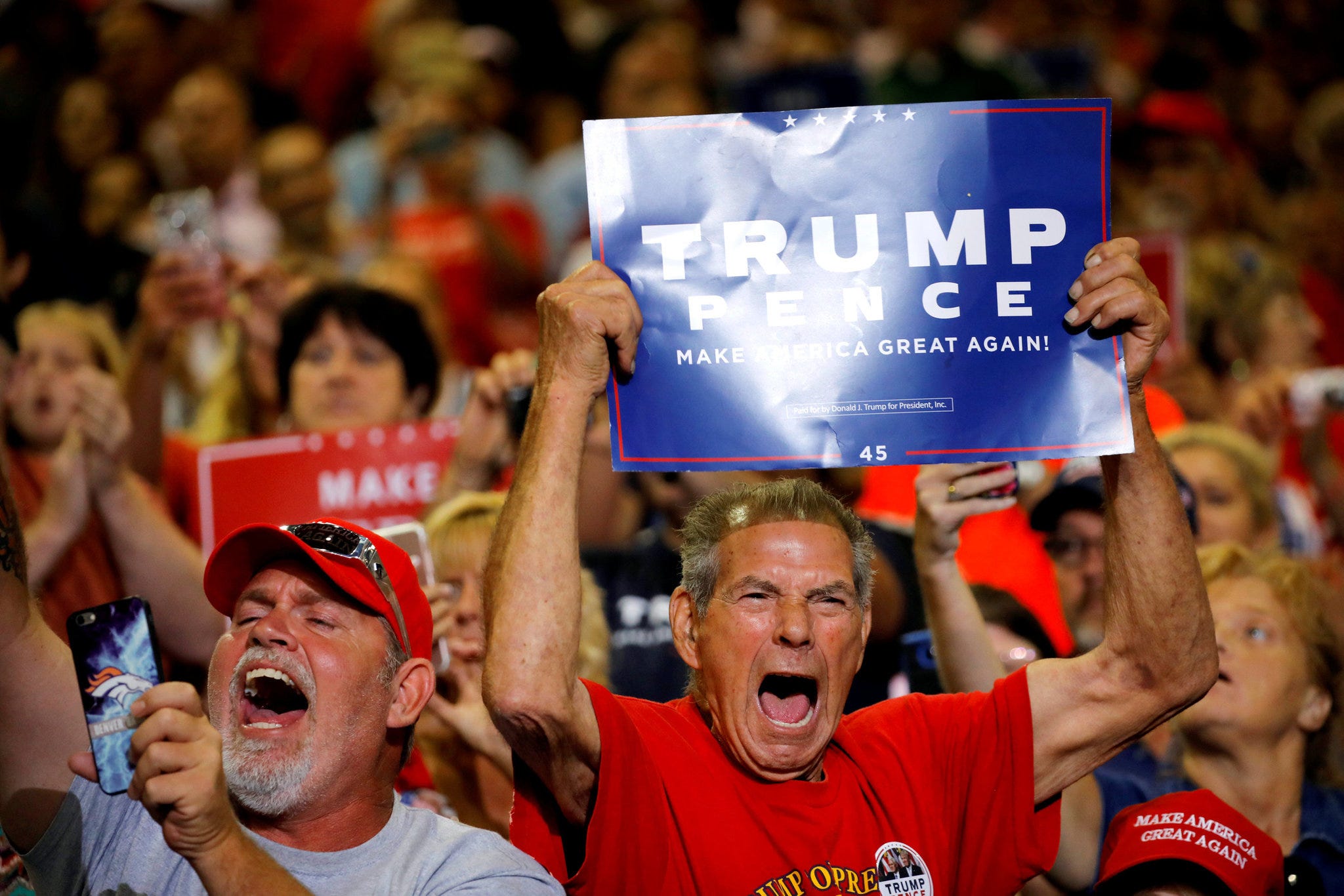
Ask a man who voted for Trump, Vance, and MAGA. Not whether the other side lost. Not whether the people he dislikes are furious. Not whether his coffee mug is full of liberal tears. Ask:
Whether he and his family are better off.
The Bureau of Labor Statistics recently provided part of the answer. From July of last year to July of this year, real average hourly earnings fell two tenths of one percent. They did not grow slowly. They fell. In April the numbers were worse, with consumer prices up 3.8 percent over the year and the energy index up almost 18 percent. His paycheck buys less than it did. That is not an “Intellectual-elite Harvard” opinion or a forecast. It is the government’s own measurement of what happened to his money.
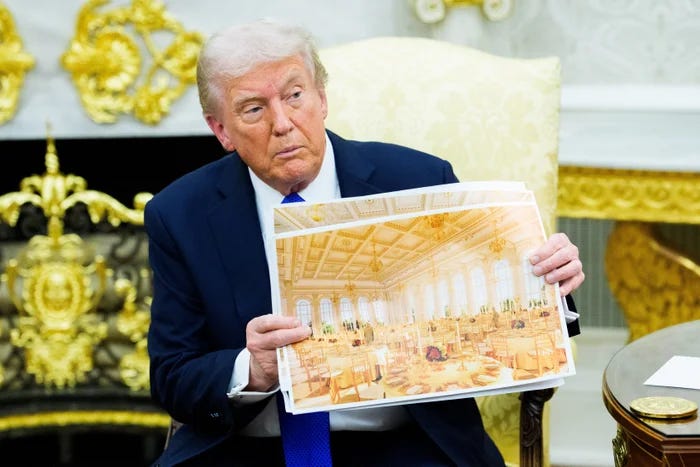
Now look at the new Trump debt, heaped upon existing debt that was borrowed in this voter’s name. The national debt crossed $39 trillion in March and will pass $40 trillion before this year is out. The Congressional Budget Office puts net interest on that debt at $1.04 trillion this fiscal year, roughly $7,700 per household. That is not repayment of the debt itself. It is merely interest: money that cannot be used for schools, healthcare, infrastructure, reducing the debt, or anything else the country needs. His children will pay it, and so will his grandchildren, although neither was asked.
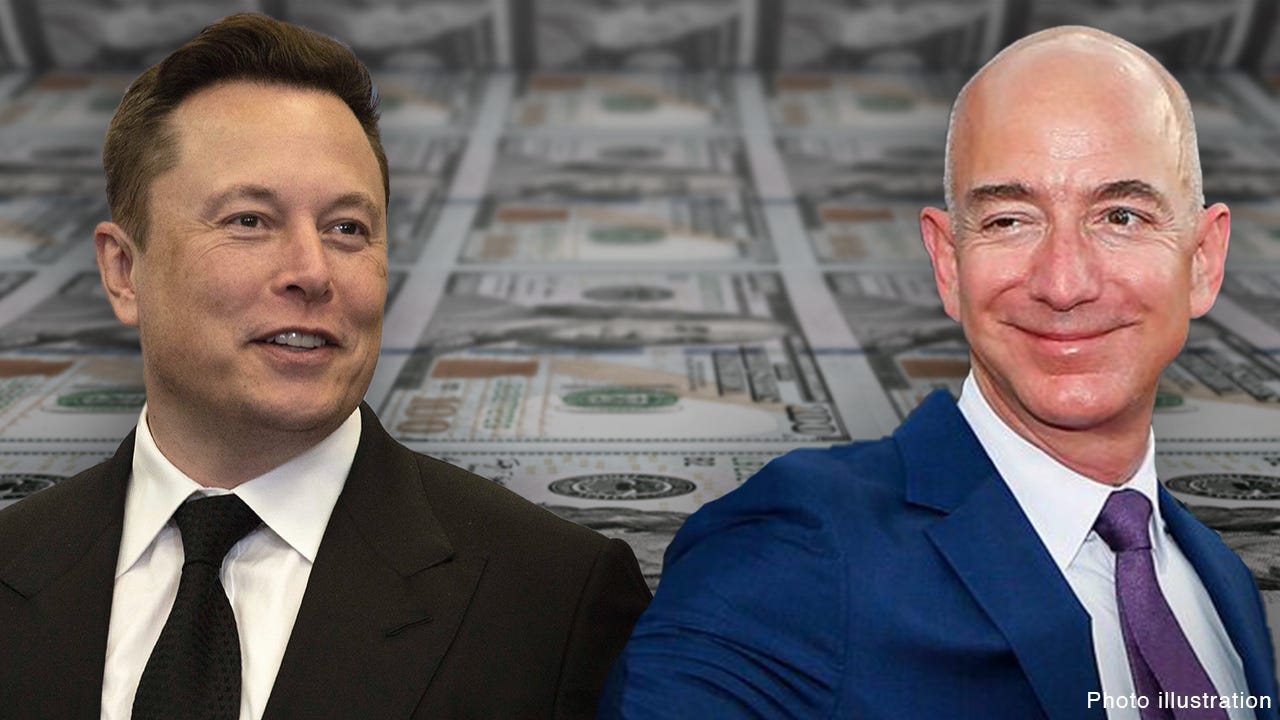
While the average American worker’s real wages went down, Bloomberg’s index recorded Elon Musk gaining $214 billion in the first six and a half months of this year alone. Jeff Bezos, who owns The Washington Post, sits above $250 billion. In 2025, the ten wealthiest people on Earth added $579 billion between them.
This is not simply market magic. It happens in a system rigged to concentrate vast wealth in the hands of a few. Trump and Republican tax cuts overwhelmingly reward people who have amassed enormous wealth. Gains made from investments are taxed more favorably than money earned from a paycheck. Billionaires can watch their stock rise by billions without owing income tax on those gains, and they can borrow against that growing fortune to finance their lives without selling the stock and triggering a tax. Much of that hoarded wealth can even be passed to heirs without ever being taxed as income.
A working American lives under a very different set of rules. He earns a paycheck, and his taxes are collected before the money ever reaches him.
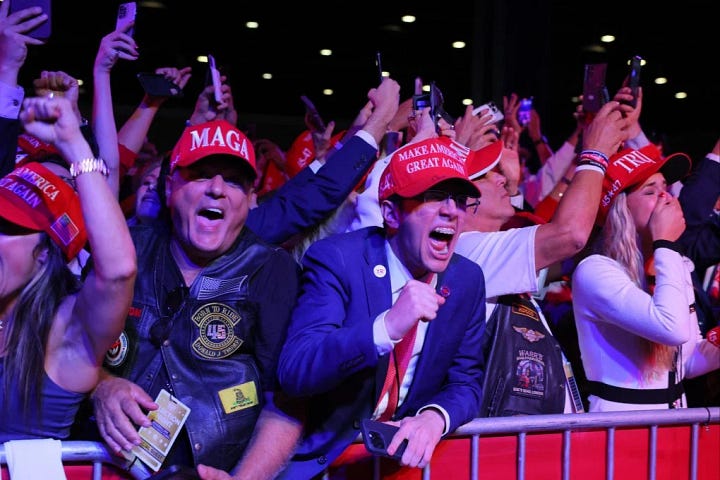

So while he is laughing because he’s enjoying the liberal tears in his cup, consider what those tears have cost him. His paycheck buys less. His children inherit more debt. The richest people in the country have never been richer, and the Epstein-Trump-Maxwell files are still hidden away. Those are just some of the prices he has paid for his cup of liberal tears.
Now ask another question.
Who is supposed to explain the price of liberal tears to him?
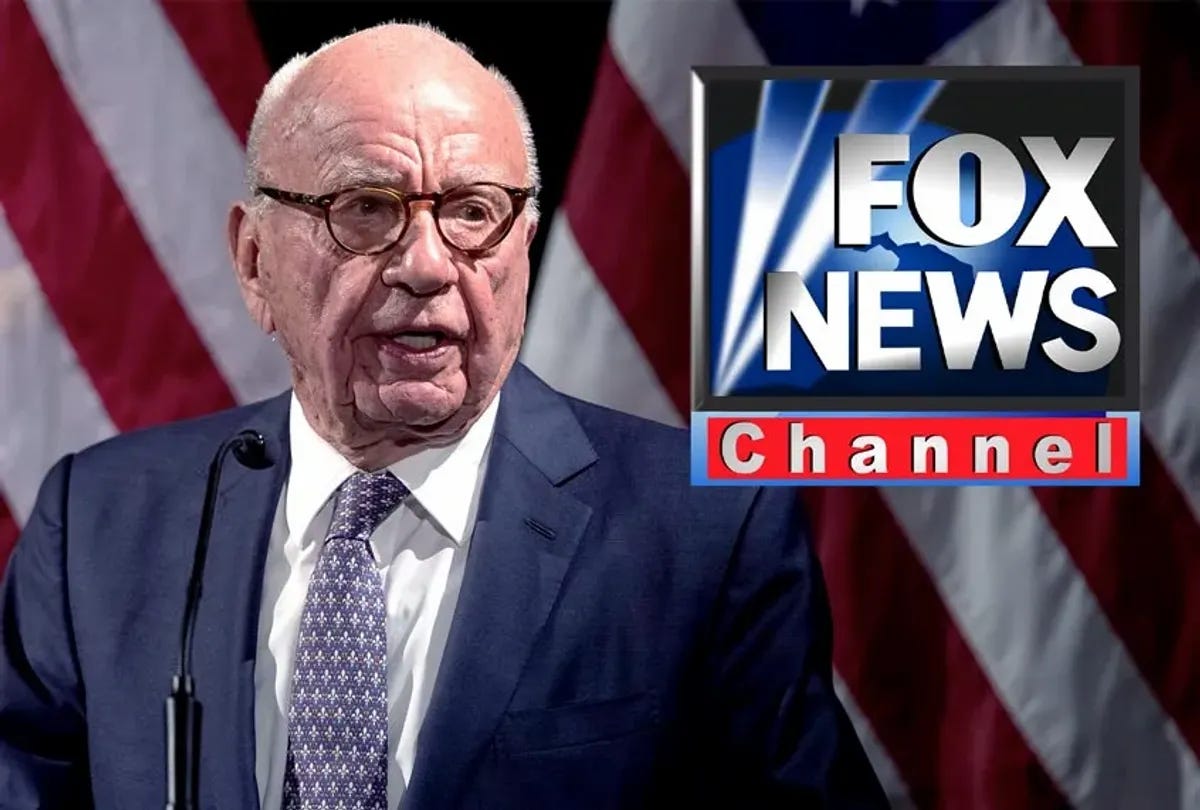
Jeff Bezos owns The Washington Post. The Ellison family now controls Paramount and CBS News. Rupert Murdoch’s media empire includes Fox News and The Wall Street Journal. Sinclair reaches millions of Americans through local television stations. Mark Zuckerberg controls Facebook and Instagram, two of the largest distribution systems for news and political information in the world. Elon Musk acquired Twitter and transformed it into X.
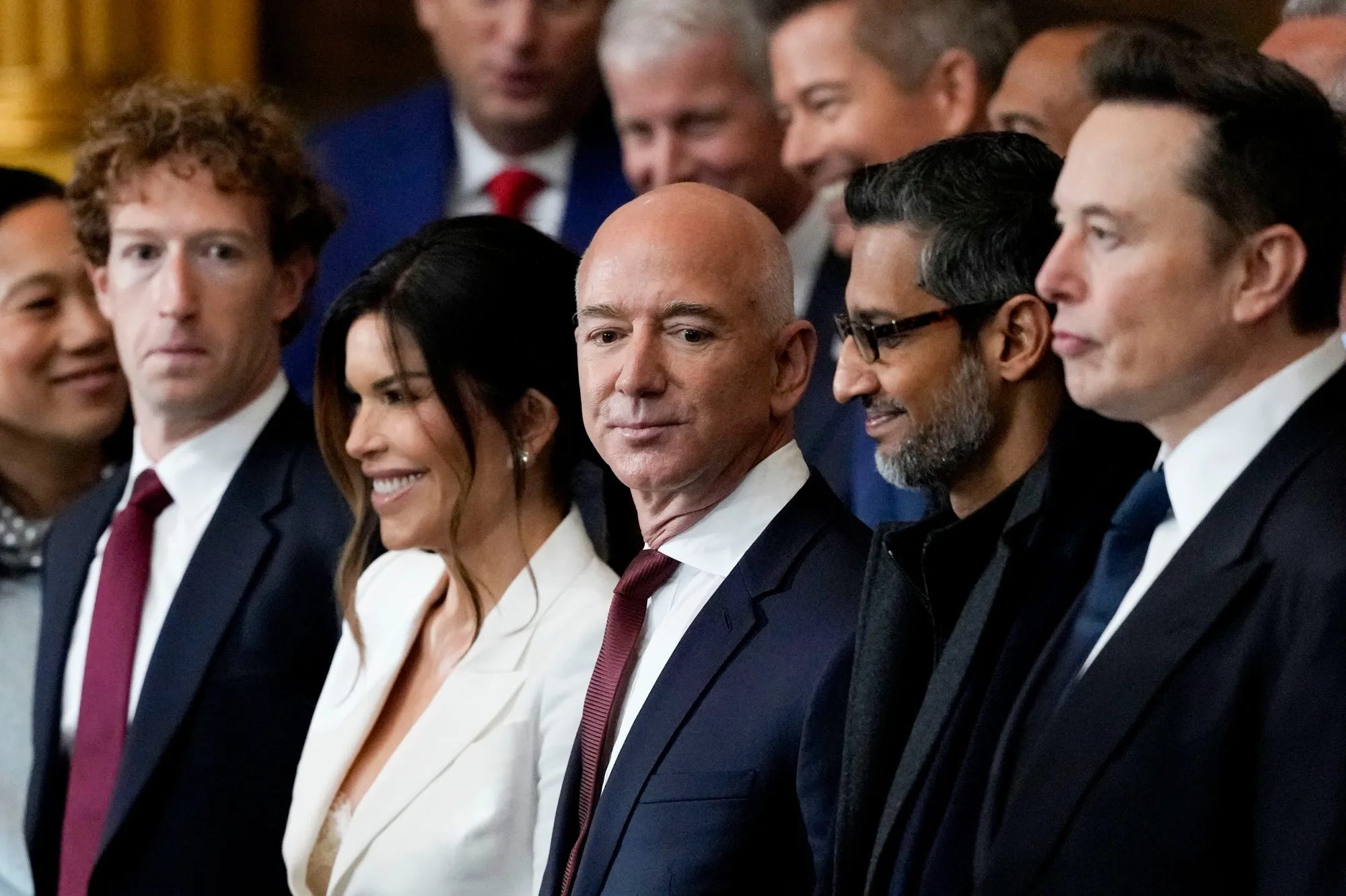
These billionaires are not disinterested observers of the American economy. They and the corporations they control operate at its highest reaches, with enormous interests in taxation, regulation, antitrust enforcement, labor law, government contracts, and the rules governing the accumulation and preservation of wealth.
That does not mean Jeff Bezos telephones an editor every morning with instructions about what may appear in the newspaper, although Bezos has demonstrated that an owner can directly change a publication’s editorial direction when he chooses. Nor does it require Larry Ellison, Rupert Murdoch, Elon Musk and Mark Zuckerberg to gather around a table and decide what Americans will be allowed to know.
The problem is more structural, more durable and, in some ways, more dangerous than a conspiracy.
The people and corporations with extraordinary economic power increasingly own or control the institutions through which Americans are supposed to understand economic policy and political power.
Then those institutions turn politics into a sporting event and give us a scoreboard. Turn on the television during an election and watch the big game.
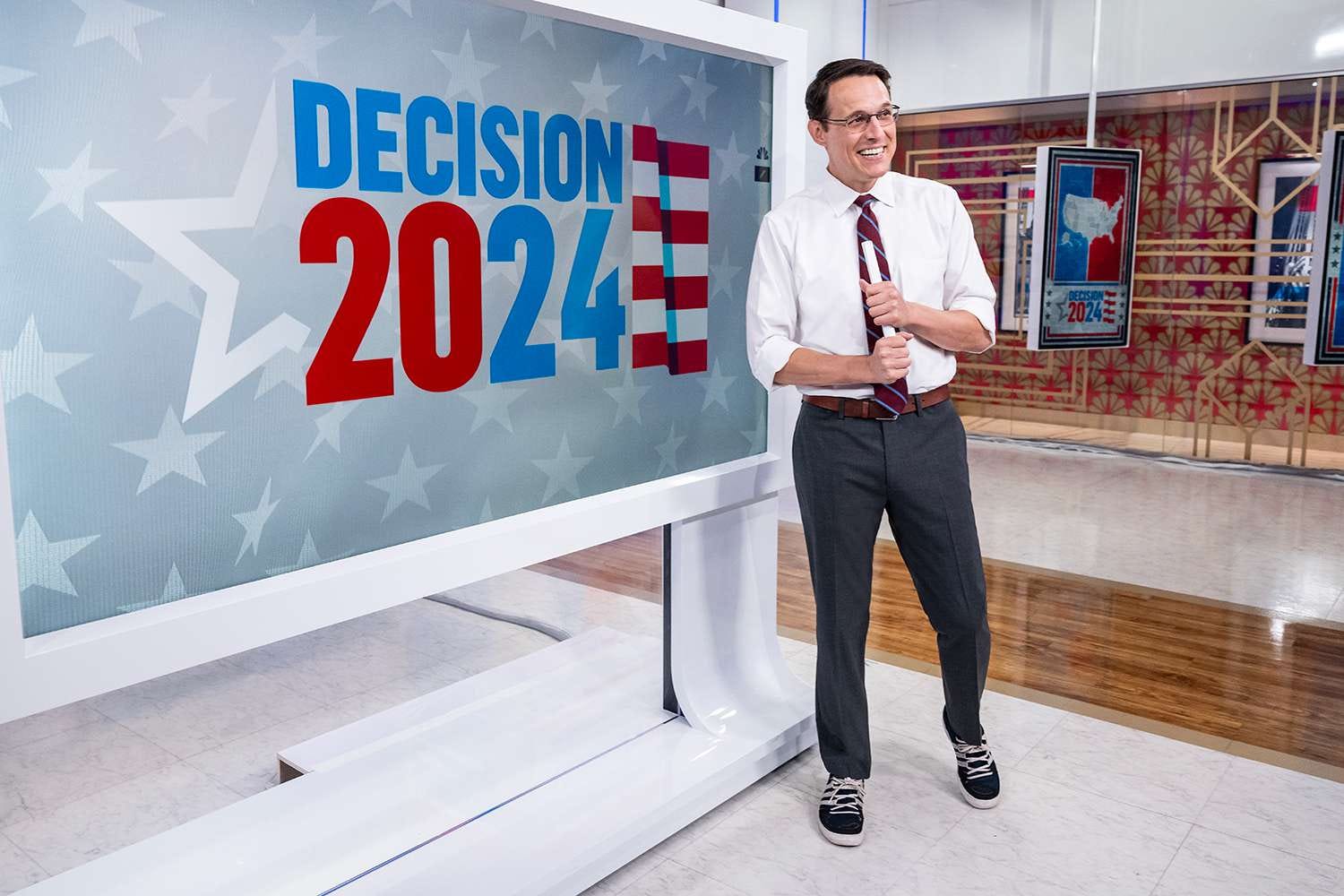
Democrats gain three seats. Republicans flip a district. A Trump-endorsed candidate surges. A progressive upsets a centrist. Democrats are in disarray. Republicans are united. A Democratic Socialist shocks the establishment. A Trump-endorsed candidate loses. The map turns red and blue as anchors stand before electronic boards analyzing battlegrounds, momentum, paths to victory, upsets, and comebacks.
Somebody lost. Somebody won.
Did you win?
There are powerful reasons to turn democracy into a sporting event, beginning with the simplest one. It makes money.
Conflict holds an audience. Polls generate almost limitless content. A political race supplies stories about rivalries, strategy, winners, losers, comebacks, and an election night “championship” with giant screens, flashing alerts, and breathless commentary.
Examining the consequences of elections is considerably more expensive.
It requires an array of analysts who understand economics, healthcare, education, climate, taxation, regulation, and law. It requires investigations, expertise, and institutional memory. Most importantly, it requires returning to a government policy six months or two years after the political drama has ended and asking what actually happened to the people who live with its consequences, suffer because of it, or, in some cases, die because of it.
The first victory for billionaire media owners: profit.
The second victory is: distraction.
A citizen trained to ask whether Trump is winning is less likely to ask whether Trump’s policies are working for him. When that same citizen is trained to celebrate a Republican victory or a Democratic victory, he has been encouraged to substitute the fortunes of a political party for the condition of his own family.
Consider how frequently political consequences are reduced to a question about the president himself.
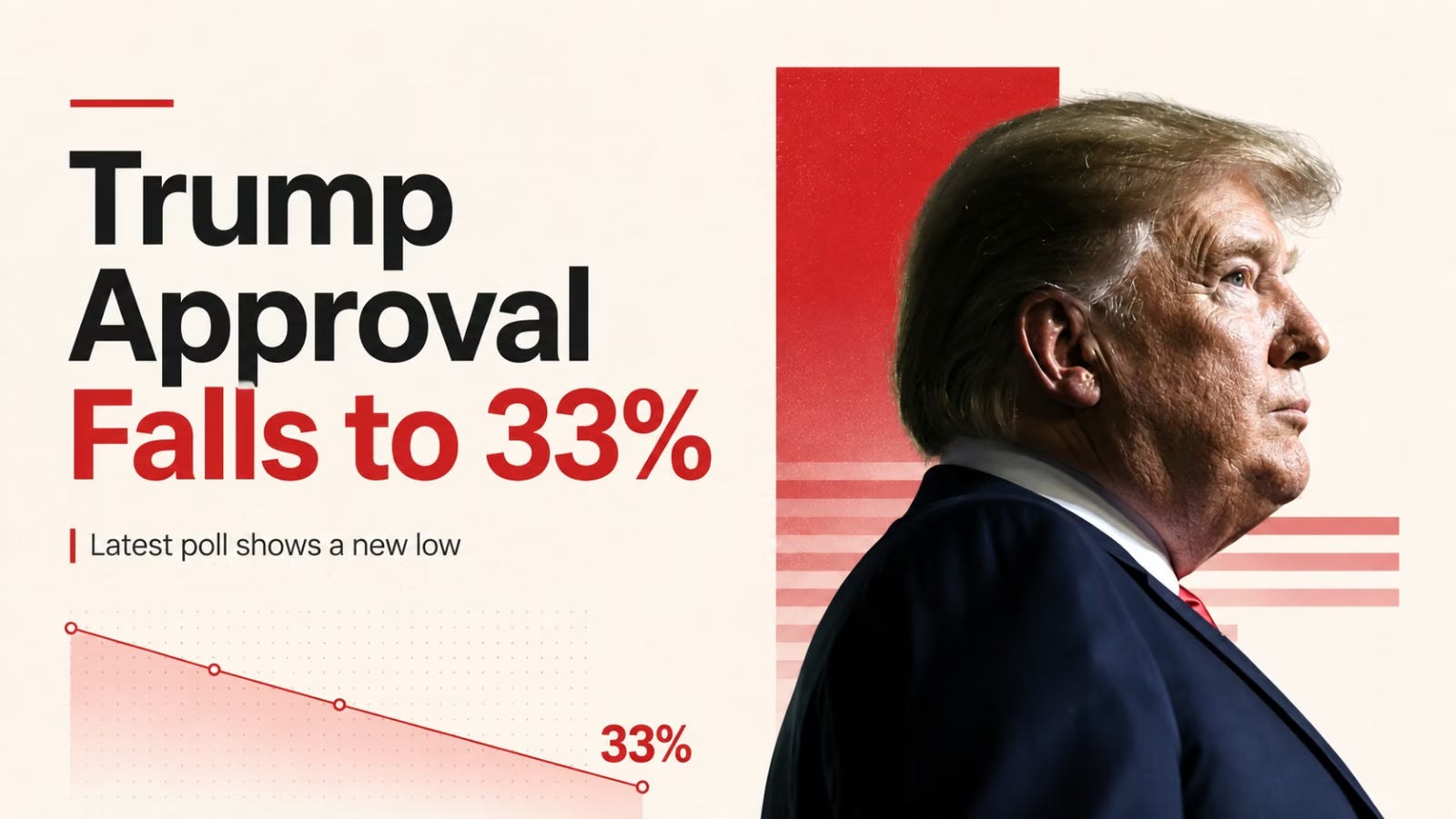
Will inflation hurt Trump? Will the growing debt hurt Trump? Will a war hurt Trump? Will abandoning our allies hurt Trump? Will economic anxiety hurt Trump? Will a Republican loss in a special election hurt Trump? Will declining consumer confidence hurt Trump?
Those may be legitimate political questions, but there is another question that should come first:
Does it hurt you and your family?
When tariffs raise the cost of something your family buys, the important outcome is not whether the price increase subtracts two points from Donald Trump’s approval rating. When Trump and Republican economic policies add another trillion dollars to the national debt, the important question is not whether Republicans can defend it in the midterms. When a tax bill like the OBBBA shifts enormous benefits toward billionaires while eliminating Medicaid coverage for ten million or more people, reducing vital services, weakening institutions, and increasing future tax and debt obligations for everyone else, its significance cannot be measured by which party gained three seats in Congress.
Election results tell us who gained power. They tell us nothing about whether families became more secure, communities became stronger, or the country left its children a better future. Those are the results that matter.
There is also a third victory in the sports model, and it may be the most valuable of all.
We blame each other. Division.

We are trained to look sideways. Republican against Democrat, MAGA against progressive, rural against urban, red state against blue state. Millions of Americans struggling with the same grocery prices, housing costs, medical bills, and fears for their children’s future are encouraged to believe that the great struggle of their time is against another American wearing the wrong political jersey or hat.
While we fight each other, wealth and power continue to concentrate upward.
Divided we are conquered.
Nearly forty years ago, Edward Herman and Noam Chomsky described ownership as one of the structural filters shaping American news in “Manufacturing Consent”. Their argument was more sophisticated than the caricature that followed it. A media system does not require an owner to dictate every story. Nevertheless, ownership establishes economic incentives and shapes perspective. Ownership helps determine which stories receive sustained attention, which questions are repeatedly asked, which experts appear on television, and which subjects disappear from view.
What Herman and Chomsky described in 1988 has not disappeared. The information system has become worse: more concentrated in the hands of a few, more technologically sophisticated, and far more deeply integrated into everyday life.
Bezos provides the clearest example because no inference about ownership is required. In 2025 he personally announced a new direction for The Washington Post’s opinion section, emphasizing personal liberties and free markets and excluding opposing views on those principles. The opinion editor resigned.
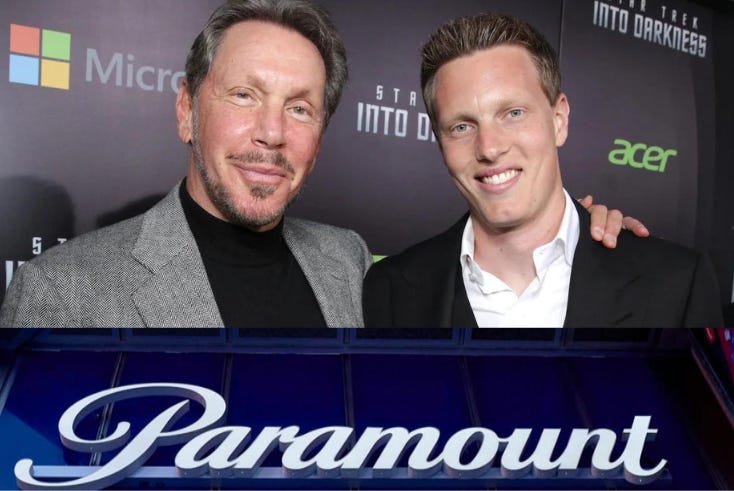
The Ellison family’s takeover of Paramount shows how billionaire media ownership and government power can become dangerously intertwined. Paramount owned CBS, including CBS News and 60 Minutes, which Trump sued over its editing of an interview with Kamala Harris. At the same time, Paramount needed FCC approval for its $8.4 billion sale to David Ellison’s Skydance.
One of the most important officials in that process was FCC Chairman Brendan Carr, whom Trump appointed to lead the agency. Carr was not simply another Trump appointee. He had written the Federal Communications Commission chapter of Project 2025, the Heritage Foundation’s comprehensive anti-democracy blueprint.
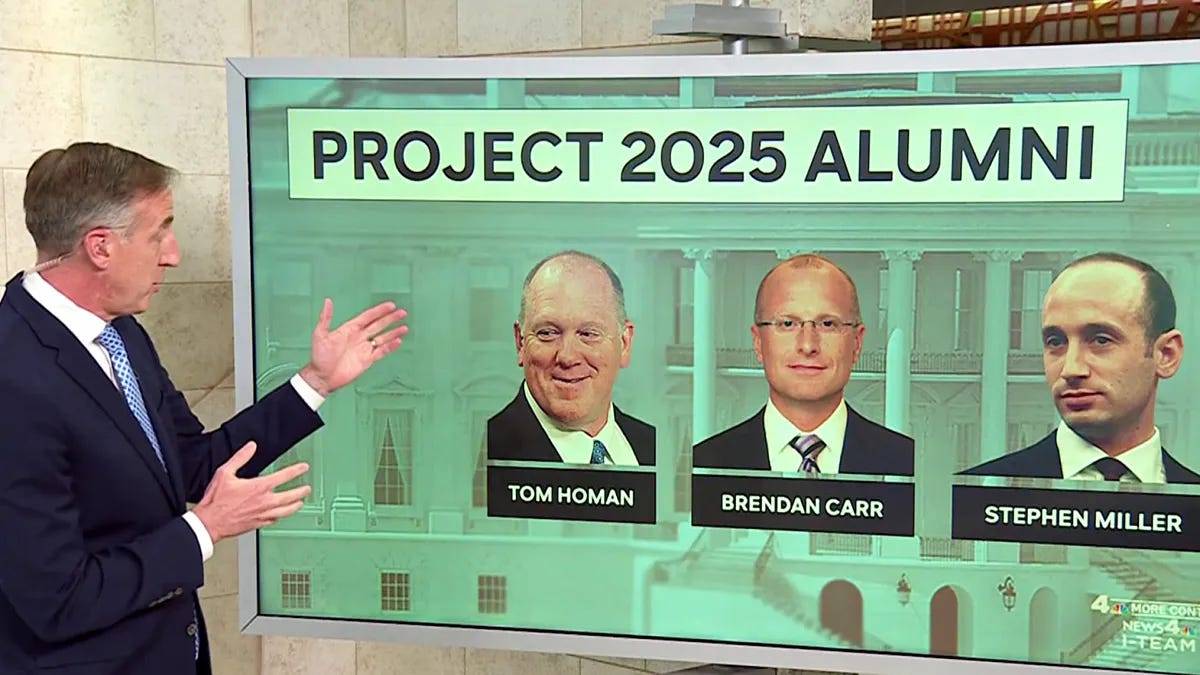
Carr’s FCC was also pursuing a complaint against CBS over that same 60 Minutes interview. Paramount ultimately agreed to pay $16 million to settle Trump’s lawsuit. Three weeks later, the FCC approved the sale to Ellison’s Skydance in a two-to-one vote, after Skydance made commitments concerning changes at CBS that Carr publicly welcomed. Carr maintained that Trump’s lawsuit played no role in the FCC’s decision, and there is no established evidence of an explicit quid pro quo. But that misses the larger and more troubling point.
A news organization responsible for investigating the President was owned by a corporation that needed his administration’s approval for an $8.4 billion transaction. The regulator overseeing that transaction had helped write Project 2025’s plan for the very agency he now controlled, while his FCC was simultaneously pursuing a complaint involving the journalism of the news organization seeking approval.
Carr made clear that journalism was relevant to his regulatory role. When the transaction was approved, he criticized Americans’ lack of trust in legacy national news and publicly welcomed Skydance’s commitment to make what he called “significant changes” at CBS. The lone dissenting commissioner, Anna Gomez, called Paramount’s settlement a cowardly capitulation and argued the complaints against CBS should have played no part in the Commission’s decision at all.
Then the concentration continued. With the Ellison family in control of Paramount and CBS News, Paramount pursued Warner Bros. Discovery, whose holdings included CNN, potentially placing another major American news organization within the same billionaire-controlled media empire. The Justice Department approved that $111 billion transaction in June, a decision Senator Elizabeth Warren said reeked of corruption and which California’s attorney general said had ignored the advice of the Department’s own staff. Twelve states sued to block it, and a federal judge issued a temporary restraining order in July.
No secret meeting is required to understand the danger, and no conspiracy theory is necessary. The problem is visible in the information structure itself: billionaire wealth buys media power, media companies depend on government decisions worth billions of dollars, and government possesses regulatory authority over broadcasters through licenses, merger approvals, and the public-interest obligations attached to the public airwaves. That regulatory authority was created to protect the public. Under Brendan Carr, it has increasingly been wielded against news organizations accused by Trump and his allies of bias, while Carr openly calls for a “course correction” in American media.
When a president attacks unfavorable journalism, when the FCC chairman threatens license consequences or accelerates reviews, when broadcasters seeking billion-dollar merger approvals are pressed to change newsroom practices, and when investigative reporting is answered with lawsuits, investigations, or accusations of treason, government is no longer merely regulating media in the public interest. It is using the machinery of regulation to influence the institutions responsible for scrutinizing government itself.
That is how a pillar of democracy can be gravely weakened without ever formally abolishing freedom of the press.
Sinclair Broadcast Group offers another version of the same problem, one that millions of Americans may have experienced without realizing it. The company owns or operates television stations reaching roughly forty percent of American households, but those stations still appear to viewers as familiar local ABC, CBS, NBC, or Fox affiliates. A viewer turns on the evening news expecting journalists rooted in the community and reporting on local concerns. Yet important editorial decisions and programming can originate at Sinclair’s corporate headquarters rather than in the local newsroom. Sinclair has required stations to air centrally produced segments, sometimes called “must-runs,” including political commentary and national stories selected by the parent company. Research published in the American Political Science Review found that Sinclair acquisitions increased national political coverage at the expense of local coverage and shifted station content to the right, even as the acquired stations lost viewers. More recent research reaches the same conclusion about nationalization and polarization.
That distinction matters because the power is partly hidden from the viewer. What looks like independent local journalism can also serve as a distribution network through which one corporate owner delivers the same political framing to communities across the country.
Then there are the social platforms.
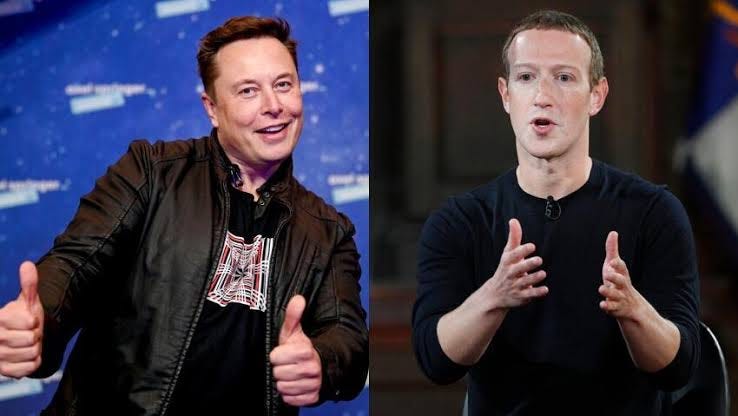
Facebook, Instagram, and X are not newspapers in the traditional sense, but they occupy a uniquely consequential position. Their owners control systems that help determine which newspaper story, television clip, political argument, or piece of disinformation reaches millions of people in the first place.
This creates a conflict at the center of American democracy that deserves far more attention.
The institutions responsible for scrutinizing concentrated power are increasingly controlled by concentrated power.
These owners have enormous stakes in the very questions their organizations are supposed to help Americans understand. How should hoarded wealth be taxed? Should unrealized capital gains pass between generations without ever being taxed as income? How aggressively should monopolies be challenged? What rights should workers possess? How much should corporations pay in taxes? How much should government regulate? Who should finance the enormous public debt? What should happen when private fortunes grow larger than the economies of entire countries?
A media organization can report every election result accurately and still obscure the answers to those questions.
It merely has to keep us watching the scoreboard.
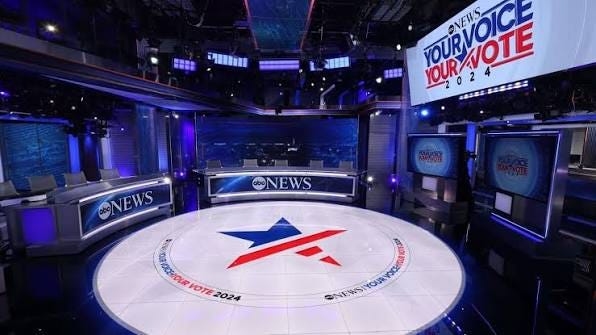
There is nothing inevitable about covering elections as sporting events. American broadcasting once operated under a very different idea of its responsibility to the public. For decades, the Fairness Doctrine required television and radio stations using the public airwaves to cover important controversial issues and provide reasonable opportunities for contrasting viewpoints. It did not require equal time for every opinion, but it rested on a principle that seems almost quaint today: broadcasters were granted access to valuable public airwaves and therefore owed something to the public in return.
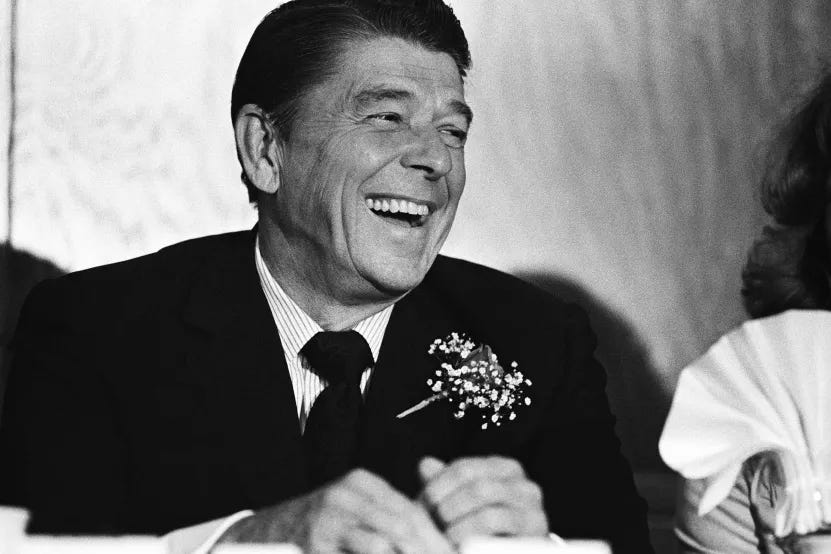
That public obligation was dismantled during the Reagan era. The FCC repealed the Fairness Doctrine in a four-to-zero vote in August 1987, and when Congress passed legislation that would have written it into law, Reagan vetoed it. Congress could not assemble the votes to override him. The change did not single-handedly create today’s partisan and billionaire-dominated media system, but it removed an important public-interest guardrail just as American media was moving toward deregulation, consolidation, and eventually the enormously profitable world of cable television and digital platforms.
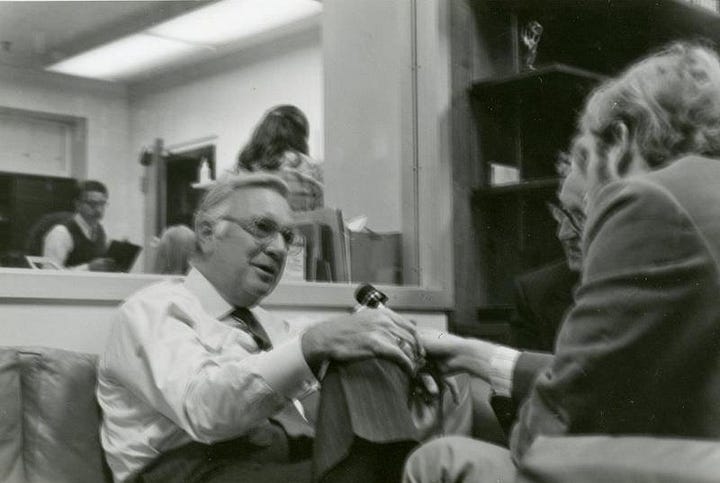
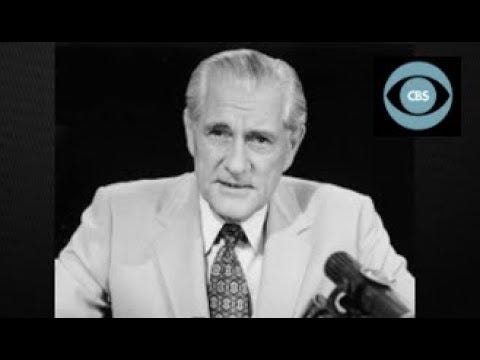
Something else was lost along the way: the expectation that news should help citizens understand what government was actually doing. CBS once put Eric Sevareid alongside Walter Cronkite not to predict who would win the next election, but to analyze events and explain their meaning. Networks still employ excellent analysts today, but the center of gravity has shifted toward panels, polling, personalities, partisan conflict, and the endless question of who is winning.
For people who already possess extraordinary economic and political power, that is an exceptionally convenient form of citizenship. It turns us into divided hyper-consumers, reduced to what Elon Musk has derisively called non-player characters. We are all NPCs in Musk’s world.
The consequences of elections extend far beyond economics.
Since September 2025, the United States military has conducted more than sixty strikes on small boats in the Caribbean and eastern Pacific, killing more than two hundred people without charges, trials, or publicly released evidence establishing wrongdoing by the people killed.
A running record of every strike is publicly available.
On the first morning of the war on Iran, a missile hit the Shajareh Tayyebeh elementary school in Minab. Amnesty International documented 156 dead, including 120 children, and concluded that the strike was unlawful. Human Rights Watch reported an even higher death toll. The United States military’s initial assessment found that American forces were likely responsible. Trump denied responsibility and suggested another country might have fired the missile.
American service members have died in Trump’s war on Iran and hundreds have been wounded. The Pentagon later revised its casualty database after reporters questioned discrepancies in the count.

The human cost of federal immigration enforcement reaches far beyond the cases that became national headlines. Immigrants and people of color have been killed, injured, detained, and separated from their families. Workers have disappeared from jobs, children have missed school, and people who have every legal right to be in the United States have avoided workplaces, hospitals, churches, and public spaces because an encounter with federal agents could mean detention, interrogation, or being swept into an enforcement action. The larger question is what happens to a society when people become afraid of their own government, when parents hesitate to send children to school, when workers fear going to their jobs, when families avoid seeking medical care, and when entire communities begin organizing daily life around the possibility that federal agents may appear.
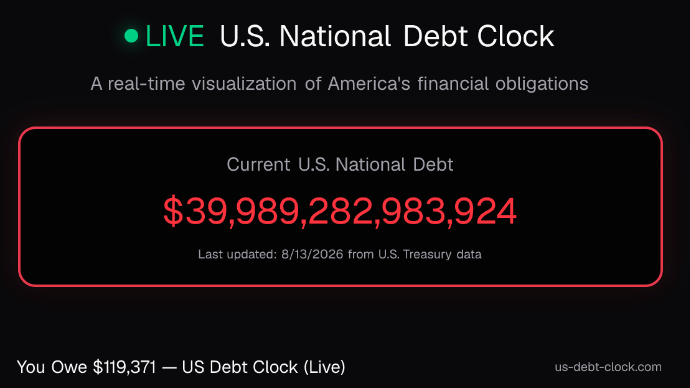
The debt is public. The interest payments on the debt are public. The wage data are public. The tax provisions are public. The billionaire wealth gains are public. Housing insecurity is visible on our streets. Food insecurity is visible in lines at food banks. Overcrowded school classrooms are visible. Gun violence is visible. Torrential rain, extreme storms, and wildfire evacuations are visible. Pipeline disasters are visible. Environmental destruction is visible.
The information exists.
What is missing is a media system willing to connect the dots: from policy to consequence, from consequence to suffering, and from suffering to those who made the decisions and those who profited from them.
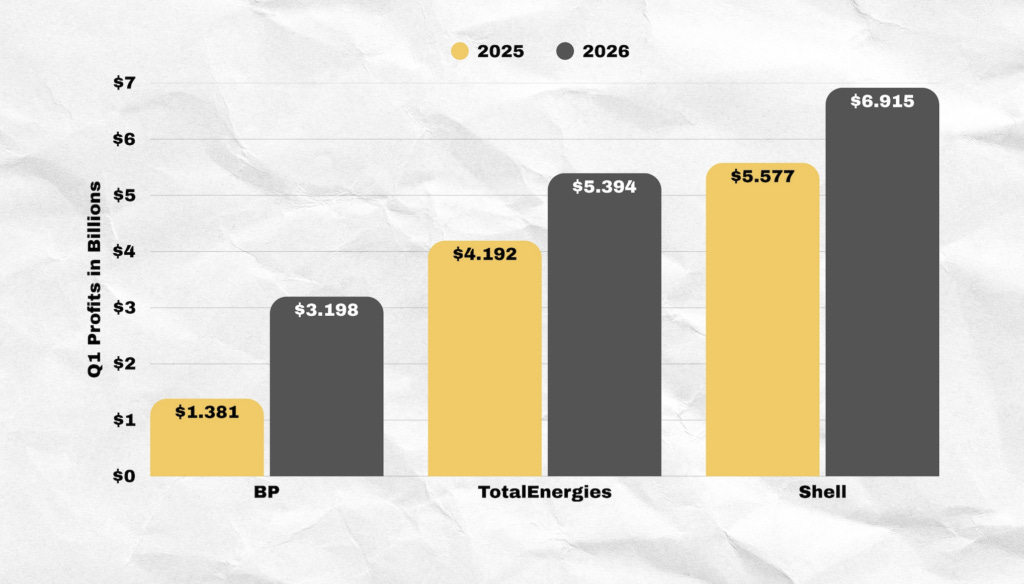
Instead, the consequences are broken into separate stories. A tariff story happens on Monday, an inflation report on Tuesday, Medicaid cuts on Wednesday, another debt projection on Thursday, and a poll about Trump’s approval rating on Friday. Each may be accurately reported, but rarely are they assembled into the governing record they collectively represent.
Then Sunday morning arrives and the panels gather to tell us who had a good week.
That is how consequence disappears into political theater. The question becomes whether the latest economic numbers are bad for Trump rather than whether they are bad for you. Whether Republicans can hold Congress rather than whether families can hold onto their homes. Whether Democrats can capitalize on public anger over corruption rather than why the public is angry in the first place.
A government can make millions of lives harder while the media covering it remains consumed with which political team will benefit from the damage.
That is the trick of the scoreboard. It turns our suffering into somebody else’s political gains and losses, and then asks us to keep watching to find out who wins.
We’ve been trained to look suspiciously at one another, divided by fear, anger, and outrage. The question we are less often encouraged to ask is who actually bought the power that shapes our societal divisions. Who wrote the tax provisions and financed the campaigns? Who received the government contracts or benefited from deregulation? Who owns the network explaining these policies or the social platform on which we argue about them? Most importantly, when the consequences are finally measured, who became richer, who became poorer, who paid, and who collected?
This article is not an argument that the wealthy are inherently evil. There is a significant difference between those who earn wealth and those who extract and hoard it. I’ve written previously about that distinction in articles such as “Wealth and Tyranny.”
The problem is structural. A healthy democracy should be profoundly uncomfortable when a tiny number of extraordinarily wealthy people possess not only immense economic power, but also extraordinary influence over the institutions through which the rest of us are informed.
Any meaningful democracy requires an informed, educated, and engaged society.
The danger becomes greater because candidates have become financially dependent on political donors who possess enormous concentrations of wealth. Modern political campaigns consume staggering amounts of money, and since Citizens United and the decisions that followed opened the door to unlimited independent political spending, candidates and parties operate in a system where access to billionaires and enormous pools of private capital can determine who can afford to run. The relationship is less an affinity than an addiction. Politicians may condemn the influence of big money while returning to it election after election because the system demands another dose.
Tax policy can then favor accumulated wealth over worker wages. Societal protections enforced through regulation can be weakened or destroyed, antitrust decisions can create or preserve fortunes, public functions can be transferred to private interests, and political campaigns return to the same wealthy donors whose interests are affected by those decisions.
The result is a self-reinforcing cycle in which wealth purchases influence, influence helps shape policy, favorable policy produces still greater concentrations of wealth, and those fortunes finance the next election and acquire still more of the institutions through which Americans understand what their government is doing.
While that cycle continues unabated and the so-called “American Dream” dies a slow death, we are encouraged to keep arguing over red and blue, left and right, Republican and Democrat.
While we fight, billionaires, aided by favorable rulings from the Roberts Court, are wielding vast private fortunes as political power. Power over elections, government, media, technology, and the information we use to interpret the erosion of democracy
We are encouraged to watch the scoreboard while billionaires extract more wealth in the darkness their power helps create.
The failure of American media is not that it occasionally gets the score wrong. The deeper failure is that the scoreboard itself has become a distraction from the purpose of democracy.
We are asked whether Democrats are winning while families struggle to afford housing, whether Republicans can hold Congress while the country assumes trillions of dollars in new obligations, and whether Trump’s economic failures will damage him politically while wages, prices, public services, and the country’s future determine the actual quality of people’s lives. Even the contest between progressives and centrists can consume more attention than the question confronting millions of families: will their children inherit economic opportunity, access to a decent education, or even a livable planet?
Those questions are being filtered through institutions increasingly controlled by people who have prospered spectacularly under the political economy those institutions are supposed to scrutinize. They do not need to fabricate the news, conceal election results, or issue instructions telling Americans what to believe. The system works more subtly than that. It simply has to keep persuading us that the contest is the story and that victory for our preferred political faction is somehow the same thing as victory for us.
Your political party is not your family, a candidate is not your quarterback, and an election is not the Super Bowl. Defeating somebody you have been trained to despise may feel satisfying, but it is not a public policy, and it does not put food on the table, reduce the rent, improve a nearby school, provide healthcare, or leave your children a country made great again.
If your party wins while your wages fall, your housing costs rise, your healthcare becomes less secure, your children’s schools deteriorate, and your government passes trillions of dollars in additional debt to the next generation, you have every reason to question what you “won.”
So the next time television tells you that Democrats won, Republicans lost, MAGA prevailed, progressives surged, or centrists held the line, look beyond the scoreboard and judge the result by what actually matters. Is your family better off? Is your neighborhood stronger? Is your community better able to care for the people who live there? Will your children inherit a country that is more prosperous, more democratic, and more capable of providing opportunity and upward mobility than the country you inherited?
Because if millions of Americans are losing ground while Musk, Ellison, Bezos, Adelson, Mellon, Zuckerberg, Thiel, and a select few others accumulate ever greater wealth and convert it into vastly greater influence over our elections, government, media, and public life, perhaps we have been looking in the wrong direction.
Democracy is not a game, and we are not sitting safely in the stands watching the political players block, tackle, and score.
We live on the field that is shaped by our vote and our actions.
Thank you for reading Leadership Matters! This post is freely available and public. Please consider sharing with others.
If you find this article of value, please do share with friends, associates, & others who have an interest in the content.
Please note that my articles and subscriptions are not paywalled. This stems from a guiding principle -that any meaningful democracy requires an informed, educated, and engaged society. It is also to honor the life of Aaron Swartz.
Aaron held firmly to the belief that research and knowledge intended for the betterment of humanity should be freely shared.
If the problem is extraction, then the response must be construction.
I am building Civic Works and its core platform, civ.works, as a direct alternative to the systems that have captured our data, our attention, and our civic life. This is a 501(c)(3) effort to create infrastructure that serves the public, not exploits it.
The goal is simple and necessary. A subscriber-supported, ad-free civic network where people can access trusted information, engage constructively, and take meaningful action without being tracked, manipulated, or sold.
No ads. No data harvesting. No hidden incentives.
Just people, information, and the tools to participate in a functioning democracy.
This kind of infrastructure will not be built by the same forces that benefit from the current system. It has to be built by us.
That is why we are asking for direct public support.
If this work resonates with you, I am asking you to make a simple commitment. Visit the pledge page and commit to supporting civ.works at launch. A small monthly contribution, combined across thousands of people, creates the independence required to build this platform without compromise.
https://civ.works/pledge/pledge.html
This is not just about funding a project. It is about proving that a different model is possible. One where civic infrastructure is accountable to the people who use it, not the interests that seek to exploit it.
If you believe the current system is failing, this is one way to begin rebuilding it.
And if you cannot contribute financially, sharing this effort with others is just as important.
The system we have was built deliberately.
What comes next can be built the same way.
Aside from writing, mentoring others, and projects related to democracy, economics, and social innovation, I’m dedicated to Civic Works, a 501c3 non-profit organization building and managing technology that blends social networking and civic engagement. Our core effort is around civ.works. When complete, it will be a subscriber-supported, ad-free social network that does not betray subscriber trust by selling or sharing data with marketers or sinister political operatives.
I’m incredibly grateful for all who contribute to the civ.works effort through our secure payment processor, Stripe, and all who help us gain visibility by sharing the project with journalists and others to move the effort forward.
Special appreciation for all who continue to recommend my rants and musings, restack articles that are found to be worthy, and share with friends and family. And the following are some special recommendations for stacks I value -
Liz Oyer, Former DOJ Pardon Attorney
Comments
Nothing yet. Say the first thing.
Sign in to join the conversation.