

America did not arrive at this moment because a storm struck without warning. The people entrusted with governing the country had the forecasts.
Congress had the deficit projections before it passed the One Big Beautiful Bill Act (OBBBA). Congressional Members knew that millions of Americans would lose health insurance as a consequence of the legislation. The administration knew the condition of American missile inventories before entering the war with Iran. It knew how dependent American agriculture had become on immigrant labor before dramatically expanding arrests, imprisonment, and deportations. It knew that fires, floods, extreme heat and other climate-driven disasters were imposing growing costs on communities while institutions responsible for forecasting, alerting, and disaster response were being hollowed out. It heard what longtime allies were saying about the declining reliability of the United States as a global partner.
And all of this occurred while the country was approaching $40 trillion in gross federal debt.
The forecast warnings, in other words, were not absent. Some were disregarded. Some consequences were accepted in pursuit of other political objectives. Some warnings collided with incompetence. Some responsibilities were entrusted to appointed officials whose experience, judgment or independence raised profound questions about whether they were capable of managing the institutions placed in their hands. And some of what has happened raises a darker question about the growing intersection between American government and private wealth.
Sadly, there are no formal indictments stemming from this article, no one is being charged here, and there will be no judge instructing a jury after the case has been presented. But there is something useful about approaching the record with the discipline a prosecution requires. An allegation is not evidence. Chronology alone does not prove causation. A conflict of interest is not automatically quid pro quo corruption, incompetence is not the same thing as an intent to destroy, and a bad outcome does not by itself establish wrongdoing.
In an attempt at fairness, I will give the defense every fact to which it is entitled, then look carefully at what remains. And what remains is a thoughtful review of a pattern of decisions, directives, and actions by the Trump-Vance Administration, and the GOP-controlled Congress.
Donald Trump is not responsible for every weakness in the United States, nor was every damaging consequence of his second administration intentional. Some problems have been intractable for generations. Some policies reflect dangerous ideology rather than vindictive malice. Some failures appear to be the consequence of recklessness or extraordinary incompetence. Other actions have created conflicts of interest and opportunities for self-enrichment that were unimaginable in previous administrations.
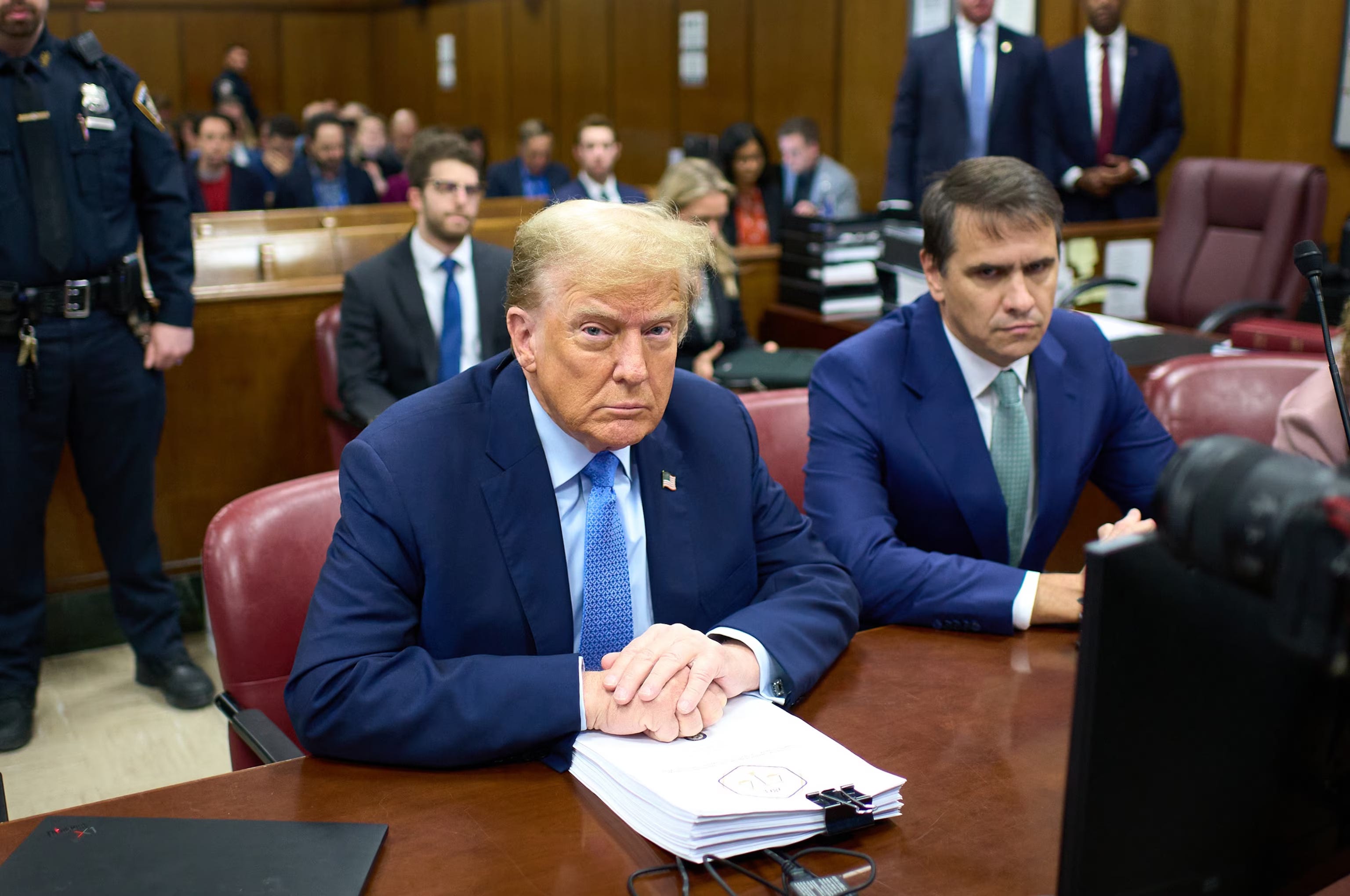
But responsibility does not disappear merely because every consequence was not intended. When a government is warned that its policies will add trillions of dollars to the debt, reduce health coverage and food assistance, disrupt labor markets, weaken emergency response, consume military stockpiles and damage alliances, and proceeds anyway, the resulting harm cannot simply be dismissed as bad luck. Nor can damage this deep be readily undone by firing a cabinet official after the consequences have begun to spread. Pam Bondi was removed as Attorney General in April 2026 and replaced by the president’s former personal criminal-defense attorney.
When loyalty to an individual or a political party repeatedly takes precedence over strengthening the country, defending the rule of law, preserving competent institutions, and improving the lives and opportunities of ordinary Americans, incompetence is no longer merely a personnel problem. It becomes part of the indictment.
The case, then, is not that America is doomed, that decline is inevitable, or that every serious problem confronting the country began on January 20, 2025. The case is narrower and, in some respects, far more troubling.
The United States entered this period possessing extraordinary reserves accumulated over generations: enormous financial capacity, scientific expertise, agricultural abundance, military power, functioning public institutions, trusted economic data, a professional civil service, disaster-response capability for the entire country, an extensive network of alliances and a social safety net designed to keep individual misfortune from becoming catastrophe. Perhaps most valuable was something harder to measure: the confidence of Americans and much of the world that, however chaotic our politics became, the machinery of the American state would continue to function.
Confidence in our stability constitutes value as surely as money in the Treasury.
The consequences of Trump’s incompetence, failures, cruelty, corruption and abuse of power cannot be measured in dollars alone. They include the people killed, imprisoned, displaced and terrorized by government actions; children killed in war; lives taken without due process; violent January 6 offenders returned to the streets through presidential pardons; families deprived of health care and food assistance; communities left more vulnerable to disaster; and a country whose institutions, alliances and military capacity are being hollowed out. Much of that damage has already been done. Much more of its cost, economic, strategic, institutional and human, is only beginning to come due.
The witnesses in this case are not campaign surrogates, cable-news commentators, or pundits screaming propaganda and lies into a microphone, intending to create outrage and hate. The witnesses are the institutions whose job is to count: the Congressional Budget Office (CBO), the Bureau of Labor Statistics (BLS), the Congressional Research Service (CRS), the Department of Agriculture (USDA), military planners, economists and the organizations that measure how the rest of the world views the United States.
Taken separately, each piece of evidence can be explained away as another policy dispute between Republicans and Democrats, another disappointing economic report, another troubled agency or another foreign-policy controversy. The architecture of decline becomes visible only when they are placed beside one another to form a pattern.
We begin with the balance sheet.
The gross national debt is already approaching $40 trillion. The Congressional Budget Office (CBO) projects gross federal debt of roughly $64 trillion by 2036. Debt held by the public, the measure economists generally consider more significant, is projected to reach roughly $56 trillion, approximately 120 percent of the nation’s gross domestic product. Net interest payments, already around $1 trillion annually, are projected to reach approximately $2.1 trillion a year by 2036. This equals nearly $13,000 for every employed American, every year. $13,000 of taxes before one dime is spent on education, housing, defense, debt reduction, or anything else. Can you imagine setting $13,000 on fire every April 15 throughout your working lifetime?
If I examine my credit card statement, I know how much I owe, the interest rate charged, and I can see what I purchased. A couple of large computer monitors. A computer that’s almost fast enough to satisfy my over-caffeinated impatience. A plane ticket and a hotel reservation. When considering the national debt, the numbers are enormous enough to lose their meaning, which is why it is useful to ask the question a prosecutor might ask of any disputed expenditure: What did we buy with our $40 trillion?
Debt held by the public last approached this level during the Second World War, when it peaked at 106 percent of GDP in 1946. The 120 percent projected by the CBO for 2036 would exceed the wartime record. The debt America incurred then financed factories, shipyards, aircraft, and armies that defeated fascism. In the decades that followed, federal borrowing helped finance infrastructure, education, scientific research, and investments that expanded the productive capacity of the country.
Debt was not painless, but much of it purchased assets from which later generations benefited. It was not reckless spending on tax cuts for billionaires, we bought infrastructure with our tax dollars.
The current budget picture looks very different.
The non-partisan Congressional Budget Office (CBO) estimates that the 2025 One Big Beautiful Bill Act (OBBBA) added $4.7 trillion to projected deficits over the coming decade, after accounting for changes in the economy and related debt-service costs. The administration’s reduction in immigration adds another $0.5 trillion, because immigrant labor generates net tax revenue to our country. (Don’t take my word for it: https://www.cato.org/blog/immigrants-pay-more-taxes-average-person.)
The OBBBA contains provisions that the CBO projects will increase some economic output, and, in fairness, those effects belong in the record as well. However, they do not erase the arithmetic.
One caveat about those projections strengthens the case rather than weakening it. CBO published them on February 11, 2026. Nine days later the Supreme Court ruled that a large share of the tariff revenue the baseline counted on had been collected illegally, and the administration was forced to terminate those tariffs. Americans had already paid that money, because tariffs are collected from importers and passed through to consumers in the price of goods, which is why CBO's own economists expected their removal to ease inflation. The refunds, roughly $175 billion in potential claims, go to the companies that filed the customs entries, not to the households that were forced to pay more for goods and absorb the cost. The CBO subsequently estimated that the termination increases projected deficits by another $2 trillion through 2036. Every debt figure in this section is the optimistic version. Tariffs are nothing more than an intentionally hidden sales tax on consumers.
By 2036 the interest payment on the debt must be satisfied before the federal government spends one dime to repair a road, fund a school, deploy a disaster team, replenish defense, finances scientific research or provides medical care. That matters because CBO has repeatedly warned that a high debt burden reduces the government’s flexibility when something unexpected occurs.
And something unexpected always occurs.
Every competent organization tries to maintain a contingency reserve for precisely that reason. The reserve is not waste. It is the ability to respond to a future crisis whether in the form of a recession, a war, a pandemic, a banking collapse, a hurricane or something that has not yet entered our vocabulary.
America accumulated such contingency over generations some in real wealth, some in good faith earned by our perceived stability. The question raised by the current fiscal trajectory is no longer merely how much we owe. It is how much capacity will remain when the next emergency arrives.
The second exhibit is where the enormous numbers and abstractions of federal budgeting become human.
The OBBBA created a national Medicaid community-engagement requirement for specified adults. In practice, many recipients must document at least 80 hours a month of qualifying work, education, community service or similar activity in order to retain coverage. The nationwide requirement begins January 1, 2027, unless individual states implement it sooner. Forty-three states and the District of Columbia are covered.
The midterm election occurs November 3, 2026. Fifty-nine days after the election the new nationwide requirement is implemented.
That calendar does not, by itself, prove that Congress deliberately chose the date to conceal the consequences until after Americans had voted. The evidence should not be stretched beyond what it can establish. What can be established is that millions of voters will go to the polls before one of the law’s most consequential provisions is fully felt, and that Congress had estimates of its likely effects when the law was passed.
The CBO estimates that the Medicaid work requirement alone will reduce federal Medicaid spending by hundreds of billions of dollars and cause millions of additional people to become uninsured. The administration’s own numbers are more specific. The Centers for Medicare & Medicaid Services (CMS) projects that the requirement will cut federal Medicaid spending by $350.3 billion over ten years, and attributes those savings primarily to 3.1 to 3.3 million people a year losing coverage. Taken together, the health provisions of the legislation are projected to leave roughly 10 million more Americans without insurance by 2034 than under the previous baseline.
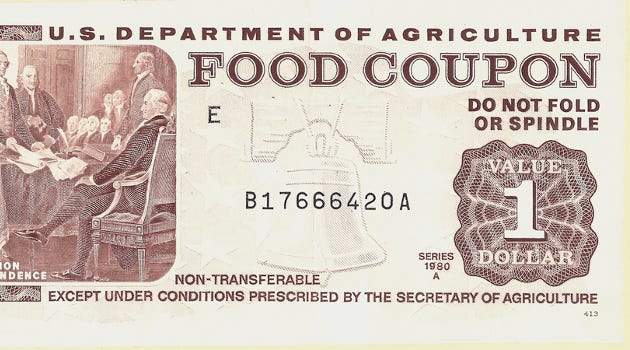
The same legislation makes historic reductions in food assistance, including expanded work requirements for Supplemental Nutrition Assistance Program (SNAP). CBO projects the changes will lower SNAP enrollment by an average of 4.7 million people, with reduced allotments of food stamps for many of those who remain. Again, the GOP describes these reductions as savings, and in a narrow accounting sense they are. The federal government spends less money.
It is merely an accounting trick.
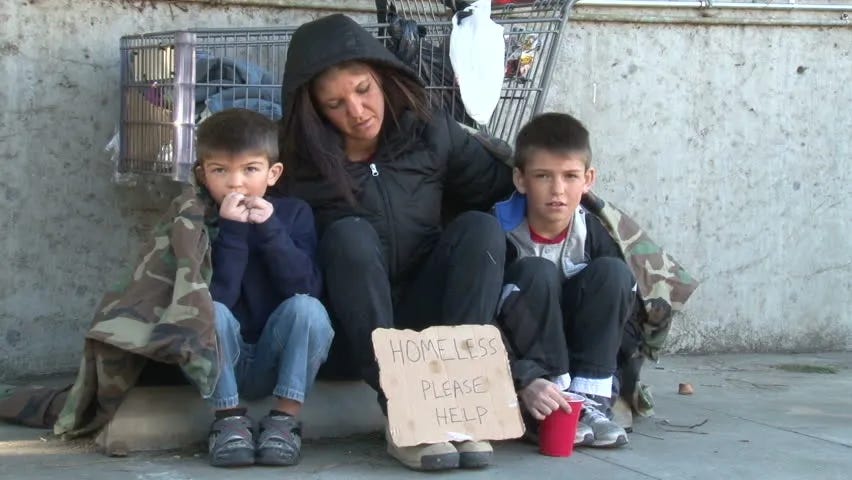
Because the hunger of impoverished families and children does not disappear when the federal appropriation disappears. The costs shift to a state governments already trying to balance its budget, to a food bank attempting to stretch donations, to a church pantry, to a hospital emergency room, to a landlord waiting for rent, or to another family member with barely enough resources of her own. Sometimes it simply remains with the person who cannot pay and becomes another unhoused statistic.
This is where national decline becomes personal, because poverty seldom arrives as one cinematic plunge from security to homelessness. More often it is a sequence. A worker loses hours. Income falls. Food becomes more expensive. A Medicaid renewal becomes difficult or coverage disappears. A prescription goes unfilled. A utility payment is postponed so rent can be paid. Then rent falls behind. The car breaks down, making employment harder to reach. A family stays temporarily with relatives, then in a motel, then perhaps in a vehicle or shelter.
A functioning safety net exists partly to interrupt that progression before one misfortune compounds into unrecoverable suffering.
The United States is weakening those protections at precisely the moment when the economic margin for millions of families appears to be narrowing.
The July employment report did not establish that America is in recession. It did, however, provide evidence that should make policymakers considerably more cautious about weakening the systems that support people when employment falters.
The Bureau of Labor Statistics reported on August 7, 2026, that the economy lost 23,000 jobs in July. More troubling were the revisions. Employment for May was revised downward by 66,000 jobs and June by another 37,000, meaning that 103,000 jobs Americans had previously been told existed disappeared when the estimates were corrected.
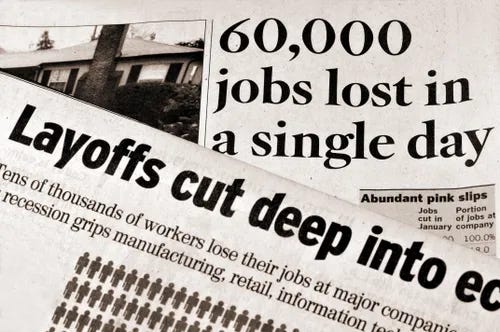
The unemployment rate remained 4.1 percent, hardly a depression-era number. But labor-force participation had fallen to 61.4 percent, its lowest level since 1976 outside the pandemic years, the number of people on temporary layoff had increased sharply, and approximately one quarter of unemployed Americans had been without work for at least twenty-seven weeks.
At the same time, inflation has not vanished. Consumer prices in June were 3.5 percent higher than a year earlier. The improvement in the monthly headline number depended heavily on a sharp decline in energy prices, while food and other household expenses remained elevated.
None of this proves imminent economic collapse, and describing it that way would weaken rather than strengthen the case. Economies fluctuate. Employment reports are revised. Inflation rises and falls.
The significance lies in the interaction of these trends with everything else.
A moderately weakening labor market is manageable when households have savings, health coverage, reliable food assistance and affordable housing. Persistent inflation is manageable when wages are rising strongly and employment is abundant. A medical emergency is manageable when insurance coverage is secure. Each shock becomes more profound as those buffers disappear.
A country does not require a depression for millions of people to suffer. It requires only millions of households with no margin for another loss.
Food provides one of the clearest examples of Trump-Vance GOP policy failures colliding with physical reality.
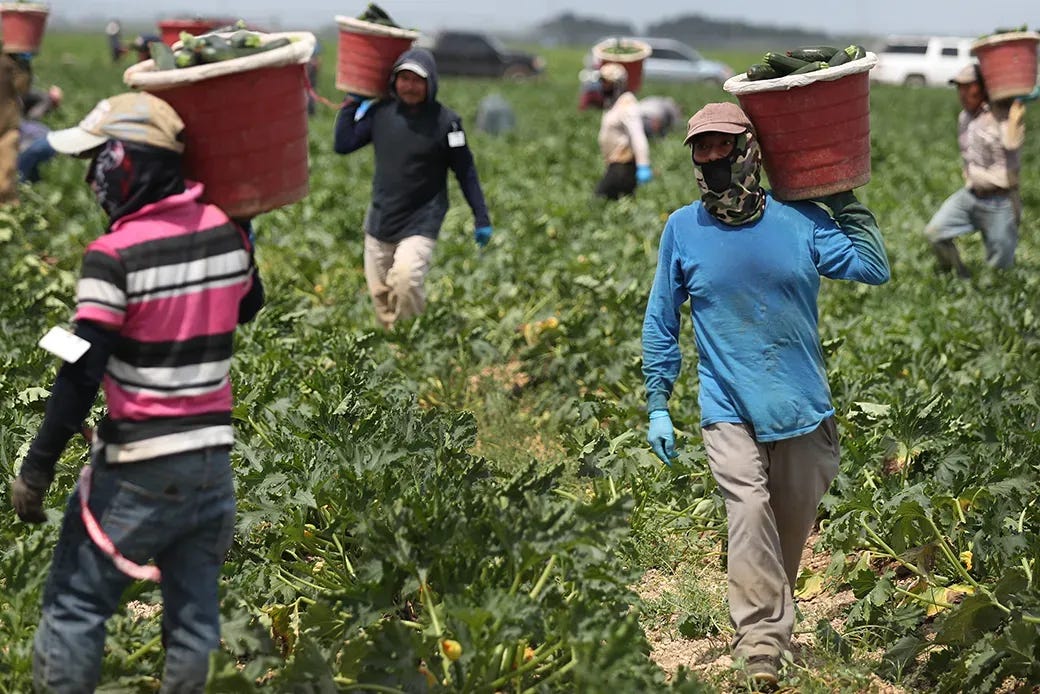
According to the Department of Agriculture, 42 percent of hired crop farmworkers held no legal work authorization in 2020 to 2022. Whatever one believes immigration policy should ultimately become, American agriculture has evolved into an industry structurally dependent on a workforce deeply exposed to immigration enforcement.
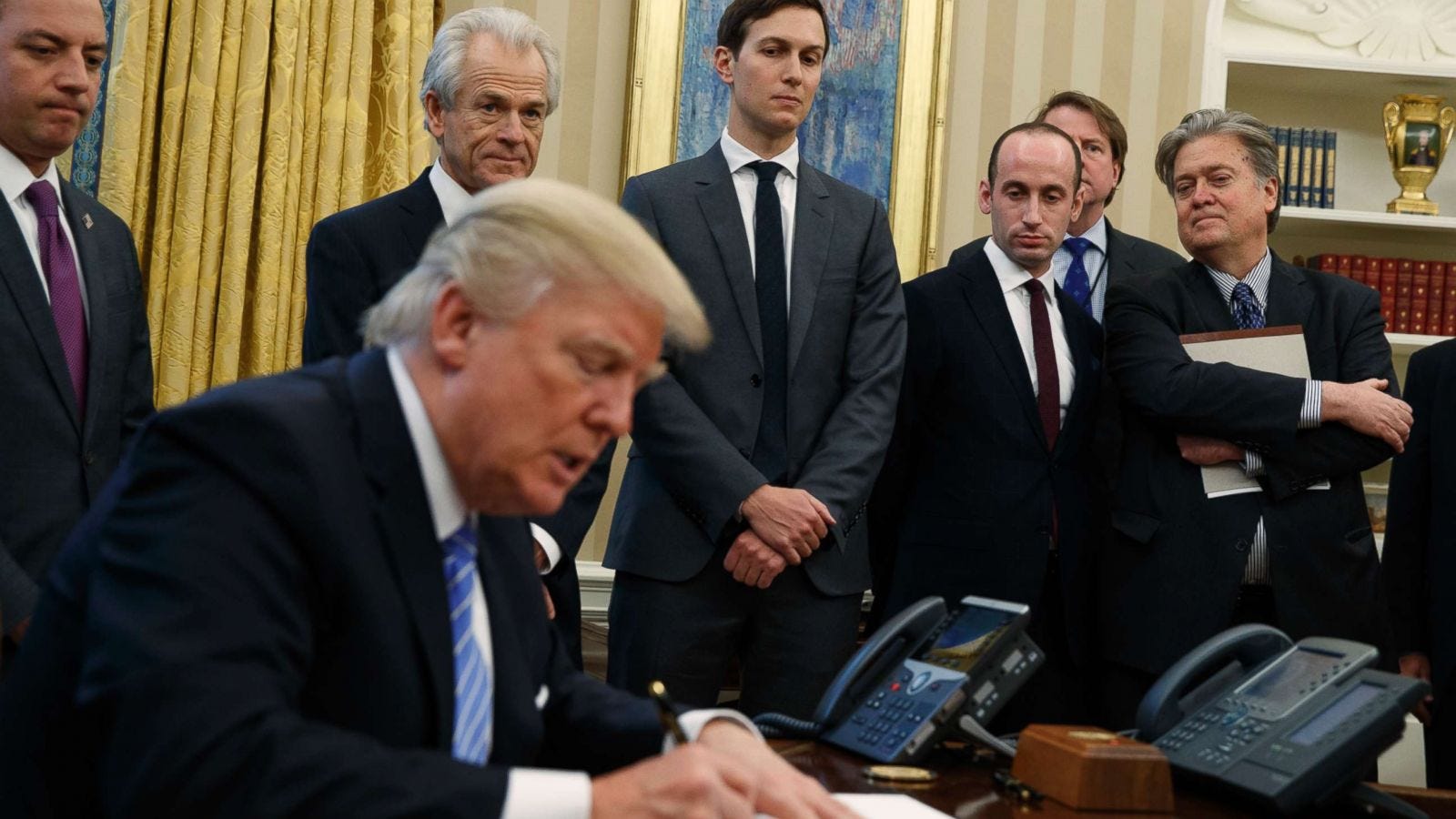
That dependency cannot be eliminated by an Executive Order from the White House, in cannot be eliminated by Stephen Miller, and it cannot be eliminated by a King’s decree. Removing workers without building a replacement labor force does not remove the necessity of the required, backbreaking farm labor.
Strawberries still have to be picked. Lettuce still has to come out of the ground. Orchards still have to be harvested before the fruit spoils. When workers disappear and crops remain in the field, the loss eventually moves through the supply chain and arrives at a supermarket register. It is simply supply and demand. When demand remains constant and the supply is decaying in the field, consider what constant demand for a shrinking supply does to consumer prices.
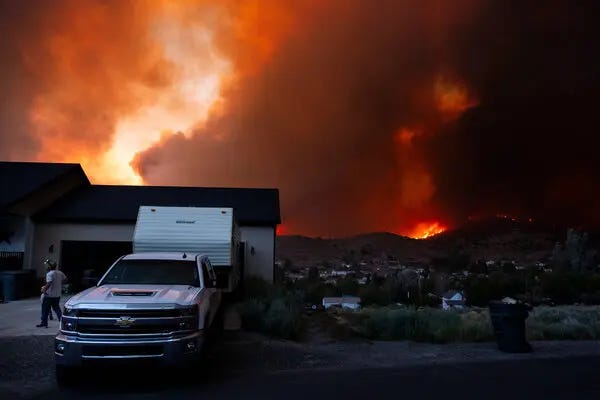
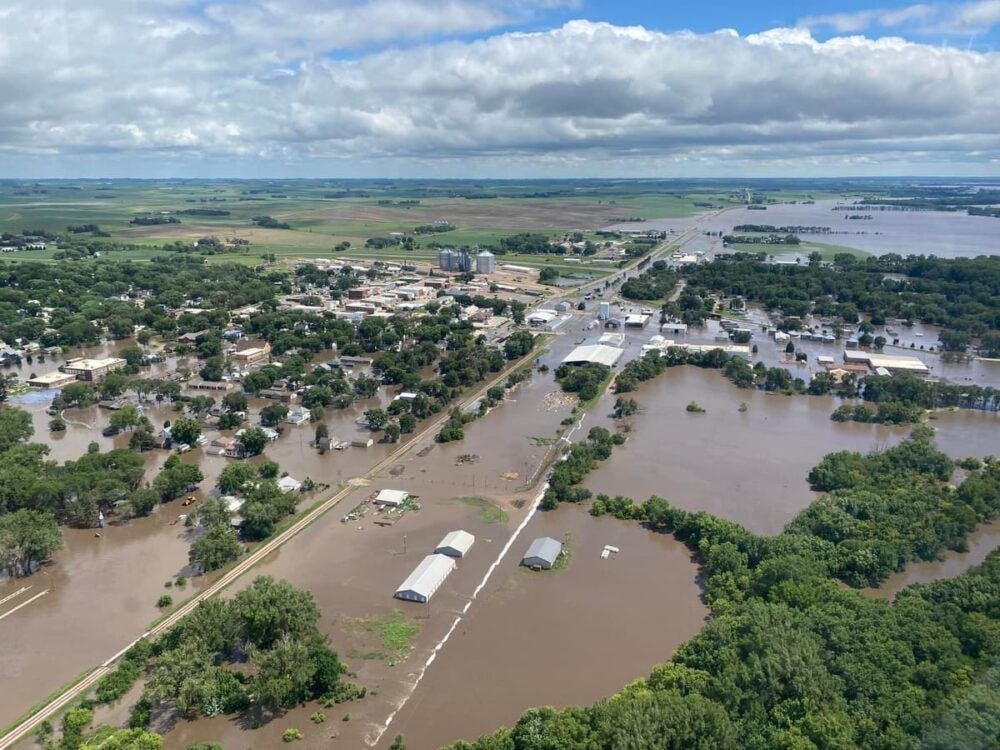
Climate compounds the problem. Extreme heat is intensifying. Heavy rain is becoming more destructive in many regions. Wildfires, flooding and drought are imposing growing costs on farms, homes, insurers and local governments. Yet the federal institutions responsible for anticipating and responding to those emergencies have themselves undergone substantial disruption led by Trump and his ill-fated Elon Musk “DOGE” effort.
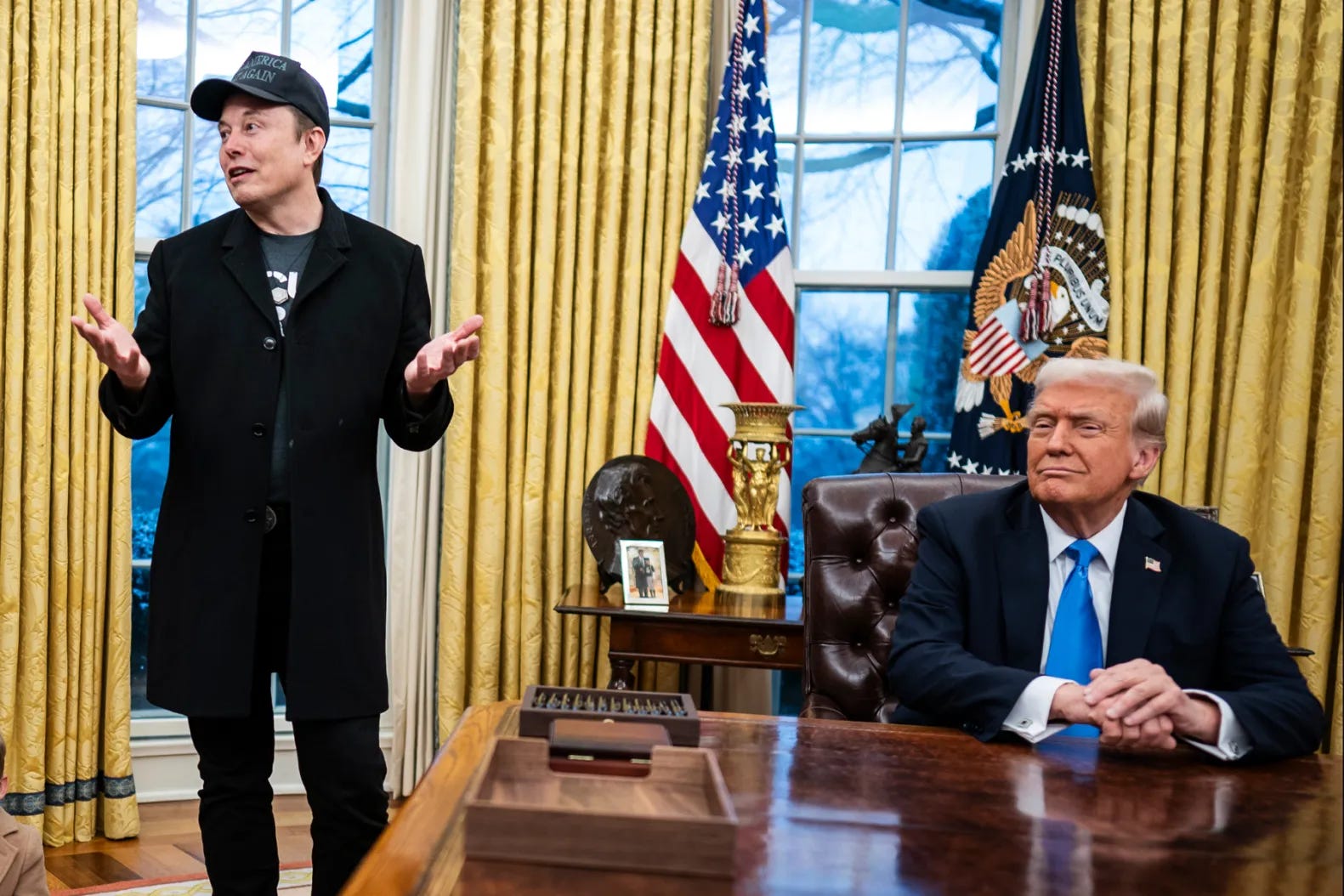
FEMA entered the 2026 disaster season following staffing losses, management turmoil and delayed disaster assistance. The Government Accountability Office reported this month that more than 4,300 employees departed the agency in fiscal 2025, more than double the prior year’s rate, and that another 2,500 had left as of May. FEMA expects to have 240 employees available for surge support during the 2026 hurricane season, down from 600 in 2025. GAO warned that the agency risks critically low staffing in the event of large or concurrent disasters.
The National Weather Service has faced staffing shortages and reduced capacity in some offices. Forecast offices in at least six locations entered last year’s hurricane season critically short-staffed, several stopped operating around the clock, and nearly a dozen suspended or limited weather balloon launches.
Disaster assistance itself has been politicized. POLITICO’s E&E News found that during this term Trump approved 23 percent of disaster requests from states whose governor and both senators are Democrats, compared with 89 percent of requests from states with Republicans in those positions. The Associated Press, analyzing FEMA data by a different method, found 80 percent approval for Republican governors against roughly 60 percent for Democratic governors, and no president since 1989 with a comparable partisan gap. The White House says there is no politicization in the president’s disaster decisions.
Two independent analyses, using different methods, reached the same conclusion. But the larger principle should not require partisan agreement. Floodwater does not check voter registration, wildfire smoke does not stop at congressional boundaries and is unaffected by tariff threats, and a national disaster response cannot function effectively if Americans begin to suspect that federal assistance depends on the political allegiance of their state.
The damage here is not only institutional. It is the erosion of trust.
The military evidence may ultimately prove to be among the most expensive.
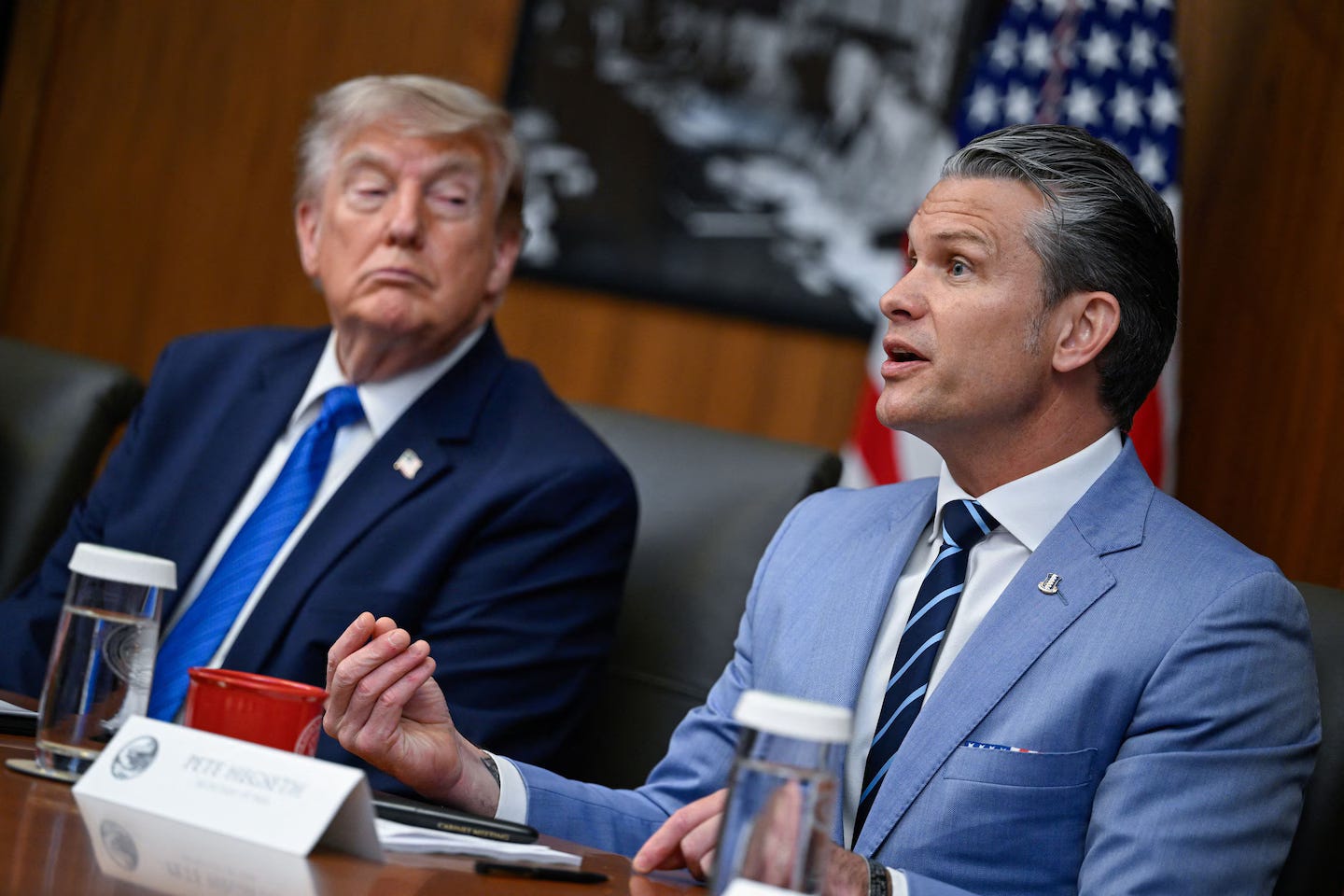
America’s shortage of precision munitions did not begin with Trump’s second administration. For years the United States purchased extraordinarily sophisticated weapons in quantities inadequate for a prolonged conflict against a major adversary. Production lines were narrow, supply chains were fragile and inventories were already under pressure from American commitments in Europe and the Middle East. This is an important fact for defense counsel.
Nevertheless, the evidence becomes more serious because the administration went to war while knowing about the weapons inventory.
Before the ill-advised war on Iran began, Gen. Dan Caine, Chairman of the Joint Chiefs of Staff, warned about shortages of critical munitions and the risks of sustaining an extended operation. Months later, reporting indicated that enormous portions of key American inventories had been consumed, including long-range precision weapons, Patriot and THAAD interceptors and Tomahawk cruise missiles.
The Pentagon is now demanding that defense manufacturers increase production, but missile inventories do not respond to presidential orders on a political timetable. Production capacity has to be expanded, components sourced, skilled workers trained and complete weapons tested. Some critical inventories may require years to return merely to their prewar levels.
That creates a cost that rarely appears in photographs from the battlefield.
A Patriot interceptor fired in the Middle East cannot simultaneously protect an American installation in Asia. A Tomahawk launched today is unavailable in a future confrontation. A missile withheld from Ukraine because the United States must preserve its own inventory affects Russia’s calculation about how long NATO countries can defend themselves from an attack.
Scarcity forces every theater to compete with every other theater.
It does not prove that another war will begin. But diminished reserves reduce America’s choices, make deterrence more expensive, force allies to build alternatives and create opportunities for adversaries to test precisely where American capacity has become thinnest.
The irony is difficult to miss. A government that promised strength may leave its successors spending hundreds of billions of dollars merely to restore the military inventory it inherited at a time when most of our resources are spent on debt interest and tax cuts for billionaires.
For much of the postwar era, one of America’s most powerful strategic assets was also among its least expensive: other nations believed that when Washington DC made a commitment, the commitment would survive changes in government.
That confidence has been destroyed.
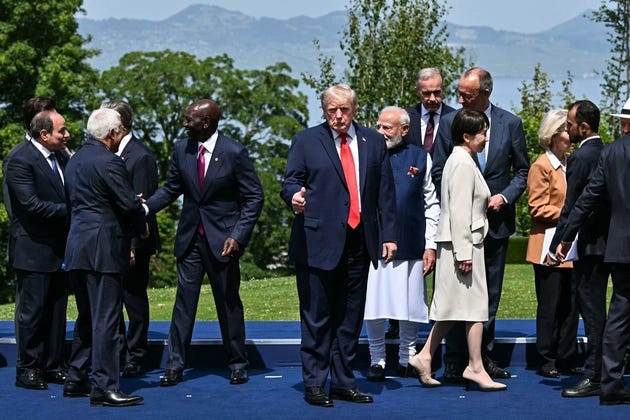
Pew Research’s 2026 international polling found median confidence in Trump’s handling of world affairs at just 23 percent across thirty-six countries. In Canada, the share describing the United States as a reliable partner fell from 83 percent in 2022 to 35 percent today. In Germany, the share who believe the United States takes the interests of countries like theirs into account fell from 60 percent in 2023 to 23 percent. Across all thirty-six countries, a median of 35 percent now say the United States contributes to peace and stability in the world, a share that has dropped by thirty points or more in Sweden, the Netherlands, Poland, Canada and Australia since 2023.
Opinion is not the same thing as an alliance treaty, but it is an early measure of something governments themselves must eventually confront: whether the United States can still be relied upon to honor commitments across administrations. That erosion of confidence has not produced the collapse of NATO. The alliance still exists, and European countries are spending substantially more on their own defense, increases that in some respects were overdue. But the more important question is what those governments are preparing for when they decide they can no longer assume that American commitments will survive the next election.
What is happening is subtler and potentially more permanent. American reliability as a stable and strong partner has been gravely diminished.
Governments that once constructed national-security strategies around the assumption of durable American commitments must now calculate the possibility that a promise made in Washington DC lasts only until the next election, or until the next “gift” is bestowed to Trump. Domestic arms production becomes more attractive. Alternative partnerships receive more consideration. European discussion of “strategic autonomy” moves from academic conferences into defense budgets.
Alliances rarely disappear in a dramatic ceremony. More often they erode through a thousand private calculations inside ministries of defense and foreign affairs.
Once those governments spend billions of dollars reducing their dependence on the United States, the next American president cannot simply enter a NATO summit, announce that America is back and expect the world to rewind. Reliability that took generations to establish will have to be earned again by generations of competent leadership.
Then there is the question of whose interests government serves.
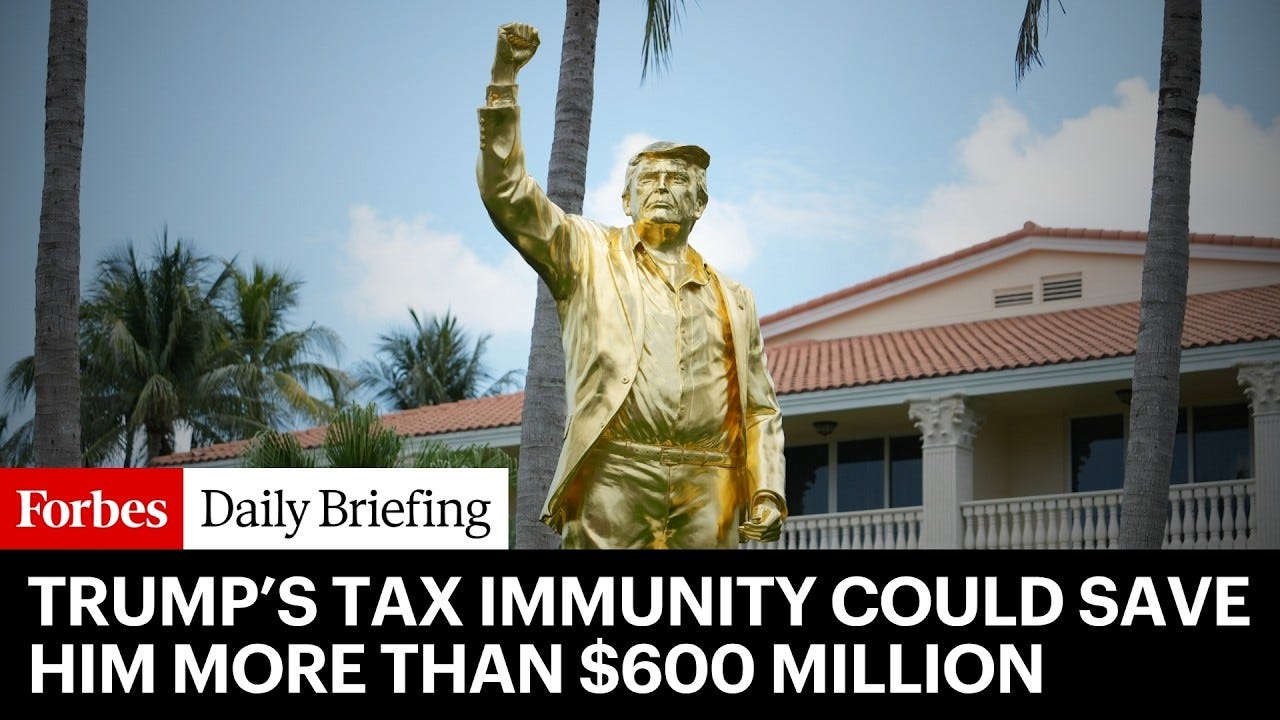
The financial disclosure Trump filed with the Office of Government Ethics in June 2026 reported roughly $1.4 billion in cryptocurrency income for 2025, at the same time his administration was making decisions capable of affecting the value and deregulation of that industry. More than $635 million came from a licensing agreement with a meme coin bearing his name. More than $290 million came from wallets associated with World Liberty Financial, the venture his sons helped launch. The filing ran 927 pages. Barack Obama’s final disclosure was eight pages. Joe Biden’s was eleven.
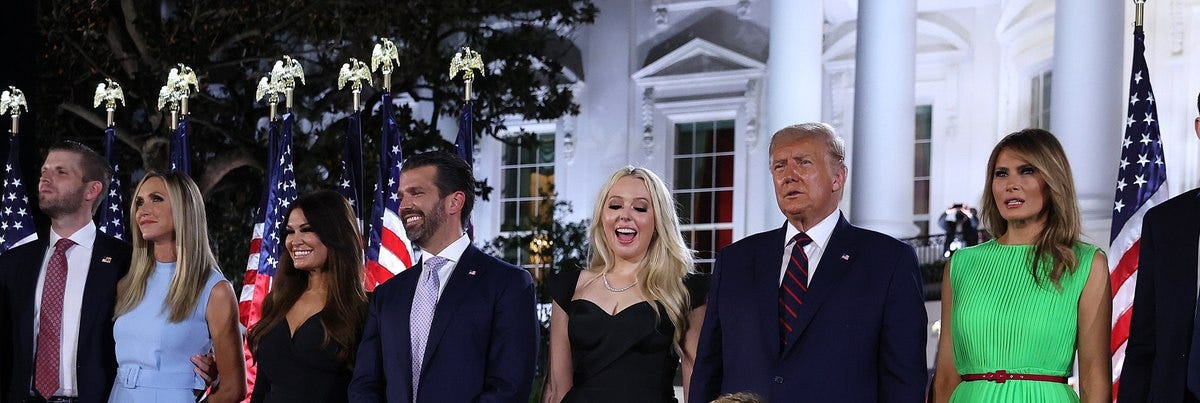
That fact alone does not prove self-dealing. It does establish an extraordinary conflict between Trump’s personal wealth and the public interest.
That distinction matters. Ethics rules exist not merely because officials might accept envelopes of cash or jets from Qatar. They exist because the public must be able to trust that the powers of government are being exercised in the public interest, not for the financial benefit of a President, the President’s family, or donors.
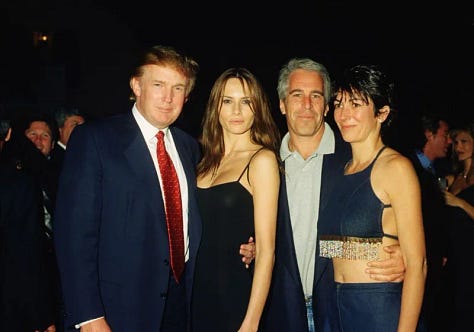
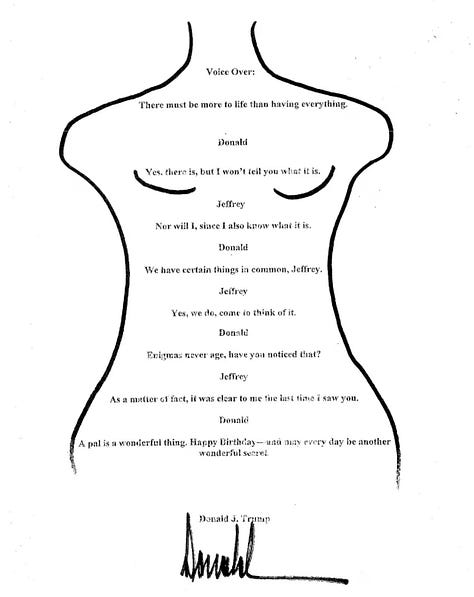
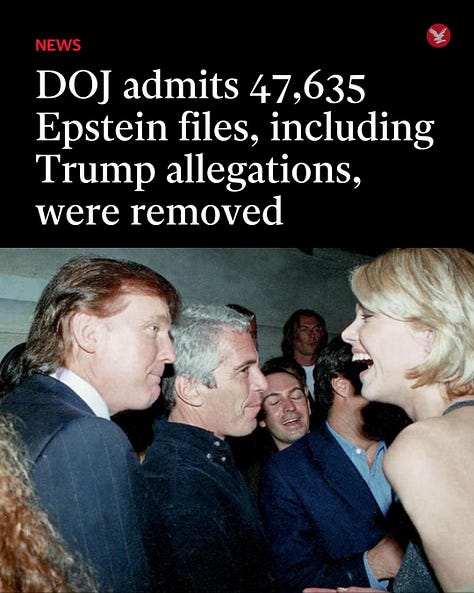
The problem becomes more serious when the institutions designed to police those boundaries lose independence. Congress passed the Epstein Files Transparency Act, which permits withholding only in narrow circumstances and expressly forbids redacting material on the basis of embarrassment, reputational harm or political sensitivity to any government official or public figure. In January 2026 the Justice Department released roughly 3.5 million pages and declared itself in full compliance. On June 25 a federal judge concluded that the department had likely violated the statute, ordered it to unredact specific documents or explain why it could not, and ordered it to publish the log of every redaction the law requires. Judge Emmet Sullivan noted that Blanche had conceded the plaintiff's arguments by declining to answer them. The department appealed rather than comply. Survivors' names and identifying information were published repeatedly. Epstein's own email address was blacked out. In February, Blanche told a national television audience that redaction errors affected about .001 percent of the materials. At his confirmation hearing in July, he put the figure at about 1 percent. The confirmation of Todd Blanche, Trump's former personal criminal-defense attorney, as Attorney General creates precisely the kind of institutional ethical tension that previous generations tried to avoid. Other appointments have raised different questions about qualifications, experience and loyalty, including at the Pentagon and across departments responsible for enormously complicated public systems.
And Congress cannot plausibly present itself as a bystander.
The OBBBA was not imposed unilaterally by the executive branch. This GOP-led Congress passed it. Cabinet officials requiring Senate confirmation cannot take office without senators voting to give them that authority. On August 8, 2026, fifty senators voted to place the president’s former criminal-defense attorney atop the Justice Department. The vote was 50-49. Only Susan Collins and Lisa Murkowski broke with their party. Appropriations continue because Congress approves them. Oversight disappears when committees choose not to conduct it, or the Trump Vance administration fire the Inspector Generals charged with oversight. A legislature that possesses the power to subpoena, investigate, appropriate, legislate and reject nominees cannot credibly claim that it merely watched events unfold.
The Constitution did not give Congress a spectator’s seat.
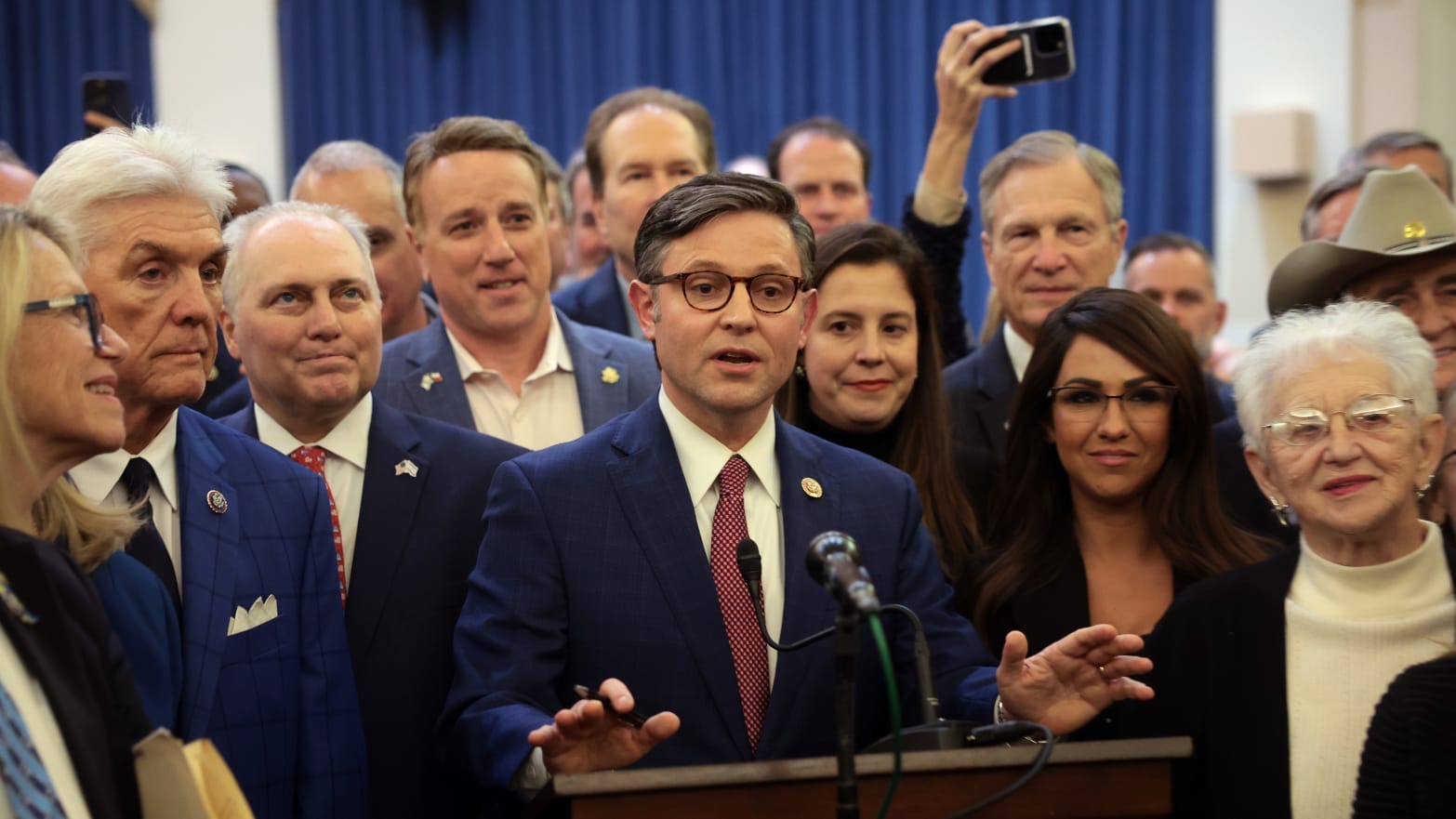
That may be the most consequential institutional failure in this entire case. Presidential power expands when legislators decide that loyalty to a president of their own party matters more than their duty to the country, to the Constitution, and to the independent power and responsibility of Congress itself.
A credible prosecution does not hide inconvenient evidence, so consider the strongest arguments on the other side.
The United States is not officially in recession. Unemployment remains relatively low by historical standards. The OBBBA contains provisions that CBO believes will modestly increase economic output. America’s munitions-production problems predated the war with Iran. The January 1 Medicaid implementation date does not prove that Congress intentionally delayed the consequences until after the midterm election. NATO has not collapsed. Trump’s cryptocurrency income, however extraordinary, does not by itself prove bribery, corruption, and/or fraud. And despite everything described here, America remains, at this moment, one of the wealthiest, most technologically sophisticated and militarily powerful nations in human history.
None of it disposes of the case. In fact, it helps define the danger.
The frightening thing about the United States is not that it has already collapsed. It is that a country this large, wealthy and institutionally deep can absorb extraordinary damage before that damage becomes obvious.
For a long time, normal life continues. Grocery stores open in the morning. Social Security deposits arrive. Highways remain crowded. Aircraft carriers sail. Weather forecasts appear on phones. Hospitals still accept insurance cards. Food banks find another pallet of canned vegetables. NATO issues another communiqué declaring that the alliance remains united.
The accumulated reserves of a continental economy conceal a great deal.
Then another shock arrives.
Perhaps it is a recession accompanied by widespread layoffs. Perhaps another pandemic -this time measles or polio, a banking crisis, catastrophic floods or wildfire season, a crop failure or another war. The precise event cannot be predicted, which is the reason nations maintain reserves in the first place.
The danger comes when several things go wrong together and Americans discover that the institution they assumed would engage has already been weakened, depleted or dismantled.
That is the architecture of decline: not a single spectacular collapse, but the systematic removal of the institutions and watchdogs that prevent collapse.
The evidence in this case is ultimately about something larger than Donald Trump because presidents leave and consequences remain.
A depleted missile inventory does not restore itself on the next Inauguration Day. A veteran forecaster who left government does not return simply because an election changes hands. A farmer who sells land after repeated losses may never plant another crop. A family that loses health coverage does not recover the year in which treatment was postponed. An ally that spends billions of dollars constructing a defense strategy around the possibility of American abandonment does not dismantle that strategy after one reassuring speech from a new, competent Secretary of State.
Debt is even less sentimental. Interest compounds regardless of which party controls Washington DC.
That is why perhaps the most important chapter of this story begins after Trump.
Imagine a future administration taking office genuinely committed to repairing the damage. It will not inherit the United States of January 2025. It will inherit the country that exists on that inauguration morning: its debt and interest payments, its remaining missile inventories, its industrial capacity, its diminished or restored civil service, its Medicaid rolls, the demand at its food banks, the farms that survived, the condition of its alliances and whatever remains of public trust.
Then the rebuilding starts.
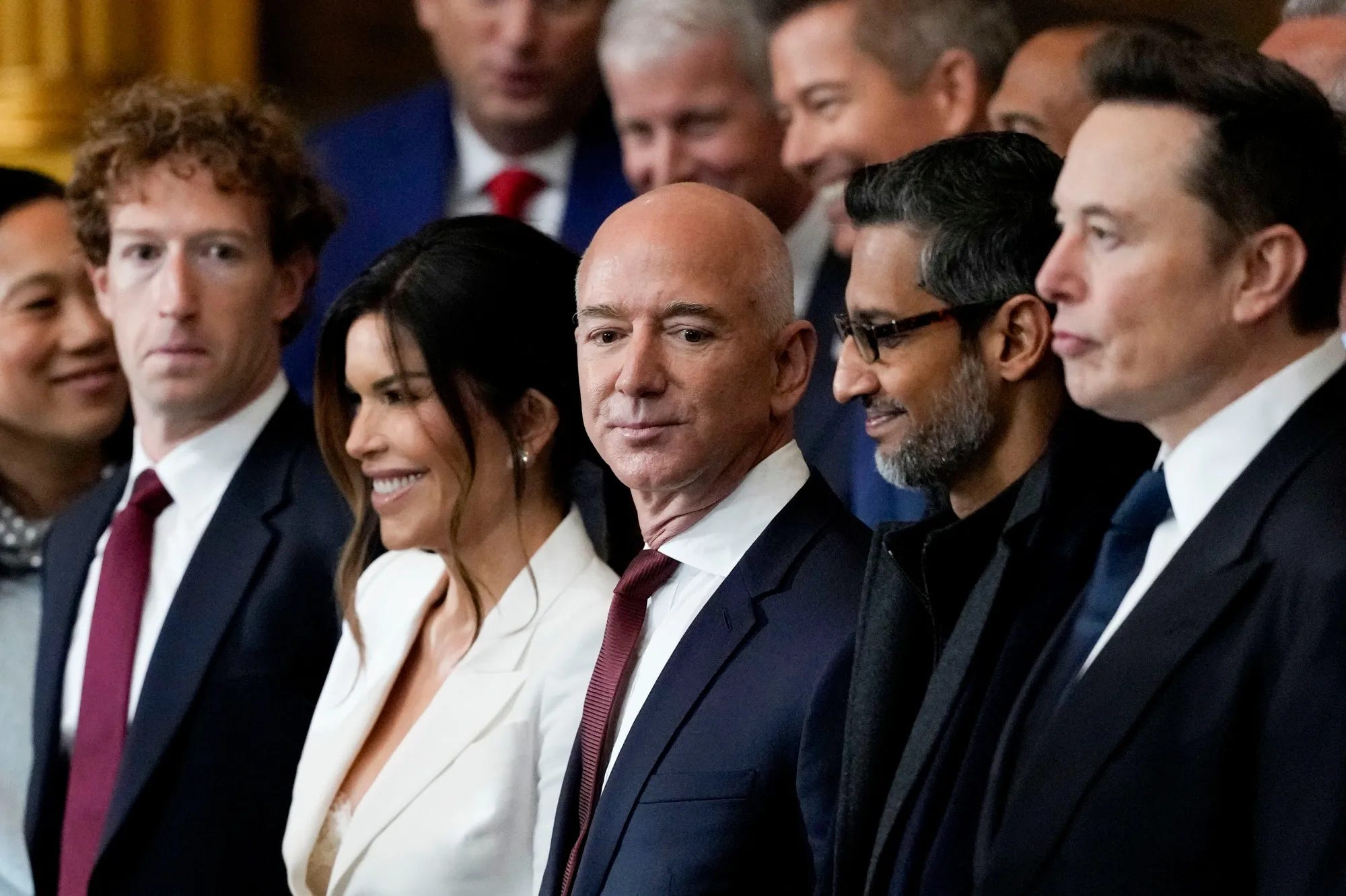
Our taxpayer money devoted to servicing Trump’s debt to fund tax cuts for wealthy donors and corporations, cannot simultaneously be used to rebuild infrastructure, restore disaster capacity, replenish military inventories, improve schools, finance scientific research or expand health care.
The other repairs will have their own schedules. Military production lines may require years of sustained investment simply to replenish weapons already consumed. Climate risks will not suspend themselves while FEMA and the Weather Service attempt to rebuild expertise. Agricultural markets will not automatically recreate experienced labor forces. Scientists, engineers, and career public servants who leave government take years of institutional knowledge with them. Allies that have learned to hedge against Washington DC will have little incentive to make themselves trust us again.
The decade or two following this administration therefore may not begin with some grand national renaissance. It may begin with something far less glamorous and far more expensive: repair.
Rebuilding public institutions means hiring people, training them and reconstructing knowledge that disappeared when experienced employees departed. Restoring military capacity means new factories, expanded supply chains and years of procurement. Reestablishing American credibility means keeping promises through several elections until foreign governments again believe those promises are durable. Repairing the social safety net means finding people who disappeared from coverage, reconstructing administrative systems and paying for medical problems that became more serious while treatment was delayed.
We may spend vast sums merely trying to recover capacities decimated by Trump, Vance, and the GOP.
That is one of the least understood costs of decline. Destruction can occur with extraordinary speed. Institutional memory cannot be reconstructed on the same timetable. A government program can be eliminated with a signature, while rebuilding the expertise behind it can take a decade. A president can destabilize an alliance in an afternoon, while three successors spend years convincing the world that the fourth president will not do it again. A missile leaves its launcher in seconds and may require years of industrial capacity to replace.
Every month the damage continues can therefore impose costs measured not merely in dollars, but in years.
That is why waiting for 2028 is not a strategy.
In a courtroom, citizens complete their obligation when they render a verdict. Democracy imposes a harder burden because the verdict is only the beginning.
The first obligation is obvious: Vote!
But voting cannot simply mean selecting the correct party jersey. If the lesson of this period is that institutional loyalty has been subordinated to partisan loyalty, then the answer cannot be merely to reverse the jerseys.
The test should be whether a candidate believes governing and the rule of law matter more than winning.
That standard ought to apply to Democrats, Republicans and independents alike. Will the candidate tell the truth when the truth hurts his own party? Will she appoint competent people rather than loyalists? Will he respect an inspector general who discovers something inconvenient or illegal? Will she defend the constitutional authority of Congress when the president belongs to her own party? Will the candidate accept arithmetic, respect professional expertise, defend an ally when doing so is politically inconvenient and tell a donor, a party leader or a president no when the interests of the country require it?
Those qualities are sometimes described as moderation. They are not. A legislator can hold strongly conservative or strongly progressive beliefs and still understand that institutions matter. What is required is something more basic: a commitment to the nation strong enough to survive partisan temptation.
We have another obligation, and it receives far less attention.
Fund independent media.
Almost none of the evidence assembled in this case was secret. CBO published its projections. BLS published the employment revisions. Congress recorded its votes. CRS analyzed the Medicaid provisions. USDA documented the agricultural workforce. Reporters investigated military inventories and financial conflicts. Researchers asked allies what they thought of us.
The information existed. What failed was our collective ability to assemble it into a coherent picture before the consequences became impossible to ignore.
Any meaningful attempt at democracy requires an informed, educated, and engaged society.
A democracy cannot correct failures its citizens cannot see, and a society whose information flow is increasingly dependent on a small number of billionaires, corporations, advertising systems and outrage-inducing algorithms has created another dangerous point of failure. Independent journalism is therefore not a cultural luxury that comes somewhere after roads, bridges and hospitals on the list of things a democracy requires. It is part of the infrastructure of democracy.
That means subscribing to local news organizations, supporting nonprofit investigative journalism, paying independent writers who do the tedious work of reading 400-page bills and building platforms whose survival does not depend upon pleasing a billionaire owner, an advertiser, a political party, private equity, or an algorithm. It means creating distributed networks of information that no single president, corporation or wealthy individual can silence.
The damage described here will take generations to repair, and during that time there will be elections our preferred candidates win and elections they lose. There will be capable presidents and dangerous ones, courageous Congresses and cowardly ones.
The objective cannot merely be to elect the right people once.
It must be to rebuild a country capable of surviving the wrong people later.
That means restoring the U.S. Treasury rather than treating debt as an abstraction that doesn’t affect us. It means replenishing military reserves while reconsidering when and why they are used (or misused). It means building environmental and disaster resilience appropriate to the climate we actually inhabit. It means maintaining a social safety net deep enough to prevent unemployment or illness from becoming homelessness and hopelessness. It means alliances sturdy enough to survive electoral cycles, a professional civil service capable of telling presidents things they do not want to hear, and a Congress independent enough to remember that its constitutional role is not to serve a criminally corrupt executive branch.
The final exhibit is not a document. It is the calendar.
January 2027, when major provisions affecting health coverage begin to be felt nationally. The years it will take to replenish weapons already expended. The approaching decade in which interest costs are projected to reach roughly $2.1 trillion annually and gross federal debt approaches $64 trillion. Years are required to rebuild expertise, recover alliances and restore institutions that have been damaged in months.
The architecture of decline was constructed through choices, and the architecture of recovery will have to be built the same way: choice by choice, brick by brick, institution by institution, election by election.
Unlike a jury, we do not get to render the verdict and leave the courtroom.
We have to live in the country that comes afterward.
Help defeat algorithmic inequality and share this article.
If you find this article of value, please do share with friends, associates, & others who have an interest in the content.
Please note that my articles and subscriptions are not paywalled. This stems from a guiding principle -that any meaningful democracy requires an informed, educated, and engaged society. It is also to honor the life of Aaron Swartz.
Aaron held firmly to the belief that research and knowledge intended for the betterment of humanity should be freely shared.
If the problem is extraction, then the response must be construction.
I am building Civic Works and its core platform, civ.works, as a direct alternative to the systems that have captured our data, our attention, and our civic life. This is a 501(c)(3) effort to create infrastructure that serves the public, not exploits it.
The goal is simple and necessary. A subscriber-supported, ad-free civic network where people can access trusted information, engage constructively, and take meaningful action without being tracked, manipulated, or sold.
No ads. No data harvesting. No hidden incentives.
Just people, information, and the tools to participate in a functioning democracy.
This kind of infrastructure will not be built by the same forces that benefit from the current system. It has to be built by us.
That is why we are asking for direct public support.
If this work resonates with you, I am asking you to make a simple commitment. Visit the pledge page and commit to supporting civ.works at launch. A small monthly contribution, combined across thousands of people, creates the independence required to build this platform without compromise.
https://civ.works/pledge/pledge.html
This is not just about funding a project. It is about proving that a different model is possible. One where civic infrastructure is accountable to the people who use it, not the interests that seek to exploit it.
If you believe the current system is failing, this is one way to begin rebuilding it.
And if you cannot contribute financially, sharing this effort with others is just as important.
The system we have was built deliberately.
What comes next can be built the same way.
Aside from writing, mentoring others, and projects related to democracy, economics, and social innovation, I’m dedicated to Civic Works, a 501c3 non-profit organization building and managing technology that blends social networking and civic engagement. Our core effort is around civ.works. When complete, it will be a subscriber-supported, ad-free social network that does not betray subscriber trust by selling or sharing data with marketers or sinister political operatives.
I’m incredibly grateful for all who contribute to the civ.works effort through our secure payment processor, Stripe, and all who help us gain visibility by sharing the project with journalists and others to move the effort forward.
Special appreciation for all who continue to recommend my rants and musings, restack articles that are found to be worthy, and share with friends and family. And the following are some special recommendations for stacks I value -
Liz Oyer, Former DOJ Pardon Attorney
Comments
Nothing yet. Say the first thing.
Sign in to join the conversation.