
humans.txt
I wrote about an experience I had with Claude on LinkedIn earlier this week: we’ve been doing some research on AI search-ability and using our own website as a place to experiment and trial methods. I was researching llms.txt, basically a txt file that LLMs read to learn about your webpage. (For those who don’t know, root-level .txt files are small plain-text files that live at the top of a website, they’re not for human visitors to read, they’re notes left out for the various bots, crawlers, and now AIs). Whether llms.txt actually does anything is largely up for debate. But then I’ve always been skeptical about overly exhaustive SEO activities. Where does the line get drawn before one heads into spamdexing territory?
In any case, Claude helped me create the llms.txt file. AI making a file for itself essentially, logical right? But here’s where it got interesting: in the course of doing this research Claude referenced a bunch of other root-level .txt files, including humans.txt. Here’s what it said:
humans.txt is a charming, pre-AI-era convention. A plain text file crediting the humans who built the site. Designers, developers, writers, special thanks. Like film credits, for websites.
Do you need one? No one needs one. But for Bolster specifically, this is actually on-brand. You’re a designer-led studio that values craft, the human touch, and explicitly positions against the polished sameness of category defaults. A humans.txt is a small, knowing gesture toward the design community — the kind of detail other designers notice and appreciate.
It felt like a strange moment to me. Obviously ironic, and in some ways, nice. But Claude knows what I like and what Bolster is about. I love this kind of thing. Feels like early days of the internet when you had your own personal place on the web (before social media). So I spun up a humans.txt for the heck of it (yes, I made it myself).
llms.txt and humans.txt are representative of an old way of thinking: a clean separation between humans and machines. But this separation has blurred. humans.txt serves as a good analogy for demonstrating real human authenticity. But llms.txt is not like robots.txt: we don’t even know if an LLM will even look at it. More likely the experience will be like what happened to me. The LLM will try and put itself in your shoes. The machine audience isn’t one audience, it’s a million personalized readings, each shaped by what the LLM already knows about the person on the other end.
My advice is show up for the LLM enough that it doesn’t misrepresent you, but more so, show up for the humans like the LLM isn’t watching.
Tim Hillegonds
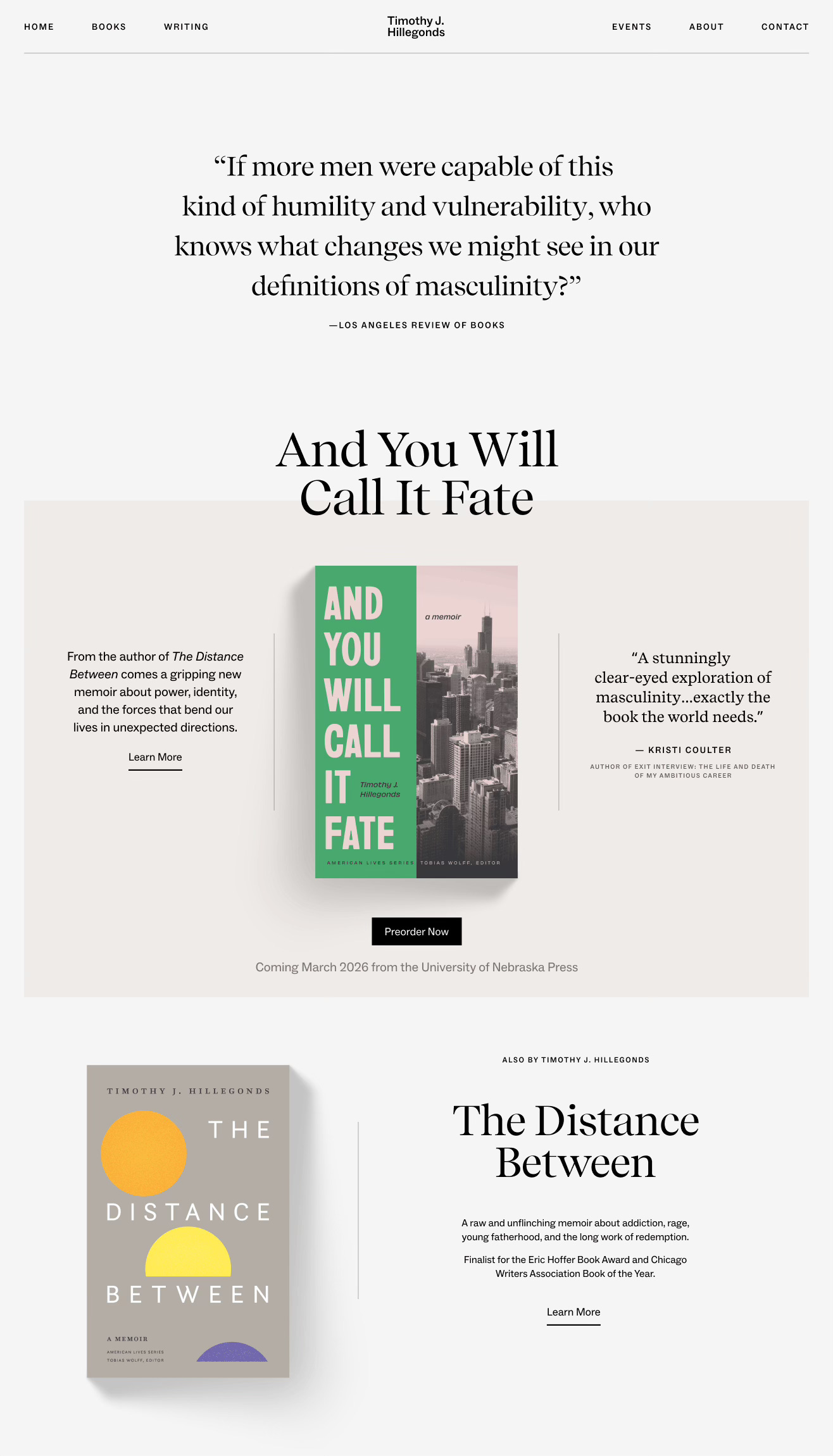
Frequent collaborator, strategist, and author, Tim Hillegonds has a new book out so we maybe him a nice place on the internet to help promote it.
Sensory Links
Visual — check out talented friend, collaborator, and illustrator
Digital — for still more irony check out this humans.txt
Sound — always loved the intro to the intro to this Michel Pettruciani recording
Need to get more human?
For founders and teams ready to evolve, Bolster provides Design that helps them see, shape, and signal what comes next. Drop me a line if you’d like chat about what comes next.
Let us know, maybe we can help.
Comments
Nothing yet. Say the first thing.
Sign in to join the conversation.