

Vomiting is truly one of life’s worst experiences. For the better part of my career. I have been involved with a group of professionals who have been living off the avails of vomiting, trying to figure out what causes it and what to do about it. This odd preoccupation came about because when I was in post medical gastroenterology training, I was assigned to see a young man on referral from one of Boston’s North Shore suburbs.
Andrew was a lean teenager with red hair and freckles. Nothing about him suggested chronic disease. Yet, he was subject to attacks that would come on abruptly, where he became nauseated, shortly followed by spasms of violent vomiting over a background of profound lethargy. His attacks would last from hours to days and nothing much helped. Eventually he would be taken to the local hospital where an intravenous line would be established to provide the fluids and electrolytes to repair the dehydration that eventually developed.
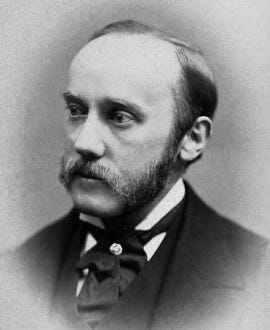
Dr. Samuel Gee
Andrew, who is now probably a middle-aged man had been brought to the Harvard Hospital by his mother in desperate search of treatment. To be honest, we didn’t really know what more we could do for him. #Cyclic Vomiting Syndrome had been described by British Pediatrician Dr. Samule Gee about 150 years earlier as bouts of intense vomiting of unknown cause separated by periods of return to normal health. Dr. Caesar Lombroso, a Children’s Hospital neurologist had described some EEG changes in these patients and some success treating them with Phenobarbital, an anticonvulsant drug which seemed to help prevent attacks in about ½ of the patients.
Andrew’s case intrigued me. All of his gastrointestinal system investigations were normal but his story reminded me of something deeply personal. When I was about 12, I developed migraine headaches. These usually came on in the late afternoon after I had been playing touch football for hours with my friends, Richard and Jordie. Through the evening, I would feel slightly unwell and about dinner, the right side of my head would start to throb causing a pressure sensation behind the eye on that side of my head. Then the vomiting would start and I would repeatedly puke up my stomach’s contents. When it was empty, “dry heaves” would continue, waking me at intervals from profound lethargy.
The distinct pattern of getting sick would happen on Saturday nights just as my parents were about to ‘step out” on for their Saturday night dinner on the town. My Dad, an engineer, assumed the two events were related rather than blaming the Saturday afternoon football game. After several cycles of vomiting, he tried a novel approach……holding my head in the vomit bowl in an amateur effort of behavioural deconditioning. As this had worked for our dog Bonnie and my Dad figured he might try it on the thin somewhat edgy second son. It didn’t work but Bonnie the dog was very empathetic.
Once I realized that my parents were going to be no help, I decided that it was up to me to solve the problem. Through trial and error, I developed a ritual that was eventually would come too be described as a relaxation exercise. I would lie in a darkened room and sequentially relax the limbs starting with my toes and working my way up the torso until I summoned my fingers, wrists and arms. The final step was to lightly touch my eyelids together “like butterfly wings” and drive any extraneous thoughts out of my head by chanting “zero, zero, zero…..” Knowing that I had found a technique together with a big dose of aspirin that could smother the explosion of pain, I was able to suppress my attacks. These occurred less and less frequently as my “anticipatory anxiety” dissipated. (Not bad problem solving for a 12-year-old.)
Cyclic Vomiting continued to intrigue me after I moved back to Canada and took over a Consulting Pediatric Practice from a pediatrician who was leaving the country. This role, unique to the British and Canadian Health Care system, meant that 2 pediatricians were charged with seeing the most complicated patients in the practice of some 60-100 general practitioners. Despite being a GI subspecialist, I was expected to see the full range of pediatric problem patients, including those with asthma, diabetes, epilepsy and of course migraine headache. The fact that I had seen so many “migraineurs” not only allowed me to hone my approach to the management of headache but allowed me to recognize the similarities between my patients with migraine and those with cyclic vomiting syndrome.
The result was that when I moved to the university to set up an academic gastroenterology sub-specialty practice, I had honed my approach to Cyclic Vomiting Syndrome to mirror what we did for children with migraine headache; teaching the parents to recognize “the prodrome’, administering a hefty dose of ibuprofen and putting them in a darkened room with little outside stimulation, worked 90% of the time in most of the cases.
By serendipity, my clinic was just down the hall from a biomedical engineer who had developed a way to map the sympathetic and parasympathetic autonomic nervous system by manipulating the output of electrocardiograms. By superimposing at part of the ECG hundreds of times, he could distill out the vagal nerve influence of sympathetic and parasympathetic impulses going to the heart. This was subsequently recognized as a way to map stress. When “compared to normal controls” we found that my Cyclic Vomiting Syndrome patients were “upregulated with stress and way downregulated with impulses tuning stress down.
This research caught the eye of Dr. BUK Lee a pediatric GI specialist in Columbus, Ohio who assembled a group of scientists to study nausea, vomiting and cyclic vomiting which began a 25-year collaboration.

Dr. Lee himself had described the relationship between cyclic vomiting syndrome and migraine, but the whole field became much more intriguing when Kathleen Adams, a Wisconsin nurse, founded the Cyclic Vomiting Syndrome Association (CVSA) in an effort to find an explanation for her daughter’s pernicious vomiting problem.
The CVSA scientific conferences brought together and eclectic group of pediatric of adult and pediatric, gastroenterologists, neurologists, NASA aeronautic medicine specialists, pharmacologists etc.
The group published the first practice guideline in North America for managing childhood CVS and then did a similar work for adults. They also put together multicentered research projects and brought along young scientists to keep up the work.
We gradually began to appreciate that Cyclic Vomiting is not a disease, but a “final common” symptom presentation for a wide variety of disorders of #brain gut interaction. Once we accepted that this was a brain not a gut issue, we could make use of all the techniques folks had developed for the management of migraine, epilepsy and the nausea seen with chemotherapy. While the majority of young children had #CVS as a form of migraine, in most teenagers, vomiting was an expression of underlying anxiety disorders. There were small group with inborn errors of metabolism and a new subgroup in CVS was the expression of a chromosomal disorder.

Things were just getting sorted out and then along came Cannabis. First Oregon and then all of Canada legalized the “non-medical use of weed under the pretext that this was a way to decriminalize the cannabis that folks were going to smoke anyway. With this apparent endorsement, and the removal of the criminal stigma, cannabis was increasingly embraced by older individuals in numbers. An entity called “#Cannabis Use Disorder” became apparent in which about 15% became habitual users. 1-2% of these developed #Cannabinoid Hyperemesis Syndrome but with such increased prevalence these patients have been showing up in Emergency Departments in increasing number fueled by the popular belief that Cannabis derivatives are used as an effective treatment in cancer chemotherapy patients.
It is now apparent that some young adults who start using cannabis to deal with anxiety start a pattern, increasingly use more potent cannabis products and go on to develop Cannabinoid Hyperemesis. While there are some treatments that temporarily treat the symptoms, the only effective cure is the cessation of cannabis use.
To summarize the past several decades, it seems to me that while science moves by fits and starts, for many, true engagement often results from a single patient encounter that resonates because of one deeply personal experience.
No posts
Comments
Nothing yet. Say the first thing.
Sign in to join the conversation.