
About the Series: Blaxploitation and the Cities That Make Us is a 6-week analytical series exploring the relationship between Blaxploitation protagonists and the communities that shape them. Whether Los Angeles, Harlem, Oakland, or Detroit, these cities are living organisms that influence each protagonist’s identity. Through historical, cultural, and film analyses, this series examines how each project reflects the neighborhoods, struggles, and communities that gave rise to some of Black cinema’s most adored heroes.
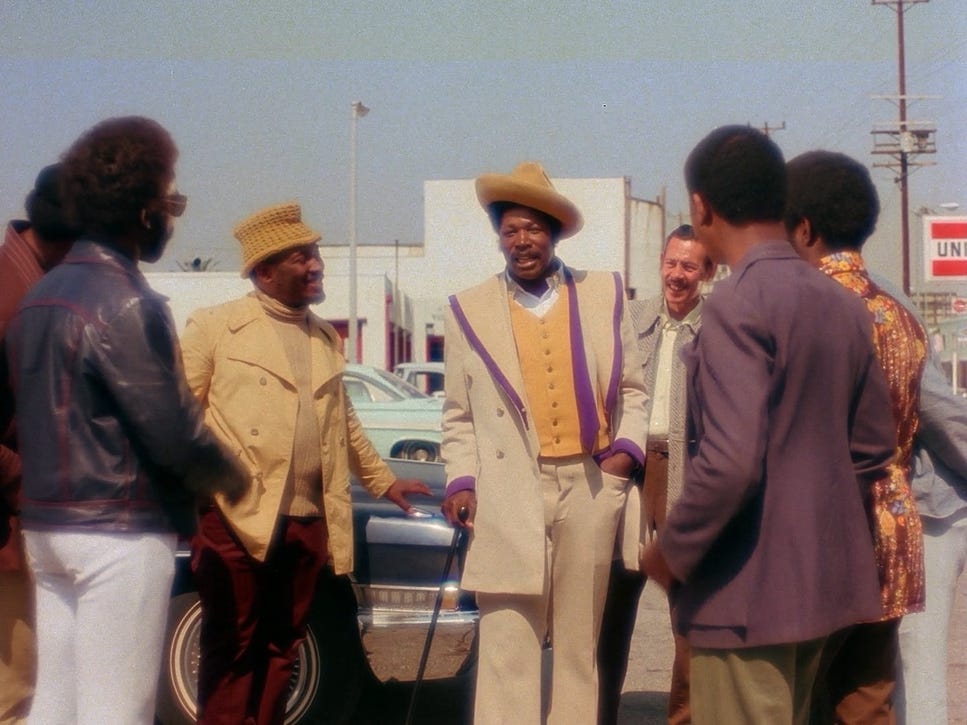
Dolemite maintains its status as a pivotal work in the Blaxploitation genre, not only for its audacious style and eccentric character, but for the way it redefined Black American representation in American cinema and pop culture. The film’s significance lies in how the era’s stereotypical images became sources of empowerment, with the figure of Dolemite (Rudy Ray Moore) challenging cinematic conventions and building future generations of artists. Moore’s cool, slick demeanor and rhythmic cadence as Dolemite signal the film’s impending status as a cinematic icon. Directed by D’Urville Martin and written by Jerry Jones (screenplay) and Rudy Ray Moore (story), Dolemite is released from prison and hastily takes control of the City of Angels. As he seeks to take down his adversaries, he leaves a lasting impression on the cast, Los Angeles, and on contemporary culture.
Dolemite, set in Los Angeles in 1975, reimagines the city by taking familiar touchpoints such as palm trees, gritty streets, and sweet sunshine and transforming them into the new Blaxploitation playbook: debauchery, kung fu, and revenge. From filming car chases in Griffith Park and nightclubs on Crenshaw Blvd, to Hollywood record shops, Dolemite touched each corner of the city and created a comfortable home for his character.
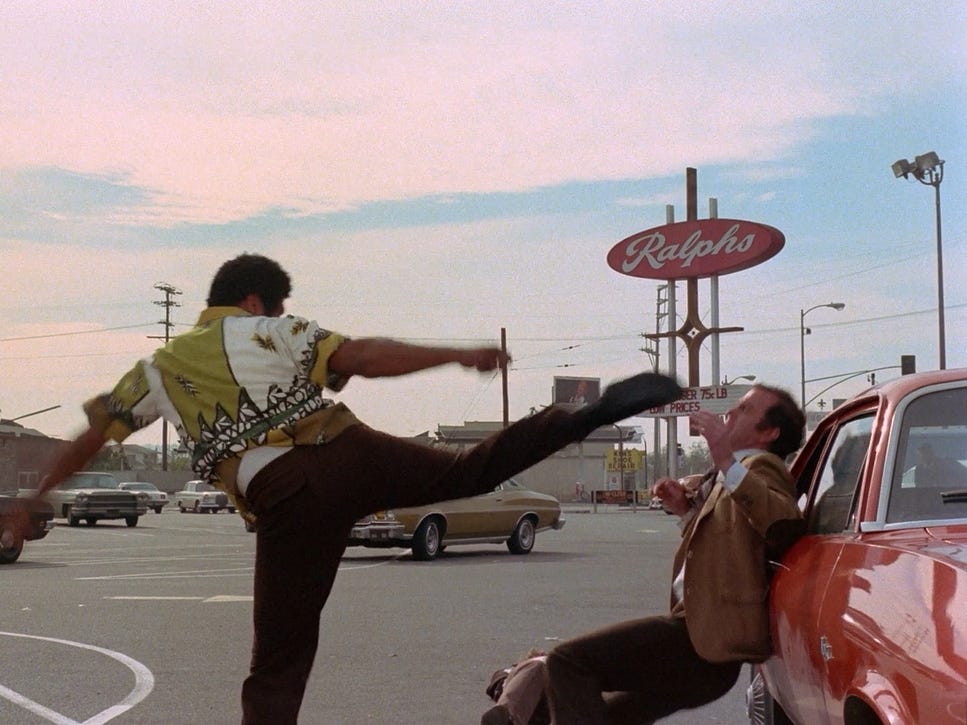
Effortless swag and an elusive nature, and a hidden sense of responsibility for his community are the crux of Dolemite’s persona. He cares for his community while seeking revenge on his adversaries, adopting a ruthless attitude. Dolemite confronts corrupt police officers who harass him and community members, defending them with sharp dialogue that reverses the status quo. When Dolemite, recently released from prison, addresses his devoted posse with the rhythmic declaration, “Dolemite is my name, and f***ing up mother f***ers is my game,” he showcases confident bravado that would later influence trailblazing rap and hip-hop artists. Using his knack for bringing his people together, he delivers carefully constructed soliloquies with a cadence and flow reminiscent of early hip-hop, solidifying his moniker as the “Godfather of Rap.” His braggadocious attitude and hyperbolic persona have influenced most contemporary comedians and rappers, becoming a form of Black cultural expression that has turned Dolemite from a character into a lasting cultural archetype. Moore’s talent for incorporating rhyme schemes into his comedy, as seen in his performances in the film, and for lyrics on topics such as sexual prowess, action heroes, and pimping was trailblazing and echoes across most contemporary facets of pop culture and celebrity. His legacy lives on in music, being famously sampled by A Tribe Called Quest, Aminé, Kool Keith, Noname, and more.
Blaxploitation films became popular for allowing Black actors to use harmful stereotypes to the advantage of Black Americans instead of against Black Americans. They relied on fantasy to create their ideal heroes in a world where reality would do nothing short of lynch them. Images often seen during this cinematic era include pimping, sexually lewd behavior, drug dealing, hustling, and challenging interactions with authority. But above all else, looking glamorous was paramount. Long fur coats, beautiful women on each arm, sunglasses, and swag. Dolemite exemplifies these traits and stands above the rest. Congruently, the film actively dodges certain expectations: Dolemite, while he embodies the flashy persona of a streetwise hustler, uses his position not just for personal gain but to empower his community, offering protection and camaraderie. His confrontations with authority are more significant than criminal acts. They are moments that upend power dynamics, making the protagonist’s struggle a form of resistance. However, in broadcasting the extravagant aspects of his persona, the film cannot fully escape the societal customs it dabbles with. Dolemite both challenges stereotypes by reclaiming mockery as pride and flipping oppression into agency. However, in doing so, it retains the same outlandish behavior by embracing spectacle. Positively, it’s clear that Blaxploitation films provided 1970s Black audiences relief, something that was often rare in reality. Dolemite’s plucky attitude and revolutionary spirit invigorated audiences, cementing him as a legend in cinematic history. This is how not only did Dolemite become the pillar of his cinematic community, but the essence and spirit of Dolemite also remained the pillar of the communities this film serves.
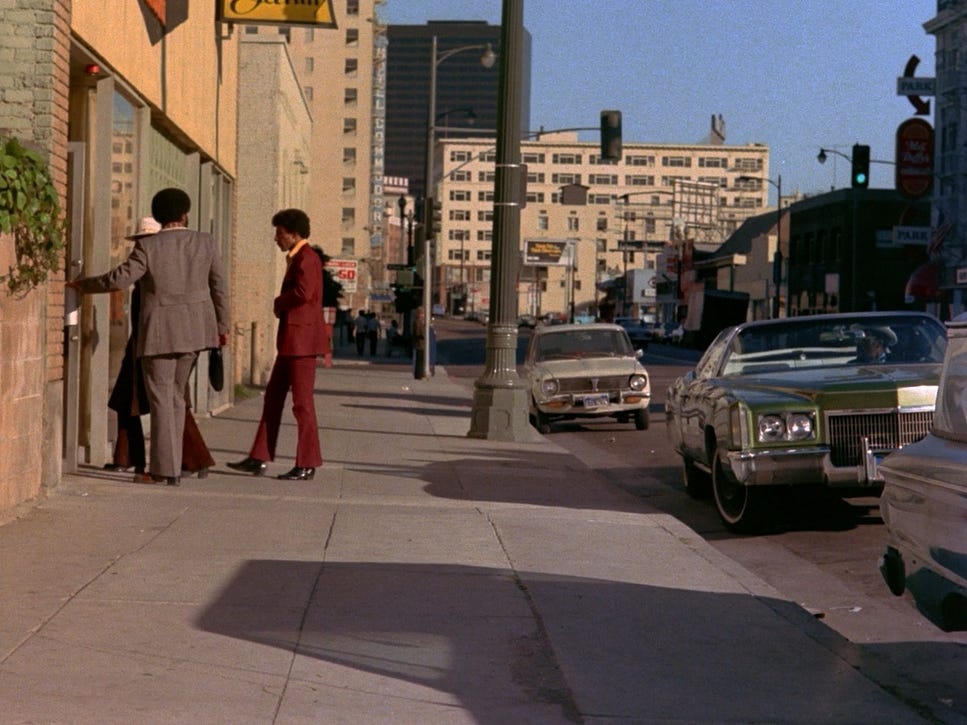
Dolemite’s character is connected to Los Angeles and leaves an enduring legacy, serving as a permanent reminder of the pursuit of a dream. The backstory of how Dolemite came to be was detailed in the 2019 film Dolemite Is My Name, starring Eddie Murphy. Los Angeles, known for attracting dreamers, superstar wannabes, and those on the cusp of greatness, is the only setting in which a character like Dolemite can succeed. Rudy Ray Moore was a superstar waiting to rise. He turned his dream into reality, using Los Angeles locations and landmarks that hold meaning for natives and pop culture fans.
Once fully immersed in the rules of the world the film sets up, getting past the lackluster ADR, poor acting, and a plethora of other technical shortcomings, it holds up. The “it’s-so-good-it’s-bad” type of film is on full display and self-aware, shaped by distinct cinematic choices. Direction by D’Urville Martin leans purposefully into boisterous performances and theatrical line deliveries, inviting the audience to share in the joke and appreciate the film’s campy nature. Moore’s deliberate overacting, dynamic gestures, and charismatic presence unify the film’s tone and sell its humor. An action-packed, revenge-seeking hustler trying to make a way for himself is a universal story that will remain relevant. The care and attention paid to this character keep him legendary. The pillar of Los Angeles is Rudy Ray Moore as Dolemite, an icon in his own right.
No posts
Comments
Nothing yet. Say the first thing.
Sign in to join the conversation.