
About the Series: Blaxploitation and the Cities That Make Us is a 6-week analytical series exploring the relationship between Blaxploitation protagonists and the communities that shape them. Whether Los Angeles, Harlem, Oakland, or Detroit, these cities are living organisms that influence each protagonist’s identity. Through historical, cultural, and film analyses, this series examines how each project reflects the neighborhoods, struggles, and communities that gave rise to some of Black cinema’s most adored heroes.
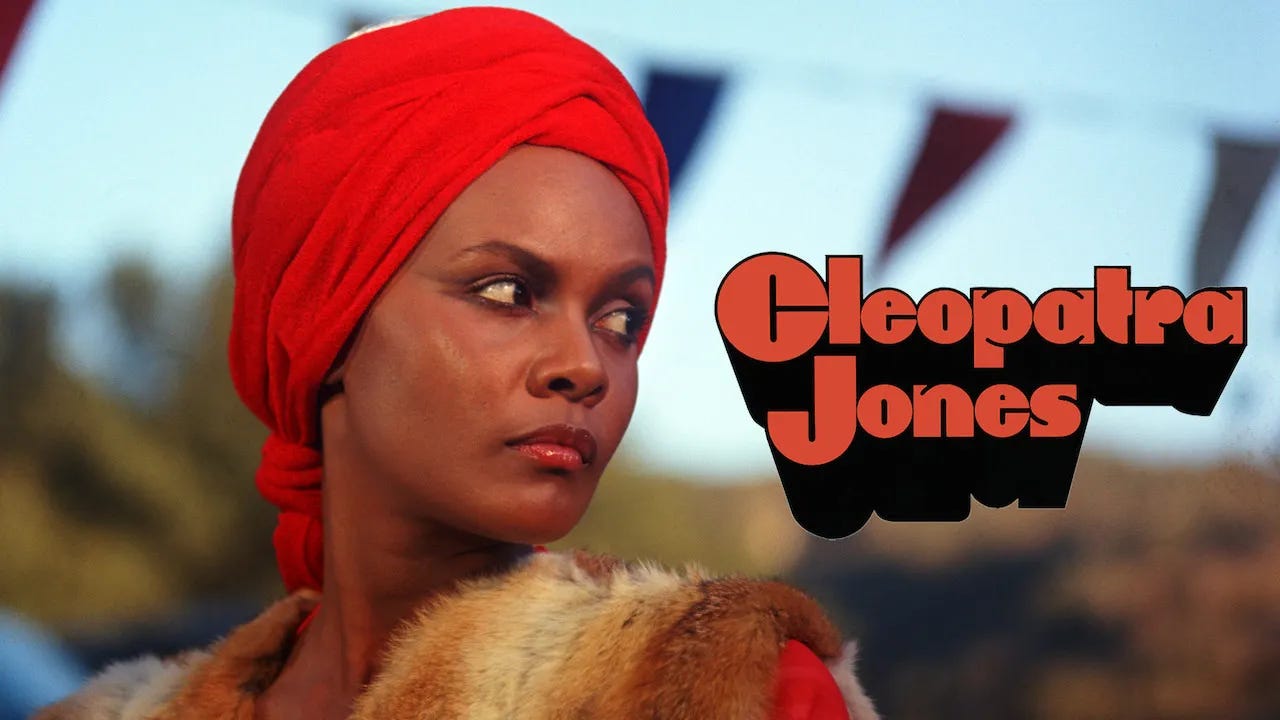
Cleopatra Jones is a fast-paced, cracking, martial-arts ball of motion. Starring Tamara Dobson as the titular character, she establishes authority and makes it clear: this is Cleo’s world; we are just living in it. In this Los Angeles-produced Blaxploitation classic, the film highlights community, city culture, and what that means for Black women making a name for themselves in the City of Angels. Cleo’s greatest strength is not her martial arts ability or unwavering allegiance to cool, but rather her reliance on the community of Watts, California, and her rejection of the myth of the lone hero.
Cleopatra is an undercover James Bond-esque special agent using overseas modeling as her cover while conducting business. After supervising the destruction of a poppy field owned by Mommy (Shelley Winters) in Ankara, Turkey, Cleo returns home to Watts, California, where she stays connected to the city through the B&S House, a home for recovering drug addicts.
Mommy plots her revenge on Cleo, using an all-male crew of agents and a plethora of beautiful young women to wait on her hand and foot, literally. Mommy orders corrupt LAPD officers to raid the B&S House, and Cleo returns to Los Angeles to enact revenge on the responsible officers. Through martial arts and impeccable style, she takes down Mommy’s drug ring, leading to their eventual showdown, where Cleo is trapped in a car crusher and then saved by her allies. With Mommy defeated, Cleo is on to her next mission: fighting the drugs that enter her home, Watts, California.
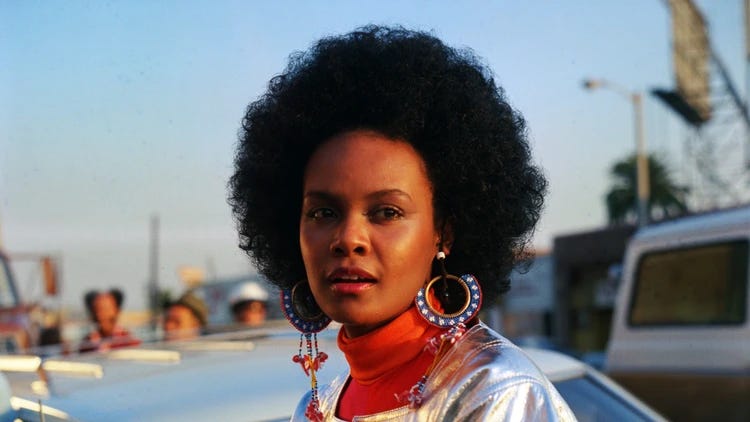
Hungry for films featuring a positive Black woman lead, Cleopatra Jones reflects on the moment when the Black Power Movement meets Black feminism. She appeals to the women of her time through a captivating combination of heroism, alluring femininity, combat skill, and Black female autonomy. As the backbone of society, Black women lead social movements, organizing efforts, and community projects, all while providing caretaking in the home. While receiving little recognition, characters like Cleopatra Jones reinforce the intersection of femininity and strength for the everyday Black woman.
Cleo commands respect, speaking with authority and a fierce staccato tongue. Delivering punchy, often cheeky dialogue, she also softens, revealing the B-side of her lifestyle. When Cleo is asked if she is okay, she replies, “My body’s okay.” The mental drain of existing as a high-powered Black woman in a white male-dominated society is generational, but Cleo gives hope to those watching. With sharp conviction, she encourages the everyday woman to remain confident and karate-chop her way out of adversity. Her confidence does not exist in a vacuum; it is shaped by the neighborhood she fights for: Watts, California.
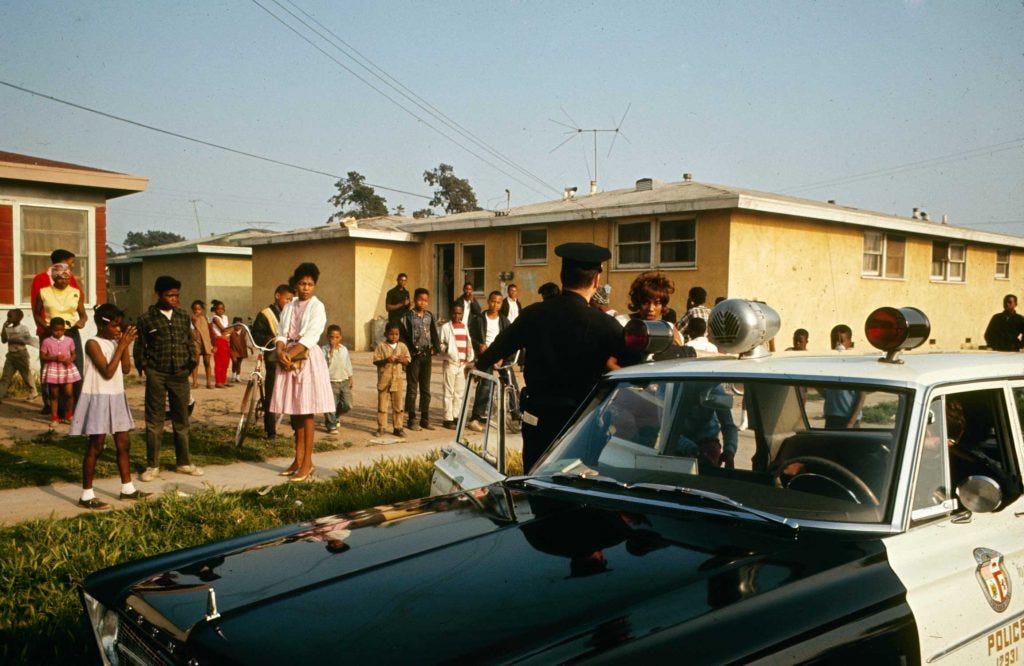
South Central Los Angeles is the backdrop for some of the most significant moments in Black American culture and, appropriately, the setting or filming location for iconic Blaxploitation films such as Cleopatra Jones, Coffy, and Dolemite. Though often draped in the reputation of Hollywood, palm trees, and dreams, it is crucial to ponder what happens when those palm trees are stained with blood. The city of opportunity and magic, Los Angeles, is also a shining example of systemic neglect and anger. Prompted by the racist and abusive treatment of the LAPD, the Watts Rebellion of 1965 lasted 6 days. The city rebelled, resulting in the deployment of the California National Guard, 34 deaths, and $40 million in property damage. In the aftermath, the community regrouped and organized through grassroots activism and the creation of arts and cultural centers in the area.
During the era of Cleopatra Jones, communal support is a necessity. While forced to face crooked cops, racists, and the evils of drug pushing, it shows how the tender care of grassroots effort creates a force field among a shared unit. “Mess with one of us, mess with all of us.” The B&S House is a fictionalized example of grassroots support in Los Angeles. Due to a lack of federal, state, and local funding, community members often shoulder the responsibility to heal their own people. Cleo demonstrates the benefits of successful community efforts, showing her allegiance and paying tribute to the community by providing protection against malevolent forces. Cleo’s boyfriend, Reuben Masters, runs the B&S House, underscoring his loyalty, and Cleo’s connection to him reinforces her desire to heal her people.
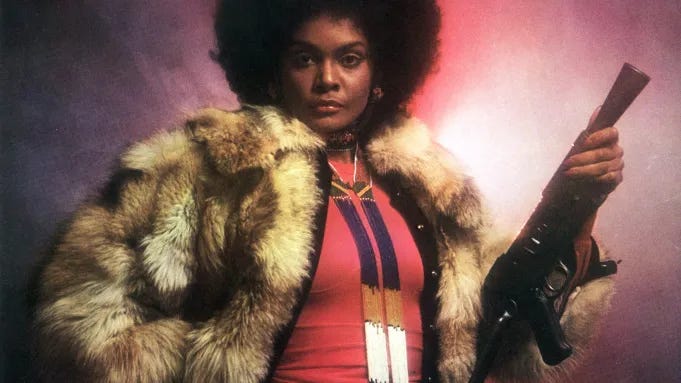
The recipe for a Black woman such as Cleo to make a name for herself in the City of Angels is as follows: 3 cups of courage, 6 teaspoons of resilience and resourcefulness, 1 packet of charisma, a sprinkle of fashion-forwardness, a hearty serving of martial-arts craftsmanship, and 7 spoonfuls of community support. Cleo is a talented Los Angeles legend and icon. However, without the knowledge and extra manpower from her allies, her battle with Mommy would have been lost. A clear reminder that even the strongest of us need support from those who care. Cleopatra Jones is not simply an action hero; she is a symbol of community building and strength in Los Angeles.
No posts
Comments
Nothing yet. Say the first thing.
Sign in to join the conversation.