
Can a machine grow like a tree? Can it learn from the rhythms of the seasons and tides? Imagine a meadow where plants, animals, humans, and machines thrive together. Welcome to the Silicon Meadow.
In 2024, media artist Refik Anadol collaborated with the Yawanawá people to make 'Living Archive: Nature' (read more about it on Right Click Save). This AI-driven installation took weather data from their traditional territory and turned it into a digital output that is always changing. It combined drawings by Yawanawá artists Nawashahu and Mukashahu Yawanawá with real-time environmental data to create a living, breathing artwork that celebrated the voice of the community behind the data.
The resilience of the Yawanawá people meets the innovation of Refik Anadol in a wonderful example of this new kind of art embedding digital infrastructure in natural rhythms
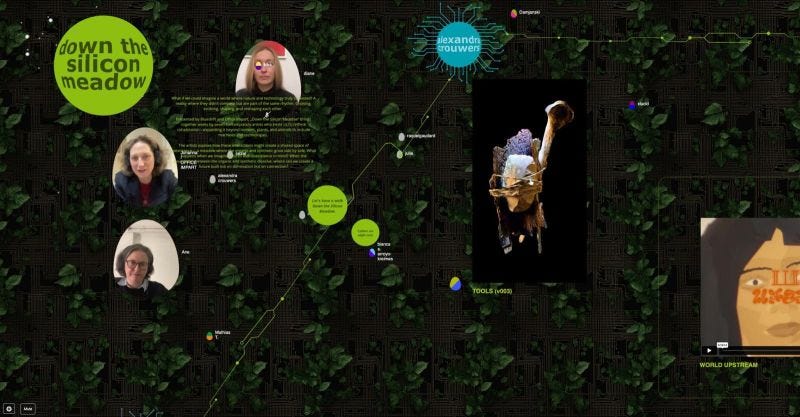
It is the change we illustrated in “Down the Silicon Meadow”, an exhibition we co-crafted with “OFFICE IMPART”. Together, the featured artworks create a dynamic ecosystem of ideas, with each piece exploring different aspects of what it means to live harmoniously with technology.
The exhibition presents an interconnected ecosystem, a vast landscape where plants, animals, humans, and machines can grow together. As we wander in this digital meadow, new ways of seeing our surroundings appear.
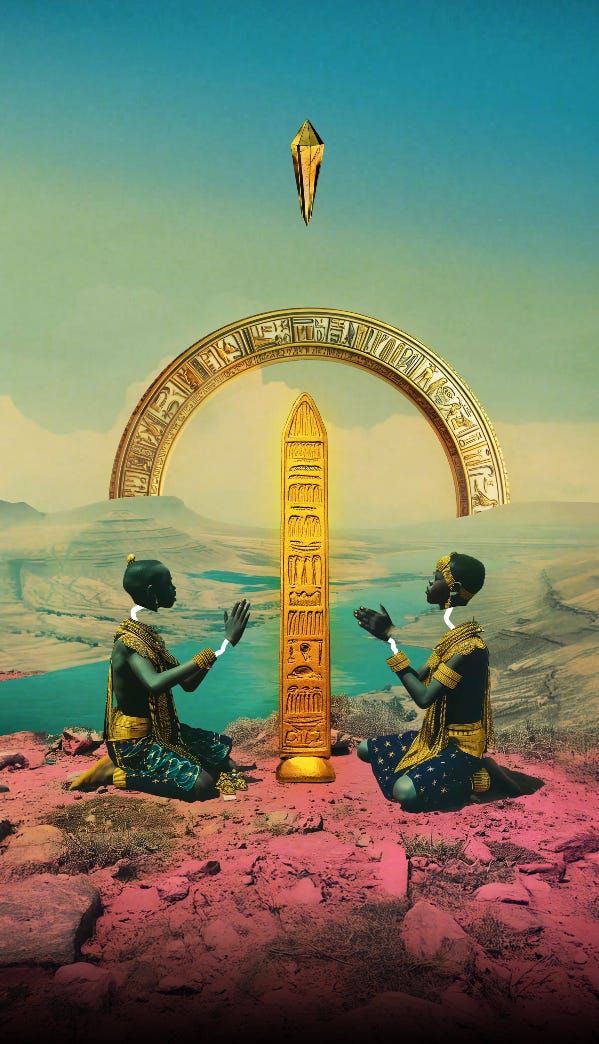
Isaac Nana Akwasi Opoku, a.k.a. AFROSCOPE’s artwork “Living Technology” sets the stage by showing the human body as the extension of planetary energy, where technology is not an external element anymore but is this inner force that fuels and guides us all. Generally exploring topics of decolonization, oneness, information overload, and deep adaptation, AFROSCOPE invites here viewers to abandon the dichotomy and appreciate the links between the two worlds.
While AFROSCOPE calls for techno-spirituality, visual artist and artistic researcher Alexandra Crouwers proposes “Tools (v003)”, an assemblage that considers matter and materiality differently. She creates bridges across time, space and ecologies, and more especially here between our techno-culture and ancient civilizations. Ancient instruments and digital waste turned into strange objects that link the past and the future. Her work invites us to consider technology as the next level of toolmanship, the next level of our eternal relationship with the material world.
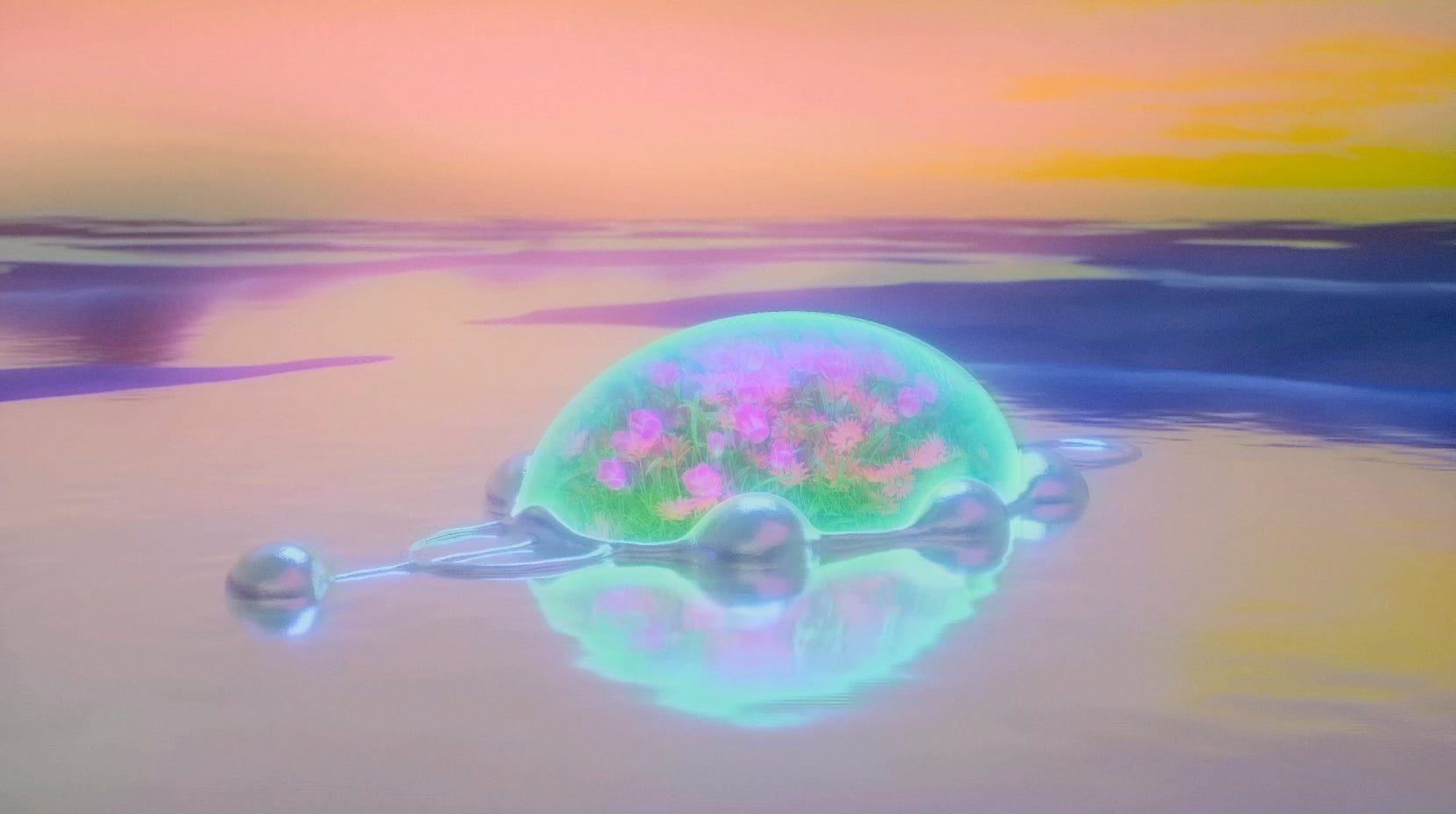
Still revisiting ancient beliefs to prepare for a better future, Canadian-Costa Rican multidisciplinary artist Bianca Shonee Arroyo-Kreimes confronts the Darwinian theory of evolution with the Panspermia theory. Born in Antiquity, this story tells us that life came to Earth with a meteorite or celestial dust traveling in the universe, spreading seeds of life. With “Vessel” Bianca Shonee Arroyo-Kreimes pushes the theory a step further by imagining these celestial objects to be bio-mechanical, half synthetic half organic like the wound of a mother. It demonstrates how the ecosystems of the future could look like – when life is supported and multiplied by artificial environments.
The meadow is not static; it thrives on motion and interaction, just as Refik Anadol’s Living Archive: Nature does. With “The Ocean has never been binary”, the artist collective CROSSLUCID brings us to the ocean where, through the use of AI, marine data is told as stories of stewardship and care. The piece reimagines the ocean as a sensorium—a fluid, adaptive system that resists binary classifications and requires collective attention.
Nathaniel Stern’s sculptures depict a vision of technological waste taken back by nature. In his series “The World After Us”, Nathaniel Stern shows laptops and phones that are discarded and overgrown with moss and roots, making us think about how the objects and materials we throw away could one-day be brought back into the ecological cycles. While some photographs are staged, others are small-scale gardens planted by the artist to let the organic take over the synthetic, see chips and circuits turn into nests of roots. In his studio, the artist becomes the first witness of bio-synthetic coexistence.

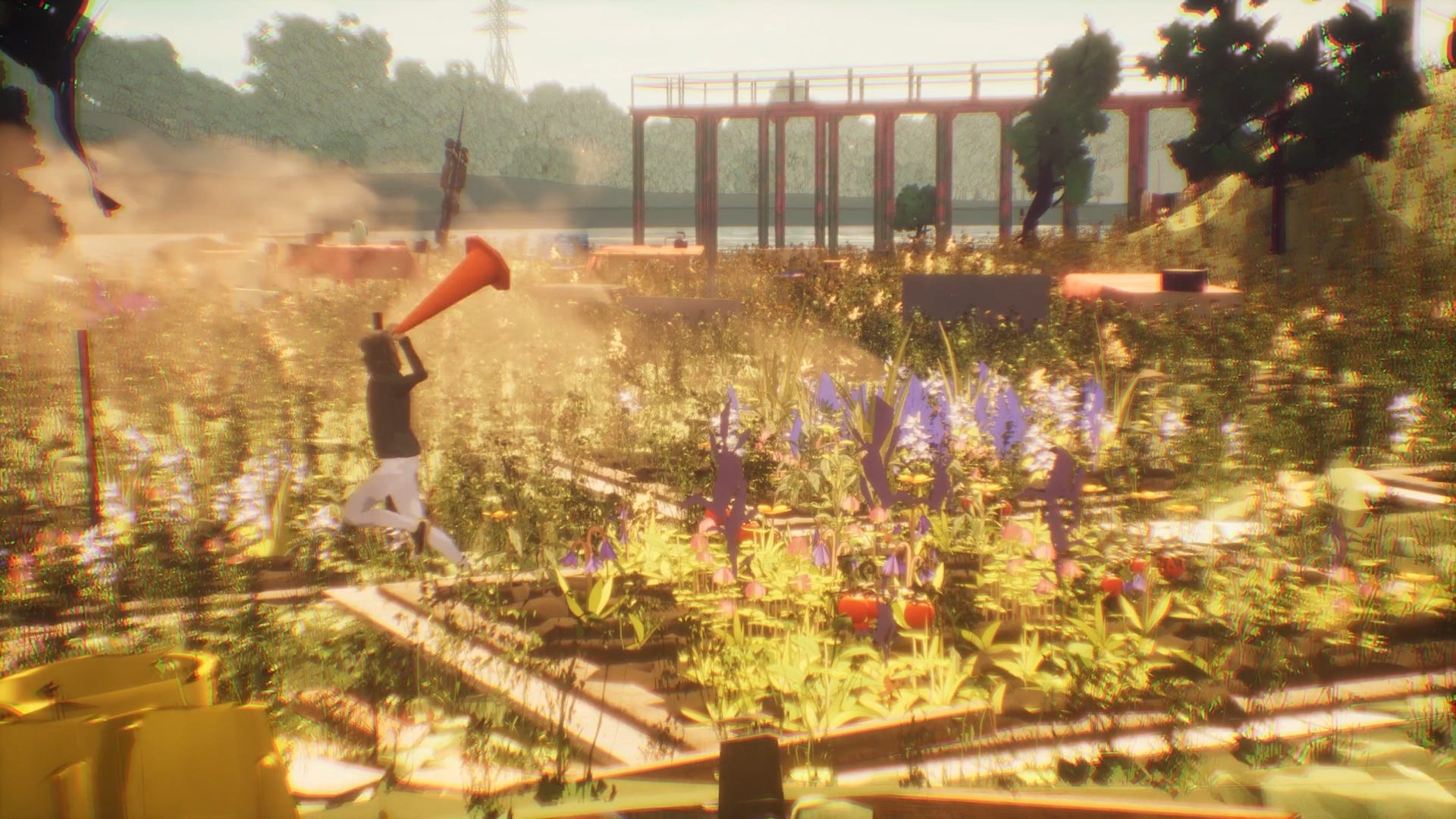
In “World Upstream”, Cezar Mocan envisions the future where AI lives in rewilded environments and spends its time in leisure rather than labor. This live simulation constructed in a game engine involves an aged hydroelectric dam that has been transformed into a peculiar picnic area. Figures such as a speaking vacuum cleaner and a wise poplar tree are depicted as being able to talk and act in a way that sometimes seems absurd, yet also deeply meaningful, as is the case with the relationship between machines and the environment in the modern world.
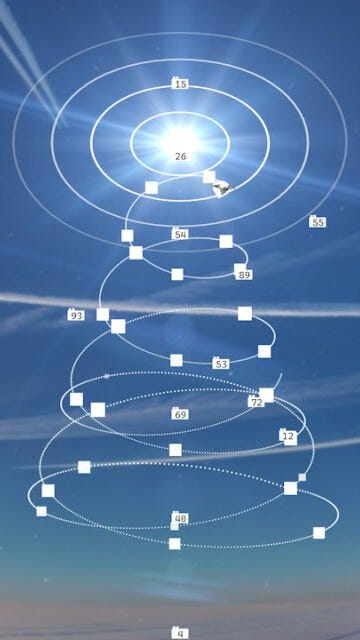
In this meadow, it seems like the sky is alive too. In “Solar Arbor”, Yoshi Sodeoka’s looping birds move hypnotically through urban geometries, their paths determined by gravity and magnetism, which are invisible forces. It is a mesmerizing exploration of chaos and order: a demonstration that technology and nature are intertwined by underlying patterns. There is also something quite spiritual in the way the bird is constantly attracted by the light of the Sun, flying towards it and then away from it.
All these works are characterized by a sense of movement and adaptation as the meadow changes with the seasons. Just like that, the exhibition is alive, it is changing right before the eyes of the viewers as they walk through it. While the visions in “Down the Silicon Meadow” are speculative and visionary, their implications are tangible. They challenge us to imagine how and what role technology can play in helping ecological recovery.
Speaking about fluidity, the virtual platform that we used plays a great part in it. “Common.garden” was developed by the artist Constant Dullart during the COVID pandemic to enable visitors to move around freely and interact with artworks more intimate, to create spaces that are centered on the connection over consumption.
On top of being a space dedicated to conviviality, the virtual show “Down the Silicon Meadow” hosted on common.garden is cleaner than 59% of all web pages globally (source)! And I can tell you that this rate is hard to find when we talk about virtual exhibitions.
This fluidity is not just a theoretical concept it is also applied in practice. “Down the Silicon Meadow” donates 5% of its sales to One Earth, which goes directly towards fighting climate change and protecting biodiversity. Here, art is not only a mirror of the world but a tool for changing it.
At its core, “Down the Silicon Meadow” is a call to stop and think about how we relate to technology, to nature, and each other. It invites us to step beyond the dualisms that have organized our thinking and instead turn to the interwoven, flexible systems that support life.
What if machines could learn from the cycles of a forest? What if they could carve stones like rivers in need of passage, or grow like roots reaching for water? What if technology wasn’t a threat but a partner in regeneration?
Let’s take a walk Down the Silicon Meadow.
Are you in Berlin? Join us!
Exhibition opening at OFFICE IMPART (Berlin, Germany)
February 1st from 4 to 8 pm
No posts
Comments
Nothing yet. Say the first thing.
Sign in to join the conversation.