
The last article of the year always feels like a moment of pause. A time to reflect, to review what mattered. A desire to share, a desire to archive.
When I started SHIFTED back in October, I didn’t know where it would take me. It began with explorations of how digital artists tackle environmental themes, grew into reflections on low-tech exhibition practices, and wandered through questions of what art can do—what it can spark, what it can change.
And now, at the close of 2024, I find myself thinking about ‘Echoes of Life—Memories of Fragile Ecosystems’. This was the most meaningful project I worked on this year. Held at the Fine Arts Institute in Cali, Colombia, from 16 to 23 November, it was more than an exhibition. It was a collaboration, a reflection, a challenge. It was an attempt to do things differently—not just to talk about sustainability, but to live it, to create it.
This exhibition, co-created with Ana Aguirre and a team of incredible volunteers, became a space where art and ecology merged together seamlessly, bringing up multi-layered discourses using art, local resources and practices and forgotten monitors, to tell a story of resilience and memory.
The stories told by the artworks presented in ‘Echoes of Life - Memories of Fragile Ecosystems' are tales of loss, connection, and resilience.
Ana Aguirre (Colombia) turned Cali's vibrant birds into dreamlike animations: a celebration of a life that hangs precariously between extinctions. Kelly Richardson (Canada) represents extinct species in diamonds, the material that contains the most pure carbon. Violet Bond (Australia) has captured a moment of transition in the forest, between life and death, while Rodell Warner (Trinidad) presents the strong relationships people can have with natural environments. Helio Santos (Mexico) presents a reflection on borders reimagined by AI, where mountains disappear and are reborn to the rhythm of extractions.
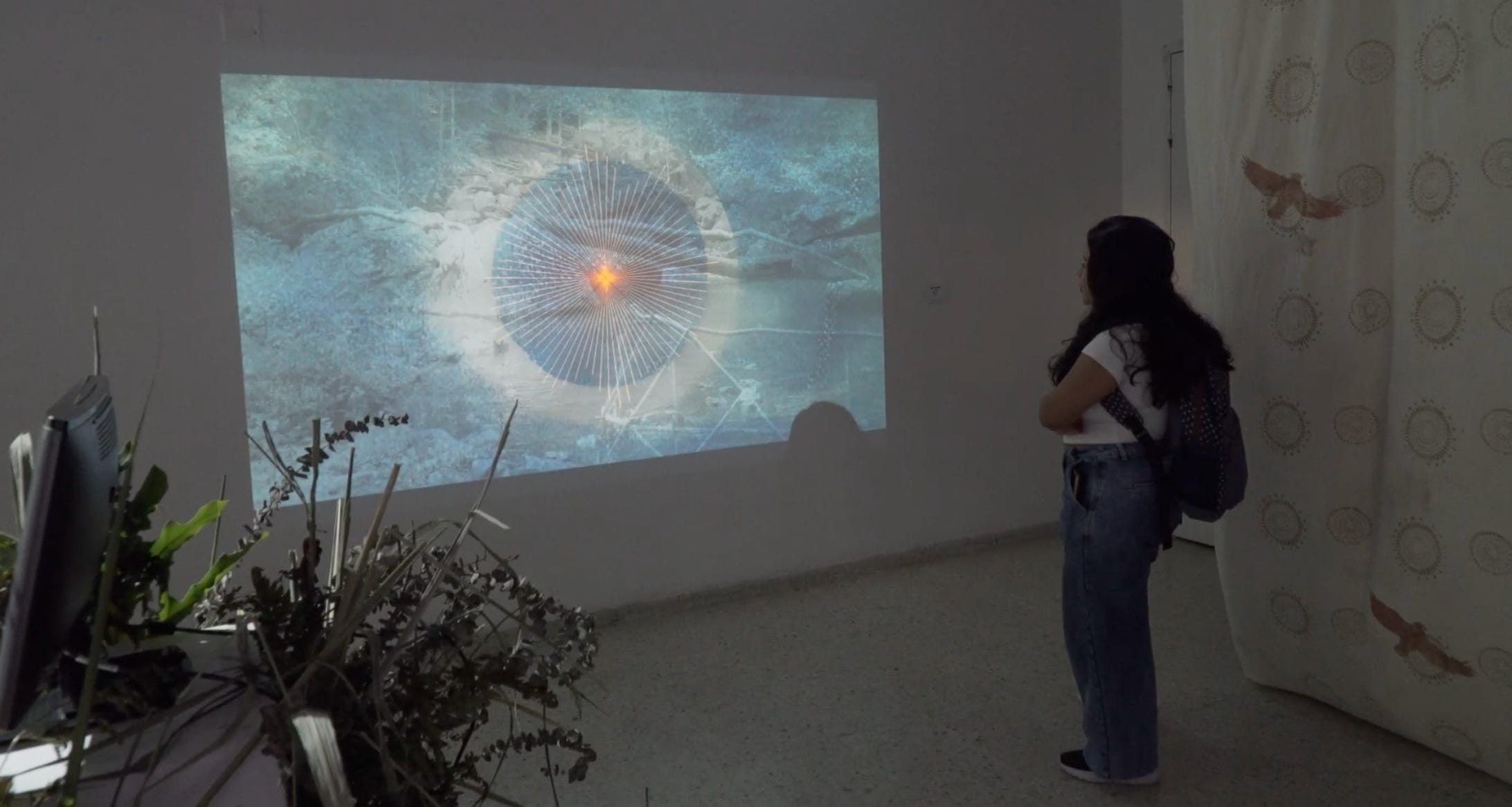
Alexandra Crouwers (Belgium), Juan Ramirez (Ecuador) and BE A STEREOTYPE aka Judd Buchanan (Brazil) present an organic allegory of industrial recycling and nature, strangely now totally and beautifully intertwined. On a similar note, Devan Harlan (USA) highlights our society's leftover consumption and lost resources.
Each piece resonated differently, leading into a sense of oneness-a recognition that struggles of one ecosystem are struggles of all. Visitors often expressed a similar feeling white ending their visit: it reminded them that we are all members of the same planet, connected by invisible threads. You can read more on the exhibition here.
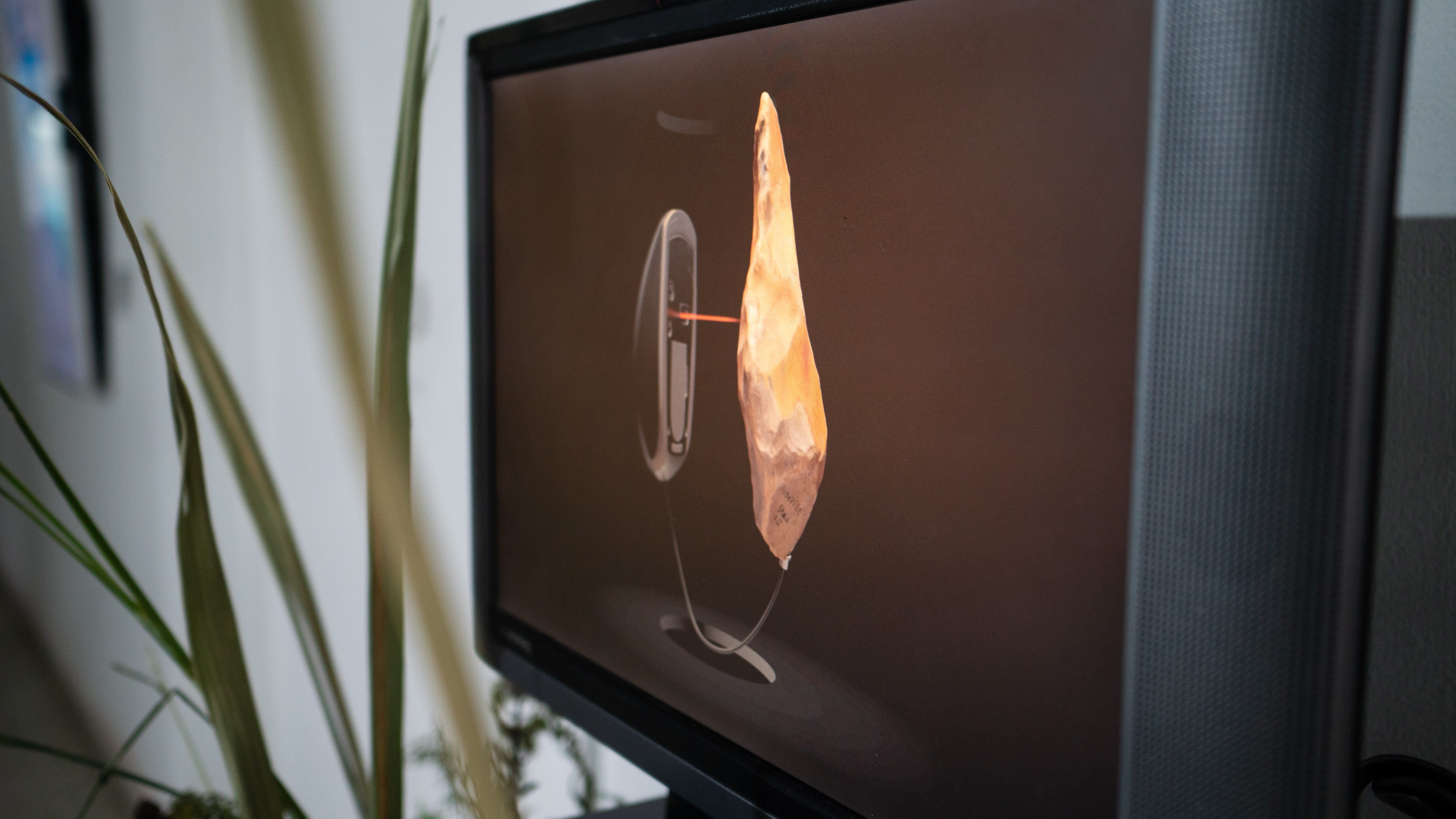
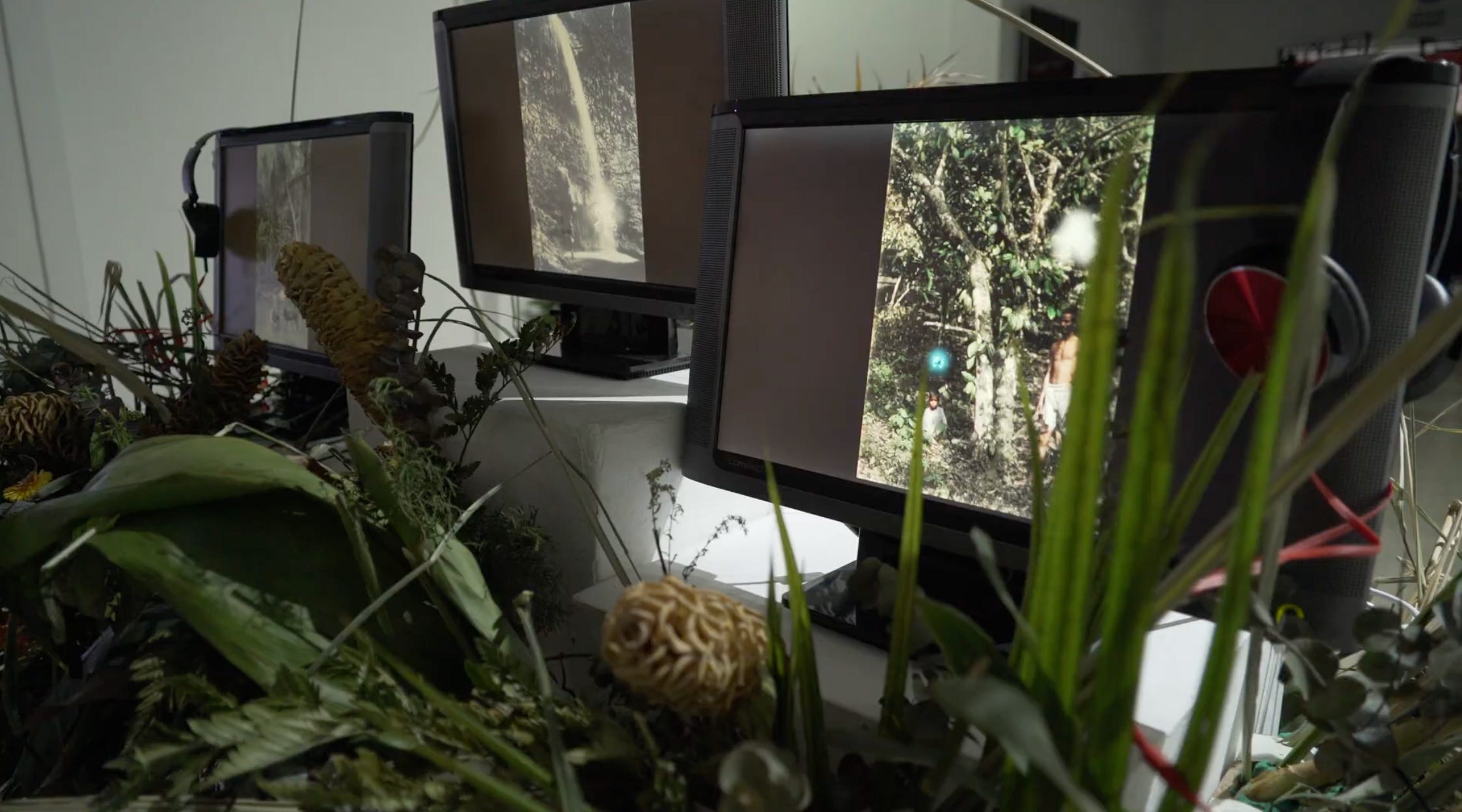
From the start, our goal was to adopt a low-tech and local approach: no new purchases, no waste, only locally-relevant materials. Everything in the exhibition would be reused, repurposed, or borrowed. As usual, it always starts with a visit of the storage room and a mind ready to think outside of the box. When Ana visited the Fine Arts Institute’s storage room, she made dozens of pictures of everything she could see. And then, we found them: old Compaq monitors, dusty, forgotten, sitting in a corner. They were bulky, heavy, from the early 2000s—but they still worked. A few adaptors later, these monitors were showing digital artworks. The matte screens even added something—softness, texture, a feeling of connection.
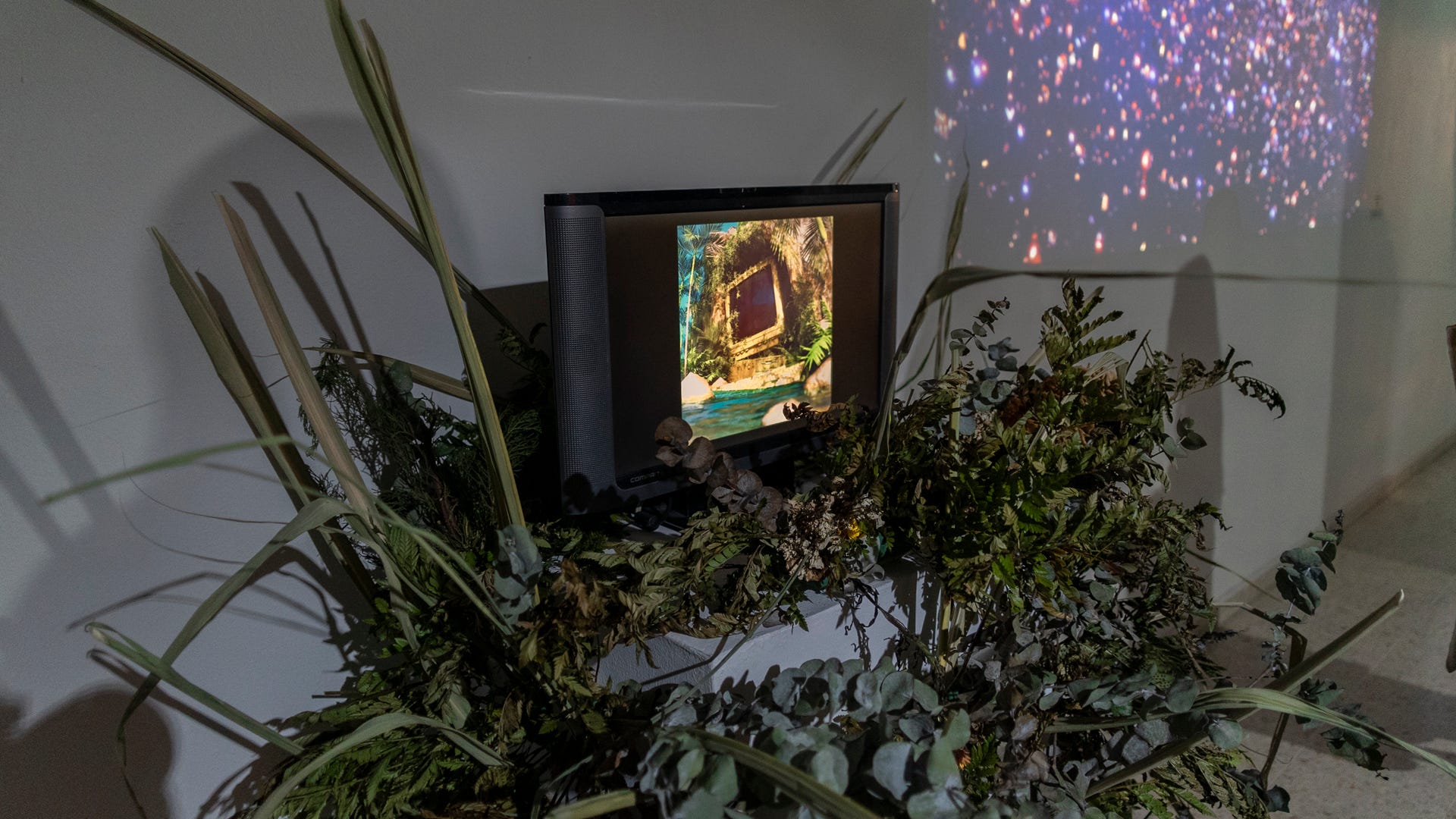
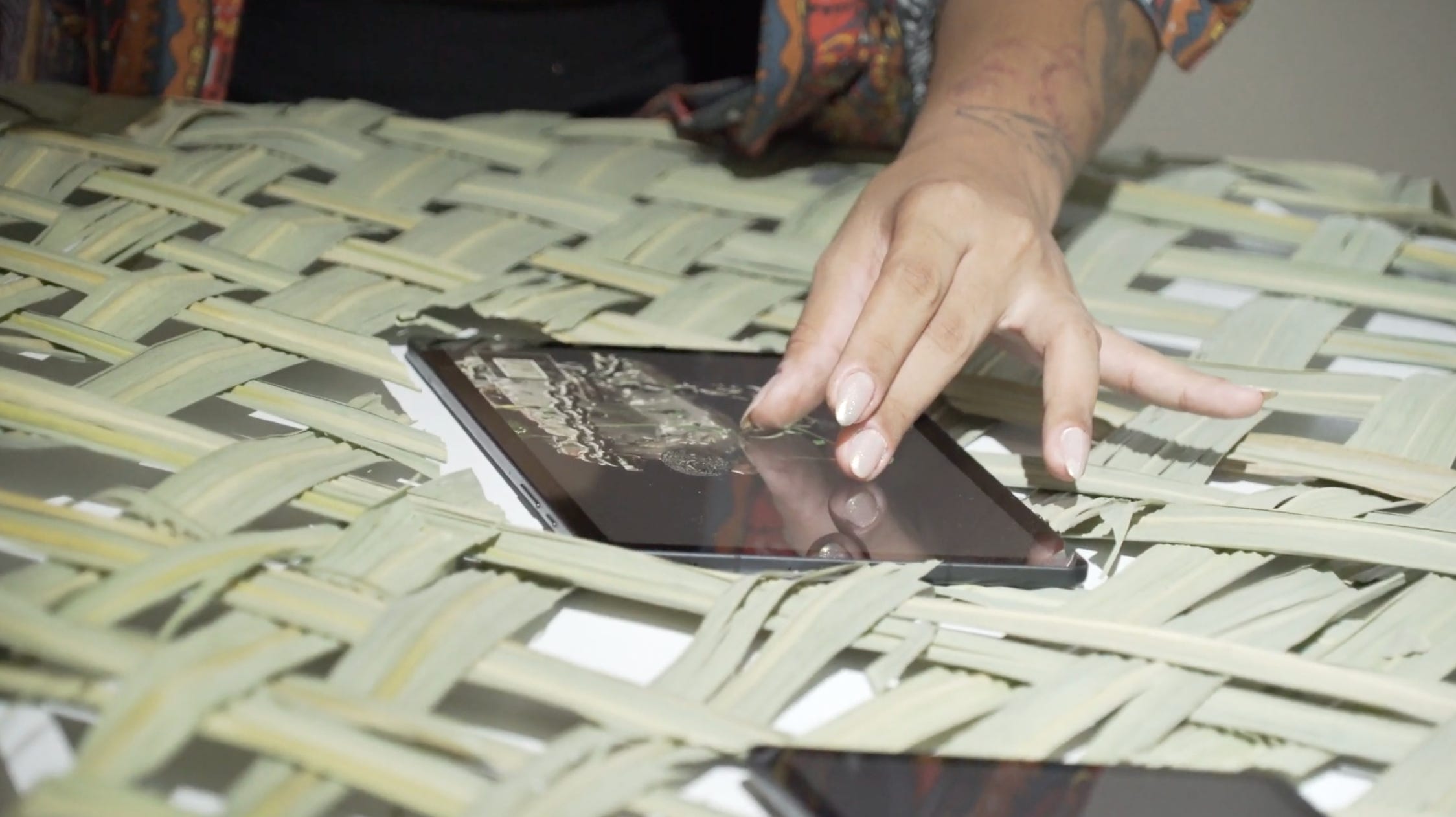
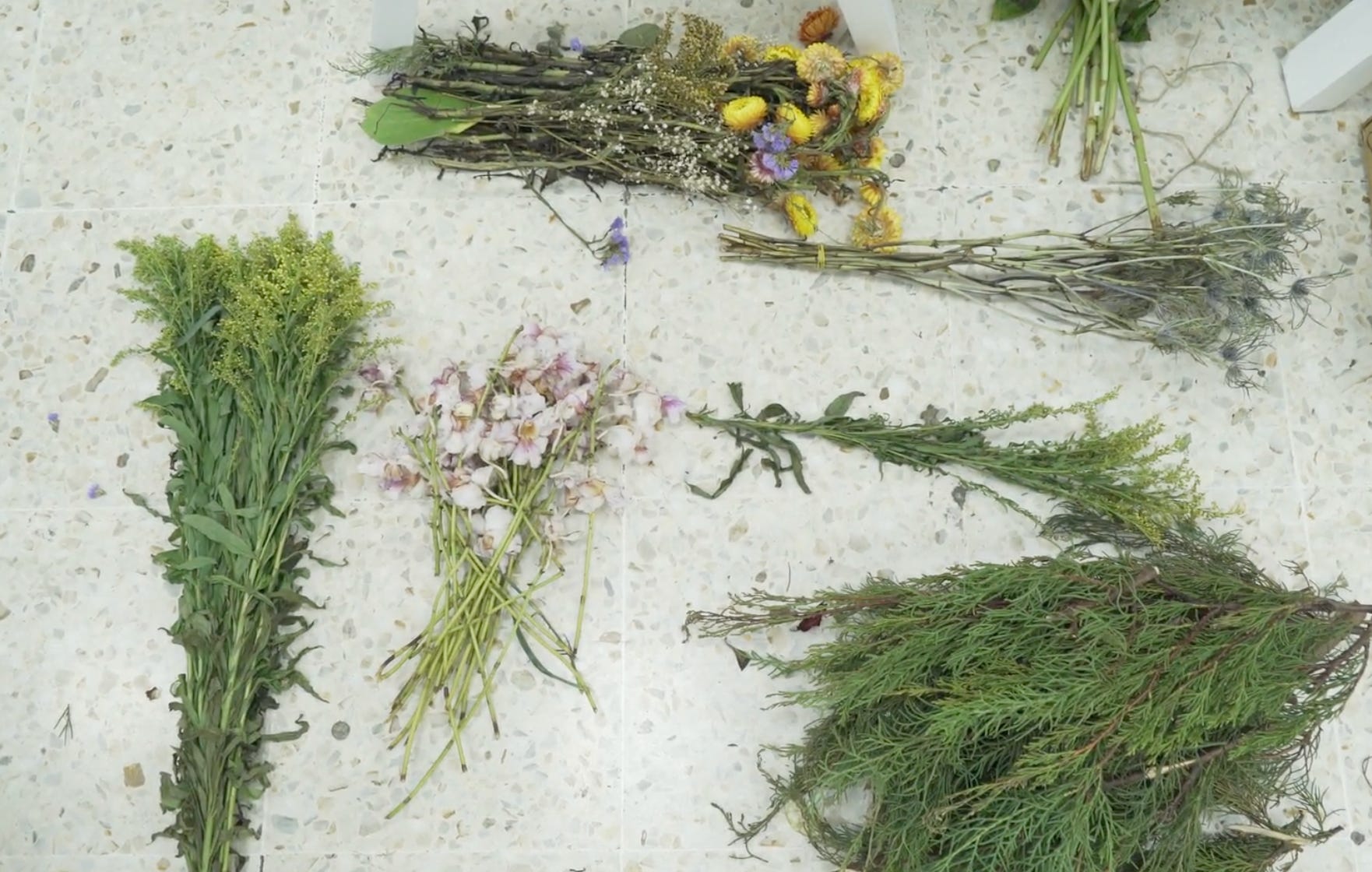
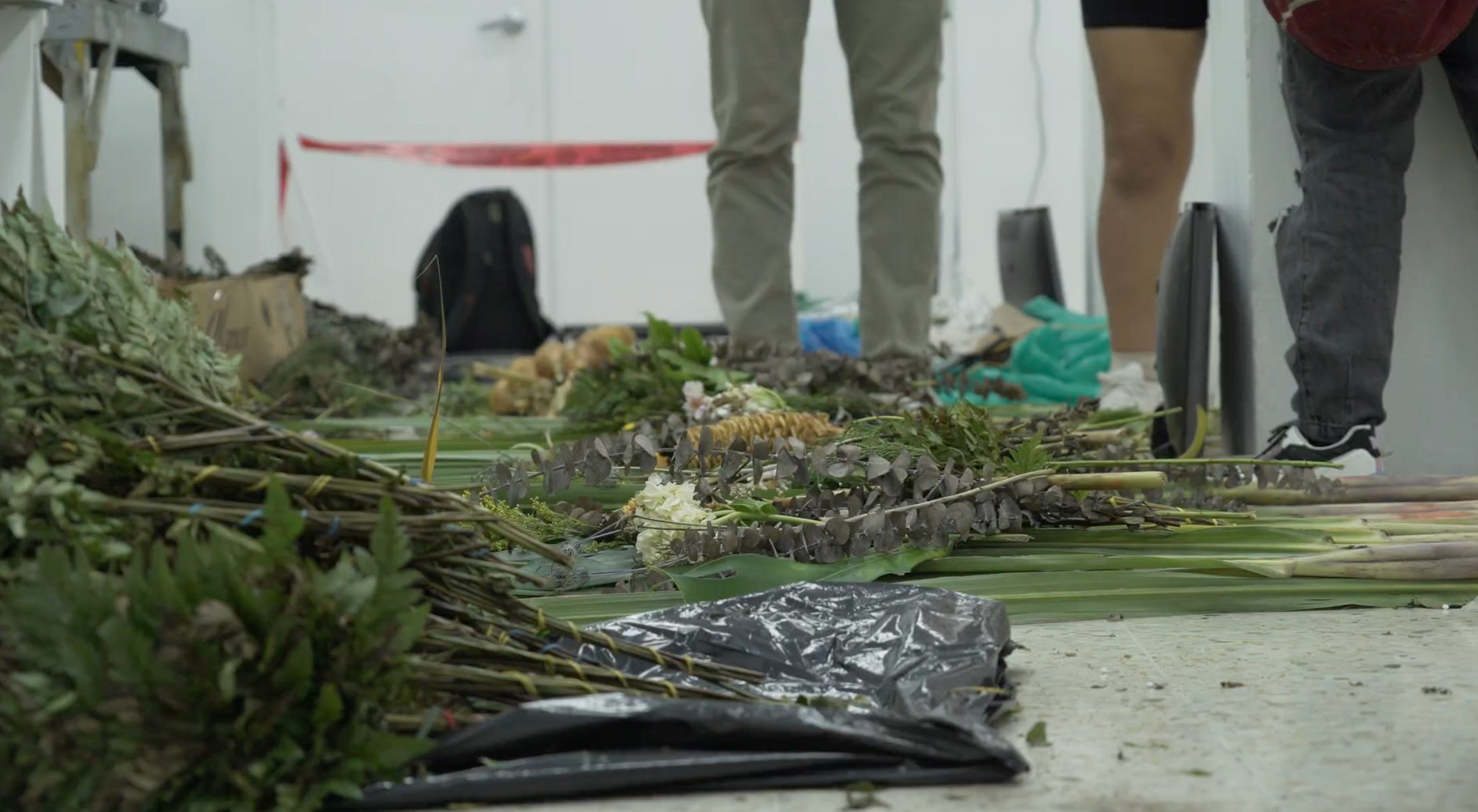
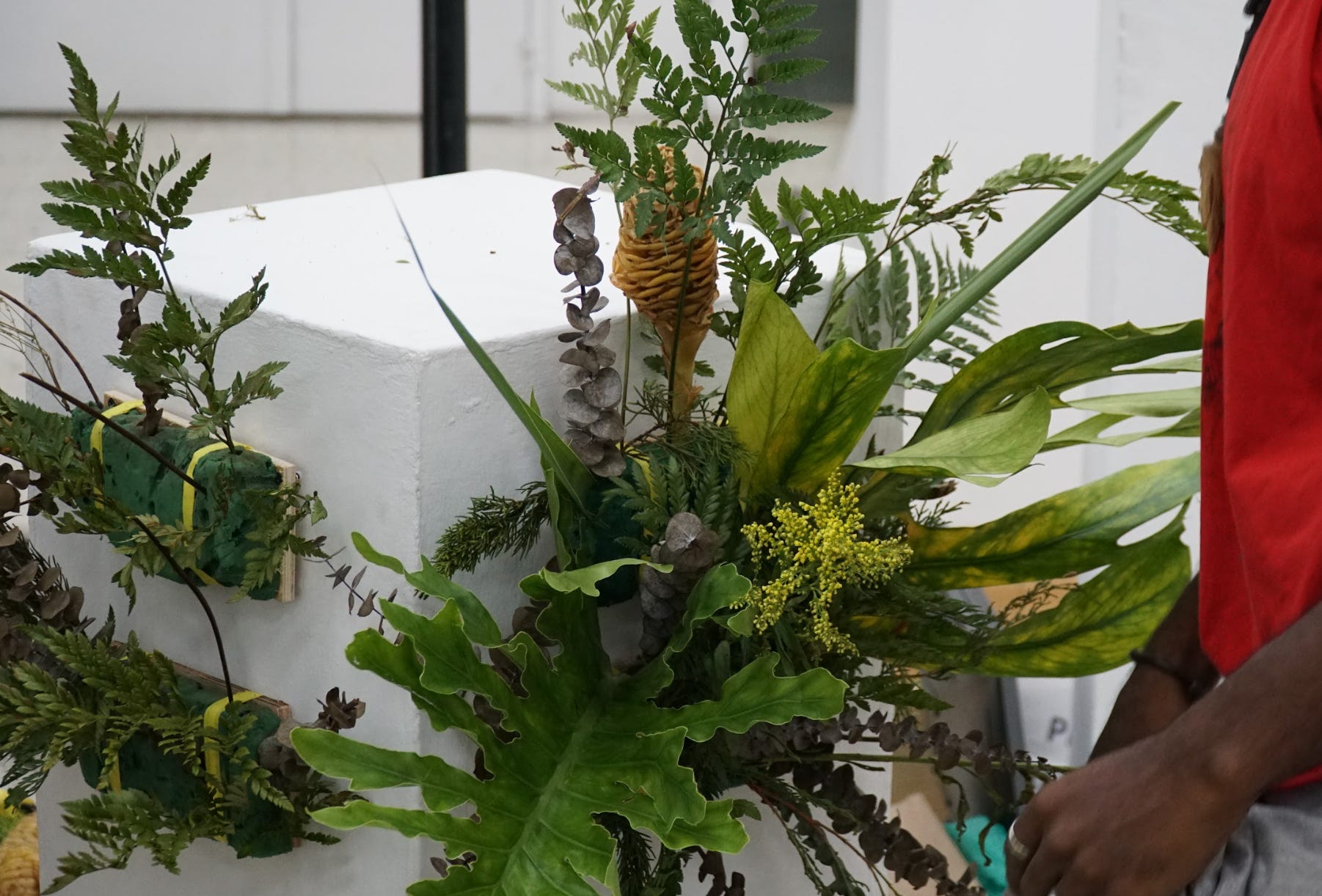
But the rest of the space needed care, too. The monitors sat on the typical white columns you see in galleries. Sterile. Cold. Not what we wanted for an exhibition about nature. We decided to find local partners. Ana reached out to a local flower shop and they gave us leftover sugarcane leaves and various plants. Using these plants, along with reused green floral foam, the team transformed the columns into lush, textured sculptures. Using these sugarcane leaves was very much in purpose as it bring an extra layer of discourse around our exhibition topic. Indeed, the water uses and the pollution due to sugarcane cultivation in the Cauca Valley near Cali are one of the biggest causes of biodiversity loss in the region.
It wasn't just the artworks and the displays that made ‘Echoes of Life’ different; it was the entire space that we constructed. Every decision meant something.
For instance, the exhibition title and curatorial introduction were not printed with the typical vinyl sticker or using toxic ink. It was instead painted directly onto the wall using coffee grounds mixed with natural glue. A nod to Cali's coffee industry and its environmental footprint-but also a small act of transformation. The coffee grounds came from an organic nearby café, again involving local shops in the exhibition making process.
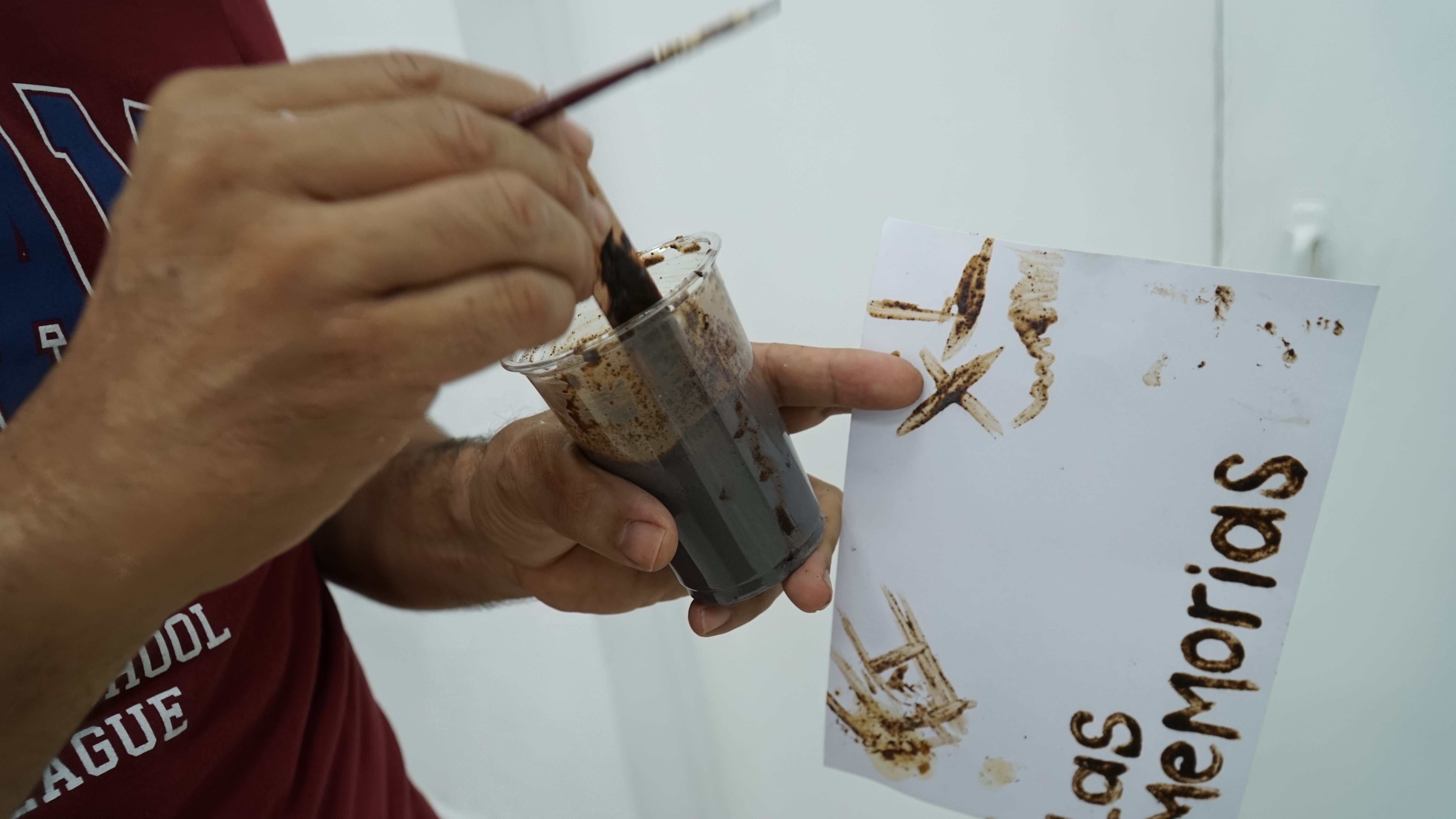
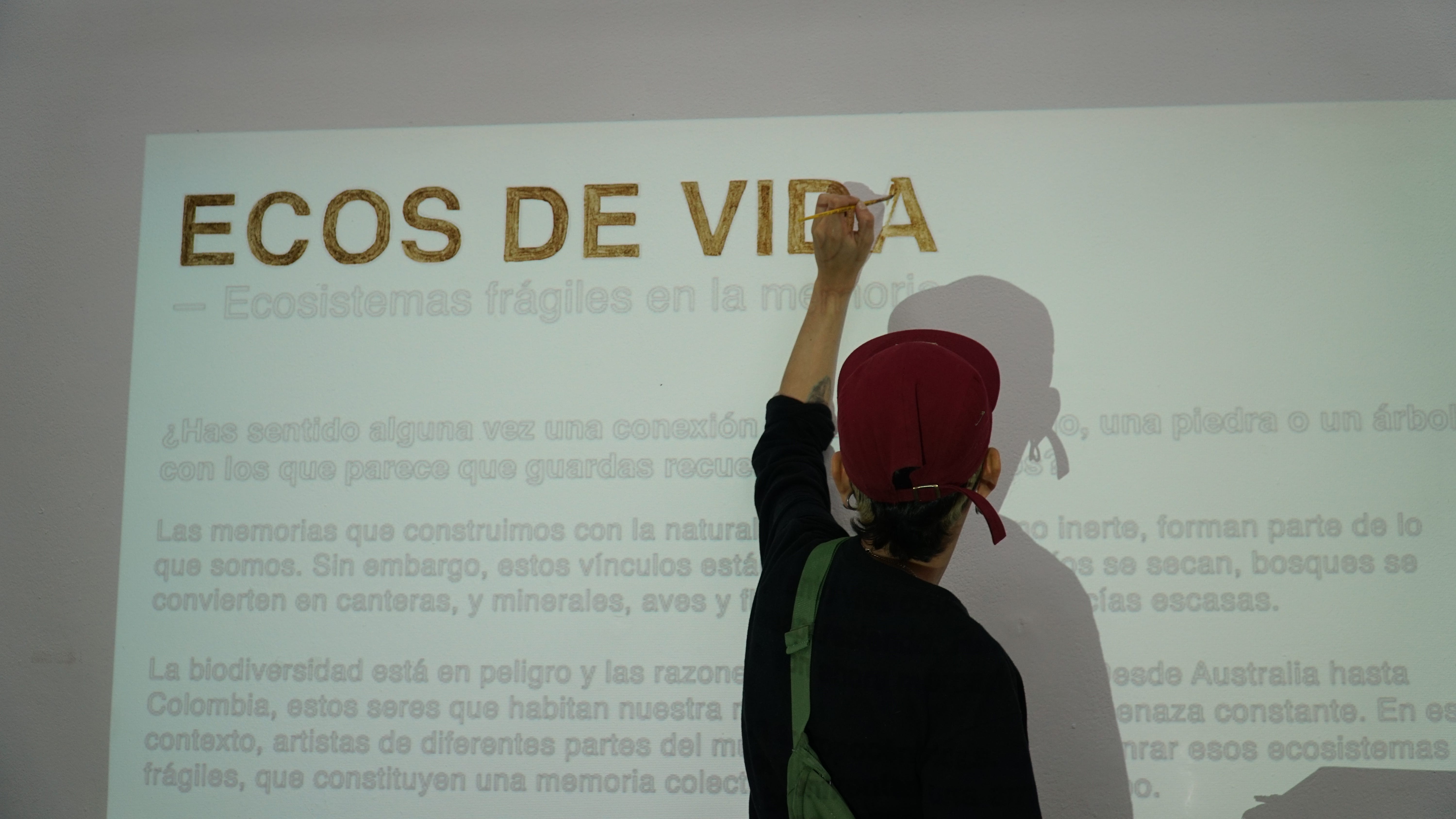
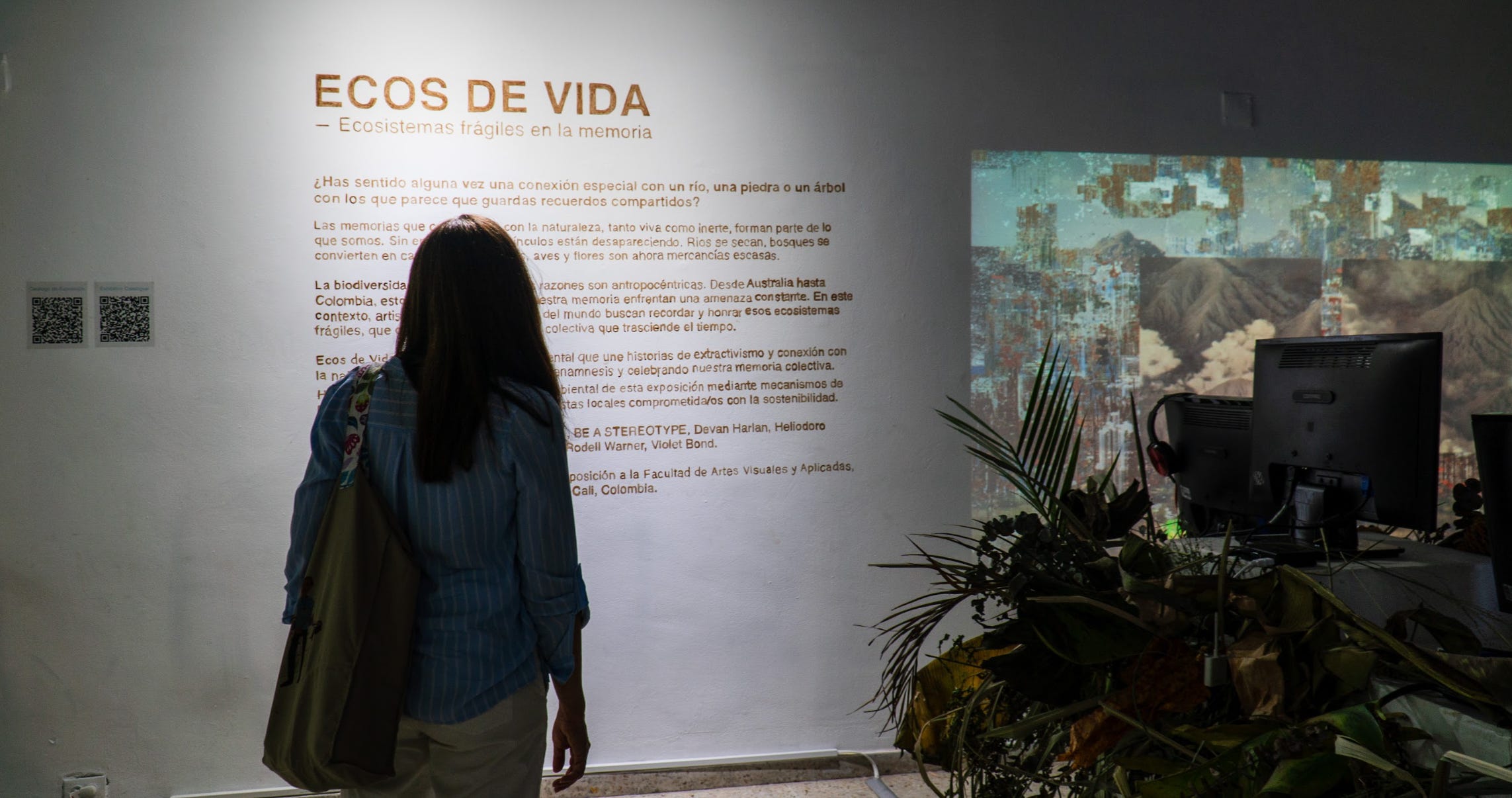
This was inspired by this excellent guide from the Centre for Sustainable Curating: “Using the Resources at Hand: Sustainable Exhibition Design”, as well as by “Exploring Sustainability Across the Arts” by the FOFA Gallery (Canada).
On top of that, the space and visitor flow were redefined with two large organic textiles. Shapes of birds inspired by Cali’s bird biodiversity, and by Ana Aguirre’s artwork, were dyed with plant-based inks. These fabrics, created in collaboration with a local artisan, hung from the ceiling, shifting the room’s atmosphere. They framed the artworks while adding a hint of earthy scent that tied the space together.
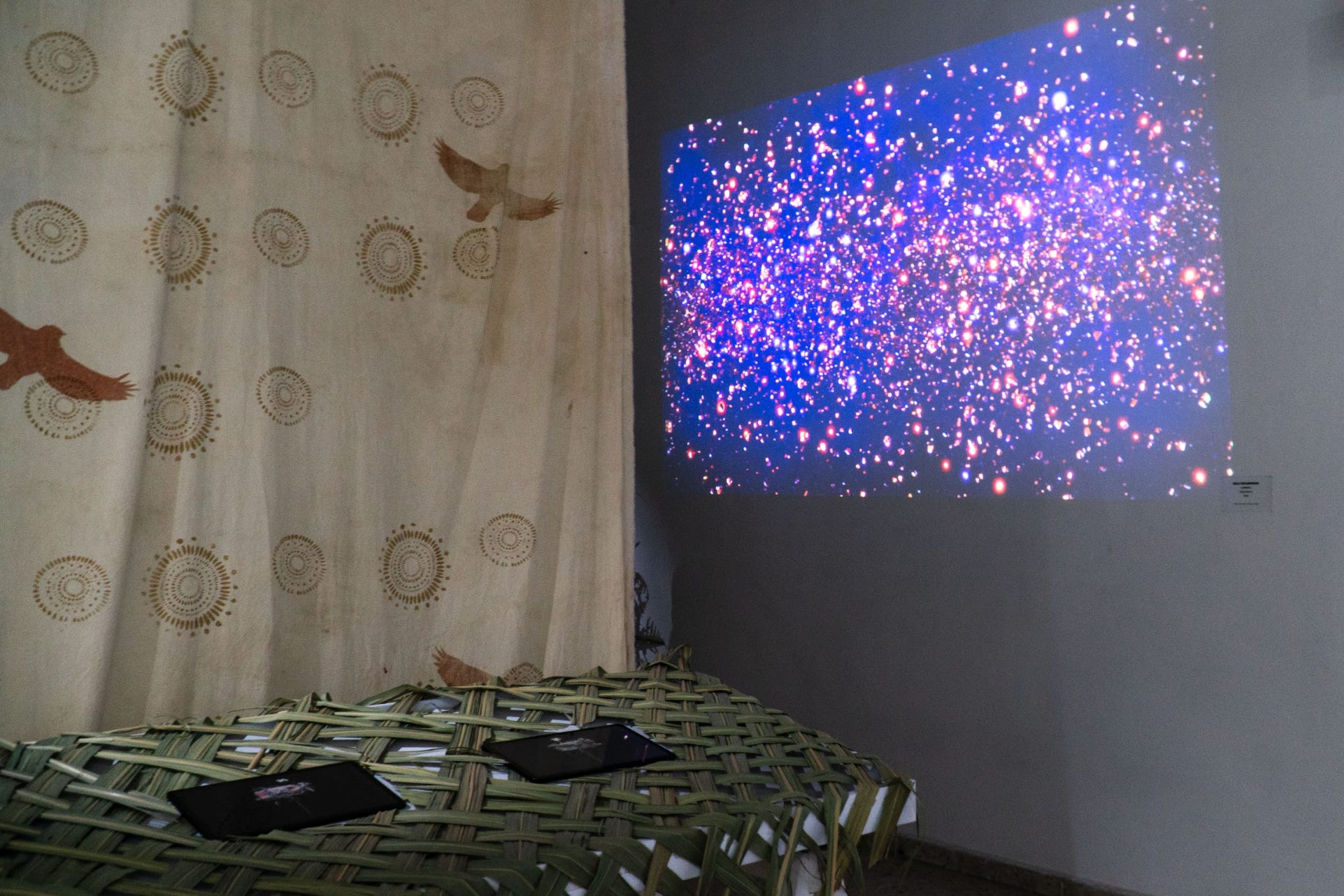
At the end of the exhibition, we asked visitors to share one word about their experience. Here’s some words shared:
Connection. Reflection. Memory. Soul of nature. Biodiversity. Synesthesia. Adaptation. Peace. Transformation. Mycelium. Awareness.
One visitor told us: “I smelled and recognized the scents of certain plants and coffee, felt so connected with being in the space.” Another said: “This exhibition repurposes elements that were discarded in a frantic rush to acquire the latest technology, rescuing screens that were on the path to their own extinction.” One last visitor said: “The animations and digital techniques used in the exhibition were captivating.”
I was impressed to see that the multi-layered we tried to convey reached out visitors so well, offering a strong emotional and sensorial experience.
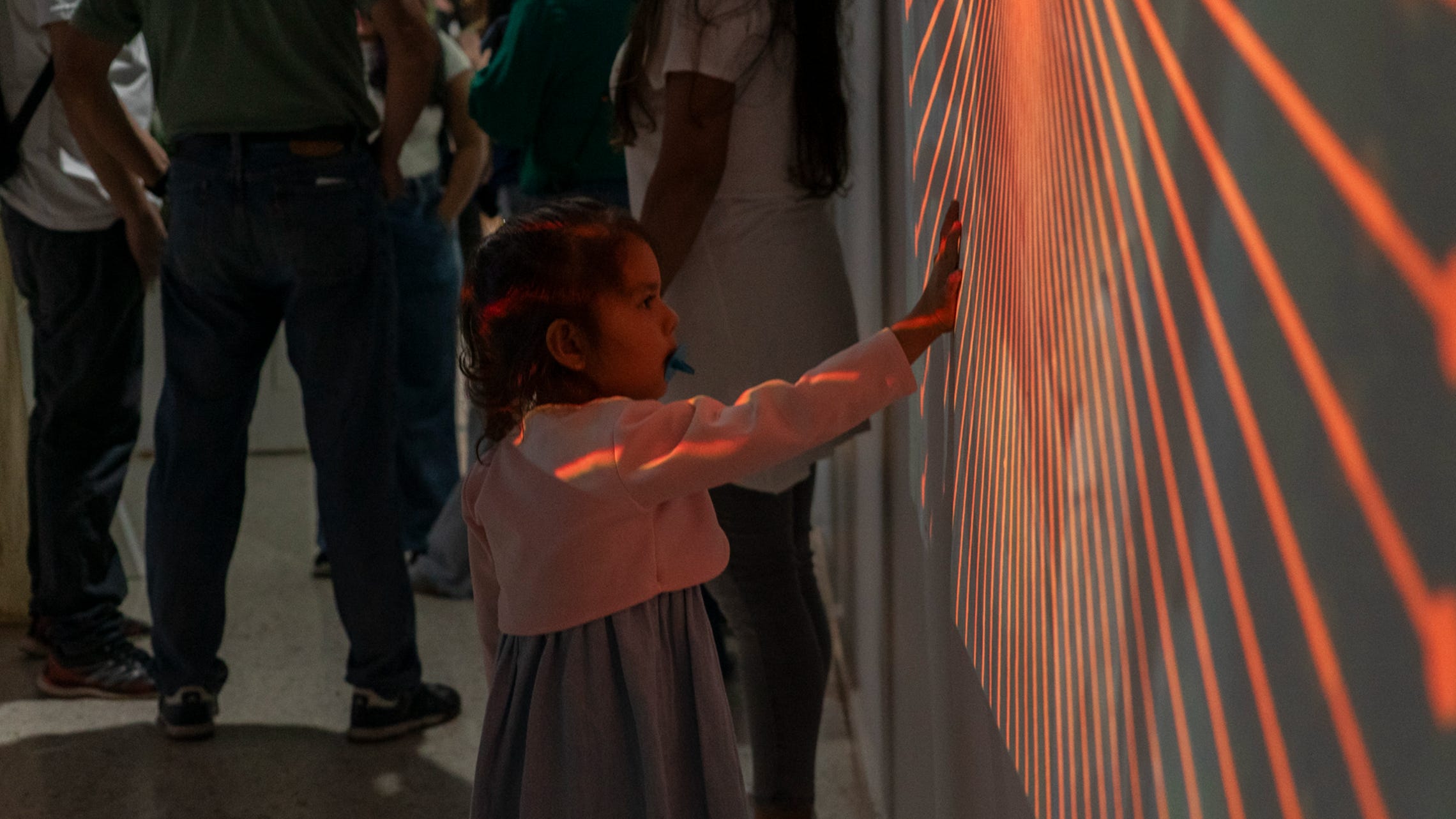
Echoes of Life was not just about what we showed, it was also about how we made it. It was about proving that art does not have to consume. It can adapt, collaborate, reuse.
As we move into 2025, I shall remember that sustainability is not a word; it's a practice, a choice. This is something we can gradually build, decision by decision.
What if every exhibition worked this way? What if care—for materials, for ecosystems, for people—became the foundation of everything we create?
Here’s to the future ✨
A huge thanks to Ana Aguirre and the Institute of Fine Arts in Cali’s team and group of volunteers who experimented with different options on site while I was sharing ideas and directions from Paris (I stopped flying in 2019 so I couldn't help on site). The creativity and their care of using local and ancient practices made this exhibition so special and unique.
From 23 January to 7 June: DOWN THE SILICON MEADOW, presented with OFFICE IMPART.
From 27 February to 15 March: MACHINA FAUNA, presented with Galerie Data.
From 23 March to 27 Avril: TBC, presented with RadianceVR.
Do you want to host an exhibition focusing on environmental digital art? Contact me!
No posts
Comments
Nothing yet. Say the first thing.
Sign in to join the conversation.