
“Class war?” That sounds a lot better than Race War or Culture War. But you are not serious. ( progressives )

Pre-emptively Answering a Common Leftist Sneer about people like me; the “petite bourgois” accusation:
I come from a family of fourteen children, and I was poor throughout my formative life; I did not have money until my mid-twenties, and by that point, the one thing I ever wanted in life was taken from me, and that thing was not property. My desire for property, housing, family security, and material independence did not arise from bourgeois comfort; it arose from experiencing their absence. To call these aspirations “petite bourgeois” will not answer any of my arguments. It merely demonstrates that Leftists want to use permanent insecurity as the test of proletarian authenticity, and a means to keep people dependent, meek and weak. As if “workers” cease to be genuine workers the moment they want something durable, and value any inherited dignity at all.
Gandhi famously quipped, when asked what he thought of Western civilization, “I think it would be a good idea.” I would say much the same about class war: Class war? That sounds like a very good idea. It is infinitely more intelligible to me than either culture war or race war, and infinitely preferable.
Class Language as Cultural Camouflage
The problem is that “the Left” advertises itself as “class war,” while in practice its class language functions as cultural camouflage for merely embittered, downwardly mobile, progressive-cultural elites who sneer at those of us of working-class origin. They create endless cultural faux pas and loopholes that are psychologically impossible for someone from a less-than-privileged, large-family origin to tolerate.
James Burnham observed that every ruling class develops what Gaetano Mosca called a “political formula”: a doctrine that “rationalizes and justifies its rule.” Our cultural and educational elites claim to speak for workers and feel they have them in the bag, but that claim increasingly serves as the political formula of their own professional and institutional maintenance. The worker supplies the moral costume for the graduate administrator, media professional, academic, activist functionary, human-resources officer, and nonprofit manager; meanwhile, these figures exercise real institutional power.
The Left therefore retains “the working class” as a sacred abstraction while becoming increasingly estranged from workers as concrete human beings: people with families, inherited customs, national attachments, religious residues, property aspirations, industrial occupations, and opinions that would never be acceptable within a university seminar.
Baudrillard and the Conversion of Class into Signs
Baudrillard helps explain the substitution. In advanced society, economic value is continually converted into “sign-exchange value.” Opinions, identities, gestures, consumption choices, and approved causes become signs of education, refinement, and socially and politically correct “virtue.” The slur “virtue signalling” has become popular because “the people” covertly understand that they are being sold hollow goods.
Class politics is transformed into a simulated class politics: a spectacle in which affluent cultural producers perform solidarity with an abstract and often non-existing “proletariat” while organizing their real coalition around the cultural distinction, of prefered and liminal groups. Material questions concerning wages, ownership, housing, taxation, family formation, industrial capacity, technological power, and democratic sovereignty are displaced by symbolic campaigns whose most immediate function is to distinguish the enlightened from the backward. The approved position becomes a social credential; the disapproved position becomes evidence of moral contamination.
Why the Meme Illustrates the Objection

Alice Thomson’s headline: “Don’t replace the culture war with class war” does not answer my objection; she only illustrates it. She and her cohorts, who cannot win elections, may speak the language of class war, but too frequently those who sit in the power chairs like her go full “mask off” demonstrating that all that stuff, is merely tolerated rhetoric that the liberal progressive mandate has no use for. They may speak the language of workers, caregivers, and voters, but then they deny the native-citizen block any standing as cultural beings. (Yes, I understand that Alice Thomson would not describe herself as a “revolutionary leftist.” She is an establishment liberal columnist. That is precisely the point: she makes explicit the managerial priorities that much of the contemporary Left accepts implicitly. The radical Left may supply the rhetoric and activists, but the establishment determines which reforms are institutionalized, and where class politics must stop.)
If “workers,” disagree with the coalition designed in their name, they are said to possess “false consciousness.” This is extraordinarily convenient. The intellectual who fails to persuade the worker never has to reconsider his theory. He can simply diagnose the worker.
Why Historic-Majority Citizens Feel Offended
This is also why many members of the historic, native-citizen-born majority experience the progressive language not merely as disagreement but as humiliation. By “historic majority,” I do not mean a biologically uniform bloc called “White people,” much less an innocent or morally homogeneous race. I mean those intergenerational populations, English, French, Irish, Scottish, European-American, European-Canadian, and others, whose families supplied much of these countries’ labour, taxation, settlement, military service, civic association, and institutional continuity. They inherited both the crimes and the achievements of their societies, as every historic people does; meanwhile no other imported group inherits the same scrutiny from leftist reconstructions of history.
From eighteenth-century abolitionism through nineteenth-century humanitarian and labour reform, and from universal suffrage to the civil-rights struggles of the twentieth century, enormous moral energies arose from within these cultures. White abolitionists attacked slavery. Workers organized against employers. Churches, socialists, liberals, conservatives, nationalists, and ordinary citizens struggled over what justice required.
On both sides of the American–Canadian border, Indigenous peoples obtained belated recognition within states that had previously dispossessed them and attempted to subordinate or assimilate their nations. The United States extended citizenship to all American Indians born within its territory through the Indian Citizenship Act of 1924, although several states continued obstructing their effective voting rights for decades. In Canada, Inuit received the federal franchise in 1950, while Status First Nations people obtained the unconditional federal vote in 1960 without being required to surrender Indian status. The Constitution Act of 1982 subsequently “recognized and affirmed” existing Aboriginal and treaty rights.
Chinese labourers who built railways and supplied the economies of California and British Columbia were nevertheless subjected to exclusion, discriminatory taxation, disenfranchisement, and restrictions upon immigration and naturalization. The United States enacted the Chinese Exclusion Act in 1882; Canada imposed its Chinese head tax in 1885 and replaced it with the Chinese Immigration Act of 1923, effectively excluding most Chinese immigration until its repeal in 1947. These injustices now occupy a recognized place in the civic histories of both countries.
Japanese Americans and Japanese Canadians were dispossessed and confined during the Second World War despite the fact that such internment is common in virtually every nation on Earth, including those less talked about like the Boers in South Africa. Both countries eventually acknowledged these acts against the Japanese, as injustices and enacted redress, America in 1988 and Canada in the same year.
Above all, the Holocaust, which I am not doubting, has become the central moral warning of the postwar Western world, together with the less mentioned, Poles, Soviet prisoners of war. Remembering this has become an accusation against the descendents of the Western Allies: the British, Canadian, American, or other Allied populations who had no part in Hitler’s crimes in occupied Poland and Eastern Europe. Historical responsibility is used as a cudgel by recent “immigrants” against “Whites” as a collective group, even though “Whites” did not see themselves as such, and for the most part, with the exceptions of some Germans and Ukrainians, suffered to end the Third Reich.
The progressive tradition hereby sounds inconsistent, frequently hypocritical, and sometimes terribly selective.

The “Older Culture” Had a Conscience
These contradictions can be seen in literature. Mark Twain could express vicious contempt toward American Indians while becoming an important critic of slavery and anti-Black racism. James Fenimore Cooper, by contrast, dignified Indigenous courage and portrayed dispossession as a moral tragedy. Harriet Beecher Stowe made the suffering of enslaved Black Americans a national moral question in Uncle Tom’s Cabin. Mary Henderson Eastman wrote sympathetically about Dakota life while defending Southern slavery in Aunt Phillis’s Cabin.
The point is not to rank one people’s suffering against another. It is that the older “European-derived” civilization already contained multiple, competing languages of conscience. “Social justice” was not imported into a moral vacuum by new, enriching migrant arrivals. The progressive cultural elite inherits this long tradition of internal criticism, claims exclusive ownership of its moral achievements, and then treats the civilization capable of producing that criticism as nothing more than an accumulation of guilt.
Modern progressive universalism largely emerges from the self-critical traditions of European-derived societies. This does not stop progressives from increasingly treating that self-criticism as a weakness to be exploited. For them and their allies, it is not seen as evidence of a moral inheritance worth preserving, but as proof that those societies possess a uniquely guilty inheritance; that “the white devil” must be blamed for everything. The end result, is that they demand a universalistic conscience most intensely from the historic Western majorities, from “The Whites,” while tolerating and even encouraging much more particularistic forms of memory, pride, grievance, and group interest, for every other possible constituency and gripe on Earth. How can you expect class unity when you do this?
When “White Privilege” Becomes a Total Biography
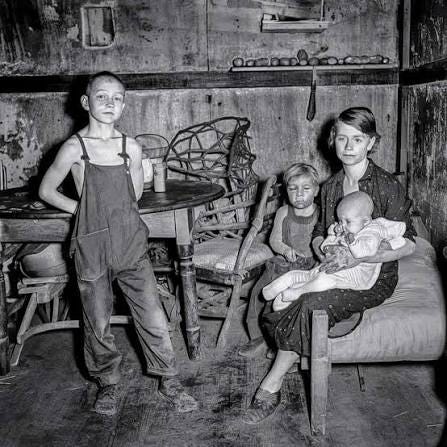
It is therefore offensive to tell an ordinary citizen whose ancestors mined the coal, cleared farms, built railways, worked in factories, fought in wars, paid into the state, joined unions, raised families, and accepted successive expansions of citizenship that he possesses no inheritance except “privilege.” Privilege may accurately describe a particular advantage. It becomes an insult when deployed as a total biography.
It converts ancestry into collective culpability while rendering contribution, sacrifice, downward mobility, present insecurity, and historical participation morally invisible. The person is held responsible for an ancestral ruling class to which his own ancestors may never have belonged, while receiving no corresponding credit for the workers, soldiers, reformers, and taxpayers from whom he also descends. He is told that his “ancestral genetic crimes” are his inheritance but that its reforms belong exclusively to the contemporary Left.
This Is Not an Indictment of Other Peoples
This objection does not blame immigrants, minorities, or any other race or civilization; they did not invent this institutional language. They are rationally pursuing their “self-interest” within the rules presented to them. The responsibility belongs principally to domestic elites who design those rules and distribute status through them. The injury occurs when equal citizenship is replaced by an asymmetrical moral order: nearly every group may articulate a collective memory, defend its continuity, and name its interests, while the historic majority may appear collectively only as a problem requiring correction.
Left-wing identity politics is treated as emancipatory by definition. Majority identity, even when expressed civically, historically, and democratically, is treated as presumptively threatening, as “Nazi” or “fascist.” That is not equality. It is an authorized hierarchy of identities.

The Burnhamite Test: Who Actually Benefits?
If citizens reject this arrangement, the managerial Left does not reconsider its representation of them. It declares them deceived, prejudiced, or manipulated. However, this is precisely Burnham’s problem of the political formula. “Social justice” legitimates the managers even when their institutional priorities no longer correspond to the material interests of the people in whose name they govern. This is why it makes more sense to ask: Who actually controls the institutions? Who receives the jobs, authority, grants, credentials, and moral prestige? Who is permitted to speak? Who is spoken for? A movement may use working-class language without transferring any meaningful power, property, or institutional control to workers.
The Fred Rose High-Water Mark
The electoral history of Canadian communism makes this problem impossible to ignore. Fred Rose, a Jewish electrician, union organizer, and Labour-Progressive candidate associated with the Communist Party of Canada, won a 1943 by-election in the working-class Montreal riding of Cartier and was re-elected in 1945 with approximately 40 percent of the local vote. At the national level, however, the party’s 1945 result was only 2.13 percent, even at the height of Soviet prestige following the defeat of Nazi Germany. Rose was subsequently convicted of conspiring to transmit state secrets to the Soviet Union and expelled from Parliament. His case catastrophically reinforced the suspicion that Canadian communists were loyal to a foreign state rather than independently rooted in Canadian working-class life.
Canada’s second explicitly communist organization, the Marxist-Leninist Party of Canada, has likewise remained electorally microscopic. In the 2025 federal election, every one of the Communist Party’s 24 candidates and every one of the Marxist-Leninist Party’s 35 candidates finished below 10 percent in their respective constituencies, and ordinarily very far below it. These parties are legally permitted to organize, publish, nominate candidates, and contest elections. Despite generations of inequality, recessions, deindustrialization, unaffordable housing, weakened unions, and concentrated corporate power, neither has constructed a remotely mass electoral constituency. That failure demands an explanation.
Why Western Communist Parties Cannot Escape the Margin
The usual communist explanation is that capitalist media, money, electoral institutions, and anti-communist propaganda prevent the working class from recognizing its interests. Canada’s first-past-the-post system punishes minor parties, and the NDP absorbs much of the available socialist and labour vote. The history of Stalinism, the Soviet invasions of Eastern Europe, and the collapse of the USSR also damaged the communist brand, and they still cannot get over this despite the enthusiasm of their tiny fan base.
My point is that a party cannot claim indefinitely to represent a class that persistently refuses to be represented by it. At some point, electoral marginality becomes evidence about the party itself. Western communist parties have frequently preserved a rigid ideological vocabulary, a subcultural organizational style, and foreign-policy attachments unintelligible or unattractive to most wage-earners. They speak as custodians of a historical doctrine rather than as builders of a new social majority.
They also devote immense attention to cultural and symbolic struggles already represented by universities, liberal parties, foundations, corporations, unions, media institutions, and the administrative state. The more their activism parallels the cultural programme of mainstream progressivism, the less reason workers have to regard them as an independent political force. The communist party becomes an ideological monastery on the edge of the liberal coalition: preserving sacred texts, supplying activists, intensifying approved reforms, and receiving a fraction of 1% in return.

The Exceptions Prove Something Important
There are exceptions, but in my view they only clarify the problem, and make it much worse. The Communist Party of Greece received more than 7 percent in the June 2023 parliamentary election. Unlike most Western communist parties, it retains historical roots, disciplined organization, trade-union connections, patriotic and anti-imperialist themes, and a recognizable place in the national memory of occupation, resistance, civil war, and dictatorship. The Communist Party of the Russian Federation received nearly 19 percent in the 2021 parliamentary election, although Russia operates under severe authoritarian constraints. The Russian party also draws strength from Soviet memory, national continuity, welfare nostalgia, state-power traditions, and opposition to the economic devastation of the 1990s.
Neither party survives by presenting workers as placeless economic units. Both draw upon national history, collective memory, sovereignty, and inherited institutions. That is precisely what much of the Western cultural Left refuses to do. It wants the economic language of class while rejecting the historic identities through which actual working populations understand solidarity.
The NDP and the Absorption of Class by Culture
The Canadian New Democratic Party provides the larger and more consequential example. A labour party should possess an intelligible constituency among wage-earners, industrial workers, renters, and citizens excluded from property ownership. Instead, the federal NDP became increasingly difficult to distinguish from culturally progressive liberalism.
Many construction, resource, manufacturing, transportation, and industrial workers feel that the party regarded their industries, communities, aspirations, and social instincts as embarrassments. It devotes enormous moral energy to causes already represented throughout the broader progressive cultural establishment while failing to make itself indispensable on housing, productivity, ownership, energy, or industrial development.
In the 2025 federal election, the NDP collapsed to 6.3 percent and seven seats, the worst result in its history. The party was squeezed between Liberals who already dominated progressive institutional culture and Conservatives who increasingly spoke the language of affordability, work, housing, national production, and popular resentment. The stronger institution absorbs the reform, appropriates its language, hires its personnel, and leaves the smaller party without a distinctive constituency.
Reform as an Exhaustion Machine
An actual communist could provide a coherent explanation for this failure. If nearly all revolutionary energy is absorbed by cultural reforms already championed by universities, corporations, media institutions, professional associations, and the liberal state, the revolutionary organization becomes the radical auxiliary of a stronger managerial coalition.
It supplies militants, vocabulary, moral urgency, and pressure from the flank. The mainstream institution then adopts a moderated form of the reform, converts it into administrative policy, and receives the political credit. The radical party exhausts itself advancing reforms that strengthen the institutional world of its liberal competitors. It gets the cast-offs of the progressive coalition, while the managerial centre acquires another justification for its authority. “The Left” presents itself as a “revolutionary politics” while becoming an unpaid research-and-development department for managerial liberalism.
Why Populism Cannot Simply Be Dismissed
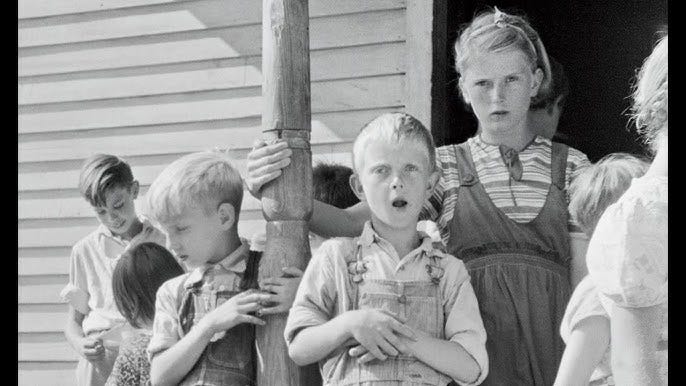
Meanwhile, when a business-backed party takes a populist turn, its concern for workers is immediately declared fraudulent. Economic elites have repeatedly borrowed popular language without surrendering power. Burnham gives us every reason to distrust the performance. But insincerity does not eliminate the underlying coalition logic.
There is at least a potentially natural bargain between productive capital and dependable labour: between those capable of financing and organizing production and citizens who want property, family security, rising real wages, technical education, and a durable place within the economic order. “The Right” may betray that bargain. But the Left cannot defeat it merely by insisting that workers have been tricked. It must offer a materially superior bargain of its own, which it refuses to do.
The Producerist Coalition in the Age of AI
In an age of robotics and artificial intelligence, this question becomes more pertinent and serious. If increasingly fewer workers are required to produce increasingly greater wealth, the old promise that nearly everyone can secure full social membership through employment alone will begin to fail. Workers must therefore acquire more than temporary wages. They need:
affordable property, housing, and family security
capital participation and widely distributed ownership
bargaining power during technological transition
public claims upon infrastructure and natural wealth
and a share of the productivity gains generated by automation.
This suggests a producerist coalition rather than conventional libertarian capitalism: productive enterprise rewarded for investment, innovation, and expansion, but technological gains deliberately translated into mass ownership and national prosperity. The objective should not be to preserve every obsolete job. It should be to ensure that technological abundance does not produce a small class of owners and administrators ruling over a permanently dependent population.

Population Policy Is Also Economic Policy
This is where conflict over population policy becomes material rather than merely racial. Some employers, investors, and governments favour “immigration” because it expands labour supply, consumer demand, rental demand, and property values. Existing citizens may reasonably ask whether continuous expansion suppresses wages, strains housing and infrastructure, diminishes their political leverage, and transfers wealth toward existing asset owners, especially when automation is simultaneously reducing the long-term need for labour.
As traditional left-wing parties lose their historic working-class base, immigration appears to offer a replacement constituency: newly arrived citizens whose first relationship with the country is mediated through the parties, public agencies, settlement organizations, and cultural institutions that promise admission, recognition, and protection from exclusion. Political institutions cultivate grievance, dependency, and partisan loyalty among populations still seeking security and standing; this becomes less and less economically and socially desirable, not just from a Left-wing point of view, but simply from an economic point of view.
Lee Kuan Yew understood this, warning that “In a multiracial society, you don’t vote in accordance with your economic interests and social interests; you vote in accordance with race and religion.” That is the contradiction the contemporary Left refuses to confront. A movement may enlarge its electoral coalition through demographic and identity-based incorporation, but in doing so it can make genuine class solidarity progressively more difficult. Workers no longer have a motive to see each other as workers and citizens with common material interests; they are organized instead as rival racial, religious, and cultural blocs.
You can hardly sneer that we have “false consciousness” and “ask us to unite by class,” while you quietly tolerate all kinds sneers against Whites who “have not made it.” It is routine, in various ways, for “the Whites” to be demeaned by striving immigrants as “White trash” and “less than” by recent immigrants who came to Western countries, with at least a dollar in their pocket, sneering down upon the descendants of Whites, who founded countries, in many cases, without a dollar in the pocket. To demand, expect unity under said terms and conditions is absurd.
There is no “anti-racist” organization, founded with the express purpose of seeking out, penalizing and policing expressions of “racism,” “ethnocentrism” or “micro-aggressions” in groups that come from continents and cultures, where such pride distinctions are commonplace and certainly not tabooed.
To drive the point home even further, while the descendants of historic majorities, derived a language to defend the rights of indigenous peoples, and condemned slavery, there has not been a single non-European derived state or institution on Earth, which has ever condemned “White slavery” historically, either by Morrocans of Western Europeans, or by Tatars of Eastern Europeans. “Rights” and the expectation of “humanistic” and or class-based consciousness, has always been a one-way street. No Ottoman Turk, even advocated for the Rights of Greeks before independence in 1829. When “Whites” are slaves, typically, its fight, die or accept.
There is no language of unity or rights made on their behalf historically. Only the historic majorities of former European countries have ever had a “conscience for the feelings of others.”
The Marxist Double Standard on Nationhood
The deepest inconsistency concerns the national question. In India, Marxists could logically unite class struggle with anti-imperialism and speak in the name of an oppressed nation. Marxist theory repeatedly recognized that workers do not exist in an abstract economic ether. They possess languages, territories, histories, cultures, and political communities.
In the First World, the English, French, Irish, American, or Canadian worker is frequently told that any comparable concern for national continuity is inherently illegitimate because his state was once powerful, imperial, or settler-colonialist. But none of this establishes that an ordinary working political community permanently forfeits its right to democratic continuity.
Where I Part Company with the Left
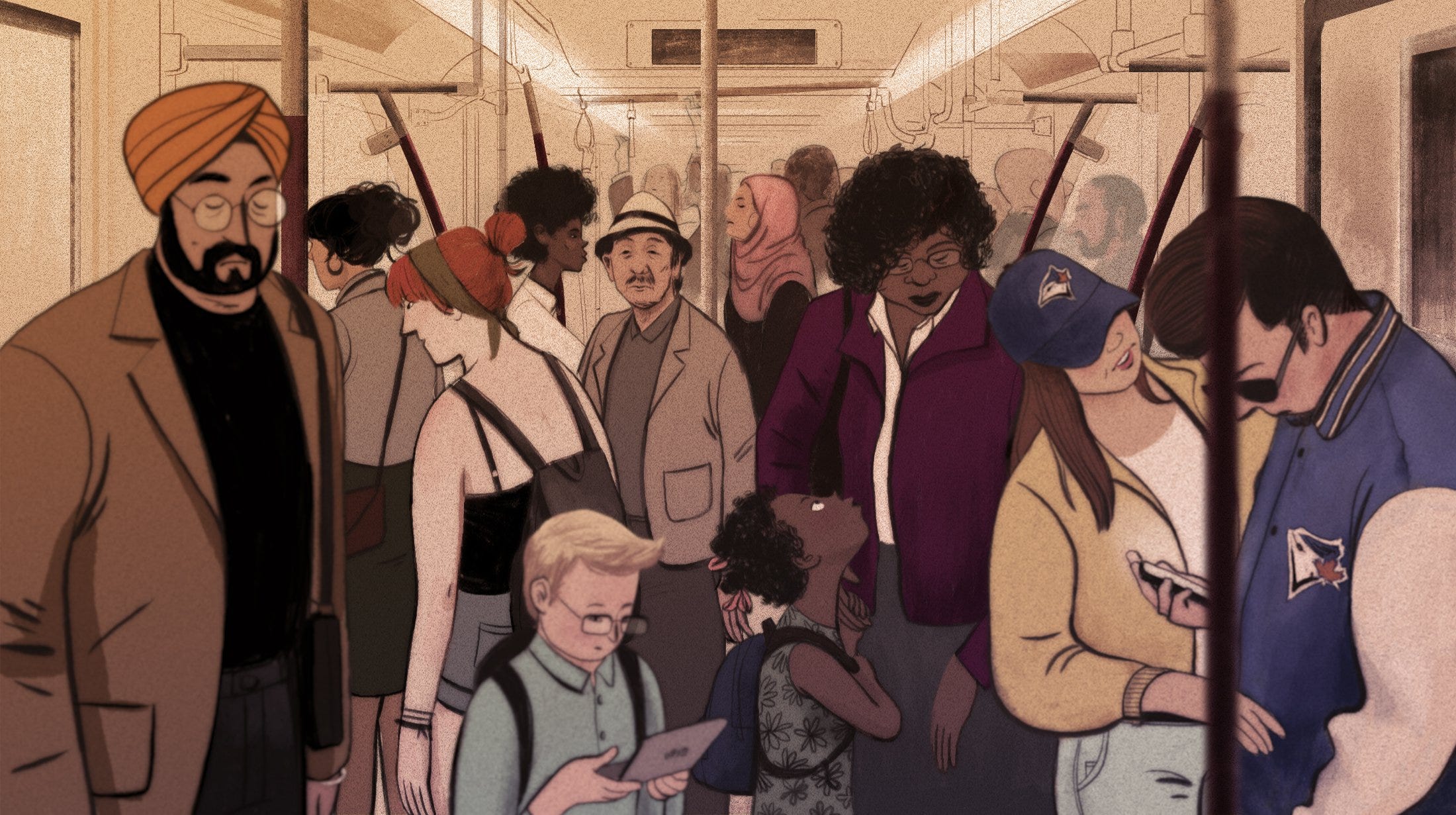
That is where I part company with the contemporary Left.
I could support a politics that organized citizens around material independence, productive property, dignified work, family security, national reciprocity, technological abundance, and restraints upon concentrated wealth. I cannot support a managerial caste using the worker as a legitimating symbol while treating actual working and taxpaying citizens as culturally contemptible. Nor can I accept that communist parties receiving fractions of 1% possess some mystical authority to define the authentic interests of millions who reject them. Their marginality does not prove that class conflict is imaginary. It suggests that their version of class politics has ceased to constitute workers as a credible political subject.
A real class politics would ask who controls production, who receives the gains from technology, and whether economic development strengthens or dissolves democratic citizenship. It would offer workers ownership rather than symbolism, power rather than therapeutic recognition, and membership rather than managed decline. That would be class war in a meaningful sense. What we have instead is too often cultural rule conducted in the worker’s name. I have been sneered at for making this argument as though it were merely a petite-bourgeois objection. But the label does not answer the objection; it evades it. I am not asking for a private exemption, a professional sinecure, (unlike many of you Leftists) or some special advantage over other workers. I am arguing for the wider distribution of property, bargaining power, technological dividends, affordable housing, civic standing, and economic security. These are not merely metaphysical anxieties about cultural-racial purity. They are concrete questions about labour supply, infrastructure, ownership, political representation, and the distribution of gains from automation.
Nor is the aspiration to own a home, accumulate productive property, support a family, or transmit security to one’s children evidence of false consciousness. It is precisely because working people possess too little durable property that they remain dependent upon employers, landlords, financial institutions, and administrative systems they do not control. To dismiss their desire for independence as “petite bourgeois” is to make permanent proletarian insecurity into a moral ideal on behalf of people who exercise cultural authority while bearing comparatively little responsibility for the material consequences.
The issue is not whether I have adopted the manners of an imaginary bourgeoisie or whether I merely have “reactionary views.” That is beside the point. On the contrary, I am offering to meet the so-called “revolutionaries” where they are. My question is whether ordinary citizens should remain tenants, debtors, temporary employees, and administratively managed clients while wealth and productive power concentrate above them. My argument asks for no advantage that could not be generalized: greater ownership, security, sovereignty, and standing for the broad body of working citizens. Tell me again: am I really just making a petite-bourgeois objection?

Sources
Managerial power, class, and cultural politics
James Burnham, The Managerial Revolution: What Is Happening in the World (1941). Burnham’s foundational account of the rise of managers, administrators, executives, and bureaucrats as a governing class.
James Burnham, The Machiavellians: Defenders of Freedom (1943). Particularly relevant for the “political formula” through which ruling minorities justify their authority.
Jean Baudrillard, For a Critique of the Political Economy of the Sign (1972; English translation 1981). Source for “sign exchange value” and the conversion of material relations into systems of social distinction.
Thomas Piketty, “Brahmin Left versus Merchant Right” (2018). Documents the transition of major left-wing parties from predominantly lower-education electorates toward highly educated constituencies.
Amory Gethin, Clara Martínez-Toledano, and Thomas Piketty, “Brahmin Left versus Merchant Right: Changing Political Cleavages in 21 Western Democracies, 1948–2020”, Quarterly Journal of Economics 137, no. 1 (2022). Provides extensive comparative evidence for the educational realignment of Western politics.
Barbara Ehrenreich and John Ehrenreich, “The Professional-Managerial Class,” in Between Labor and Capital, ed. Pat Walker (1979). The classic left-wing formulation of the professional-managerial class as salaried mental workers occupying a complicated position between capital and labour.
Historical reform, race, and national inheritance
Shelley Fisher Fishkin, ed., Mark Twain in Context (2020). Useful for Twain’s contradictory relationship with race, slavery, and American identity.
Wayne Franklin, James Fenimore Cooper: The Early Years (2007). Reassesses Cooper’s treatment of Indigenous dispossession and its economic sources.
Harriet Beecher Stowe, Uncle Tom’s Cabin (1852), and Mary Henderson Eastman, Aunt Phillis’s Cabin (1852). The first was an enormously influential antislavery novel; the second was a proslavery response written by an author also known for depicting Dakota life.
Communism, nationhood, and anti-imperialism
V. I. Lenin, “The Socialist Revolution and the Right of Nations to Self-Determination” (1916). The essential Marxist text distinguishing the nationalism of oppressed nations from that of imperial or oppressor states.
AI, immigration, housing, and the producerist alternative
International Monetary Fund, “Gen-AI: Artificial Intelligence and the Future of Work”, Staff Discussion Note 2024/001. Estimates that AI will affect nearly 40 percent of global employment and discusses possible productivity gains, displacement, and inequality.
Bank of Canada, “Assessing the Effects of Higher Immigration on the Canadian Economy and Inflation”, Staff Analytical Note 2023-17. Examines immigration’s simultaneous effects upon Canadian labour supply, consumption, housing demand, productive capacity, and inflation.

Comments
Nothing yet. Say the first thing.
Sign in to join the conversation.