
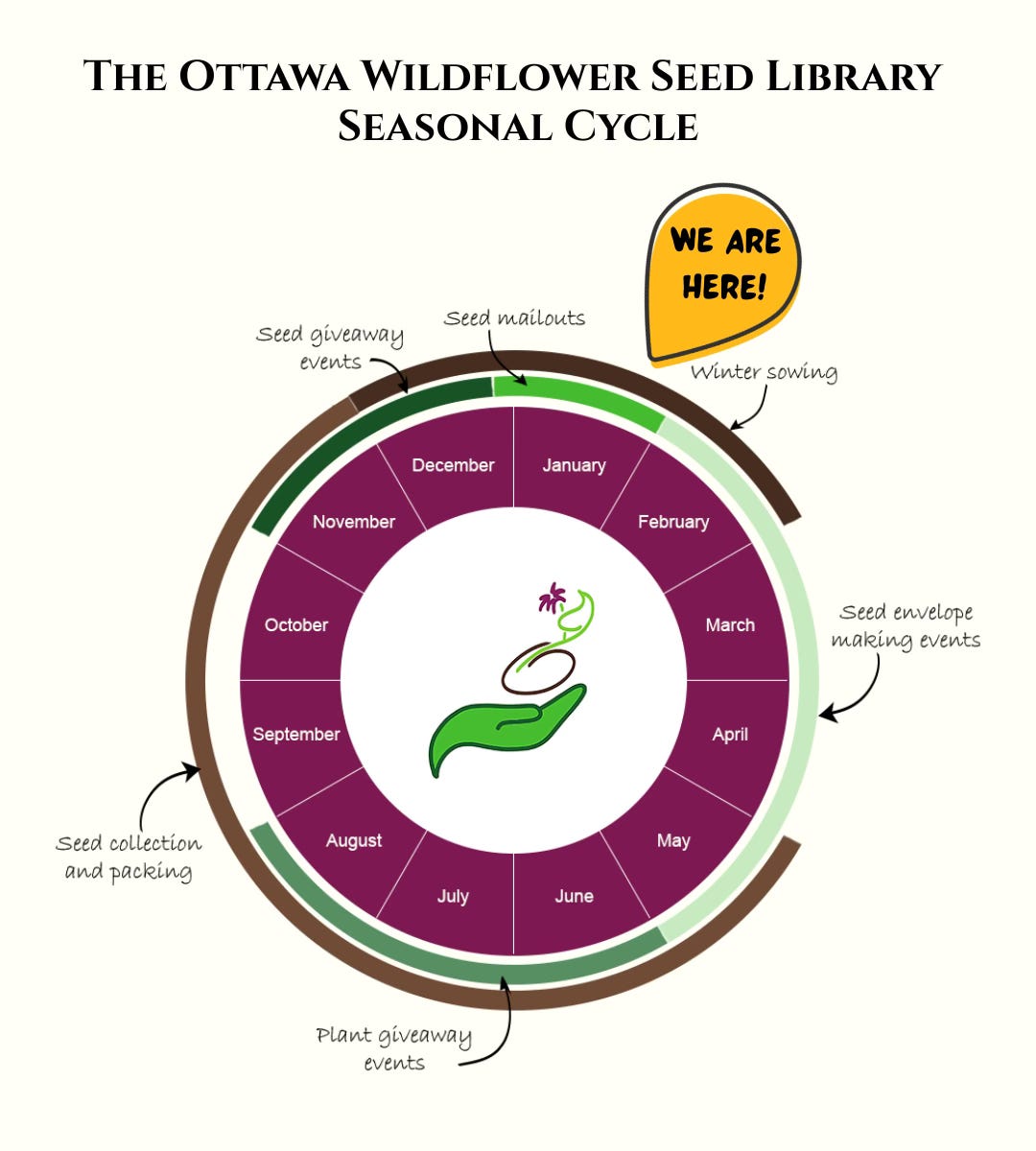
As we do each year, we opened up our shop for online orders on December 26, 2025, and after a busy few weeks, we are happy to report that we completed 8,466 orders this year! A huge jump from our 4,786 last year! We want to thank our amazing volunteers who tirelessly prepared and mailed out seeds. We also want to give a special shout out to the Fletchers’ ladies who allowed us to use their space for our mail out this year. What a huge act of generosity and kindness that made an enormous difference in our ability to fulfill more orders, faster! Finally, we want to thank all of you who ordered seeds; together we are building inter-connected habitats across our beautiful regions!
Winter Sowing Demonstration
When: February 11, 2026 at 6:30pm
Where: Ottawa Tool Library, 877a Boyd Ave., Ottawa, ON
About: Join us to learn more about the winter sowing process!
Winter Sowing Demonstration
When: February 12, 2026 at 6:30pm
Where: Ottawa Public Library – Greenboro, 363 Lorry Greenberg Dr, Ottawa, ON
About: Join us to learn more about the winter sowing process!
Full Moon Date: February 1, 2026
Mimi Byrne is a PhD student in Dr. Jessica Forrest’s lab at the University of Ottawa and her research focuses on native specialist bees. These are species that collect pollen from only one group of host plants. For example, Primrose sweat bees (Lasioglossum oenotherae) collect pollen only from primroses (genus Oenothera), while Bellflower resin bees (Megachile campanulae) collect pollen only from bellflower (genus Campanula) plants. Ontario is home to a number of specialist bees, who play essential roles as pollinators for their host plants.
In managed landscapes, such as public parks or home gardens, a specialist bee might find their host plants as both wild plants or cultivars (a plant modified for desired traits, like more vibrant flower colours or increased bloom size). But an important question remains: do these cultivars provide the same nutritional benefits for specialist bees as wild plants? That’s where Mimi’s research steps in and why she’s looking for your help!
Mimi is looking for home gardens in Ottawa with specific types of plants. If you are interested in having your garden considered as a research site, please fill out this short survey: https://forms.gle/RemJzSbo278d4zQK6.
The survey lists the plant groups she’s hoping to study, but you do not need to have every plant listed to participate! Her research activities will focus on small native solitary bees. No bumble bees will be caught or harmed. A small number of bees will be collected for identification purposes (additional details are provided in the survey).
Thank you for considering being part of this research, and please feel free to reach out
with any questions. Mimi can be contacted at mbyrn070@uottawa.ca and she looks forward to hearing from you!
Wild Blue Phlox (phlox divaricata)
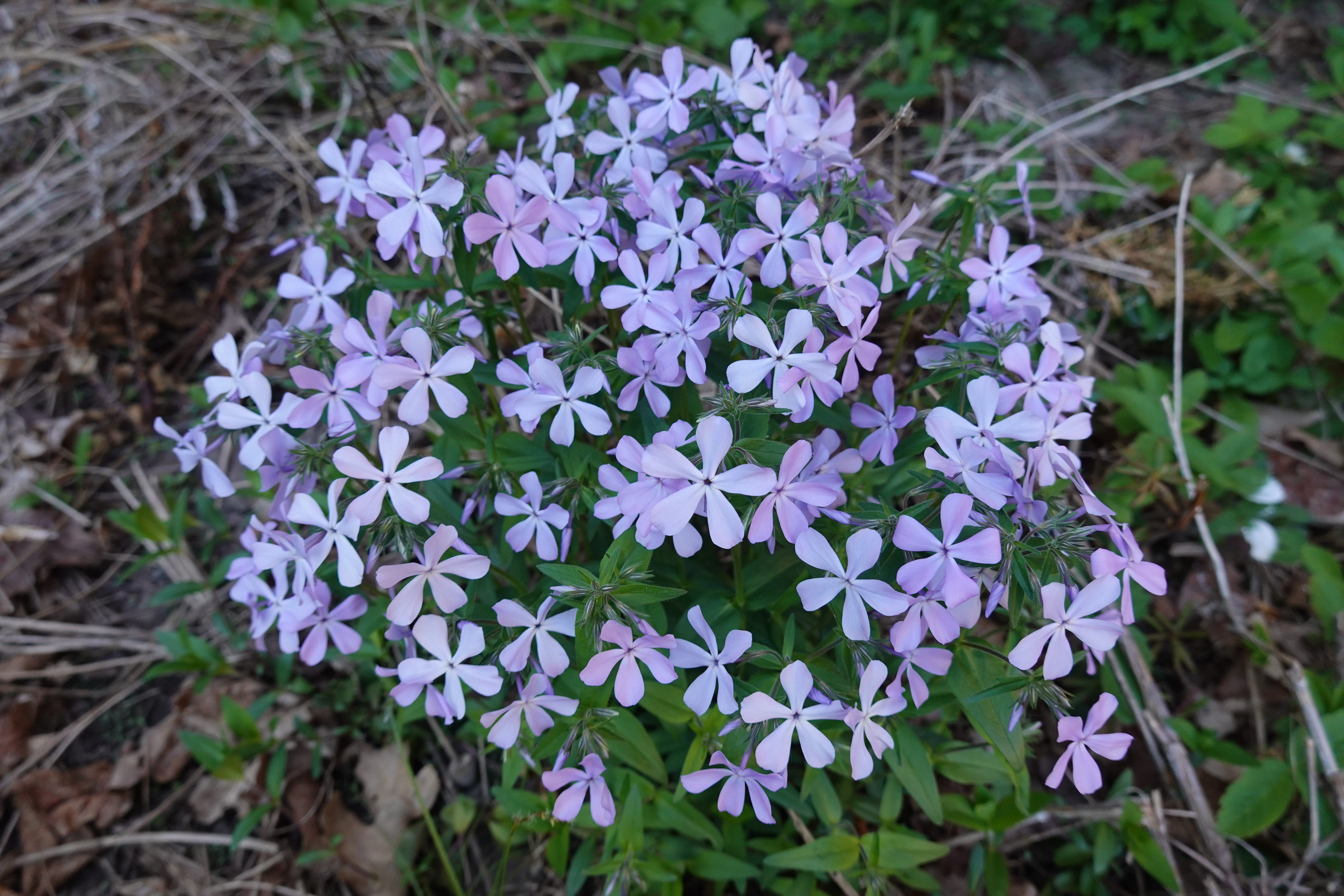
Wild Blue Phlox, also known as Wild Sweet William, Forest Phlox, and Blue Woodland Phlox is a colourful native plant that blooms from spring to early summer. Its stems and leaves are covered in fine hairs and the flowers consist of five petals that are slightly notched at the ends. Wild Blue Phlox can be found in a variety of pastel shades such as blue, violet, purple and sometimes white. The colour of the flowers has been reported to shift as the season progresses, changing from blue in spring to white as summer approaches.
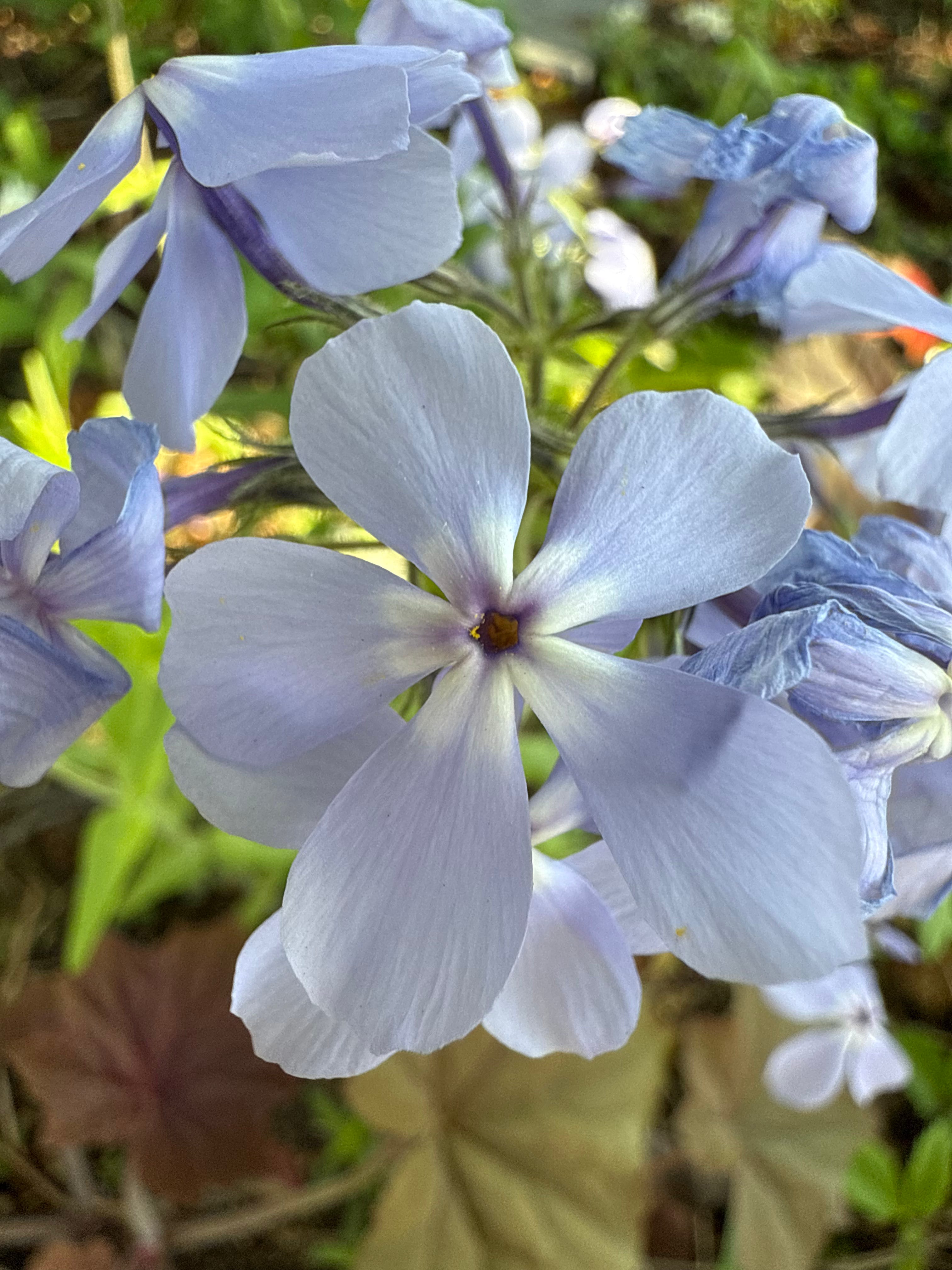
The short stature of the plant (average of 30cm tall) makes for an excellent ground cover, particularly in shady locations as Wild Blue Phlox prefers full to partial shade. The many small flowers on the plant attract a variety of pollinators, including hummingbirds, sphinx moths and bumblebees. It is also the host plant to two moth species, Spotted Straw (heliothis phloxiphagus) and Olive Arches (lacinipolia olivacea).
It’s a new year and we are deep into winter – the days are cold, snow is piling up and spring gardening feels like a faraway dream. And yet, this is a perfect time to open a bag of soil and start your seedlings (no grow lights required)! Winter sowing is the process of sowing seeds during the winter months, taking advantage of the season’s cold and moist weather to provide your seeds with stratification, an essential step for many native plants.
Stratification, also called “cold moist stratification” or “seed stratification” is the process in which seeds are exposed to moisture and cold for a period of time. By stratifying your seeds you can help break their dormancy period and trigger the germination process. While there are a few different ways to stratify your seeds, one of the simplest is winter sowing.
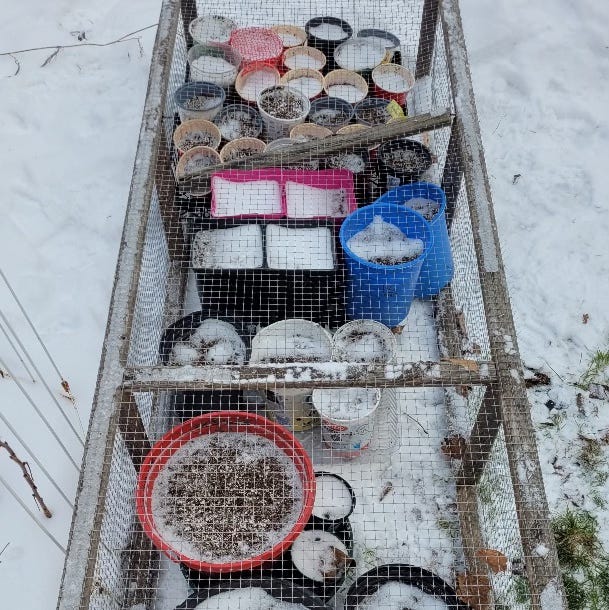
At its root (pun intended!), winter sowing involves placing soil into a water-resistant container, often a clear plastic container, that has drainage holes in the bottom and a cover that allows water and snow to come in, but keeps seed foraging critters out. One of the most common, and environmentally friendly, methods for winter sowing is to use recycled materials. From juice jugs to fruit containers to old gardening pots – take a look around your home and you will likely find several good containers to start your seeds!
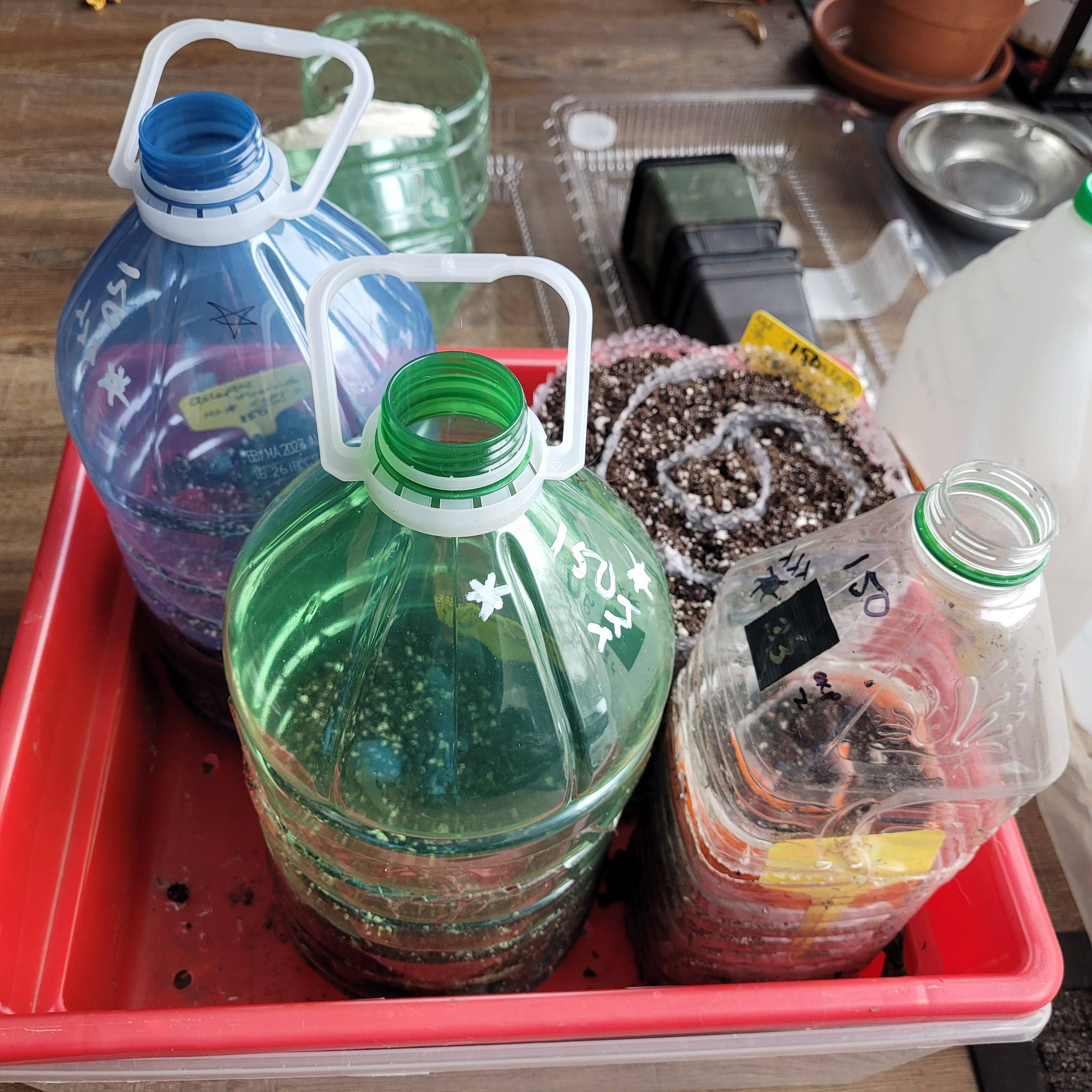
The winter sowing method aims to mimic the natural winter period that a seed in the wild would experience, but protected from animals and easily shared and transplanted in the spring. The Ottawa Wildflower Seed Library has several fantastic resources to help you get started with winter sowing such as step-by-step instructional videos and written instructions.
Have you tried winter sowing? If so, share your experiences in the comments below!
This month’s volunteer spotlight highlights the work of Valeria Huber:
Valeria was first introduced to the Ottawa Wildflower Seed Library in 2023 as a volunteer helping with seed packging. She has helped make thousands of seed envelopes that the OWSL uses during seed packing and seed mailouts. Although she does not describe herself as a gardener per se, she does tend to a small outdoor area and enjoys the native plants that grow there.
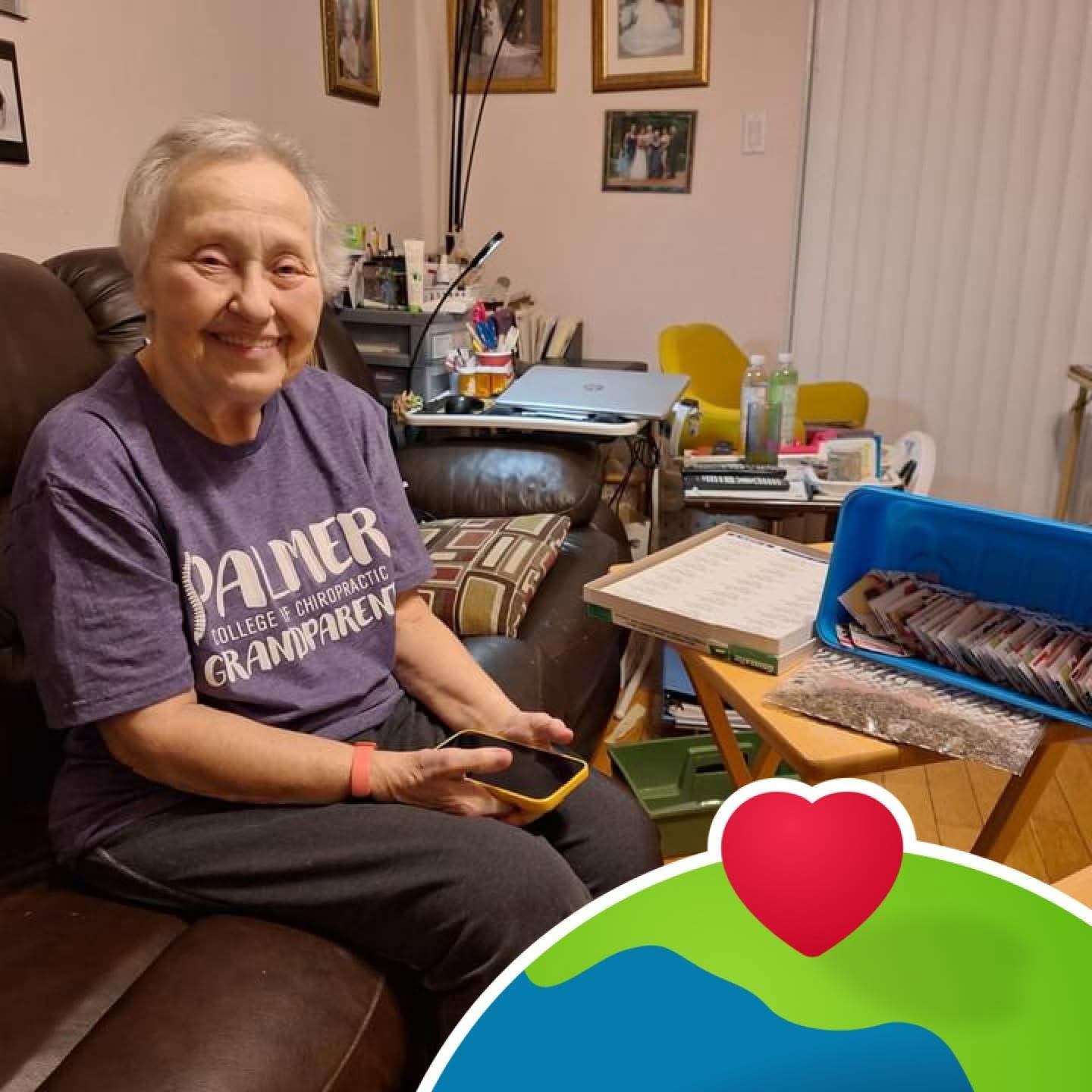
When asked what she enjoys the most about volunteering, Valeria highlights the opportunity to expand her knowledge of native plants, their care and maintenance. She also enjoys reading about others’ gardening experiences, winter sowing and the community’s passion for growing things.
Valeria is continually amazed by the dedication of our volunteers and deeply appreciates the sense of community within the library. She values the chance to meet others, learn from them and contribute to a shared mission. Always willing to lend a hand, Valeria looks forward to the continued growth of the seed library. We are grateful for her many contributions and if you are one of the thousands who received seed packets from the library – you likely have Valeria to thank for the little envelope in which your seeds arrived.
Sources:
Rick Gray and Shaun Booth, The Gardener’s Guide to Native Plants of the Southern Great Lakes Region (Ontario: Firefly Books, 2024)
No posts
Comments
Nothing yet. Say the first thing.
Sign in to join the conversation.