
This past month, we mailed seeds to roughly 100 public libraries in Ontario and Québec as part of a new project that sees us supply libraries with seed packages and information about native plants so that they can provide them to their clients! We are also developing a pilot project with three real estate agents to distribute our seeds and information to home owners this spring.
In other news, the library is further enhancing our new online catalogue and we are looking for volunteers to help with our research. We’re hoping to develop descriptions for each species in our catalogue by using available scientific research to develop those descriptions. Are you interested in helping? Please send us an email at info@wildflowerseedlibrary.ca. We thank you in advance for your help.
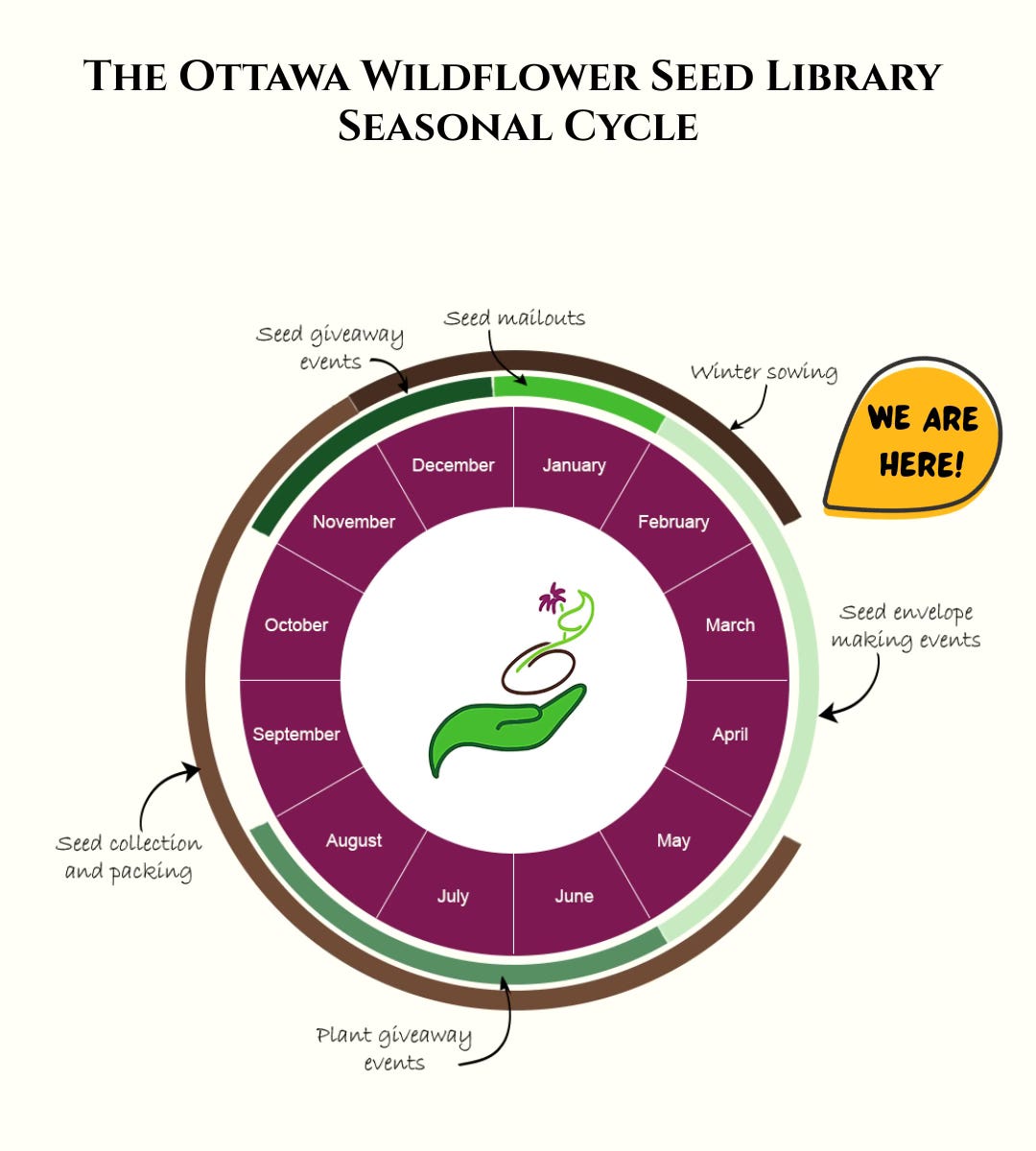
This is also the time of the year when we make our seed envelopes, using any recycled paper you have on hand. If you’re new to envelope making, this video offers a quick tutorial of the process. Envelopes can be made at home and dropped off at any OWSL events. We also have drop off locations in Nepean, Alta Vista, Kanata, Orléans and Barrhaven (you can reach out to info@wildflowerseedlibrary.ca to coordinate a drop off). We will also be hosting in-person envelope making sessions this March (details below).
Growing Green Event – Winter sowing Workshop
When: March 1, 2026 from 2:30 - 3:30
Where: Rockland YMCA
About: Join us for a winter sowing presentation! Learn more about native plant gardening, best practices, get free seeds and learn how to successfully grow them!
Seed Envelope Making Event
When: March 7, 2026 from 1:00-3:00pm
Where: Tom Brown Arena, 141 Bayview Station, Ottawa
About: Join us in making seed envelopes! For those new to making envelopes, this is the perfect event to learn the craft and to meet other library volunteers.
Facebook event details: https://www.facebook.com/share/1BKJtfWztb/
Ottawa Seedy Saturday
When: March 7, 2026 from 10:00am-3:00pm
Where: Emmanuel United Church, 681 Smyth Road, Ottawa
About: Enjoy a day of garden presentations, crafts, seed vendors and social gathering with your local gardeners!
Kemptville Seedy Saturday
When: March 8, 2026 from 10:00am-3:00pm
Where: 75 Campus Drive, Kemptville Campus, Kemptville
About: Enjoy a day of garden presentations, crafts, seed vendors and social gathering with your local gardeners!
Carp Seedy Saturday
When: March 14, 2026 from 10:00am-2:00pm
Where: Carp Agricultural Hall, 2790 Carp Road, Carp
About: Enjoy a day of garden presentations, crafts, seed vendors and social gathering with your local gardeners!
Full Moon Date: March 3, 2026
With the recent blanket of snow, it may not feel like winter will ever end, but if you look to your calendars you’ll find that spring is less than a month away! The first day of spring, also known as the spring equinox, will fall on March 20, 2026. Much like the autumn equinox, the spring equinox heralds a change in seasons and is a day of equal light and equal night. It’s a time for many to celebrate the steady warming of the weather, longer days, and a return to the garden!
Red Trillium (trillium erectum)
Red Trillium, also known as American True-love, Wet Dog Trillium, and Ill-scented Wake-robin, is a native plant in the lily family and a crimson-hued cousin of Ontario’s official flower, the White Trillium.
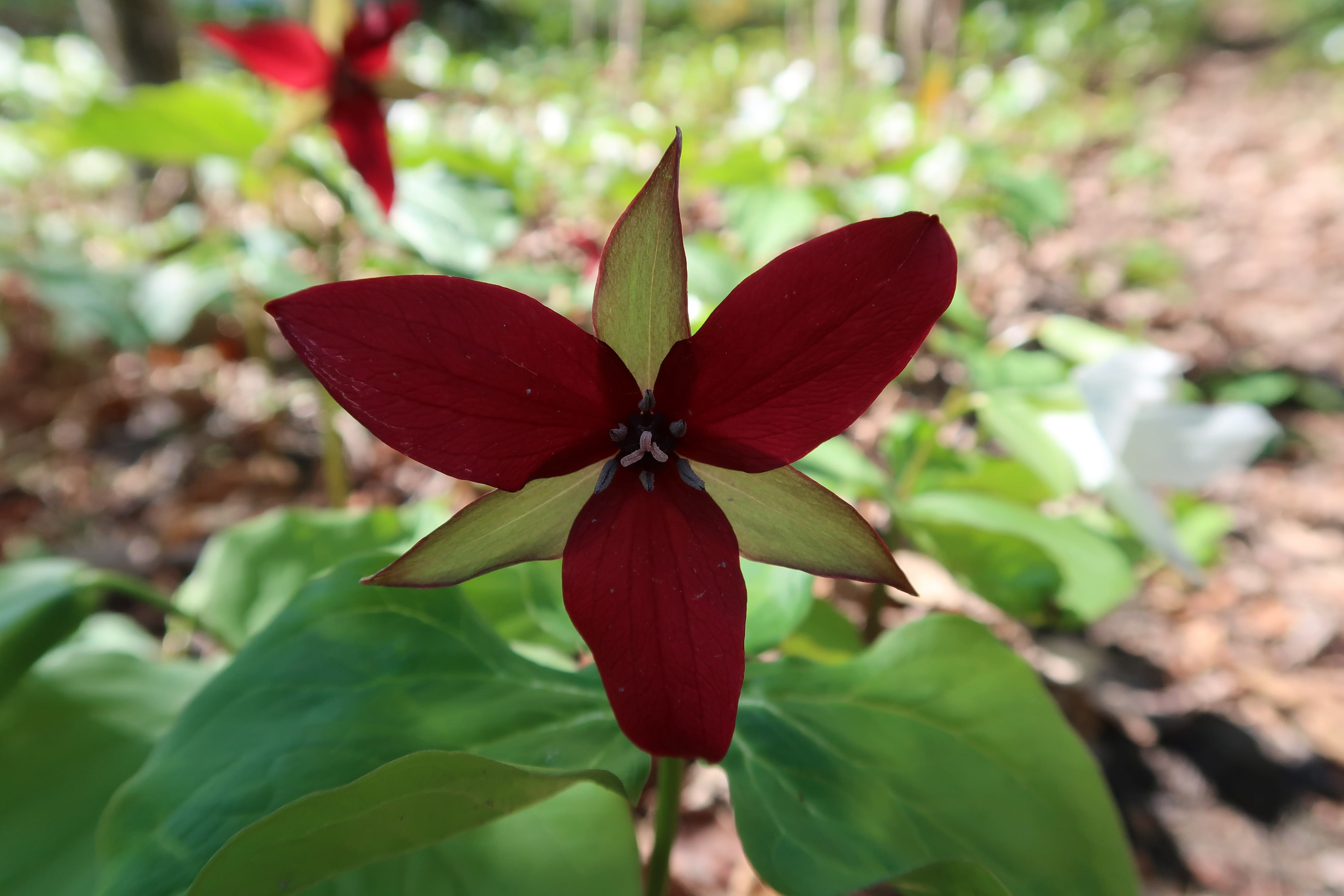
The Red Trillium boasts three large leaves and is crowned with a single dark red, three petalled flower. The petals are lance-shaped and have stamens topped with yellowish anthers. Unlike the White Trillium, the Red Trillium does not produce nectar in order to attract pollinators, but rather emits a scent similar to rotting meat in order to attract carrion flies and beetles. These insects are attracted to this smell and by visiting from flower to flower they aid in pollination. Don’t be worried about adding this plant to your garden though – you can only smell it if you put your nose right up to the bloom (avoid this and you should be spared any bad odours)!
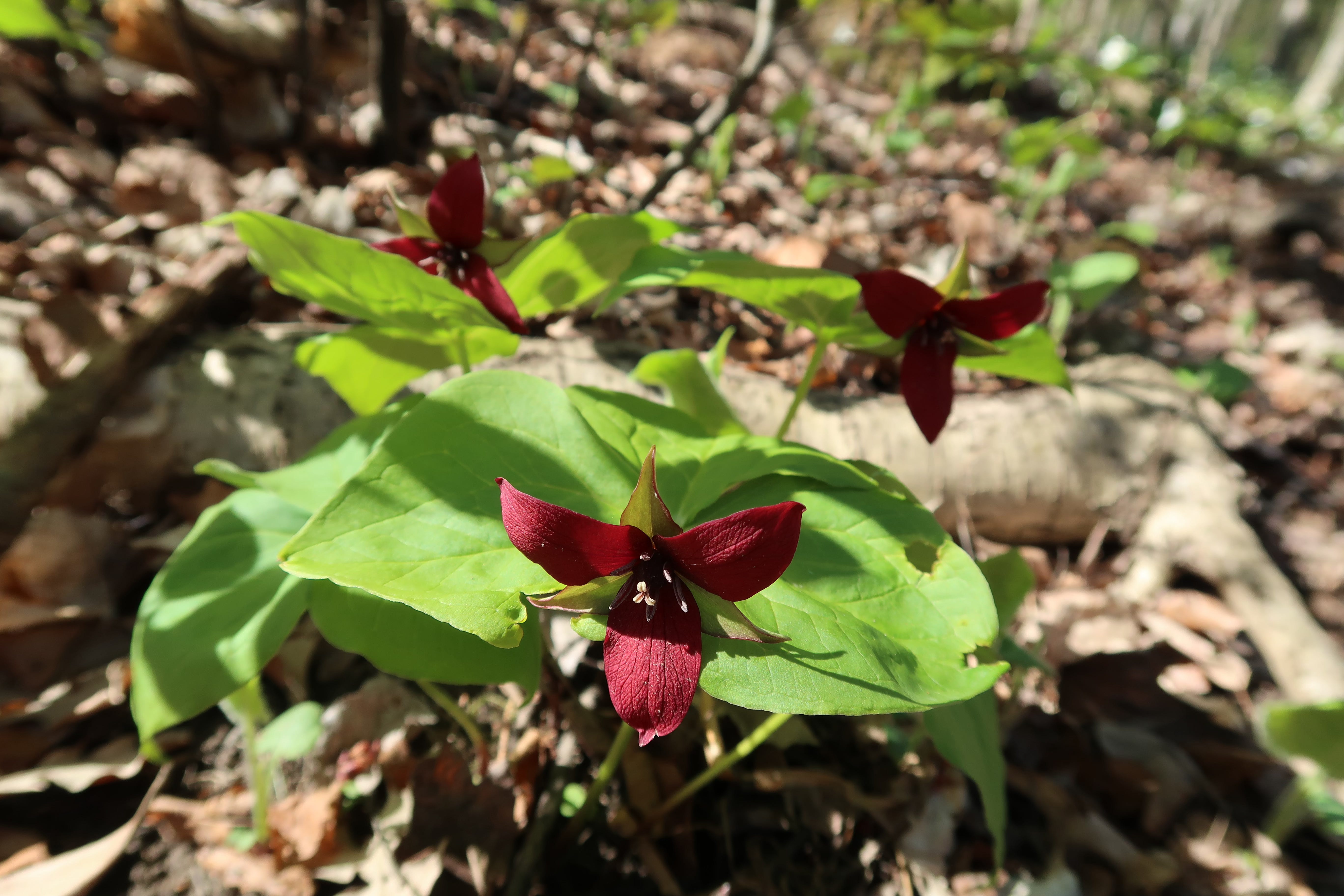
The Red Trillium is a spring ephemeral, blooming in early spring and going dormant by mid to late summer. The plant prefers a location in the garden with dappled shade but will require a good source of morning sun in the early days of spring. While the Red Trillium produces a gorgeous garnet coloured flower, it is not recommended to pick or cut the flower as this can cause the plant to die.
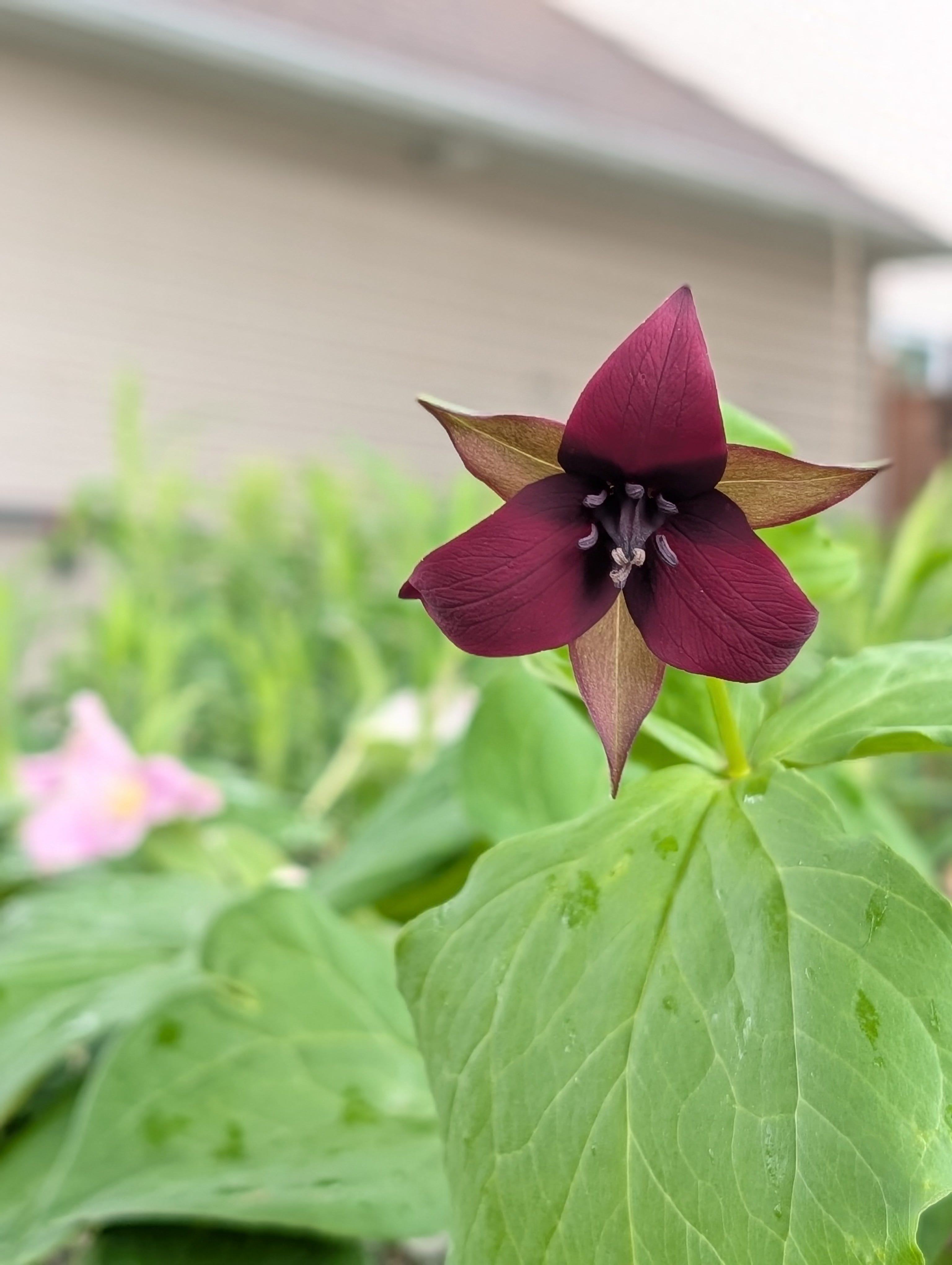
Another interesting feature of the Red Trillium is that while it commonly spreads by rhizomes, its seeds are also dispersed by ants in a process known as myrmecochory.
Seed dispersal happens in many different ways – some are carried away on the wind, some burst open and catapult their seeds in every direction, and others use barbs to hitch a ride on fur and clothing. In this month’s newsletter I’d like to take a moment to look at one fascinating way plants disperse seeds: myrmecochory.
Myrmecochory (pronounced murr-muh-koh-KOR-ee) describes a symbiotic relationship between plants and ants that allow for seed distribution while also providing ants with a tasty snack. Plants, like the red trillium, have evolved seeds that have a fat-filled structure on their exterior called an “elaiosome”. An elaiosome is a highly nutritious food source for ants and are filled with rich lipids, amino acids and other nutrients. The word “elaiosome” comes from the Greek words “elaion” and “soma”, meaning oil and body, respectively.
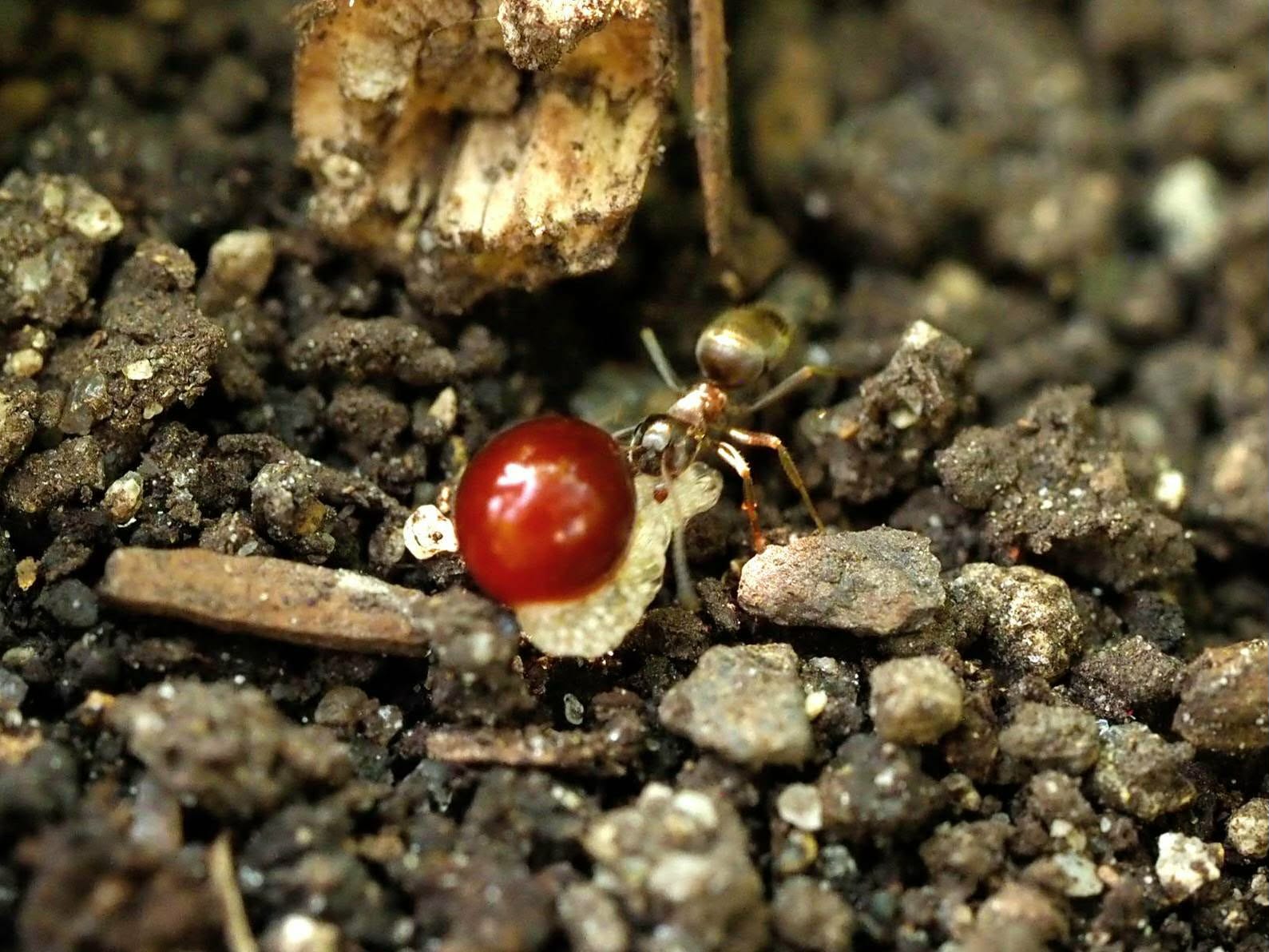
Ants are attracted to these fat covered seeds and carry them back to their homes where they eat the elaiosome and then discard the seed. The seeds are discarded near an ant’s nest in “trash zones” alongside other by-products such as decaying plant and animal matter. These ant trash piles are an ideal location for the seed’s germination as it is underground, in nutrient rich soil and away from predators such as birds and mice.
There are over 11,000 plants worldwide that rely on myrmecochory in order to disperse their seeds. By having their seeds carried away the resulting plants can avoid competition with the parent plant and help spread the species to other locations. It’s a fascinating example of symbiosis in which the plant can distribute their seeds over a wider distance and ants can enjoy a nutritious snack!
This month’s volunteer spotlight highlights the work of Mireille Trent:
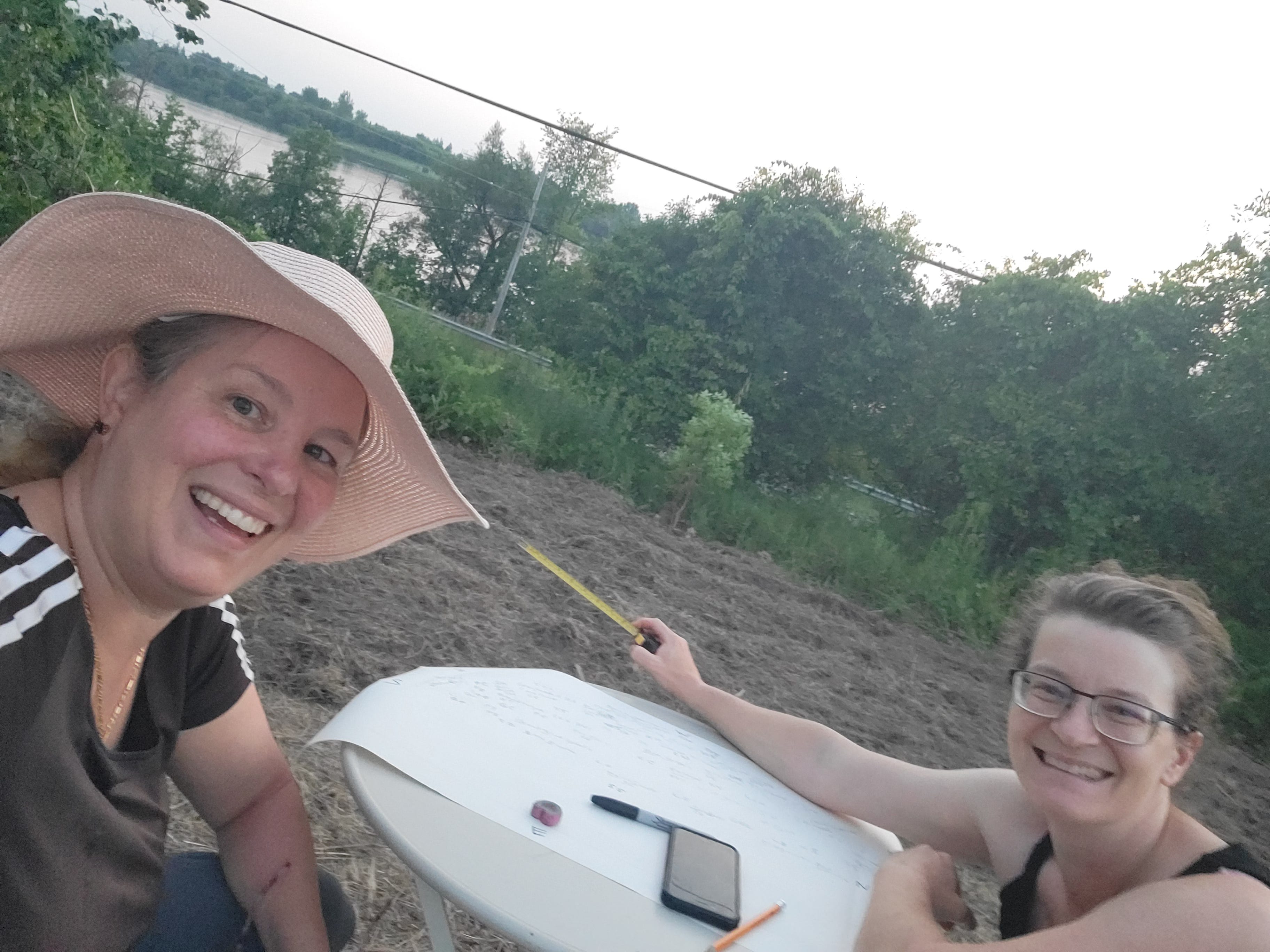
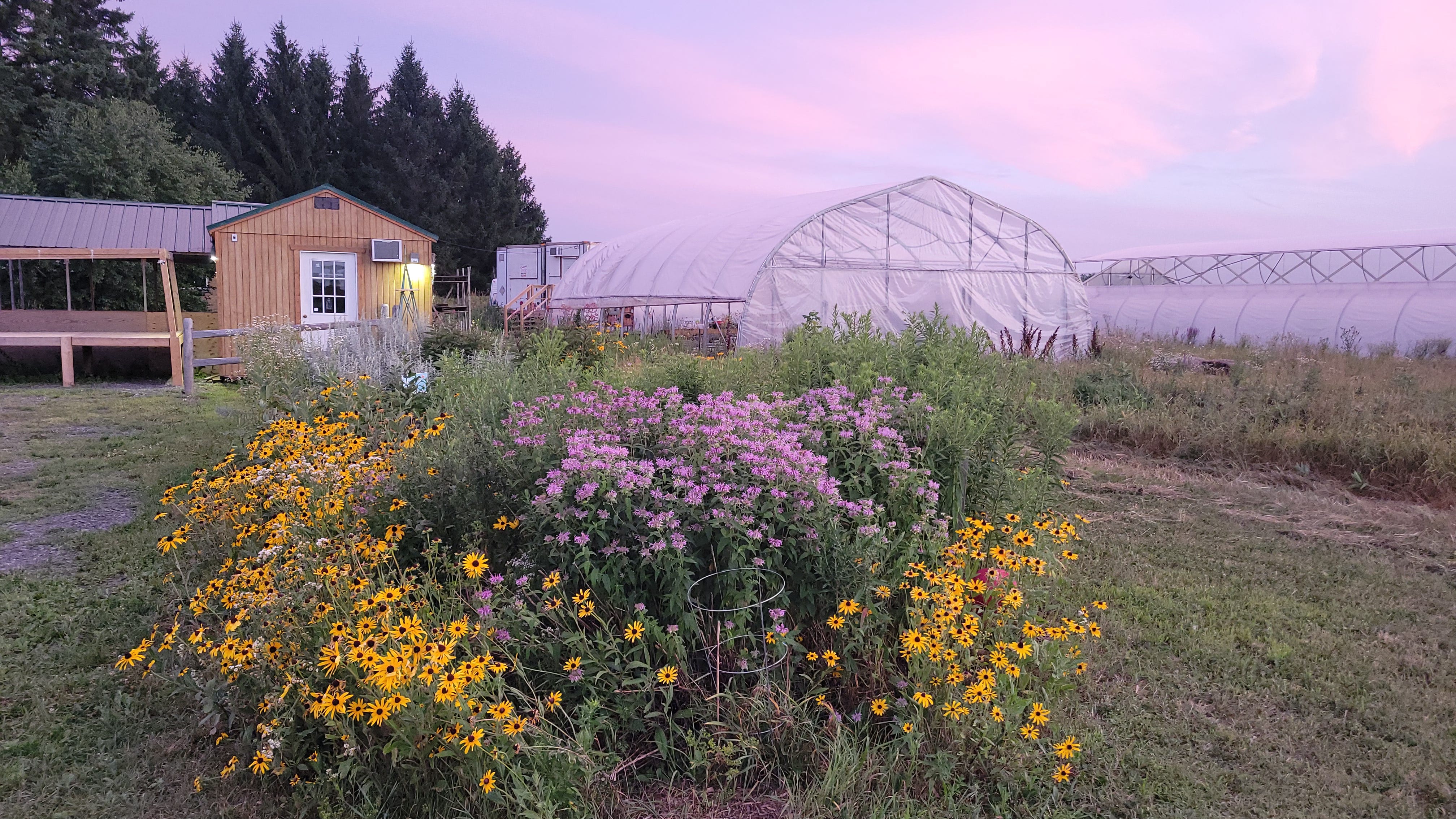
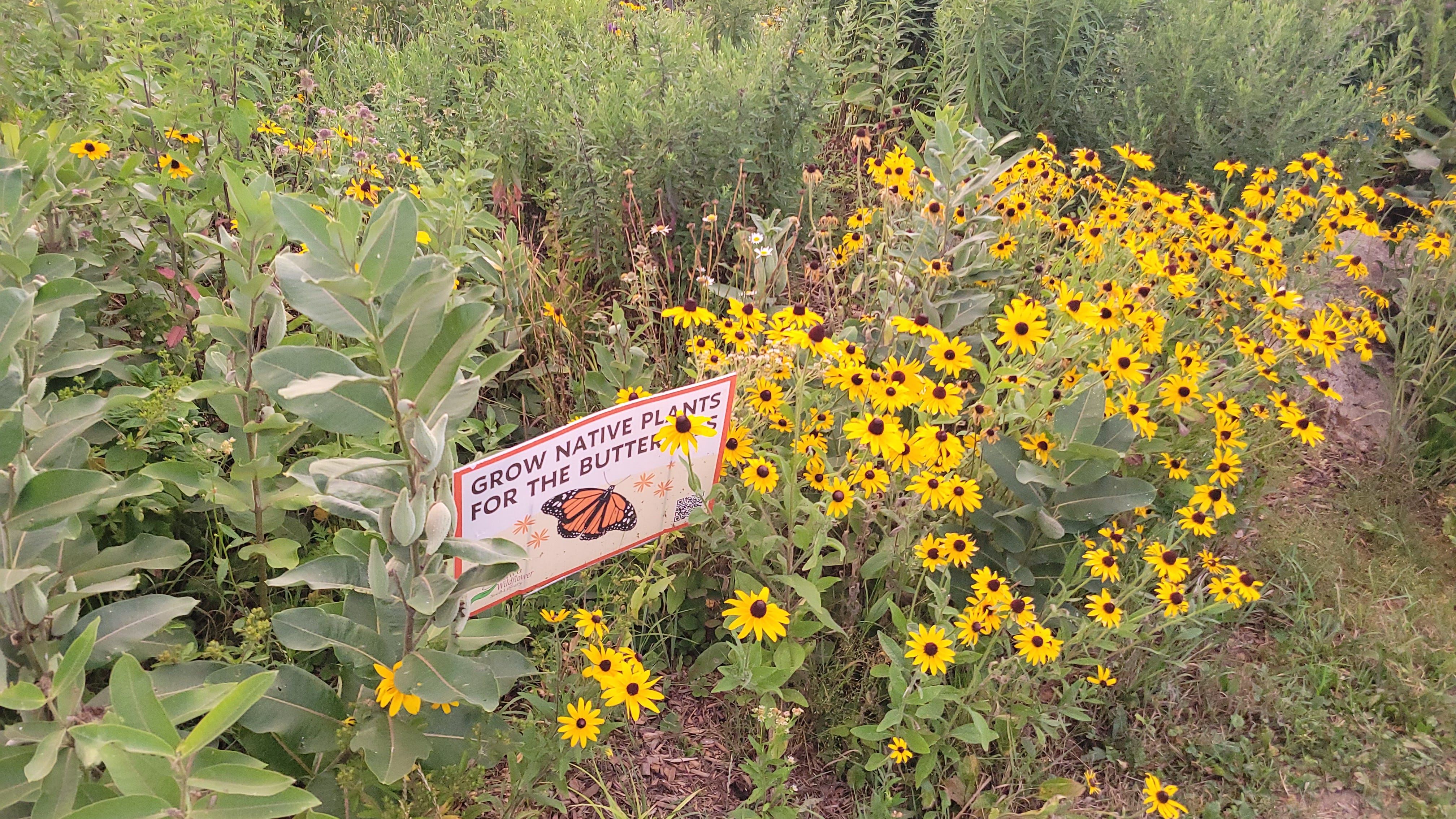
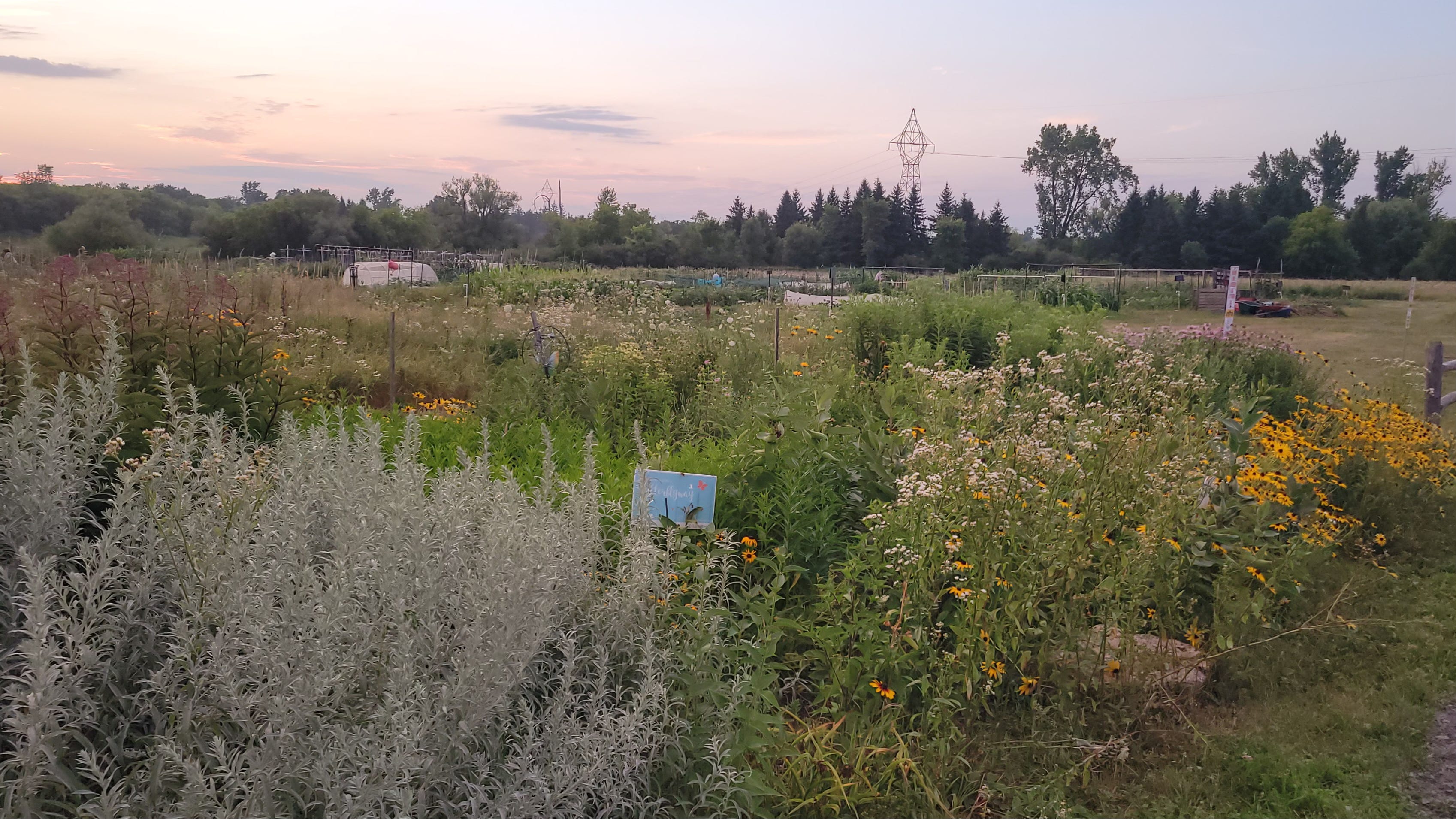
Mireille Trent has been volunteering with the OWSL for about two years, but her journey with native plants started roughly five years ago when her daughter became a Butterfly Ranger with the David Suzuki Foundation. By actively supporting her daughter’s work, Mireille learned about native plants and enjoyed creating habitat gardens for pollinators, birds and other wildlife – beautiful spaces that are literally buzzing with life! She is now in her sixth year of supporting the Butterflyway Program.
A favourite native plant of Mireille’s is spotted jewel weed, also known as touch-me-nots (you can read up on this plant in our October issue of the Bloom & Buzz). This plant brings back fond memories of Mireille’s grandma showing her how they pop open with a touch and watching seeds fly everywhere. Even though she's in her 50s now, Mireille is still a child at heart and the little explosion of seeds is still thrilling. The flower itself is also beautiful and reminds her of succulents, another plant favourite.
One of Mireille’s favourite things about volunteering with the seed library is meeting new people. From volunteers who generously donate their time to those the library shares seeds and plants with – young or old – our love and curiosity for nature connects us all. Mireille notes that there is something magical and beautiful about sharing seeds, it is the gift of life and hope for a beautiful future.
Sources:
Manorome, Pilar, “Ontario’s trilliums”, Ontario Parks, April 2025. https://blog.ontarioparks.ca/trilliums/
Michaelson, Julie, “Myrmecochory: How Ants Shape Plant Communities”, Xerces Society, 2024. https://xerces.org/blog/myrmecochory-how-ants-shape-plant-communities
Murphy, Emma, “Myrmecochory – How Ants Help Expand Our Gardens”, The Peterborough & Area Master Gardeners. 2025. https://peterboroughmastergardeners.com/2025/05/26/myrmecochory-how-ants-help-expand-our-gardens/
Rick Gray and Shaun Booth, The Gardener’s Guide to Native Plants of the Southern Great Lakes Region (Ontario: Firefly Books, 2024)
No posts
Comments
Nothing yet. Say the first thing.
Sign in to join the conversation.