
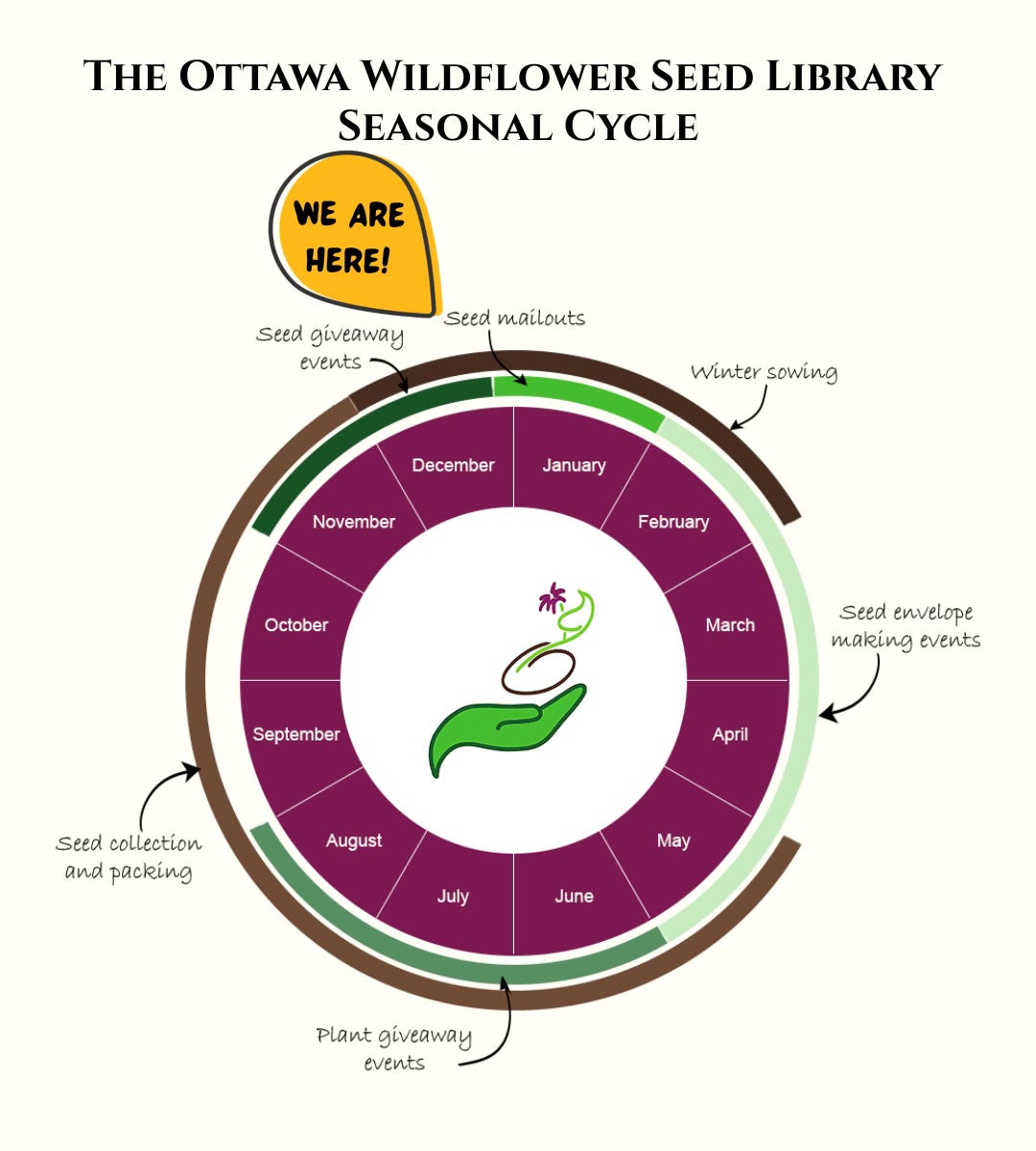
The Library had another fantastic seed giveaway season! We gave away seeds to 824 people, during eight seed giveaway events! A big thank you to everyone that packed seeds, volunteered at our events, and are growing native plants! You are amazing!
Please note that we are asking you to bring us your seeds as soon as you can, since we are wrapping our seed packing season! Contact us at info@wildflowerseedlibrary.ca to drop your seeds off at one of our locations in Alta Vista, Barrhaven, Nepean, Kanata and Orléans.
We are now moving into the mailing season! Starting December 26th, you will be able to order seeds for free from our shop (not catalogue). All mailing is free, but donations are welcomed so that we can continue our work.
Interested in helping to create interconnected habitats? Then come join other volunteers and lend a hand during the mailout, you can sign up here. Join a wonderful group of volunteers that are working together to build a better future! It’s a lot of fun and you will get to make new friends!
Seed Shop Goes Live!
When: Friday, December 26, 2025
Where: Online at https://wildflowerseedlibrary.ca/shop/
About: Looking for native seeds to grow in your community? Then check out our new Seed Shop on the Ottawa Wildflower Seed Library website. You can browse the different native plant seeds we have available, order seeds and have them mailed to you – all for free! Help your local ecosystem by planting plants native to your area!
Volunteer Potluck
When: Saturday, January 17, 2025 from 11:30am-1:30pm EST
Where: Tom Brown Arena, 141 Bayview Station Road, Ottawa, ON K1Y 4T1
About: Have you volunteered with us in the last few months? Join us for a thank you potluck! Let’s hang out together to celebrate a successful season!
Full Moon Date: January 3, 2026
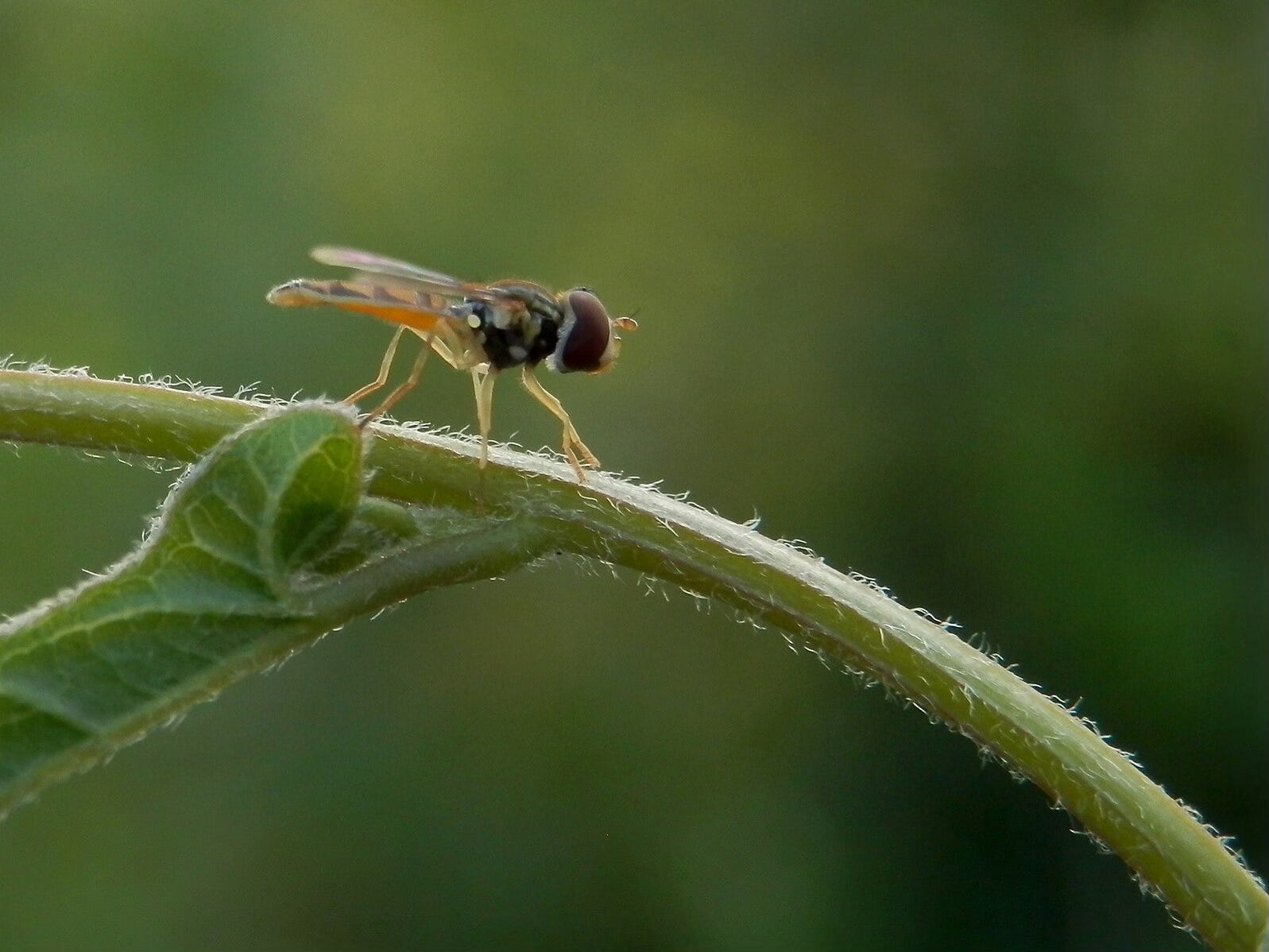
When we think of pollinators one of the first things that come to mind are “bees”, and rightly so, native bees are an integral part of our ecosystem and pollinate our plants as they travel from flower to flower. But while bees may be the poster child of pollination, there are many other insects and animals that also provide crucial pollination services. This month I’d like to make some space to explore “beyond bees” and shine a spotlight on our other pollinator pals, starting with: hoverflies!
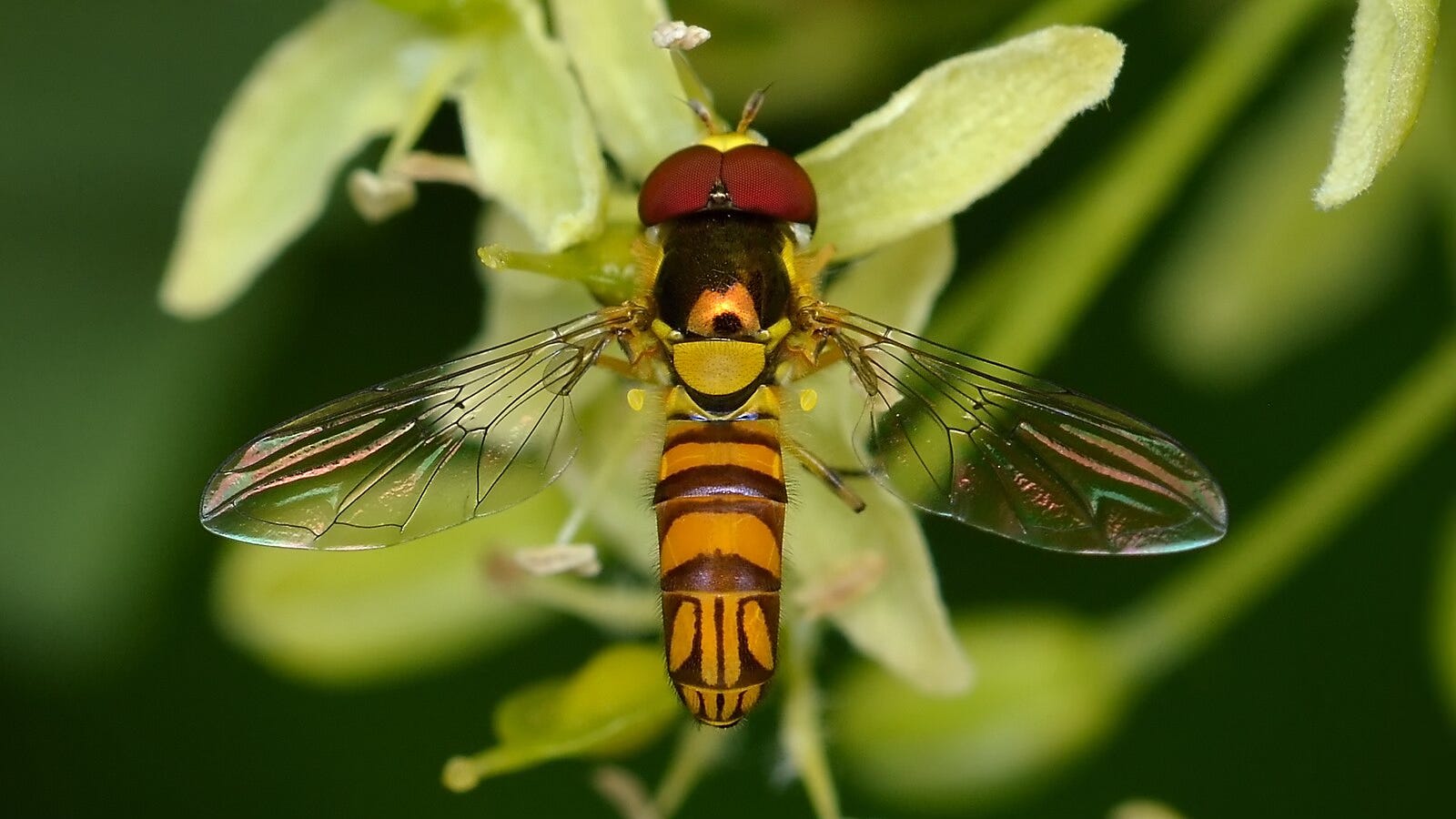
A hoverfly, also known as a flower fly, is in the Syrphidae family in the order Diptera. They are called hoverflies as their strong, flexible wings allow them to hover in one spot for extended periods of time. There are over 6,600 species of hoverflies around the world, of which 539 can be found in Canada. They can live in a variety of habitats throughout Canada, including regions of the Arctic and Subarctic. They also vary greatly in size, ranging from 4mm to 25mm in length.
You have likely seen hoverflies before and maybe mistaken them for bees or wasps – which is exactly what hoverflies hope you will do! Hoverflies are a fantastic example of animal mimicry, which is when one animal evolves to take on the characteristics of another animal or its surroundings in order to gain a survival advantage, such as protection from predators. In the case of hoverflies, they have evolved to look very similar to bees and wasps. They have the same colouration (yellow and black stripes), pointed abdomens, and some even have elongated antenna. This is done in hopes that predators will confuse them for a stinging insect, such as a bee or a wasp, and therefore think twice before trying to make a quick snack of them. This is how hoverflies use mimicry to their advantage as they, in fact, cannot sting.
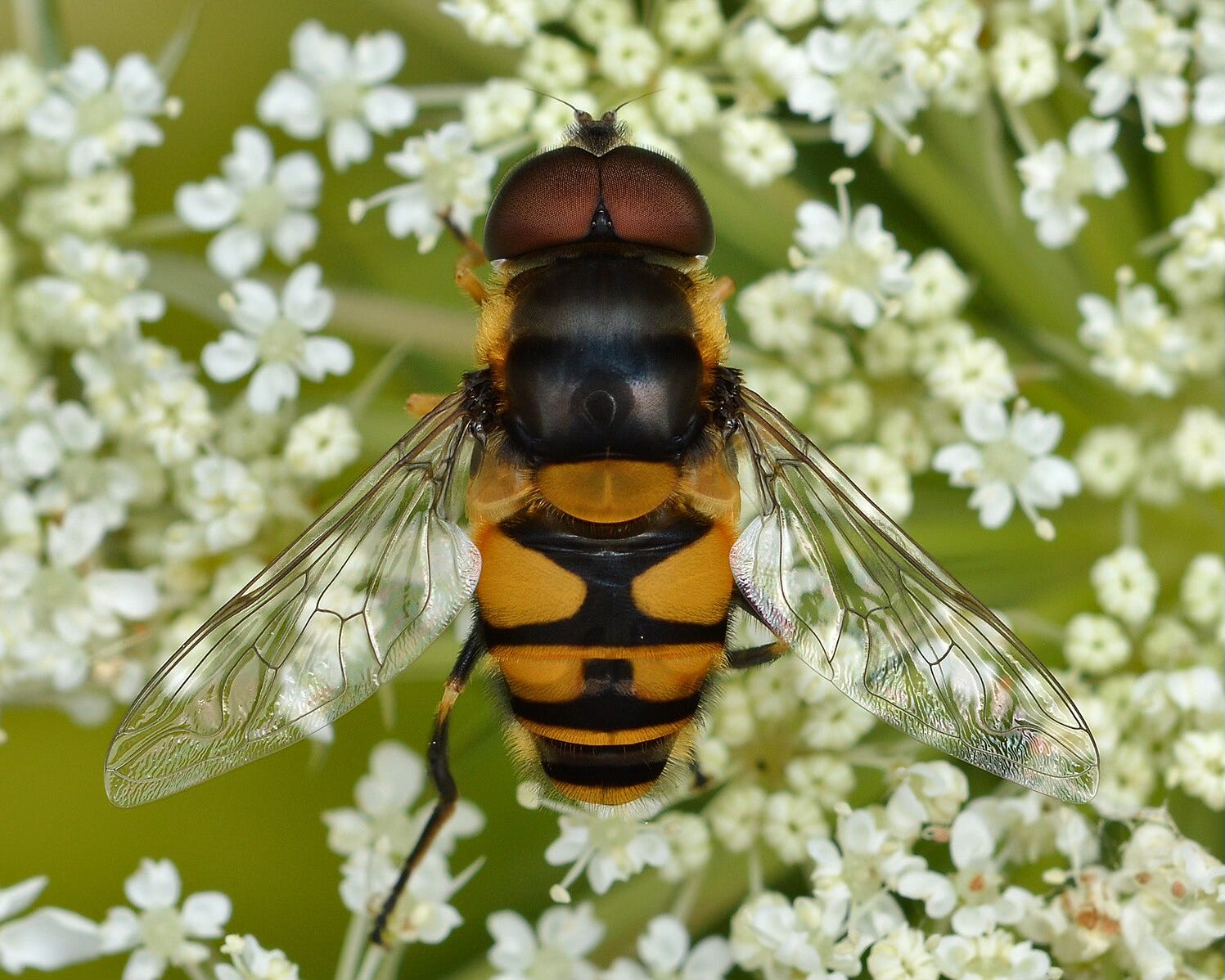
While visually similar to bees and wasps, there are a few ways to determine if what you’re seeing is a hoverfly. The easiest way to do this is to count the number of wings. Bees and wasps have four wings while flies, including the hoverfly, only have two. Additionally, the eyes of bees and wasps are on the side of their heads whereas a hoverfly’s eyes are at the front of its head.
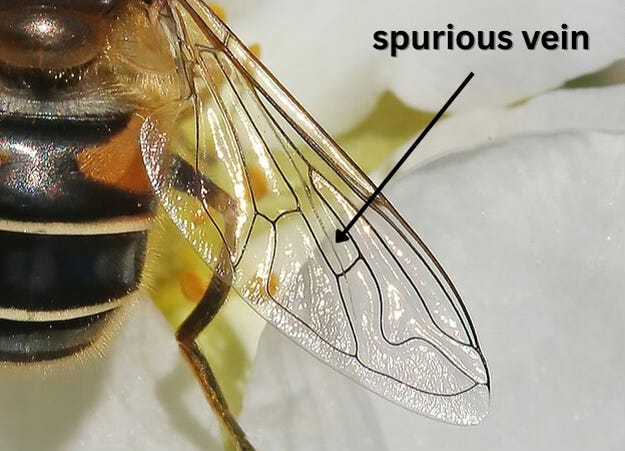
Now, it’s worth noting that there are other flies that do a good job of mimicking bees and wasps, such as the bee fly (bombyliidae) or the robber fly (asilidae), so not every bee-like fly can be instantly identified as a hoverfly, but there is a way to tell them apart. Unlike other flies, hoverflies have a unique vein within their wings called a “spurious vein”. These are difficult to spot though (especially if the hoverfly you’re looking at is on the move!), but if you can snap a clear photo, you may be able to notice this identifier.
Like bees, hoverflies travel from flower to flower searching for nectar and pollen to consume. In doing so, the little hairs on their bodies help transfer pollen from one flower to another. Unlike bees though, a hoverfly’s diet expands beyond nectar and pollen. When in their larval stage, hoverflies prey upon aphids and other common garden pests such as thrips. Additionally, they are important decomposers as they also feed on decaying organic matter.
The hoverfly’s special role as a pest manager, decomposer, and pollinator is garnering them more attention from academics in recent years. A recent study out of the University of Alberta looked at hoverflies in agriculture and the importance of creating habitat for them near crops. In the study it was noted that hoverflies have been “understudied in agroecosystems given their potential utility to provide two ecosystem services to crops”.
So next time you see a pollinator pal in the garden, take a moment to look closer and see if it may be a hoverfly – a pollinator plus and master of mimicry!
If you liked learning about hoverflies and would like the newsletter to continue looking at different pollinators in future issues, let us know by liking this post, sending us a message or by leaving comments! And for those missing the plant of the month and gardening tidbits – don’t worry, they will return next month in our first issue of 2026!
This month’s volunteer spotlight highlights the work of Bojana Kolbah:

As a lifelong hiker, Bojana has always been fascinated by the relationships between flora and the specific environment in which it thrives. Her approach to gardening is to work with nature rather than try to mould it and is also passionate about conservation efforts. She was first introduced to native plants when a friend was putting in an order with Ontario Native Plants. Bojana joined in, purchased some native plants, and since then there has been no turning back!
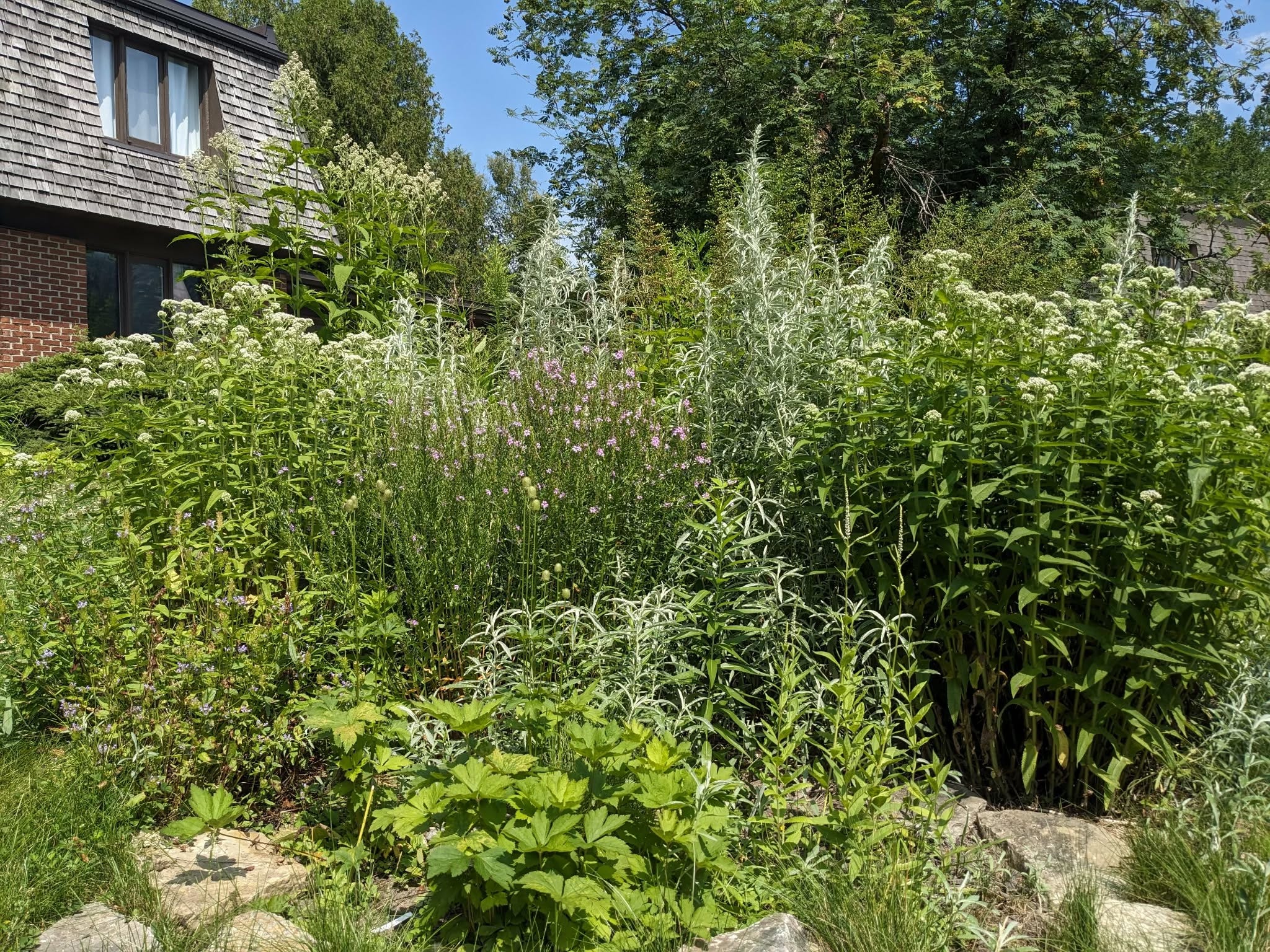
Bojana has volunteered with the OWSL since 2024. She has helped to collect and package seeds as well as coordinating seed packing events. One of her favourite things about volunteering with the seed library is sharing the joy of native plants by collecting seeds from her garden. Her favourite native plants are water avens as they always have amazing leaves and a magical flower. For Bojana, native gardening is great because once you find the right spot for the right plant you can build beautiful, varied gardens without the need for fertilizer or constant watering.
Sources:
“Pollinator Profile: Flies”, Pollinator Partnership Canada. https://pollinatorpartnership.ca/en/flies
Stefan, Andy. “Hoverfly”. The Canadian Encyclopedia, 20 April 2023, Historica Canada. www.thecanadianencyclopedia.ca/en/article/hoverfly. Accessed 18 December 2025.
Rachel Pizante, John H. Acorn, I. Pilar Jiménez, Carol M. Frost, “Treed field borders net-export over 82,000 more hoverflies per km every week into canola crops than herbaceous field borders, regardless of mass-flowering crop bloom”, Agriculture, Ecosystems & Environment,
Volume 377, 2025, https://www.sciencedirect.com/science/article/pii/S016788092400389X#bib53
No posts
Comments
Nothing yet. Say the first thing.
Sign in to join the conversation.