
Every year, I look forward to the reports that reveal the strategic decisions of institutional investors. One of my favorites is UBS’s Global Family Office Report, which focuses on the asset allocation of family offices. They are, after all, among the most flexible institutional investors when it comes to making meaningful changes to their portfolios. And believe it or not, things finally seem to be shifting.
Below is the average strategic asset allocation of the 307 family offices that participated in the Global Family Office Report 2026. It shows that family offices continue to rely heavily on the “big three.” Cash, bonds, and equities still account for nearly 80% of the average portfolio. It is also striking that, despite everything that has happened, family offices remain remarkably enthusiastic investors in private markets.
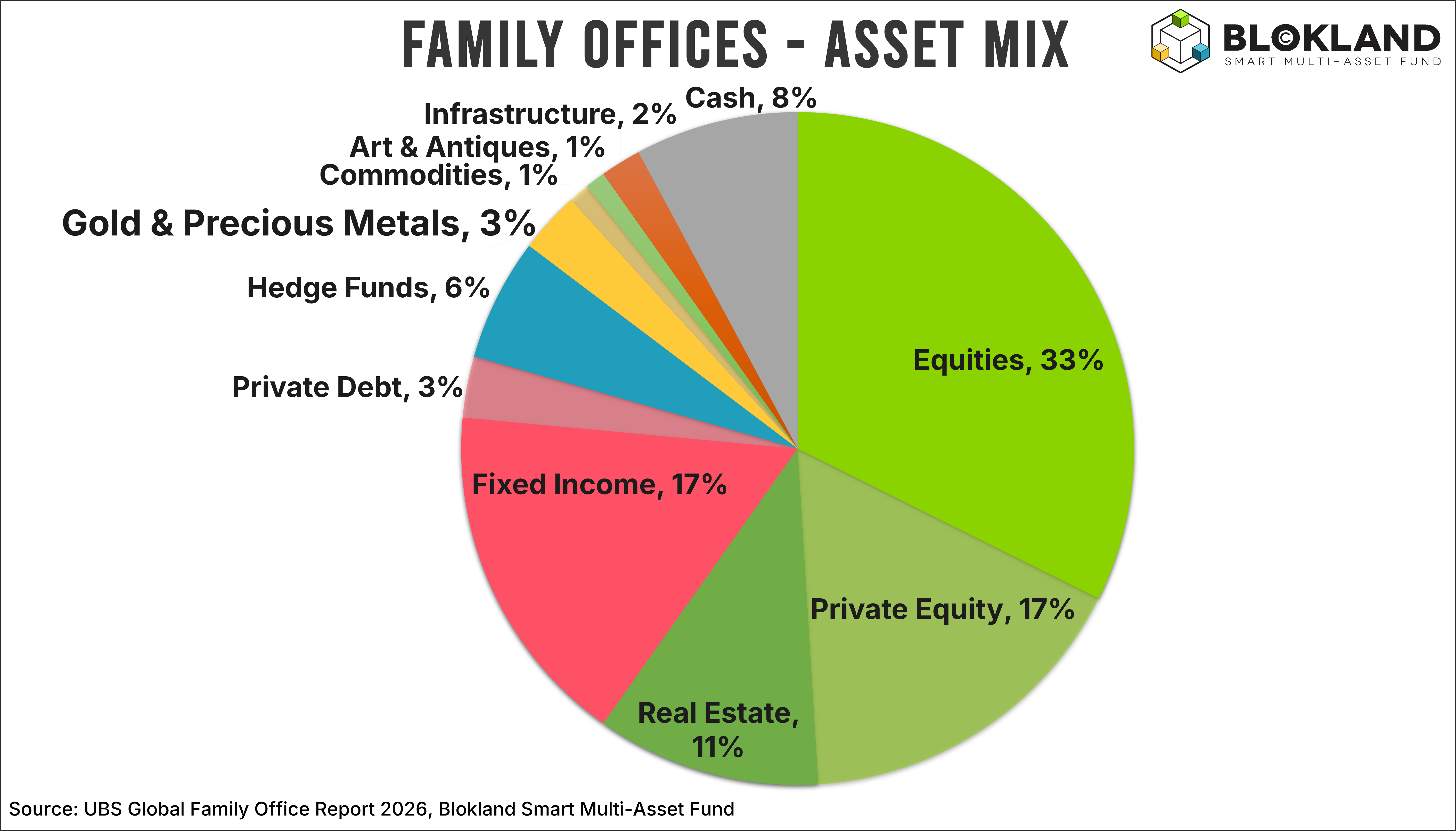
Beneath these seemingly traditional asset allocations, however, lies a much more significant shift. Family offices appear to be preparing for a substantially different asset allocation.
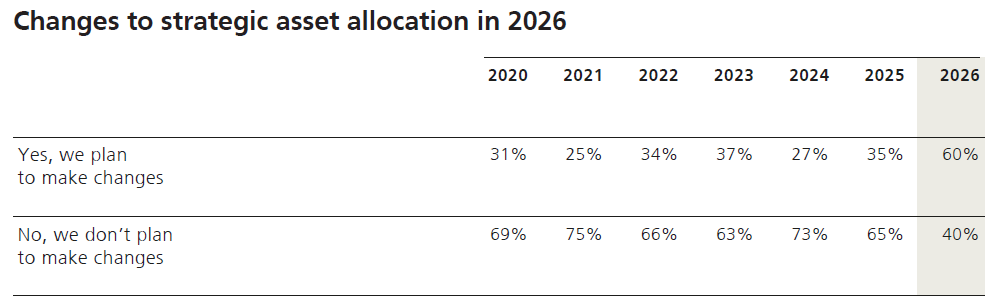
Regarding whether they intended to change their strategic asset allocation this year, 60% answered yes. In previous years, that figure never exceeded 37%, which reflects a meaningful change of direction.
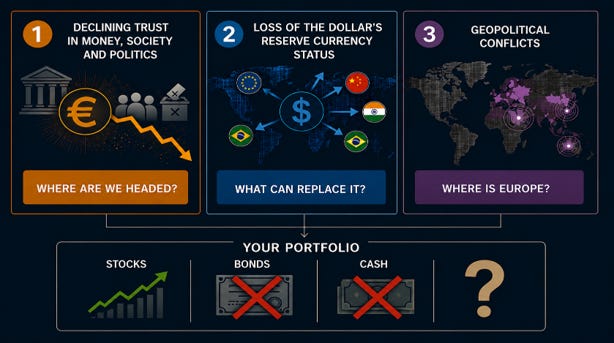
The reasons behind these planned changes should sound familiar to most investors. Geopolitical risks, including trade wars and military conflicts, are mentioned frequently. So are concerns about the enormous global debt burden and the growing probability of another recession.
More importantly, these risks are viewed as structural rather than temporary. That alone likely explains why family offices are reconsidering their investment policies.
Closely related to these risks is the U.S. dollar. Many respondents expect, quite rightly in my view, that the dollar’s status as the world’s reserve currency will decline. As a result, family offices intend to reduce their dollar exposure, hedge more of their currency risk, and prepare for a world that is less dependent on the dollar.

Where family offices appear to be well aware that the world is changing rapidly, their strategic asset allocations have hardly changed over the past several decades. The mismatch between today’s risks and yesterday’s portfolios has become increasingly obvious.
The most frequently mentioned portfolio adjustment, and in my view the most logical one, is a larger allocation to gold. For 2026, the average allocation rises by one percentage point to 3%. That is still remarkably low, but it is nevertheless three times higher than it was just two years ago. Of course, gold’s strong price appreciation over the past few years has also contributed to this increase.
It is my firm conviction that as these structural risks continue to unfold, allocations to gold will continue to rise. I would not be surprised if the average allocation to gold triples again over the next three years.
In the UBS report, bitcoin remains grouped under the label “crypto.” That, too, will eventually change. For now, bitcoin is nothing more than a niche investment.
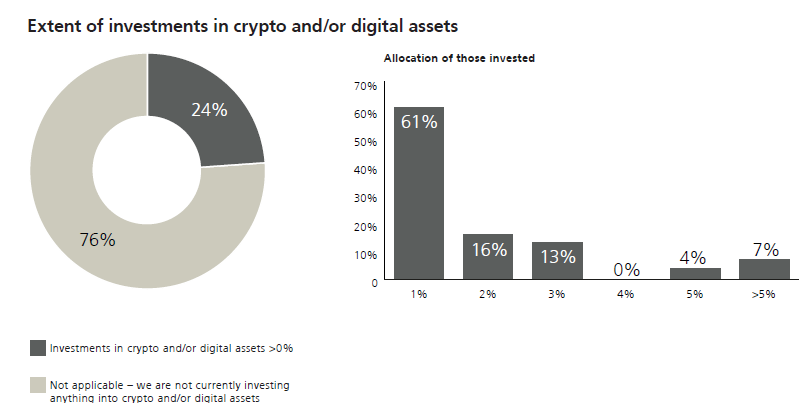
Even so, we are beginning to see some progress here as well. Twenty-four percent of family offices now invest in crypto, typically bitcoin, and of those investors, just under half have incorporated crypto into their long-term strategic asset allocation.
The strategic asset allocations, but perhaps even more so the accompanying commentary from family offices, speak volumes. The world is changing, and investors are increasingly recognizing that their portfolios have to change with it.
That process will take time. Most people simply do not like change.
But it is happening.
And that is encouraging to see, given that our entire investment philosophy is built around The Great Rebalancing.
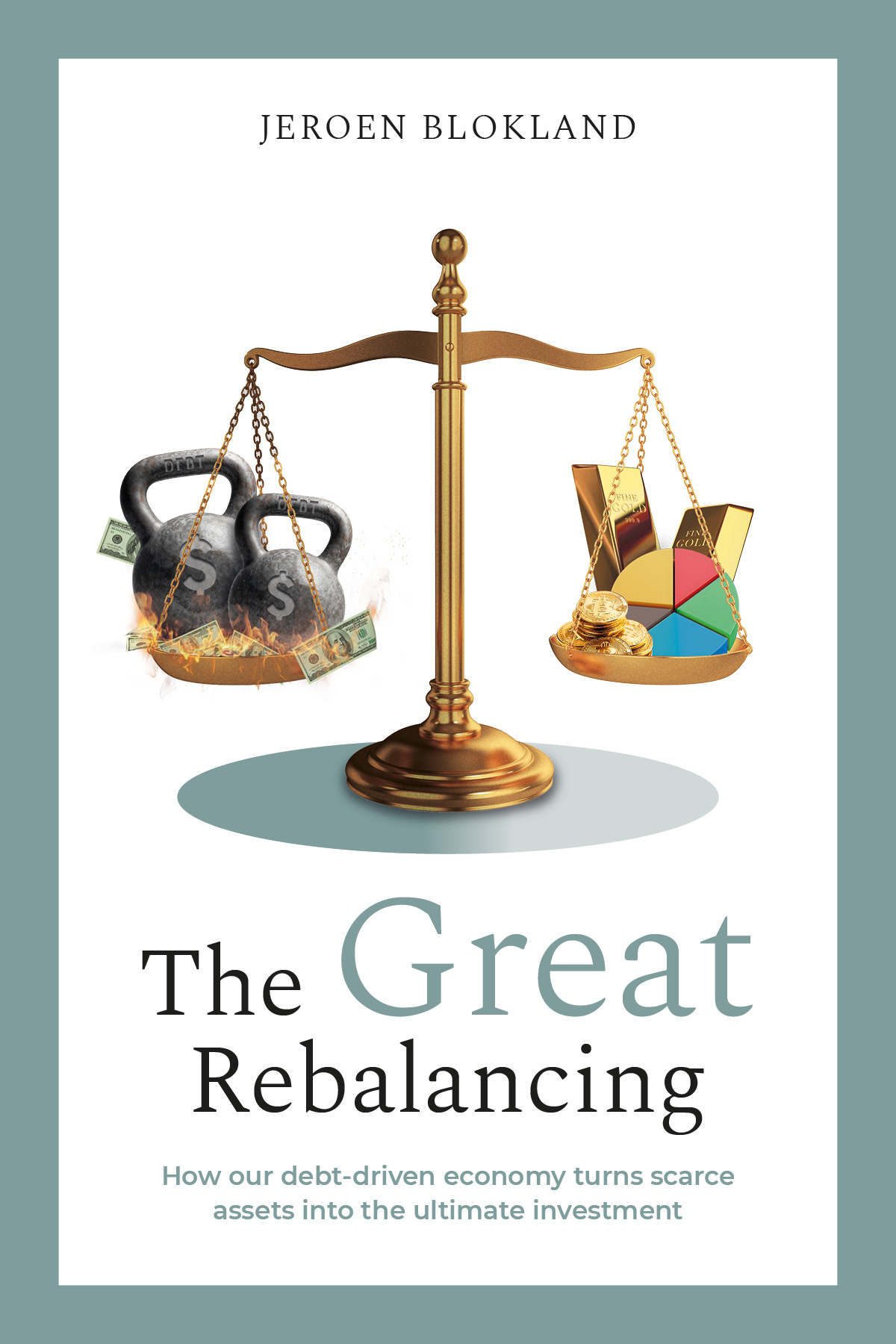
I wrote The Great Rebalancing to explain why scarce assets, with gold leading the way, have become indispensable in a financial system driven almost entirely by debt and money creation.
The book explains how aging, combined with an unprecedented accumulation of debt, fundamentally changes the rules of the game. Central banks are becoming increasingly unable to deliver on their promise of price stability, making the continued debasement of our money all but inevitable.
As a result, savings and bonds can no longer be relied upon to preserve purchasing power or protect wealth. Anyone who wants to safeguard the value of years of hard work will have to look elsewhere.
Scarce assets, such as gold, can help bring the financial system back into balance. And as long as the underlying risks remain unresolved, that role is likely to become even more important.
Because traditional investors, including asset managers, pension funds, and yes, family offices, move so slowly, ultimately to the detriment of their clients, I launched the Blokland Smart Multi-Asset Fund.
Unlike traditional portfolios, the fund explicitly incorporates today’s structural risks by avoiding cash and bonds altogether, while investing instead in quality equities, physical gold, and bitcoin.
When combined with The Emergency Brake, our model-driven risk management strategy is designed to limit losses during severe market declines.
This allows us to stay ahead in building investment portfolios that are designed for the world ahead, not the one behind us.
If you would like to learn more, feel free to contact me at jeroen@bloklandfund.com to schedule a meeting. Or simply book a call at a time that suits you using this link.
More information and all contact details are available on the Blokland Smart Multi-Asset Fund website.
Until next time,
Jeroen Blokland

Comments
Nothing yet. Say the first thing.
Sign in to join the conversation.