
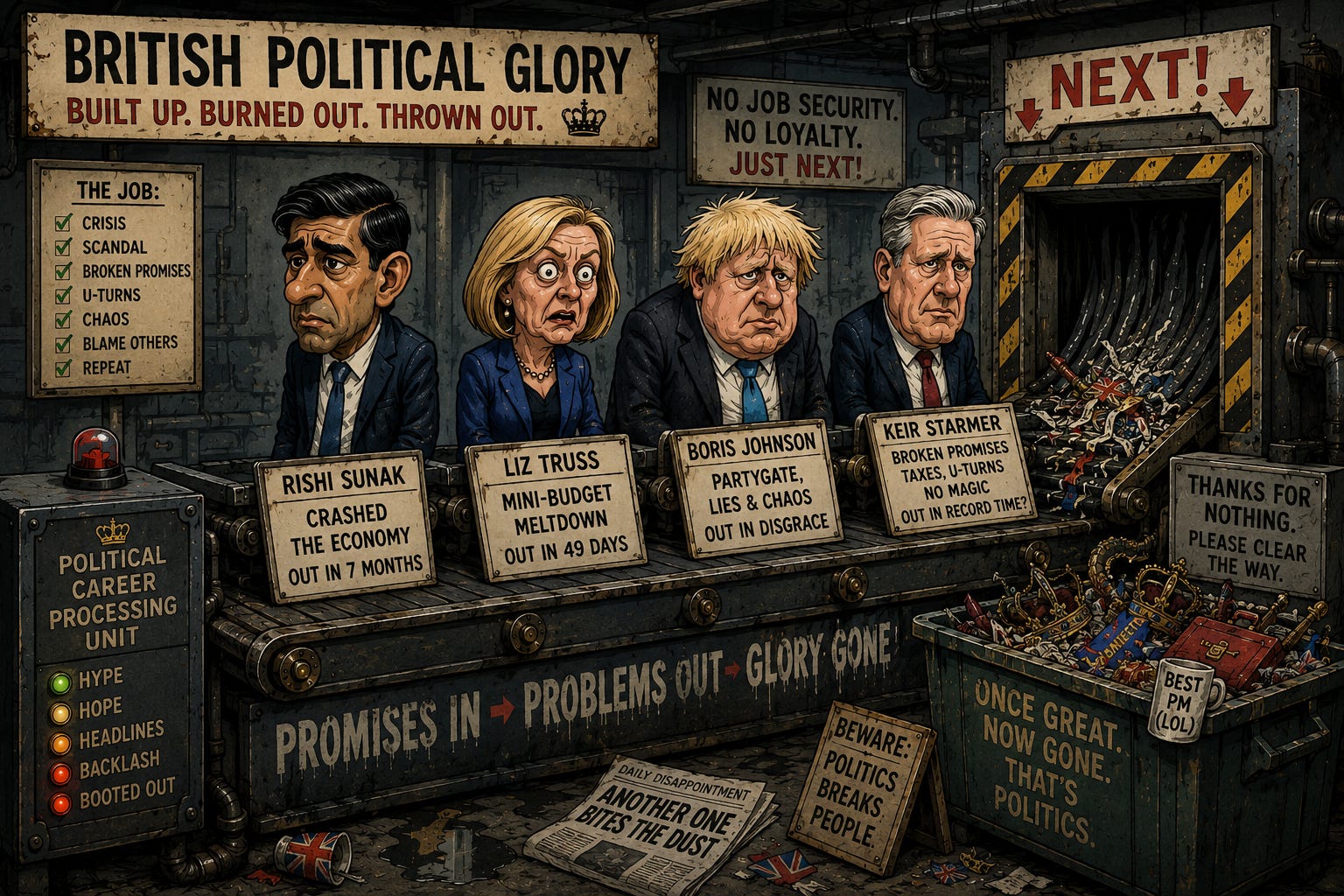
At the time of writing, Keir Starmer is still the Prime Minister of the United Kingdom. And if it were up to him, he would like to keep it that way. The days when politicians voluntarily stepped aside seem to be long behind us. Yet the latest political drama in Britain highlights a much less amusing structural trend: rising political instability, increasing polarization, and a steadily growing tax burden.
Less Than Two Years
I looked it up. Since July 2016, when Theresa May entered Downing Street, the United Kingdom has already gone through five prime ministers. That puts the average shelf life of a British prime minister at less than two years (depending on how long Starmer survives, of course).
That fact alone explains why genuine long-term policymaking has become so rare. Vision, patience, and perseverance require time. Modern politicians rarely have that luxury. From the day they are elected, they are often preoccupied with one thing above all else: political survival.
.
A Broader Perspective
Politics is often seen as a local affair. Every country is different, or so the conventional wisdom goes. As a result, broader patterns are often overlooked.
Yet those patterns are very much there. France, for example, has gone through no fewer than ten prime ministers over the past decade. Ten. At some point, it becomes impossible to describe that as political stability.
What increasingly emerges as the common thread behind the short lifespan of governments is the state of public finances.
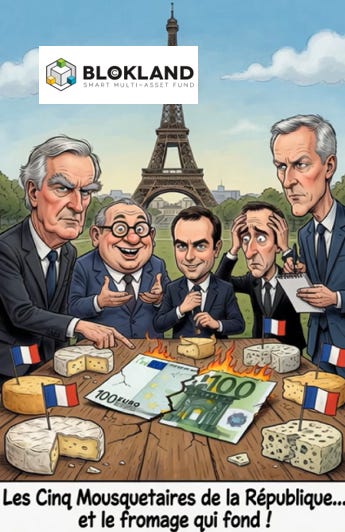
François Bayrou was effectively shown the door after just nine months when he ran into an immovable parliament while trying to push through €44 billion in spending cuts, including the politically explosive proposal of eliminating two public holidays. For the French political establishment, that proved a bridge too far.
But it can get worse. Michel Barnier lasted exactly 91 days before being removed through a vote of no confidence. A remarkable detail that illustrates just how much French politics has changed: it was the first successful no-confidence vote since 1962.
Unpopular
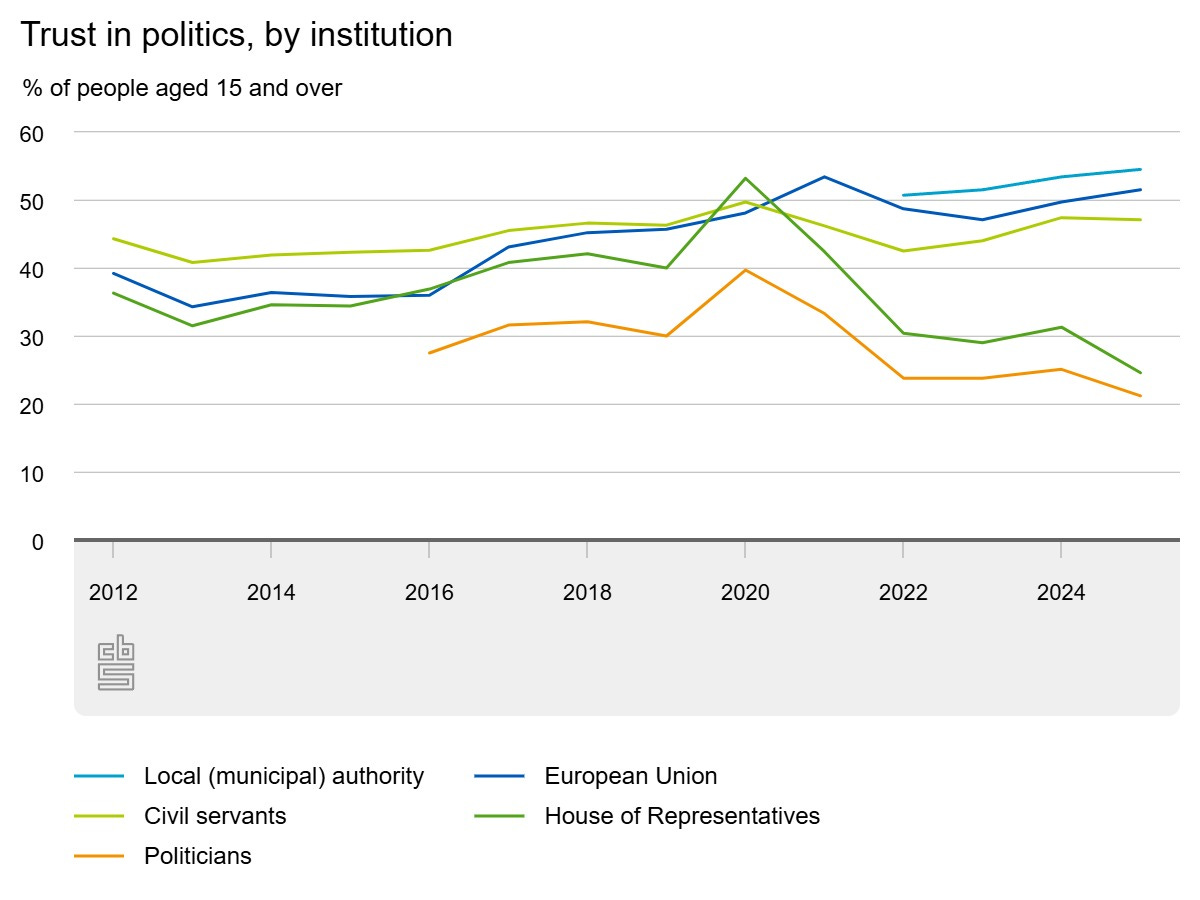
Earlier this week, the Dutch Statistics Office reported that confidence in politicians and parliament has fallen to the lowest level ever recorded.
In other words, the Dutch now have less faith in their political leadership than they did in the years immediately following COVID, when large parts of society were effectively locked down.
That is not exactly encouraging.
Connecting The Dots
Politicians being forced from office because they are unable to deliver on promises regarding budgets, employment, social security, and pensions is becoming an increasingly familiar pattern. Governments promise fiscal discipline while simultaneously promising stronger growth, generous welfare systems, full employment, and comfortable retirements. Eventually those promises collide with reality.
For investors, these developments carry significant consequences. First, political instability tends to reduce economic growth. When governments are no longer allowed the time to pursue consistent, long-term policies, meaningful results become increasingly difficult to achieve.
The situation is made worse by polarization, an unfortunate but predictable consequence of politicians failing to deliver on their promises and disappointing the voters who put them in office. Entire libraries have been written on the economic costs of what I call demolition politics. Policies introduced by one government are first dismantled by the next before a completely different set of policies can be implemented. That is an extraordinarily expensive way to run a country.
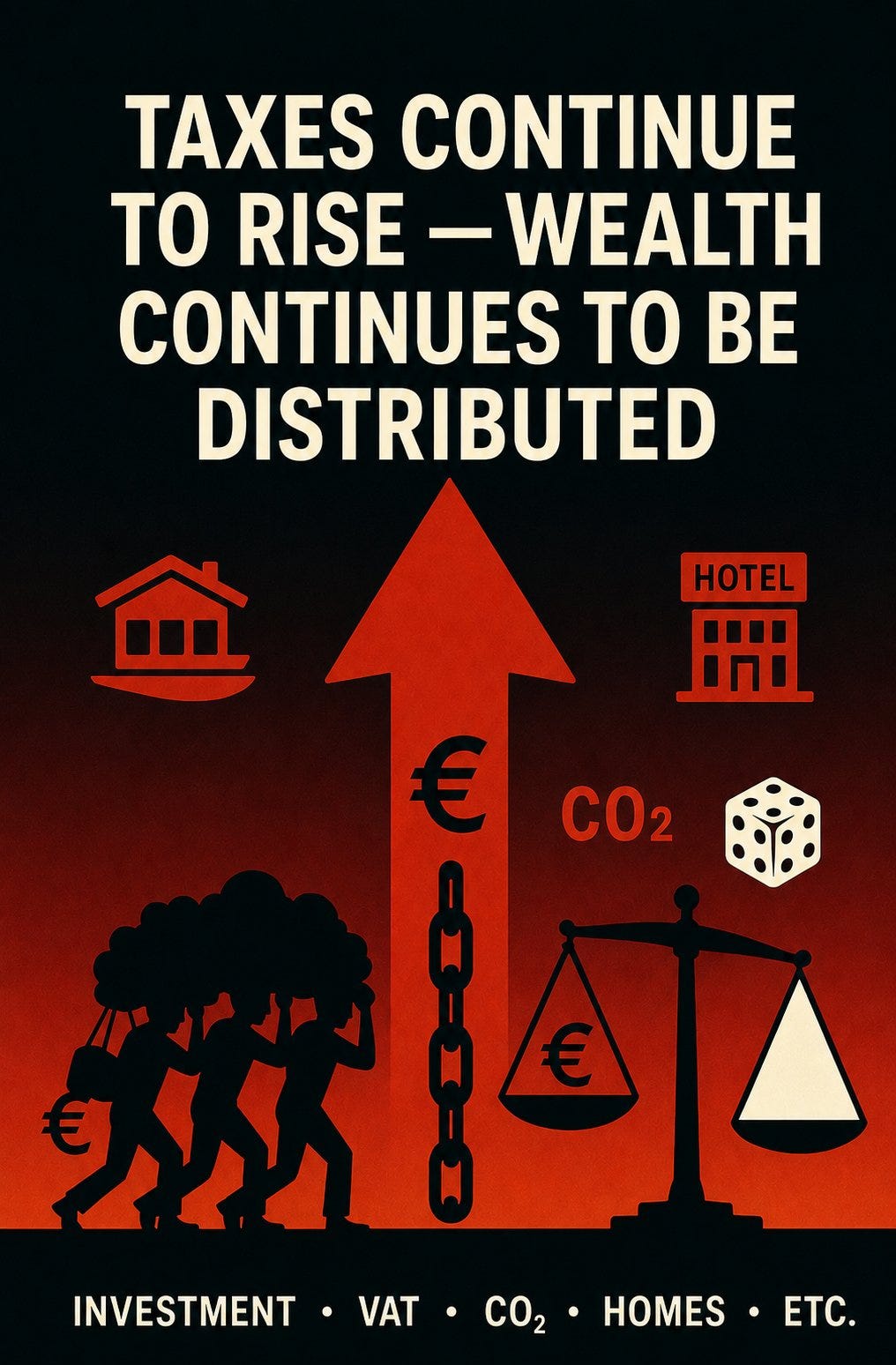
Last but certainly not least, taxes continue to move higher. While there is no shortage of debate about the relative tax burden on labor versus wealth, in practice, policy tends to move in only one direction. Taxes on various forms of wealth continue to rise, while taxes on labor rarely move lower.
In my home country, the Netherlands, taxing unrealized gains is the latest craziness. In addition, regardless of where one stands in the debate over realized versus unrealized gains, tax rates continue to rise.
A Way Out?
I do not know who will leave first: Starmer, the current French prime minister, or the Dutch government.
What I do know is that the discussion increasingly revolves around the same topic: public finances.
Now that interest expenses have surged, it may be worth asking whether there is a way out that could extend the political shelf life of governments, at least from a budgetary perspective.
Any ideas? I do.
Blokland Smart Multi-Asset Fund
Do you see political instability increasing as well? And do you understand that unsustainable public finances are one of its primary causes?
Then you also understand why the pressure on central banks to keep interest rates low continues to grow and why the probability of structurally higher inflation is rising.
Investors can escape this reality by avoiding assets that are highly sensitive to interest rates and inflation. Excess savings fall into that category as well. Their purchasing power is systematically eroded over time.
That is precisely why the Blokland Smart Multi-Asset Fund holds no cash, invests nothing in bonds, and focuses exclusively on scarce assets.
If you are interested in the Blokland Smart Multi-Asset Fund or would like to participate, feel free to schedule a call via this link or email me at jeroen@bloklandfund.com.
Kind regards,
Jeroen Blokland

Comments
Nothing yet. Say the first thing.
Sign in to join the conversation.