
(Note from John Eisenberg: In 1991, the Baltimore Sun sent me to the Dominican Republic to write about the Orioles’ scouting efforts there. It was among the most memorable and poignant trips I took for the paper during my 23 years there. The Orioles’ hardscrabble operation basically consisted of one scout driving around the island in a used truck with bags of rice and beans in the back, looking for teenage prospects who might blossom with years of mentoring. The latest episode of the Bird Tapes Podcast, available with this post, is my audiobook-style reading of the award-winning article that resulted from my trip. Available to free and paid subscribers, the episode can be downloaded to a device and consumed on Apple Podcasts or Spotify as well as in Substack. Later this week, I’ll write another post about an enduring charity effort that resulted from my trip to the Dominican.)
Among the many factors that help explain why more than four decades have passed since the Orioles played in the World Series, one stands out to me as more pivotal than most. By not investing more heavily — until recently — in scouting the Dominican Republic and procuring and developing talent from that country’s famously deep pool of talent, the club put itself at a competitive disadvantage.
The Orioles lagged far behind other teams in the Dominican for years, with the disparity especially glaring in the 1990s and early 2000s. Other teams employed more scouts and invested more bonus money in premier prospects. Many built and operated bricks-and-mortar academies for housing and developing those prospects. In many cases, their investment paid significant dividends in the form of Dominican-born major league talent.
The Orioles did have scouting boots on the ground and their efforts produced a trickle of Dominican-born major leaguers such as Manny Alexander, Luis Mercedes and Armando Benitez in the ‘90s. Benitez had a nice run as the Orioles’ closer, but the pipeline was never enduringly flush with possibilities.
It was Andy MacPhail, the Orioles’ chief baseball operative from 2007 to 2011, who convinced then-owner Peter Angelos that something had to change. Although the Orioles’ shortfall in the Dominican predated him, Angelos was steadfastly dubious about the cost-effectiveness of such a program. The club didn’t have a training facility in the country, forcing prospects to stay at private homes. The Dodgers and Blue Jays had operated Dominican academies since the ‘80s.
During MacPhail’s tenure, the Orioles began renting a facility that enabled them to house prospects and develop a more significant program. “We went from an F grade to a C-plus” on committing to procuring Dominican talent, MacPhail told me in his Bird Tapes interview earlier this year.
They get an A grade now. Under Mike Elias, the team’s current chief baseball operative, the Orioles have increased their Dominican scouting efforts and paid more for top prospects. Most importantly, they opened a state-of-the-art training academy in 2024.
On the day it opened, Elias said, “I think that this academy and the Orioles’ presence in the Dominican Republic is a good statement that it is impossible to excel in the major leagues without an excellent program in this country.”
That’s basically what the Orioles tried to do for many years.
The impressive exploits of 21-year-old Samuel Basallo, a burgeoning star on the 2026 Orioles, vividly illustrate what the club potentially was missing for all those years. And Basallo is just the first product of the Elias-era Dominican program to make an impact in the majors. More are coming.
But just because the Orioles trailed other teams for many years doesn’t many they gave zero effort. To the contrary.
In 1991, the Baltimore Sun sent me to the Dominican to write about the Orioles’ efforts to procure talent there. I spent a week with Carlos Bernhardt, their full-time Dominican scout. It was an unforgettable experience. I liked Carlos as much as anyone I encountered in my many years of covering the Orioles. And man, was he working hard.
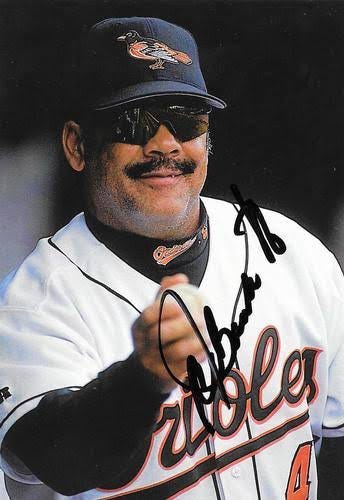
Criss-crossing the island in a used Toyota with bags of beans and rice in the back seat, Bernhardt looked everywhere for talent. One day, he was driving along and saw a strong-armed young guy mixing cement on a highway crew. Bernhardt thought, “There’s a catcher.” Bernhardt signed him and the young man, Cesar Devares, wound up reaching the major leagues in Baltimore.
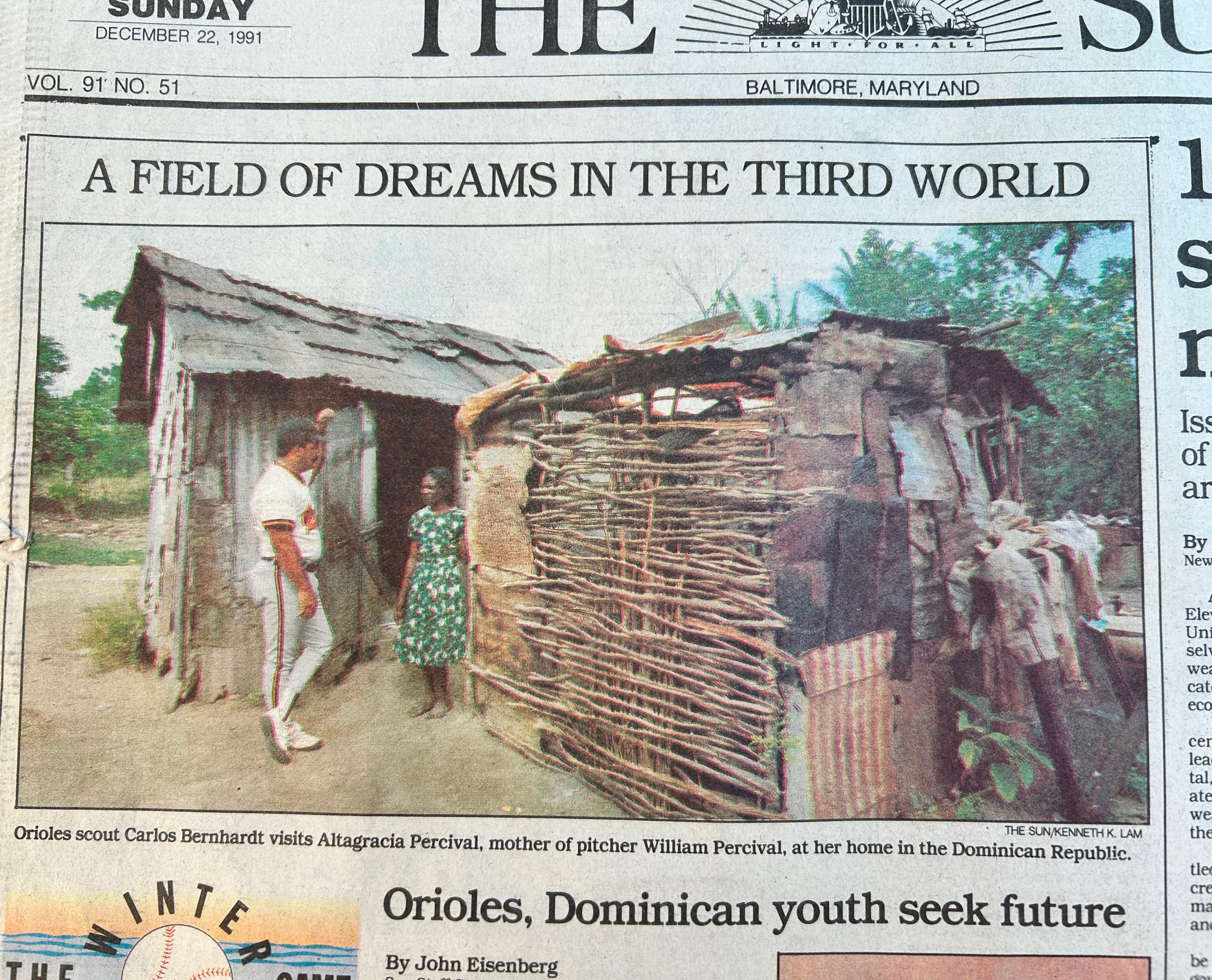
The beans and rice went to the families of the Orioles’ prospects, almost all of whom came from desperate poverty.
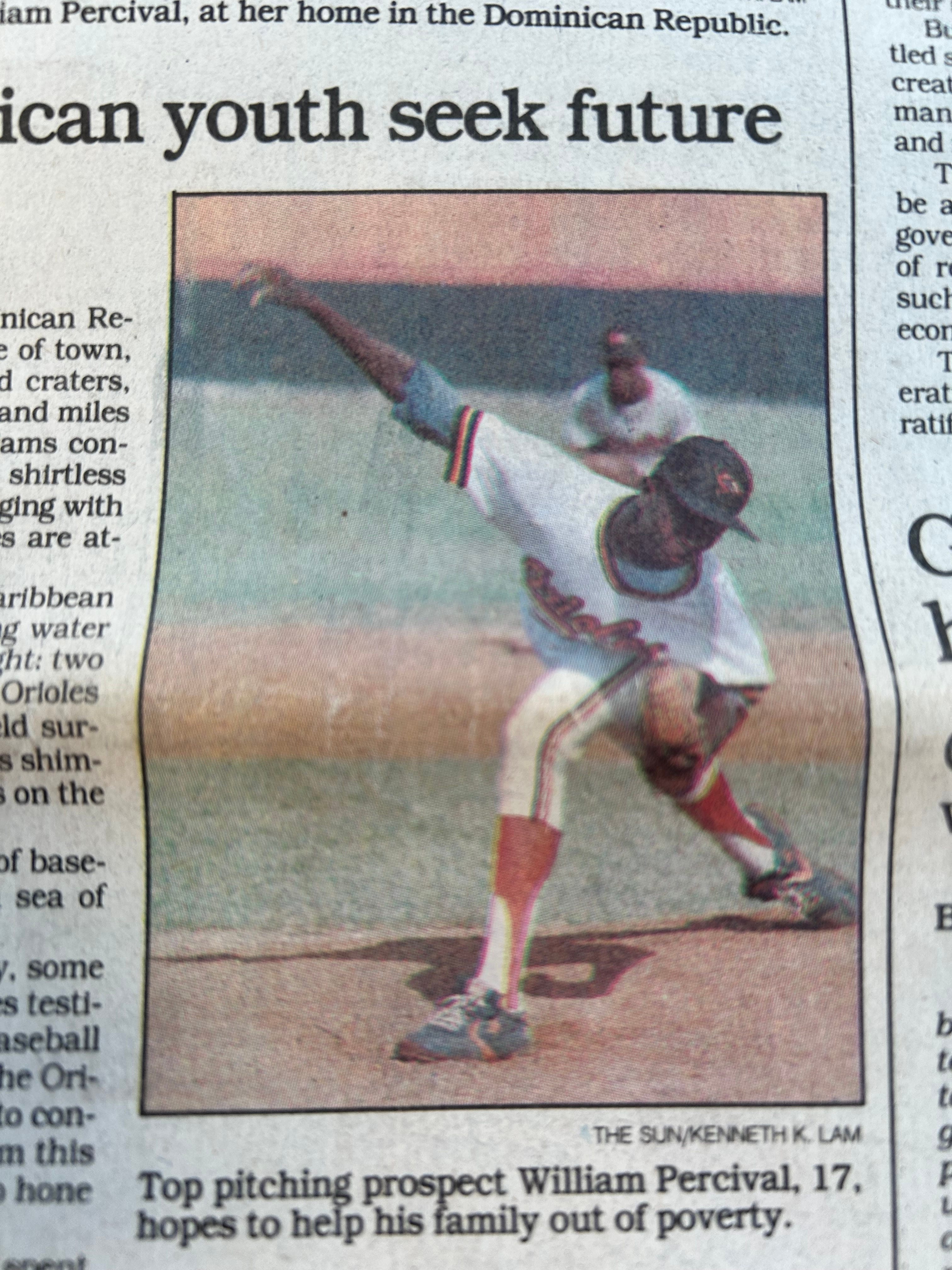
I zeroed in on a 17-year-old pitcher, William Percival, whom Bernhardt had spotted as a youngster throwing 85 mph in a pickup game. A Baltimore Sun photographer, Ken Lam, was on the trip with me, and Bernhardt took us to see Percival’s family. Lam snapped a series of pictures that illustrated the desperation underlying the Dominican baseball scene.
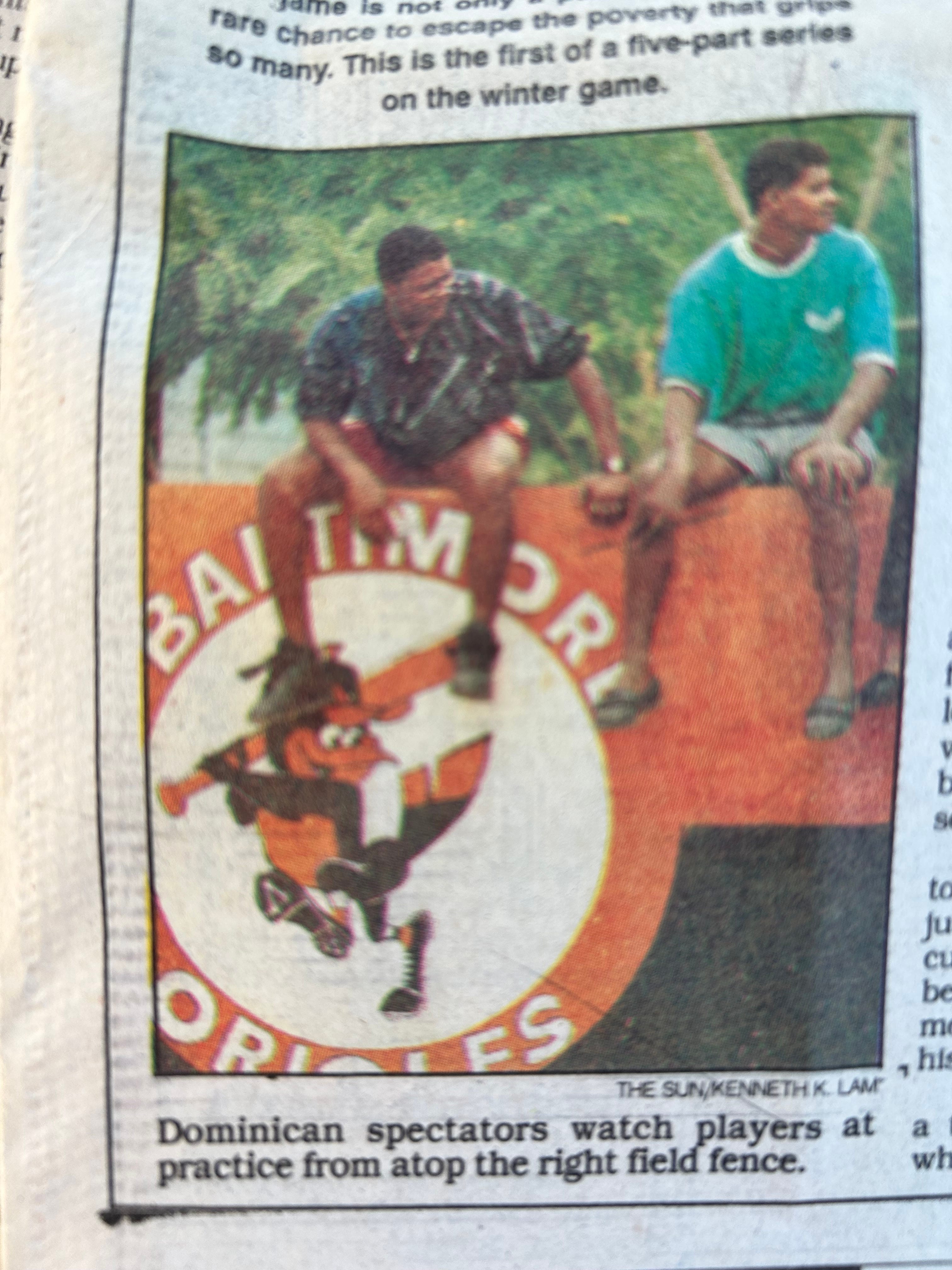
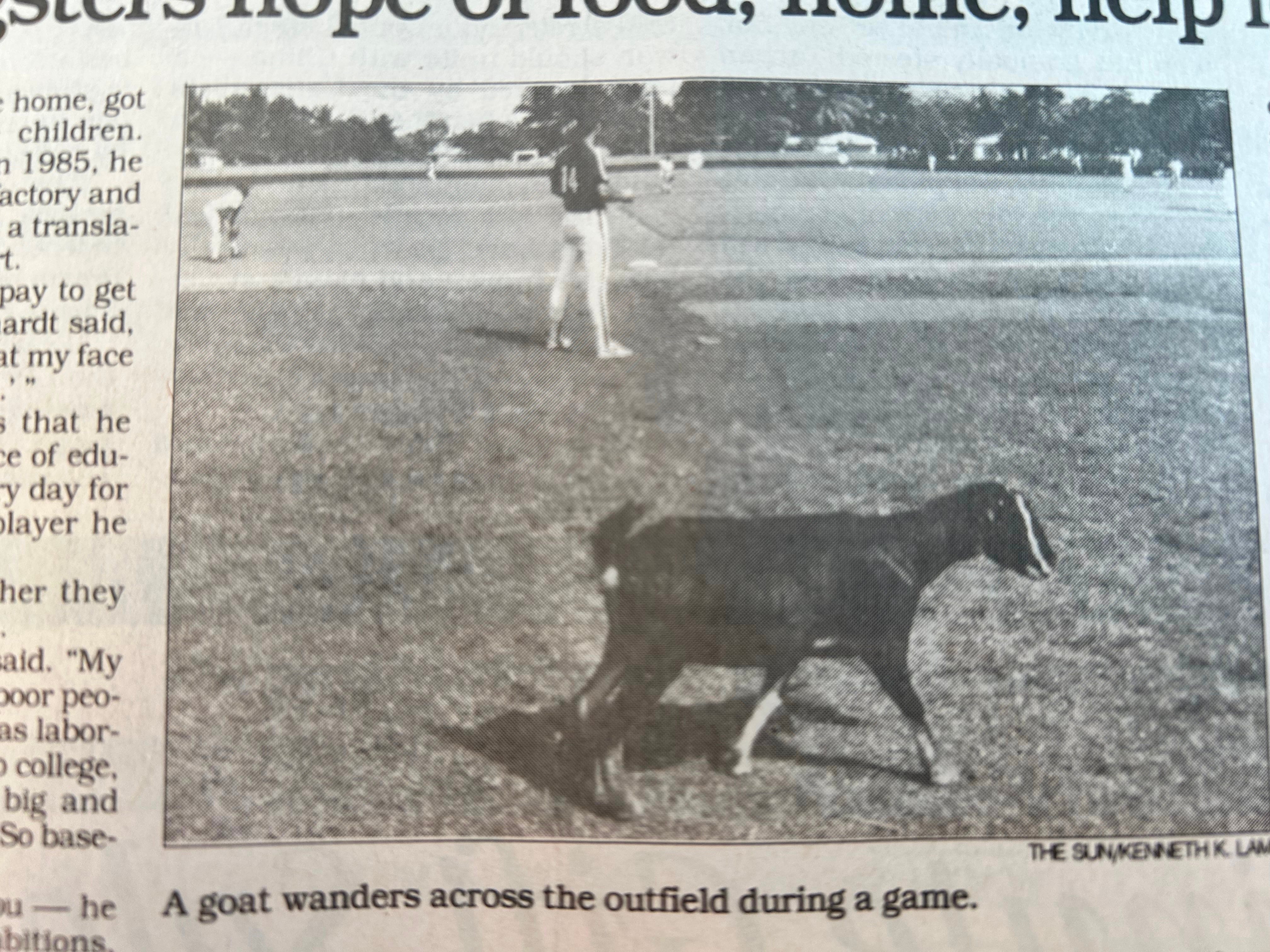
While other teams worked with their prospects at state-of-the-art academies with manicured fields, Bernhardt (and a few assistants) tutored the Orioles’ prospects on an open field at the end of a dead-end country road. It was the home field for an Orioles-sponsored team in the Dominican summer league — one of the outermost tendrils of organized baseball.
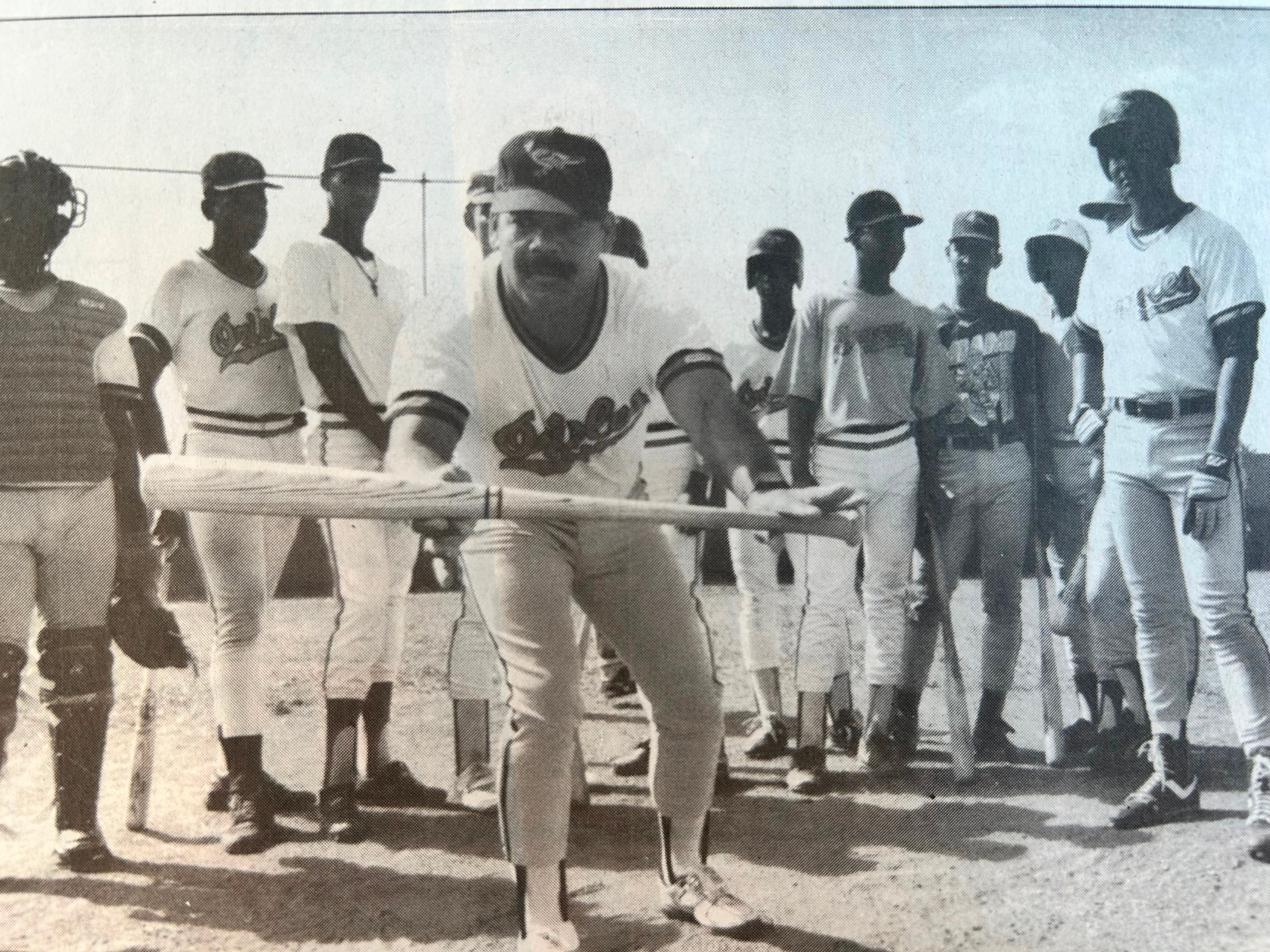
Bernhardt eventually signed more than 250 players to Oriole contracts over more than two decades as their Dominican scouting supervisor, working against long odds the whole way. As a reward, the Orioles brought him to the United States and made him the first base coach on their major league team in 1999.
Needless to say, the Orioles have come a long way in the Dominican since the days when Bernhardt signed players off highway crews and goats wandered around the field where the club tried to turn teenagers into real prospects.
Better late than never.
Comments
Nothing yet. Say the first thing.
Sign in to join the conversation.