
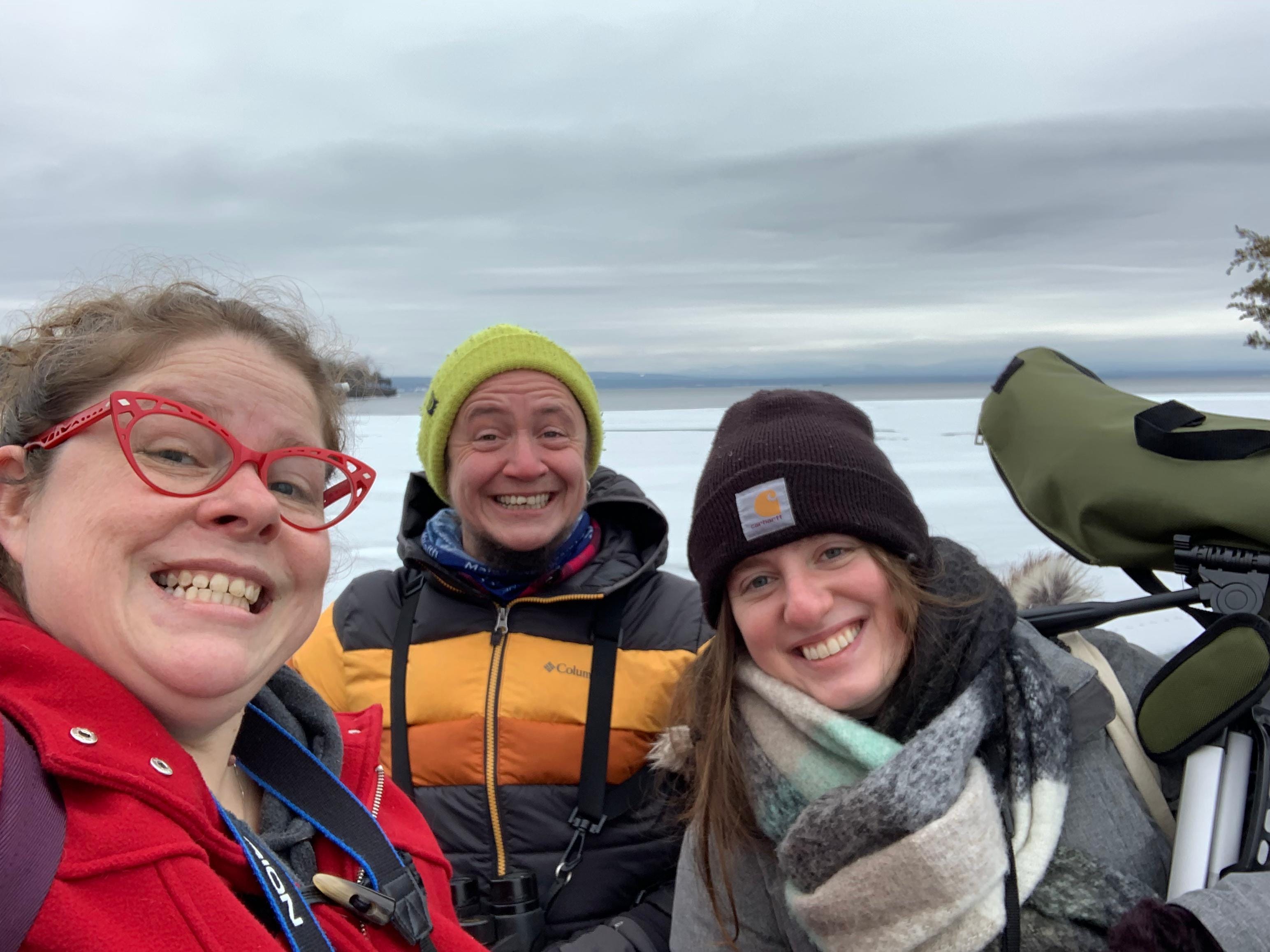
Birding is at its best when it creates space for more people to experience wonder, curiosity, and connection with the natural world. The Feminist Bird Club has embraced that idea from the beginning, building welcoming communities where birding is accessible, inclusive, and rooted in joy and mutual support. Their work reminds us that expanding who feels at home in birding ultimately strengthens the entire community.
We are especially grateful to Kieran Campbell (they/them) for taking the time to share their experiences, perspectives, and the mission of the Feminist Bird Club of Northern Vermont with us.
Find out more about the Feminist Bird Club, its mission, and local chapters at feministbirdclub.org.
For readers who may be new to the Feminist Bird Club (FBC), how would you describe its core mission and the spirit behind your outings?
The mission statement of the FBC is: “Promoting inclusivity in birding while fundraising and providing a safe opportunity for members of the LGBTQIA+ community, BIPOC, and women to connect with the natural world.” Partnering the mission statement with a sense of joy, wonder, and a lot of fun encapsulates the spirit of our outings.
FBC is known for its commitment to inclusivity and accessibility. How do those values show up in your day-to-day programming and community decisions?
A few of us will always scout out a potential birding site before taking others there, even if we have been there before. On those scouting missions, we focus on the site’s accessibility and take time to fill out a Birdability info sheet. We will take pictures, make notes, and thoroughly assess the planned walk. For longer or more varied walks, at least one of us will offer to stay in one place for those who would like a sit spot for birding or who may be unable to join for the full walk. We are also very clear in our descriptions about what to expect during the outings. Our goal is always to make sure our walks are accessible and enjoyable for anyone who shows up.
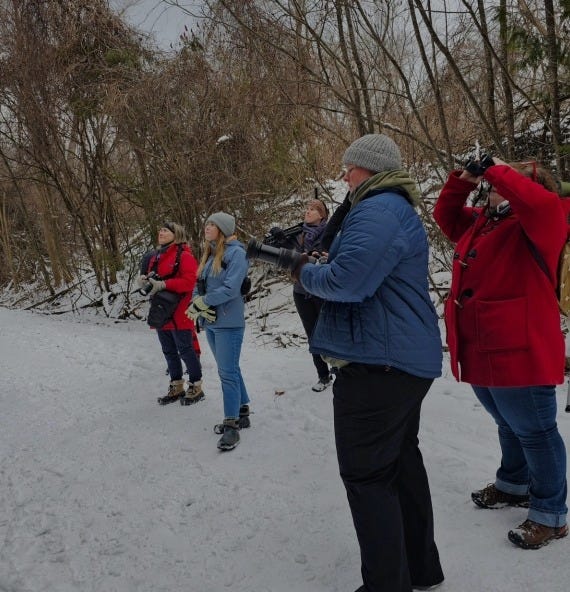
There are lots of FBC chapters, seemingly more every year, each reflecting the needs of its local community. What does a typical bird walk or gathering look like with the Northern Vermont chapter, and how does it differ (if at all) from other, local birding outings?
Our walks more often resemble social outings rather than a typical bird walk. I think that, because of the organizations we highlight and raise money for with each outing, our demographic tends to skew a bit younger, more queer, and more diverse than on other outings I have been on. There are usually at least one or two brand new birders who will join us, and we tend to be a bit chattier than most.
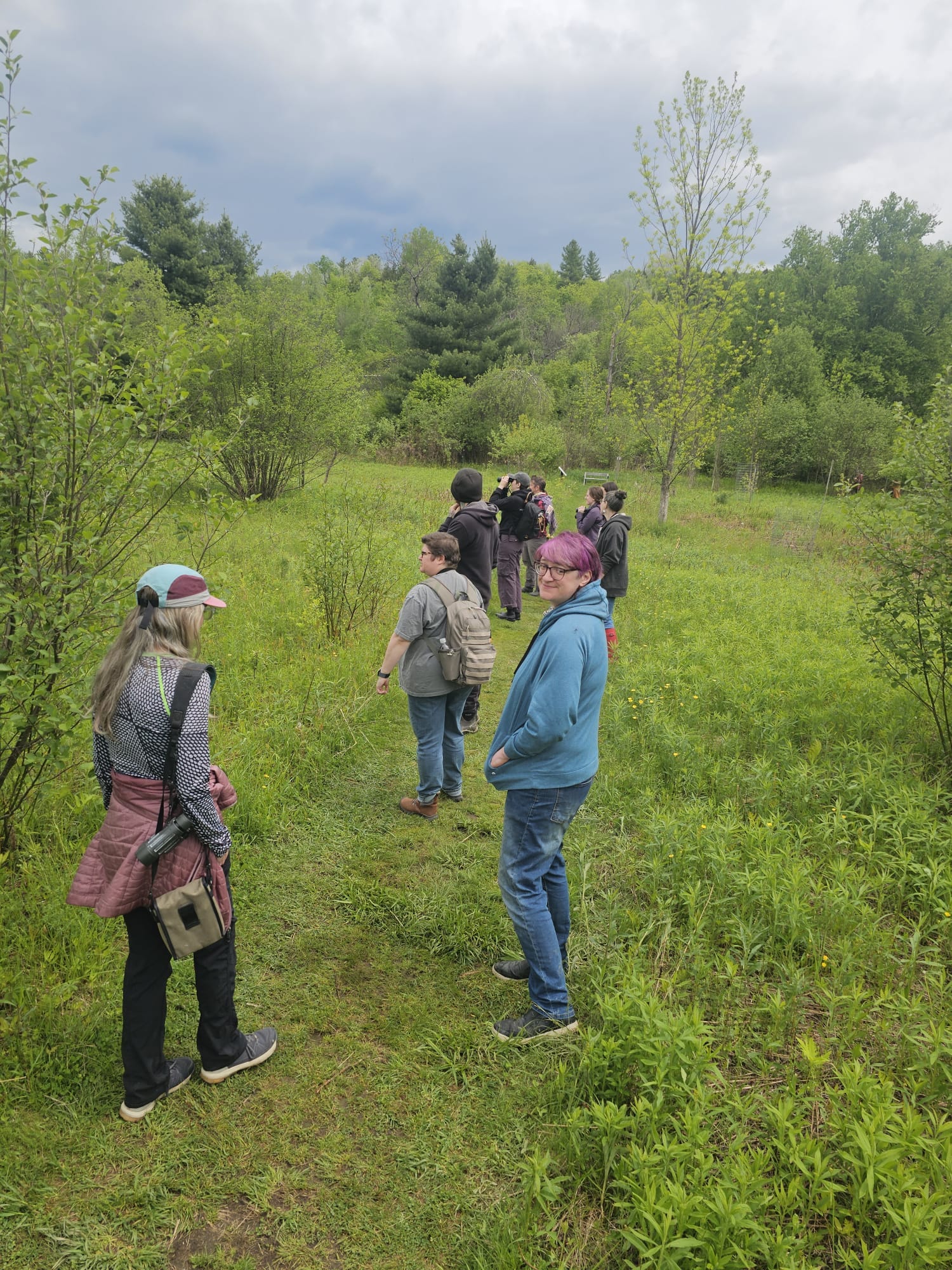
What barriers to birding do you most often see in your community, and how does your chapter of FBC work to address them gently?
Accessibility is often a barrier for potential birders. We make sure to follow the Birdability standards when scoping out a future outing, include accessibility information in our event descriptions, and offer a “sit” option for folks who would prefer it. Accessibility also means transportation. We include public transit options in our detailed event descriptions and have offered car-share rides in the past. We also do a variety of locations in Central/Northern Vermont to reach the most folks. Cost can also be a barrier to purchasing binoculars or field guides. We have a few spare binoculars on hand at all outings in case someone needs a pair.
Birding can sometimes feel intimidating or performance-driven. How does your group help foster a more welcoming, low-pressure relationship with birds and the natural world?
As we introduce ourselves during our outings, we aim to keep everything lighthearted and focus more on the joy of simply seeing or hearing the birds rather than checking things off a list or aiming for a certain number of birds. We are also very open about our strengths and weaknesses in birding, and we often talk about how we rely on each other to make positive identifications.
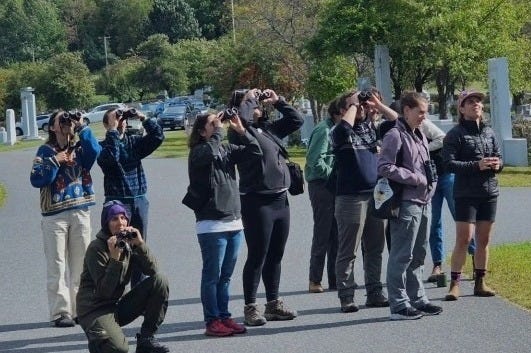
What role does joy play in your birding practice and in building community?
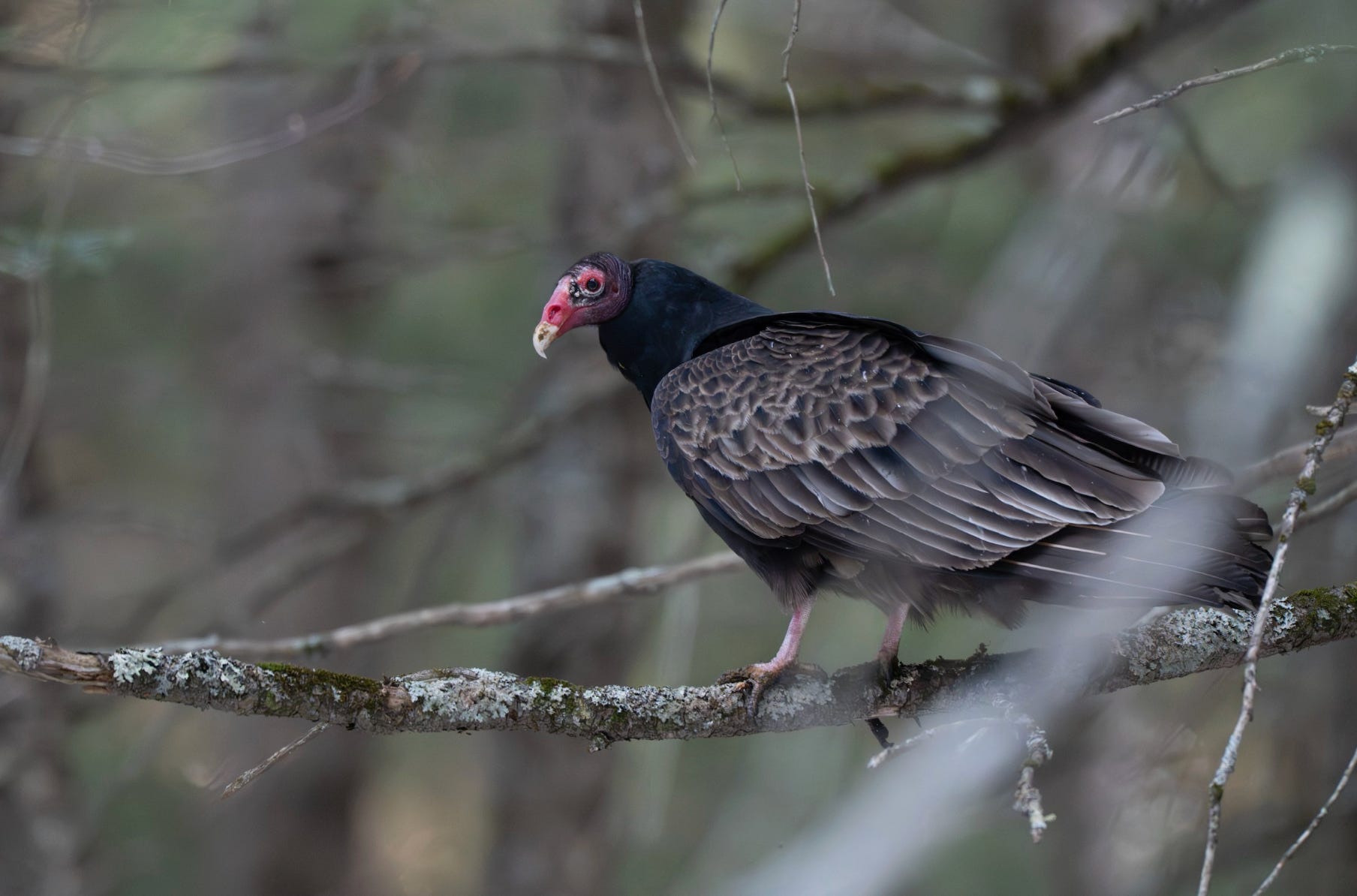
Joy is the main driver behind my bird watching. I just love seeing birds! No matter how many times I see a chickadee or a Turkey Vulture, I am excited and pumped to see them. And when I finally see that new bird for the first time? Absolutely ecstatic. I recently startled a small group of Blue-winged Teal because I audibly gasped upon realizing what they were. They were a lifer for me, and I was excited to have found them. In terms of building community, I feel that joy brings folks together. Whether birding, biking, or doing outreach, folks connect better and form stronger, more meaningful relationships when there is a shared sense of joy and wonder in their interactions.
Have there been any moments on an outing—something a bird did, or something shared among participants—that felt especially meaningful or defining for your chapter?
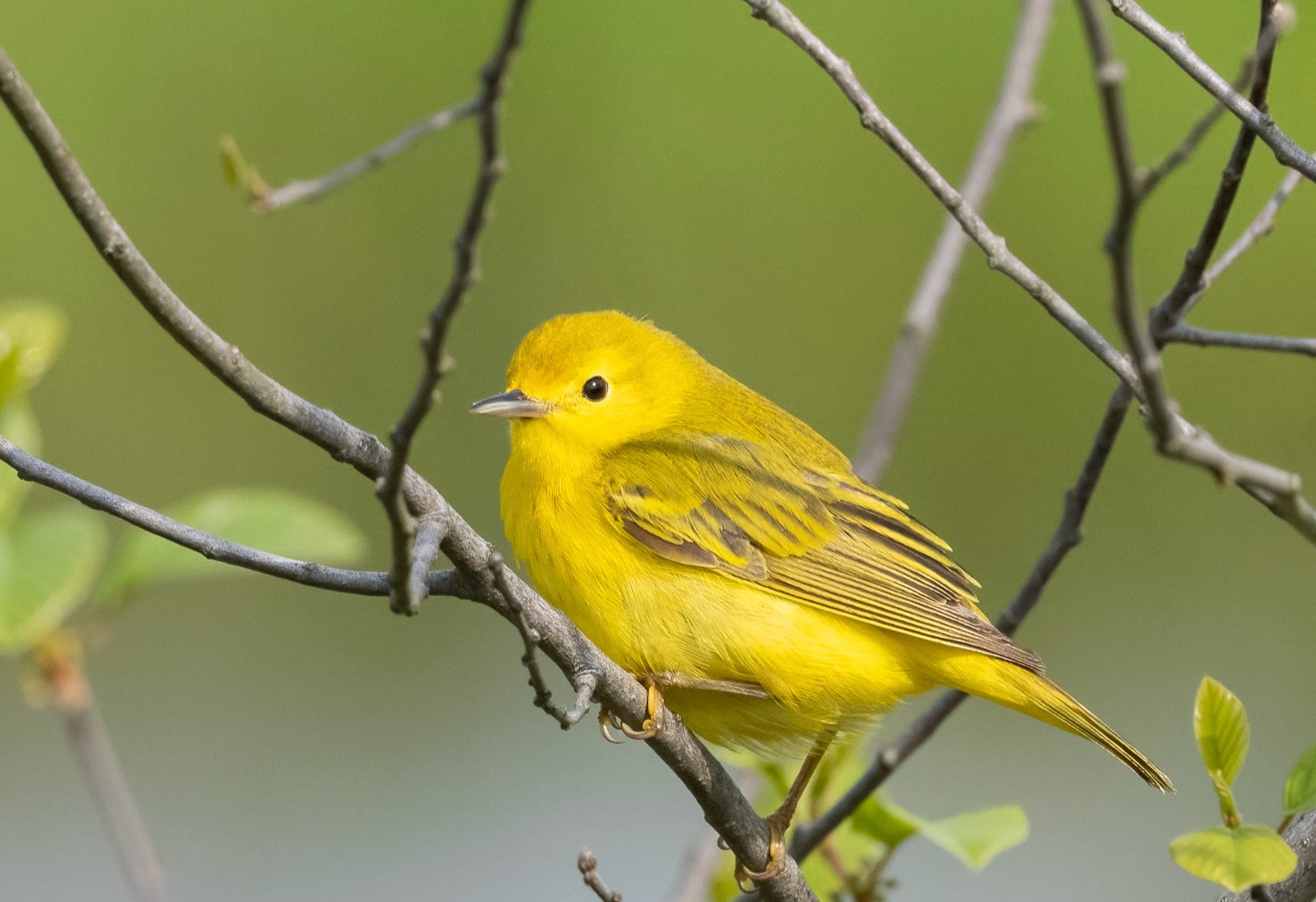
During an outing in early spring two years ago, we were lucky enough to witness a Northern Yellow Warbler fledgling emerge from its nest and begin climbing a tree, all while its parent nearby encouraged it. We were on a relatively busy recreation path in Colchester, and multiple people stopped to ask us what we were looking at. Each time, someone from the group explained excitedly and offered the binoculars to the person. Those interactions really highlighted the inclusivity and joy we strive to attain on every outing.
Finally, we always like to ask: who would you like to see featured in a future BU interview? I’ve only met her twice and only on bird walks, but Ali Wagner from Mad Birders (Mad River Valley, VT). Her knowledge of birds and incredible ear for identifying bird songs is amazing. And she is willing to share that knowledge with anyone, is super kind, and is approachable.
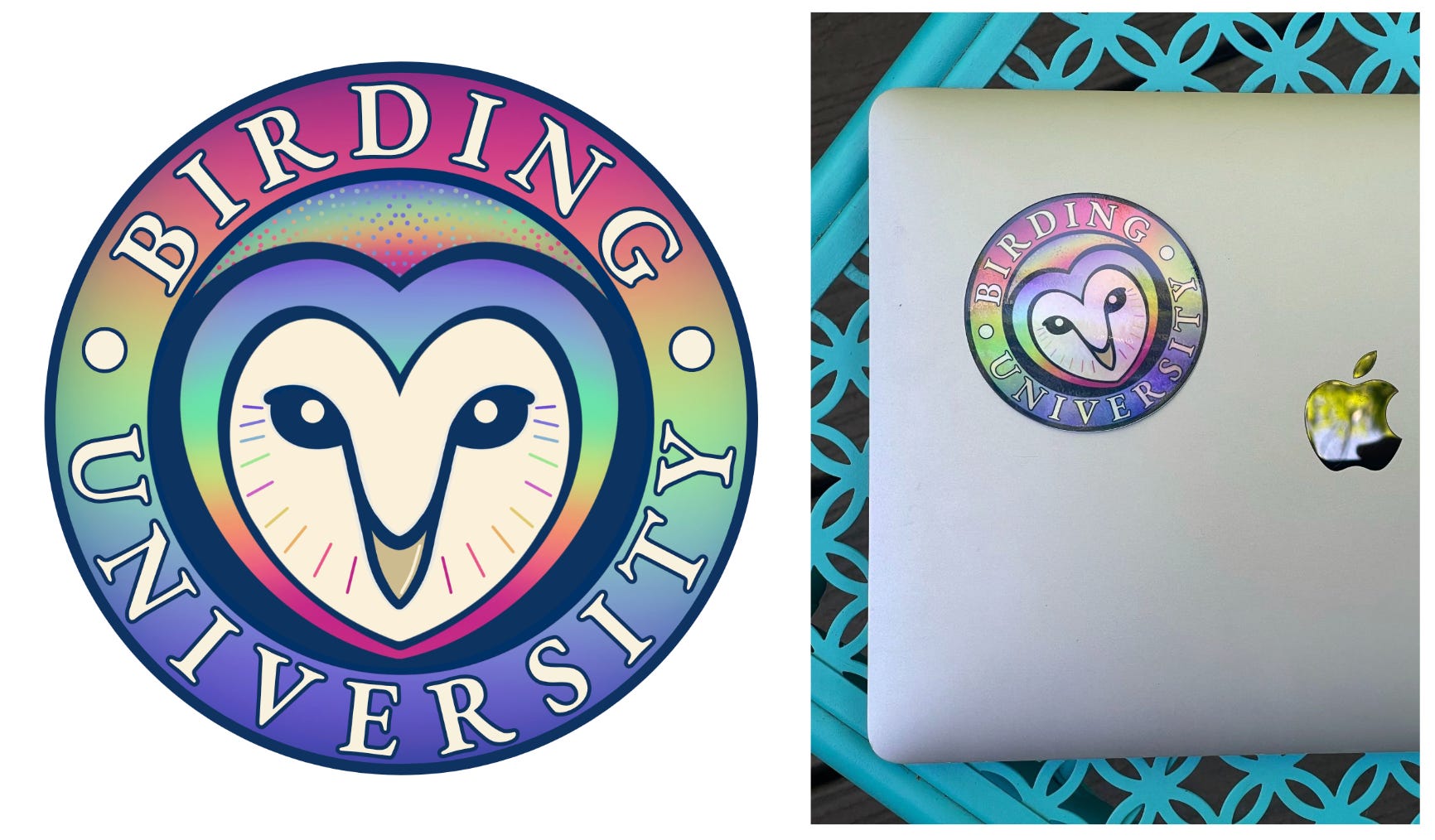
Get Your Birding University PRIDE Sticker!
At Birding University, we believe birding is at its best when everyone feels welcome. This sticker is a simple reflection of that belief—and a celebration of the many people who make this community what it is.
For every sticker sold, we’ll donate $1 to the Feminist Bird Club and $1 to The Trevor Project, the leading suicide-prevention and crisis-intervention nonprofit for LGBTQ+ young people.
Comments
Nothing yet. Say the first thing.
Sign in to join the conversation.