
Welcome to the birdy side of the internet! This week’s newsletter explores two very different stages of a bird’s life. In This Week in Birding History, we follow one of the world's greatest long-distance travelers—a Southern Hemisphere seabird that made an extraordinary appearance in eastern Canada. In Birding Tip, we stay much closer to home, examining how to tell when a young bird on the ground truly needs help—and when the kindest thing you can do is simply give it space.
This Substack is reader-supported. To receive new posts and support our work, consider becoming a free or paid subscriber.
This Week in Birding History: A Southern Seabird in the St. Lawrence
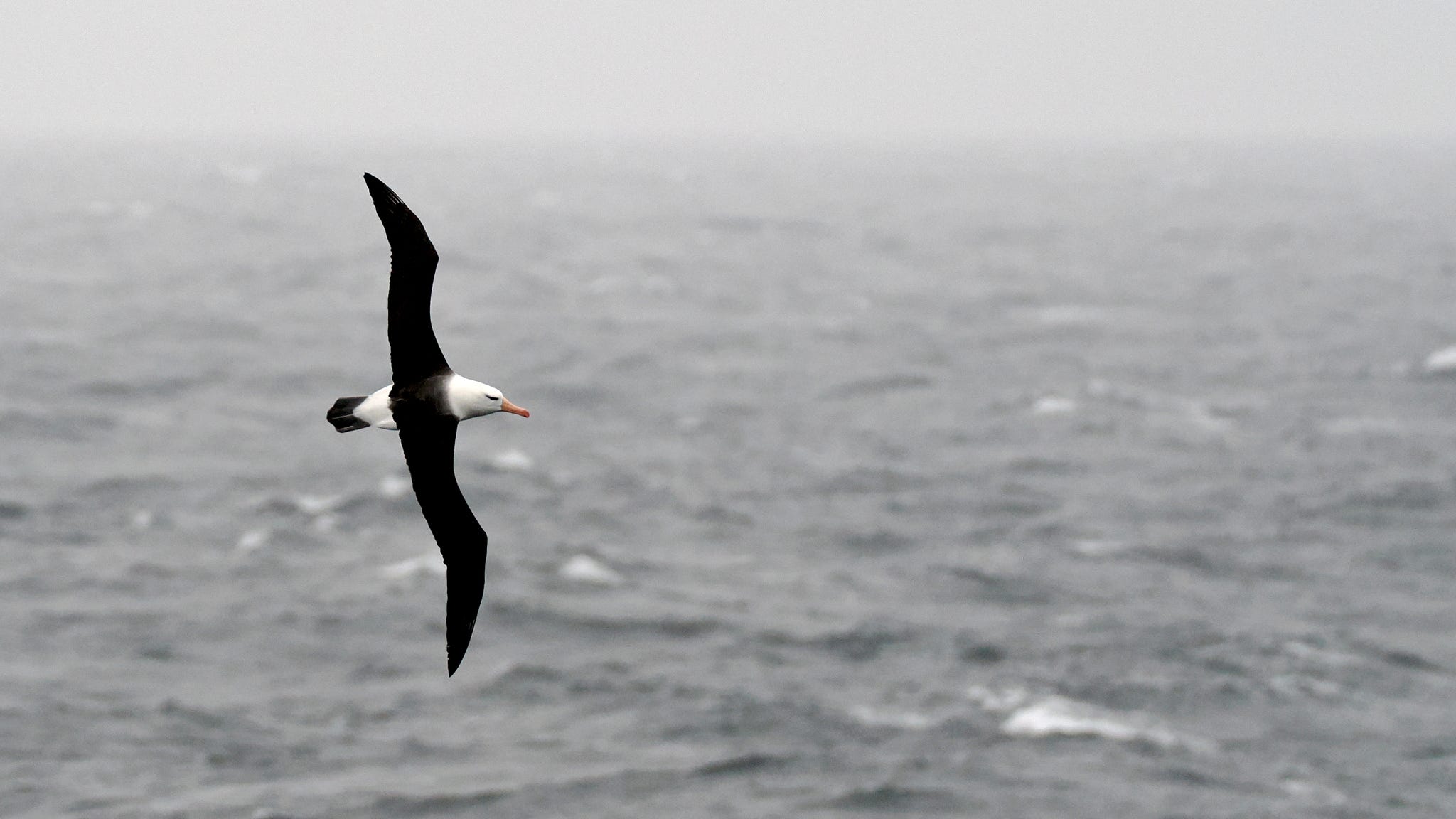
June 29, 2024 — Two years ago this week, birder Sophie Couture was aboard a lobster fishing boat off the eastern tip of Québec’s Gaspé Peninsula when she and her companions noticed a bird with an immense wingspan feeding on discarded mackerel tossed overboard by the fishermen. Recognizing the encounter as something extraordinary, Sophie photographed the bird and shared the images with Étude des Populations d’Oiseaux du Québec (ÉPOQ), the province’s long-running bird records database established in 1975. The photographs confirmed an astonishing identification: a Black-browed Albatross—the first record for Québec and one of very few ever documented in Canada.
Black-browed Albatrosses normally spend their lives in the Southern Hemisphere, breeding on remote islands around Cape Horn, the Falkland Islands, South Georgia, and other subantarctic archipelagos. Outside the breeding season, they roam widely across the Southern Ocean, ranging from the Antarctic coastline north to about 30° south latitude. Yet a small number undertake remarkable journeys into the North Atlantic. Most of these wanderers appear around the British Isles, Iceland, and the Faroe Islands, where a handful of individuals—most famously one nicknamed Albert—returned year after year for decades. Others have ventured even farther north into Arctic waters off Russia. Records from continental North America remain exceptionally scarce, making Québec’s first Black-browed Albatross an extraordinary addition to the province’s avifauna and a reminder that even the world’s greatest ocean wanderers can occasionally stray far beyond their expected horizons.
Birding Tip: The Fledgling Test
There are few things that trigger our protective instincts faster than a baby bird on the ground. It looks vulnerable. It may flutter awkwardly, call loudly, or sit in the open looking like it has absolutely no plan. To a well-meaning person, that can look like an emergency.
But in many cases, the best thing you can do is...nothing.
Late spring and early summer are fledgling season for most birds in North America. Across neighborhoods, parks, backyards, forest edges, marshes, and fields, young birds leave the nest before they are fully skilled at being birds. Many are feathered, mobile, and still being fed by parents nearby. They may not fly well yet or they may sit helplessly in low vegetation, under shrubs, or even in the middle of a lawn. This stage can look alarming, but for many birds it is completely normal.
That is where the fledgling test comes in. Before rescuing a baby bird, the first question should be, “Does this bird actually need help?”
Nestling or Fledgling?
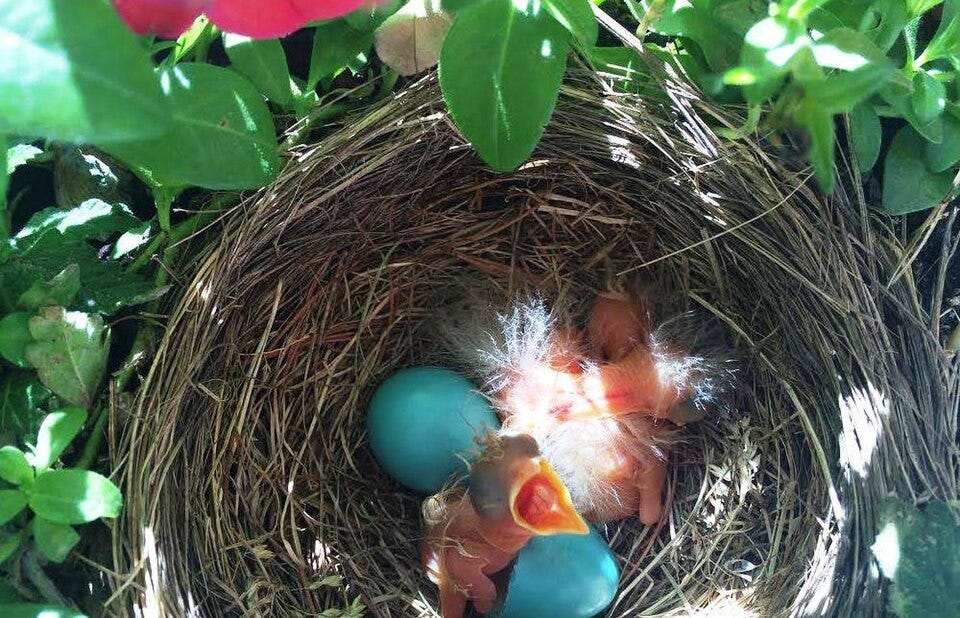
The most important distinction is between a nestling and a fledgling. A nestling is a very young bird that still belongs in the nest. Nestlings may have bare skin, closed or partially closed eyes, sparse down, or only partly developed feathers. They usually cannot stand, hop, perch, or flutter well. If you find a nestling on the ground, it may have fallen or been knocked from the nest before it was ready.
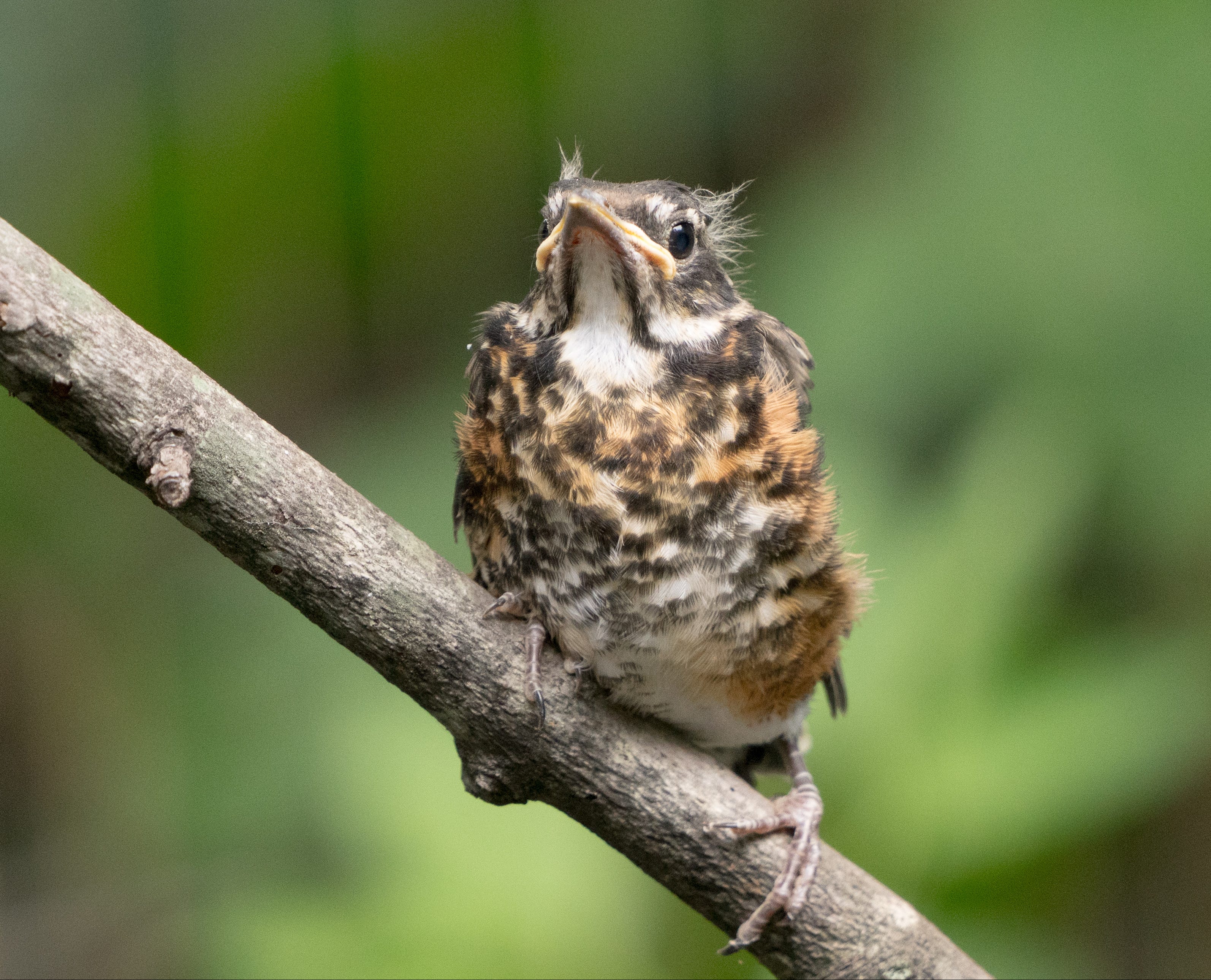
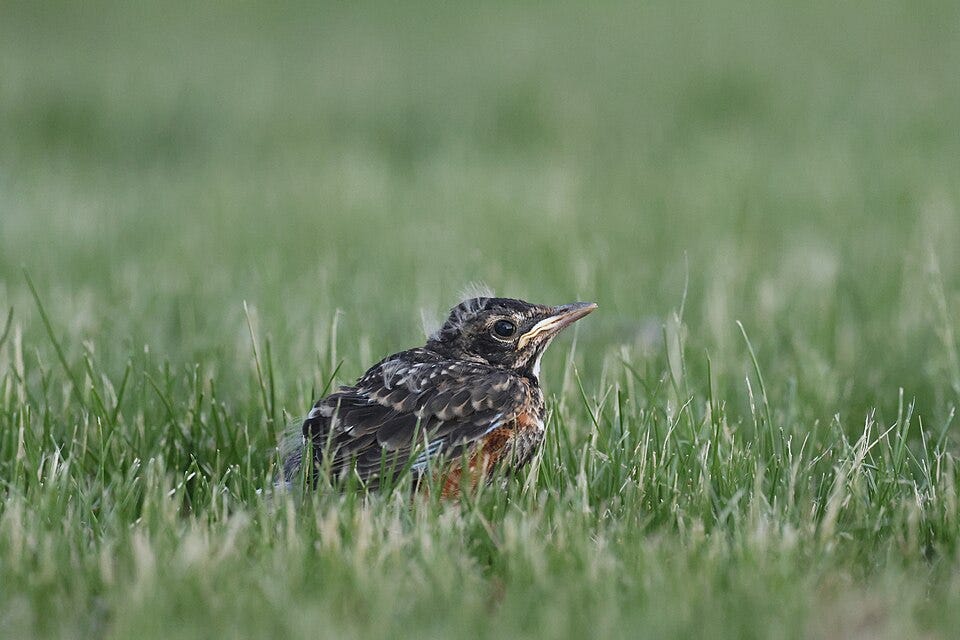
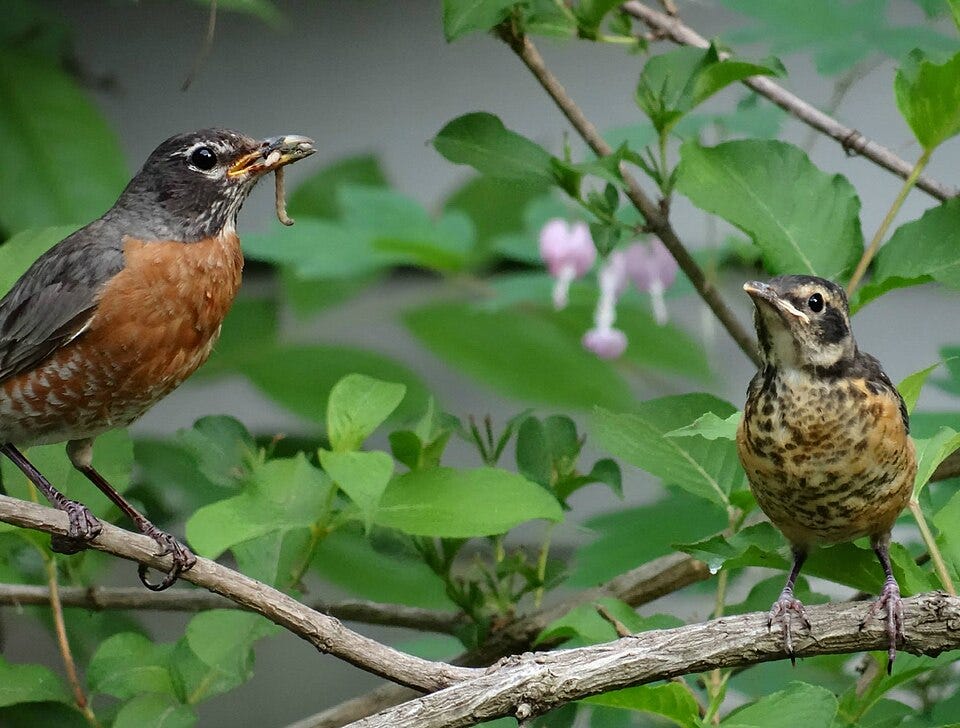
A fledgling is a young bird that has left the nest of its own volition, yet in many cases is not fully independent. Fledglings are usually mostly or fully feathered. They may have short tails, soft-looking plumage, fleshy gape edges at the corners of the bill, and an awkward way of moving. They can often hop, grip with their feet, flutter short distances, or hide in vegetation. They may look clumsy, but they are in the normal transition between nest life and independence.
This is the part that surprises many people: leaving the nest does not mean a young bird can fly well. For a lot of species, leaving the nest is less like graduation and more like the first day of practice. The young bird is out, but its parents are still feeding, guarding, and communicating with it as it learns to navigate the world. That means a bird on the ground is not automatically abandoned. In fact, a fledgling sitting quietly under a shrub may be exactly where it is supposed to be.
The Fledgling Test
When you encounter a young bird, pause and run through a simple test before deciding whether it needs help.
Look at the feathers — Is the bird mostly feathered, or is it bare and undeveloped? A mostly feathered bird is more likely to be a fledgling. A mostly naked, downy, or sparsely feathered bird is more likely to be a nestling.
Watch its behavior — Is it alert? Can it sit upright? Can it hop, flutter, or perch low to the ground? These are all signs of a fledgling. A bird that cannot support itself, feels limp, or lies exposed without normal movement may need assistance.
Assess the danger — Is the bird in the middle of a road, on a busy sidewalk, exposed to cats or dogs, or trapped somewhere it cannot escape? If the bird is a fledgling but is in immediate danger, you usually do not need to remove it from the area. Instead, move it only a short distance to nearby cover—such as beneath a shrub, onto a low branch, or into dense vegetation—while keeping it close enough for its parents to find. Often, you won’t even need to touch the bird; simply approaching may encourage it to hop or flutter into cover on its own.
Watch from a distance — Parent birds are often nearby, but they may not approach while you are standing over their young. Step back and observe quietly for several minutes. You may see an adult return with food, call from nearby cover, or keep watch from a perch. If the bird is feathered, alert, mobile, and not injured or in immediate danger, it usually does not need to be rescued.
When Help Actually Helps
There are situations where intervention is appropriate. If a bird is a nestling and you can safely find the nest, the best option is often to place it back in the nest. The common belief that parent birds will reject a baby because a human touched it is a myth. A quick, gentle return to the nest is often far better than removing the bird from its parents.
If the nest cannot be found, is destroyed, or is unreachable, the situation becomes more complicated. In those cases, contacting a licensed wildlife rehabilitator or local wildlife agency is usually the best next step. They can advise you on whether a surrogate nest is appropriate or whether the bird needs professional care.
A bird should also get help if it is visibly injured, bleeding, weak, cold, covered in insects, unable to move normally, or known to have been caught by a cat or dog. Any bird known to have been caught by a cat should be evaluated by a licensed wildlife rehabilitator. Even small puncture wounds can lead to fatal infections if left untreated.
What you should not do is try to raise the bird yourself. Baby birds have specialized diets, feeding schedules, temperature needs, and developmental requirements. Well-meaning care can easily become harmful care. Bread, milk, water dropped into the bill, random seed mixes, or improvised feeding can injure or kill a young bird. When a bird truly needs help, the safest help is professional help.
What Birders Can Learn from Fledglings
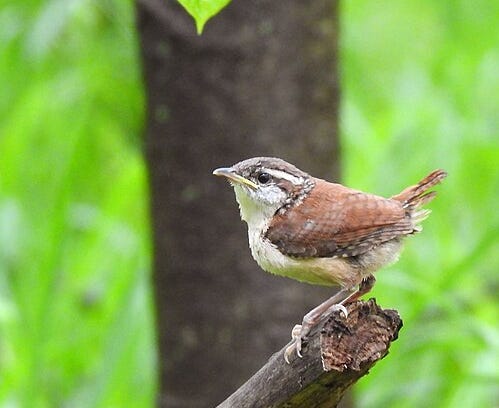
For birders, fledgling season is not just a rescue question. It is also a chance to become better observers. Young birds force us to slow down. They do not always look like the field guide image. Juveniles may have streaking where adults are plain, dull colors where adults are bright, shorter tails, fluffier body shape, or odd proportions. A young Northern Cardinal may not yet have the adult male’s full red plumage. A young American Robin will show distinct spots on its underside. A young Blue Jay may look softer and less crisp than the noisy, confident adults we are used to seeing.
Behavior can be just as useful as appearance. Begging calls, wing fluttering, short flights, and adults carrying food are all clues that breeding has been successful nearby. Sometimes the easiest way to identify a fledgling isn’t by its plumage but by its parents. Watching an adult arrive with food often tells you more than field marks alone.
This is also a great time to practice breeding evidence. If you use eBird, observations of recently fledged young provide valuable breeding evidence. They confirm successful nesting and help document which habitats are supporting local bird populations.
Give Them Space
The hardest part of fledgling season is that the right action often feels passive. We want to pick the bird up, move it somewhere safer, or take it somewhere that feels more controlled. But young birds do not learn to become birds in controlled conditions. They learn in the messy space between the nest and independence—hopping through grass, hiding beneath shrubs, making short, unimpressive flights, and relying on attentive parents nearby.
That doesn’t mean we ignore danger. Move a fledgling out of a road or away from an immediate threat, and call a licensed wildlife rehabilitator if the bird is injured, truly orphaned, or known to have been caught by a cat. But when a young bird is simply awkward, feathered, and exactly where life has placed it, the best rescue is often restraint.
The next time you find a baby bird on the ground, pause before acting. Check its feathers, watch how it moves, and look for its parents. Then ask yourself the fledgling test’s most important question: Does this bird need rescue, or does it simply need room to grow?
Thanks for Reading
Thanks for reading! Birding often reminds us that birds don’t always behave the way we expect. Some cross oceans and appear thousands of miles from home, while others leave the nest long before they’re capable of graceful flight. Whether you’re documenting an unexpected rarity offshore or pausing to observe an awkward fledgling in your backyard, taking a moment to watch carefully before acting often leads to both better birding and better outcomes for the birds themselves.
Get Your Birding University PRIDE Sticker!
At Birding University, we believe birding is at its best when everyone feels welcome. This sticker is a simple reflection of that belief—and a celebration of the many people who make this community what it is.
For every sticker sold, we’ll donate $1 to the Feminist Bird Club and $1 to The Trevor Project, the leading suicide-prevention and crisis-intervention nonprofit for LGBTQ+ young people.

Comments
Nothing yet. Say the first thing.
Sign in to join the conversation.