
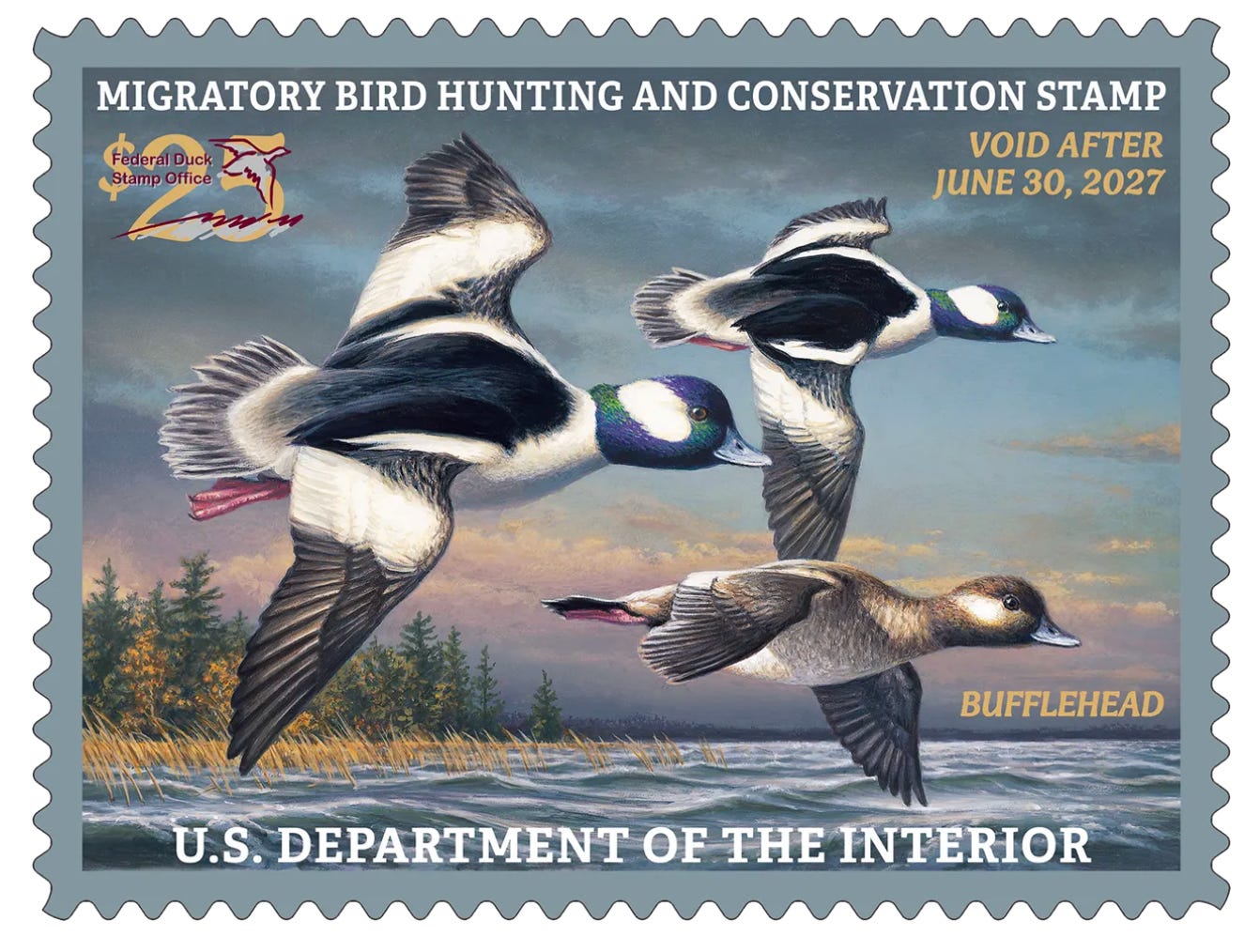
Welcome to the birdy side of the internet! This week, we’re highlighting one of the most successful conservation programs ever created: the Federal Duck Stamp. While many birders know it as a requirement for waterfowl hunters, its impact extends far beyond hunting. In fact, it may be the single most effective conservation purchase you can make all year. With this year’s Federal Duck Stamp now available, there’s never been a better time to learn why this small piece of art has become one of the greatest conservation success stories in North America.
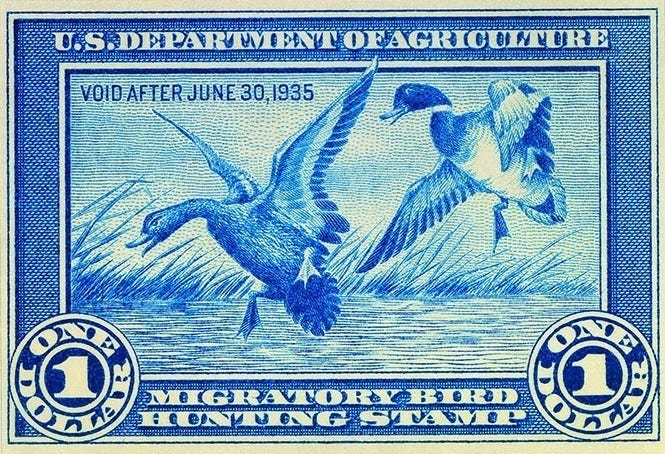
The Federal Duck Stamp—officially the Migratory Bird Hunting and Conservation Stamp—was established in 1934 during the depths of the Dust Bowl, when wetlands across North America were disappearing at an alarming rate. The idea was elegantly simple: require waterfowl hunters to purchase and carry an annual stamp, then dedicate nearly every dollar from those sales directly toward conserving habitat.
More than 90 years later, that simple idea has become one of conservation’s greatest triumphs.
Since the program began, Federal Duck Stamp sales have generated more than $1.3 billion for conservation and helped protect over six million acres of wetlands and wildlife habitat. Even more remarkably, 98 cents of every dollar spent on a Federal Duck Stamp goes directly toward habitat acquisition or conservation easements within the National Wildlife Refuge system. Very few conservation programs can claim that level of efficiency.
It’s easy to assume the Federal Duck Stamp exists only for duck hunters.
That couldn’t be further from the truth.
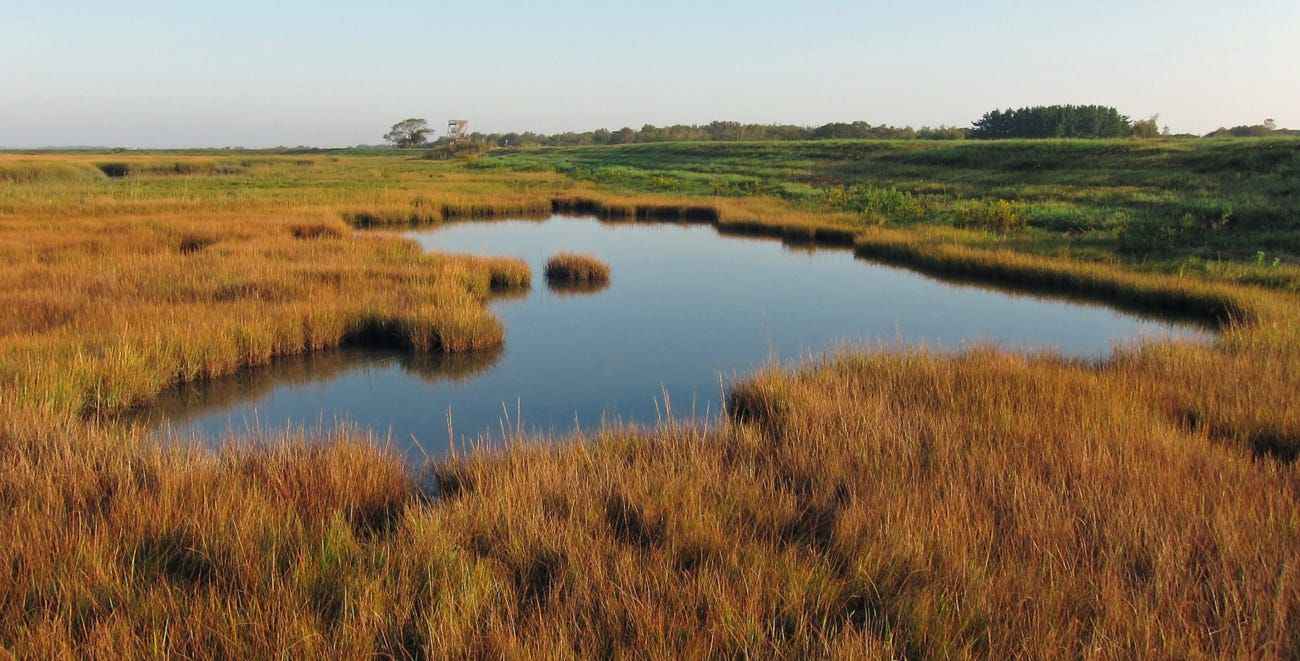
While waterfowl gave the program its name, the wetlands protected through Federal Duck Stamp funding support far more than ducks and geese. They also provide breeding habitat for shorebirds, wading birds, rails, grebes, marsh-nesting songbirds, raptors, amphibians, pollinators, mammals, and countless migratory songbirds that rely on healthy wetlands during migration.
Protect a marsh, and you’re protecting an entire ecosystem.
Even if you live far from the wetlands conserved through the Federal Duck Stamp Program, you’ll still benefit from them. Millions of migratory birds depend on these habitats during their annual journeys, linking landscapes across continents. The ducks, shorebirds, waders, and even many songbirds you enjoy in your own community may rely on protected wetlands hundreds—or even thousands—of miles away during another stage of their annual cycle.
That conservation extends beyond individual wetlands to the places we love to experience birds. Many of North America’s greatest birding destinations—including countless National Wildlife Refuges—owe at least part of their existence or expansion to Federal Duck Stamp funding. Every birder who has enjoyed spectacular migrations, photographed waterfowl at sunrise, or watched cranes settle into wetlands at dusk has likely benefited from habitat protected through this remarkable program.
One of the best-kept secrets in birding is that a current Federal Duck Stamp also serves as an annual entrance pass to any National Wildlife Refuge that charges an admission fee.
That means your purchase supports conservation and helps you enjoy the places your dollars are protecting.
For many birders who visit multiple refuges each year, or their favorite one over and over, the stamp can easily pay for itself while supporting habitat conservation.
It’s hard to find another conservation purchase with this kind of return.
For just $25, you’re helping protect wetlands that:
Support migration — Millions of waterfowl, shorebirds, and songbirds depend on healthy wetlands during migration and throughout the year.
Preserve biodiversity — Wetlands are among the most productive ecosystems on Earth, supporting thousands of species beyond birds.
Improve water quality — Healthy wetlands naturally filter pollutants and sediments before they reach rivers and lakes.
Reduce flooding — Wetlands absorb and slowly release floodwaters, helping protect nearby communities. As extreme rainfall and flooding events become more frequent in many regions, these natural buffers are more important than ever.
Store carbon — Intact wetlands help capture and retain significant amounts of carbon, making them valuable allies in addressing climate change.
It’s one of the rare conservation purchases where the connection between your dollars and real habitat protection is direct, measurable, and transparent.
Each year’s Federal Duck Stamp also celebrates wildlife art.
Since 1949, the design has been selected through the prestigious Federal Duck Stamp Art Contest, one of the most respected wildlife art competitions in the world. Winning artists receive no prize money—only the honor of seeing their artwork become that year’s official stamp, with proceeds supporting habitat conservation instead.
The newly released 2026–2027 Federal Duck Stamp features three striking Buffleheads painted by Minnesota artist James Hautman (see this article’s lead image), continuing a decades-long tradition that blends art, conservation, and outdoor heritage into a single annual collectible. The win also extends the remarkable Hautman family legacy. Alongside his brothers, Joseph Hautman and Robert Hautman, James is part of the only trio of siblings ever to win the prestigious Federal Duck Stamp Art Contest. Collectively, the Hautman brothers have won the Federal Duck Stamp Art Contest 16 times since Joe’s first victory for the 1990–91 stamp, which featured a pair of Black-bellied Whistling-Ducks.
Simply put, birds need habitat.
We often think of conservation as volunteering, donating to nonprofits, planting native gardens, or participating in community science. Those are all wonderful ways to make a difference.
Buying a Federal Duck Stamp belongs on that list.
It’s an easy annual tradition that supports one of the most proven habitat conservation programs ever created. Whether it stays tucked inside your field notebook, is displayed on your desk, or is added to a growing collection, it represents something much larger than a stamp—it represents acres of wetlands that will continue supporting wildlife for generations.
Purchasing a Federal Duck Stamp is easy. They are available through the U.S. Postal Service/Post Offices, many National Wildlife Refuges, and selected sporting goods and outdoor retailers. You can also purchase one online through the U.S. Fish & Wildlife Service’s trusted partner, Amplex, which distributes Federal Duck Stamps on behalf of the Department of the Interior.
Whether you’re a birder, photographer, hunter, or simply someone who cares about conserving habitat, it’s one of the most direct ways to invest in the future of North America’s birds.
One of the beautiful things about the Federal Duck Stamp is that it reminds us that conservation succeeds when many people each contribute a little.
Hunters purchase it because they’re required to. Birders buy it because they value habitat. Collectors appreciate the artwork. Wildlife photographers, hikers, and refuge visitors purchase it to access refuges and because they understand healthy landscapes benefit everyone.
Different communities. Shared purpose.
At a time when conservation challenges can feel overwhelming—and when rallying people around a single cause is often difficult—the Federal Duck Stamp offers something refreshingly tangible: a simple, direct way for ordinary people to help protect extraordinary places.
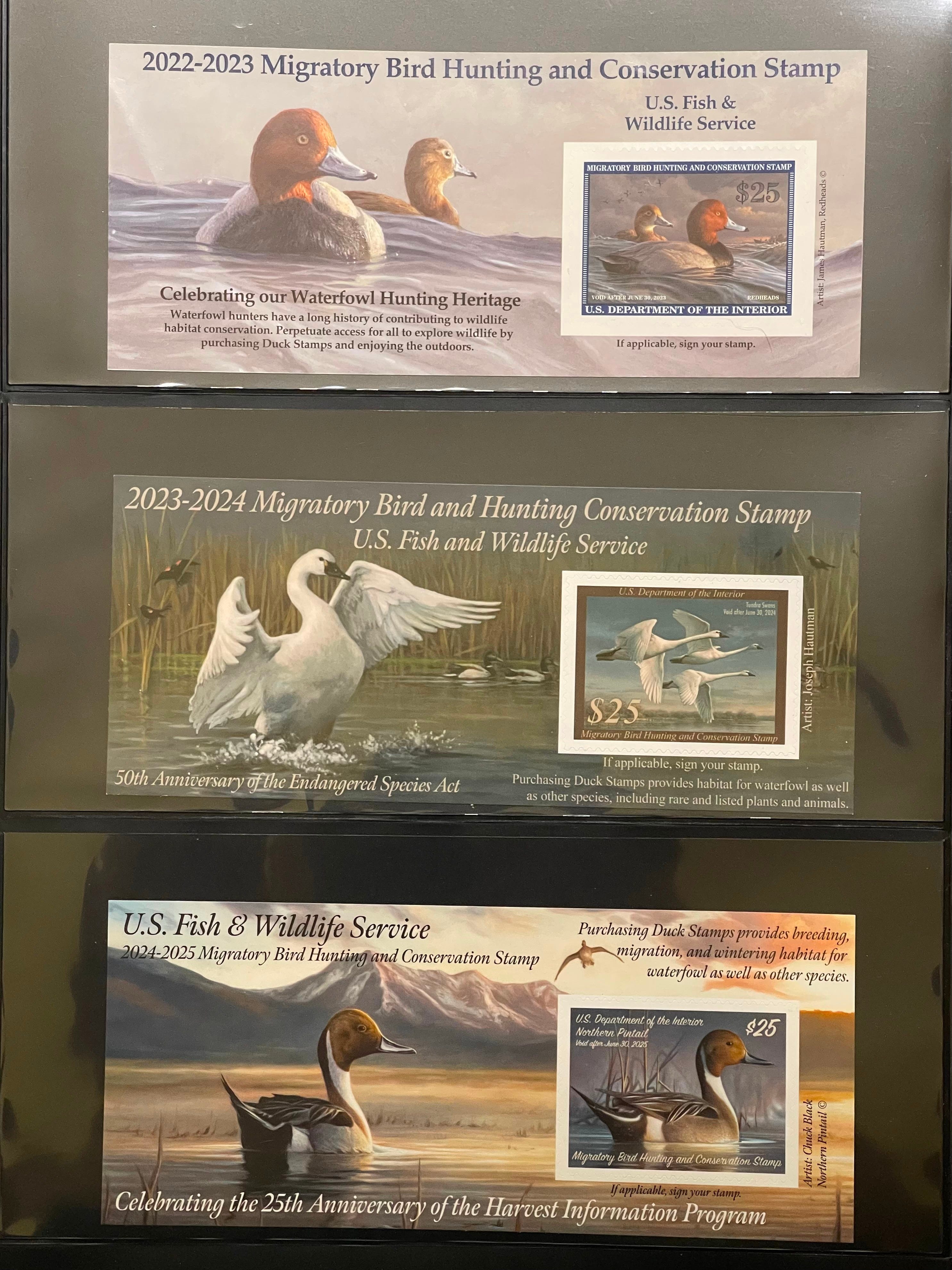
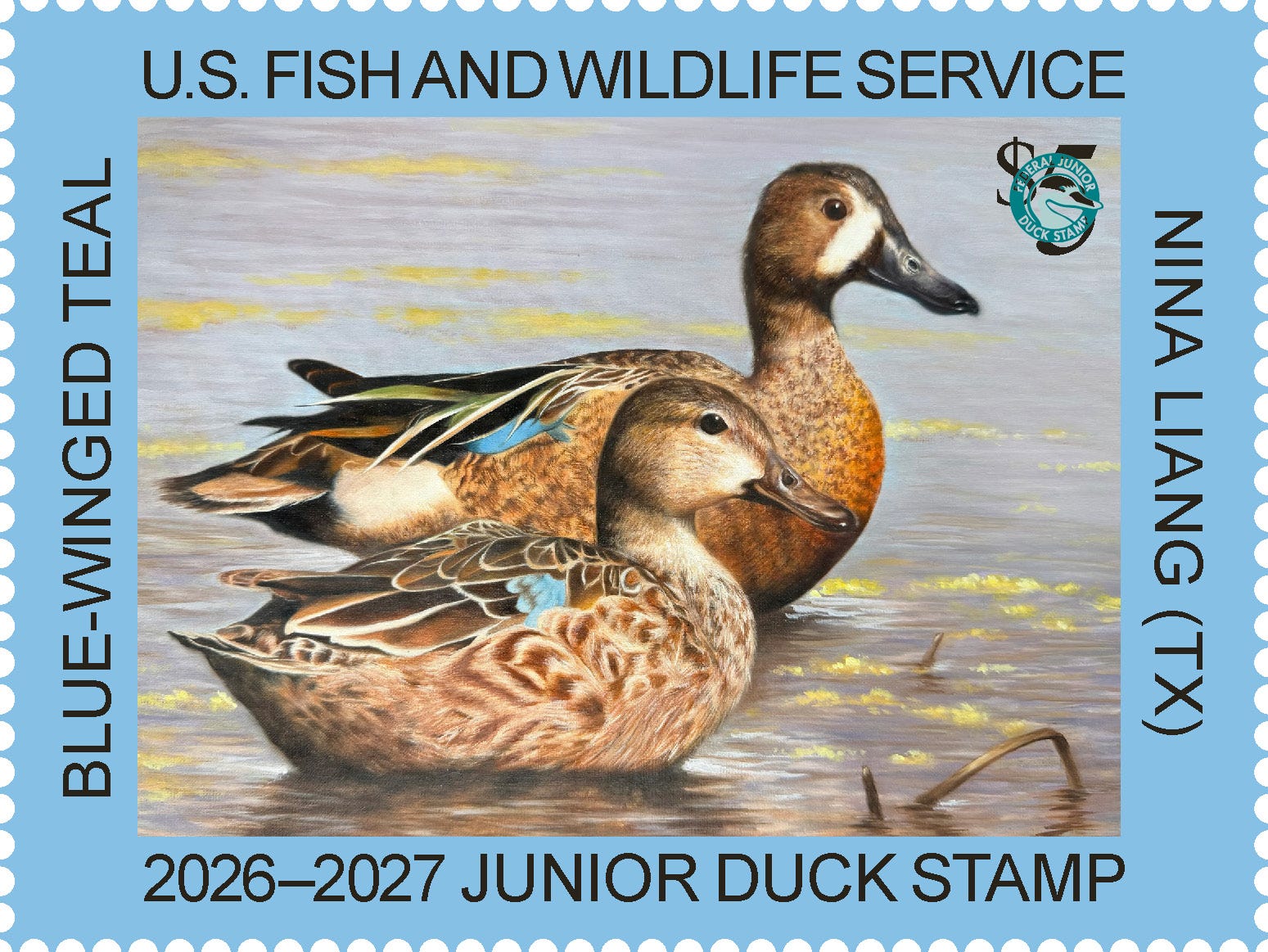
Looking ahead, the 2027–2028 Federal Duck Stamp is already taking shape. Each year, just a handful of eligible waterfowl species are selected for artists to depict in the Federal Duck Stamp Art Contest, with one of those species required to be the predominant bird in the composition. For the upcoming competition, artists will choose from the Cackling Goose, Blue-winged Teal, Mottled Duck, Long-tailed Duck, or King Eider. This year’s slate of eligible species has seen relatively little representation on the Federal Duck Stamp, ranging from the Cackling Goose, which has never before appeared, to the Long-tailed Duck, which has been featured just twice, most recently in 2009. That means next year’s winning design could either introduce an entirely new species to the program or celebrate the return of one that hasn’t graced the stamp in more than a decade.
Conservation often feels like it requires grand gestures, but the Federal Duck Stamp reminds us that lasting impact can begin with something surprisingly small. A single purchase has helped conserve millions of acres over the past nine decades—not because one person bought one stamp, but because generations of people chose to invest in habitat together.
If you haven’t purchased a Federal Duck Stamp before, consider making this your first year. Whether you’re a birder, photographer, hunter, or simply someone who values healthy wetlands, you’ll be joining one of North America’s longest-running and most successful conservation traditions. Sometimes the simplest way to help birds is also one of the most effective.
Show your love for Birding University and brighten up your gear with our official sticker. Grab yours today—every purchase helps support our work!
Comments
Nothing yet. Say the first thing.
Sign in to join the conversation.