
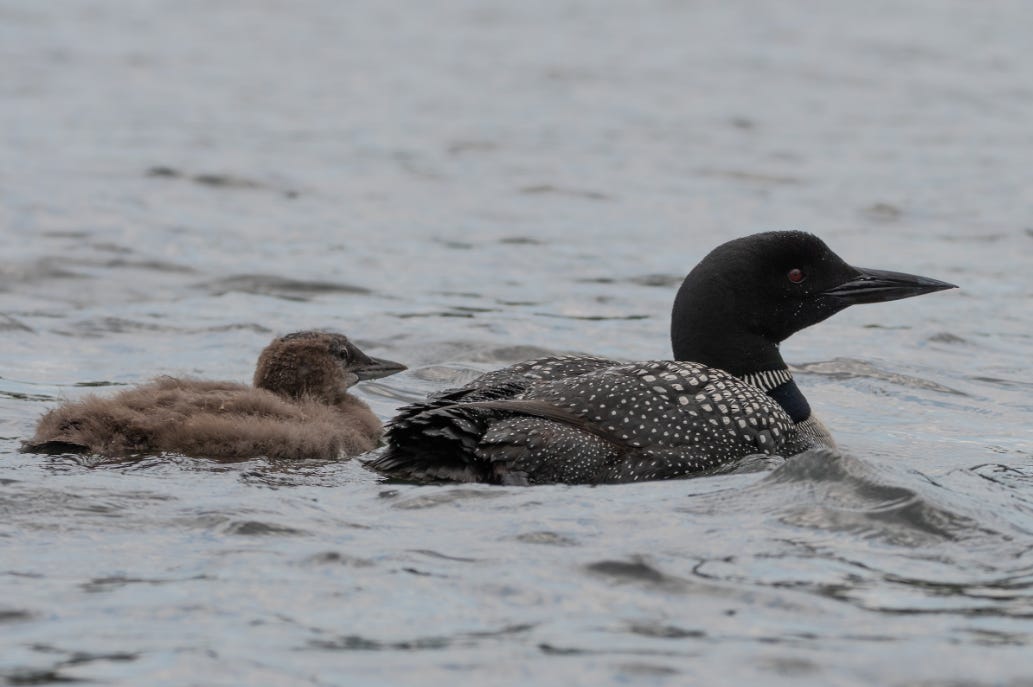
Welcome to the birdy side of the internet! This week’s newsletter pairs a remarkable count from South America with a timely tip to watch how birds move through the landscape after the breeding season. In This Week in Birding History, we revisit a standout observation involving a large gathering of parakeets in Colombia. In Birding Tip, we look at why following family groups can be one of the best ways to find birds, understand behavior, and make the most of late-summer birding.
This Substack is reader-supported. To receive new posts and support our work, consider becoming a free or paid subscriber.
This Week in Birding History: A Perspective on Parakeet Population
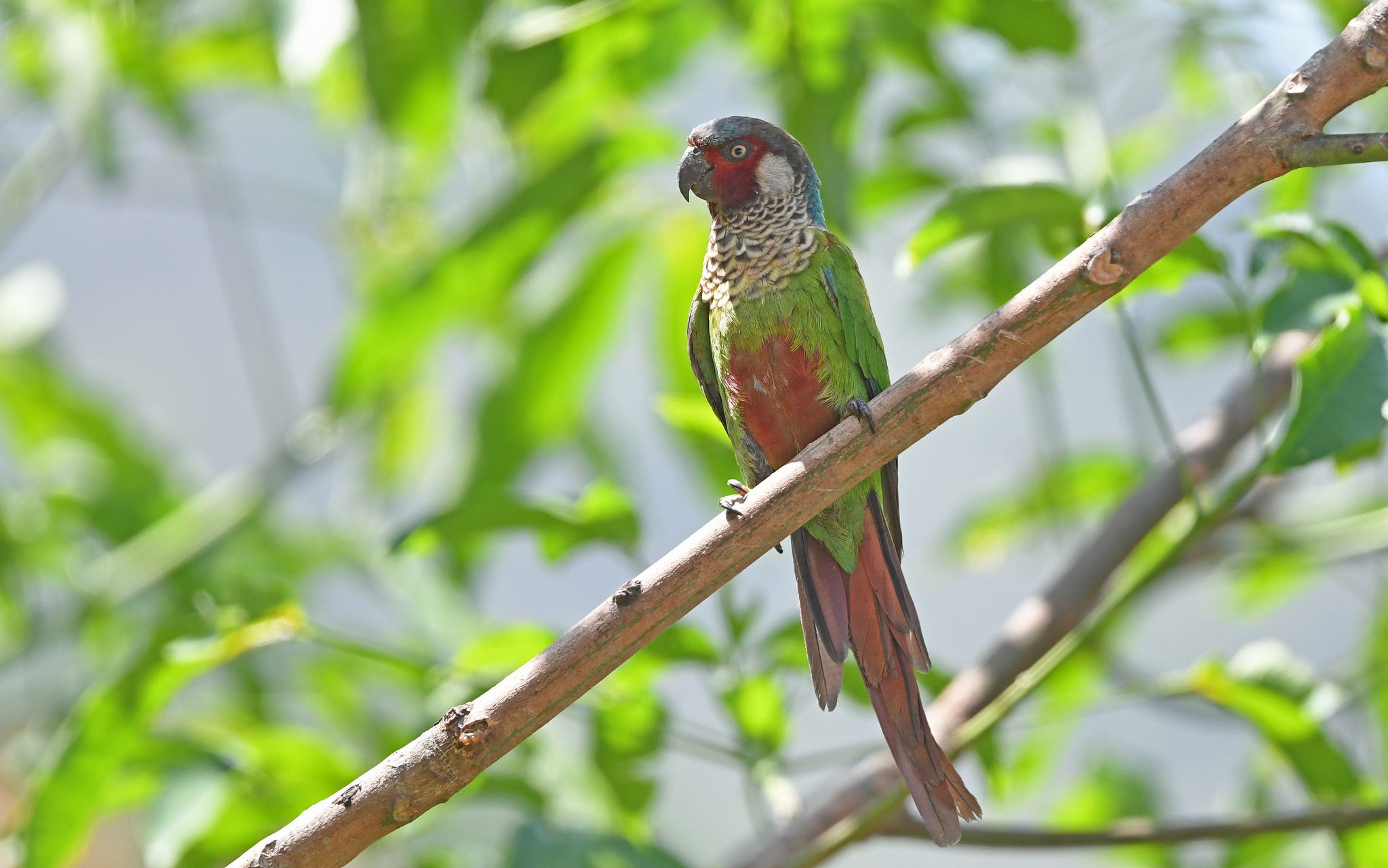
July 13, 2022 — Four years ago this week, experienced Swiss birders Fabian Schneider and Jean-Esteban Liberek were birding a valley in Colombia’s Serranía del Perijá when they encountered multiple groups of Perijá Parakeets along a 1.6-mile (2.55 km) stretch of road. By tallying the birds seen throughout the morning, they estimated a remarkable 80–100 individuals—the highest total ever reported on a single eBird checklist for this endangered species.
The significance of that count becomes clear when viewed in the context of the species’ tiny population. Fewer than 2,500 adult Perijá Parakeets are thought to survive worldwide, all within an area of roughly 3,200 square miles (8,400 km²)—about the size of Yellowstone National Park. The species inhabits undisturbed montane forests along the western slope of Colombia’s Eastern Andes and the Sierra de Perijá on the Colombia–Venezuela border, where it is most often encountered in small, noisy flocks of five to thirty birds. Despite growing interest from birders visiting the region, Perijá Parakeets have been documented on fewer than 200 eBird checklists.
One hundred parakeets may not sound extraordinary until viewed another way. A flock of that size represents roughly 4% of the world’s adult population. If Black-capped Chickadees were concentrated in the same proportion, the equivalent gathering would number approximately 1.7 million birds. Applied to House Sparrows—the world’s most abundant bird according to a 2021 global population estimate—the equivalent flock would exceed 64 million individuals. Encounters like Fabian and Jean-Esteban’s offer both encouragement that important strongholds remain and a reminder of just how vulnerable this endangered parakeet continues to be.
Birding Tip: Follow the Family Group
By July, many birds have finished nesting, and the woods begin to feel quieter. Dawn choruses fade, territorial disputes become less common, and many birders assume activity has slowed. In reality, birds are often still very active, they’ve simply shifted their priorities from defending territories to raising young. Learning to recognize family groups is one of the easiest ways to find birds during midsummer.
Listen for the Young
Unlike the rich songs of spring, fledglings communicate with simple, repetitive begging calls. These high-pitched notes may sound insignificant at first, but they can quickly reveal the location of an entire family. Newly fledged birds frequently call whenever a parent approaches with food, creating brief bursts of activity that draw attention to otherwise hidden birds.
Take a moment to stop whenever you hear these unfamiliar calls. Parents often make repeated feeding trips along predictable routes, giving you multiple opportunities to observe them. A single begging call may lead you to adults, fledglings, and sometimes neighboring families all using the same patch of habitat.
Watch the Adults
Adult birds often provide the biggest clues. Rather than singing from exposed perches, they spend much of the day carrying insects, seeds, berries, or caterpillars. Their movements tend to be purposeful. Instead of wandering through the habitat, they’ll repeatedly disappear into the same shrub, sapling, or patch of vegetation where young birds are waiting.
Pay attention to behaviors such as:
Carrying food without immediately eating it.
Making repeated trips to the same location.
Giving soft contact calls instead of loud songs.
Appearing agitated when you approach.
Briefly exposing themselves before disappearing into dense cover.
Following these behaviors often leads to observations that would be impossible through song alone.
Family Groups Create Birding Opportunities
As fledglings become more independent, families often begin moving together through the landscape. Certain songbirds may travel as loose family units for several weeks after leaving the nest. Instead of encountering a single individual, you may suddenly find five or six birds feeding together. These gatherings also increase the likelihood of mixed-species associations. Family groups may overlap with other species using the same food resources, creating surprisingly diverse pockets of activity during an otherwise quiet season.
Look for Age Clues
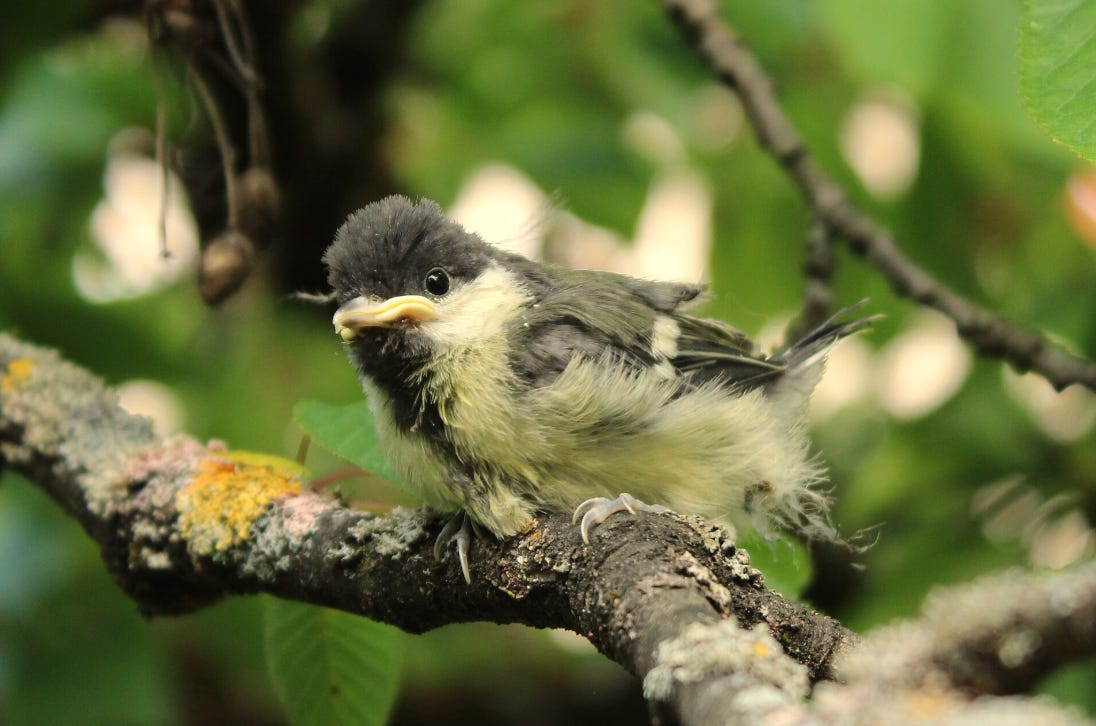
Family groups offer a great chance to practice aging birds in the field. Recently fledged birds often look subtly different from adults. They may have shorter tails, loose or fluffy body feathers, softer facial patterns, pale gape edges, or less crisp markings overall. Their behavior can be just as useful as their appearance. A bird that flutters its wings, gives repeated begging calls, follows an adult closely, or waits in cover while another bird brings food is often a young bird, even if its plumage is not immediately obvious.
This is especially useful in groups like warblers, sparrows, wrens, and woodpeckers, where young birds may not match the clean field-guide image of an adult. Some juveniles look duller, streakier, browner, or more weakly patterned, while others may already be beginning to replace juvenile feathers through early molt. When you find a family group, slow down and compare individuals side by side. Notice which birds are feeding independently, which are still begging, and which plumage details separate adults from young. These small clues can turn a quiet midsummer encounter into one of the best identification lessons of the season.
Bird Ethically Around Young Birds
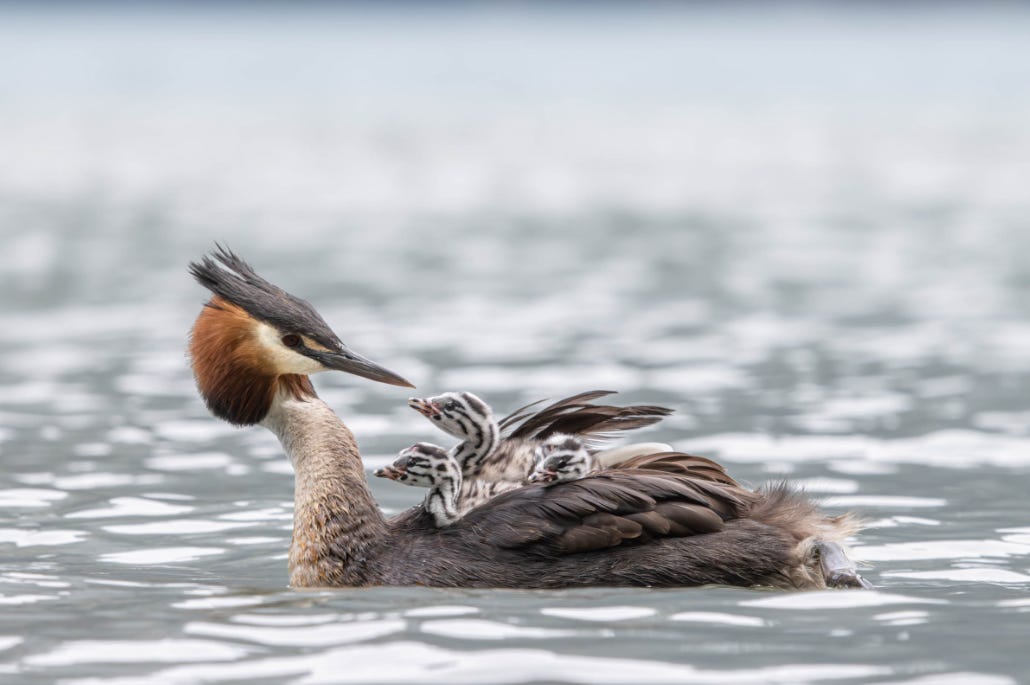
Watching recently fledged birds can be one of the highlights of summer birding, but it also requires extra care. Avoid approaching closely enough to interrupt feeding visits or cause young birds to scatter. If adults begin giving persistent alarm calls or hesitate to return with food, you’ve probably moved too close.
The best observations happen when you let the birds dictate the encounter. Stay patient, keep your distance, and allow family groups to continue their natural behavior. Not only will the birds remain undisturbed, but you’ll often witness fascinating interactions that would otherwise never occur.
This July, don’t mistake a quiet forest for an empty one. Listen for begging calls, watch for adults carrying food, and follow family groups as they move through the landscape. The season’s most rewarding discoveries often come from birds that are no longer announcing themselves with song.
Thanks for Reading
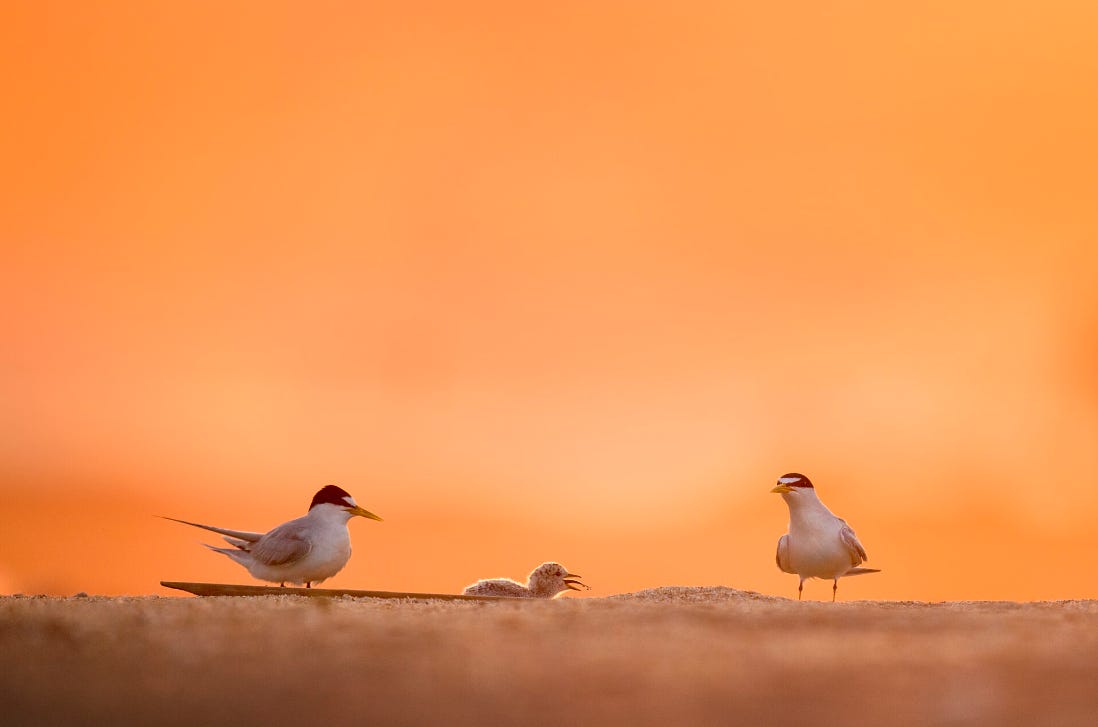
Family groups can turn quiet summer birding into something far more active and revealing. By watching where young birds and adults move, feed, and call together, you can uncover pockets of activity that might otherwise go unnoticed. Following these groups also builds a better understanding of post-breeding behavior, habitat use, and the subtle seasonal shift from nesting to dispersal and migration.
Support Birding University
If you enjoy our work, you can show your appreciation with a one-time tip by buying us a “bird-friendly coffee.” Every contribution helps us keep creating content you love!
Comments
Nothing yet. Say the first thing.
Sign in to join the conversation.