
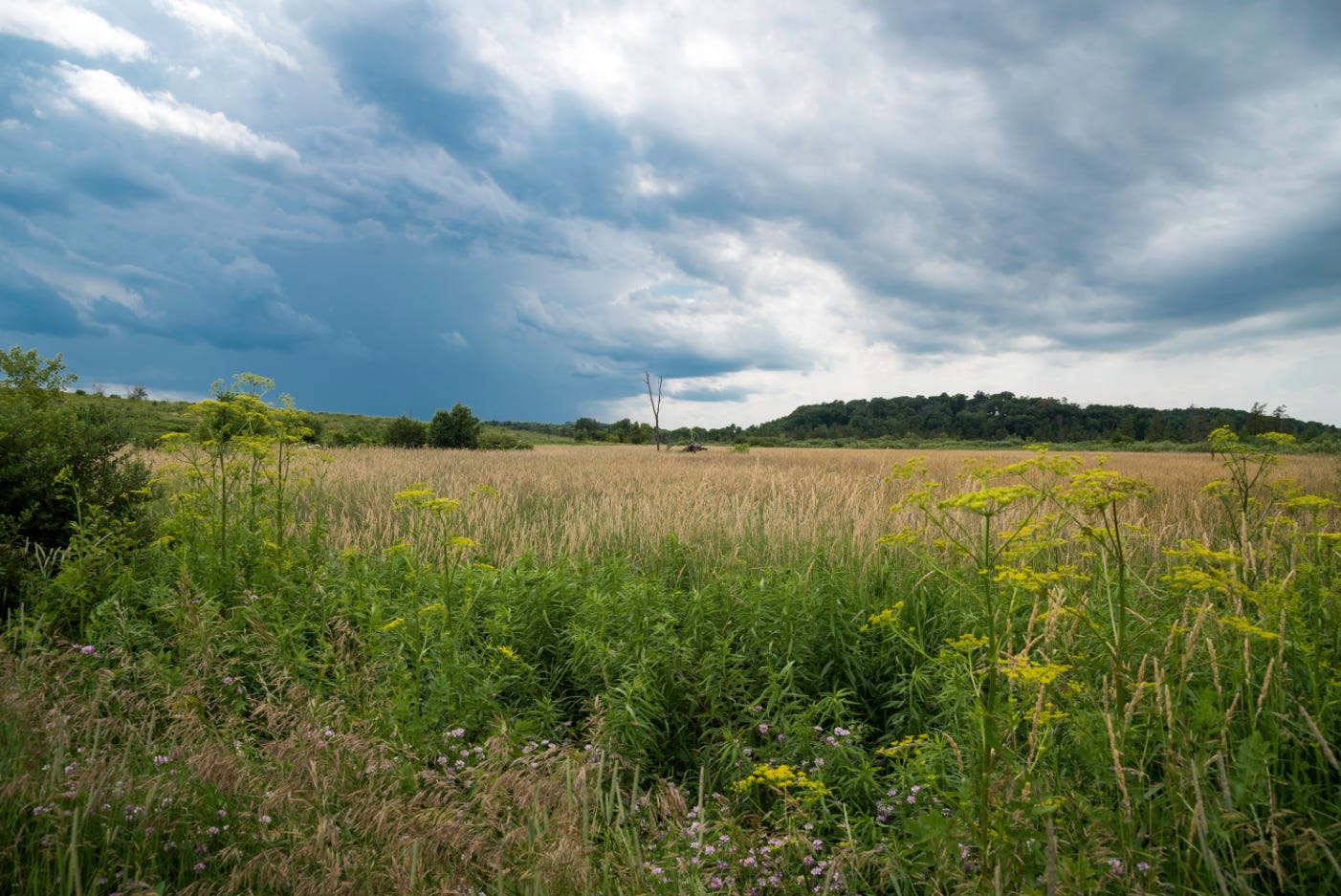
Welcome to the birdy side of the internet! This week’s newsletter pairs an unexpected coastal visitor in the middle of the continent with a timely look at how summer weather can reshape birding conditions. In This Week in Birding History, we revisit a beach bird that turned up far from the shore, while Birding Tip explores why the hours after summer storms can be especially productive in the field.
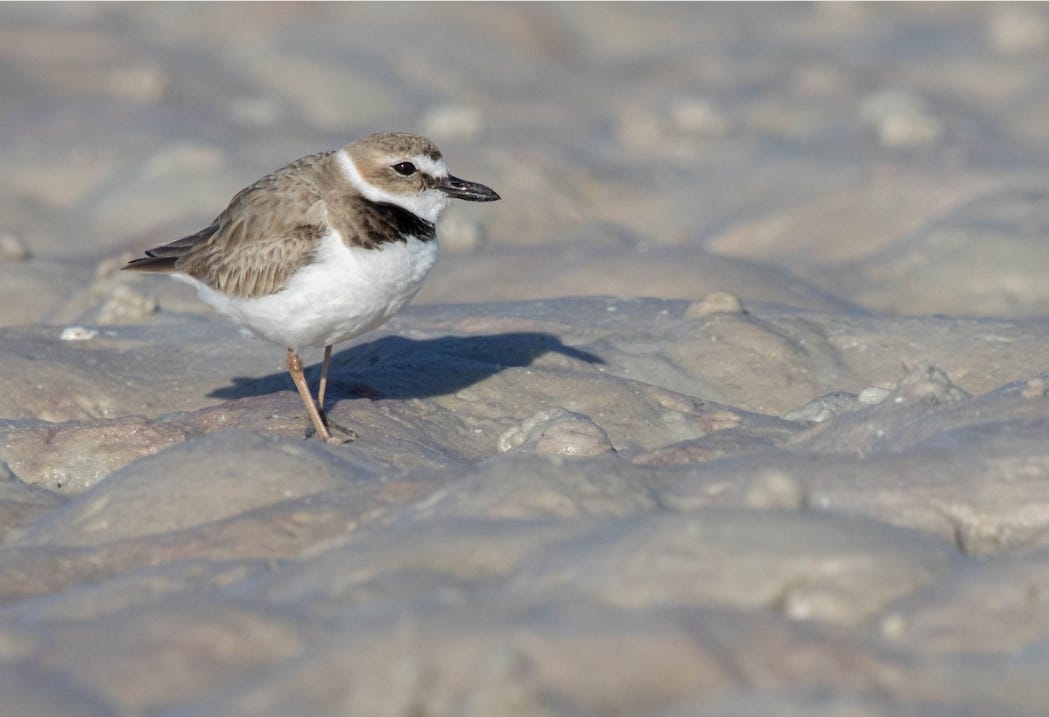
July 9, 1995 — Thirty-one years ago this week, birders Chris Hobbs and Steve Addinall were exploring near Mound City, Missouri, when they happened upon an unfamiliar shorebird. Larger than a Semipalmated Plover but smaller than a Killdeer, the bird stood out with its stout, all-black bill, complete black breast band, and pale gray legs. Those field marks quickly led to an astonishing identification: Wilson’s Plover—Missouri’s first record of a species far more at home on sandy ocean beaches than Midwestern croplands. The Missouri Bird Records Committee later ranked the sighting as the state’s second-most significant rarity of 1995, surpassed only by a first state-record Sooty Tern carried inland by Hurricane Erin.
Wilson’s Plover is considered one of North America’s most coastal-restricted shorebirds, and inland records remain exceptionally rare. This species breeds almost exclusively on sandy beaches, barrier islands, salt flats, and coastal lagoons along the Atlantic coast from Virginia to Brazil and along the Pacific coast from Baja California to northern Peru. Historically nicknamed the “Thick-billed Plover,” the species uses its oversized bill to capture fiddler crabs and other hard-bodied invertebrates that few similarly sized shorebirds can handle.
Fittingly, Missouri’s first Wilson’s Plover was discovered during the week of its namesake Alexander Wilson’s (1766–1813) birthday. Widely regarded as the “Father of American Ornithology,” Wilson’s landmark American Ornithology was the first comprehensive account of North America’s birds and inspired generations of ornithologists.
When dark clouds roll in, most birders head home. Yet some of the most unpredictable birding events can happen immediately after a summer storm passes. Summer storms reshape the landscape in ways that concentrate birds, expose new habitat, and temporarily change normal movement patterns. Understanding these changes can help you take advantage of opportunities that last only a few hours.
Heavy rain often transforms familiar locations. Flooded fields become temporary wetlands. Puddles appear in agricultural fields. Reservoirs and ponds experience changing water levels that expose fresh mudflats. These newly available habitats can attract shorebirds that may have flown overhead unnoticed just hours before.
After substantial rainfall, check:
Flooded farm fields
Retention basins
Reservoir shorelines
Fresh mudflats
Wet fields and parks
Sewage lagoons and wastewater treatment ponds (where public access is permitted)
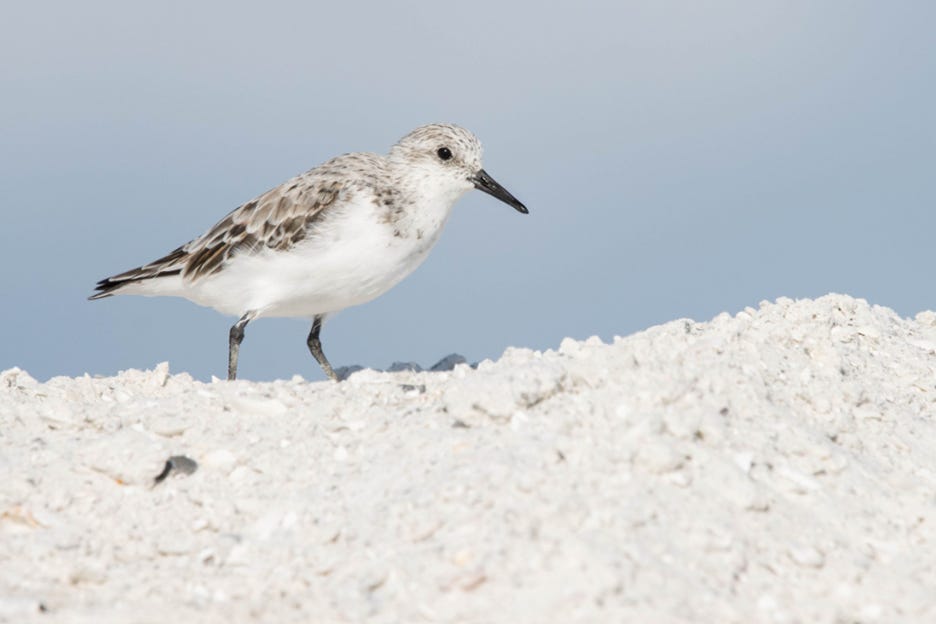
These temporary habitats often provide food-rich foraging areas that birds quickly exploit. During the late summer these locations become magnets for migrating shorebirds. If you are struggling to add shorebirds to your inland county list, follow the summer storms.
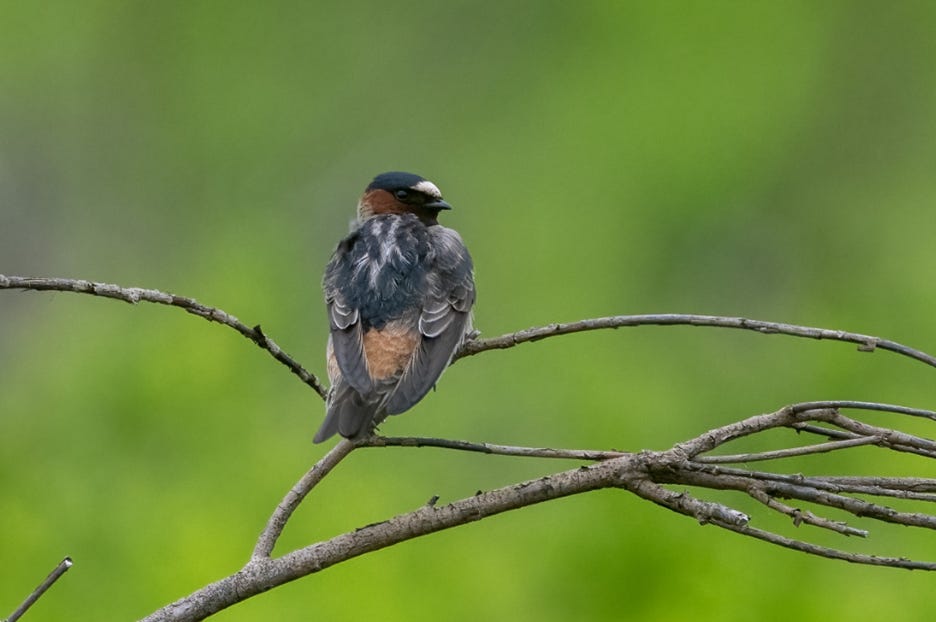
Summer storms don’t just impact habitat conditions, they also influence bird activity. Many species become highly active immediately after rain ends, taking advantage of cooler temperatures and abundant insects brought to the surface. Swallows often flock low over open fields, flycatchers return to exposed perches, and any insectivore may take advantage of these conditions.
Storm systems may also interrupt migration. Although we usually associate migration with spring and fall, shorebirds and a handful of early migrants are already moving south by July in most parts of North America. Passing weather may force these birds to the ground to rest. This phenomenon can create brief windows when species appear in places they might otherwise fly over. These conditions are the precursor to fallout, and when they coincide with a strong push of migrants and geographical features that funnel birds, lucky birders may find themselves in the midst of an incredible experience.
Rather than viewing bad weather as a reason to cancel your plans, consider adjusting your timing. Head out shortly after a storm clears instead of before it arrives. Visit locations where changing water levels can create new habitat, and check places you might normally overlook.
Some of the best birds of the summer are found when changing conditions briefly place them exactly where observant birders are looking. The next time thunder interrupts your plans, don’t assume the day is lost. Once conditions are safe, grab your binoculars and head back outside. The storm may have just improved the birding.
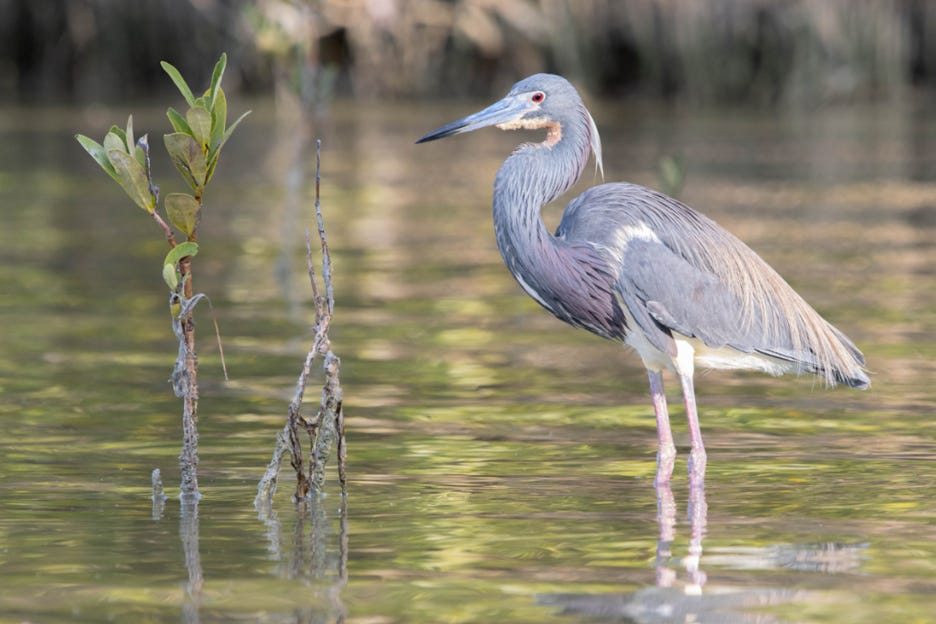
An important note to consider despite all the excitement of storm birding. Birding after a storm is very different from birding during one. Always wait until lightning has completely passed before heading into the field. Be mindful of rising water, unstable trails, falling limbs, and rapidly changing weather forecasts. If another storm is approaching, it’s better to cut a birding session short than risk being caught in dangerous conditions.
Summer storms can briefly reset a landscape—cooling temperatures, grounding migrants or wanderers, stirring up insects, and concentrating birds in newly active feeding areas. By paying attention to weather shifts and getting out safely after storms pass, birders can find surprising activity during a season that often feels quiet. Sometimes the best birding comes not from perfect conditions, but from knowing how birds respond when conditions suddenly change.
If you enjoy our work, you can show your appreciation with a one-time tip by buying us a “bird-friendly coffee.” Every contribution helps us keep creating content you love!
Comments
Nothing yet. Say the first thing.
Sign in to join the conversation.