
Belief in someone does something physical. It shows up in the body as a shift in chemistry that opens the brain to the fuel it needs to grow.
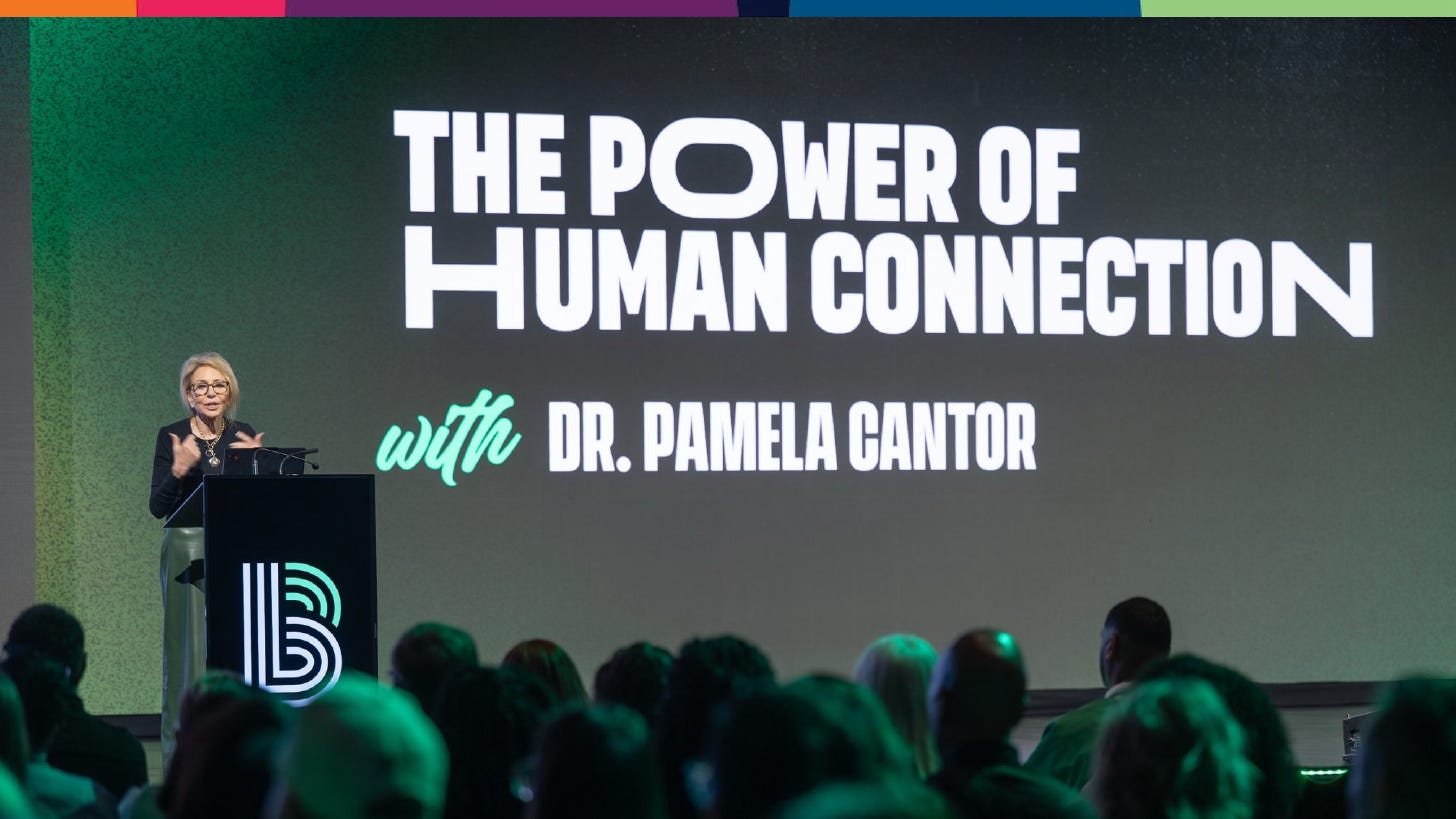
Standing on a stage in Atlanta in front of a crowd of people, I had the strange experience of being moved by a room before I had said a single word.
These were the mentors and young people of Big Brothers Big Sisters — the Bigs and the Littles, as they call them — gathered for their national conference. I have spoken to a lot of audiences, but this one felt different right away. These were not people who think about human connection as an idea; they build connections, one pair at a time, and they have been doing it for more than a hundred years.
I have been writing about the biology of connection for a long time: how relationships fuel the brain and make growth possible. But standing in that room, I kept circling a question I had not yet put to you. Of all the relationships that shape a life, why does this particular kind work? A Big and a Little are not family. They did not find each other; an organization introduced them. And still, reliably, something powerful grows in that assigned, unlikely space.
I want to tell you why I think it does. And why it matters more than we usually let ourselves admit.
Something I rarely say out loud is that the relationships that changed my life were, in large part, due to luck. The right person happened to be in the room at the right moment. Someone happened to see something in me that I could not yet see in myself. I did not earn those people, and I could not have ordered them. They arrived, and because they did, my life went one way instead of the other. I have written before about how decisive they were. What I have not said is how arbitrary it was that I got them at all.
The single most important input into a developing brain — the steady presence of someone who believes in you — is handed out almost entirely by chance. Some children are born into a dense web of caring adults. Others, often the ones who need it most, are born into scarcity, and no amount of potential inside them improves the odds that anyone will ever notice it.
The scale of this is hard to take in. Ten million young people would benefit from a mentor. Twenty thousand have already asked for one and are still on a waiting list.
That is the problem Big Brothers Big Sisters exists to solve. Strip away the events and the awards, and what the organization does is radical. It refuses to leave the most important relationship in a child’s life to chance. It builds that relationship on purpose, for the children luck would otherwise pass over.
It is fair to be skeptical here. You cannot assign trust. You cannot manufacture the kind of bond that rewires a brain. And yet this is one of the most carefully studied questions in my field, and the evidence says otherwise.
In 1995, the research organization Public/Private Ventures ran a true random-assignment study of nearly a thousand young people who had applied for a Big. Half were matched with a mentor; the other half were placed on a waiting list. Eighteen months later, the children who had been matched were measurably less likely to have started using drugs or alcohol, about half as likely to skip school, and reported better relationships with their own families. A bond that began as an assignment had positively changed the direction of a life.
Looking more closely at the study, the benefits were not spread evenly. They concentrated in the relationships that lasted. We tend to assume a short match is simply a smaller dose of a good thing, but the research doesn’t support that. A match that starts and then falls apart can leave a child no better off, and sometimes worse, than if it had never begun.
Jean Rhodes, who founded and directs the Center for Evidence-Based Mentoring at the University of Massachusetts Boston, has spent decades refining this picture. What predicts whether a mentoring relationship helps a child has little to do with how often the pair meets, or how many activities they check off. It comes down to the quality of the bond, and whether it endures. Presence, repeated over time, is the active ingredient.
Once you understand that, the design of a serious mentoring organization stops looking like bureaucracy and starts looking like biology.
The screening, the training, the professional staff behind every match, the patient work of pairing one particular adult with one particular child: all of it exists to protect the one variable that matters most — that the relationship will be good and that it will last. A Big who leaves after two months has not handed a child a partial success. The research says it can do real harm. So the whole apparatus is built to keep that from happening.
Different organizations protect duration in different ways. Big Brothers Big Sisters does it through trained, supported volunteers. Friends of the Children, founded on the same conviction, goes further still: it hires full-time, salaried professional mentors and commits to each child from kindergarten through high school graduation, twelve years or more, in their words, “no matter what,” precisely because the science says that is where the change lives. These are two different designs, bound by one underlying truth.
If you have been reading this Substack, you already have a clue about what is happening underneath all of this. Belief in someone does something physical. It shows up in the body as a shift in chemistry that opens the brain to the fuel it needs to grow. What I have not said before here is that this fuel is the most unequally distributed resource I know of, and that mentoring, done well, is one of the few deliberate attempts we have ever made to hand it out more fairly.
From that stage in Atlanta, I said something core to my beliefs: Mentorship is cultivation, not selection.
We do not go searching for the rare, deserving child who already shows promise. We build the conditions in which promise no one could have predicted becomes visible. This is the reversal underneath all of it. A test sorts children by what they can already do. A mentor does the opposite: a mentor assumes there is more inside a child than anyone has yet seen and then stays long enough for it to come out.
From everything I know, this is one of the most evidence-based things a human being can do for another. If I could write a prescription for it, I would.
What I saw in Atlanta was a roomful of people who understood — long before anyone could measure it — that for a child, connection is infrastructure. It is the thing everything else gets built on. And they were building it on purpose, for the children our luck-based world would otherwise leave out.
I am so grateful to Artis Stevens and the entire Big Brothers Big Sisters network for letting me be part of it, even for an afternoon.
I would love for you to share this with someone who needs to hear it, and to leave a comment below. I read and reply to as many as I can. If you want to go deeper into the science of how we become who we become, please subscribe.
Thank you for being here.
—Pam
Comments
Nothing yet. Say the first thing.
Sign in to join the conversation.