
There is a woman in a lab at MIT whose entire career began because she couldn’t choose.
Domitilla Del Vecchio grew up in Rome, the daughter of an engineer. Her father kept a home laboratory stuffed with the colorful insides of computers, circuit boards, bits of equipment he’d bring home from work. She spent hours there as a child, tinkering, touching, asking what things did.
Then in middle school, she had a math teacher who didn’t teach math the way anyone else did. This teacher started with the theory of numbers, almost philosophical, and something clicked. Later, a biology teacher in high school opened yet another door. By the time Del Vecchio was looking at universities, she had a problem: she loved math, she loved engineering, and she was captivated by biology, and yet she could not find a single place that would let her do all three.
So, she spent the next two decades building that place herself. She worked on robotic control systems in Rome, collaborated with biologists at Caltech, and eventually landed at MIT, where she now leads a lab at the intersection of mechanical engineering, biological engineering, and synthetic biology.
I want to tell you what she found there, because I believe it changes how we should think about who any of us can become.
What the Textbooks Get Wrong
Every cell in your body carries the same genome, the same starting code. What makes a skin cell different from a brain cell is not the code itself, but which genes are expressed and at what level. As cells develop, certain genes get turned on, others get turned off, and a process called DNA methylation and histone modification locks those settings in place. That lock is what biologists call epigenetic memory. It’s how a cell remembers what it is and what it has experienced.
For decades, the textbook understanding of that memory was binary: on or off. A gene was either fully expressed or fully silenced. If scientists saw a cell sitting somewhere in between, they assumed it was temporary, a cell that would eventually commit one way or the other.
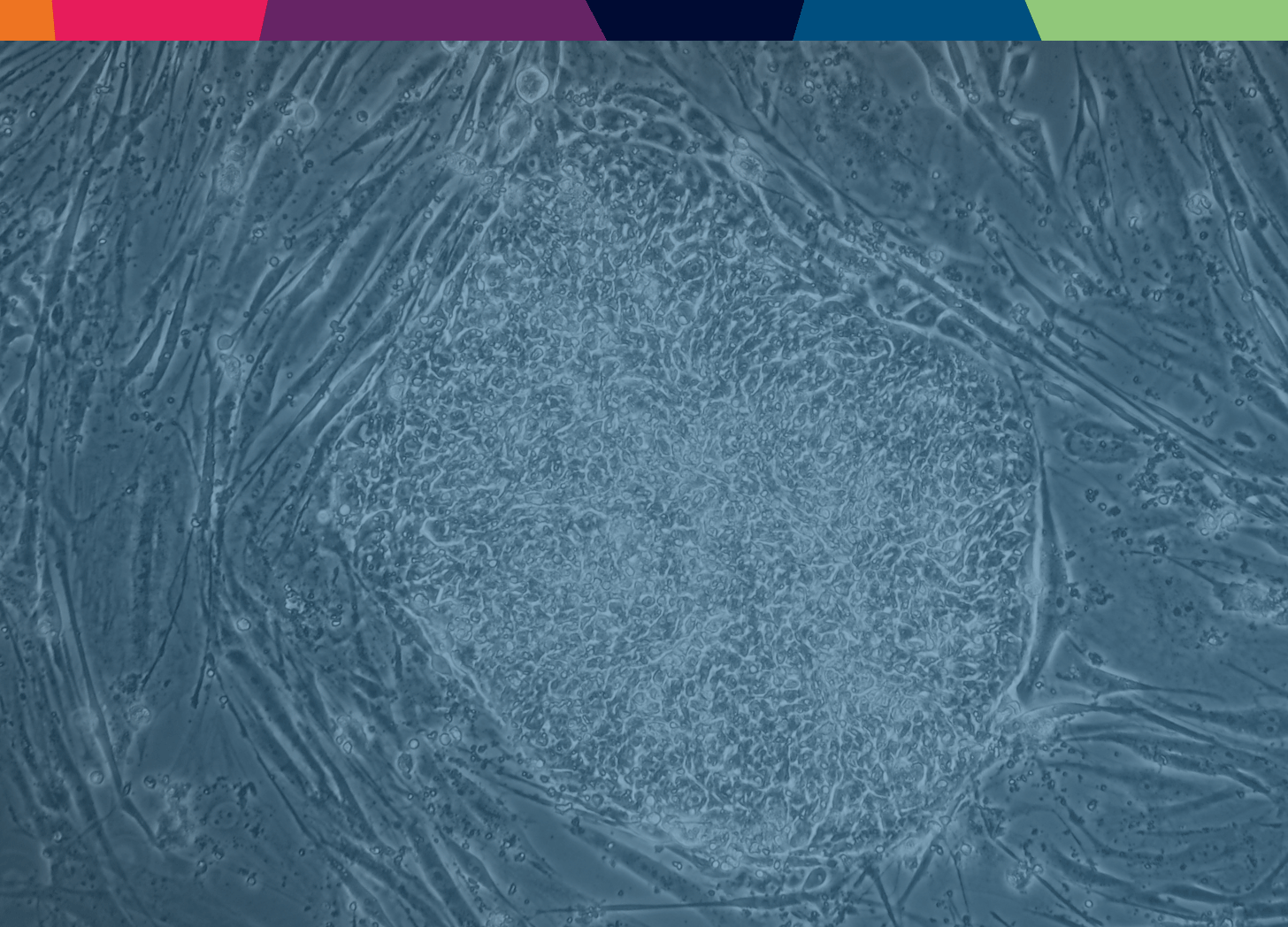
Del Vecchio’s team tested that assumption. They engineered cells with a fluorescent marker tied to gene expression and then set different cells to different levels: fully on, fully off, and everywhere in between. Then they watched. For five months.
What they expected was that the in-between cells would drift toward one camp or the other. On or off. Because that’s what every textbook said would happen.
It didn’t happen.
Every single level held. The cells set to 30 percent of expression stayed at 30 percent. The cells at 70 percent stayed at 70 percent. Five months later, every intensity along the entire spectrum was maintained exactly where it had been set.
Gene expression wasn’t a light switch at all, but a dial, a dimmer switch. And the dimmer switch could be set anywhere, and it would stay there.
The study’s lead researcher, Sebastian Palacios, called the finding “mind-blowing.” I think that undersells it. I think it changes the way we need to think about human possibility itself.
Why This Finding Mattered to Me
I have spent thirty years translating the science of human development for people who work with children, who build systems, who make policy. And for most of that time, I have been making an argument that many people found hard to accept: that human potential is not fixed, not predetermined, and not knowable in advance. That what any one person is capable of depends enormously on the conditions and relationships around them.
I have said this in classrooms and in boardrooms. I have said it in clinical settings with children who had been told, in one way or another, that their story was already written. Over the years, I have watched children walk into my office carrying a number or a label someone gave them, convinced it told them everything they needed to know about what they could become. It never did.
This study gives that argument something it has never had before: proof at the level of the cell.
What Del Vecchio’s team has shown is that the machinery of life itself operates on a continuum. Your cells don’t snap into predetermined categories. They settle at levels that are shaped by relational context, by environment, by the molecular signals they receive. And those levels hold. They become what and who that cell is.
But the level was never inevitable. It was set by what happened to and around it.
What We’ve Been Dismissing
The consequences of this finding go well beyond the laboratory. Del Vecchio herself put it plainly: there may be many more cell types in our bodies than we currently know or recognize, and these cells have not become what they are going to become …..yet. Scientists may have been overlooking cells that don’t fit neatly into existing categories, dismissing them as noise, as transitional states, as cells that just hadn’t finished deciding yet. When in fact those in-between identities may be permanent or not. They may have functions we haven’t begun to understand.
I want you to sit with that for a moment. We have been looking at cells that don’t match our categories and assuming they must be temporary but already determined. We have been treating “in between” as a problem to be resolved rather than a state to be understood and developed.
Does that sound familiar?
I think about this every time someone tells me a child has been assessed. That a test score or a diagnosis or a zip code has revealed something essential and unchangeable about what that child is capable of. I think about the systems we’ve built to sort young people into tracks, to determine early who is college material and who is not, who is gifted and who needs intervention, who has potential and who has reached their limit.
Those systems rest on a binary assumption. You either have it or you don’t.
But identity is not a switch. Not at the cellular level, and not at the human level. It is a dial, and what sets the dial is not the code you were born with. It is the relationships that surround you, the environments that hold you, the experiences that signal to your biology what is possible here.
We have been treating “in between” as a problem to be resolved rather than a state to be understood and developed.
The First Chapter
This is the first chapter of the book I am writing, and it is the first chapter for a reason. Because I believe this is the first thing anyone needs to understand about human potential before we talk about education or mental health or workforce development or any of the systems that touch human lives.
The biology of becoming is not binary but graded. It is responsive. It is far more sensitive to context than any of us were taught to believe.
Del Vecchio couldn’t choose between math, engineering, and biology. So, she built a career that held all three. Nobody told her cells to do that. Something in her environment, a father’s lab full of opened-up computers, a math teacher’s philosophical question, a biology teacher who opened a door at the right time, set the dial. And the dial held and nurtured her future discoveries.
I find that deeply hopeful, not in a soft way, but in a scientific way.
Because if the machinery of life itself is capable of holding an infinite range of states, then no one’s potential was ever as narrow as the system that measured it at one moment in time. No child’s trajectory was ever as fixed as the label that was placed on them. And no human life was ever as determined as the story someone told about it before it had fully unfolded.
The biology of becoming is not binary but graded. It is responsive. It is far more sensitive to context than any of us were taught to believe.
The Cells That Are Still Deciding
Right now, inside your body, there are cells that have not fully committed to who they are going to become. They are holding a position on a dial, responsive to the signals around them, capable of being set in ways we are only beginning to understand.
That is the biology of human possibility, doing exactly what it was designed to do.
The question for the rest of us, for parents, teachers, employers, policymakers, for anyone who has ever looked at another human being and made an assumption about what they were capable of, is whether we will build the environments that our biology requires and set those dials toward flourishing. Or whether we will keep insisting that a light switch was all there ever was.
I know where the science points. I have known for a very long time. And now, thanks to a woman who refused to choose between the things she loved, the cells themselves—her cells—are confirming it.
Three Things You Can Try This Week
Notice a binary you’ve been holding. Is there someone in your life, anyone, whom you’ve mentally filed into a fixed category? Smart or struggling. Resilient or fragile. Ready or not ready. See if you can replace the switch with a dial. What would it take to move that dial, even slightly? What signal might you be able to send?
Be someone’s open door. Del Vecchio’s father didn’t tell her to become a synthetic biologist. He just left the lab open. A math teacher asked an unconventional question. A biology teacher let her explore. You don’t have to engineer someone’s future. You just have to be the kind of presence that tells their biology: more is possible here. That noticing itself is a neurobiological event.
Resist the urge to sort. The next time you encounter a test score, a performance review, a first impression, anything that wants to place a person in a fixed position, remember what the most sophisticated memory system in biology just taught us: even cells don’t work that way.
If the machinery of life can hold a spectrum, so can your understanding of another human being.
As always, if these ideas resonate with you, I’d love for you to share this with someone who needs to hear it. And please leave your comments below. I look forward to reading and replying. If you want to go deeper into the science of how we become who we become, please subscribe.
Thank you for being here.
—Pam
Comments
Nothing yet. Say the first thing.
Sign in to join the conversation.