

If the biology of expertise depends on sustained struggle, on the experience of trying something you cannot yet do and failing at it and trying again, what happens when we hand that struggle to a machine?
When I was in medical school, I was a slow reader and an even slower memorizer. This was not a small problem to have.
The volume of material was enormous, and we were warned almost daily never to fall behind, that we would be tested every week. It wasn’t only reading; it was remembering what I read. So I sat in the library for hours. I would convert what I was studying into outlines by hand, sometimes just the essential idea on a single line, but more often looking for patterns, connecting the dots, pulling the meaning out of the text. I wrote until my hand cramped and the library emptied out. I did this night after night, week after week, without understanding why it was working.
But it was working, the information got internalized and memorized. Days later, I could remember what I had written. The act of writing, of physically converting what I was reading into my own words, was getting the material into my brain with meaning, in a way that reading alone never did.
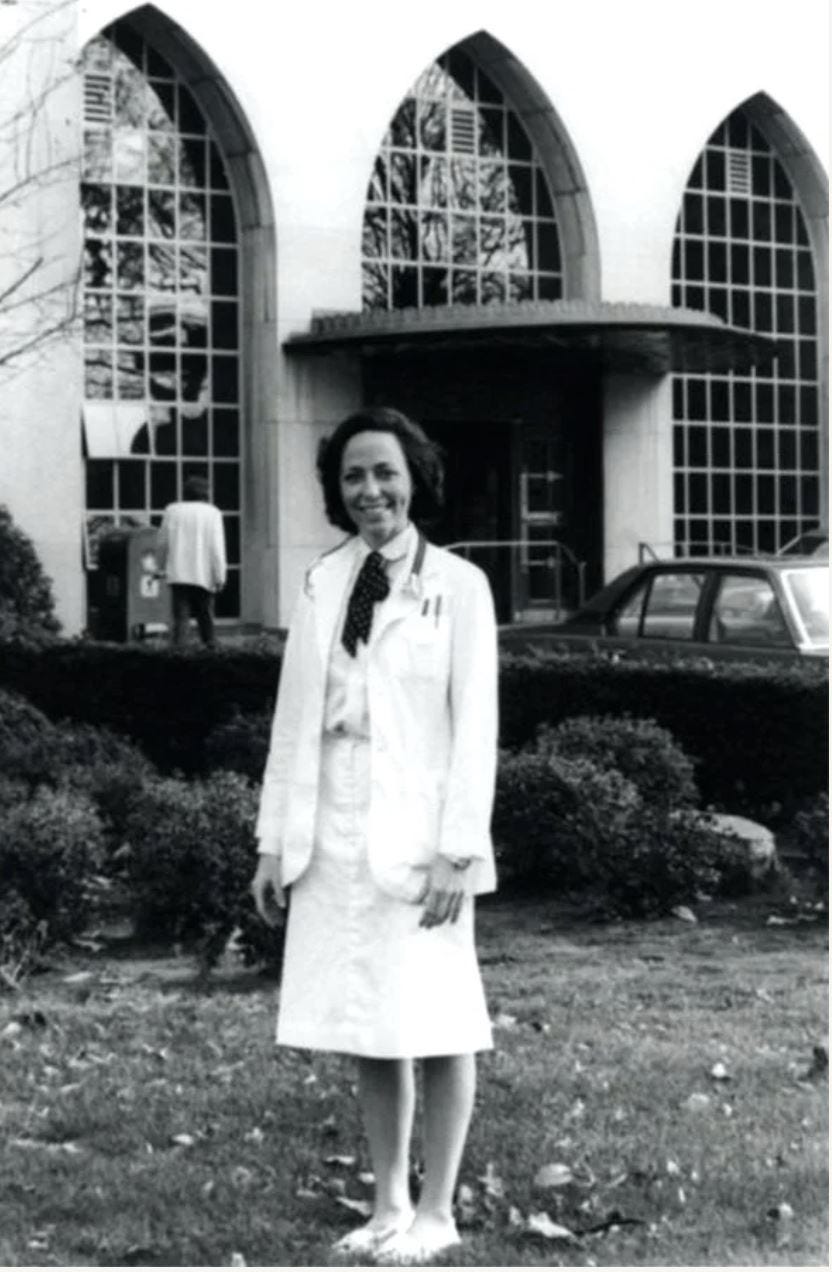
I knew nothing back then about neuroplasticity or brain malleability. All I knew was that this slow, painstaking process, the one nobody would have called efficient, was building something. I just didn’t know what.
Roger Federer was giving the commencement address of his life. He had retired a year earlier with one of the most dominant records in the sport: 1,526 singles matches, almost 80 percent of them won. His game was so smooth people called it “effortless.”
He hated that.
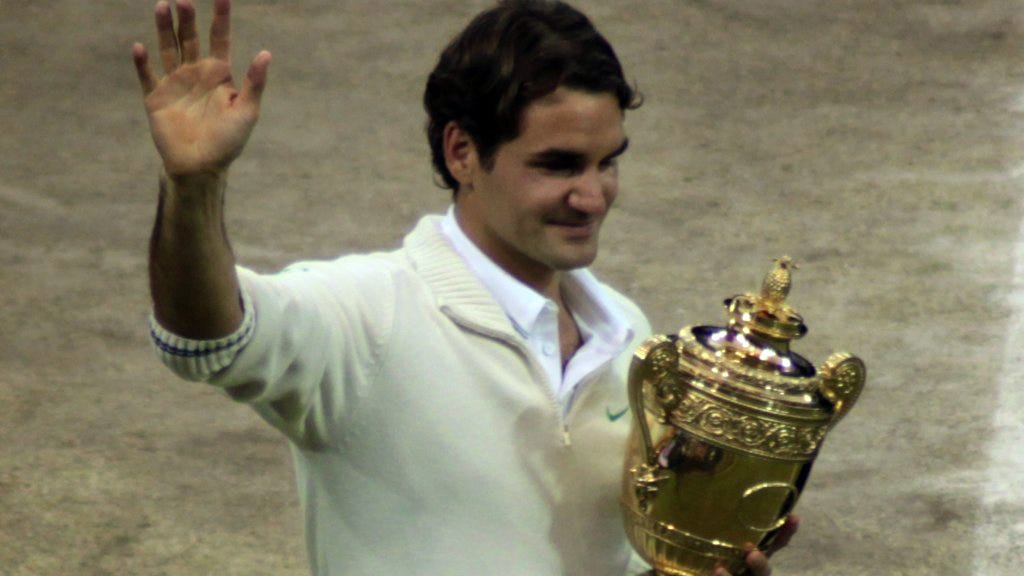
“Effortlessness is a myth,” he told the eager graduates at Dartmouth. “I did not get where I got with pure talent alone. I got there trying to outwork my opponents.”
Then he told them something more uncomfortable. Across all those matches, he had won only 54 percent of the individual points. One of the greatest players of all time lost nearly half of every point he ever played.
The lesson he drew was not about avoiding those losses. It was about what to do with them. Every point, win or lose, had to be fully committed to and then fully released. That capacity to fail at the highest possible rate and keep coming back was itself a skill he had built, over years, through practice.
What Federer was describing, without using the words, was a sustained biological investment in adapting the physical structure of his brain so that it could handle failure.
When you practice something difficult, repeatedly and with attention, two neurons that fire together build a stronger connection. That is the essence of Hebb’s Law: neurons that fire together, wire together. The connection gets stronger, signals travel faster, and a circuit begins to form. This is called long-term potentiation.
Then something else starts happening. The axons that carry the signal, the long arms of the neurons, begin to be wrapped in a fatty sheath called myelin. The axons that get the most traffic get the most myelin, and the more myelin, the faster the signal. A heavily myelinated circuit fires many times faster than an unmyelinated one. This is what is happening when a skill becomes “second nature.” The circuit fires with such speed and reliability that it no longer requires conscious attention.
Control of the skill also migrates from one memory system to a completely different one. Early in learning, performance depends on the hippocampus, the part of the brain that holds things in conscious memory. Think of the beginning piano student rigorously thinking about which finger goes where. With sustained practice, control shifts to a different system altogether, centered on the basal ganglia and cerebellum. This system operates below conscious awareness. It is fast. It is durable. It is what allows a professional musician to play a piece she has not touched in twenty years.
By the time you saw Federer on the court, the shot was executing itself. Extraordinary skill, in any domain, is the accumulated record of a sustained biological investment no amount of natural endowment can duplicate.
None of this happens in a vacuum. Every structural change I have just described depends on a neurochemical environment that has to be right for it to last. Three molecules matter most:
Dopamine is released in response to reward and to a sense of agency. Practice that you have chosen, supported by a teacher or a coach you trust, generates dopamine release. Practice that is coerced does not.
Acetylcholine is released during focused attention. It sharpens the brain’s processing, turning up the signal and turning down the noise. Attention is not just a psychological act. It is a neurochemical gate that decides whether your practice produces structural change in the first place.
BDNF, brain-derived neurotrophic factor, is sometimes called “Miracle-Gro” for the brain. It is the molecule most responsible for making structural brain changes that last. It is increased by physical exercise, focused attention, and positive social interaction. It is decreased by chronic stress and isolation.
Read that list again. The conditions that most powerfully fuel structural brain change — connection and engagement and movement — are the same conditions that produce the biology most responsible for making the change last.
Anders Ericsson’s 1993 study of elite violinists became the cornerstone of nearly every book on expertise.
Malcolm Gladwell reduced it to the “10,000 hour rule,” a simplification Ericsson objected to until his death. The hours were never the point. The structure of the hours was. What separated the best violinists from the merely good was not talent. It was the cumulative hours each had spent in deliberate practice — aimed at things they could not yet do, uncomfortable, effortful, and almost by definition, not enjoyable.
But there is something Ericsson’s theory never accounted for, and it has tugged at me for years. He never asked who sustained these performers. Who kept them practicing through the hours that were not enjoyable. Who kept them coming back after they had failed.
Because in every great performer’s story, there is always such a person.
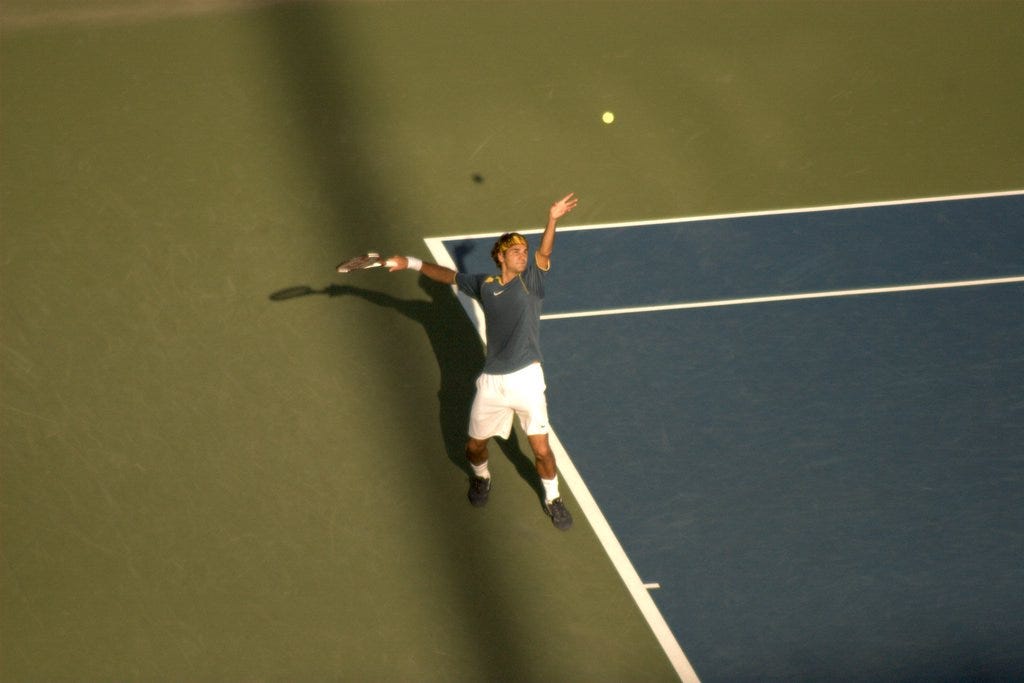
For Federer it was Peter Carter, the coach who worked with him from age ten to fourteen, the one who taught him how to fail. Federer has said that without Carter, he would not have become the player he became. (Carter died in a car accident when Federer was twenty-one.) He had turned a hot-headed, easily frustrated kid into a person who could lose 46 percent of every point and stay calm enough to win the next one. This is the emotional neuroplasticity that Federer’s coach nurtured in this adolescent player, giving him more top-down regulation in his brain and in his game. He built his prefrontal circuits through practice and coaching and became able to quiet his brain before it hijacked the next point.
For me, before medical school and through every one of those library nights, there were people who had seen something in me before I could see it in myself. The psychiatrist who had once called me a “pearl in an oyster.” Teachers who helped me discover my brain and what it could really do. Friends who refused to let me believe I was destined for less. The hours in the library were bearable because of what they had given me. The biology of becoming is never solitary. It is sustained from the outside in.
If you have been reading this Substack, you know the science. Oxytocin drives trust and social bonding — and it drives blood perfusion to the brain, delivering the nutrition neural circuits need to grow. Connection is not only the fuel of healing. It is the fuel of expertise. The same chemistry that repairs a brain after trauma sustains the hours it takes to build one toward mastery.
Synapses, myelin, BDNF — none of it is built by hours alone. It is built by hours that have been sustained. And human beings are sustained by other human beings.
Connection is the energy source. It always has been.
Which brings me to a question I cannot stop thinking about.
If the biology of expertise depends on sustained struggle, on the experience of trying something you cannot yet do and failing at it and trying again, what happens when we hand that struggle to a machine?
We do not yet know what happens to a brain that was meant to be reconstructed by years of effortful practice when the practice is replaced by a frictionless answer from a chatbot. But I know what the brain requires. And none of it is produced by ease.
A student who asks an AI to summarize a paper that they have not worked to understand has not done what I did in that library. Their hand has not become stiff from writing, and they have not fought to stay awake until they nailed the material. Their attention has not narrowed to the effort to understand a single concept for an hour. Their frustration has not been metabolized into making meaning. The neural circuit that would have been built by writing an idea out that they fully understood in their own hand was never constructed. A week later, they will remember reading about the paper. They will not remember the paper and what it meant.
I am not against these tools. I use them, as do many of you. But we need to be honest about what they cannot do. They cannot build a circuit for us. They cannot myelinate an axon we did not fire. They cannot produce BDNF in a brain that was never asked to struggle.
What you practice, you build. What you offload, you lose.
Federer’s “effortlessness” was a myth because every shot had been earned, in struggle, over years, in the presence of a coach who told him the truth. My capacity to remember and understand what I read in medical school was a gift I gave myself by sitting in the library long after I wanted to leave, sustained by people who had seen who I could become.
I wouldn’t want to live in a world that isn’t going to produce a Roger Federer. This isn’t about tennis. We live in an era today where we can explain Federer’s game and the brain that produced it. What we should be thinking about is how to replicate the conditions which produced this so we can discover and cultivate many more people across every field that can do what he did.
Do one thing the slow way. Choose one thing this week you would normally hand off to a tool — a summary, an outline, a first draft — and do it yourself, by hand, with your full attention. That feeling, the slight resistance, the slight strain, is the feeling of your brain building a circuit. It is the feeling of becoming.
Find your Peter Carter. Think of someone who has helped you keep going through something hard. A coach, a teacher, a friend, a therapist. Tell them what they did for you. The biology of your becoming was activated by their presence in your life, and naming it now is one of the most generous things you can do.
Let a young person struggle with something small. Resist the urge to step in. Resist the urge to hand them the answer. Let them sit with the problem long enough that they have to reach for something inside themselves. That reach is the moment the circuit gets built. Your job is not to spare them the struggle, but to be there, steadily, while they go through it.
As always, if these ideas resonate with you, I’d love for you to share this with someone who needs to hear it. Please leave your comments below. And if you want to go deeper into the science of how we become who we become, please subscribe.
Thank you for being here.
— Pam
Comments
Nothing yet. Say the first thing.
Sign in to join the conversation.