

The energy the brain receives is not spent evenly across it. Fuel is allocated locally and continuously, according to what is being used at the time.
The night before my first day of medical school, I noticed my voice was cracking as if I were getting a cold. By the evening my voice was completely gone. I was mute, and it had nothing to do with laryngitis.
I stayed up the whole night in a panic. How was I supposed to walk into my first class, the day I had worked so hard for, without a voice?
The next morning, I grabbed a clipboard and wrote on it: I am Pam and I don’t have a voice today. My classmates introduced themselves by writing their names on my clipboard. I sat down for the first lecture and looked around the room: very few women, and I was older than almost everyone. A big feeling of dread was flooding through my body, and I was sure they could see straight through me.
That night I drove to my therapist’s office. What is this? I wrote, pointing to my throat.
“It’s a severe, stress-induced reaction to your first day of med school,” Dr. S said. “You still don’t believe that you belong there.”
Will I get my voice back? I wrote. And how long will it take?
“It takes two weeks to get used to anything new like this.”
And sure enough, it came back in just under two weeks.
I have thought about that clipboard for years, and what I understand now is something I could not have understood then: my body made a decision without consulting me. It treated that lecture hall as an emergency, and it took my voice.
You know this feeling even if nothing so dramatic has happened to you.
This is when your thinking just freezes. You are in a room where you do not feel safe, or in a conversation you have been dreading. Or maybe it is a week when something at home is very wrong, and you cannot hold an idea long enough to do anything with it. Then the answer arrives hours later, and you calm down. Your intelligence did not change during that time, but your access to it did.
This is what I mean by having a case of the stupids.
And then there is the opposite. You feel easy, someone is on your side, and your brain is on fire. You’re making connections you were not looking for, and words are coming out in the right order. You feel like the best version of yourself, and that feeling is telling you the truth. In that moment you have all of yourself available.
Most of us file all of this under mood, or personality, or discipline. But something physical is happening.
Amy Arnsten’s lab at Yale looks at what happens to the brain under stress you cannot control. Her work shows that the prefrontal cortex loses function. That is the part of you that plans, holds several things in mind at once, and stops you from saying the first thing you think of. Control passes to older, faster systems that evolved for a different problem. Survival. They are superb at getting you out of a burning building. They are useless for writing a paragraph.
The stupids are not a verdict on you. Much of what you are feeling is those older systems taking over.
One study that moved this out of the clinic was done in a sugarcane field.
Sugarcane farmers in Tamil Nadu are paid once a year, at harvest. In the months before, money is tight and debts are outstanding. In the months after, there is cash. In 2013, Anandi Mani and her colleagues tested the same farmers before the harvest and again after, using Raven’s Progressive Matrices, the pattern-completion problems that appear on IQ tests.
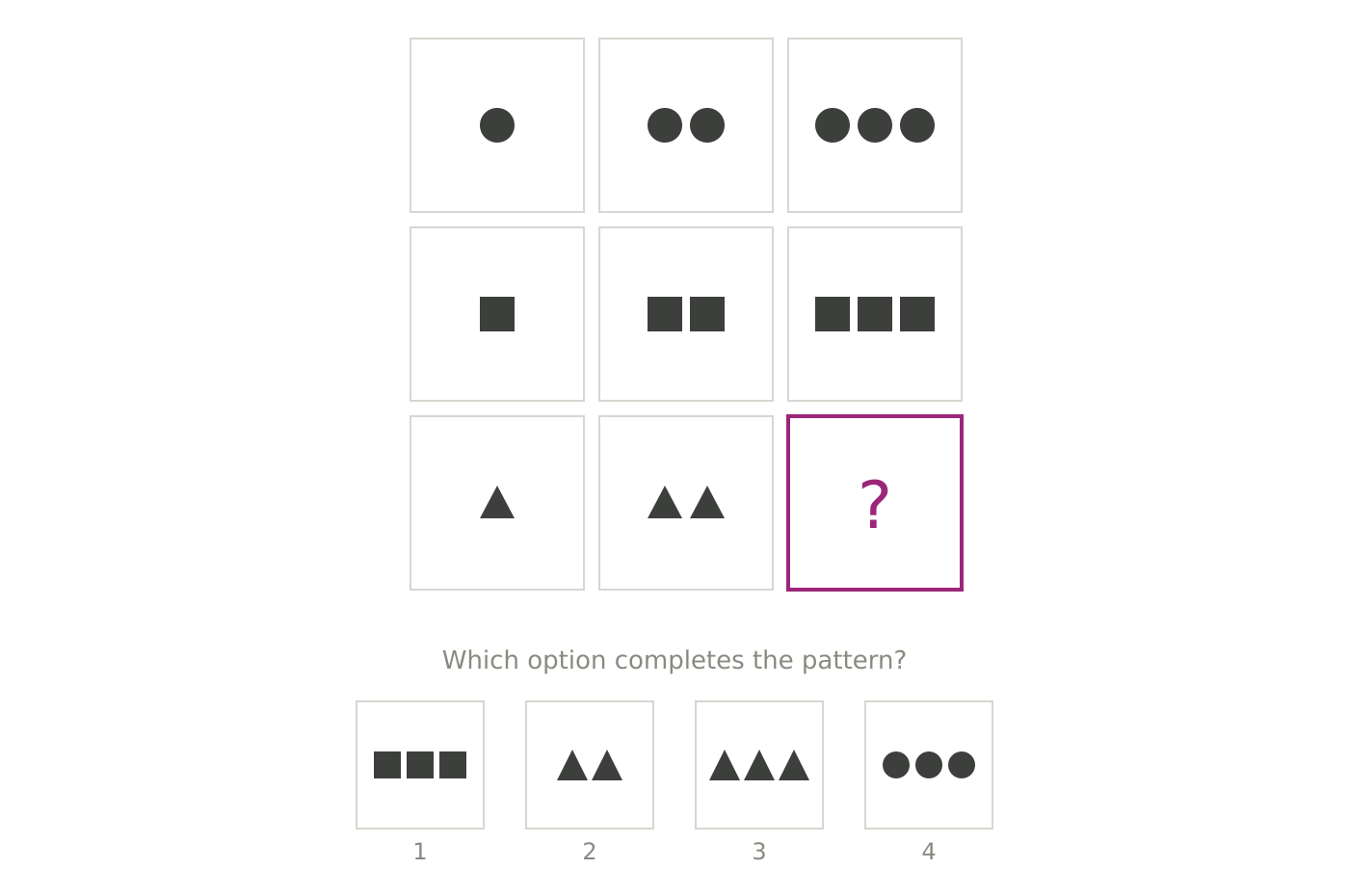
The same men, weeks apart, did better after the harvest. On ten items the average went from 4.35 correct to 5.45. Each farmer was his own control, which is what makes the result hard to explain away. Nutrition, hours worked, and time available were all examined, and none of them accounted for the difference.
Nobody got smarter in the intervening weeks. What changed was how much of their capacity was already committed to something else.
I like this study because of who it lets off the hook. We have a long habit of looking at people who are struggling, in school or at work or in poverty, and reading their performance as information about their ability. It is the same mistake I would have made about myself on that first day of medical school, holding a clipboard, certain that the silence meant something about who I was.
We think we are measuring a person’s ability. We are measuring how much of it they can reach that particular day, at that particular time, in that particular environment.
What the farmers cannot tell us is why a mind would be built to work this way. For that you have to look at what thinking costs.
At its peak, in early childhood, the brain consumes close to two-thirds of the body’s resting metabolism. Christopher Kuzawa and his colleagues at Northwestern established the shape of this, and one detail from their work stands out to me.
The age at which the brain’s energy demand peaks is also the age at which the body’s growth is slowest.
This is not a coincidence. The energy going into the brain is energy that is not going into the body.
Once you know the organ is that expensive, everything else follows, because anything that costly gets budgeted. And every budget has an order of priority.
Robert Sapolsky spent a career describing what happens to that order under threat. A body that believes it is in danger funds the emergency first and defers whatever can wait: growth, repair, digestion, immunity, every long-term project. This is a superb design. Everything on that list is an investment in having a future. A body that is not sure it has one, does not invest.
This may also be the missing half of what Arnsten describes. Her work tells us what changes when the pressure comes. The budget tells us why a body would be built to change it at all. The difficulty is that the system cannot always tell the difference between a real emergency and, say, a first day of class.
The energy the brain receives is not spent evenly across it. Fuel is allocated locally and continuously, according to what is being used at the time.
This is what brain imaging measures. The scans behind Kuzawa’s figures tracked glucose uptake region by region, and what they show is that consumption follows activity. Areas doing work draw fuel, areas that are idle draw less. Exactly how the delivery happens at the level of individual cells is still argued over. That the delivery follows the work is not.
Picture two children in the same classroom: one is engaged, spoken to, curious, safe. She is using the circuits that learning depends on, and they are drawing what they need. The other is watchful, braced, somewhere else entirely. His attention is committed to the room and the people in it, not to the lesson, and the circuits the lesson requires are not the ones doing the work. He is not being given less because anyone decided he deserved less. His body is funding what it believes is the more urgent problem.
We look at that second child and we call him unmotivated. We write it on a form, and it follows him from one grade to the next, until eventually he reads it about himself. But he is not choosing the room over the lesson. His body made that allocation before he had any say in it, the same way mine did on the first day of medical school.
We are reading a shortage of fuel as a flaw in the child.
There are a couple of things about energy and the brain that are true, but they might sound like a contradiction.
On any given day, the budget is finite. Whatever fear has already spent is not available for anything else, and no amount of trying harder reopens it. This is why telling a frightened child to concentrate does not work and why telling a frightened adult to calm down works even less well. You are asking them to spend capital that is already gone.
Across years, the budget itself moves. This is what I have witnessed most closely in my patients. What a person can afford to think about widens as they get safer and narrows when safety goes away. Two people can begin with similar biology and arrive at very different capacities, and part of that difference is what one of them spent a childhood paying for.
This, I think, is the hopeful part. Capacity responds to conditions, and conditions are something we know how to change.
Dr. S, my therapist, did not give me my voice back. He told me what was happening, and he told me it would pass, and then my classmates wrote their names on my clipboard instead of laughing at me. Trust grew. Somewhere in those two weeks of class my body concluded that the room was not dangerous. The voice came back on its own, the way anything comes back when the budget is finally there to pay for it.
Physicians are trained to look at a person and ask what is wrong with them. That is what diagnosis is, and there are times when what’s wrong is exactly the right question.
But the habit did not stay in the medical field. We test children, we sort them, we place them, and every one of those steps is built to find the problem inside the person in front of us. It is a powerful way to think. It is also why a child whose energy is going somewhere else looks, on paper, like a child with less to give.
I have learned to ask something else first. When someone in front of you cannot hold an idea, cannot plan, cannot find the word, before you decide what that tells you about them, ask what else is going on that their body senses and that their brain is funding right now. An argument with a dear friend. A fight at home. A diagnosis in the family. A room where they do not feel safe. It all comes out of the same account.
That question will not always give you an answer. But it may keep you from reaching the wrong one.
There is one more question underneath all of this, and it is the one I am asked most often now: what artificial intelligence is doing to this budget. What it frees in us, and what it stops asking of us. I am still working that out, so more on that soon.
Thank you,
Pam
Comments
Nothing yet. Say the first thing.
Sign in to join the conversation.