
Nearly twenty years ago, I read the first reports about biochar, then known only from the Terra Preta soils present in vast areas of the Amazon basin. Concentrated along the high river banks where people founded permanent settlements safe from the extensive annual floods, these black, fertile soils had been created by human beings over thousands of years. The pottery shards and stone tools embedded up to two meters deep were proof that the soils were anthropogenic, and not some natural formation.
These soils became agricultural soils growing food that supported a large civilization, with a population greater than that of today’s Amazon. Furthermore, the Terra Preta was still in use in modern times by farmers who marveled at its great fertility.
And that is how I got started with biochar. At the time, I was a writer, covering environmental and energy topics for an online news source, as well as producing feature stories for a yoga magazine. In 2007, when I heard about the first ever International Agrichar Conference taking place in Australia that year, I begged my editor to let me cover it. She agreed to pay me for an article, and that would be enough to cover my travel.
That first conference was attended by about a hundred people, including soil scientists, farmers, engineers, climate analysts, and economic development workers. I learned a great deal and profited from all the connections that I made there. The attendees ended up voting for a name change from “agrichar” to “biochar” and the International Biochar Initiative was born. A year later, I was hired by the IBI to work on communications and project development. I have been a biochar professional ever since.
I had titled my article “The Good Black Magic that Can Save the Earth.” Follow the link to read it at the Yoga International website.
Now, in 2025, I have experienced that good black magic of biochar for myself in myriad ways. The most direct is how it feeds me delicious and nutritious food from my garden.
Biochar also feeds my brain as I enjoy my investigations into understanding how the magic works. I constantly read scientific publications on biochar, and I have written a few myself. I really like doing citizen science to learn about biochar in my garden and nearby forests. But I also see the limits of reductive science as practiced in our institutions. It is always useful to take things apart in a scientific investigation, but often our science fails to put it all back together to see reality in a more holistic way.
This is where the magic comes in. It was science fiction author Arthur C. Clarke who said “Any sufficiently advanced technology is indistinguishable from magic.”
Biochar is increasingly becoming a technology, but it is also a natural phenomenon. The most fertile soils in the world, the Iowa Mollisols and the Chernozems of the Russian steppe, contain large amounts of charcoal deposited by regular grass fires. Teasing apart the biological and chemical components of these soils provides us information, but does not explain everything about how they work. My shorthand concept for how biochar works is that is supports biological diversity. Soil is alive with microbiology, insects, and worms. Living soil is resilient and fertile. We no longer see soil as merely a substrate to hold up a plant that we feed chemicals. We are learning to support the soil life that feeds the plants for a truly regenerative agriculture.
Biodiversity is how life thrives. Organisms do not live in a vacuum. Organisms live in ecosystems because we all need each other. Life is not reductive, it is inclusive and holistic. Sometimes the concept of Magic - advanced technology not under human control - is the best way to characterize life in all its blooming, buzzing confusion.
How else to explain the appearance of this magical being - a big beautiful garden spider in my tomato patch this summer? These spiders are not uncommon, but why did she choose this place to weave her web? What is the purpose of the different features of her design? We can pick her apart as much as we want, but mysteries will still remain.
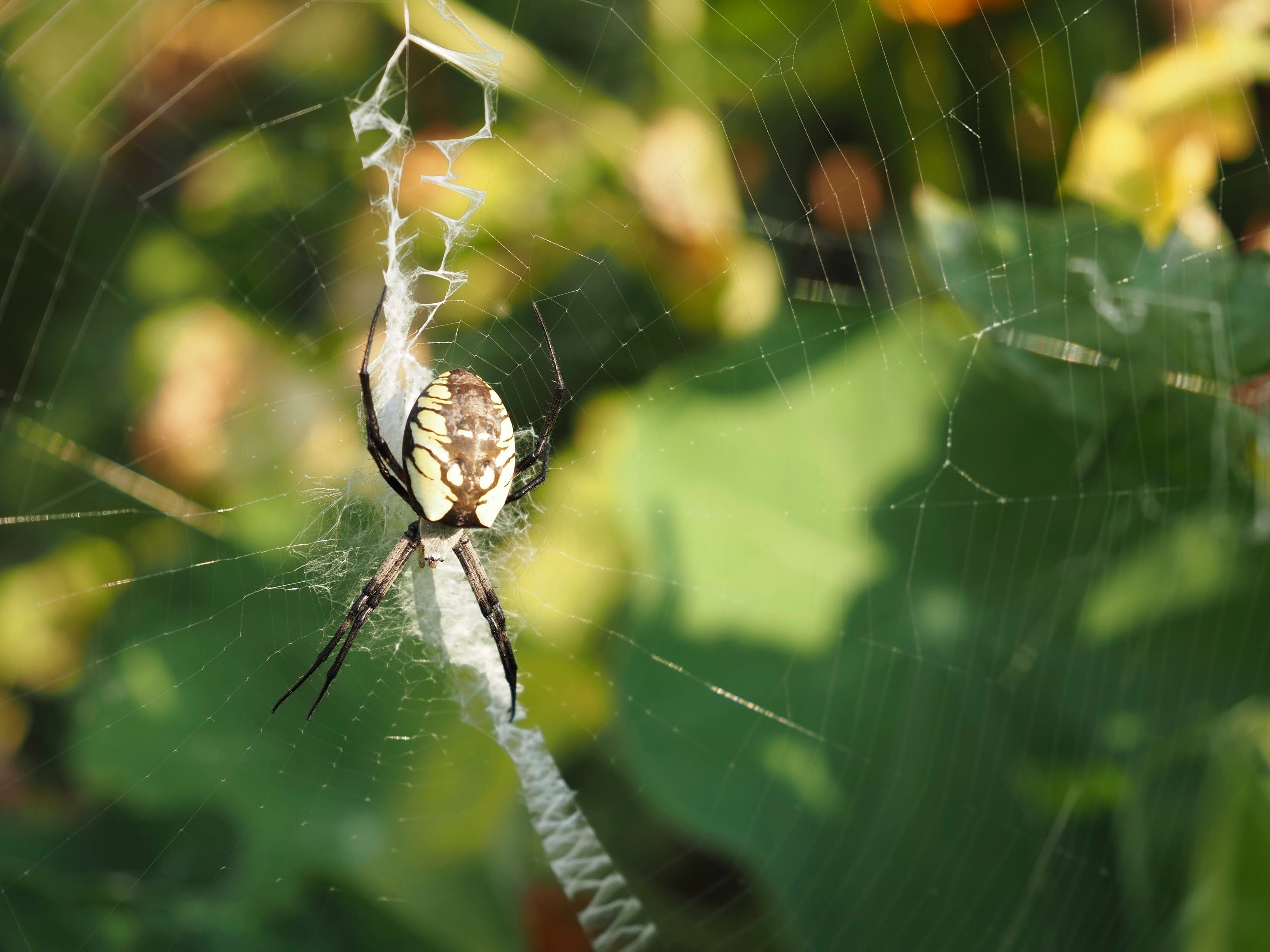

The Great Mystery is Life Itself, and we are privileged to be here to participate in it. I give thanks for every aspect of life, even the difficult parts. Death is a part of life, as Halloween reminds us. However, just as we should not smash a spider because it looks scary, we should not harm our fellow humans out of fear. Part of our purpose here on Earth is to resist the evil and bad black magic that humans are also capable of. I won’t name any examples here. I am sure that you can think of some.
Stay safe, fellow humans, and if you want to learn more about biochar, check out my resources below.
Here is a recent one: Kevin Gallagher, host of the WPKN radio podcast Digging in the Dirt interviewed me a few days ago. You can listen here: https://share.transistor.fm/s/047ee580.
I heard from Kevin yesterday - he sent me a picture of biochar he just made in his BBQ grill, using the method I describe in the podcast. Way to go!
Please, if you want to learn more about practical biochar tips and tricks for growing your own food, or you are interested in stewardship biochar for restoring natural ecosystems and biodiversity, check out some of my links below:
The Biochar Handbook at Amazon.com
The Biochar Handbook at Bookshop.org
Purchase Kelpie’s Practical Biochar Course
Order your Ring of Fire Biochar Kiln®: RingofFire.earth
Check out my YouTube channel: www.youtube.com/@KelpieWilson
Biochar On Site network for practitioners of stewardship biochar
No posts
Comments
Nothing yet. Say the first thing.
Sign in to join the conversation.