
I was thrilled to be invited to contribute once again to Matt Powers’ R-Soil online conference that took place last month. Matt offers these free conferences on a regular basis, along with massive amounts of other content available by subscription. I have his Regenerative Soil book and find it to be an indispensable reference on all things related to soil and compost. Get on his mailing list to hear about upcoming opportunities.
I titled my talk “Biochar Home Economics” because taking stock of the season’s garden results was on my mind. I have often wondered if I am really saving money by growing so much of my own produce. After all, I end up spending a pretty penny on this garden hobby of mine. Would I be better off financially if I just got it all at the grocery store?
Well that is not the exactly the right question. Since health is wealth, the real question has to be: would I be as healthy and happy if I bought all my produce at the store instead of spending so many hours out in the sunshine digging in the dirt? Would the store produce be as clean and nutritious as what I grow myself? And what about waste? Picking what I need fresh from the garden means I don’t end up with moldy cucumbers in the vegetable bin because I over-bought at the store.
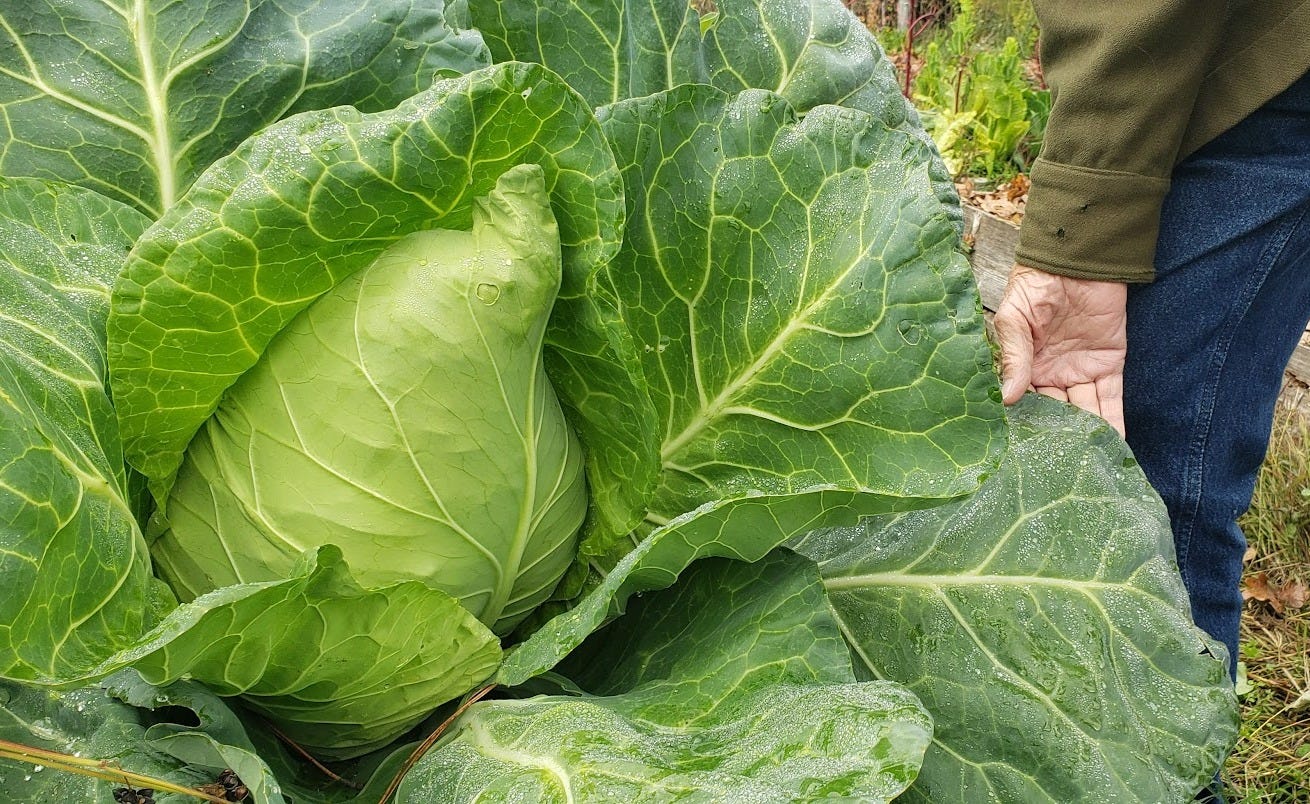
I have no idea what it would cost to purchase all our produce on a yearly basis. We eat meat, dairy, nuts, and some grains, so I have to buy those things, but vegetables are the basis of most of our meals. Google tells me that the average American spends about $1000 a year on fresh produce, or $2000 for the two of us. We would likely spend more than that because we cook at home and rarely eat out. Furthermore, Google also says that American households waste about $1600 a year on produce that rots in the frig. Are we a nation of vegetable abusers?
Anyway, I made list of what we are self-sufficient in and what we need to buy. The only reason we cannot grow all our own potatoes is the voles. I wouldn’t mind sharing some potatoes with them but they like to eat up all the tiny baby potatoes and that ends up severely reducing the harvest. This is a problem to solve if you have any ideas.
Winter squash takes a lot of room, so that is a limiting factor. And carrots and lettuce are gone in the winter so I buy some in January and February when I am hankering for something besides cabbage and kale. Otherwise, winter is when I eat my frozen and canned produce.
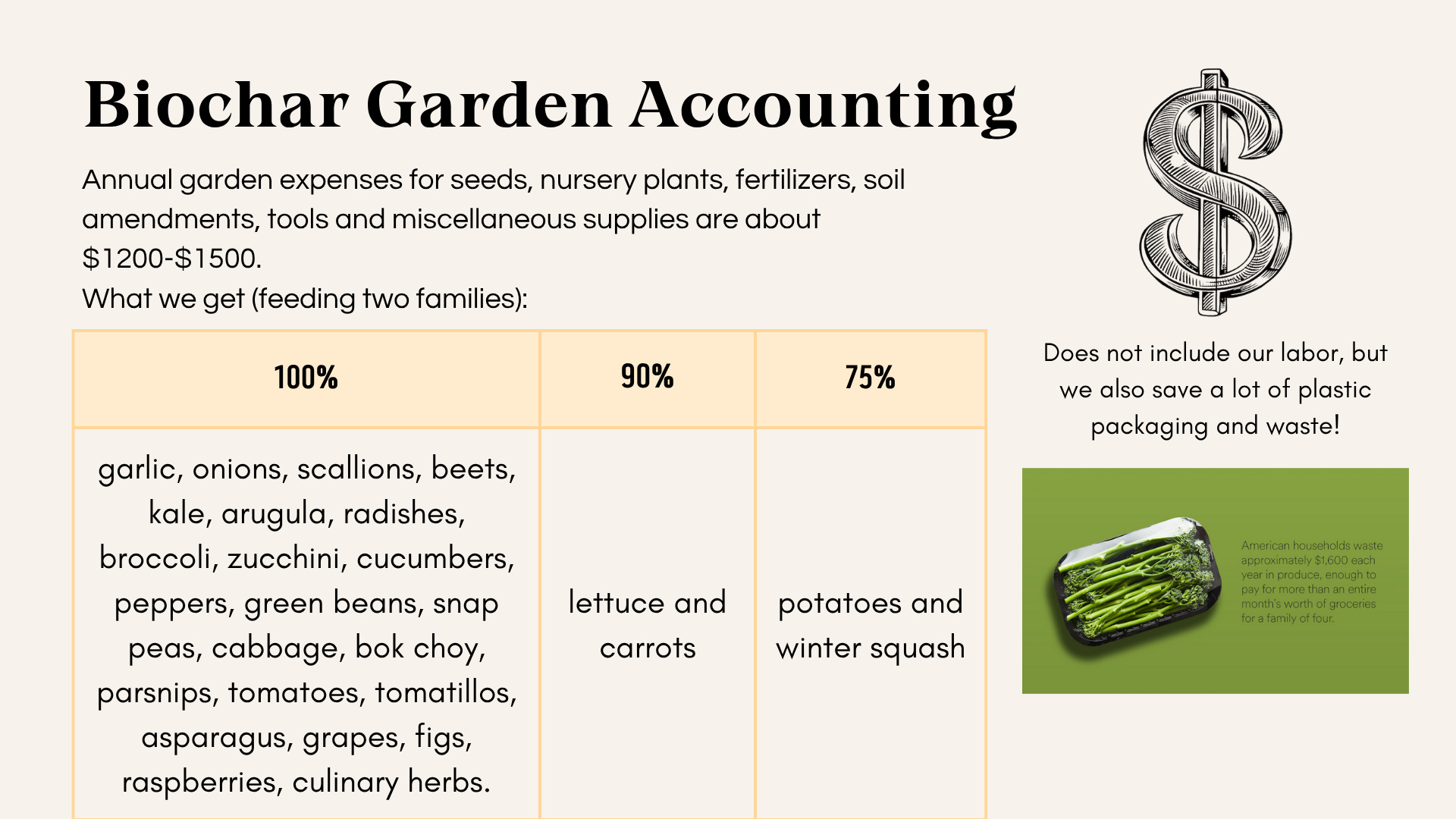
I would say that at the very least we break even on the garden and most likely we save money. And my accounting does not include what our garden partners use.
The other side of the equation is continually trying to save money on inputs. Biochar really helps here. Biochar makes it very easy and efficient to recycle food scraps and garden weeds into compost. I still need to buy some fertilizer, and that is the single greatest expense, but I don’t seem to need as much as I used to.
The key to reducing garden expenses is to make the best use of what you can find nearby for free. Here’s my list of free, low cost, and more expensive inputs.
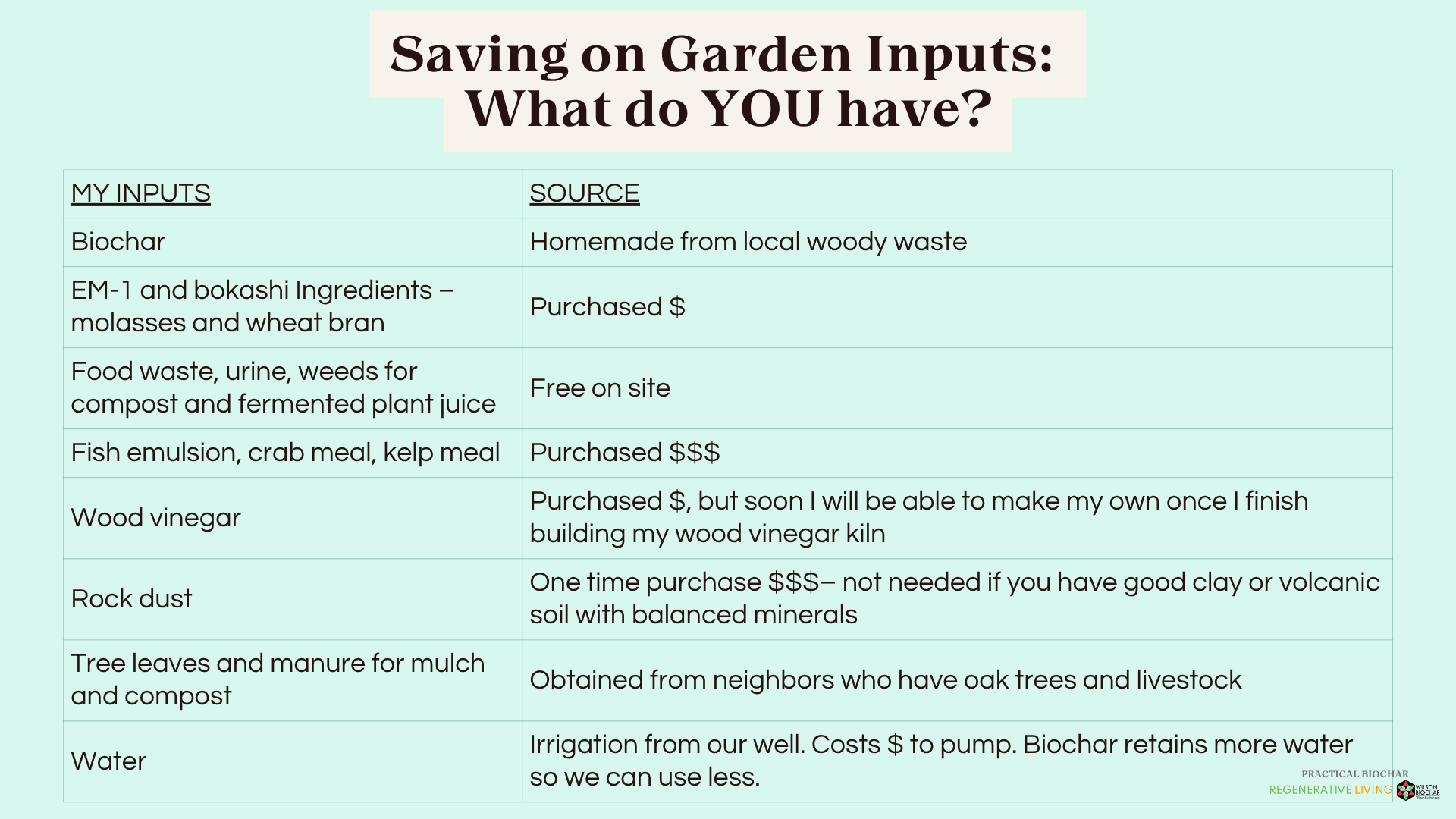
I use fish emulsion for nitrogen and phosphorous and kelp meal for potassium. The crab meal provides nitrogen and calcium but more importantly, it is a source of chitinase. Chitinase is an enzyme produced by bacteria that breaks down chitin, a polysaccharide found in the exoskeletons of crabs and some scary soil pests called symphylans. Symphylans are like tiny centipedes that feed on the fine roots of your plants and stunt their growth. They are very, very hard to get rid of.
A few years ago, the garden was looking terrible. Everything started off fine, but soon the plants looked stunted. I would tug on a tomato plant and it would just fall over. I could see that all the fine roots were gone. This was a disaster. All of our hard work and investment was now at risk. I was told by everybody that I asked that the only solution to a symphylan infestation was to fallow your garden for years and hope that they eventually go away.
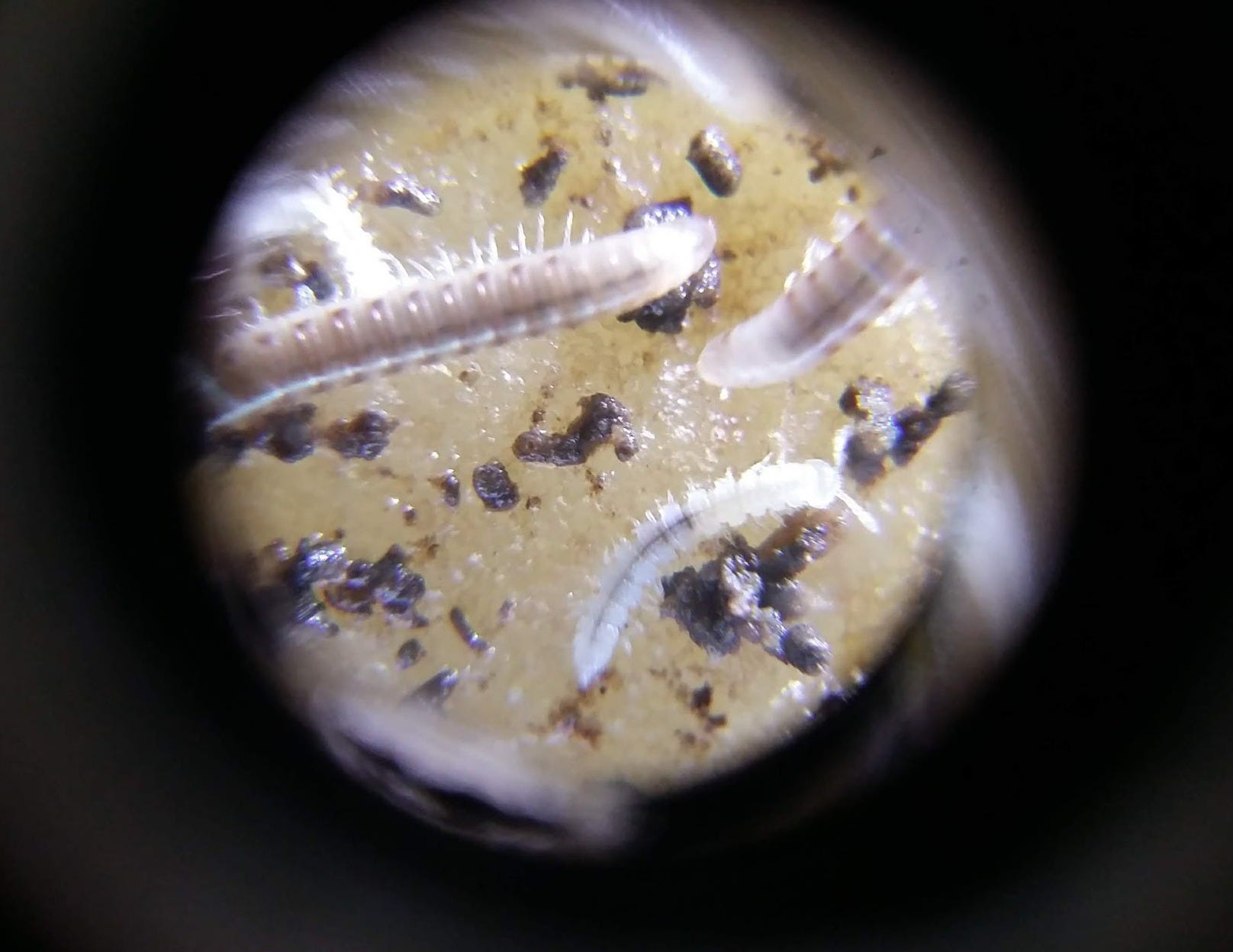
I was in despair. I tried a lot of things, but what finally worked was crab meal. I think the chitinase-producing bacteria come in with the crab meal and the chitinase dissolves the exoskeletons of the symphylans. I make sure to use it every year now. It costs me about $80 for a 40 pound bag, but it is totally worth it as an insurance policy.
Now I need a solution for the voles. Either that or we need to start charging them for what they eat!
Please, if you want to learn more about practical biochar tips and tricks for growing your own food, or you are interested in stewardship biochar for restoring natural ecosystems and biodiversity, check out some of my links below:
The Biochar Handbook at Amazon.com
The Biochar Handbook at Bookshop.org
Purchase Kelpie’s Practical Biochar Course
Order your Ring of Fire Biochar Kiln®: RingofFire.earth
Check out my YouTube channel: www.youtube.com/@KelpieWilson
Biochar On Site network for practitioners of stewardship biochar
No posts
Comments
Nothing yet. Say the first thing.
Sign in to join the conversation.