
Terrible Mayhew: Shall we conclude our chat with a few words about your readers? Who do you picture as your readership for these novels? Who are they aimed at, ideally?
Bill Willingham: Ideally? They’re for anyone who wants to read them. No, don’t look at me like that. I’m not trying to be flippant and certainly not dismissive. But I don’t write for any particular audience. I wouldn’t begin to know how one does that, so I don’t even have the tools to judge those who can write to a specific readership. The only standards I’ve ever been able to bring to the table, when deciding what to write, is a muddled mix of what I want to write, and what I think might make an entertaining story. I think the standard explanation of my practice in writing, is the old saw, “Write for yourself,” meaning write with my tastes in mind. And that’s fine and dandy, as far as it goes, but I know damn few people (much less fellow writers) who only have one set of tastes. My concept of what makes a good story varies widely, from one day to the next, only depending on what I’m in the mood for. So I guess I write what I’m in the mood for now, and hope it doesn’t alter wildly before I can bring the story to a close. When I wrote the adventure novel Down the Mysterly River, I had no idea it was a children’s book. I simply wrote the story I felt like writing at the time, perhaps with the spirit of CS Lewis hovering just out of sight ahead of me, to give me a target to aim for. I wanted to write a smart and kind protagonist sharing an adventure with a bunch of talking animals. That’s it. When my agent Ken eventually placed the novel with TOR Books, that’s when I found out it was a children’s (or young readers) book, because they told me it was. I didn’t know that’s what I’d written, but they did. However, anecdotally at least, I’ve had good responses from many an older reader who enjoyed Mysterly, so maybe it’s a children’s book that isn’t only for children. Maybe the Outrider trilogy is a book for fans of sword and sorcery, but not only for them. Maybe there’s calories in there to suit other palates as well.
TM: Won’t that make it hard for those at your new publisher who now have the job of finding an audience for the Outrider books?
BW: Well… sure. Finding a reader and selling a book to him is hard, which is one of the reasons I’m happy to have the Raconteur people take on the responsibility of doing it.
TM: Any particular instructions or helpful ideas to get them started?
BW: Sure. I would advise them to use the Bullwinkle template. I presume you’d seen episodes of the old Rocky and Bullwinkle cartoon show?
TM: Of course.
BW: Just like most others of my age, I first watched the show when I was a young tyke and found it hilarious and wonderful. It was exactly the show aimed specifically at a young child’s immature, unformed tastes and understanding. Then, later on, in my adulthood, I had occasion to watch those shows again and discovered something: There was also material in those cartoons specifically aimed at old farts, and their well-formed tastes, understanding, and humor. It was there all along, unknown to the child me (all of that stuff went over my head without me ever suspecting stuff I wasn’t getting), but waiting for the adult me to come along. Did those Bullwinkle cartooning geniuses plan it that way from the beginning, or were they just a creative pack of wild beasts whose main remit was to make things they found interesting and amusing, with the confidence there were enough others like them out there to constitute a viable audience? I have no idea, but it worked. The lesson then is, build stories that cross barriers of age, interests, and genre sensibilities, as long as it conforms to these two rules: A) make it the best story of which you’re capable, and B) don’t write down to those whom you might perceive the readership to be (you’d be surprised how many professional story creators have contempt for their perceived audience — but fortunately for us, they’re all being kept busy making superhero movies just now).
TM: And maybe point C) should be: find ways to get your books in front of potential readers.
BW: Yes, but now that’s a task for the Pros-from-Dover I’ve teamed with. Not only do they have the skills I lack, but their enthusiasm to do that part of the business is inspiring. Of the most important qualities I looked for, in seeking a publisher for these books, enthusiasm might have been the most important. Okay, honesty counted for a lot as well, so call it enthusiasm and honesty. Oh, and dedication. They demonstrated to my satisfaction they’re in this for the long run. They aren’t just a group of people dabbling for a while in book publishing, until something more interesting comes along. They plan to be doing this for years to come — which we’ll read as more years than I likely have left to worry about it. In any case, that’s the list: enthusiasm, honesty, and long range dedication.
TM: I’m curious about the name Outrider. How did you come up with it?
BW: Serially. The first time I used the name Outrider was in collaboration with the late, great comics writer Peter B Gillis. We co-created the character to feature as a backup for 1First Comic’s flagship comic series called Warp. In that case, circa 1981 or 821, at the very beginning of my comics drawing career, the Outrider was an adventurer in outer space. That character appeared in a few backups, but nothing more.
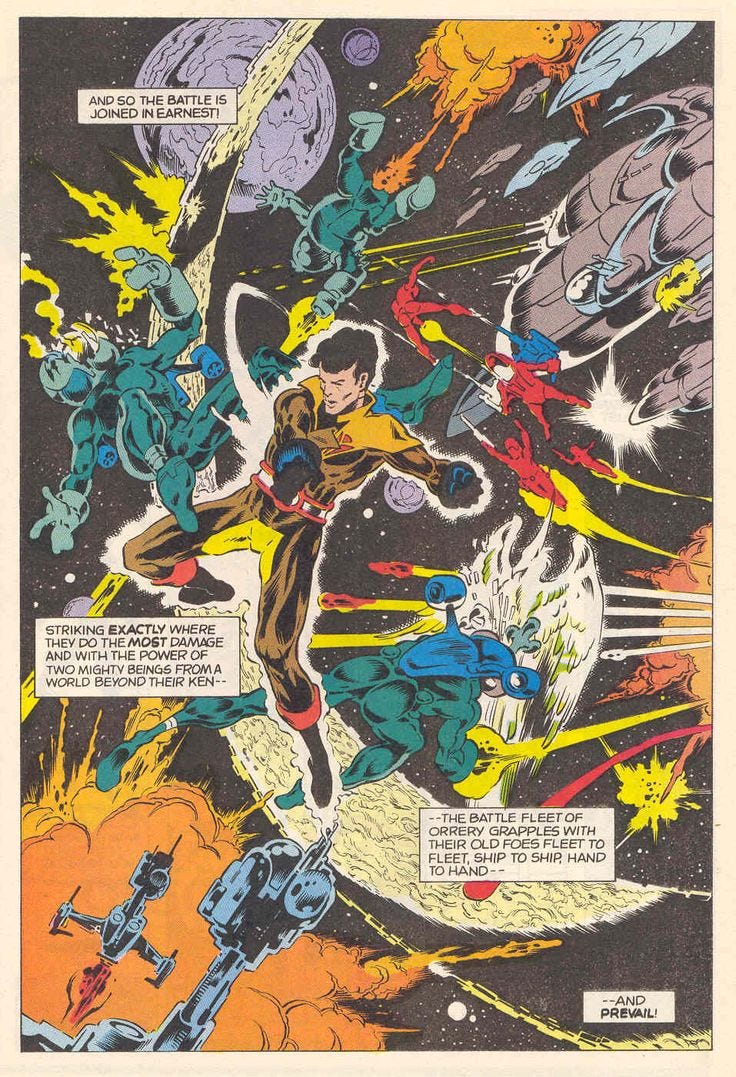
BW: I thought there was more that could have been done, specifically with such a compelling name for an action-adventure character, so I tucked the name away. The next time I used the name was in 1998 for a villain character in the comic series Pantheon, which I created and wrote for Bill Williams’2 comics company Lone Star Press. Good enough, for a second use of the name, but it still wasn’t enough to be worth the name. So I tucked it away for a second time.
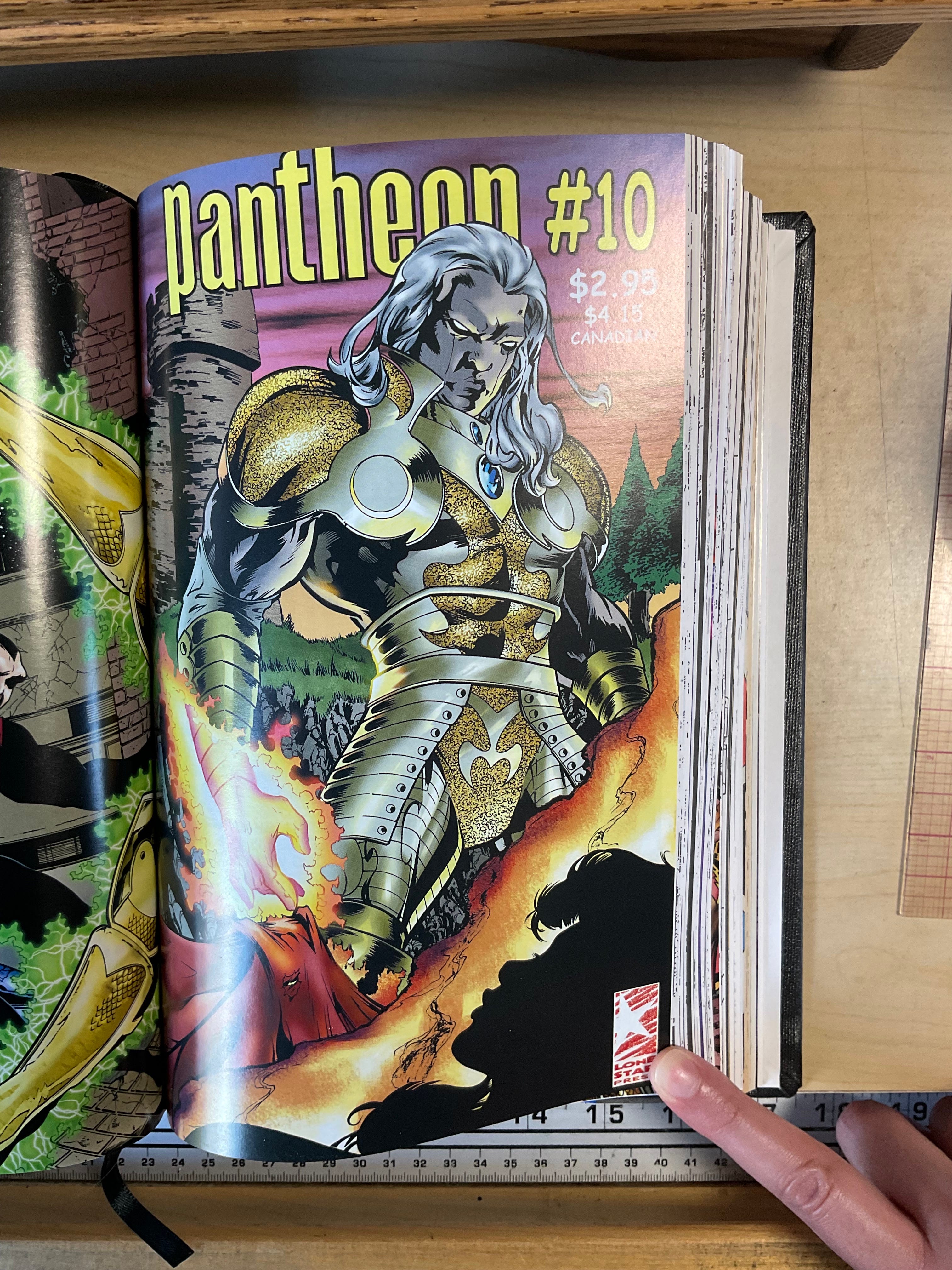
BW: Third time’s a charm. Now, at last, I feel I have a character with enough gravitas and longevity to really do right by Outrider. I predict this one will have some staying power?
TM: Staying power beyond the first three books? I guess this is my nosey way of asking, does the character survive the trilogy?
BW: No comment.
TM: Robert E Howard wrote 21 Conan stories. Edgar Rice Burroughs wrote 24 Tarzan novels, not to mention his appearances in other novels in ERB’s extended fictional universe.
BW: Noted.
TM: I’m just saying, if you expect the Outrider to have Conan-level staying power, or Tarzan level… well, it seems the low twenties is the minimum number of stories to have a reasonably good chance to earn a lasting place in the pop-culture zeitgeist.
BW: So I’ll still be writing Outrider stories in my nineties? You’re being so very helpful.
TM: Since we should think about wrapping this up, is there anything else you’d like to say to whoever manages to find this article?
BW: Yes, please. I’d like to ask everyone who reads this interview to consider picking up and reading the three Outrider books when they come out, beginning early next year. No doubt you’ve heard that all three books are completed, and in the process of being prepared for publication. This is true. There’s no chance you’ll have to wait for years, for the story to come to completion. But more importantly, I believe it’s a good adventure story, perhaps even a great one, that won’t waste your valuable investments of time and money. I invite you to consider it, when the books come out. And if you decide it’s not your cup of tea3, then thank you anyway, for reading this far.
The first appearance of Outrider as a backup feature in Warp, was actually in early 1984.
Despite the insistence from various luminaries, Bill Willingham and Bill Williams were not two names for the same person. Either Bill would like to believe they could come up with a more serviceable alias (were an alias required) than one so close to their real name. We assure you Bill and Bill are two separate persons and always were. When they are together, which is a sad rarity these days, you can easily tell them apart, because Bill is considerably more handsome than Bill.
If you scroll a short way down in this Substack space, you’ll find an article titled, The Giant, the Witch, and the Warlord, wherein the first chapter of the first Outrider has been leaked, to help you decide if it’s something you might like. So far, the small handful of advance readers (so far) agree that the first chapter is fairly representative of the rest of the chapters and books.
No posts
Comments
Nothing yet. Say the first thing.
Sign in to join the conversation.