
Bill Willingham: Now then, where were we?
Terrible Mayhew: I was just about to tell you, you have tzatziki sauce spilled on your shirt. And you were just about to tell me all about Raconteur Press and what made you choose them to publish your series.
BW: Right. Well, first of all, let’s back up a bit. At the height of the comic book series Fables’ popularity I had received several invitations from many well-known publishers to write novels for them (which I automatically translated ‘for us’ to mean, ‘you write and we’ll publish’). I’d not really done prose work by then, at least not work meant for publication.1 I couldn’t attempt to exploit those offers just then for two reasons. First, I was intimidated to attempt writing a full novel for a major book publisher. Second, I simply didn’t have the time at the time. Writing Fables took up most of my creative energy, because I tried every issue to spend it all. I felt Fables deserved every erg of creative sweat I was able to manufacture, leaving it all on the table, as the saying goes. My standard response was to hand the offers over to my agent (I had an agent at the time), saying something along the lines of, “Ken, I’m interested in this offer, but not yet. See what the deal might be for some day in the not-too-distant future.” Long story short: I put off any serious effort towards writing novels until Fables came to a close. But by then all those major publishers had moved on. The moment it ended Fables, it seemed, was yesterday’s news, and so was I. No longer represented by an agent by the end of Fables,2 I tried knocking on those big publisher doors, and calling them on the phone, to let them know I was ready to begin, but the enthusiastic offers of previous years had all expired. May I digress a bit here?
TM: By all means.
BW: Most of those publishers wouldn’t deal with a writer directly. It was, and remains, their policy to only deal through an agent (even if they’d shown interest and in some cases even tendered offers before), so there was no joy to be found there. Those few of the so-called major publishers who were reluctantly willing to accept unagented submissions had truly draconian submission methods. I’m sure they did it to cut down on the number of manuscripts to hit their slush files, hoping to get the stack down to a manageable level, but their way of discouraging submissions (while still allowing them) were dismissive, arrogant, and just downright mean. It’s as if every publisher selected their most martinet editor to craft their submissions guidelines, with universal variations on, “If you don’t submit your manuscript in exactly the way we say, we’ll dispose of it unread, after first rendering it down into wet pulp and feeding that mush to our basement goblins. Then, once they shit it out, we ship that manure to our punishment farm, where all of our enslaved surviving former editors (who were told they were bound for a lovely senior retirement village) are forced to stomp, stomp, stomp, that brown substance into mud bricks destined for one of our building subsidiaries. And yes, if those hapless thralls don’t work hard enough, our overseers punish them by ordering them to, “make bricks without straw.” So don’t you dare try submitting anything without jumping gleefully and humbly through every hoop we can think of constructing as an impediment to your hopes and dreams.”
TM: Ouch. You’re a man with opinions.
BW: I may have exaggerated a touch, but the fact remains, they immediately come across as elite, arrogant, and unpleasant. The submission process often being any given writer’s first exposure to the publisher, why would any writer ever want to work with such people?
TM: They do need to winnow down the herd of submissions though.
BW: Granted. I remember a span of a year or two when DC Comics announced they would no longer accept comic series ideas from anyone outside the company. Talking about the new policy once with Paul Levitz, who was (I believe) Editor in Chief at the time, he explained the decision this way: “If it’s not quite an act of desperation, it’s close. It’s our way to cut the vast number of submissions down to a trickle of only those who won’t take no for an answer. And what continues to come in, despite our adamant ‘don’t do it’ is still more than we can handle.” So yes, I can see the need to trim down the aegean stables amount of unsolicited stuff that comes over the transom, but here’s the rub: You can find a way to be kinder about it. You pretend to be a professional publishing house, whose editors purportedly are highly skilled in recognition and cultivation of the best writing available. With that premise, you’d think one of them could write a better way of communicating a more reasonable set of instructions. You’d think they could be kinder.
TM: Unless they don’t want to be kind.
BW: Exactly. My experience at an uncountable number of conventions, encountering a vast array of editors, representing any number of publishing houses, has led me to one inescapable conclusion: The average editor3 all too quickly reveals himself to be a smug, superior being (often dumb as a bag of hammers, but that’s a whole ‘nother problem); whose superiority most often is a badly-worn costume to mask an inferiority complex deep and wide, in which one could float an invasion armada. They can’t risk anyone finding out how scared and fragile they really are. Therefore they’re mean because that’s what they choose to be.
TM: I suspect we’re circling in on what made you choose Raconteur.
BW: We are. Strap in for just a bit longer and we’ll get there.
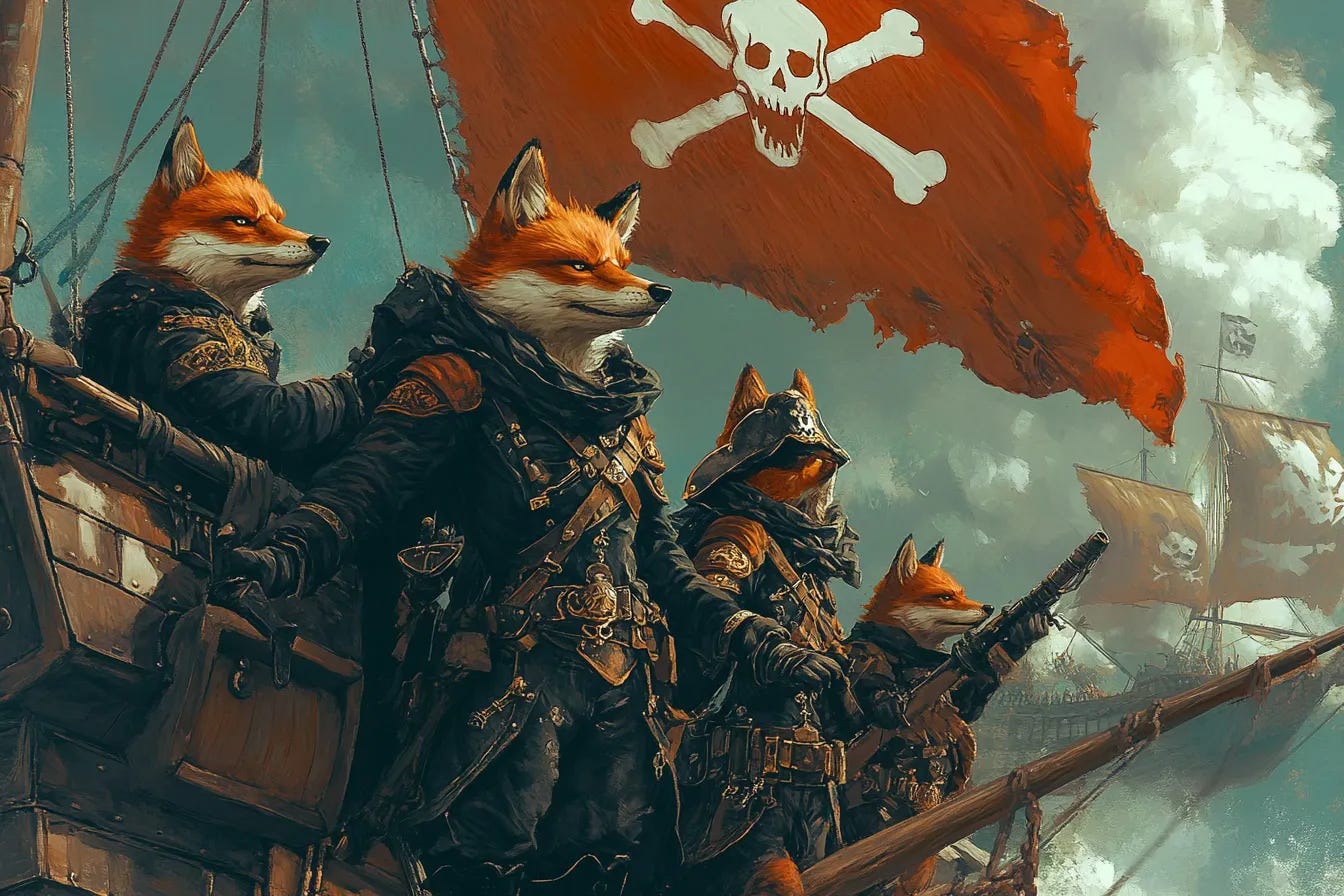
BW: Undaunted by the closed doors at the many publishing houses, I wrote prose novels and published them myself, under my Mount Pelion imprint.
TM: “Mount Pelion, where heroes are born?” While scouring your messy writing desk for loose change, I saw the line on one of your add mock-ups.
BW: Yes, that’s the one. I was content to do it myself, with the understanding I’m a terrible salesman and marketer. And any sort of self-promotion usually only embarrasses me, so there wasn’t ever going to be much success along the line of getting my novels into the hands of readers. Let me digress again to note most of us in the creative fields tend to dismiss those who’re proficient at self-promotion as little more than sleazy carnival barkers (and some are exactly that bad, but not all, by any means). Done judiciously, and with a modicum of humility and humor, never taking yourself too seriously, it’s a skill set worth having. I wish I had more of a knack for doing it. If you’re going to self-publish, you’re the company. You’re it. No one else is going to do it for you.
TM: So you muddled along and…
BW: Out of the blue someone at a toy and merchandising company, wanting to get deeper than they’d done so far into actual publishing, offered me the chance to write a novel, or a series of novels, based on a character they owned. The character was a blank slate, only a set of cool images, so I could more or less write what I wanted, as long as it was done well. Long story short, I took more than a year off of my working life, wrote the three novels and turned them in. The head honcho of this company claimed to love them and accepted them for publication. We moved along to the contract stage of the process. Unfortunately, their contract was one I could never sign. We tried negotiating, but after several back and forth sessions, it was clear they weren’t going to back away from too many key conditions that I considered unfair (and which the entire publishing world would agree were unfair, were I to make their proposed contracts public).
TM: Hampered by an NDA?
BW: No, I’m hampered by courtesy. I learned never again to sign an NDA many years ago. No matter how one tries to dress it up, an NDA is ever only a tool of abuse, used by villains to enable cheating and other outrages against fair-minded partners.
TM: Care to name names?
BW: No, but only because they aren’t villains, deserving of public rebuke. New publishers often fall prey to overly ambitious lawyers, who attempt to grab everything for their client at the expense of the other party, whom they don’t represent and for whom they have no obligations. I believe this impasse was a case of that. They’re a most excellent manufacturing company and I wish them well. I hope, if they continue in publishing, they’ll eventually learn how to offer a fair deal.
TM: So that deal fell through. How were you able to take the three novels back? Was there a dispute over ownership?
BW: No, because I owned everything I wrote. I rewrote the three books, taking out anything that remotely might be considered to belong to the afore-mentioned company, and their IP. I created a new main character from the ground up. Everything else, the world, a host of other characters, the story and situations, were things I’d created out of whole cloth. Since their contribution was limited to a set of images, it was an easy job to remove anything they owned, or might later lay claim to. In fact, I was able to improve the main character immeasurably, by putting back all the things they asked me along the way to take out. I’d list what those things are, but they’re (hopefully) interesting surprises waiting for readers in the story.
TM: Then you went looking for a new publisher?
BW: Yes. I was in no hurry though. Ever since I tried to retire from the writing business, I’ve never been busier. When a writer retires, it doesn’t mean he stops writing. It only means now he’s free to only write (or sometimes draw in my case) what he wants. Do you know what that does for him?
TM: I suspect so, but do tell.
BW: It immediately frees up all the time he once had to spend pitching story ideas to other people (usually people with no creative or story instincts of their own), trying to convince them to let you do the story you dearly want to do, and (often) instead having to settle for the story they want you to do. It’s like immediately getting an extra six months back out of every year. So yes, I went looking for a new publisher, but slowly and carefully.
TM: Why didn’t you self-publish the trilogy, like with some of your other novels?
BW: Call this an experiment. I wanted to see if there was a small company of scrupulously ethical people who are tickled to do all of the things I don’t want to do, such as print books and market them with giddy enthusiasm.
TM: And you found such a publisher?
BW: I did. Now we’re at last talking about the intrepid men and women of Raconteur Press.
TM: Let’s explore this further, but perhaps in a third installment. Making our conversation its own trilogy, if you will. I want to discuss the potential readers of this epic. Shall we reconvene tomorrow, or the next day?
BW: Yes, please.
With the exception being the many stories I’d written with Clockwork Storybook, a cooperative of prose writers working within the framework of a shared fictional universe (the made-up city of San Cibola). But an exploration of that undertaking, in those days, deserves its own long-winded article, so we’ll simply admit to ‘not much prose experience’ during the height of Fables’ run.
Which is its own long story, and largely a private one, so nary a bit of explanation will be forthcoming.
In this case, I refer to those editors who occupy the offices of administrators — those whose job, first and foremost, is to protect the company interests. Actual editors, often freelancers, who aren’t involved with the politics and palace intrigues of trying to move up the corporate ladder, can be quite pleasant and helpful.
No posts
Comments
Nothing yet. Say the first thing.
Sign in to join the conversation.