
As a heart and lung transplant surgeon, I spent years caring for patients at the most critical moments of their lives. Those experiences taught me the extraordinary power of modern medicine. But they also taught me something equally important: health is shaped long before a patient ever arrives at a hospital.
That realization is one of the reasons we founded NashvilleHealth.
Thanks for reading A Second Opinion! Subscribe for free to receive new posts and support my work.
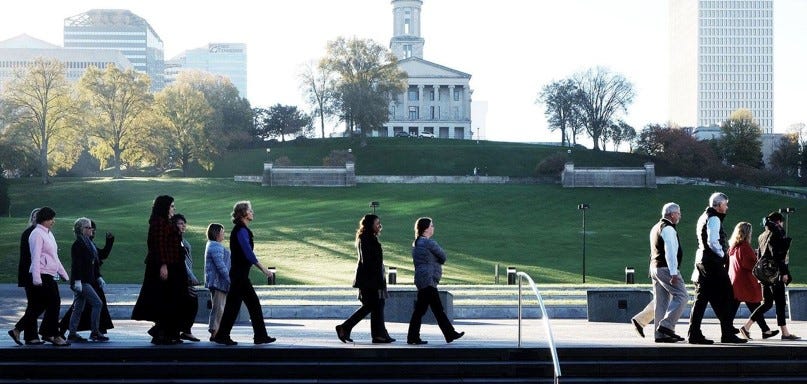
At first glance, Nashville seems like one of the healthiest cities in America. We are home to world-class hospitals, outstanding physicians and nurses, leading medical schools, innovative healthcare companies, and remarkable philanthropic organizations. Few cities possess so many healthcare assets.
Yet our health outcomes tell a different story.
Too many Nashvillians live shorter, less healthy lives than they should. Chronic disease remains pervasive, and life expectancy varies dramatically across neighborhoods. In fact, when we founded NashvilleHealth in 2016, it was in response to data from the Robert Wood Johnson Foundation’s County Health Rankings that showed Nashville behind its peer cities in nearly every health indicator. From rates of smoking and infant mortality, to obesity and hypertension – Nashville consistently trailed its peer cities of Charlotte, Austin, Denver, and Fort Worth.
Those disparities reveal an important truth: healthcare and health are not the same thing.
Healthcare is what happens in a clinic, hospital, or physician’s office. Health is shaped every day by whether someone has access to nutritious food, reliable transportation, safe places to play and exercise, stable housing, economic opportunity, and a community that supports healthy choices.
As physicians, we’re taught that healing begins by listening. The same principle applies to communities. Before we prescribe solutions, we must understand the realities people face in their daily lives.
That’s why NashvilleHealth was created—not to replace the remarkable organizations already serving our city, but to bring them together. Lasting progress requires healthcare providers, nonprofits, businesses, academic institutions, government, faith communities, and neighborhood leaders working toward shared goals, informed by shared data and guided by the voices of the communities they serve.
We’re beginning to see what that collaboration can accomplish.
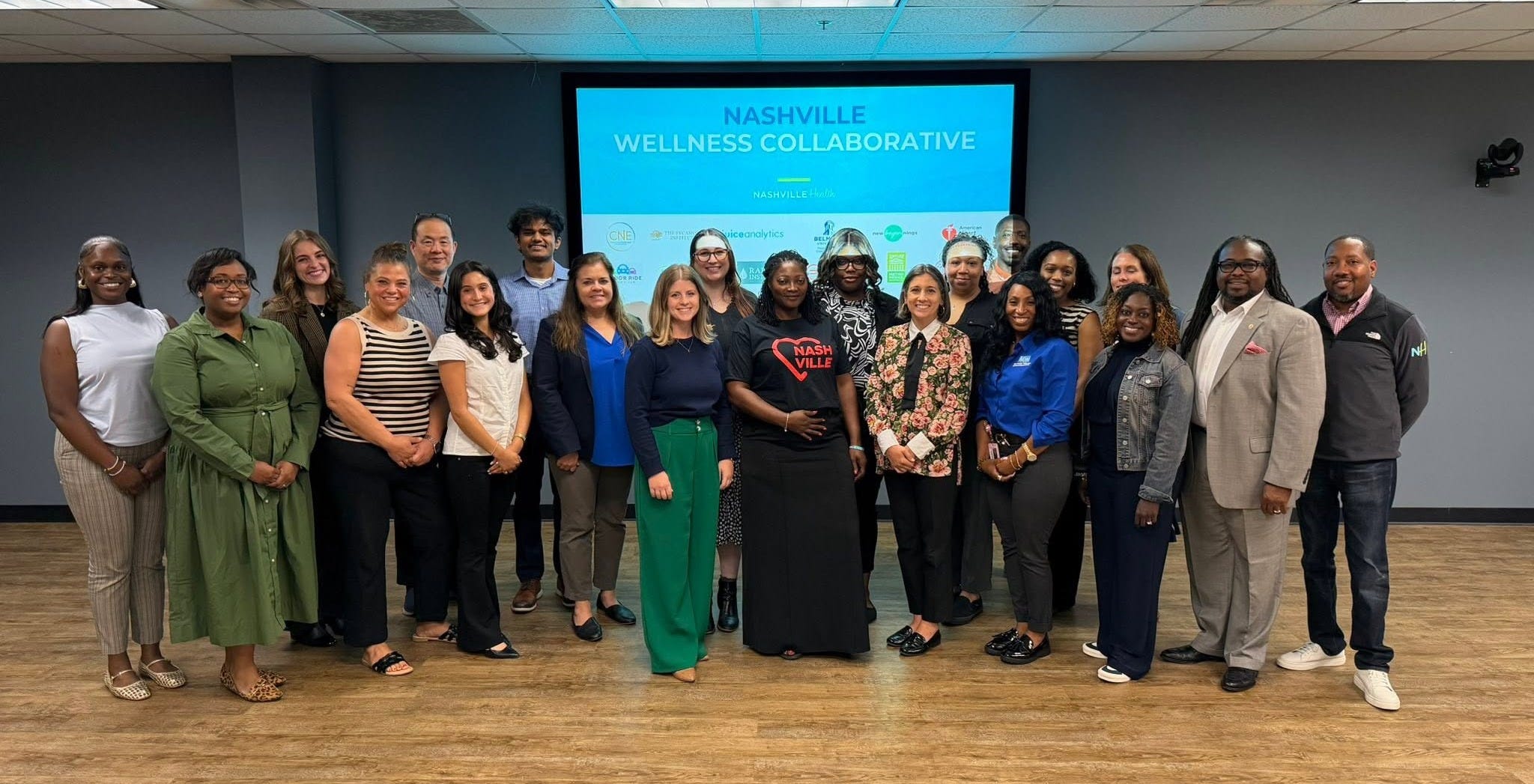
By aligning key stakeholders through the Nashville Wellness Collaborative, launched by NashvilleHealth in 2022, their joint work led to the designation of North Nashville as the city’s first Wellness Opportunity Zone and to the Metro-funded, NashvilleHealth-led Heart of Nashville initiative.
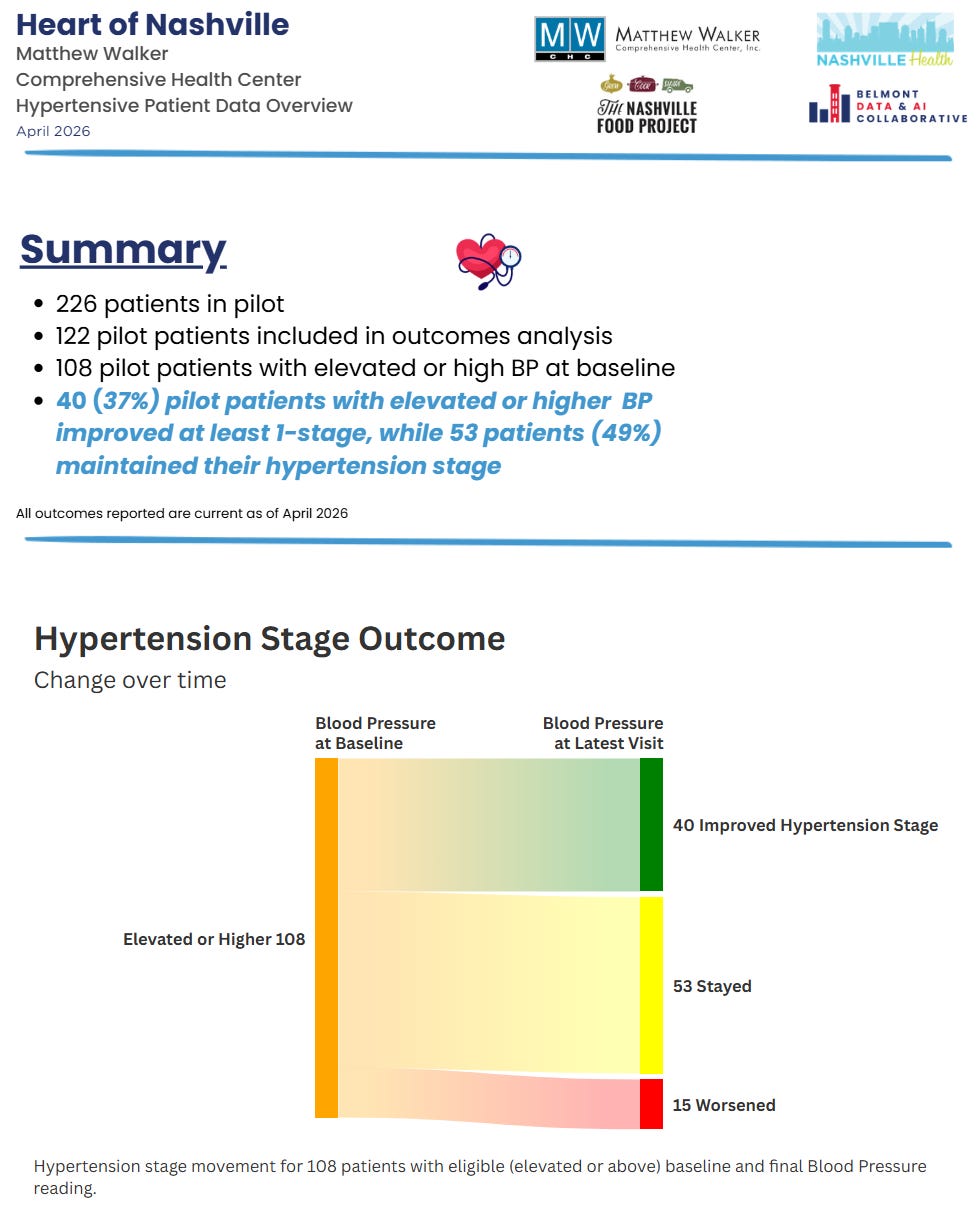
Heart of Nashville demonstrates the effectiveness of NashvilleHealth’s collaborative impact approach. The initiative brings together partners across our city – including the Matthew Walker Comprehensive Health Center, The Nashville Food Project, Senior Ride Nashville, Belmont University, Meharry Medical College, and The Sycamore Institute – to create a coordinated approach for patients with uncontrolled hypertension. Participants receive high-quality clinical care combined with heart-healthy meals, transportation, fitness opportunities, and other practical supports that make healthier living possible.
The early results are encouraging. More than 226 patients have been served, thousands of meals have reached families, and many participants with elevated hypertension have improved by at least one full hypertension stage. But what excites me most is what they represent: proof that addressing the conditions that shape health can improve lives.
This lesson extends far beyond Nashville.
Every community already has dedicated people working to improve health. What many communities lack is the trusted infrastructure to align those efforts, reduce duplication, measure outcomes, and sustain collaboration over time.
Building healthier communities isn’t simply about expanding healthcare. It’s about creating a culture of health—one in which every sector recognizes that it has a role to play in helping people live longer, healthier, and more fulfilling lives.
The city thrives when its residents thrive. That simple idea inspired NashvilleHealth more than a decade ago. Today, I believe it offers a model that communities across America can adapt in their own pursuit of better health.
Read more about why we founded NashvilleHealth in my recent Forbes article, and learn more about NashvilleHealth’s work at NashvilleHealth.org.
Thanks for reading A Second Opinion! Subscribe for free to receive new posts and support my work.
Comments
Nothing yet. Say the first thing.
Sign in to join the conversation.