
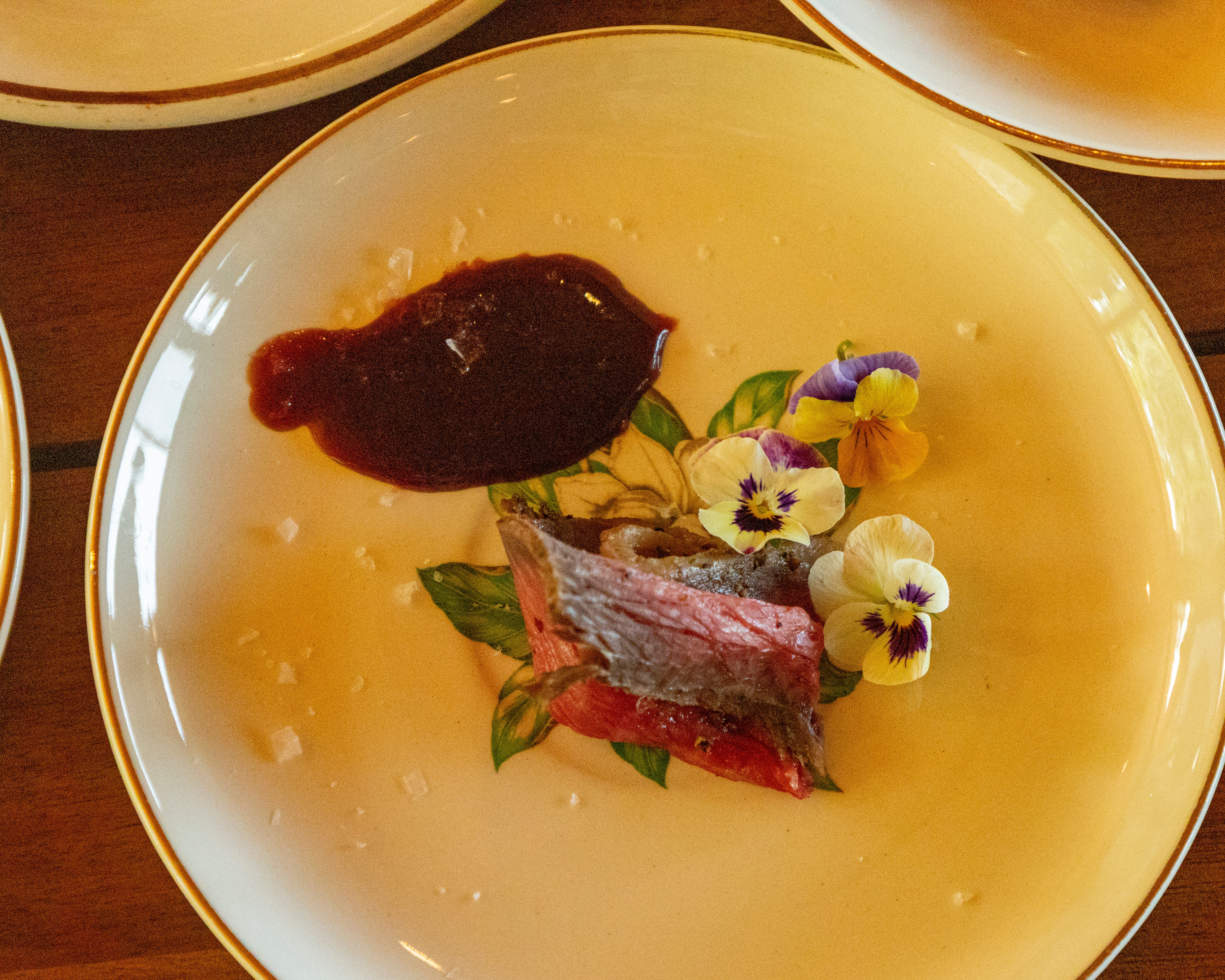
A small plate, delicately folded roast beef, pansies, and a dollop of Blackcurrant barbecue sauce. I press my fork into the beef, slide it through the barbecue sauce, then over the flowers and onto my tongue. I taste a light burst of salt, followed by the sweet tang of currants, then a trailing cascade of floral notes. I look around the room and see other tasters standing still, heads down, contemplating. Our first Blackcurrant tasting event is off to a good start, though we are terribly late to the table. Birds have been enjoying Blackcurrants for millions of years.
My work with The Savanna Institute is spreading the joy of Blackcurrants far and wide. I brought culinary creatives together at our Elderflower Retreat in Spring Green, Wisconsin to taste and evaluate a wide variety of Blackcurrant dishes. No one talked about Blackcurrants being tart, instead they reveled in the way this berry brought savory sophistication to dishes.
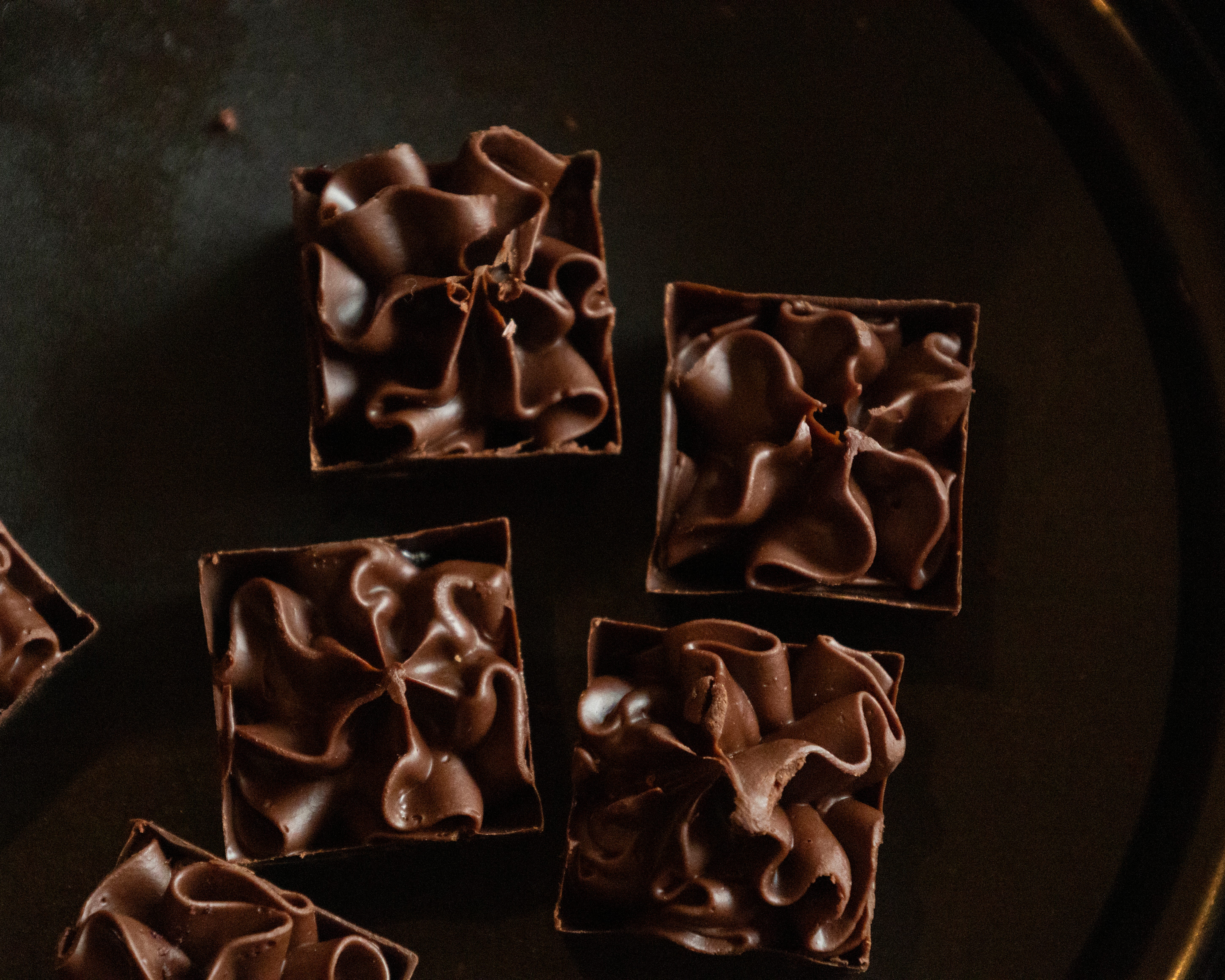
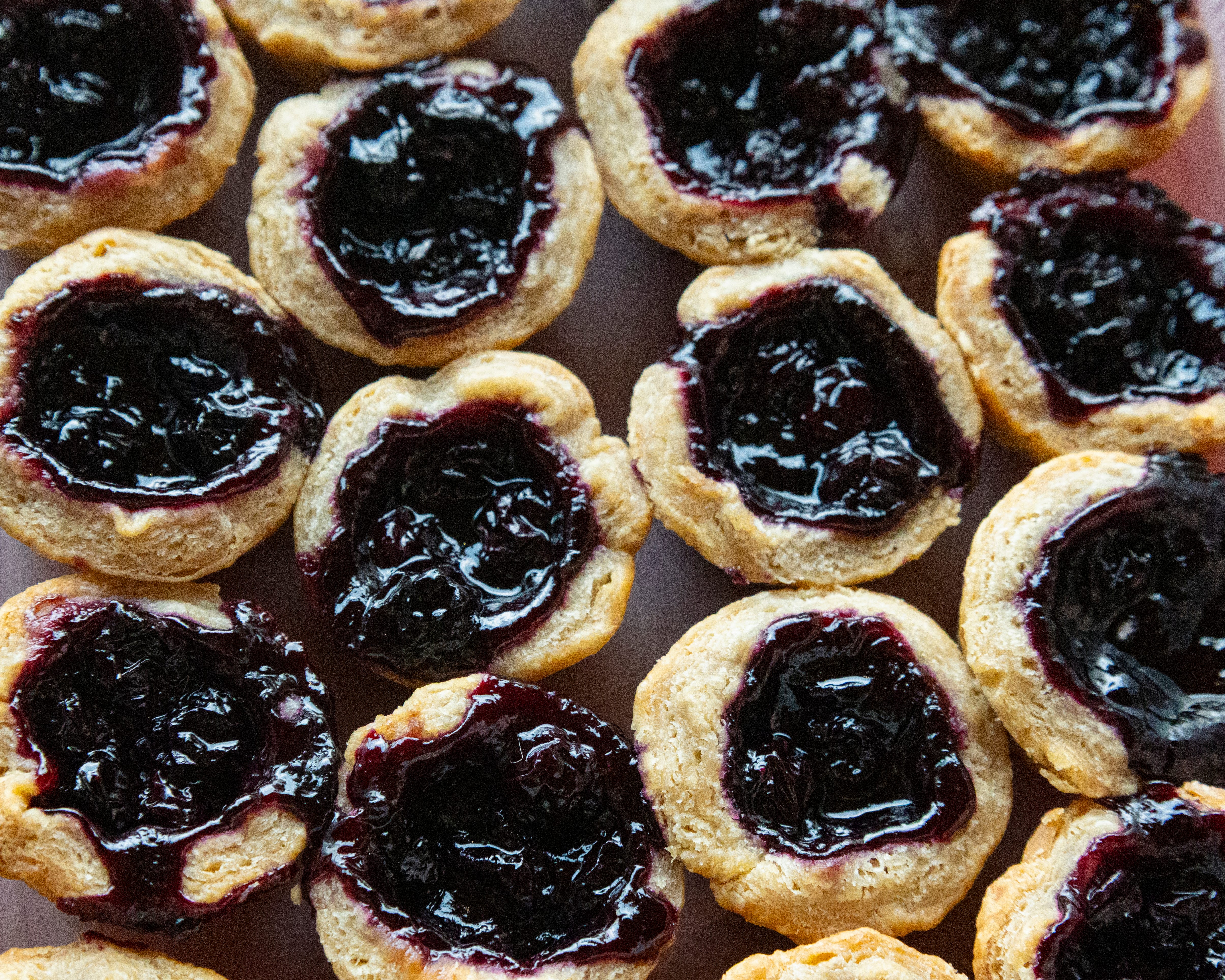
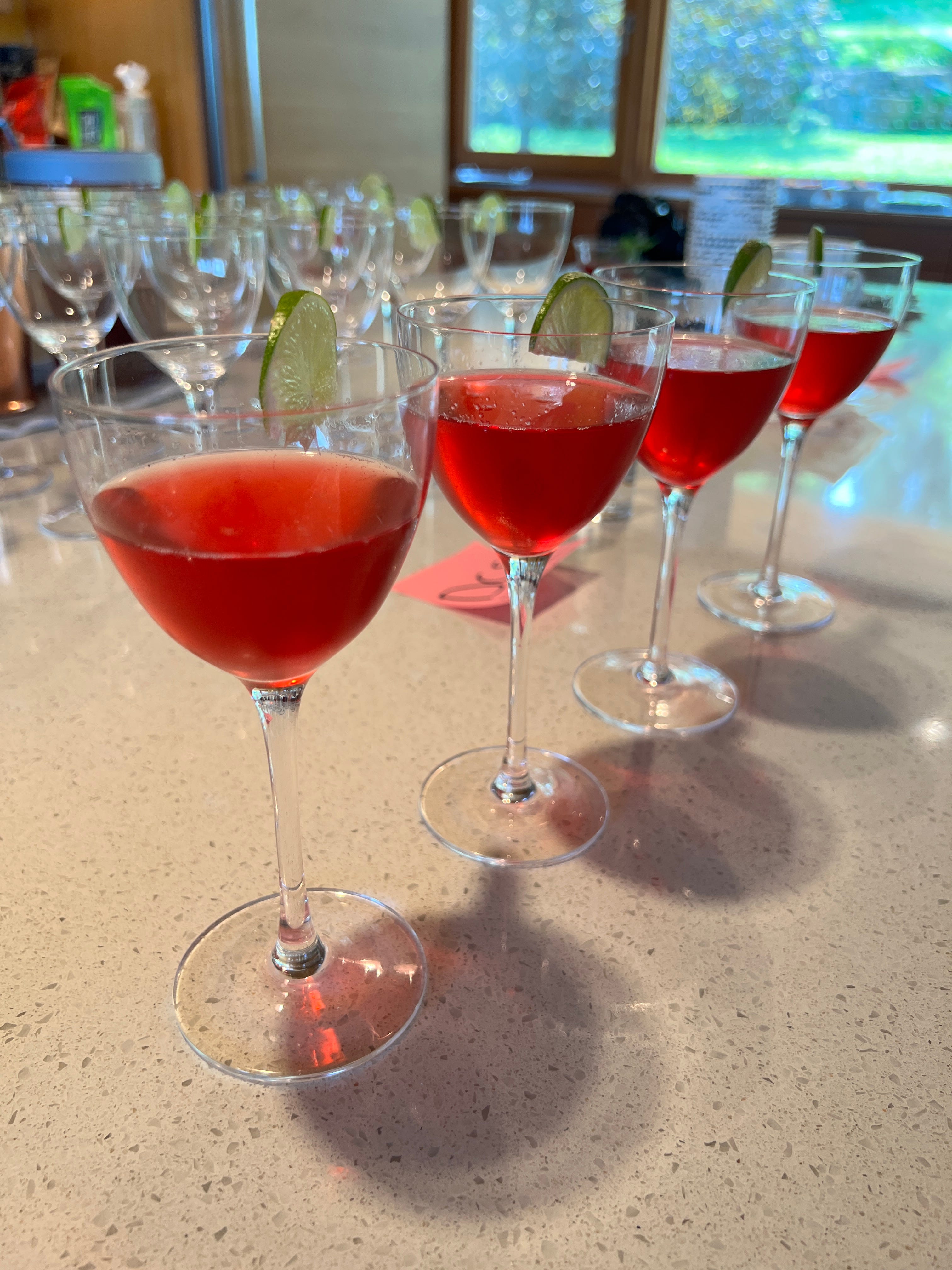
Tables were arrayed with chocolates, tea, baked goods, salads, drinks, jams, syrup, and molasses. This powerful little berry paired well with fat, salt, and sugar. In the best preparations, the boldness of the berries brightened the food.
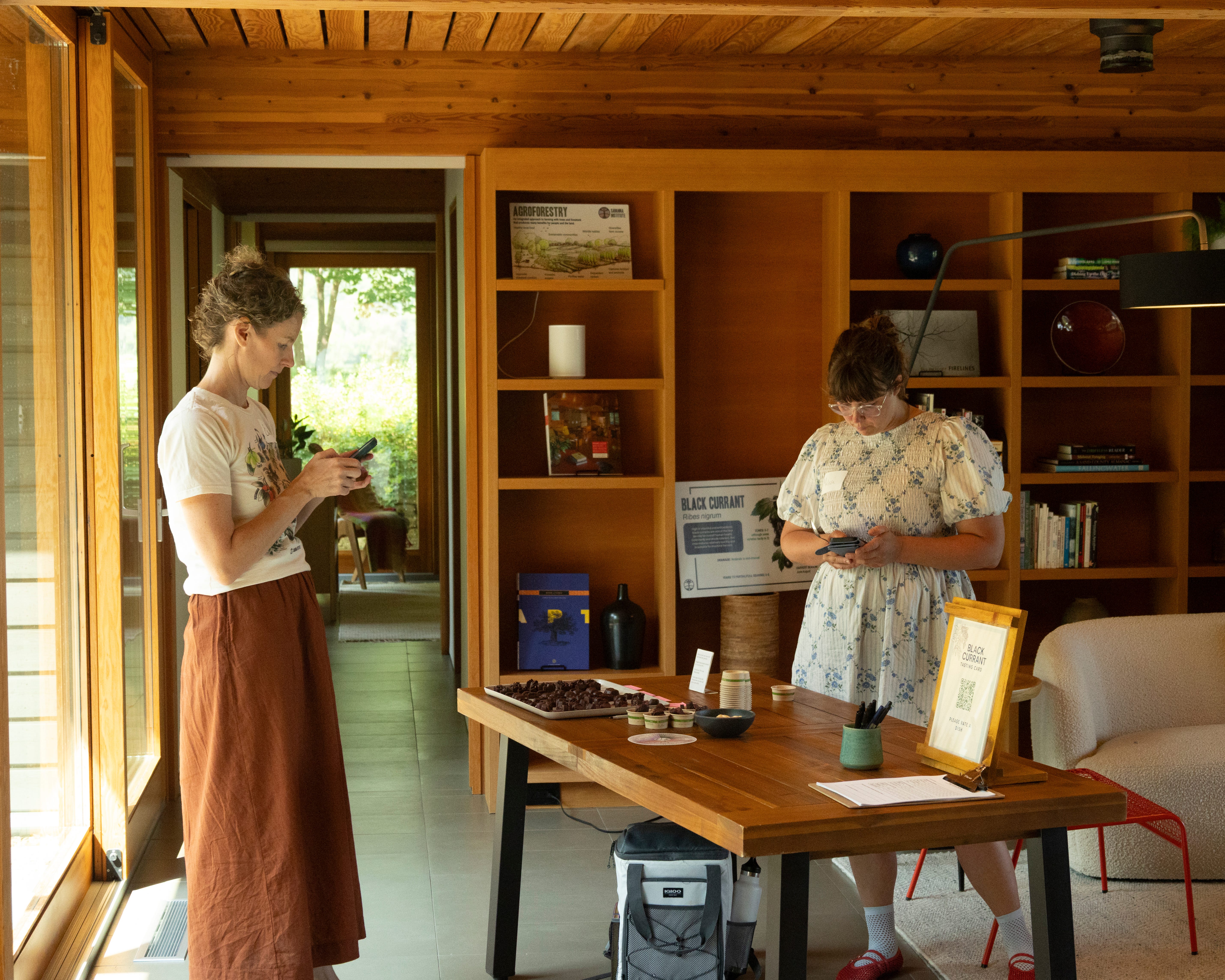
At the end of the event, our Blackcurrant breeder did a little coding on the spot, and we managed to get a spreadsheet full of data to generate a list of the most appreciated dishes. As she went through the results, I was surprised and thrilled to learn that my Blackcurrant stem tea was number five.
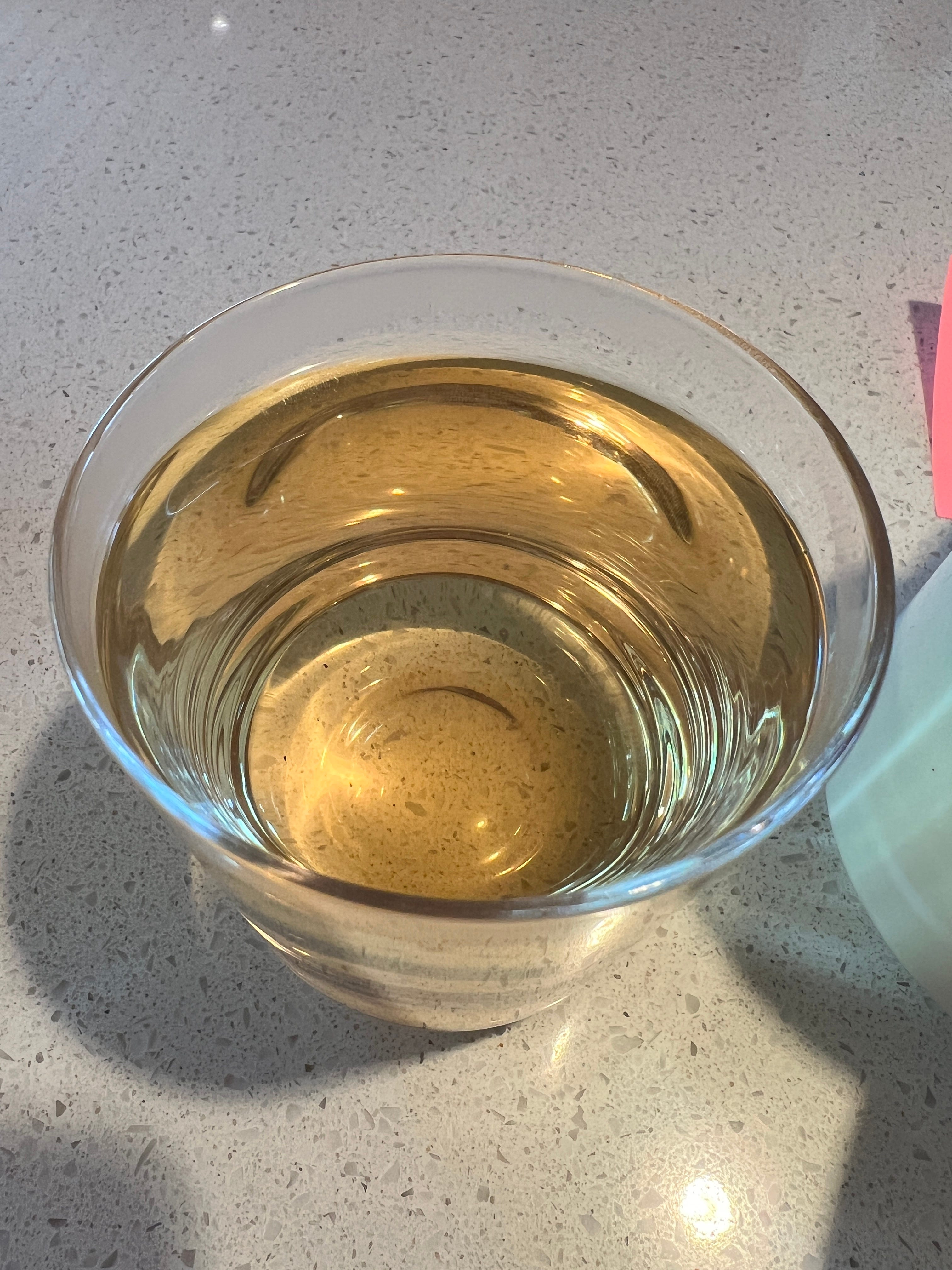
I almost didn’t bring it. Amidst tables weighed down with rich chocolates, delicate pastries, jams, and glossy molasses, my brew felt far too plain to belong. We are so accustomed to valuing a plant solely for its fruit that it is easy to overlook the quiet, subtle gifts carried in the rest of its body. At the last minute, I grabbed my humble bundle of sticks, leaves, and buds anyway, thinking I might just set them out quietly during lunch.
In the flurry of setting up, I hastily steeped the tea and left it on the counter. When the labels were handed out, the pot received one too, inadvertently entering the official tasting. I am committed now that I know this experiment resonated with chefs and super-tasters. They sensed the same thing I did: there is magic in the whole plant, if we only slow down enough to taste it.
I already ordered little paper tubes, pouches, and Mulberry paper and I will be sending out Blackcurrant tea samples far and wide. This is the beginning of introducing this plant to American palates.
We expect to harvest 4,000 pounds of Blackcurrants in 2027 and 15,000 pounds in 2028. As our agroforestry plantings expand and cover more land, the birds are responding. In an initial survey by the agroforestry company Propagate, young chestnut plantings held 40% more bird species and 103% more insect species than the neighboring soy. Our partners at the Ecdysis Foundation have sampled insects and birds on more than a thousand farms across the country, and they find the same pattern everywhere: as farms move away from chemicals and monoculture, life returns.
A new study out of Ohio State University shows that areas with intensive industrial agriculture are associated with accelerating declines in bird populations. This data documents something many of us have known for decades. I can drive through seemingly lush cornfields for hours without an insect hitting my windshield. It did not used to be this way. Twenty years ago, we had more insects. Now, we have precious few. The bare soil blows, life retreats to the margins. How could it be any other way?
Research by Doug Tallamy reveals the quiet starvation built into exotic hedgerows. Compared to native plantings, exotic hedgerows harbor 91% fewer caterpillars and nearly 96% less caterpillar biomass. They are lush, green illusions—all structure, no function.
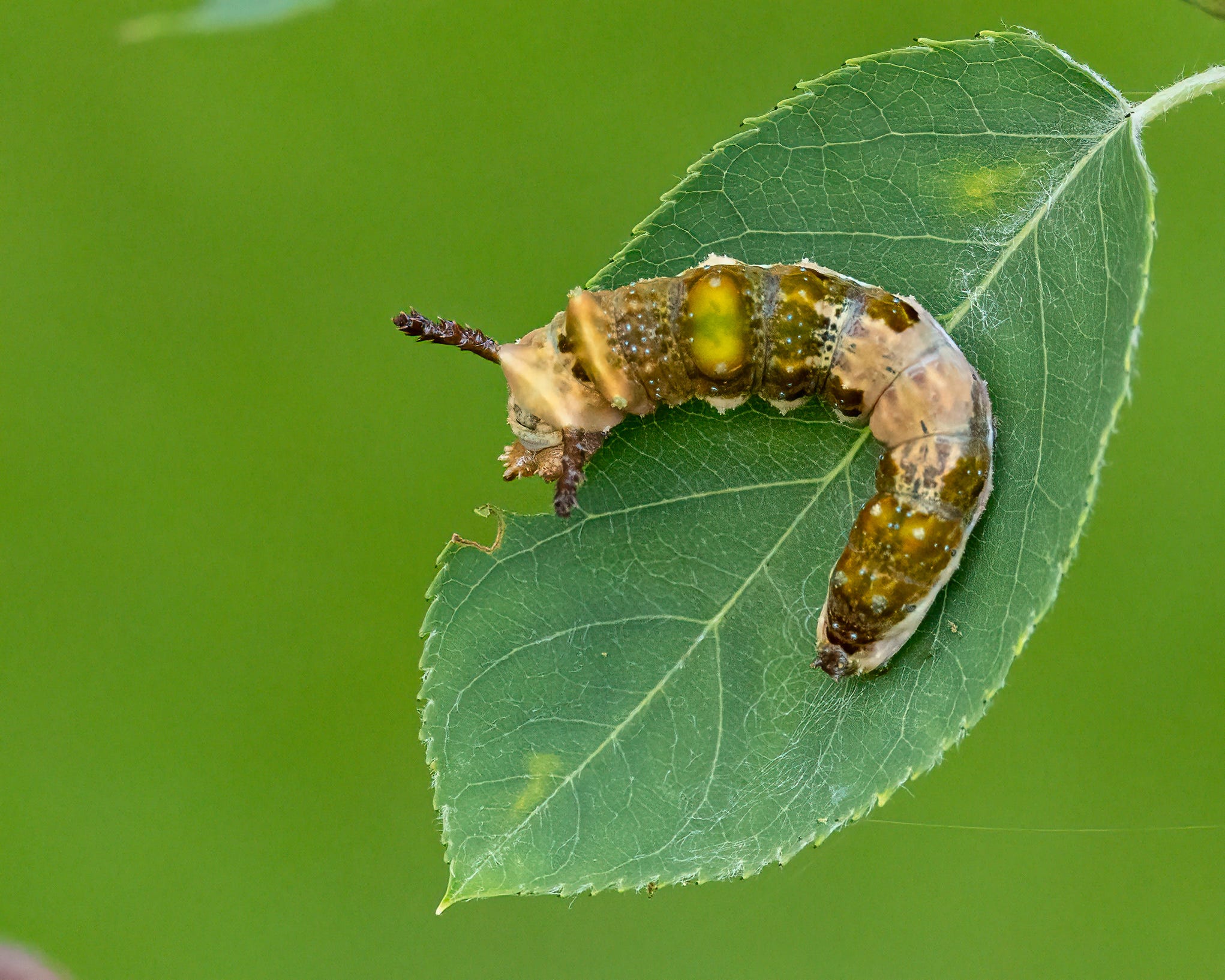
The same thing is happening in corn and soybean fields. We have allowed two plants to dominate our landscape, and two plants are not a home. Insects, birds, and people vanish in their presence, ghosted by monoculture.
The reason our soil and culture are blowing away is that one story shapes our thoughts about food. We have been told over and over that we are feeding the world. Believing and embodying that story is a hard way to go.
Our food system is amazing in some ways. It produces a staggering amount of cheap calories and has maximized yield. In doing so, it has emptied the land of wildlife and people. We have overshot our mark.
I used to farm, and one of my primary motivations for the work I do now is to help farmers. They are my friends. I know how hard it is for them to handle the cognitive dissonance of living within the feeding the world story. They know the majority of our corn and soybeans go to feed livestock and make fuel for our cars. Very little of it is food for people.
We are witnessing a landscape that can’t hold and a story that can’t hold together because both have shallow roots. Soil eroding, the story eroding, everything washing away, disappearing, life becoming thin, life becoming quiet. It doesn’t have to be this way.
Farmers are changing. I recently attended the annual meeting for the Down at the Farms Cooperative in central Illinois. One hundred and thirty farms are members of this co-op, and they sell two million dollars worth of diverse food every year. Just after lunch, Marty Travis, the founder and driving force behind the co-op, asked some of the farmers to tell their story. I remember Doug slowly and reluctantly standing up to tell the group that he used to be a backhoe operator and farm row crops. That meant he spent a lot of time sitting in a machine. This led to back pain and a real crisis in his life. He got laid off from his work operating a backhoe, and that is when he met Marty. Marty invited him to grow vegetables for the co-op. Doug started using his body and his back got better. He ended by saying, in a halting and shaky voice, “Marty showed me that my life still had value … that I still … had something left to give.”
Imagine a version of that story repeated 130 times. That is the power of the co-op. That is culture change in action. These farmers are committed to the co-op because it restores a measure of dignity to their lives.
This dynamic is not limited to this co-op. I used to host town hall meetings and we would have 30 farmers from a community come in and take a few minutes to tell us what matters most to them. They all talked about the same thing. They most value their families, the land, and their communities. I have yet to hear a farmer say the thing they value most is growing the maximum amount of corn and soybeans at any cost.
At a time when so much is out of our control, food offers a tangible way to effect positive change in the world. The way we eat determines how the land is farmed. If more of us chose to eat the products of agroforestry farms, the land would be covered with perennial plants, and the insects and birds would come back.
This is not an all or nothing proposition. If enough people made a small commitment and started buying some local perennial food we could keep more of the soil covered and improve life for people and wildlife.
I never felt at home within the old story. Something always felt off, though for years I could not say what. Only now, past fifty, am I learning to inhabit a different story. I feel relief in stepping off the treadmill and onto steady ground, into relationships with people, land, and birds. This is where my sustenance lies.
Some of us are called to tend the earth and foster life. In doing so we become more whole, like the earth itself. Mystery flowing into mystery.
P.S. If you’d like to begin in your own backyard, our cultivars Savanna Zap and Savanna Zing fit easily into ordinary landscaping. They can be found online at One Green World, Pense Nursery, Food Forest Nursery, GardensAlive, and Peaceful Heritage Nursery. The Blackcurrant we grow came to us from Europe, but it has native cousins here, like clove currant and American black currant, and the birds have been eating their fruit far longer than we have. If you want to plant for the birds first, a native currant is a beautiful place to start.
Comments
Nothing yet. Say the first thing.
Sign in to join the conversation.