
There is an old Japanese story about Momotaro the Peach Boy. An elderly childless couple ate a peach and became young again and had a baby boy. When he was a teenager he traveled across the countryside with a pheasant, a dog, and a monkey that joined him because he shared his millet dumplings with them. They traveled together to a remote island where they battled and defeated demons.
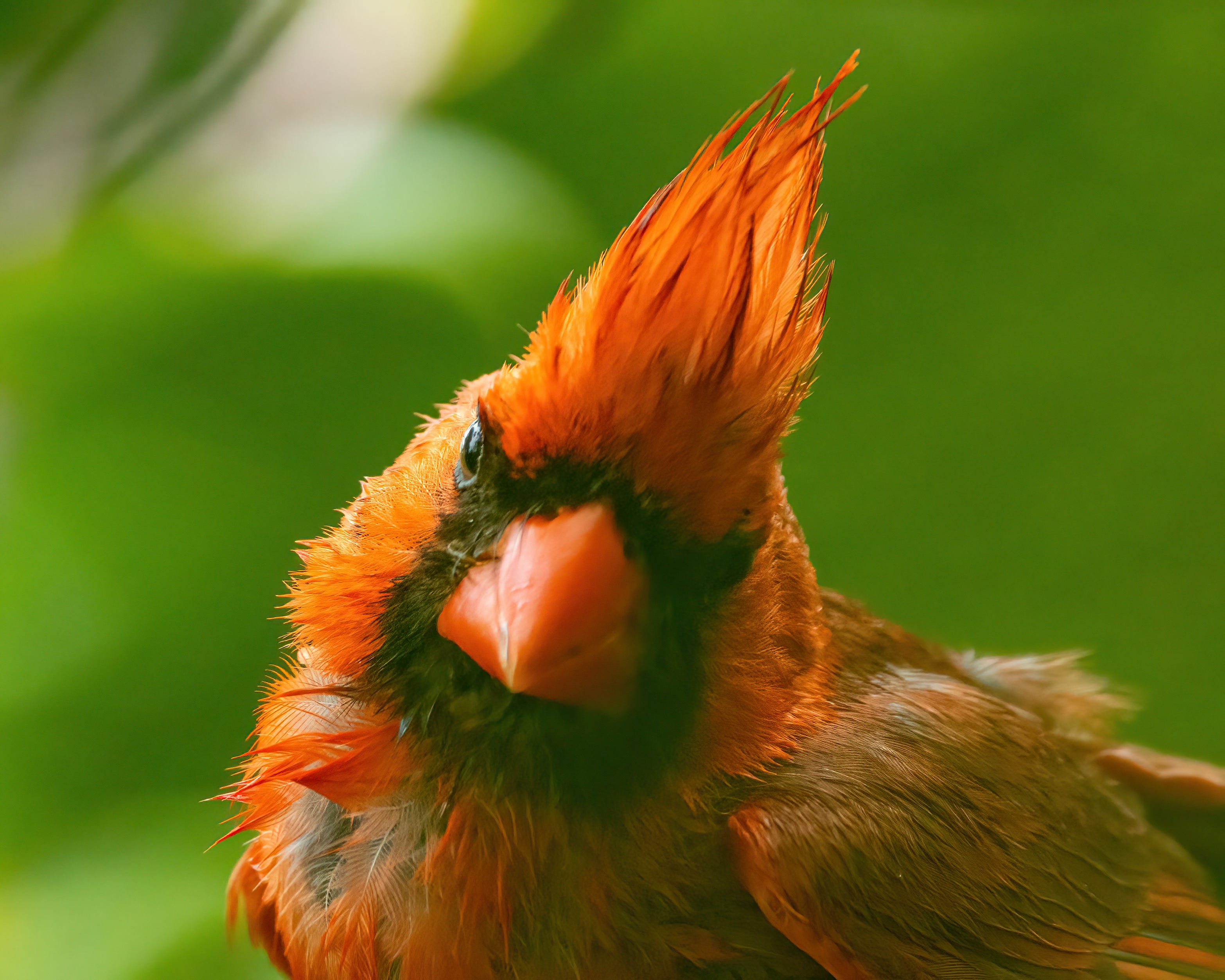
I thought of that old story as I reached for a peach in my garden. I lightly pressed on the shoulder to feel for a little give. I felt ripeness and decided it was ready to harvest, and as I was about to twist and pull, I heard a fluttering of wings, a rush of air, and ruffling of feathers. I peered through a small opening in the leaves and caught a glimpse of a preening male Cardinal. He was bathing in the pond and then he was perched 4 feet over my head.
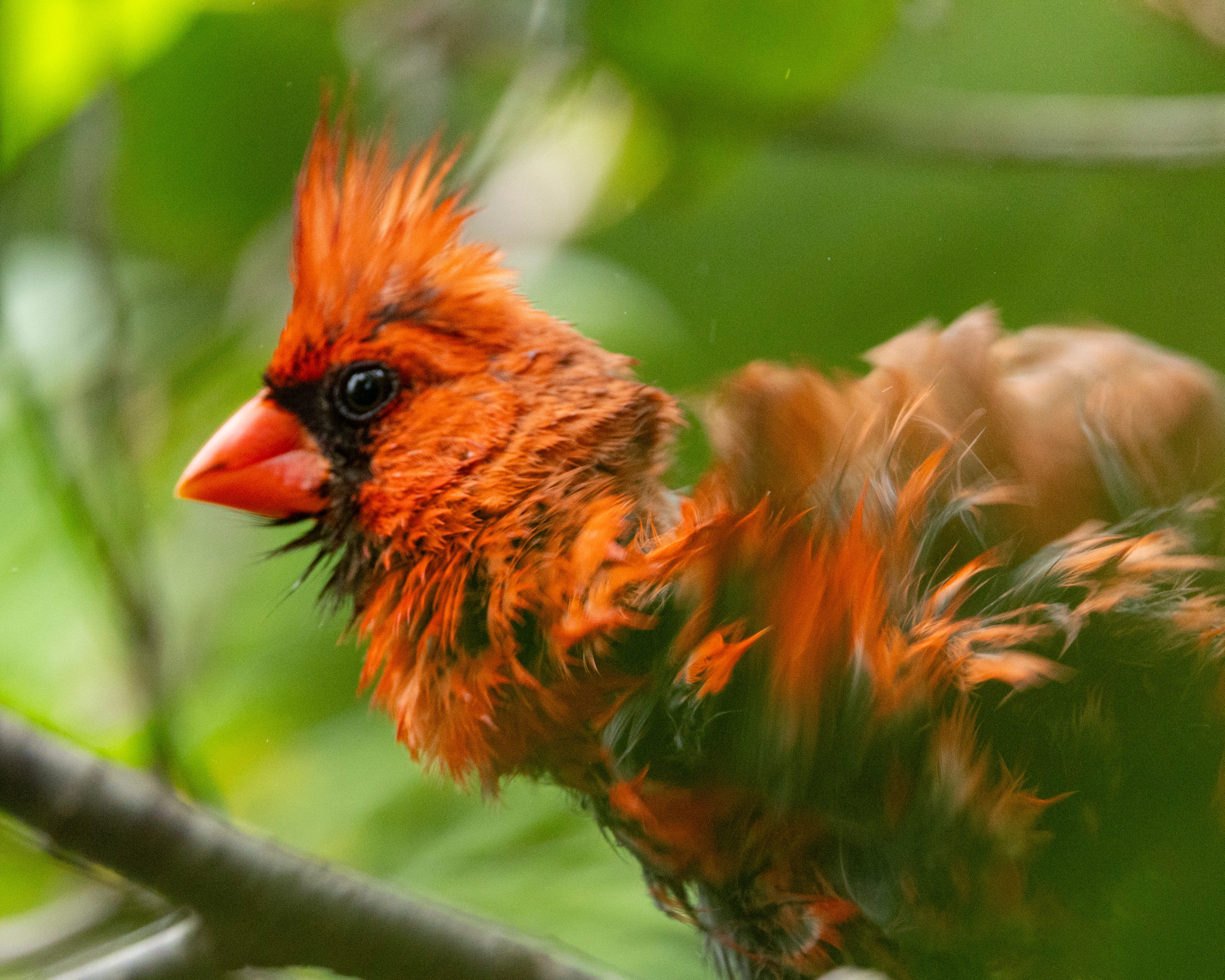
I noticed that he was intent on preening and looking out over the garden. He did not seem to care about me. I slowly turned and walked back to the house to get my camera. I came back and stood in the same place and started taking pictures. That got his attention and he glanced at me while he preened and fluffed.
At that distance, I could see how expressive he was. His wet crest was in constant motion going straight up and then down flat. He was intently watching and listening to other birds, his whole body tuned into his surroundings.
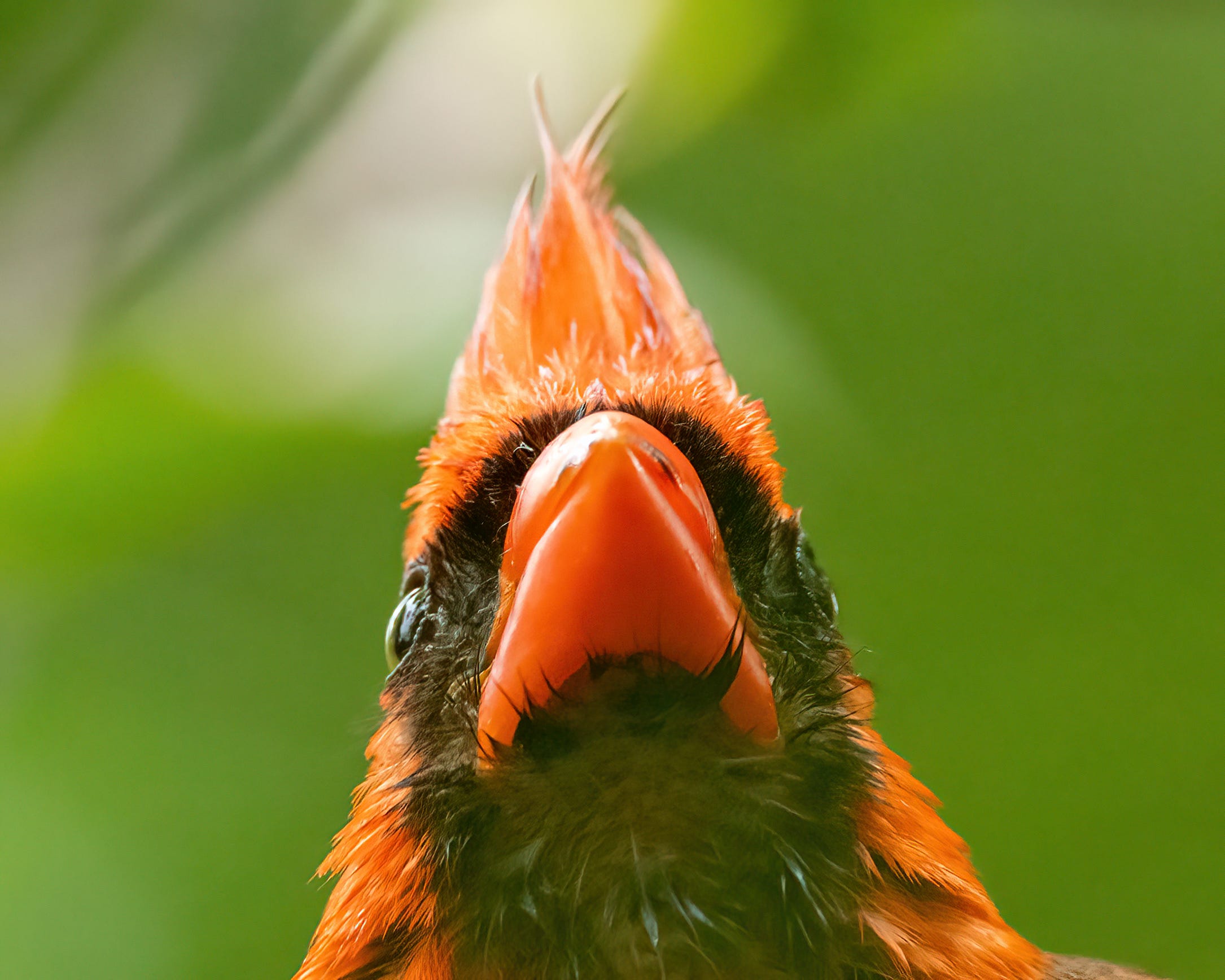
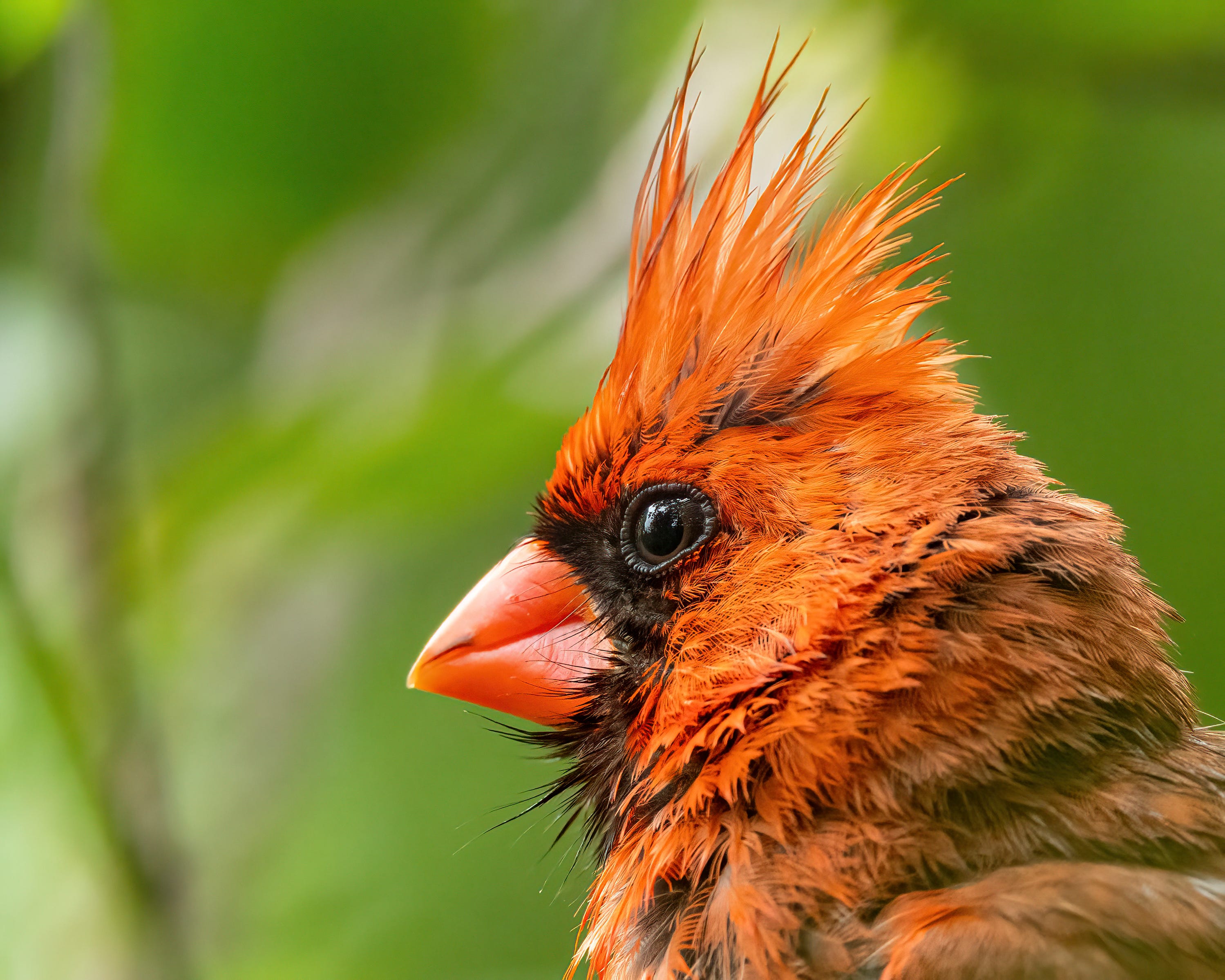
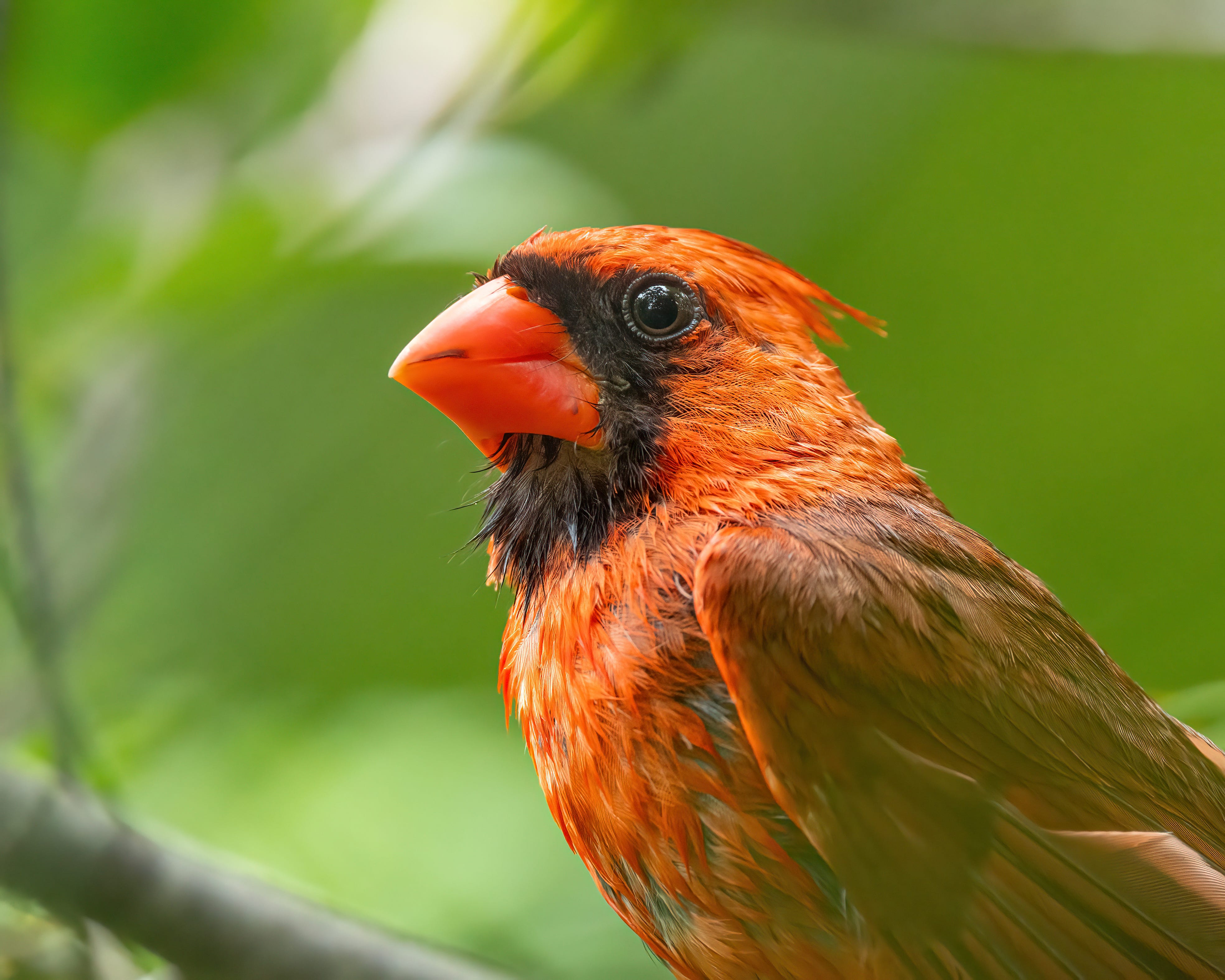
He departed after a few minutes, and I was left wondering why he let me get so close. I have found that if I am working in the garden weeding, harvesting, and pruning, the birds tend to go about their routines. They have learned that if my gaze is on the ground, they are safe. If I stand up straight and look at them, they take notice.
A lot of people tell me they believe that when a Cardinal comes close it signifies a visit from a deceased loved one. It comes up almost every time I post a Cardinal photo. Someone will say their mother believed it, or their grandmother did, and that they think about it every time they see one in the yard. What strikes me about the belief is that the bird is understood to be carrying something. It has come from somewhere else and has something to deliver, and the whole encounter is a message that arrived. The Cardinal is the envelope.
I remember when I was a kid I would notice my grandma standing still looking out the window at our birdfeeder. I would stand next to her and she would comment on how beautiful the Cardinals were. She appreciated all birds, but had a special connection with Cardinals. She also had an abiding interest in genealogy. She created elaborate family trees with the names of our ancestors. She did this long before there was an Internet. Maybe the Cardinals were her conduit.
I can see why we have so many stories about Cardinals. Their constant presence and red feathers provide beauty all year. They tend not to migrate and they do not fade into drab winter plumage, so the bird at the February feeder is the same bird that was there in July, which is worth something to a person who is grieving. And they come to us. They work the hedges and the feeders and the edges of the yard, close to the house, at the hours we are most likely to be looking out the window.
For me, the garden produces vegetables, fruit, solitude, and relationships with birds. I see Cardinals every day. I know their routines and they know mine. I believe they recognize me as an individual.
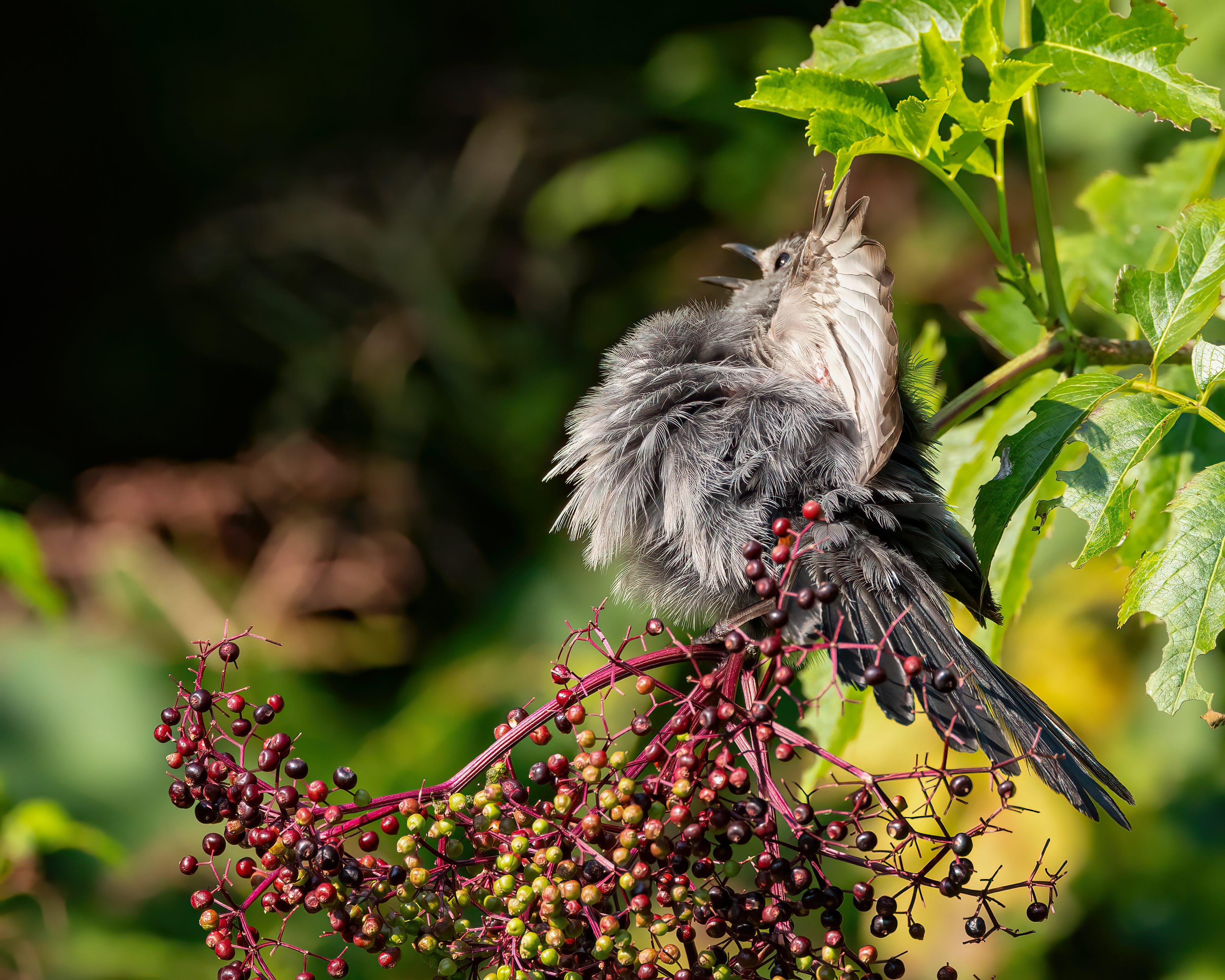
When I am harvesting elderberries, the Catbirds come to the same shrub. They seem to be worried about me taking too much. A few days ago I was filling a bucket with elderberries when a male Cardinal flew in close and started eating Goji berries nearby. He was selecting the darkest red berries, which provide him with sustenance and brilliant feathers. The carotenoid pigments in these berries are what give him his red color.
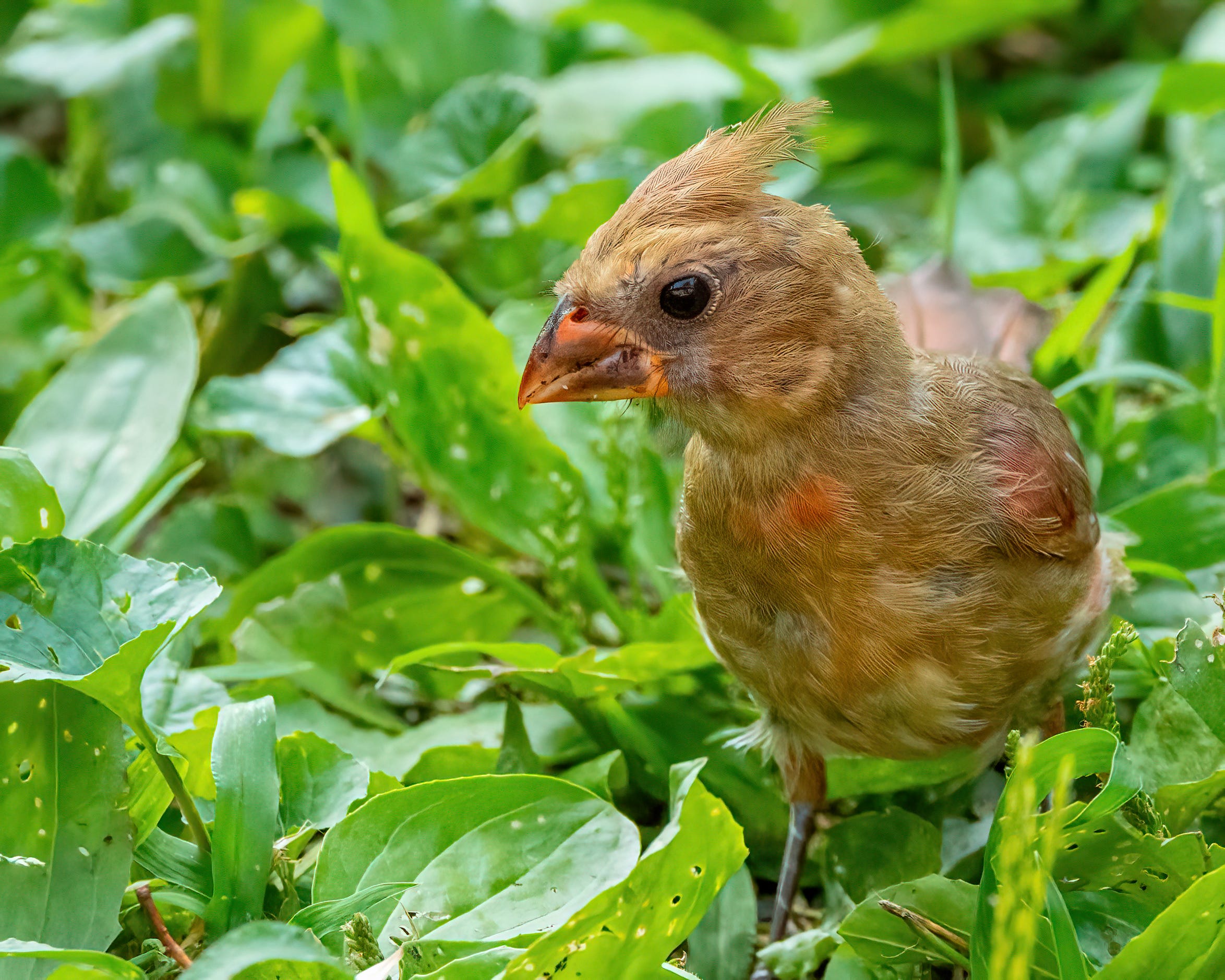
I headed back to the house with my elderberries, and I noticed a juvenile Cardinal at the bird feeder. I took a closer look. The bird was a warm brown with subtle patches of orange mixed in. He had a thin crest and a hint of red in his tail feathers, but the most interesting thing about him was his bill, which was mottled gray and orange. This was a visual display of a garden becoming a bird. He was taking in yellow-orange pigments, and an enzyme in his body added a small amount of oxygen to each end of the molecule, turning yellow into red, and depositing that red in his bill. He was in the process of becoming one of our beloved red birds.
The Cardinals in my garden are made from the fruit and insects in my garden. I am helping create the beauty I so admire. Maybe, if I get close enough and allow my routine to merge with the Cardinals’ routine, I will be able to reach out and hold my grandmother’s hand.
Comments
Nothing yet. Say the first thing.
Sign in to join the conversation.