
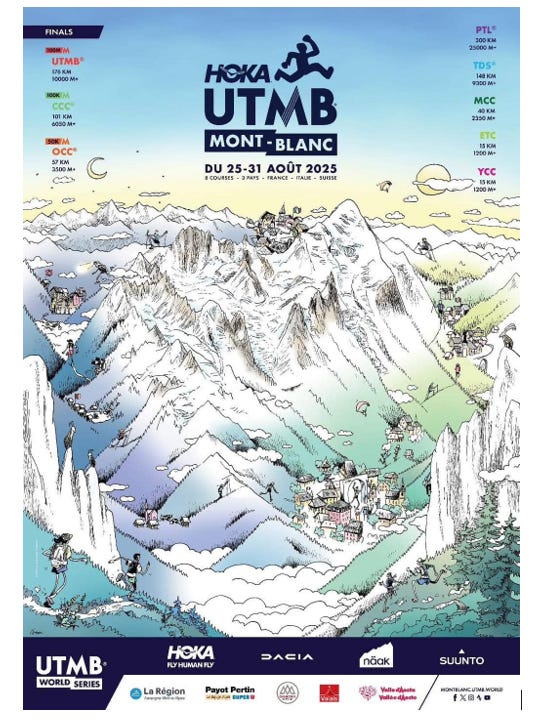
Friday, August 29th, the spectacle will be total: in the morning, the CCC sets off from Courmayeur (101 km and 6,050 m of elevation gain), then, in the evening, comes the main UTMB loop (174 km, 10,000 m of elevation gain, through France, Italy, and Switzerland).
More than 3,000 runners will be at the start, and the story is well known: nearly a third will drop out before reaching Chamonix. Why? Not for a lack of training, but often due to poor effort management.
My message is simple: you can avoid dropping out. How? By following your natural pace.
Can You Really Trust Your Sensations?
The answer is: yes... and no.
For over 15 years, at our Billatraining lab at the University of Évry, we’ve studied how the body regulates exertion. After exploring classical approaches (constant power, constant heart rate, constant lactate), we tested a new hypothesis:
👉 The athlete adjusts their ascent speed based on inspired oxygen pressure (PIO₂), which decreases with altitude.
So, we took the lab into the real world—not just on treadmills but on the slopes of Mont-Blanc and elsewhere, sometimes sacrificing sleep to recharge batteries under a refuge table. Physiology is not just for the gym!
Result: Whether you're an experienced mountaineer or a trail runner, as soon as you have a sufficient VO₂max (≈ vVO₂max ≥ 15 km/h), you automatically adjust your climbing speed with remarkable precision. The big difference?
· Experienced mountaineers use half as much oxygen per meter climbed compared to novices.
The Brain: Your Ally... and Your Safety Net
Our marathon studies have shown that the brain detects early signals of fatigue (as soon as 20 km!): rising energy costs, decreasing speed variability.
👉 This is when you need to listen to yourself.
The danger isn’t lack of willpower but forcing yourself against internal signals by following an overly rigid plan.
Simple Recipe for a Successful UTMB
· ✔ Train by feel: at least 6 months before the race, practice running without relying on a watch.
· ✔ Lighten up on tracking: leave the watch in the locker room. Just keep your phone for safety.
· ✔ Refocus: on climbs, try the “sentence rule”: if you can speak a full sentence clearly, you’re in the right zone.
· ✔ Manage your fuel: prep a simple, mildly sweet drink to avoid hypoglycemia without ruining your stomach.
Hypoglycemia and Perceived Effort (RPE): Beware the Trap
· ⚠ The brain overestimates effort → RPE artificially climbs.
· ⚠ Concentration drops, cognitive fatigue rises.
· ⚠ Hormones (cortisol, adrenaline) amplify perceived effort.
· ⚠ Result: you feel like you’re maxed out… even when you still have fuel in the tank.
👉 Don’t rely solely on RPE during hypoglycemia; it’s a safety net during this extreme race in a merciless mountain setting – don’t forget!
Conclusion: Run With the Intelligence of the Body
The UTMB is not just about physical strength. It’s a dance between the brain, muscles, altitude, and sugar.
Listen to your sensations, respect your limits, accept slowing down, and you’ll discover that the pleasure of running around Mont-Blanc comes less from the stopwatch and more from the clarity of a well-managed effort.
And remember: your sensations never lie about your overall fatigue state, even if your heart rate is low (altitude promotes this) or your lactate level (“the legendary ‘lactate paradox’”).
If you feel that the effort is very hard but you're barely moving forward, it’s probably time to have that homemade sports drink—or the one you’re used to (never experiment with new food or drinks on race day).
Practical Recipe for a 500 mL Soft Flask
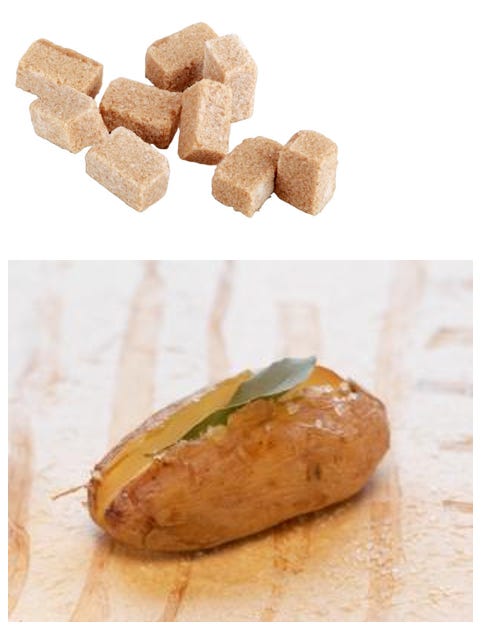
· 1 sugar cube no. 4 (≈ 5g sucrose)
· Add pure glucose to reach a 2:1 glucose/fructose ratio
· Add a pinch of salt (≈ 0.5g)
Aucun post
Comments
Nothing yet. Say the first thing.
Sign in to join the conversation.