
0:00
-17:52
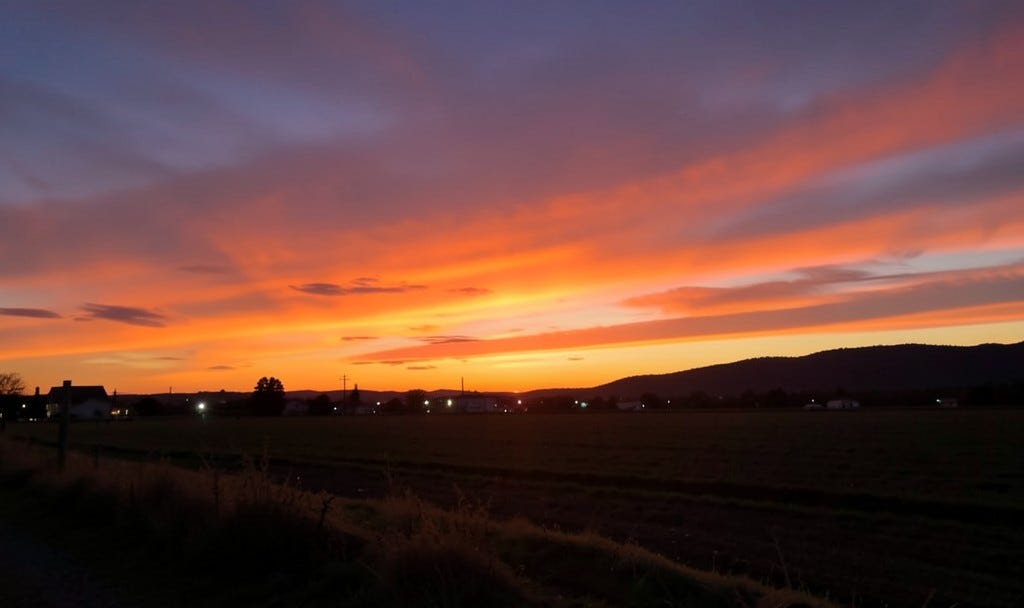
The stunning red and orange colours of a sunset happen because the Sun’s light has to travel through a much thicker layer of Earth’s atmosphere when it is low. This extra air scatters the shorter blue and violet light waves away, allowing only the longer red and orange waves to pass through to your eyes.
Hyderabad Sunset Details
· Sunset Time: 6:39 PM
· Direction: 284° West
· Next Autumnal Equinox: September 23, 2026
A sunset happens in the west. Because the Earth spins from west to east, the sun moves across the sky and goes down on the western horizon every evening.
Why the Exact Spot Changes?
· The sun only sets due west on the exact days of the spring and autumn equinoxes.
· During summer, the sun sets further toward the northwest.
· During winter, the sun sets further toward the southwest.
The sun sets in the west. However, it only sets due west on the exact days of the spring and autumn equinoxes. During other times of the year, the setting point shifts toward the northwest or southwest depending on the season.
Sunset Directions by Season
· Spring and summer: The sun sets toward the northwest.
· Equinoxes (March and September): The sun sets due west.
· Autumn and Winter:
The sunset theory is a philosophical metaphor. It suggests that the most beautiful and magical moments in life are temporary and not meant to last. Just like a sunset, their fleeting nature does not make them less real. Instead of trying to hold on to them, we should enjoy them while they are here.
Core Ideas
· Imperfections and Endings: Things like youth, deep love, and joyful phases end.
· Mindful Presence: We must accept the end. Being fully present matters more than trying to make a moment last forever.
· Lasting Impact: A short experience can still give you a memory that stays with you for a lifetime.
The “3-finger rule” (or finger method) for sunset is a survival trick used to estimate how many minutes of daylight you have left. By holding your hand out at arm’s length, 3 fingers stacked between the sun and the horizon mean you have about 45 minutes of sunlight remaining.
How to Use the Finger Method?
· Extend your arm: Stretch your arm straight out in front of you. Turn your wrist or hand so your fingers are sideways/vertical.
· Line up the horizon: Place your bottom finger right on the horizon line. Do not stare directly at the sun; look slightly to the side.
· Count the fingers: Stack your fingers upwards until the top finger touches or covers the bottom edge of the sun.
· Calculate the time:
Each finger width represents roughly 15 minutes of daylight left.
o 1 finger = 15 minutes
o 2 fingers = 30 minutes
o 3 fingers = 45 minutes
o 4 fingers (one hand-width) = 1 hour
If there is a larger gap of space or more than 4 fingers fit, you can “leapfrog” your other hand on top to keep counting.
Thirty minutes before sunrise is generally called
Civil twilight (specifically starting at civil dawn). During this time, the sun is less than 6 degrees below the horizon, enough natural light is present to see objects clearly, and outdoor activities can proceed without artificial light.
Phases of Morning Twilight
Before the sun crests the horizon, the morning goes through three distinct scientific phases of twilight:
· Civil Twilight: Lasts roughly the 30 minutes right before sunrise; the horizon is distinct and most terrestrial objects are clearly visible.
· Nautical Twilight:
Occurs roughly 30 to 60 minutes before sunrise; outlines of objects are visible, but the horizon is less distinct and bright stars remain visible.
· Astronomical Twilight: Begins about 90 minutes or more before sunrise; the sky is still mostly dark, with only a faint glow on the horizon.
In a romantic context, “sunset” represents the bittersweet end of a relationship or a quiet acknowledgment of deep love paired with letting someone go. It is often referenced through the popular metaphorical phrase, “The sunset is beautiful, isn’t it?”
The Hidden Meaning of the Sunset Phrase
· The Code: Saying “The sunset is beautiful, isn’t it?” is a poetic way to tell someone you love them while simultaneously accepting that your time together is over.
· The Symbolism: Just as a sunset marks the final light of the day before the dark arrives, it mirrors a relationship that has reached its natural and inevitable conclusion.
· The Sentiment: It communicates that even though the romance is fading, the warmth and memories of the connection will always remain.
Other Meanings of “Sunset” in Love
· Impermanence: Sunsets are frequently used as a metaphor for fleeting love—reminding people that things do not have to last forever to be deeply meaningful and beautiful.
· The “Sunset Clause”: In modern dating trends, a sunset clause is an agreed-upon expiration date or timeline (such as six months) in a new relationship or “talking stage” to evaluate compatibility and avoid wasting time if true commitment does not develop.
To calculate time using the sun, extend your arm straight, flatten your hand, and stack your fingers between the horizon and the sun. Each finger equals roughly 15 minutes of remaining daylight. For precise solar time or shadow math, use astronomical formulas or digital tools like the NOAA Solar Calculator.
Estimating Time until Sunset (Hand Trick)
· Extend arm: Fully straighten your arm and turn your hand sideways.
· Touch horizon: Place the bottom of your bottom finger right on the horizon line.
· Count fingers: Stack fingers upward until the top finger touches the bottom of the sun.
· Calculate: Multiply the total number of fingers by 15 minutes.
o 4 fingers = 1 hour
o 8 fingers = 2 hours
Telling Time with Shadows (Sundial Method)
· Place a stick: Push a straight stick or rod vertically into open, flat ground.
· Mark shadows: Note where the tip of the shadow falls and place a small rock or mark.
· Wait and measure: The sun moves 15 degrees across the sky per hour, which shifts your shadow at a steady, measurable pace.
Calculating Exact Solar Time
· Find longitude: Determine your exact local longitude coordinates.
· Apply longitude correction: Adjust by 4 minutes for every degree of difference between your position and your time zone’s standard meridian.
· Use Equation of Time: Factor in the Earth’s changing orbital speed and axial tilt using an USNO Equation of Time Data table, which can shift solar time by up to 15 minutes.
The book and movie Twilight is named after the time of day between day and night. Author Stephenie Meyer chose it from a list of atmospheric words because it represents key themes in the story, including the transition of Bella’s life and the lifestyle of the vampires.
In-Story Meaning
· Safe time for vampires: In the book, Edward explains that twilight is the safest time for his family to move around because it is dim enough to mask them, but not fully dark.
· A border state: It mirrors the middle ground between two worlds, matching Bella’s shift from a normal human to a person involved with vampires.
Selection and Origin
· Original title: Meyer first called the manuscript Forks after the setting in Washington, but her agent asked her to change it to something more evocative.
· Brainstorming: Meyer sent her agent a list of words with good moods, and Twilight stood out as the best fit for the tone of the romance.
The first light of the day is called dawn or daybreak. It is the time in the morning when the sky starts to get light before the sun comes up.
Other Names and Scientific Terms
· Break of day / Crack of dawn: Common phrases for this early time.
· Astronomical dawn: When the sun is 18 degrees below the horizon and the very first faint light shows in the sky.
· Nautical dawn: When the sun is 12 degrees below the horizon and the ocean horizon becomes easy to see.
· Civil dawn: When the sun is 6 degrees below the horizon and there is enough natural light to see things outside.
· Sunrise: The exact moment when the edge of the sun first pops above the horizon.
Twilight is the entire transitional period of soft glowing light between day and night when the sun is below the horizon. Dusk is the specific, darker end of that twilight period just before complete nightfall. If twilight is the long journey into darkness, dusk is the final milestone.
Key Differences
· Definition: Twilight is the atmospheric phenomenon and process of indirect sunlight; dusk is the specific end point of evening twilight.
· Timing: Twilight starts immediately after the sun sets. Dusk occurs at the very end of twilight, right before full night begins.
· Morning Counterpart: Twilight happens twice a day (morning and evening). Morning twilight is called dawn, while evening twilight leads to dusk.
Stages of Twilight and Dusk
Twilight is broken into three distinct scientific phases based on how far the sun is below the horizon:
· Civil Twilight (0° to 6° below horizon): The brightest phase. The horizon is clear, and outdoor activities are easy. Civil dusk marks the end of this phase.
· Nautical Twilight (6° to 12° below horizon): The horizon is dim, and major stars appear. Nautical dusk marks this midpoint.
· Astronomical Twilight (12° to 18° below horizon): The sky is nearly dark. Astronomical dusk marks the absolute end of any remaining solar light.
Comments
Nothing yet. Say the first thing.
Sign in to join the conversation.