
It occurs when Earth is positioned directly between the Sun and the Moon. This alignment happens once every lunar cycle, which takes about 29 days to complete.
0:00
-10:57
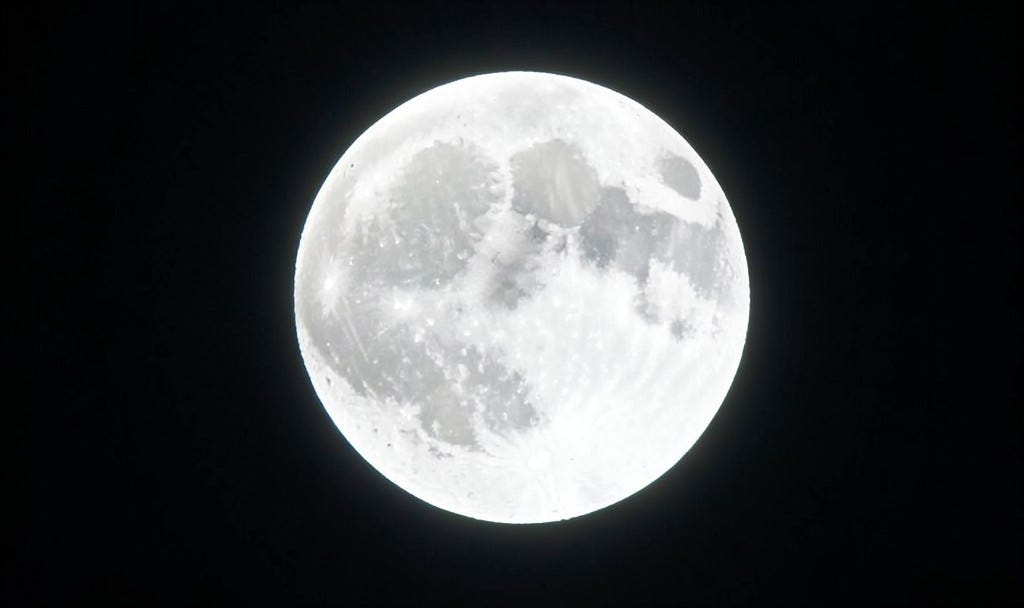
A full moon happens when the Sun, Earth, and Moon form a straight line in space. During this alignment:
· The side of the Moon facing Earth is completely bathed in sunlight.
· The Moon rises in the east just as the Sun sets in the west.
· The Moon remains visible in the sky for the entire night.
Because this is a precise alignment, the exact moment of a full moon lasts only for a split second. However, to the human eye, the Moon appears full for about two to three nights.
Ocean Tides and Fish Activity
The full moon has a noticeable physical impact on Earth due to the combined gravitational pull of the Sun and the Moon:
· Spring Tides: When the Sun and Moon pull together (during a full moon and new moon), ocean tides experience their maximum range. This creates the highest high tides and the lowest low tides.
· Wildlife Changes: The increased night time brightness often stimulates greater fish activity, improving their ability to see and find food.
Names of the Full Moons
Each full moon throughout the year has a traditional name. These names date back to Native American, colonial American, and European traditions, and they typically relate to agricultural seasons or animal and plant behaviours.
For example:
· Harvest Moon: The full moon that occurs closest to the autumnal equinox, which helps farmers work late into the night by its light.
· Blue Moon: Typically refers to the second full moon that occurs in a single calendar month, which happens once every two or three years.
Lunar Eclipses
The full moon is the only time a lunar eclipse can occur. A lunar eclipse happens when the Moon passes through Earth’s shadow.
· Because the Moon’s orbit is tilted, an eclipse does not happen during every full moon.
· When a total lunar eclipse does happen, sunlight filters through Earth’s atmosphere, causing the Moon to appear a glowing red, which is often called a “Blood Moon”.
The next full moon is on August 28, 2026, at 12:19 a.m. EDT. It is known as the Sturgeon Moon. You can track upcoming phases in real time using the Space Moon Phases Guide.
Upcoming Full Moon Dates in 2026
· August 28: Sturgeon Moon
· September 26: Corn Moon
· October 26: Hunter’s Moon
· November 24: Beaver Moon
· December 23: Cold Moon
A full moon has a very small, measurable effect on human sleep, but scientific research shows it does not cause dramatic changes in behaviour, mental health crises, or crime.
Sleep and Brightness
· Less deep sleep: Some studies show people spend less time in deep sleep and take longer to fall asleep during a full moon.
· Extra light: The bright light of the full moon can disrupt natural sleep cycles, especially if blinds or curtains are open.
· Tiredness and mood: Minor sleep loss can make people feel more irritable or short-tempered the next day.
Why the Myth Persists?
· Confirmation bias: People easily remember chaotic or strange events that happen during a full moon and forget when those same events happen on other nights.
· Cultural expectations: Beliefs passed down through history and folklore make people expect unusual behaviour, which can influence how they notice and react to situations.
Scientific studies show that a full moon has little to no direct biological effect on women. While historical folklore and some small studies suggest links to menstrual cycles or sleep changes, comprehensive modern research finds no consistent proof that the lunar phase alters female health or cycles.
Menstrual Cycles
· No strong link: Large studies tracking thousands of women find that periods do not reliably start on a full moon.
· Random timing: Period start dates line up with the moon no more often than pure chance.
· Modern light: Artificial indoor lights affect human circadian rhythms far more than natural moonlight does.
Sleep and Mood
· Slight sleep shifts: Some people take longer to fall asleep or sleep less during a full moon.
· Not gender-specific: Sleep disruptions happen to all genders equally, mostly due to extra light outside.
· Power of belief: Expecting changes during a full moon can cause stress or poor sleep, known as the placebo effect.
A full moon happens when the Earth sits directly between the sun and the moon. This alignment lets the sun fully light up the face of the moon we see. It occurs roughly once every 29 days, making the moon look like a bright, round circle in the night sky.
Scientific Facts
· Alignment: The sun, Earth, and moon form a straight line in space.
· Tides: Ocean tides grow stronger. The gravitational pull creates higher high tides and lower low tides.
· Lunar Eclipses: A lunar eclipse can only happen during a full moon when Earth’s shadow falls on the moon.
· Sleep Changes: Some studies show people might sleep slightly less or take longer to fall asleep due to the extra night light.
Myths and Human Behaviour
· Craziness: Old myths say full moons make people act wild. Real studies show no strong link to high crime rates or major mental health crises.
· Energy Levels: Many people feel more awake or emotional simply because the night is much brighter.
· Traditions: Many cultures use this time for quiet reflection, meditation, or letting go of old habits.
Comments
Nothing yet. Say the first thing.
Sign in to join the conversation.