
0:00
-16:59
Why It Happens?
· Earth spins: Our planet turns toward the east.
· View changes: Turning toward the sun brings the eastern horizon into view first.
· Daily cycle: Spinning creates the illusion that the sun travels.
Important Details
· Exact directions: The sun only rises due east on the equinoxes.
· Seasonal shifts: It rises slightly north or south of east during other months.
The correct word for the blank is rises (present tense) or rose (past tense). For a general fact or universal truth, use the simple present tense form: “The sun rises in the east.”
Grammar and Usage Details
· Tense: Use rises for habitual actions or scientific facts. Use rose if you are writing about a specific past event.
· Subject-Verb Agreement: “The sun” is a singular third-person subject, which requires the verb to take an “s” ending (rises).
Yes, it is correct to say “The sun rises in the east” as a standard, everyday English expression for a general truth. However, you need the word “The” before both “sun” and “east” for proper grammar.
Grammar and Phrasing
· Use “in the east”: It is the standard idiom to use the preposition “in” when describing the general direction where the sunrise happens. Saying “from the east” sounds awkward because it implies a point of physical origin rather than a location.
· Use “The”: A complete sentence requires the definite articles: “The sun rises in the east”.
Scientific Reality
· Apparent movement: Technically, the Sun does not move around the Earth. The Earth rotates from west to east, making it look like the Sun is coming up in the east.
· Exact spot changes: The Sun only rises due east on the spring and autumn equinoxes. On other days, it shifts slightly toward the northeast or southeast depending on the time of year and your location.
The sun rises in the east and sets in the west. This happens because the Earth spins toward the east on its axis.
Why and How It Works?
· Earth spins: Our planet turns from west to east. As it spins, your view moves into the sunlight.
· Exact direction: The sun only rises due east on the spring and autumn equinoxes.
· Seasonal shifts: On other days, it rises slightly north or south of due east depending on the time of year and your location.
Yes, the sun rises in the east. This happens because the Earth spins toward the east. As our planet turns, it brings the eastern horizon up into the sunlight.
Why It Varies?
· Exact East: The sun rises exactly due east on only two days each year, which are the spring and fall equinoxes.
· Summer Shift: During summer, the sun rises further to the northeast.
· Winter Shift: During winter, the sun rises further to the southeast.
· Earth’s Tilt: These changes happen because the Earth is tilted on its axis as it travels around the sun.
The phrase “the sun rises in the east” means that the Earth spins from west to east on its axis, which makes the sun appear to come up over the eastern horizon every morning. It also serves as a universal truth, a symbol for dependable natural laws, or a metaphor for a fresh start.
Scientific Meaning
· Earth’s spin: Our planet turns toward the east.
· Visual trick: This spin makes the sun look like it moves across the sky from east to west.
· General rule: It only rises exact due east on the spring and fall equinoxes.
Symbolic and Metaphorical Meaning
· New starts:
Dawn brings light, hope, and a brand-new day.
· Reliability: It represents something that is completely certain and never changes.
· Ancient traditions: Many cultures look to the east as a sacred source of life and awakening.
When the sun rises, the exact moment is called sunrise (or sunup), while the early morning period of light before the sun appears is called dawn.
Related Morning Terms
· Sunrise: The exact moment when the top edge of the sun appears over the horizon.
· Dawn: The time before sunrise when the sky starts to get bright.
· Twilight: The general soft light in the sky caused by the sun before it rises or after it sets.
· Daybreak: Another common word for the very start of the day when morning light first shows.
According to global sleep data from the World Population Review, South Africa wakes up the earliest in the world with an average wake-up time of 6:24 AM. Close behind are Colombia (6:31 AM) and Costa Rica (6:38 AM).
Top Early-Rising Countries
· South Africa: 6:24 AM
· Colombia: 6:31 AM
· Costa Rica: 6:38 AM
· Indonesia: 6:55 AM (earliest in Asia)
Why People Wake Up Early in These Places?
· Work and Commute Culture: Early start times for schools and businesses help beat heavy traffic.
· Consistent Daylight: Countries near the equator (like Colombia and Indonesia) experience roughly 12 hours of daylight year-round, with the sun rising near 6:00 AM every day.
· Social Norms: Local culture and traditions place a high value on morning productivity.
The phrase “the sun rises” literally means the daily appearance of the sun above the horizon in the morning caused by the turning of the Earth. Symbolically, it represents a fresh start, new hope, and the beginning of a new day.
Literal and Scientific Meaning
· Earth’s Rotation: The sun does not actually move; the Earth spins on its axis, making the sun appear to come up in the east.
· Time of Day: It marks dawn, daybreak, or the very start of daylight.
Figurative and Symbolic Meanings
· Hope and Renewal: A new sunrise is often used as a sign that tough times will pass and a better day is coming.
· Idioms: Phrases like “think the sun rises and sets on someone” mean you completely adore that person and find them the most important person in the world.
The hours between 3:00 AM and 5:00 AM are commonly called the predawn hours, the wee hours of the morning, or the middle of the night. Depending on the exact time of year and your local sunrise time, 5:00 AM often marks the very beginning of the early morning or dawn.
Common Names for This Time Frame
· Predawn hours: The quiet window of time right before the sun starts to rise.
· The wee hours: A colloquial expression for the early hours of the morning right after midnight.
· Dead of night: Often used for the darkest, deepest part of the night, usually spanning from midnight to just before dawn.
The spiritual meaning of sunrise represents the triumph of light over darkness, new beginnings, inner awakening, and divine hope. Across many cultures and faiths, the rising sun is a sacred reminder that life is cyclical, offering a daily chance for rebirth, clarity, and spiritual renewal.
Core Spiritual Themes
· Light Over Darkness: The dawn proves that night is temporary, symbolizing the defeat of ignorance, evil, or despair by wisdom and truth.
· Fresh Starts: Each sunrise acts as a reset button, letting you leave yesterday’s struggles behind and step into fresh potential.
· Spiritual Awakening: The first rays mirror the soul waking up from the sleep of unconsciousness into higher awareness.
· Divine Presence: Many traditions view the quiet hours of dawn as a thin veil between worlds, making it an ideal time for prayer and meditation.
Cultural and Religious Views
· Hinduism: The sun (Surya) is revered as a living deity and life-giver. Praying or practicing yoga at dawn honours the divine energy sustaining the universe.
· Christianity: Sunrise symbolizes resurrection, Christ’s victory over the grave, and God’s mercies being made new every morning.
· Indigenous & Earth-Based Traditions: Dawn is greeted with gratitude as the earth re-energizes, honouring the cardinal direction of the East where new life begins.
A sunrise universally symbolizes new beginnings, hope, and a fresh start. It represents the triumph of light over darkness, the promise of a brighter future, and the continuous, cyclical rebirth of life each day.
Core Meanings
· New Beginnings: A clean slate to leave the past behind and try again.
· Hope and Optimism: Proof that light always returns after the dark of night.
· Awakening: A metaphor for spiritual enlightenment, clarity, and higher consciousness.
· Resurrection and Rebirth: A sacred sign of life starting over or overcoming adversity.
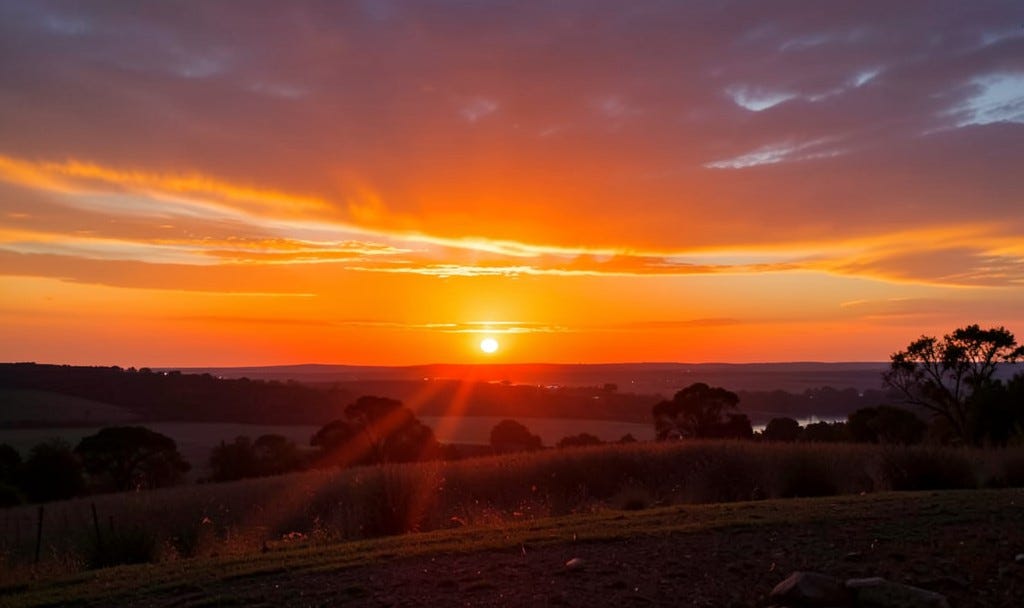
When the sun rises the Earth spins and turns your location into the sunlight. The sun does not actually move; the spin of the planet makes it look like the sun comes up in the east. This event brings daylight, changes the colours of the sky, and wakes up living things.
The Science of Sunrise
· Earth spins: Our planet turns toward the east every 24 hours.
· Bending light: Air around the Earth bends light, so you see the sun before it reaches the real edge of the horizon.
· Red and orange sky: Sunlight travels through more air when the sun is low, which scatters blue light and lets red and orange light reach your eyes.
Changes on Earth
· Temperature rises: The sun begins to warm the ground and air.
· Nature wakes up: Birds start to sing, and daytime animals begin to move.
· Plants react: Leaves and flowers open up to catch the new light.
Comments
Nothing yet. Say the first thing.
Sign in to join the conversation.