
Cardinal Arthur Roche sat in his Vatican office overlooking St. Peter’s Square and finally delivered the verdict that traditional Catholics had been instructed for more than a year to pretend was still undecided.
Pope Leo XIV will not repeal Traditionis Custodes.
He will not restore Summorum Pontificum.
He will not free the traditional Roman Mass.
According to Roche, Leo has already settled the question.
The interview should be read as the invoice for Trad Inc.’s “long game.”
Before the conclave, Michael Matt promised to resist “Francis II to his face.” After Robert Prevost appeared on the balcony, Matt suddenly found reasons to wait. An unnamed former student reportedly liked the Latin Mass. The new pope wore a mozetta. He spoke softly. He sang in Latin. Perhaps something had happened in the conclave. Perhaps conservative cardinals had secured a quid pro quo. Perhaps Rome would reward silence with liturgical relief.
Critics who examined Leo’s actual record were derided as amateurs, zombies, morons, headless chickens, click-chasers and reckless pessimists. Matt urged traditional Catholics to “cool it,” “sit in the system humbly,” and give the new pope time. Ten days into the pontificate, he announced that Leo was definitely “not Pope Francis II.”
Roche has now explained what that patience purchased.
Nothing.
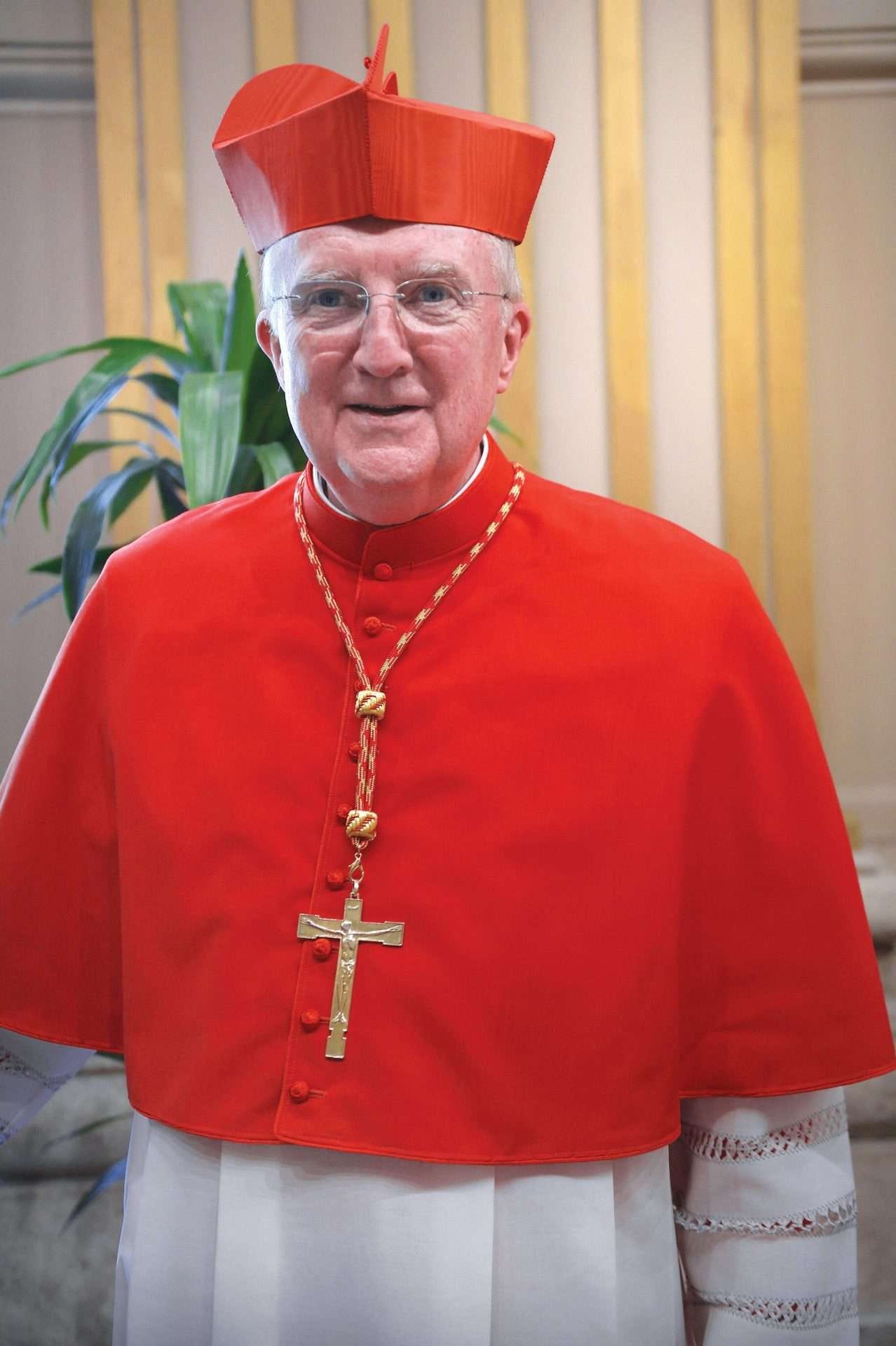
In his July 29 interview with The Tablet, Roche was asked whether restricting the traditional Mass would remain as important under Leo as it had been under Francis.
His answer left no opening:
“Pope Leo is not going to change Traditionis Custodes, and he’s not going back to Summorum Pontificum.”
Roche then mocked the claim of persecution. When he meets Catholics who want the older liturgy, he said, he asks them: “The Holy Father has given you that, so what’s the problem?” They supposedly cannot answer.
Here is the answer.
The pope has not “given” Catholics their inherited Roman liturgy in any meaningful sense. He has maintained a system in which the rite may exist only by permission, under surveillance, away from normal parish life, with new communities discouraged and priests required to demonstrate ideological acceptance of the postconciliar settlement.
Traditionis Custodes declares the books of Paul VI and John Paul II the “unique expression” of the Roman Rite’s law of prayer. It hands bishops authority to limit the old Mass while directing them to ensure that authorized groups do not question Vatican II or the legitimacy of the liturgical reform.
Benedict XVI had said the opposite juridically. He declared that the 1962 Missal had “never been juridically abrogated” and was therefore “in principle, always permitted.” No priest required permission from Rome or his ordinary to celebrate it privately.
Francis did not merely regulate Benedict’s settlement. He reversed its governing principle. Benedict said the Mass had never been abolished and did not belong to the bishop as a favor to distribute. Francis placed it behind the bishop’s gate.
Leo has kept the gate locked.
Roche’s claim that the pope has “given” traditional Catholics the old Mass resembles a jailer boasting that he has given a prisoner sunlight because the cell contains a narrow window.
Roche’s defense of the new liturgy was equally revealing.
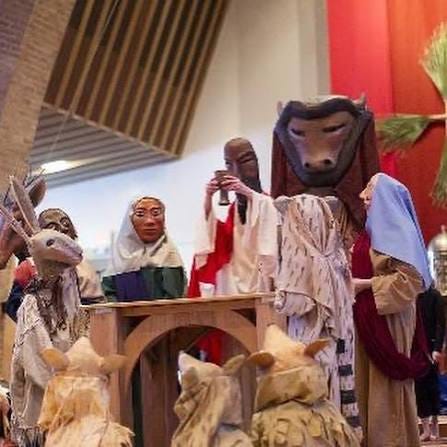
He said Vatican II wanted the Church to become “more missionary” and that the “abundant diet of Scripture” now supplied through the reformed rites “wasn’t available to us before.” He contrasted the traditional Mass, where the priest acts on behalf of the congregation, with the reformed understanding that the baptized are a priestly people and “they too are celebrating with the priest.”
The first statement is historically misleading.
The traditional Mass did not deprive Catholics of Scripture. Its Ordinary is saturated with Scripture. Its Introits, Graduals, Tracts, Alleluias, Offertories and Communion antiphons are overwhelmingly biblical. Every Mass contains an Epistle and Gospel. Its prayers embody biblical language so thoroughly that Catholics often absorb Scripture without hearing a verse announced as a classroom citation.
The reformed lectionary contains a greater quantity and variety of passages. That is a quantitative difference. It does not establish that Scripture was previously “unavailable,” nor does it prove that multiplying readings automatically produces missionary vitality.
The Council itself ordered that Latin be preserved in the Latin rites and that Gregorian chant retain pride of place, even while allowing wider use of the vernacular and a richer presentation of Scripture. The liturgical product Roche defends cannot be identified simplistically with everything the Council Fathers prescribed.
Archbishop Sample inadvertently confirms the point. In the interview quoted below, he admits that Sacrosanctum Concilium was “very badly implemented” and that the Council Fathers would not have recognized some of what followed.
That admission destroys the usual defense.
Catholics are ordered to accept the new liturgical order as the necessary expression of the Council while its defenders concede that the Council Fathers would scarcely recognize what was manufactured in their name.
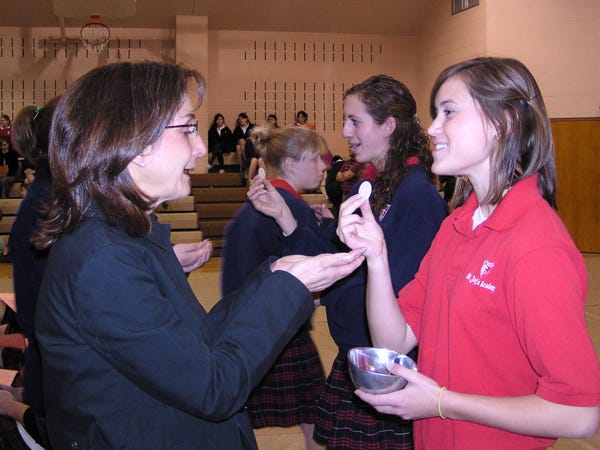
Roche’s statement that the baptized “are celebrating with the priest” requires an essential distinction that his language obscures.
The faithful genuinely participate in the Eucharistic sacrifice. They unite themselves spiritually with the victim and offer their prayers, lives, sufferings and acts of worship through the priestly mediation of Christ.
They do not offer Mass in the same way as the ordained priest.
Even the conciliar catechism states that the common priesthood and ministerial priesthood differ essentially, not merely in degree. A 1983 doctrinal instruction explains that only the ordained priest can confect the Eucharistic mystery in persona Christi and offer it in the name of the Christian people.
The congregation is not a collective celebrant possessing the priest’s sacramental power.
This distinction lies near the heart of the traditional liturgy. The priest approaches the altar as a consecrated mediator, offering sacrifice to God for the living and the dead. His eastward orientation, whispered Canon, separate Confiteor and carefully guarded sanctuary all communicate that he is doing something no baptized assembly can perform for itself.
The modern liturgical environment repeatedly blurs that truth. The altar becomes a table facing the people. Lay readers, servers, ministers and commentators occupy the sanctuary. The priest increasingly appears to preside over the community’s collective performance.
Roche’s formulation does not formally deny the ministerial priesthood. It reveals the ecclesiology that made the new rite possible: the Mass reconceived primarily as the action of the assembled priestly people, coordinated by an ordained president.
The old liturgy makes the unique priesthood visible.
The new vocabulary makes it necessary to add footnotes explaining that everyone is not really doing the same thing.
Roche’s interview is devastating because Michael Matt and his allies had persuaded traditional Catholics that restraint might influence Leo.
On election night, Matt relied upon an unidentified former student who reportedly considered Prevost favorable to freedom for the Latin Mass. He compared Leo to Benedict and suggested that “something happens with these men when they become popes.”
Ten days later, he declared:
“Our new pope is not Pope Francis II.”
Matt said the reign of terror was over. He speculated that Leo might be an “honest liberal,” a “truth seeker,” perhaps a man beginning to change. The documentary record consisted largely of vestments, temperament, Latin phrases and favorable rumors.
Leo’s actual program was visible from the beginning. He praised Francis, affirmed the path of Vatican II, embraced synodality and retained the machinery of the previous pontificate.
Matt measured Leo against Francis’s manners rather than Francis’s program.
A revolution can hire an adult.
When critics pointed this out, Matt did not merely disagree. He weaponized hope against them. His side supposedly possessed patience, wisdom and Catholic instinct. The critics were angry, inexperienced and spiritually reckless. They might “dash hope to hell” by speaking too soon.
Christian hope rests in Christ’s promises. It does not require optimism about Robert Prevost.
A Catholic could hope supernaturally while concluding, accurately, that Leo would preserve Francis’s liturgical policy. That is precisely what happened. Leo maintained Traditionis Custodes. His government sanctioned the SSPX. Roche says Summorum Pontificum is not returning. Covadonga’s pilgrims, as we will see, still cannot conclude their pilgrimage with the traditional Mass inside the basilica.
The strategy has failed according to its own stated objective. The people who read Leo correctly were insulted. The men who read him incorrectly demanded silence.
Now the verdict comes from Leo’s own liturgical prefect, and those men owe their readers more than another explanation of how the long game is secretly working.
They owe them an apology.
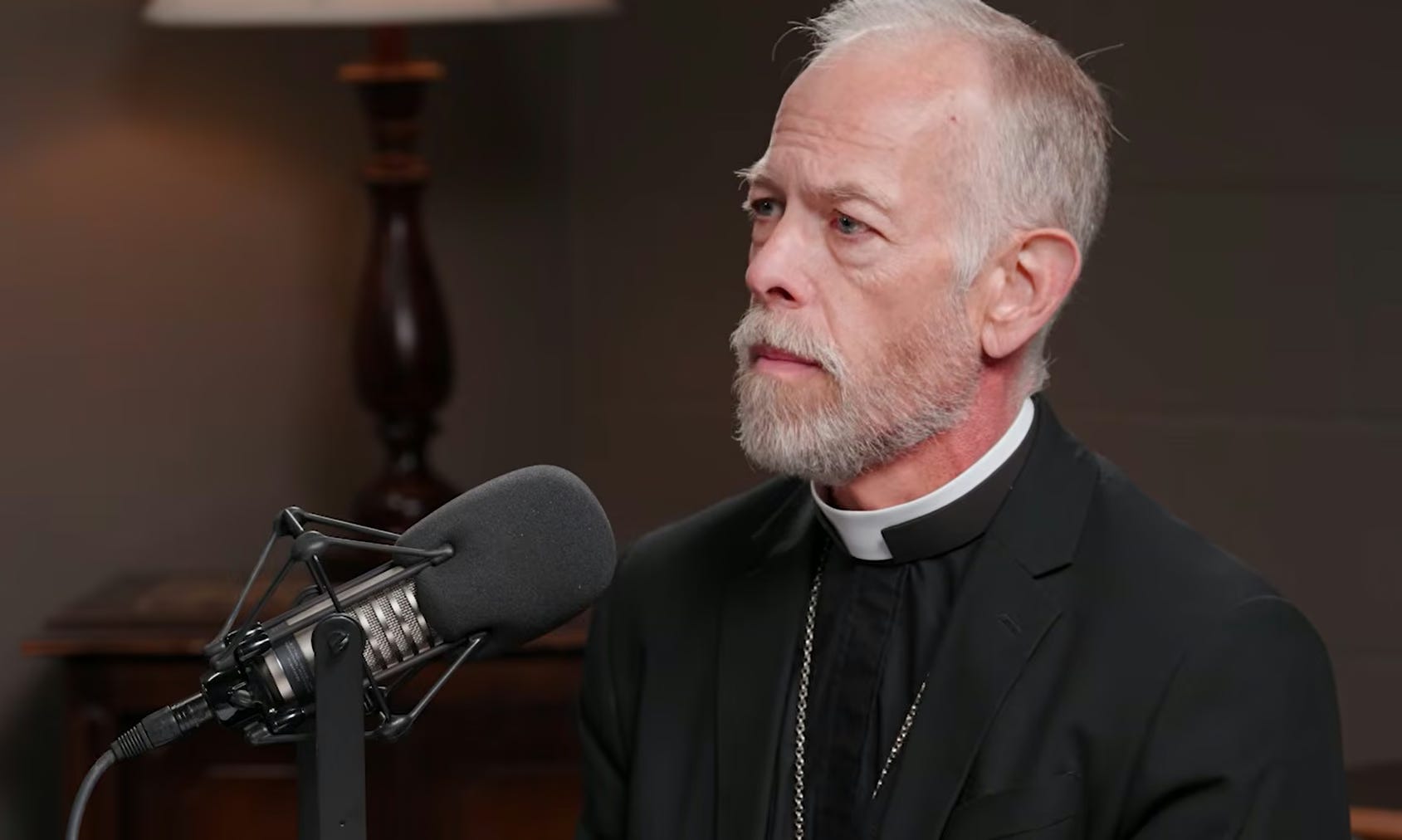
Archbishop Alexander Sample now says the SSPX has “become something else” by consecrating bishops without papal authorization.
The consecrations are unquestionably serious. Episcopal consecration without a papal mandate cannot be dismissed as an administrative technicality. It directly concerns hierarchy, jurisdiction and visible ecclesiastical unity. Leo warned the Society to desist, calling the proposed act schismatic; after the July 1 consecrations, the Dicastery for the Doctrine of the Faith declared the consecrators and newly consecrated bishops excommunicated.
The Society answers that an emergency threatening the transmission of faith, priesthood and liturgy supplied the necessity for its act.
That defense must first be answered.
Sample does not answer it by saying the SSPX views itself as a faithful remnant or by declaring that its prayer for the pope is “just words.” That is an assertion about interior sincerity. The Society publicly recognizes Leo, names him in the Canon and denies that it intends to establish a rival papacy.
Its position may contain canonical tensions. “Lip service” is not an argument.
Sample’s own interview supplies evidence for the Society’s state-of-necessity case. He acknowledges wild liturgical experimentation after Vatican II, says the Council’s liturgical constitution was badly implemented and admits that Council Fathers would not recognize some of the resulting worship. He even concedes that “illegitimate developments” followed the Council.
Then he tells traditionalists to remain inside the institution responsible for those developments and suffer.
How much illegitimate development is required before the emergency becomes real The traditional Roman rite is restricted. Catholic children grow up without access to it. The pope’s chief liturgical official publicly announces that the restrictions will remain. The episcopate has tolerated generations of doctrinal confusion and liturgical degradation.
Yet Sample’s argument reduces the crisis to a test of submission: stay in the structure, accept the deprivation and suffer obediently.
He says the SSPX has “become something else.”
By his own account, the postconciliar liturgy became something the Council Fathers themselves would not have recognized.
He has identified the transformation and accused the wrong defendant.
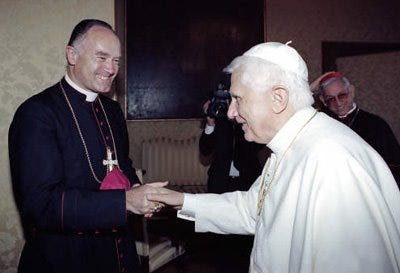
Sample says Benedict told him personally that Summorum Pontificum was issued to reconcile the Church with her past rather than primarily to reconcile the SSPX.
That may be entirely true.
It does not help Sample’s case.
A Church requiring reconciliation with her own past has already admitted a rupture in consciousness. The Roman liturgy was not an embarrassing adolescent phase from which the Church needed to recover. It formed saints, missionaries, martyrs and civilizations.
Benedict’s phrase was an indictment of the postconciliar mentality that treated what had been sacred for centuries as suddenly dangerous.
The SSPX controversy arose from that same rupture. Archbishop Lefebvre resisted because the old Mass, priesthood and doctrine were being displaced by a new religious settlement. Reconciling the Church with her past necessarily touched the substance of his complaint, even if bringing the Society into canonical regularity was not Benedict’s exclusive motive.
Francis shattered that attempted reconciliation.
Roche now says Leo will not rebuild it.
Sample’s personal recollection of Benedict therefore strengthens the traditionalist charge: Rome once recognized that the rupture had to be healed. Leo has chosen to preserve it.
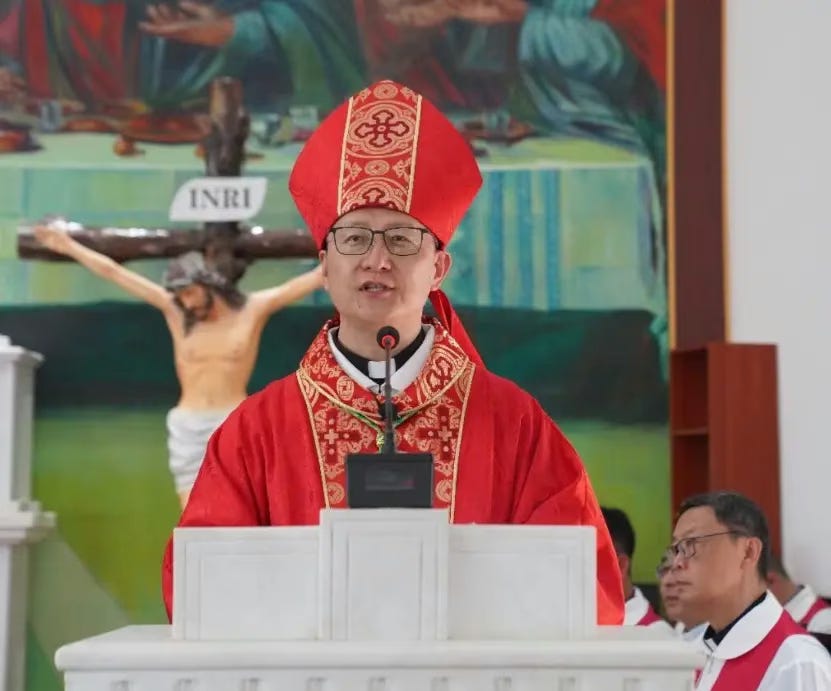
Rome’s treatment of the new Chinese bishop exposes the elasticity of its concern for apostolic independence.
On July 29, Francis Xavier Duan Yongkun was consecrated coadjutor bishop of Bameng. The Vatican disclosed that Leo had appointed him on June 15 after approving his candidacy “within the framework” of the Holy See’s provisional agreement with the People’s Republic of China. Duan was formed at institutions associated with China’s officially controlled ecclesiastical system and later became vicar general of Bameng.
The agreement remains secret. Catholics are expected to trust that a process negotiated with an atheist Communist state protects the freedom of the Church, although the faithful cannot read its terms. The arrangement was extended for four more years in 2024 because the parties claimed to have reached consensus on its “effective application.”
The Chinese regime demands religious organizations submit to communist party supervision. The Vatican nevertheless treats candidates produced through this opaque, state-entangled system as capable of receiving papal approval. Écône says it must preserve bishops free from the modernist destruction of tradition. Rome answers with excommunication. Beijing participates in a secret episcopal-selection framework. Rome calls the result dialogue.
The distinction is formally obvious: Duan received Leo’s approval; the SSPX candidates did not. The moral question concerns how papal approval is granted and withheld. Rome will negotiate episcopal appointments with a Communist government that persecutes independent Chinese Catholics. It will not grant four auxiliary bishops to a priestly society whose seminaries, worship and doctrine preserve almost everything Rome required before Vatican II.
The apostolic mandate has become less a protection against hostile political power than a certificate of conformity with Rome’s current diplomatic and doctrinal program. The underground Catholic who distrusts Communist control is urged to accept the agreement. The traditional Catholic who distrusts the synodal hierarchy is condemned for refusing it.
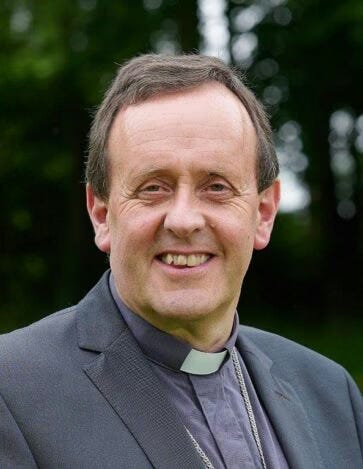
On the same day, Leo appointed Gerard Nash Bishop of Ossory while leaving him Bishop of Ferns, uniting the two ancient dioceses in persona episcopi. Each diocese retains its legal identity, but both are now governed by one man. Nash had already served as Ossory’s apostolic administrator since January. The arrangement will be presented as prudent stewardship. It is also an institutional obituary written in administrative Latin.
Ireland once exported priests, missionaries and religious across the world. Its parishes, seminaries and dioceses formed a dense Catholic civilization. Now ancient sees remain alive on paper while the hierarchy quietly consolidates them under shrinking personnel. One bishop. Two dioceses. Separate seals, separate archives, separate legal identities—and a single shepherd because the institutional life beneath them can no longer sustain the inherited structure.
This is the missionary fruit against which Roche’s claims should be measured. The old Mass supposedly failed to nourish a missionary Church. The new liturgy provided its abundant scriptural diet. Sixty years later, the dioceses are being paired like failing parishes. The old Church allegedly needed reform because it could no longer reach modern man. The reformed Church cannot staff the map it inherited.
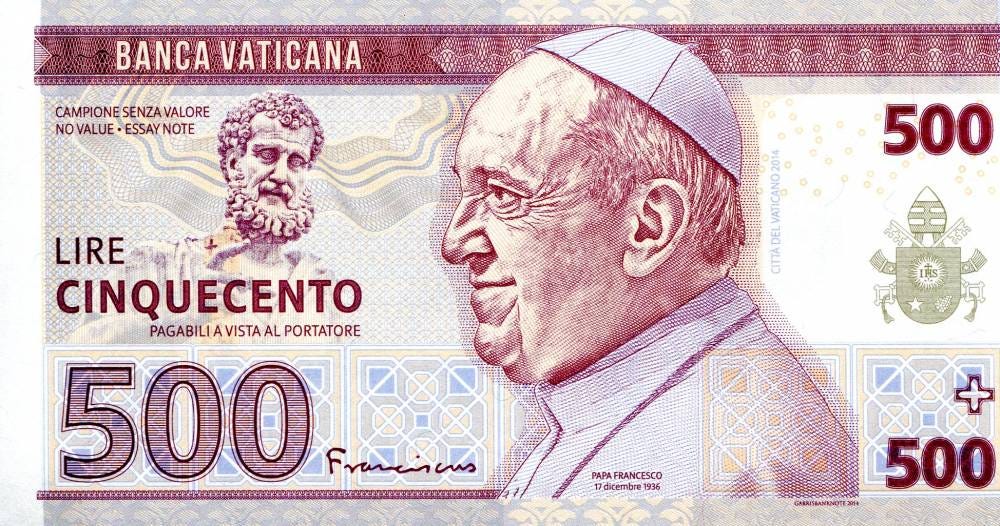
The Vatican Bank, meanwhile, reported €51 million in net profit for 2025, a 55.5 percent increase over the previous year. Its commission of cardinals approved a dividend of €24.3 million to the Holy Father—up 76.1 percent—to support religious and charitable works. The bank managed €5.9 billion in client assets and reported €815.3 million in net assets.
The dividend is not Leo’s personal spending money. Claims that the pope simply pocketed €24.3 million would be false. The financial result nevertheless sharpens the contrast. Rome is not too poor to operate internationally. It maintains a profitable financial institution embedded in the global banking system. It negotiates with states. It administers dicasteries, conferences, synodal assemblies, diplomatic missions and vast communications operations.
Its poverty appears most acute when Catholics ask for priests, monasteries, diocesan stability or the unrestricted liturgy of their ancestors. Ireland consolidates. French monasteries close. Traditional communities lose churches. Families drive for hours to find Mass. Pilgrims sleep outdoors and celebrate at temporary altars.
Then Roche looks from his revolving chair across St. Peter’s Square and asks them to explain how they are being persecuted.
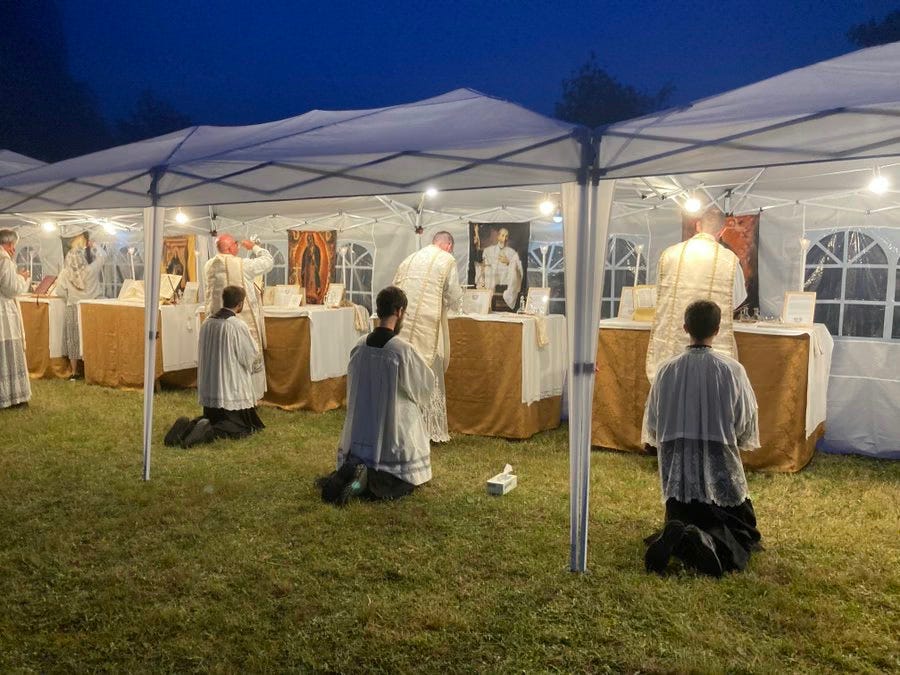
The sixth Nuestra Señora de la Cristiandad pilgrimage drew 1,700 registered participants to walk from Oviedo to Covadonga from July 25 through July 27. The majority were young, and the pilgrimage included families, 52 priests and 21 seminarians. Its organizers describe the restoration of Christian social order and devotion to the traditional Roman Mass as central to its mission.
The pilgrims had solemn traditional Masses at their camps. Priests celebrated private Masses for the faithful along the route.
At Covadonga itself, the published schedule contained no concluding Mass in the basilica. It listed a solemn Te Deum at 5:15 p.m. The Vatican’s Dicastery for Divine Worship had forbidden the customary traditional Mass at the shrine in 2024, and this year’s program shows that the exclusion remained.
The contrast could hardly be more complete. Young Catholics walked nearly one hundred kilometers. Families brought children. Priests heard confessions and offered the sacrifice in camp. Seminarians joined them. The pilgrimage grew to record size. They reached one of Spain’s great Marian shrines and the Mass that inspired the pilgrimage could not enter with them.
Roche says the older liturgy is available. Available where? In a field, perhaps. At an improvised altar. In an approved enclave whose survival depends upon the bishop. At the destination basilica, after 1,700 Catholics have crossed Asturias in prayer and penance, the answer remains no.
The institution that stages endless “listening sessions” has heard these people perfectly well. It simply does not like what they are saying.
These stories belong together.
Roche defines unity as adherence to the reformed liturgy and Leo’s restrictions. Sample defines communion as remaining within the official structure despite admittedly illegitimate postconciliar developments. Rome defines apostolic legitimacy strictly at Écône and flexibly through a secret agreement with Beijing. Ireland preserves diocesan names while the Catholic population beneath them collapses. The Vatican Bank prospers. Covadonga’s pilgrimage grows. Rome consolidates the first and restricts the second.
This is not random incompetence. The system possesses a hierarchy of values. A bishop produced through negotiation with Communist China can be incorporated. A Roman liturgy inherited from Catholic antiquity must be contained. A dying diocese can be administratively merged. A flourishing traditional pilgrimage cannot have its Mass in the basilica. A cardinal may speak as though the faithful celebrate Mass alongside the priest.
A traditional society that insists upon bishops to preserve the old priesthood has “become something else.”
The cumulative pattern remains the problem.
Authority is rigid when applied against tradition and elastic when applied in service of the postconciliar project. Continuity means accepting the Council, the new rite, the new ecclesiology and the men who administer them. Rupture means questioning whether that settlement remains Catholic.
The system will permit the old Mass as an aesthetic concession. It will not permit the old Mass to testify against the theology that displaced it.
That is why Roche is more important than another diocesan cancellation. He has stated the principle openly. Leo will preserve the revolution’s liturgical constitution. The old Mass may survive only within that constitution and on its terms.
Michael Matt asked Catholics to remain silent because Rome might be changing.
Rome was not changing.
Matt’s policy changed.
The critics he abused preserved the record. Roche has now supplied the conclusion.
The “long game” did not free the Mass.
It gave Leo fourteen months of protection while his government prepared to keep the Mass restricted, punish the SSPX and continue the same ecclesiastical program that had been visible from his first appearance on the balcony.
The mozetta was real.
So was the revolution.
If you value independent Catholic analysis and want to help keep this work going, you can make a contribution or subscribe below. Every donation and subscription directly supports the writing, research, and production of Hiraeth in Exile.
Thank you for helping preserve independent Catholic journalism rooted in truth and tradition.
Comments
Nothing yet. Say the first thing.
Sign in to join the conversation.