
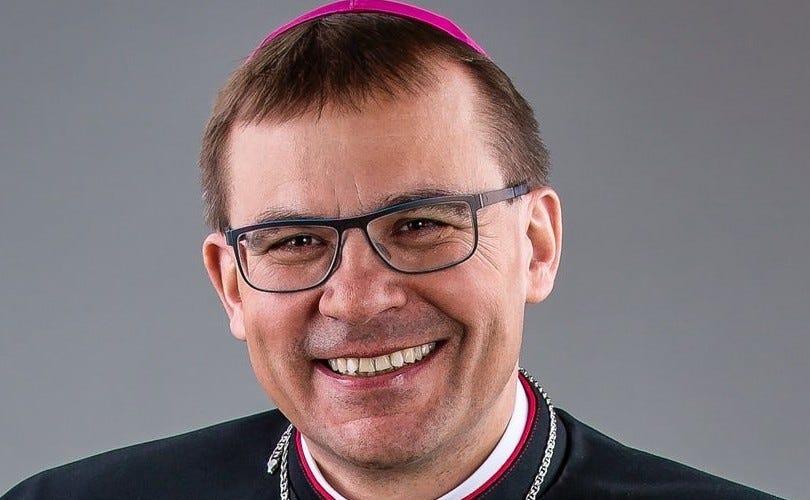
Bishop Tomáš Holub of Plzeň has provided the theological explanation Cardinal Arthur Roche left unstated.
Roche told traditional Catholics that Pope Leo XIV would retain Traditionis Custodes and refuse to restore Summorum Pontificum. Holub has now explained why the restriction cannot end without endangering the entire synodal project.
A synodal Church requires a synodal liturgy, he argues, and that liturgy “can only be the Novus Ordo Missae.”
The traditional Mass carries a different vision of the Church. It forms Catholics around the altar, the sacrifice, the ordained priesthood, inherited authority and a worship received from previous generations. Holub considers that vision Tridentine, outdated and poorly suited to the needs of modern man.
He deserves credit for clarity.
For decades, Catholics were assured that the liturgical conflict concerned tastes. Some preferred Latin and incense. Others preferred the vernacular and congregational singing. One group found spiritual nourishment in silence; another appreciated visible participation. Rome supposedly stood above the dispute, attempting to accommodate different sensibilities while protecting ecclesial unity.
Holub has discarded that fiction.
The rites form different ecclesial instincts. Catholics who attend the old Mass learn to understand the Church differently. According to Holub, that difference produces suspicion toward the reform and distrust toward the institution that imposed it. Therefore, the traditional Catholic requires correction through “accompaniment, formation and synodal support.” (PCH24)
That is the real program.
The old Mass may survive temporarily as a concession to people awaiting reeducation. It cannot flourish as an equal expression of Catholic worship because it forms Catholics who recognize another Church—the Church Rome governed, prayed and believed in before the revolution.
The Bishop Is Describing a Change of Religion
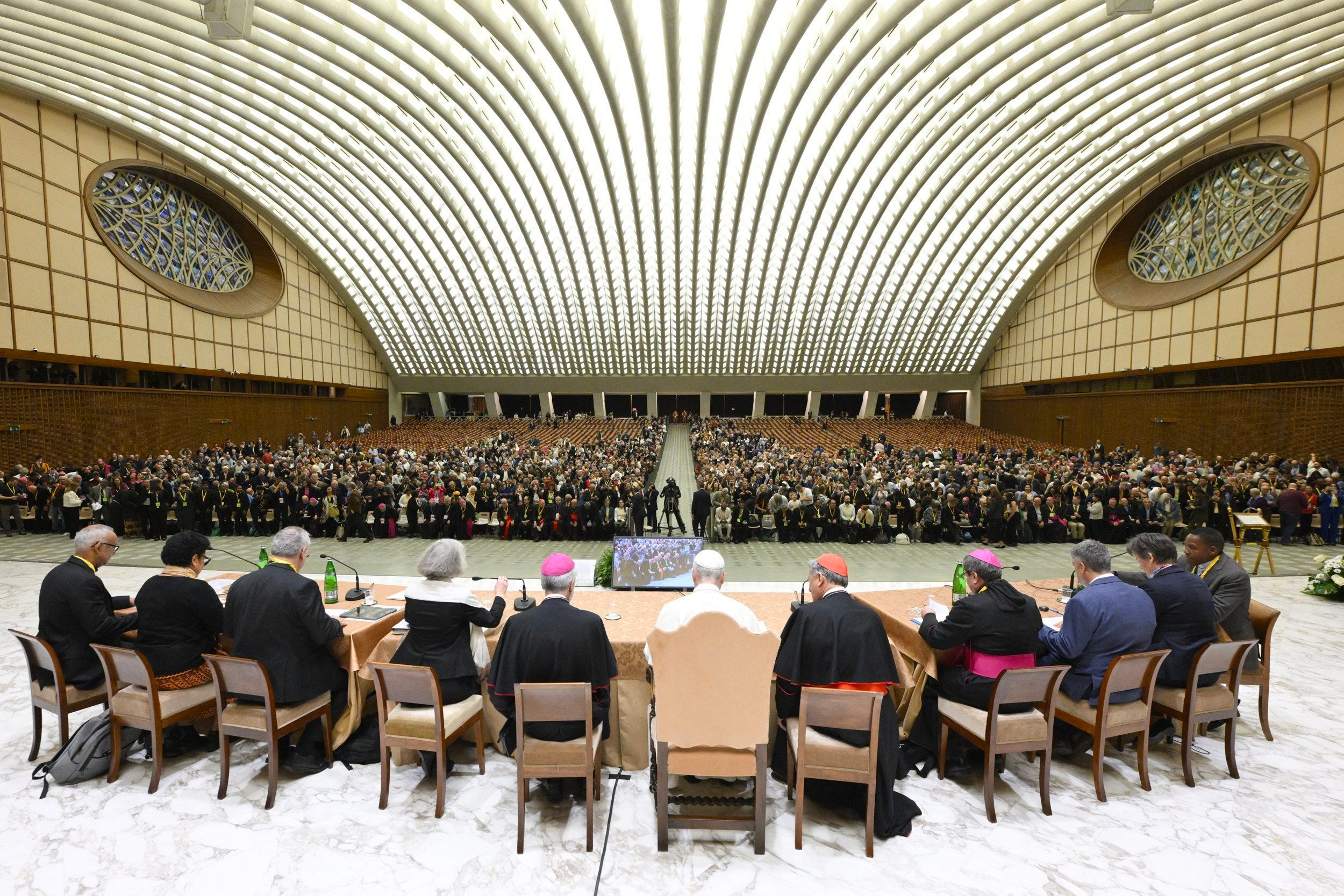
Holub’s argument appeared after the completion of a three-year diocesan synod in Plzeň. This was no speculative exercise written by a retired academic. Holub presided over the process, accepted its final document in May 2026 and made it a binding direction for the diocese’s missionary, organizational and economic development during the next five years. (bip.cz)
His logic proceeds in a straight line.
Modern evangelization requires a theology adapted to modern people. That theology is expressed through synodality. Synodality requires a Church centered upon the gathered community, common baptism, shared ministries and visible participation. The Novus Ordo gives sacramental expression to that Church.
The traditional Mass points elsewhere.
Holub says the old rite expresses a Tridentine vision that “no longer meets today’s needs.” Catholics attracted to it absorb the ecclesiology carried by its prayers and ceremonies. They begin to doubt whether the reform represents organic development. They become suspicious of the new structures. Cracks appear. (PCH24)
Every major claim of traditional Catholic criticism is contained in that indictment.
The traditional Mass possesses a theology.
The reform possesses another emphasis.
The rites shape competing understandings of the priesthood, the sacrifice, the assembly, authority, participation and the purpose of worship.
Attachment to the old rite therefore becomes dangerous precisely when it succeeds. A young Catholic may begin with Gregorian chant, silence and beauty. He soon notices that the priest faces God rather than performing across a table. He discovers a calendar organized around penance, fasting, saints and the mysteries of Christ. He hears prayers for the conversion of heretics and schismatics. He encounters an offertory that unmistakably anticipates sacrifice. He watches the priest enter the sanctuary as a consecrated mediator rather than the elected chairman of a congregational meeting.
Then he begins asking what happened.
Holub understands this process. So does Roche.
That is why a thriving traditional congregation causes greater alarm than a dying one. The old people may be indulged. The young families represent transmission. A permitted historical remnant can disappear peacefully. A living rite produces another generation.
The Assembly Becomes the Protagonist
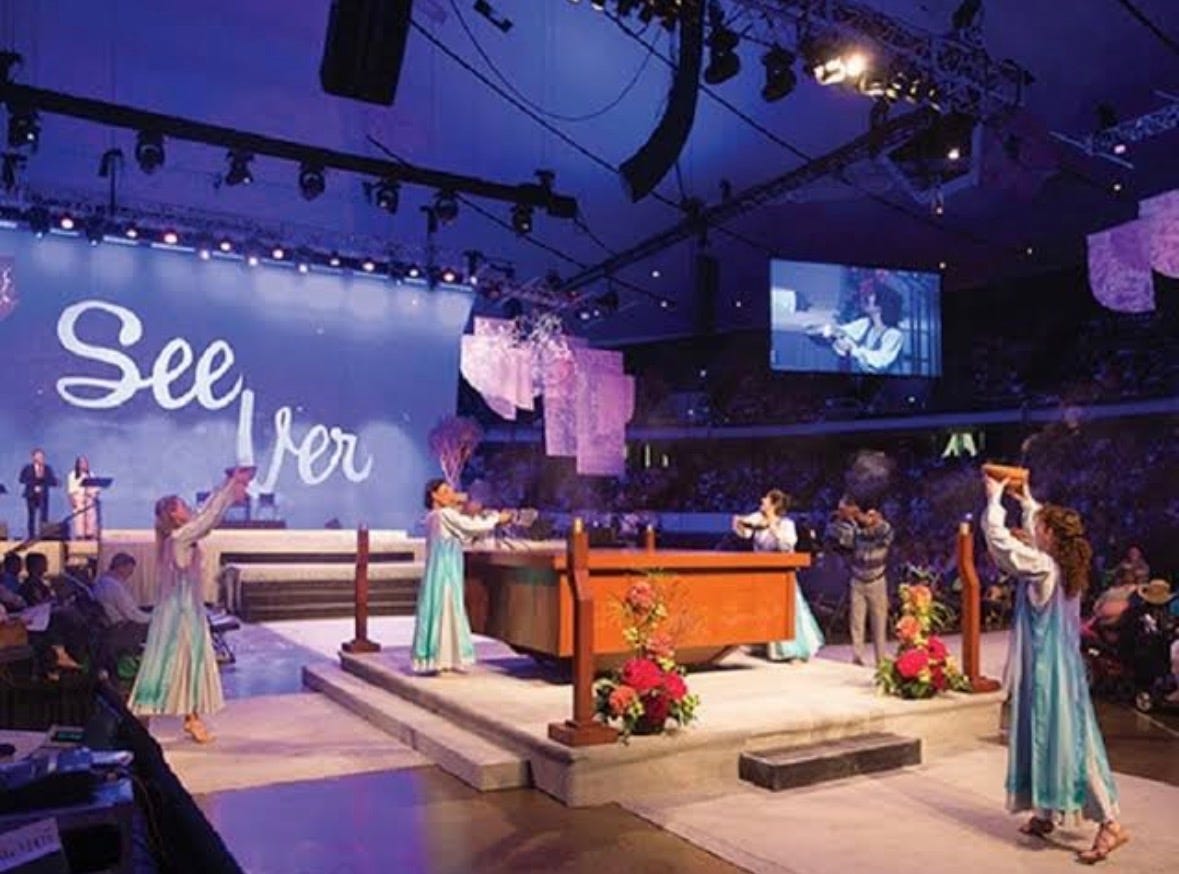
Holub’s chosen word is revealing.
During the synodal process, he says, the people became the protagonist rather than the recipient of services. Clergy and laity, men and women, are joined through baptism. The Church is presented as an assembly of ministries whose unity becomes visible in liturgical action. (lifesitenews.com)
Catholic doctrine certainly teaches the real participation of the faithful in the Eucharistic sacrifice.
Pius XII explained it at length in Mediator Dei. The faithful offer the divine Victim through the hands of the priest and unite their own lives, prayers, penances and sacrifices with Christ’s oblation. Their participation is neither imaginary nor decorative. It arises from baptism and incorporation into the Mystical Body. (Vatican)
Yet Pius XII carefully preserved the distinction that modern liturgical language repeatedly blurs.
The priest acts in the person of Christ the Head. The faithful offer through his hands and according to their own mode. The congregation does not collectively acquire the sacramental power given through Holy Orders.
The current Code of Canon Law remains explicit: a validly ordained priest alone can confect the Eucharist in the person of Christ. A 1983 doctrinal letter likewise teaches that all the faithful participate in the offering, while the ministerial priest alone consecrates the sacrifice and offers it in the name of the Christian people. (Vatican Press)
The traditional Mass makes that distinction visible before anyone opens a theology book.
The priest approaches the altar alone. He speaks portions of the rite in a voice the congregation cannot hear. His hands are consecrated for sacred action. He enters a guarded sanctuary. He offers sacrifice facing the same direction as the people. His actions possess an objective efficacy that neither depends upon congregational enthusiasm nor requires the assembly to watch every movement.
The faithful participate by joining themselves to the action of Christ.
The reformed liturgical culture increasingly identifies participation with activity distributed among members of the assembly: speaking, reading, processing, presenting, singing, carrying, greeting and administering. The distinction between interior participation and visible employment becomes harder to preserve. Silence appears vacant. Receptivity resembles passivity. A priest acting beyond the congregation’s line of sight seems to exclude them.
The Mass becomes the public self-expression of the assembled community.
Holub’s language reveals where this development leads. A Church “based on the congregation” requires a liturgy that stages the congregation’s protagonism. The inherited rite becomes unsuitable because its architecture directs everyone—priest and people alike—toward an action received from above.
The old Mass refuses to make the assembly the main character.
That is among its greatest offenses.
Vatican II Was Celebrated in the Liturgy Holub Calls Obsolete
Holub presents the Novus Ordo as the necessary liturgical expression of Vatican II. The chronology creates an immediate difficulty.
The Council opened in 1962 and promulgated Sacrosanctum Concilium in December 1963. Paul VI promulgated the new Roman Missal in April 1969, more than three years after the Council had closed. The bishops who debated and approved the Constitution on the Sacred Liturgy did so while worshipping according to the inherited Roman rite Holub now treats as the vehicle of an obsolete ecclesiology. (Vatican)
The Mass of the Council Fathers was the old Mass. They heard its Canon. They prayed its offertory. They encountered its hierarchical sanctuary and sacrificial orientation. They participated in its solemn ceremonies.
If the rite itself teaches an ecclesiology incompatible with Vatican II, then Vatican II was conceived, debated and promulgated by bishops being continuously formed in the wrong Church.
The Council’s text also resists the crude opposition Holub imposes upon it.
Sacrosanctum Concilium calls for full and active participation, while ordering that Latin be preserved in the Latin rites. It gives Gregorian chant pride of place. It treats the liturgy as the exercise of the priestly office of Jesus Christ, in which public worship is performed by the whole Mystical Body according to the different roles proper to its members. (Vatican)
Even Pope Leo’s May 2026 catechesis on the document described liturgical participation as both internal and external. That distinction leaves room for silence, contemplation, adoration and interior union with the sacrifice. It does not reduce participation to the public visibility of each baptized person’s activity. (Vatican)
The Council ordered reforms. It never declared that the existing Roman rite embodied a false understanding of the Church. It never said Catholics praying that rite would require accompaniment away from the ecclesiology it conveyed. It never announced that a Church using the received liturgy could no longer evangelize modern man.
Holub has moved far beyond the conciliar text. He has converted the reform into an ecclesiological border. On one side stands the synodal Church: communal, participatory, ministry-driven, assembled and forever engaged in conversation with itself. On the other stands the Tridentine Church: hierarchical, sacrificial, priestly, inherited and directed toward God.
The old Mass is dangerous because it makes the second Church visible.
The Missionary Claim Requires Evidence
(Taylor before he sold out)
Holub grounds his case in evangelization. Modern men supposedly thirst for transcendence, yet the old instruments have exhausted their usefulness. The Church must meet this thirst through current theology, synodal processes and an adequate liturgy. (PCH24) (PCH24)
This claim has been repeated throughout the postconciliar period with remarkably little accountability.
The reformed rites have now existed for more than half a century. Synodal structures have multiplied. Parish councils, listening sessions, lay ministries, commissions, diocesan assemblies and pastoral plans cover the ecclesiastical landscape.
Yet every failure produces another demand for the same medicine. People leave because the Church has yet to become synodal enough. Vocations disappear because laypeople require more protagonism. Parishes close because the liturgy remains insufficiently adapted. Catholics lose confidence because lingering remnants of the old Church inhibit the reception of the new one.
The theory can never be disproved. Its failures become evidence that implementation must continue.
Traditional communities create a more troublesome spectacle. They attract young adults who were never formed in the preconciliar Church. Families drive long distances to attend. Men discern priestly vocations. Women enter traditional religious communities. Children learn chant and serve at the altar. The very people whom the old instruments supposedly cannot reach keep finding them.
This does not establish that every traditional parish thrives or that every Novus Ordo parish collapses. It does place the burden of proof on men who propose suppressing a living inheritance in the name of missionary effectiveness.
Holub offers a theory.
Traditional Catholics keep producing evidence.
“Accompaniment” Has Acquired a Destination
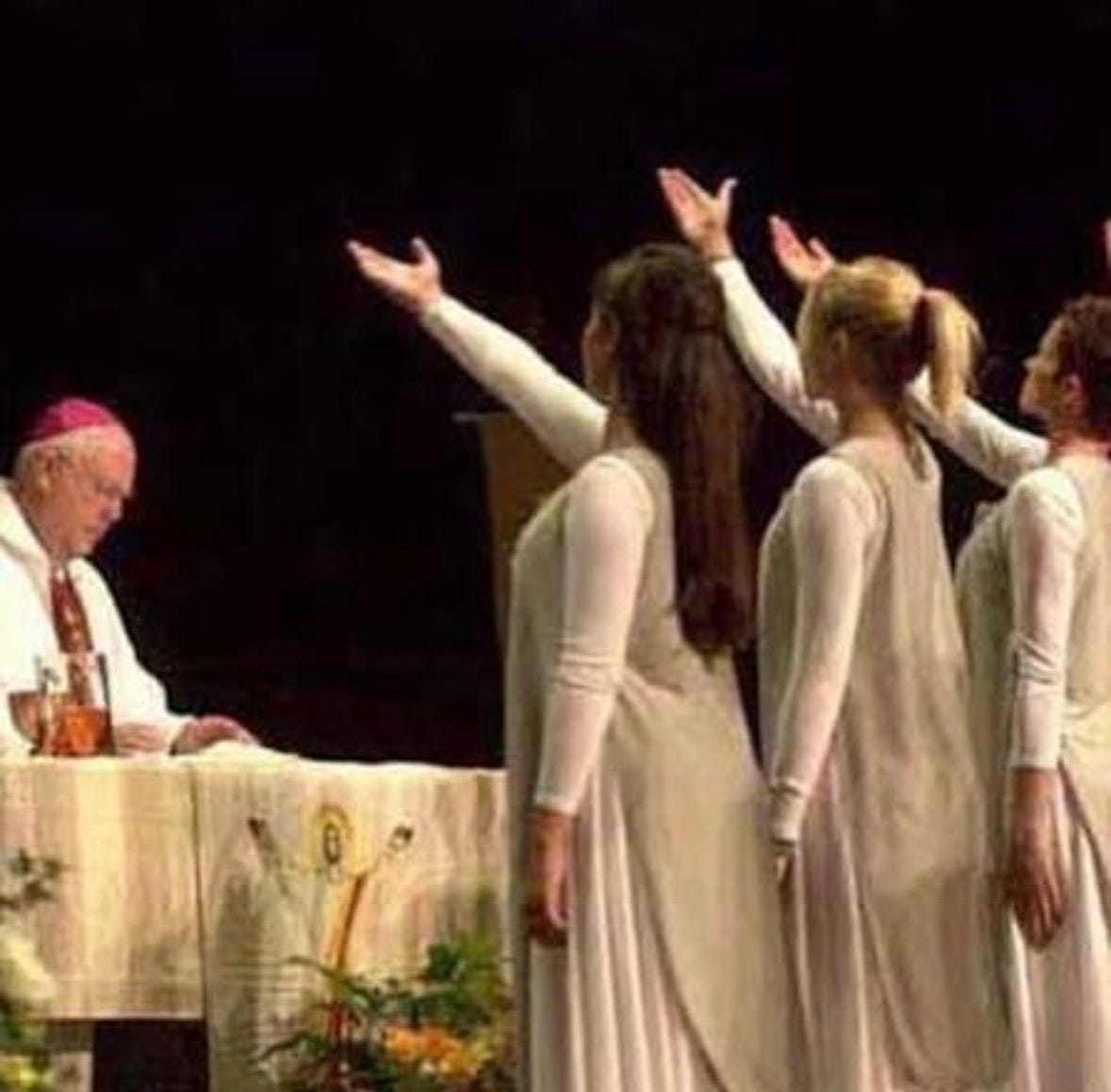
The pastoral language comes next.
Holub calls for firmness joined to benevolence. Catholics attached to the old rite must undergo accompaniment, formation and synodal support. The common theological foundation has already been decided: Vatican II as the true Magisterium. (PCH24)
No genuine dialogue remains once the conclusion is imposed as the starting point.
The traditional Catholic enters the process carrying a defect. His liturgy has formed him in an outdated ecclesiology. His questions concerning the reform reveal distrust. His attachment produces cracks. The ecclesiastical authorities will accompany him toward the answer they selected before he arrived.
This is catechesis by administrative pressure.
A parish loses its regular Sunday Mass and is told that unity requires sacrifice. A priest must secure permission to celebrate the rite that shaped almost the entire history of the Latin Church. A bishop may tolerate a congregation temporarily while ensuring that no new groups form. Children may attend the old Mass only so long as the community understands that its future belongs elsewhere. When Catholics resist, the resistance itself becomes proof that the old rite forms division.
First the authorities attack the liturgy. Then they diagnose the wounded faithful as distrustful. Then they prescribe formation by the authorities who wounded them. Holub calls this synodal support. Older regimes used plainer vocabulary.
Roche Supplies the Law; Holub Supplies the Theology
Roche’s interview established the governing policy. Holub’s essay supplies its ecclesiological rationale.
The restriction of the traditional Mass arises from more than Francis’s personal resentment, Roche’s bureaucratic hostility or a handful of bishops irritated by mantillas. The old rite preserves a sacramental world that obstructs the synodal reconstruction of Catholic identity.
It teaches that worship descends from God rather than emerging from the assembly, the priest possesses a sacred character separating him for sacrifice and the Church receives her rites as an inheritance.
It teaches that participation can reach its greatest intensity in silence, authority exists to guard what has been handed down, and to measure the present against the past.
That final lesson is intolerable to a revolution presenting every rupture as development.
Traditional Catholics compare. They compare the offertories.They compare the calendars. They compare the churches. They compare the priestly vocations. They compare the missionary claims with the missionary fruits.
Eventually, they compare the religion practiced by their ancestors with the religion administered around them.
This explains the fury directed toward the Society of Saint Pius X. The SSPX preserves more than forbidden ceremonies. It preserves the institutional memory of a Church that understood itself differently. Its seminaries, schools, priories and chapels demonstrate that Catholic life can continue outside the synodal program.
Rome calls that refusal schism.
Holub has now described the alternative demanded in the name of communion: Catholics must accept that the liturgy of their fathers carries an obsolete ecclesiology, submit to formation in the new one and allow the ancient rite to recede with the Church it embodies.
The battle over the Mass was always a battle over the Church.
A Czech bishop has finally admitted it.
If you value independent Catholic analysis and want to help keep this work going, you can make a contribution or subscribe below. Every donation and subscription directly supports the writing, research, and production of Hiraeth in Exile.
Thank you for helping preserve independent Catholic journalism rooted in truth and tradition.
Comments
Nothing yet. Say the first thing.
Sign in to join the conversation.