
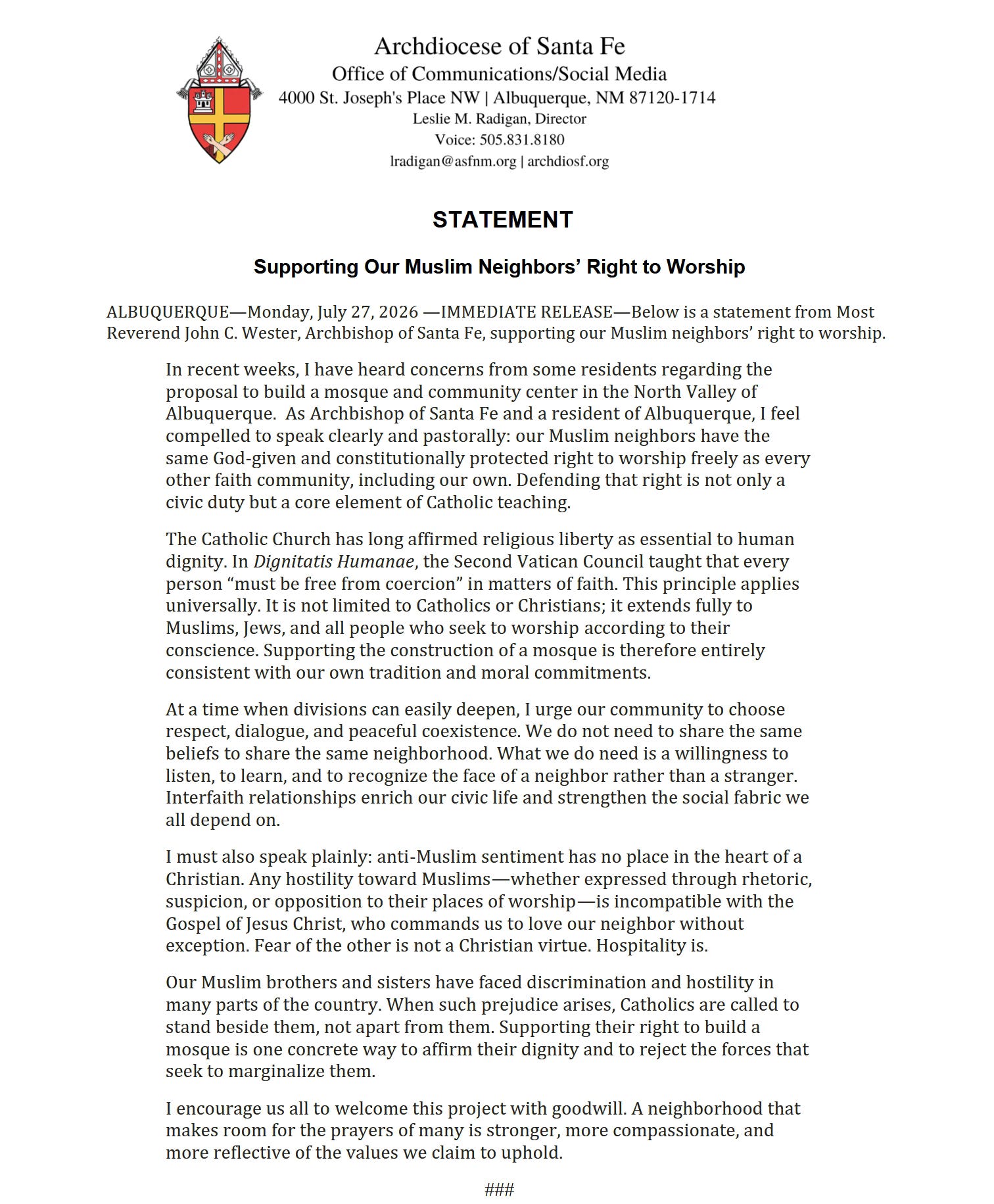
The crest of the Archdiocese of Santa Fe sits at the top of the page. Beneath it appears the word STATEMENT, followed by a title that might have come from a municipal interfaith commission: “Supporting Our Muslim Neighbors’ Right to Worship.”
The attached image is authentic. Archbishop John Wester published the statement on July 27 in response to local opposition to a proposed mosque and community center in Albuquerque’s North Valley. Its crucial sentence reads:
“Our Muslim neighbors have the same God-given and constitutionally protected right to worship freely as every other faith community, including our own.”
Wester then moves beyond a defense of civil peace. He declares that supporting construction of the mosque is “entirely consistent with our own tradition and moral commitments,” urges residents to welcome the project, and describes opposition to Muslim places of worship as incompatible with the Gospel.
American law protects Muslims from government discrimination. A Catholic may defend Muslim families against violence, vandalism, harassment, or collective punishment. Justice applies to every neighbor. Conversion has never been accomplished through mob action.
Wester’s statement claims something much larger.
He joins a constitutional civil liberty to a “God-given” right and places Muslim worship on the same plane as Catholic worship. The mosque and the Catholic church become parallel expressions of a universal religious entitlement. The bishop then presents active support for the mosque as an application of Catholic tradition.
That proposition cannot be reconciled with the traditional doctrine of the Catholic Church.
Leo XIII taught that civil society owes public worship to the true God and cannot treat all religions as though they possessed equal standing before Him. In Libertas, he rejected the claim that unrestricted freedom of worship is one of the rights given to man by nature. He also condemned the political principle that every form of worship should stand “on an equal footing.”
The distinction is elementary. A person possesses dignity, freedom of will, and protection from unjust coercion. Error possesses no dignity of its own. False worship cannot acquire divine authorization merely because the civil government tolerates it.
Even the post-conciliar Catechism attempts to preserve this distinction. Its treatment of religious liberty says that the civil right constitutes immunity from external constraint within just limits. It adds explicitly that this is neither “a moral license to adhere to error” nor a supposed “right to error.”
Wester erases that distinction. He begins with freedom from coercion and arrives at a positive, divinely founded right to construct and operate a house dedicated to a religion that rejects the Catholic Faith. He then recruits the Gospel commandment of charity to condemn opposition.
The move is pure Dignitatis Humanae in pastoral operation. The conciliar declaration promised to leave untouched the duties of men and societies toward the true religion, while simultaneously grounding a public civil right to religious activity in human dignity. Sixty years of episcopal practice have shown which half of that formula possesses operative force. The duty toward truth survives in footnotes. Equal religious liberty governs episcopal action.
A Catholic bishop should desire the conversion and salvation of Muslims. He should preach Christ crucified, the Trinity, baptism, grace, judgment, and the necessity of the true Faith. He should protect Muslims from injustice because they are creatures made by God, souls for whom Christ shed His Blood, and men whom the Church must labor to convert and save.
Wester’s statement offers neighborhood pluralism as the final horizon. Muslims remain Muslims, Catholics remain Catholics, and religious difference becomes another contribution to a richer “social fabric.” The bishop appears as guardian of a civic settlement whose highest goods are coexistence, dialogue, and reciprocal affirmation.
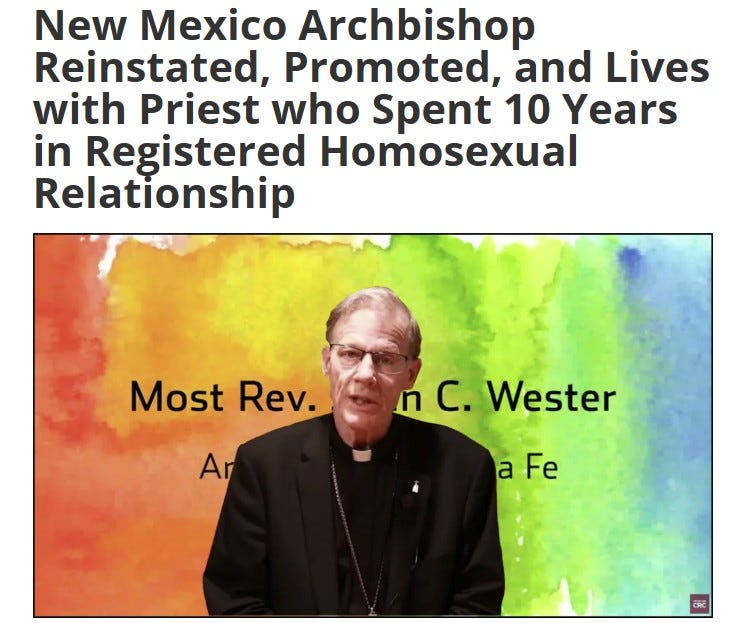
The statement also lands against the background of Wester’s handling of Father Steve Rosera.
In 2025, the Lepanto Institute published court records and archived material indicating that Rosera spent nearly ten years in a legally registered domestic partnership with another man while away from active priestly ministry. The reporting also documented Rosera’s public advocacy for same-sex marriage. Wester restored his priestly faculties in 2021 and placed him in positions that included pastor, dean, school supervisor, and service on the archdiocesan marriage tribunal. Zenit later summarized the documentation and reported that multiple clergy said Wester and Rosera resided in the same former Jesuit rectory.
By December 2025, Wester had also appointed Rosera to the archdiocesan College of Consultors, even after the controversy had become public.
The contrast in episcopal energy is instructive. Toward Islam, the archbishop speaks of divine rights, hospitality, and a moral duty to welcome. Toward a priest publicly documented as having entered a civil partnership contrary to Catholic morality and clerical celibacy, the same administration has offered restoration, promotion, and institutional authority.
The pattern is deeper than personal inconsistency. The system experiences inherited Catholic boundaries as harshness and contemporary transgression as an opportunity for accompaniment.
On July 25, a van drove into a crowd near Berlin’s Christopher Street Day celebration. A Polish woman was killed. The number of injured was initially reported as twenty-nine and later as thirty-one. The suspected attacker, Abdul Ballout, subsequently died during a police operation. Investigators found what they believed to be a recorded pledge of allegiance to the Islamic State, and German reporting identified him as a previously known high-risk Islamist threat.
There is no need for speculative embroidery about the suspect’s death. The documented facts already indict the security apparatus that allowed a known extremist to remain free.
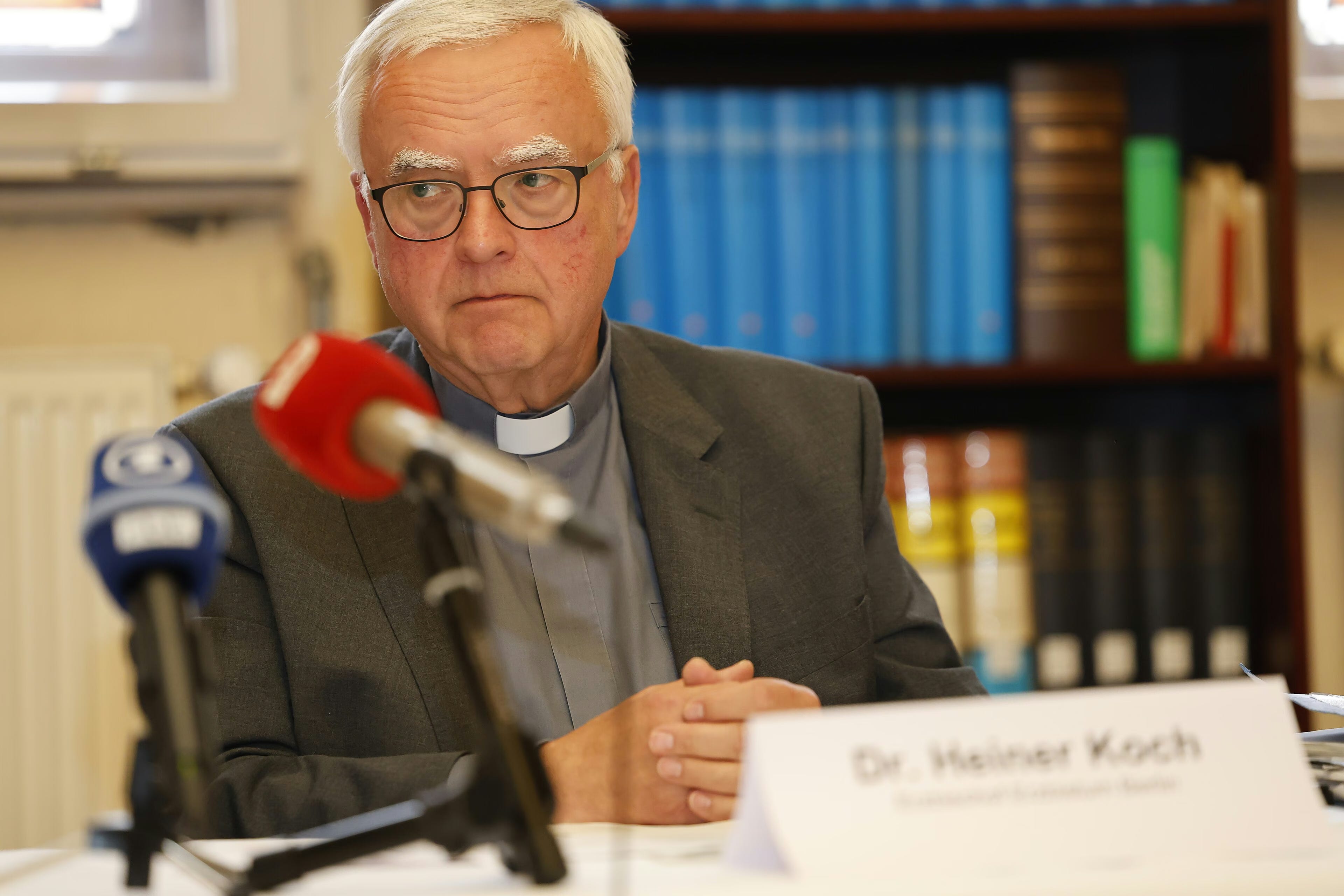
Archbishop Heiner Koch responded with prayer for the dead and injured, as any Christian should. Then he described Christopher Street Day as a “joyful and moving celebration” that had been brutally destroyed.
The whole context matters. Koch was expressing horror at mass murder, grief for victims, and rejection of hatred. Yet the adjective remains his own. He chose to define the Pride gathering itself as joyful and moving.
The day before the main parade, Berlin had hosted its first drag march. Among its organizers were members of the Sisters of Perpetual Indulgence, a movement whose members parody Catholic religious sisters while promoting sexual activism. One organizer described every kiss as an act of revolution and every wig as a war cry.
A bishop can condemn murder without canonizing the moral character of the event at which it occurred. A Catholic pastor may grieve every victim, comfort every wounded person, and denounce Islamist terrorism while still speaking truthfully about a public festival built around the vindication and celebration of conduct condemned by divine and natural law.
Koch made another choice. His words conferred episcopal approval upon the celebration itself.
This fits his previous record. In 2023, Koch announced that priests and pastoral workers in Berlin would face no disciplinary action for blessing same-sex couples. His archdiocese publicized the policy, and Koch had already described himself as able to imagine such blessings.
The Berlin attack exposed a collision between two revolutionary movements. Islamist ideology and the sexual revolution possess radically different moral codes, yet both reject the kingship of Christ. The modern episcopate has no theological language capable of judging either one. It can condemn “hatred,” affirm identities, offer prayers, and call for solidarity. Its public vocabulary ends where revealed truth begins.
A Catholic bishop once stood between rival errors and summoned both parties to conversion. The contemporary bishop blesses the civic order in which rival errors compete for recognition.
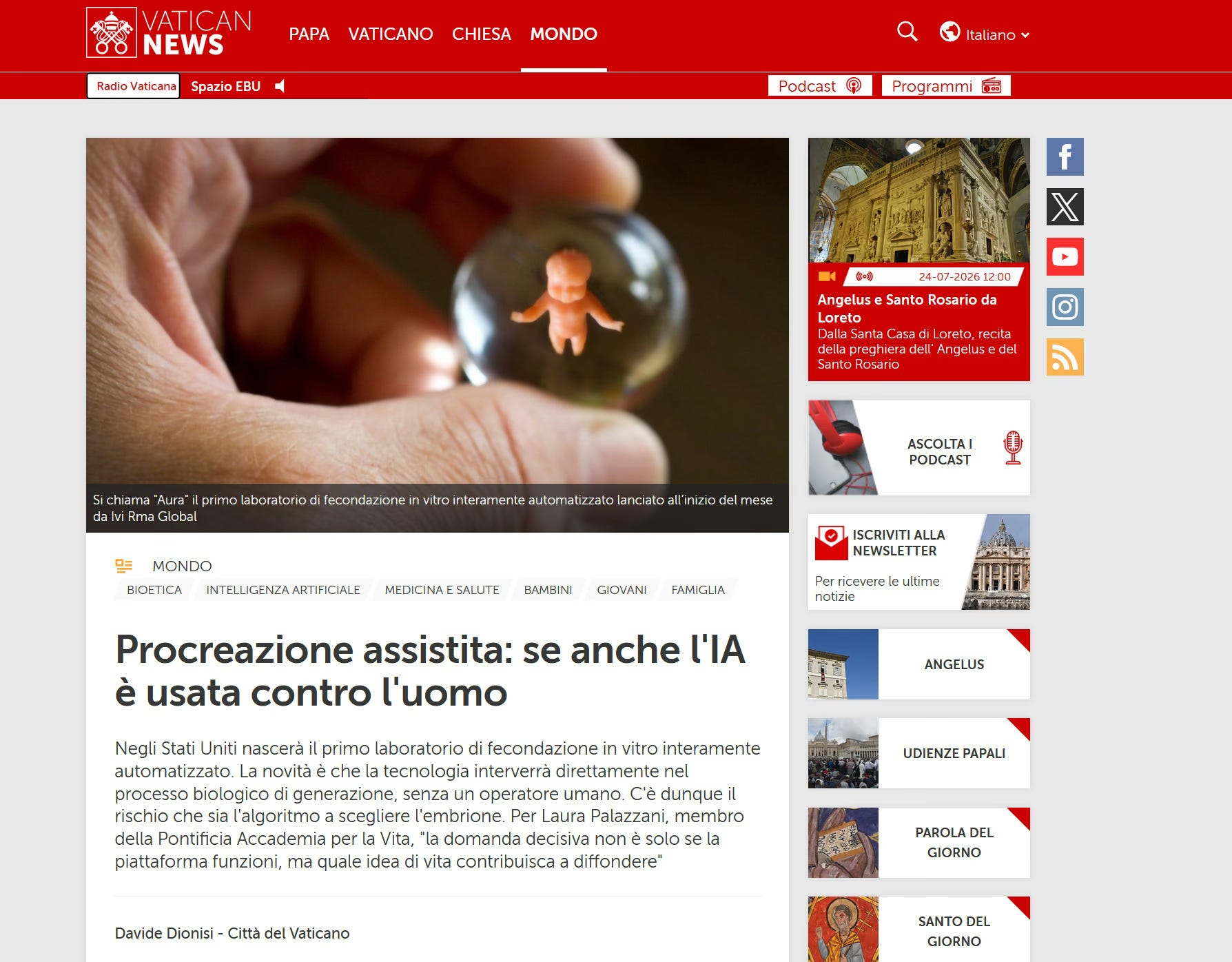
On July 21, Vatican News published an article about Aura, a proposed fully automated in vitro fertilization laboratory. The article warned that artificial intelligence could transform technology from a tool into a decision-making agent. Laura Palazzani of the Pontifical Academy for Life raised concerns about algorithms evaluating embryos, biased data, transparency, accountability, informed consent, and the risk that human generation might resemble an industrial process.
These concerns have substance. An algorithm selecting human embryos introduces another layer of eugenic calculation into an already dehumanizing process.
Yet the article carefully builds its moral alarm around automation while treating human-supervised IVF as the acceptable baseline. Palazzani says technology should support the clinical process and preserve the responsibility of the physician. She lists the retrieval and treatment of gametes, in vitro fertilization, embryo culture, and embryo transfer among the stages requiring human accompaniment. Her “specific bioethical risk” emerges when an algorithm, rather than the embryologist alone, selects the embryos.
The word alone carries the whole scandal.
Catholic doctrine identifies IVF itself as morally illicit. Donum Vitae states that even homologous IVF—using the gametes of a married couple, with every effort made to avoid embryo destruction—remains contrary to the dignity of procreation and the conjugal union. It places the origin of the child under the power of doctors and biologists and separates generation from the marital act.
Vatican News never gives readers that governing principle. Instead, it asks how humans can remain responsibly in charge of the laboratory.
This is the characteristic moral method of the new ecclesial bureaucracy. It begins halfway through the act. The intrinsic evil has already been normalized, renamed, and incorporated into professional practice. The Catholic contribution consists of humane regulation, ethical oversight, equitable access, transparency, and a committee to ensure that the machines remain accountable.
The embryologist may choose which child receives a chance to live. The scandal begins when software assists him.
That is how a moral prohibition becomes a management framework. No formal reversal is required. Silence accomplishes the work.
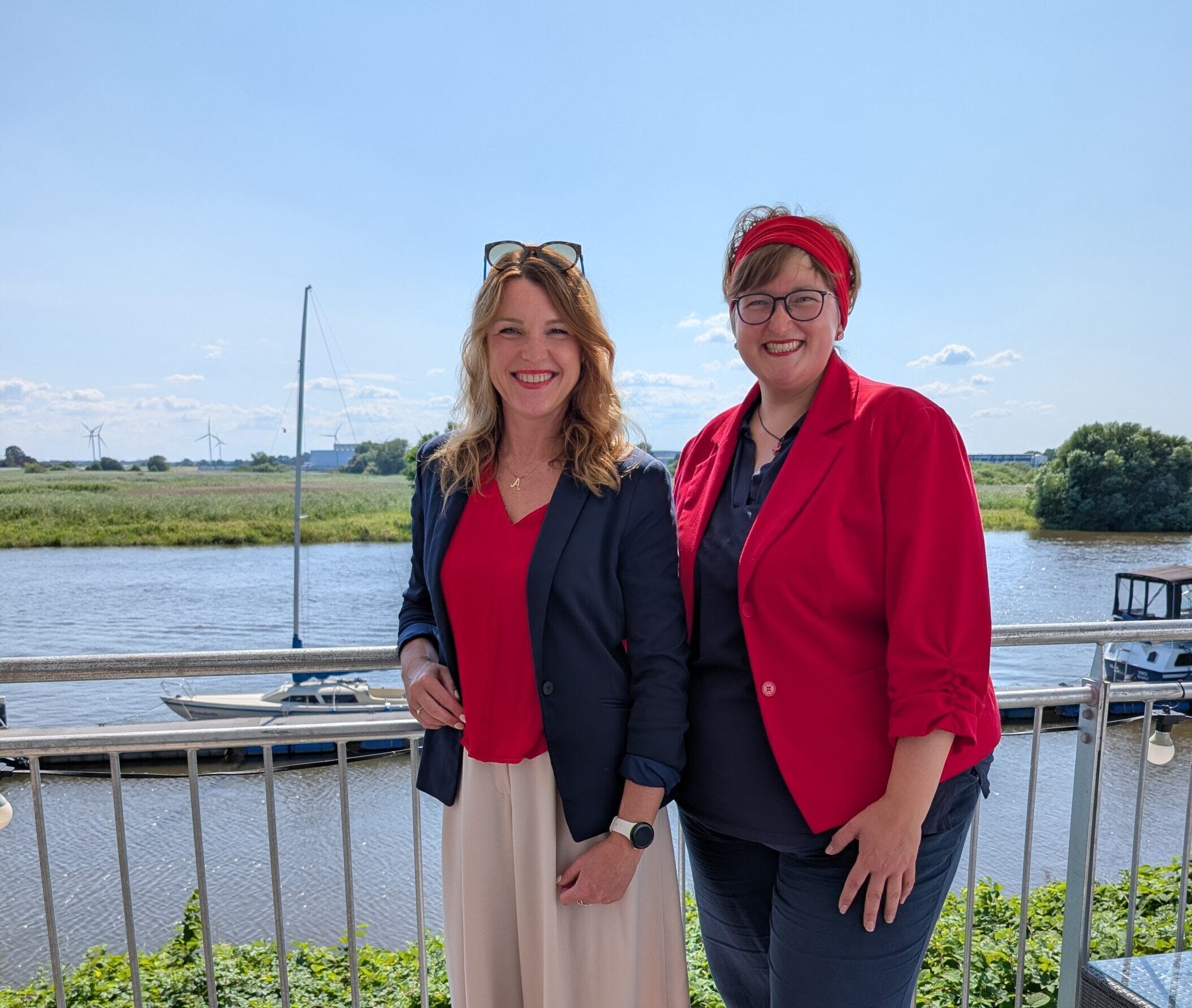
The Catholic Deanery of Bremen-Nord has announced that, beginning September 1, Ute Zeilmann and Agnes Dobrzynski will lead its three parishes. Zeilmann will supervise pastoral ministry and the professional pastoral team. Dobrzynski will direct administration.
The deanery’s own announcement emphasizes that, for the first time, “two women and not a priest” will lead the parishes. Father Johannes Pawellek, who is approaching retirement, will serve as a “moderating priest” and accompany the leadership team from a distance. Another priest from India will join the pastoral staff for five years.
The women describe their program as an application of global synodality: leadership exercised together, listening to the “Spirit-power of God,” spiritual discernment, and an end to solitary leadership decisions.
The arrangement invokes Canon 517 §2, which allows laypeople to participate in parish pastoral care when a genuine shortage of priests prevents the appointment of a pastor. The canon still requires a priest, equipped with the powers and faculties of a pastor, to direct that pastoral care.
A 2020 instruction from the Congregation for the Clergy went further. It stressed that this arrangement is exceptional, arises from priestly scarcity rather than a theory of lay promotion, and entrusts laypeople with participation rather than the direction, coordination, moderation, or governance of the parish. It also warned against titles that blur the distinction between priestly and lay responsibility.
Bremen’s publicity seems designed to announce the opposite impression. The women lead. The priest accompanies. His retirement makes him suitable for supervision from afar.
This reveals the practical goal. The priesthood remains necessary for sacramental validity, so a priest must remain somewhere in the organizational chart. Governance, public identity, pastoral direction, personnel, and decision-making migrate elsewhere. The priest becomes the authorized technician who supplies consecration, absolution, and canonical compliance.
The sacramental constitution of the Church is retained as plumbing.
The arrangement developed in the Diocese of Hildesheim under Heiner Wilmer. Pope Leo XIV appointed Wilmer Bishop of Münster in March 2026, and he was installed on June 21 as head of Germany’s largest diocese by Catholic population. Leo also appointed Christian Würtz to Eichstätt on July 7.
Rome’s response to the German experiment continues to arrive in the form of promotions and appointments.
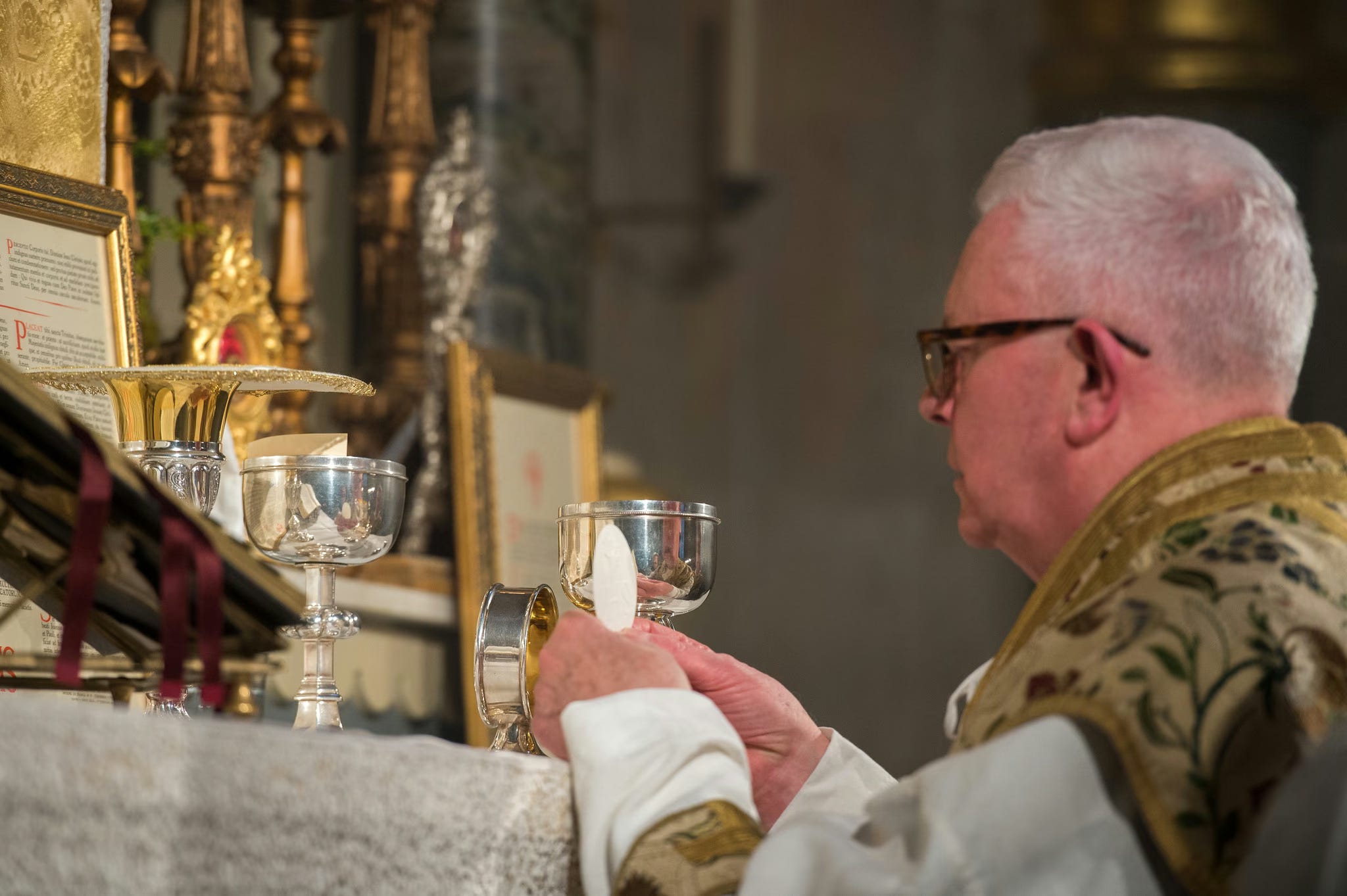
Several German dioceses told CNA Deutsch that they had no plans to expand the Traditional Latin Mass. Passau and Cologne offered brief refusals. Hamburg said the existing provision was sufficient.
Regensburg supplied the clearest explanation. Its spokesman described a “sufficient” number of traditional Masses as an important pastoral response to the “partially aggressive missionary activity” of the Society of St. Pius X and its supporters. He identified religious liberty, ecumenism, and relations with non-Christian religions as the chief doctrinal disputes separating the Society from the post-conciliar hierarchy.
Those subjects are doctrinal issues. They form the backbone of the crisis.
The Regensburg policy treats the old Mass as a controlled substance. A limited dose may be dispensed to susceptible Catholics, reducing the chance that they seek the full traditional doctrine from the SSPX. Expansion would defeat the purpose. The diocesan liturgy functions as a vaccine against integral Catholicism.
This is far more revealing than the usual language about unity.
Regensburg does not cherish the traditional rite because it formed saints, nourished Europe, expressed the theology of sacrifice with unmatched clarity, and sanctified generations of Catholics. It tolerates the rite as a defensive instrument against priests who attach doctrinal consequences to it.
The SSPX’s alleged “self-isolation” consists largely in its refusal to agree that the Church’s prior teaching may be replaced by a new settlement on religious liberty, ecumenism, and non-Christian religions. Santa Fe’s mosque statement demonstrates exactly why the dispute persists. Wester’s conclusion would have been condemned by the very popes whose liturgy the German bishops now ration.
The Mass and the doctrine belong together. That is precisely what the containment strategy seeks to prevent Catholics from discovering.
A Madrid sacristan appeared in a video circulated by Betania TV and accused a priest of instructing him to attach a small light to the viril of a monstrance because illumination from outside the glass failed to produce the desired artistic effect.
The sacristan reportedly displayed the device and pleaded with priests to adore and glorify Christ rather than use the Eucharist for propaganda, sentimentality, or stagecraft. Reports also repeated a more serious allegation that a circular light may at times have been used in place of the Host.
The confirmed portion of the testimony already says enough.
When faith in the objective reality of the sacred weakens, spectacle rushes in to replace it. The Host requires lighting. The sanctuary requires projections. The priest becomes a producer of experiences. Beauty is detached from proportion, rite, silence, vestment, chant, incense, architecture, and reverence. It becomes an effect assembled by pastoral technicians.
The old liturgy never needed to simulate transcendence. Its gestures arose from belief that transcendence had entered the sanctuary.
The light taped to the monstrance offers a fitting image of contemporary worship. Christ remains at the center, at least physically, while human machinery supplies the glow that makes Him emotionally effective.
The same instinct appears throughout the week’s stories. The mosque needs episcopal validation. Pride needs episcopal adjectives. IVF needs humanized management. Lay governance needs a sacramental technician. The old Mass needs strict dosage controls. The Eucharist needs stage lighting.
Everything receives assistance except the Faith itself.
Then comes the study from France.
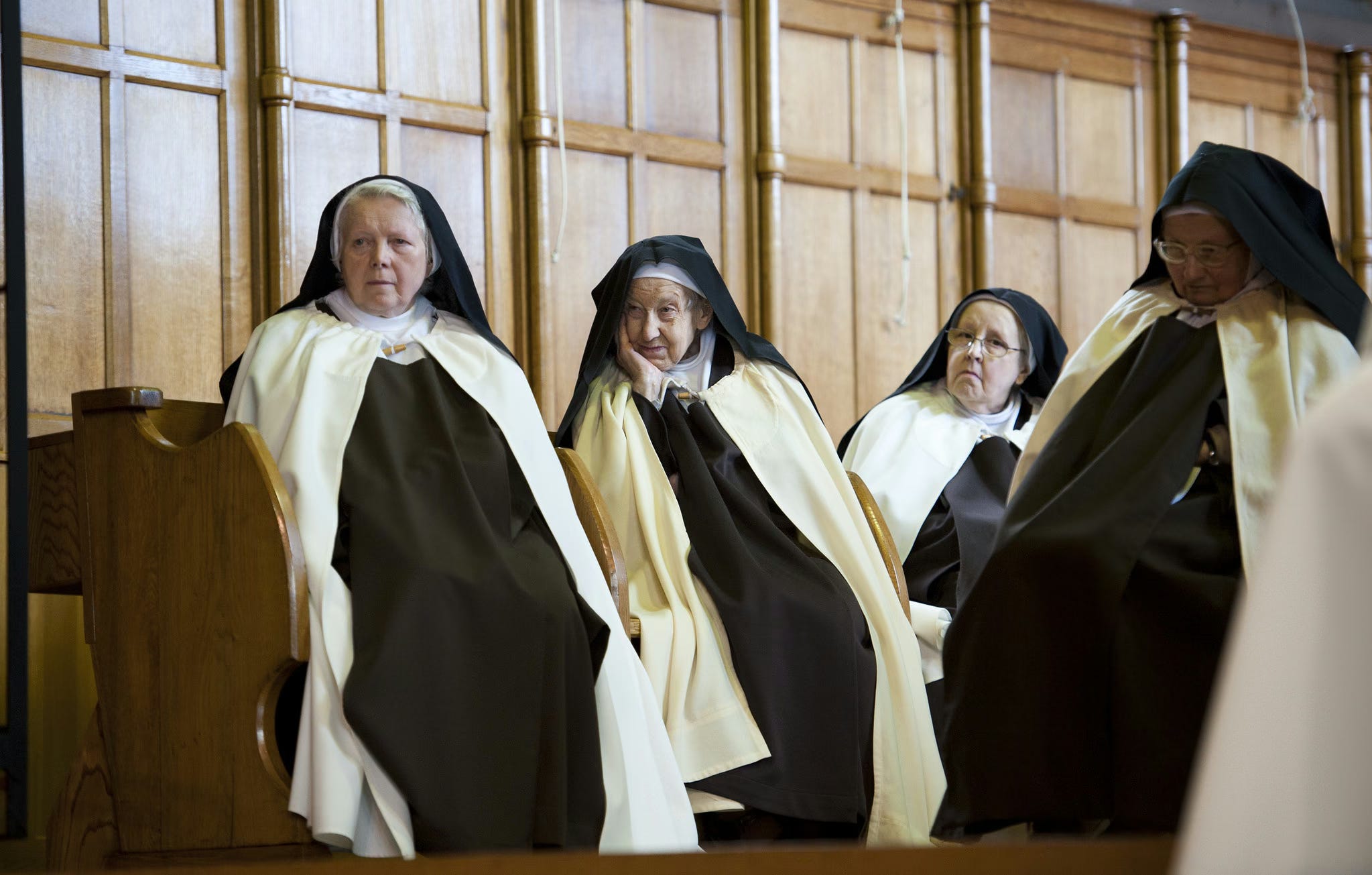
Sociologist Isabelle Jonveaux examined contemplative Catholic monasteries from 2007 through 2026. Nearly thirty percent had closed or announced closure. Women’s monasteries suffered especially severe losses. The pace rose from fewer than four closures annually before about 2015 to roughly ten per year today.
The detailed figures are brutal. France had 244 monasteries using French exclusively in the Divine Office, thirty-six using both French and Latin, and twenty-three using Latin exclusively.
Among the French-language houses, thirty-four percent closed. Among the bilingual houses, nineteen percent closed.
Among the exclusively Latin houses, the closure rate was zero.
Correlation alone does not establish that Latin caused survival. The Latin houses may also possess younger members, stricter observance, stronger communal identity, more stable rules, clearer habits, greater doctrinal cohesion, or a more demanding approach to vocation.
That qualification strengthens the traditional case. Latin frequently serves as the audible expression of an entire religious ecology: continuity, objectivity, inherited discipline, separation from the world, seriousness about sacrifice, and confidence that the community possesses something worth surrendering a life to receive.
A young woman rarely enters a cloister to join a smaller version of the culture she has already left behind. She enters because eternity has made a claim upon her.
The post-conciliar reformers attempted to make religious life more accessible, flexible, contemporary, dialogical, and relevant. In practice, they often removed the very features that justified the sacrifice. Once the habit fades, the office becomes ordinary speech, enclosure softens, authority becomes participatory, and apostolic relevance supplants contemplation, the monastery begins to resemble an underfunded retreat center inhabited by aging volunteers.
Traditional houses ask for everything. They therefore attract people seeking something worth everything.
The zero-percent figure explains much of the hierarchy’s hostility toward tradition. A successful traditional monastery is more than a liturgical preference. It is evidence. Its choir stalls refute decades of expert planning. Its novices expose the barrenness of adaptation. Its continued existence becomes an accusation against every commission that spent half a century explaining why surrender to modernity was pastoral realism.
The old communities were promised extinction. Many of their reformers reached it first.
These events form a coherent picture.
In Santa Fe, a bishop takes the civil immunity of persons and elevates false worship into a God-given public right.
In Berlin, a bishop mourns the victims of Islamist terrorism and supplies a moral benediction for the Pride celebration at which they were attacked.
At Vatican News, IVF enters Catholic discourse as an established medical practice requiring humane supervision.
In Bremen, women receive the visible leadership of parishes while a retiring priest preserves canonical and sacramental functionality from a distance.
In Regensburg, the ancient Roman Mass is tolerated partly to keep Catholics away from priests who still connect the rite with the doctrine it expresses.
In Madrid, the Eucharist becomes material for artistic production.
In France, the monasteries that refused the logic of adaptation remain alive.
The traditionalist critique does not arise merely from rude personalities, bad appointments, weak homilies, or excessive enthusiasm for synodality. It arises because Catholics are asked to identify this machinery with the indefectible teaching and governing Church established by Christ.
At some point, “bad bishops” loses explanatory power. A hierarchy that repeatedly rewards doctrinal inversion, promotes the agents of dissolution, disciplines inherited worship, and speaks the moral language of the secular regime presents a deeper ecclesiological problem.
Can the Church of Christ, exercising her authority as Church, teach societies to accord false religions the equal public right condemned by her previous pontiffs? Can she reorganize parishes so that priestly governance survives mainly as a canonical fiction? Can her official news organ discuss an intrinsically evil reproductive industry while locating the ethical crisis in the replacement of embryologists by algorithms? Can she regard the Mass of her saints as an ideological hazard while praising a mosque as an expression of God-given liberty?
A Catholic may hesitate before embracing any conclusions. The accumulating evidence makes easy reassurances harder to sustain. The burden of explanation belongs increasingly to those who insist that every contradiction can be reconciled, every rupture is development, and every promotion of a destroyer is an inscrutable act of prudence.
France’s surviving Latin monasteries offer a quieter judgment. Their monks and nuns continue chanting the office while diocesan offices merge parishes, distribute leadership among committees, import priests to service collapsing structures, and prepare another round of managed closures.
Their survival resolves no canonical controversy by itself. It reveals where Catholic life still recognizes its own voice. The system that hails the mosque as a God-given right and treats the old Mass as an aggressive threat has reversed its instincts. Catholics should measure that reversal against the Faith handed down to them, regardless of the crest printed above the statement.
If you value independent Catholic analysis and want to help keep this work going, you can make a contribution or subscribe below. Every donation and subscription directly supports the writing, research, and production of Hiraeth in Exile.
Thank you for helping preserve independent Catholic journalism rooted in truth and tradition.
Comments
Nothing yet. Say the first thing.
Sign in to join the conversation.