

On July 21, the Italian bishops’ newspaper Avvenire published an upbeat feature about a Jesuit summer program called “100 Pinne — Mare e Bibbia,” or “100 Fins — Sea and Bible.”
The formula sounds pleasant enough: beaches, excursions, Scripture, personal meditation, community life and the Eucharist. The program runs this summer in Sicily, Sardinia, Calabria and Albania. In Ragusa, participants spend ten days studying the Song of Songs with Jesuit Father Cesare Geroldi while visiting beaches and picturesque Sicilian towns. Other editions take Judith or the Passion of Christ as their themes. (Avvenire)
Hiraeth In Exile is a reader-supported publication. To receive new posts and support my work, consider becoming a paid subscriber.
Then there is the photograph.
Avvenire identifies it as an image from a previous edition of “100 Pinne.” What appears to be a Eucharistic celebration is taking place directly on the beach amid participants dressed for the beach. A woman visible near the celebration appears to be wearing a bikini.
When the Beach Becomes the Sanctuary
Missionaries have celebrated Mass in forests. Military chaplains have offered it in deserts. Priests have erected improvised altars in prison camps and battlefields. Catholics hiding from persecution have worshiped wherever the Sacrifice could safely be offered.
The issue raised by “100 Pinne” is therefore subtler than a cheap gotcha about sand.
This is an organized Jesuit retreat. Participants lodge at Jesuit or Catholic retreat facilities and travel deliberately to beaches and tourist sites. The beach Eucharist pictured by Avvenire belongs to the aesthetic being advertised: Bible, sea, friendship, swimsuits, prayer, excursions and Mass folded together into one relaxed summer spiritual experience. (Avvenire)
That aesthetic has theological consequences.
Catholic liturgy has always used separation to teach sacredness. There is a sanctuary because some space is set apart. There are sacred vessels because some vessels are set apart. The priest vests because at the altar he performs an action radically different from ordinary social activity. The altar receives relics and consecration because Calvary has become sacramentally present.
The instinct of the modern pastoral program runs in another direction. It continually wants to erase thresholds.
Bring the altar to the beach. Bring the congregation as it is. Merge worship with recreation. Reduce the transition between swimming and Sacrifice. Make God feel accessible by making the sacred environment resemble ordinary life.
The advertised goal is intimacy. The predictable result is familiarity. And familiarity with holy things can become deadly to religious consciousness.
The problem with a bikini near Mass lies far deeper than female skin. A Catholic polemic that fixated only on the woman would miss the ecclesiastical decision that placed the Holy Sacrifice inside a recreational environment where beach attire was entirely predictable.
The serious question belongs upstream.
Why was the altar there?
A woman dresses for the beach because she has been brought to a beach. The organizers decided where the Eucharistic Sacrifice belonged.
Rome Knows How to Care About Liturgical Space
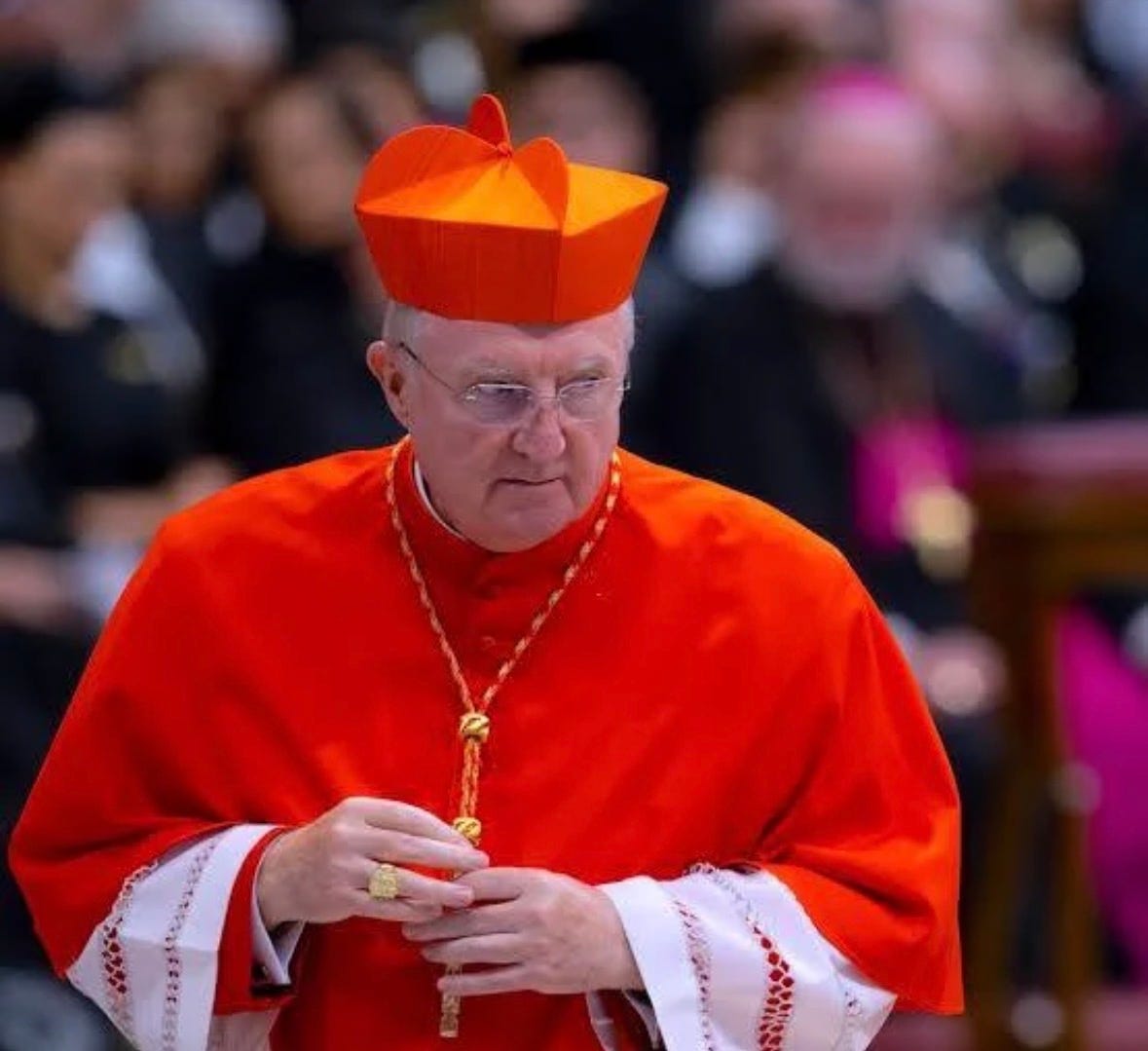
Now place the beach scene beside the post-Traditionis Custodes regime.
A Catholic attached to the Roman liturgy celebrated for centuries cannot simply ask his parish priest for it.
The diocesan bishop regulates access. Locations are designated. Parish churches were specifically restricted. Priests ordained after the motu proprio entered an additional authorization process. The Vatican’s subsequent Responsa ad dubia explained that even allowing the old Mass in a parish church where another site is unavailable requires careful assessment. The goal, Rome said, is eventually to return the Roman Rite to a “unitary form” of celebration. (Vatican)
No one can plausibly claim that modern Rome has become indifferent to liturgical discipline.
It has simply become extraordinarily selective about where discipline matters.
The young family seeking Gregorian chant, silence, a communion rail and the ancient Roman Canon encounters discussions about authorization, ecclesial communion, designated locations, permissions and concessions.
The summer retreat looking to bring Eucharist and beach culture into the same frame gets a cheerful spread in the Italian episcopate’s newspaper.
These situations involve different legal questions. Their juxtaposition still reveals something important.
Rome is capable of perceiving symbolism.
It understands perfectly well that the location of a liturgy teaches ecclesiology. That is exactly why the old Mass has been pushed out of parish churches in certain circumstances: the restriction is intended to signify that the earlier rite no longer belongs to ordinary parish life. The Vatican itself said so. (Vatican)
Apparently symbols suddenly become innocent when the pastoral fashion travels in the approved direction.
Berlin and the Moral Status of Pride
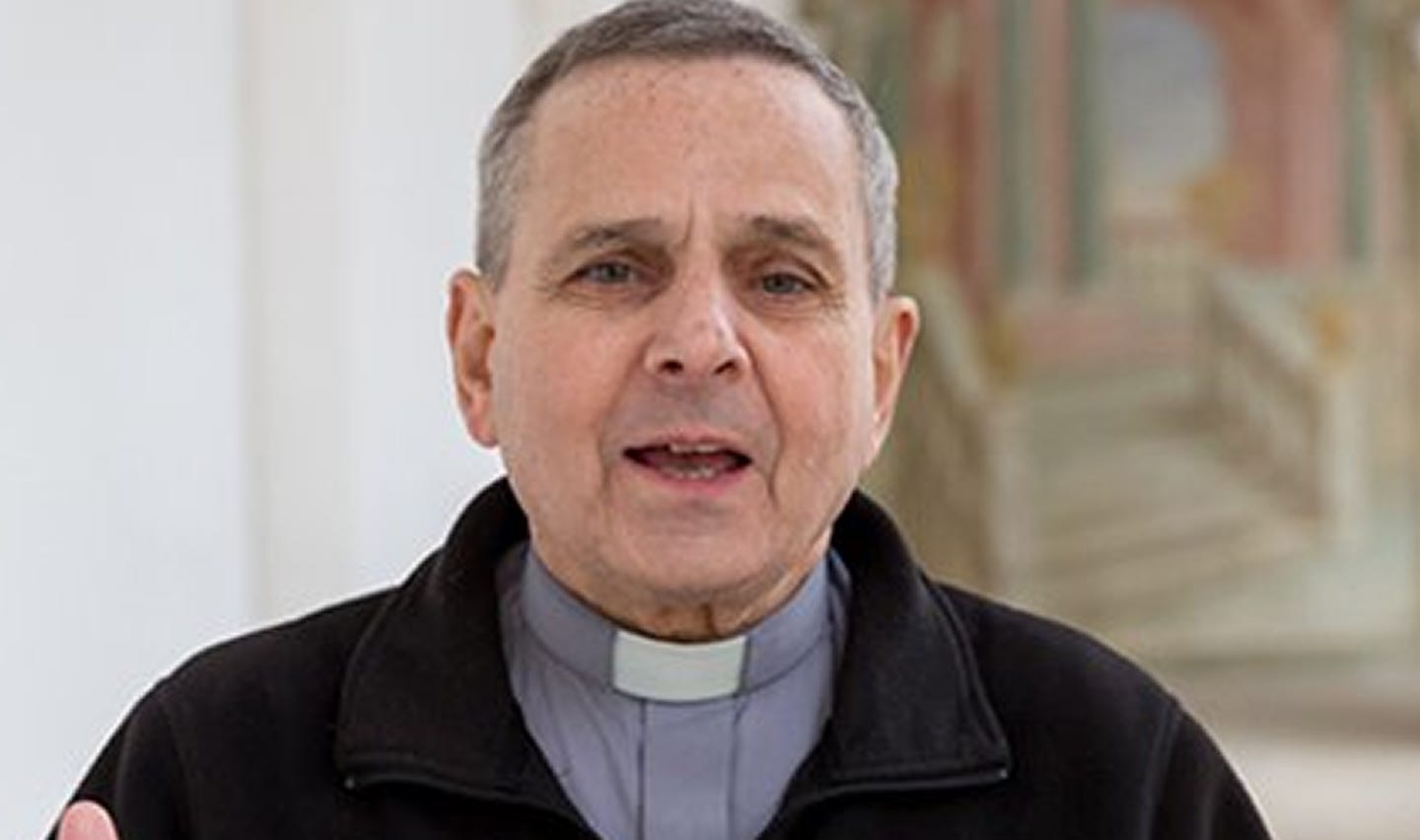
(Father Winfried Abel)
A few days later, Germany supplied a second image of the contemporary Church.
An Islamist terrorist had attacked Berlin’s Christopher Street Day festivities on July 25, driving a van into a crowd and attacking people with a bladed weapon. A woman was killed and dozens were wounded. German authorities treated the attack as Islamist terrorism. (Reuters)
Berlin Archbishop Heiner Koch responded with horror at the bloodshed, as any Christian should. Yet Koch went further. He described the Pride event itself as “such a joyful and moving celebration.” (Erzbistum Berlin)
An 87-year-old retired priest, Father Winfried Abel, objected publicly. He called the event a “parade of shamelessness” and criticized its public celebration of sexual behavior Catholic doctrine has traditionally condemned. He also described the atrocity as a “signal from Heaven” calling Christians to conversion. The Diocese of Fulda promptly distanced itself from him. (EWTN)
Catholics should, of course, condemn the murder without reservation. A woman was killed. Other human beings were wounded and terrorized. Islamist terrorism acquires no moral legitimacy because its victims were attending an event Catholics consider immoral. Murder remains murder. Terror remains terror.
Then the interesting thing happened.
The diocesan statement responding to Fr. Abel praised the Christopher Street Day as an event drawing attention to human dignity and opposing exclusion and violence, while insisting that people must never experience existential threat because of sexual orientation or identity. (DIE WELT)
And Archbishop Koch had already called CSD itself a “joyful and moving celebration.” (Erzbistum Berlin)
There lies the unresolved Catholic question.
What exactly was being celebrated?
The Catechism Already Solved the False Choice

There is no conflict between protecting homosexual persons from violence and teaching Catholic morality.
The Catechism already contains both propositions.
It teaches respect, compassion and sensitivity toward persons experiencing homosexual attraction. It also teaches that homosexual acts are intrinsically disordered and cannot be approved. Vatican doctrinal documents have repeatedly maintained the same distinction. (Vatican)
A Catholic bishop therefore had every doctrinal tool necessary to respond to Berlin without surrendering an inch.
He could have said that the murder was wicked, that every victim possessed inviolable human dignity, that hatred and terrorism violate the moral law, and that Christians must protect innocent people from violence.
He could also have said that Pride celebrations publicly affirm a vision of sexuality incompatible with the Gospel.
Those propositions can occupy the same paragraph.
Instead, the Catholic leadership supplied moral condemnation for the terrorist and moral affirmation for the festival.
When an elderly priest broke the consensus, the institutional immune system activated.
That tells us something.
Bishop Schepers Moves Repentance Across the Confessional
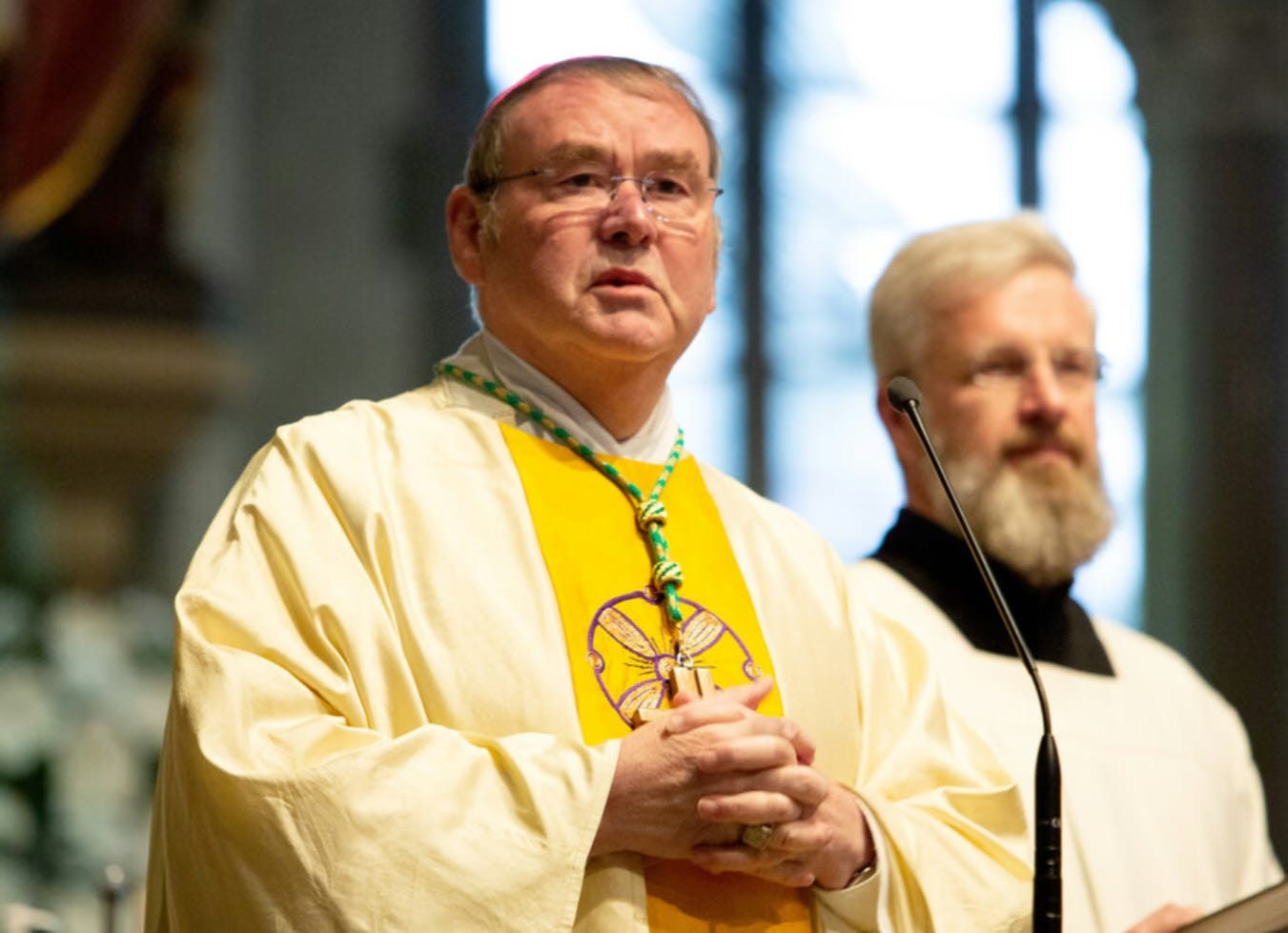
Then Auxiliary Bishop Ludger Schepers of Essen, the German Bishops’ Conference official responsible for queer pastoral ministry, entered the discussion. He said Catholic parishes must become “safe spaces” for queer people, complained that biblical passages had been removed from their proper context and used against them, and declared that the resulting contradiction between the Gospel and queer experience “calls us to conversion.” (Kirche und Leben)
Conversion had finally arrived in the story.
Its destination was the Church.
Ludger Schepers went considerably further.
His August 2 statement deserves to be read carefully because it illustrates the mechanism by which Catholic doctrine can remain technically present while its pastoral meaning is reversed.
Schepers asks whether Catholic parishes truly function as safe places for queer people. He declares the “safe space” concept a direct consequence of the Gospel. He says biblical passages have too often been removed from their salvation-historical context and deployed against people. He warns that parts of the worldwide Church allow “cultural homophobia” to shape their response. Finally, he speaks of the need for conversion because queer people have experienced a contradiction between unconditional divine love and parish life. (Kirche und Leben)
Read the statement searching for another word.
Chastity.
It never arrives.
Neither does homosexual conduct as a moral category, the Catechism’s teaching that every Christian, whatever his temptations, is called to chastity, Christ’s repeated summons to repentance from sin, or the possibility that authentic pastoral love sometimes requires telling a person something he desperately wishes were false.
Schepers never formally announces, “The Catechism is wrong.” He does something pastorally more effective. He changes the vocabulary through which the Catechism can be heard.
The person becomes an identity. Biblical prohibition becomes an experience of exclusion. Pastoral correction becomes a potential threat to safety. Recognition becomes the proof of love. Conversion migrates from the person confronting disordered desire to the Church confronting its historical failure to affirm.
The inversion occurs in grammar before anyone bothers convening a doctrinal commission.
This is how revolutions usually succeed inside institutions possessing old constitutions. The inconvenient text remains in the filing cabinet while a different set of assumptions governs daily life.
Scripture Is Suddenly “Out of Context”
Schepers’ complaint about biblical passages deserves particular attention.
Which passages? He does not say. What context changes their moral content? He does not explain. What did St. Paul mean in Romans 1 or 1 Corinthians 6? No exegesis appears. What did two thousand years of Catholic moral teaching misunderstand? Again, silence.
The insinuation does the work. Ordinary Catholics hear that Scripture has been weaponized by people who extracted verses from their proper context. The moral stigma gradually moves from the acts Scripture condemns to the Catholics who continue citing Scripture against them.
This technique leaves every formal escape route open. If challenged, Schepers can say he never denied the Bible. He merely opposed misuse of the Bible.
Yet a bishop who announces that biblical passages have harmed queer people incurs a corresponding duty to tell Catholics what those passages actually mean.
Otherwise “context” becomes theological chloroform.
The uncomfortable text remains on the page. Nobody has to feel it.
The Incoming Vatican Communications Prefect Has a Christological Problem
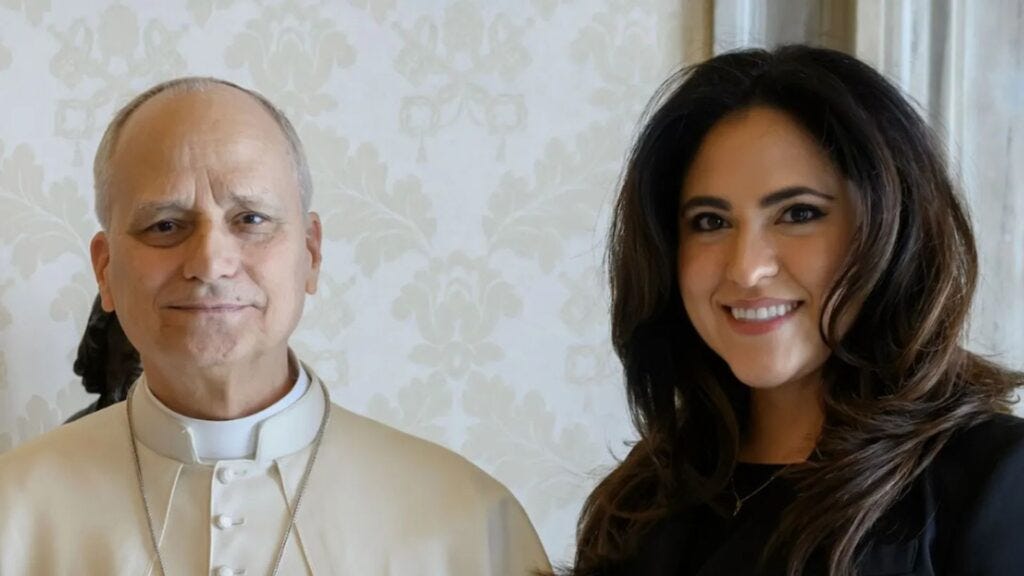
Meanwhile in Rome, Leo XIV was preparing his own communications revolution. On August 3 he received Maria Montserrat Alvarado, currently president and COO of EWTN News, whom he appointed in June to become prefect of the Dicastery for Communication on November 1. (Vatican Press)
In a 2022 conversation about Nostra Aetate, Alvarado discussed what she understood as “supersessionism.” While explaining the subject, she referred to the idea “that all Jews should become Christians,” then added that this was “obviously” wrong. The recording resurfaced after her Vatican appointment. (LifeSite)
Perhaps she expressed herself badly.
Someone taking over the communications apparatus of the Holy See should understand why that possibility offers limited comfort. Because the sentence she actually uttered collides with Catholic missionary doctrine in a remarkably direct way.
Even John Paul II wrote in Redemptoris Missio that “Jews and Gentiles alike” receive salvation through Jesus Christ. (Vatican)
Even Dominus Iesus says the Church must proclaim the truth revealed by Christ to all peoples and announce conversion to Jesus Christ and adherence to the Church. It explicitly distinguishes equal human dignity in interreligious dialogue from equality between religious doctrines. (Vatican)
The postconciliar Vatican’s own 1991 Dialogue and Proclamation states that interreligious dialogue and proclamation cannot replace one another and describes inviting people to become disciples of Jesus in the Church as a sacred duty. (Vatican)
And the apostles settled the original question rather vividly. They were Jews. Pentecost began with Jews. Peter preached Christ to Jews. Paul entered synagogues and preached Christ.
The primitive Church would have found the proposition that Jews should remain outside Christianity rather difficult to comprehend.
One may debate the terminology of “supersessionism” for several lifetimes. The Great Commission remains obstinately short.
The Office Matters Almost as Much as the Statement
Alvarado will occupy a powerful Roman position.
The Dicastery for Communication encompasses Vatican News, Vatican Radio, L’Osservatore Romano, the Holy See Press Office and other communications operations. The prefect therefore exercises immense influence over how the Roman institution presents itself to the world. (Vatican)
Her appointment also embodies a deeper Francis-era constitutional innovation that Leo has chosen to continue.
Conciliar Canon 129 says those in sacred orders are qualified for the Church’s power of governance, while lay Catholics may cooperate in its exercise. Canon 274 adds that offices requiring the power of orders or ecclesiastical governance belong to clerics. (Vatican)
Then came Francis’s Praedicate Evangelium.
Its fifth governing principle declares that Curial authority is vicariously received from the Roman Pontiff and concludes that “any member of the faithful can preside over a Dicastery or Office,” depending upon its nature and function. (Vatican)
Paolo Ruffini was already a layman, so the revolution hardly began with Alvarado. Her sex attracts headlines; the governing principle deserves more attention.
The older ecclesiology connected sacred governance organically to Holy Orders.
The newer Curial constitution discovers a way to locate the decisive source of governing authority in papal delegation, allowing a lay Catholic to exercise leadership over a Roman dicastery.
Leo inherited that structure.
He has now placed his own appointee inside it.
The Woman Chosen to Explain Rome Has Her Own “Healing” Annulment Theology
Maria Montserrat Alvarado’s biography adds another dimension to Leo XIV’s appointment.
Alvarado has spoken openly about a failed marriage and the subsequent ecclesiastical declaration of nullity. In a March 10, 2025 interview she said, “I’m not married, but I am annulled in the Church,” and argued that annulment can bring a person closer to the Church and to Christ. Her own process, she said elsewhere in the conversation, lasted roughly two years and became a form of healing for her.
That fact by itself proves nothing improper about her declaration of nullity. The Catholic Church has always recognized that apparent marriages can be invalid from the beginning. We have no access to Alvarado’s tribunal acts, and therefore no responsible basis for declaring that her decree was wrongly granted.
Her language about annulment, however, deserves attention.
A declaration of nullity is fundamentally a judicial finding about an objective historical fact: whether matrimonial consent produced a valid marriage in the first place.
It is not Catholic divorce.
It exists precisely because the Church maintains that a valid and consummated sacramental marriage cannot subsequently be dissolved by human authority.
Yet Alvarado speaks about the process largely through the vocabulary of healing, welcome and recovery after divorce. She has encouraged divorced Catholics to pursue it where appropriate and described the experience in strikingly therapeutic terms.
There is a subtle ecclesiological shift buried there.
Once annulment becomes culturally understood as the Church’s pastoral answer to a failed marriage, the tribunal begins to occupy a role it was never designed to perform. The question drifts from Was there ever a marriage? toward How can this person be healed from the marriage that failed?
The first question belongs to justice.
The second belongs to pastoral care.
Confusing them is one of the reasons the modern annulment regime has become so controversial.
Four Stories, One Governing Instinct
Treating these stories as four isolated scandals misses what makes them revealing. The phenomenon lies in their direction. The ambiguities keep leaning the same way.
Sacredness yields to informality. Moral condemnation yields to identity language. Repentance is redirected toward Catholics. Mission yields to interreligious coexistence. Sacred governance becomes detachable from Orders.
Traditional liturgy, meanwhile, encounters an institutional culture suddenly capable of microscopic distinctions, exact permissions, carefully restricted locations and Roman oversight.
No secret committee needs to coordinate any of this.
An institution develops instincts.
Its officials gradually learn which statements produce praise, which produce embarrassment, which Catholic doctrines require contextualization, and which violations justify immediate intervention.
Eventually those instincts reveal the institution’s operative faith more clearly than its library does.
What the Institution Defends Tells You What It Believes
These four incidents expose the practical hierarchy of values operating inside the contemporary ecclesiastical system.
A Catholic institution reveals itself through the boundaries it guards instinctively. Watch where officials become nervous. Watch which language triggers an immediate correction. Watch where dispensations proliferate and where rules suddenly acquire teeth.
In the cases before us, the pattern is difficult to miss. There is intense sensitivity around queer identity and the legitimacy of the reformed ecclesiastical order; remarkable elasticity around older Catholic instincts concerning sacred space, public morality and missionary conversion; and formidable canonical vigilance where the traditional Roman liturgy or traditionalist resistance enters the picture.
The old Catholic documents remain available to anyone with an internet connection. They can still be quoted against every new contradiction.
That provides reassurance only until one asks why Catholics must continually quote the Church’s own documents against the men and institutions claiming to speak for the Church.
That is the question Rome still cannot suppress with another decree.
And it is why the current crisis has moved far beyond preferences about Latin, lace, architecture or ecclesiastical tone. The controversy now reaches the nature of authority itself: what Catholic authority is, where it comes from, what it exists to guard, and whether an institution can reverse those purposes so consistently that “abuse of authority” ceases to explain what Catholics are watching.
The answers will determine considerably more than where the next Mass is allowed to be celebrated.
If you value independent Catholic analysis and want to help keep this work going, you can make a contribution or subscribe below. Every donation and subscription directly supports the writing, research, and production of Hiraeth in Exile.
Thank you for helping preserve independent Catholic journalism rooted in truth and tradition.
Hiraeth In Exile is a reader-supported publication. To receive new posts and support my work, consider becoming a paid subscriber.
Comments
Nothing yet. Say the first thing.
Sign in to join the conversation.