
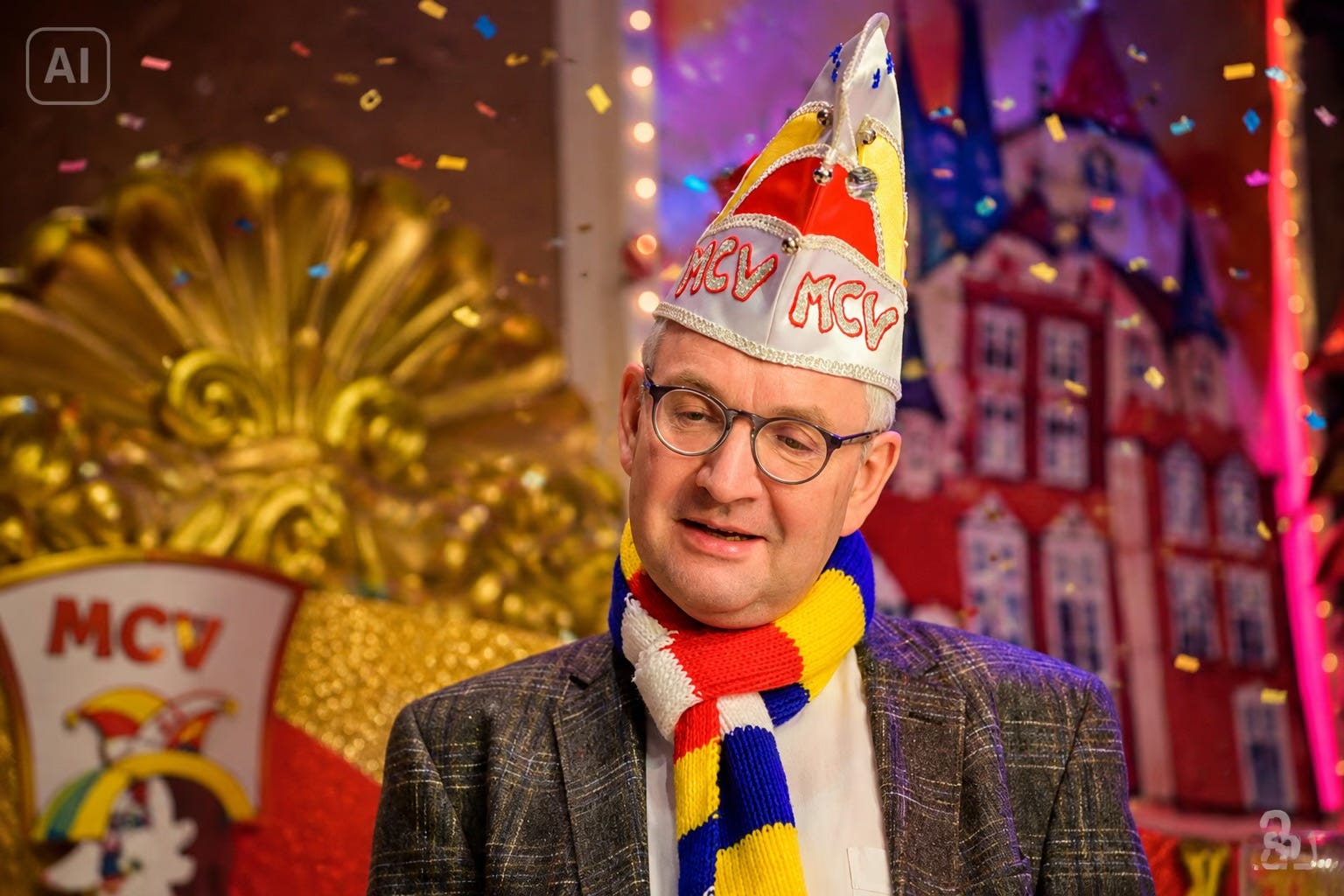
Peter Kohlgraf has managed to compress the ecclesiastical crisis into three sentences.
The Bishop of Mainz was asked this week whether laypeople may preach the homily during Mass despite Rome’s recent refusal to permit the practice in Germany.
His answer began correctly. According to the Roman norms, he acknowledged, a laywoman cannot preach the homily. He cannot give her permission. “Canon law does not allow it and that remains our basis.”
Then came the next sentence.
Lay preaching has nevertheless become customary in some parishes of his diocese.
Then the third:
“If I learn of this, I will not take disciplinary action or impose sanctions under canon law.”
He added that he does not encourage the practice and cannot permit it. He will simply “take note” that it occurs. (CNA Deutsch)
This would already be an extraordinary statement from a diocesan bishop about a liturgical rule. It becomes considerably more revealing when one reads what Rome actually told the Germans.
The Dicastery for Divine Worship rejected the German bishops’ request for an exception on June 17. Vatican News summarized the ruling in emphatic terms: reserving the homily to a priest or deacon is “not a merely disciplinary norm” because it arises from the nature of the liturgy itself. The homily is connected to the sacramental mission received through Holy Orders and to the unity between Word and Sacrament in the Eucharistic celebration. (Vatican News)
Kohlgraf therefore knows the rule and the theological reason and he knows Rome just denied the German bishops an exemption. He knows he lacks power to dispense from it. And he has announced beforehand what he intends to do when his own parishes violate it.
Nothing.
If anyone still believes the crisis in the Church is principally a crisis of Catholics refusing to obey their legitimate superiors, Mainz has supplied a useful case study.
Rome Had Just Said No
Germany did things by the book. The Synodal Way called for lay men and women to preach during Mass. The German Bishops’ Conference then formally petitioned Rome for an indult—an exception from the normal law. The Vatican considered the request and refused it.
The Dicastery for Divine Worship said the restriction could not simply be waived because the matter reaches beyond administrative convenience. The homily belongs to the liturgical act itself and is bound to the ordained ministry. (Vatican News)
This is significant because Germany’s bishops had presented the issue as an obvious pastoral development. The country possesses professionally trained lay theologians and pastoral workers. Many already exercise substantial responsibilities in parishes. Why, the argument runs, should a theologically educated woman who spends her week directing pastoral programs be forbidden to explain Sunday’s Gospel while an exhausted priest gives a mediocre sermon?
That argument has considerable emotional force in the Church Germany has constructed. It also rests upon precisely the ecclesiology Rome rejected. The homily is more than a lecture delivered by whoever possesses the best theology degree.
The Vatican’s own Homiletic Directory says it is an act of worship. Because it belongs intrinsically to the liturgy, it is entrusted to bishops, priests and deacons rather than to any baptized Catholic who happens to speak well. The ordained minister’s role at the ambo is related to the same sacramental order that places him at the altar. (Vatican)
Germany sees competence. The traditional discipline sees office. Germany sees a microphone. The Church sees Holy Orders.
Then Read the Part Kohlgraf Should Find Most Uncomfortable
Redemptionis Sacramentum was promulgated under John Paul II in 2004 to address liturgical abuses. Its language concerning lay homilies is almost comically specific in light of Mainz. The homily at Mass, it says, may be entrusted to another priest or sometimes a deacon, “but never to a layperson.”
Then comes paragraph 65:
Any earlier norm admitting non-ordained faithful to give the homily is abrogated, and the contrary practice “cannot be permitted to attain the force of custom.” (Vatican)
Read that again beside Kohlgraf.
The Vatican instruction anticipates exactly the excuse now offered in Mainz. You cannot say: “Well, people have been doing it for years” or “It has become established locally.” You cannot allow repetition of the abuse to transform the abuse into a custom. Rome explicitly closed that escape hatch.
Kohlgraf then told katholisch.de that lay preaching has indeed become an “eingebürgerte Praxis”—an established or naturalized practice—in some Mainz parishes and that he will leave it alone. (CNA Deutsch)
The document says the practice cannot be allowed to acquire the force of custom. The bishop says it has become customary and he will not change it. For once, interpreting the documents requires very little theology.
Canon Law Also Tells the Bishop What His Job Is
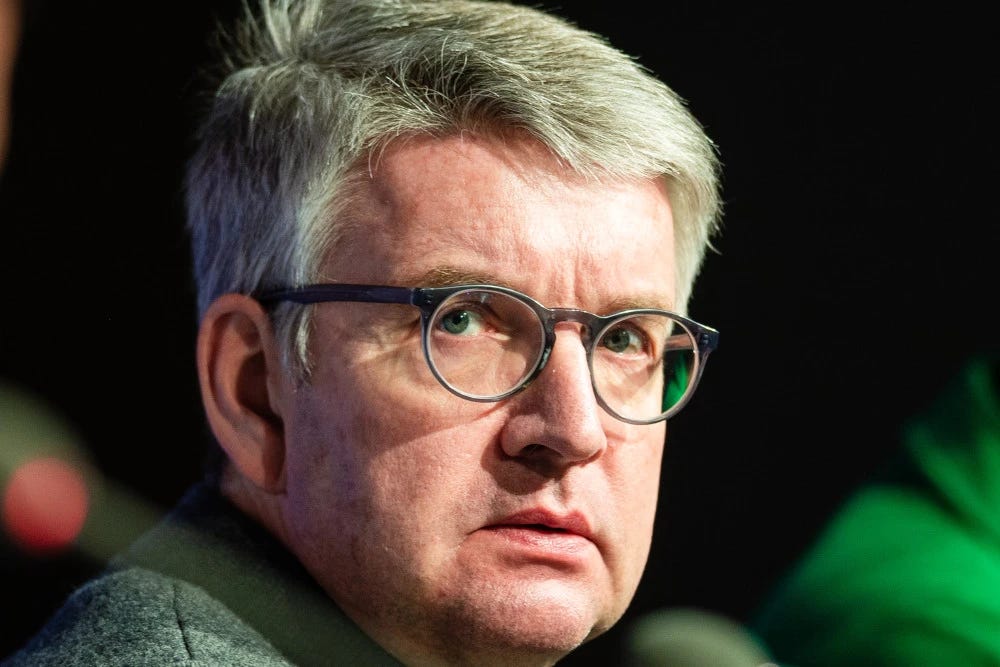
Kohlgraf presents his position as a kind of canonical middle ground. He will neither authorize the lay homily nor punish it. Rome says no. He says no. The parish does it anyway. Everyone has technically maintained his position.
This is bureaucratic Catholicism at its finest: orthodoxy preserved on paper while the prohibited practice becomes ordinary life. The difficulty is that canon law assigns bishops responsibilities beyond issuing correct opinions.
Canon 392 says that because a bishop must protect the unity of the universal Church, he is bound to promote the common discipline of the whole Church and urge observance of ecclesiastical laws.
The next paragraph becomes almost embarrassingly specific. The bishop must exercise vigilance so that abuses do not enter ecclesiastical discipline, especially concerning “the ministry of the word” and “the celebration of the sacraments.” (Vatican)
Those happen to be the two things at issue here. The ministry of the word. Inside the celebration of the Eucharist. Kohlgraf’s obligation is therefore difficult to reduce to: I personally cannot give permission, so I shall watch other people do it. The diocesan bishop is precisely the person canon law charges with preventing the practice from taking root. And Redemptionis Sacramentum says the same thing yet again: the diocesan bishop must “diligently oversee the preaching of the homily.” (Vatican)
Kohlgraf is not some helpless spectator in the back pew.
He is the bishop of Mainz.
The Great German Art of Disobedience Without Saying “Disobedience”
Kohlgraf is careful. He does not stand before a camera and cry, “Rome has no authority over me.” He says canon law remains the basis. He does not issue a diocesan decree authorizing women to preach. He says he cannot. He does not describe the Vatican ruling as meaningless. He merely calls parts of Rome’s reasoning “not entirely consistent.” (CNA Deutsch) Then the forbidden practice continues.
This is the sophisticated form of ecclesiastical rebellion developed in the postconciliar Church. You preserve verbal communion while emptying command of consequence.
Rome speaks. The bishop respectfully receives. The bishop explains his reservations. Local practice remains unchanged. Nobody commits the vulgar offense of formally rejecting authority. Authority simply ceases to govern.
German Catholicism has perfected this technique because open schism would create unnecessary legal and financial complications. Why leave when one can remain inside, collect the church tax, occupy the cathedral, participate in the bishops’ conference, vote in synodal structures, and move steadily in the desired direction while Rome periodically sends concerned letters?
The paper says no. The parish says yes. The bishop says he sees both sides. Years pass. Then someone proposes recognizing the established reality.
This is how revolution becomes custom while everyone insists the constitution remains intact.
And Then There Is the SSPX
Now recall what happened six weeks ago.
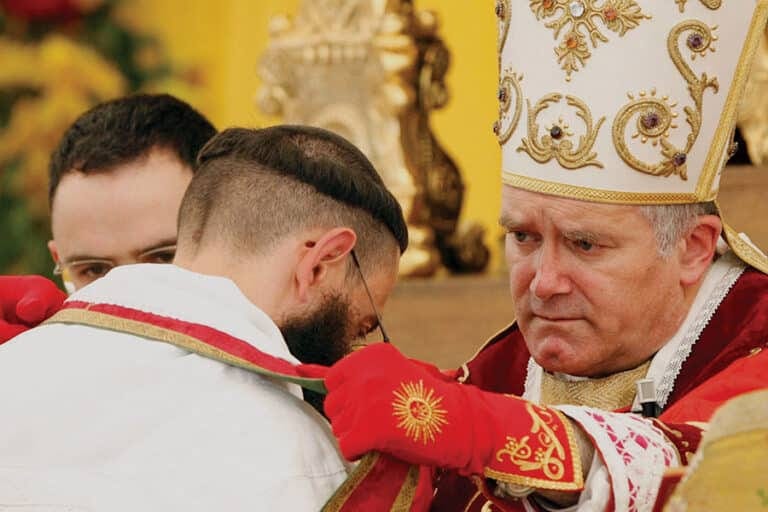
On July 1, the Society of Saint Pius X consecrated four bishops without pontifical mandate.
Rome had warned repeatedly that proceeding would constitute a schismatic act. After the consecrations, the Dicastery for the Doctrine of the Faith declared that the consecrators and those consecrated incurred excommunication. Vatican News described the act as a rupture of communion and emphasized that it had occurred against Leo XIV’s repeatedly expressed will. (Vatican News)
The SSPX case is canonically different from a lay homily. Consecrating bishops without a papal mandate is a graver act under current canon law. Yet the comparison exposes something larger than equivalence between two canonical offenses.
It exposes the culture of enforcement.
When traditionalists invoke necessity and resist a Roman command because they believe the Faith and sacraments require bishops capable of preserving the traditional priesthood, Rome has no difficulty recognizing disobedience. It can identify the guilty parties. Issue warnings. Quote the canon. Specify the penalty. Declare excommunication. Publish the decree. Explain why unity depends upon obedience to the Roman Pontiff.
No bishop says, “Well, episcopal consecrations without mandate have become an established practice in that community, so I will simply take note.” Nobody worries that enforcement might encourage “denunciation” or praises the richness contributed by unauthorized consecrators. Nobody distinguishes between officially permitting the act and declining to do anything about it.
Rome knows how authority works when the SSPX is involved.
Mainz demonstrates the other model.
Kohlgraf Is Worried About “Denunciation”
His concern becomes even more revealing in the fuller German reporting.
Kohlgraf said the renewed prohibition from Rome worries him because it could encourage Denunziation—denunciation or informing—against laypeople who preach.
He would prefer Rome to permit lay homilies, at least in German-speaking countries. He describes trained pastoral workers capable of preaching as a “wealth for the Church.” (Kirche und Leben)
Think about the inversion. The Vatican declares that lay preaching at Mass contradicts a norm rooted in the sacramental nature of the liturgy. The bishop worries about the people who might report violations. A Catholic who expects the bishop to enforce liturgical law risks becoming the problem.
We have seen this mechanism repeatedly. First a prohibition becomes unpopular. Then violating it becomes common. Then reporting the violation becomes uncharitable. Then enforcement becomes pastorally insensitive. Then the established abuse becomes evidence that the prohibition no longer reflects the sensus fidelium.
Finally Rome changes the rule and calls the result discernment.
What happened during the intervening twenty years disappears from the story.
The revolution merely “developed.”
This Is About the Priesthood
The lay-homily debate can look trivial beside the spectacular scandals of modern Catholicism. It is anything but trivial. The argument reaches directly into the postconciliar crisis of the priesthood.
Traditional Catholic worship surrounds the priesthood with distinctions. The priest enters the sanctuary because he has received something the layman has not received. He touches sacred things in a manner proper to his office. He offers sacrifice. He absolves. He blesses with sacerdotal authority. He preaches as one entrusted with an ordained teaching office.
The modern ecclesiastical instinct repeatedly works to flatten those distinctions. The sanctuary fills with lay ministers. Extraordinary ministries become ordinary. Parish leadership becomes detached from priestly government. Pastoral workers take roles once understood as flowing naturally from clerical office. Female altar servers normalize women acting within the sanctuary. Synodal language emphasizes baptismal equality until sacramental differences begin sounding like regrettable exclusions.
The homily is therefore another frontier. If preaching at Mass is fundamentally about who can give the best reflection, Holy Orders looks incidental. If it belongs organically to the priestly and diaconal office within the sacred liturgy, ordination matters. Rome’s June decision surprisingly defended the second proposition with unusual clarity. Kohlgraf’s pastoral practice quietly returns to the first.
Roche Is Right Here, Which Makes the Irony Better
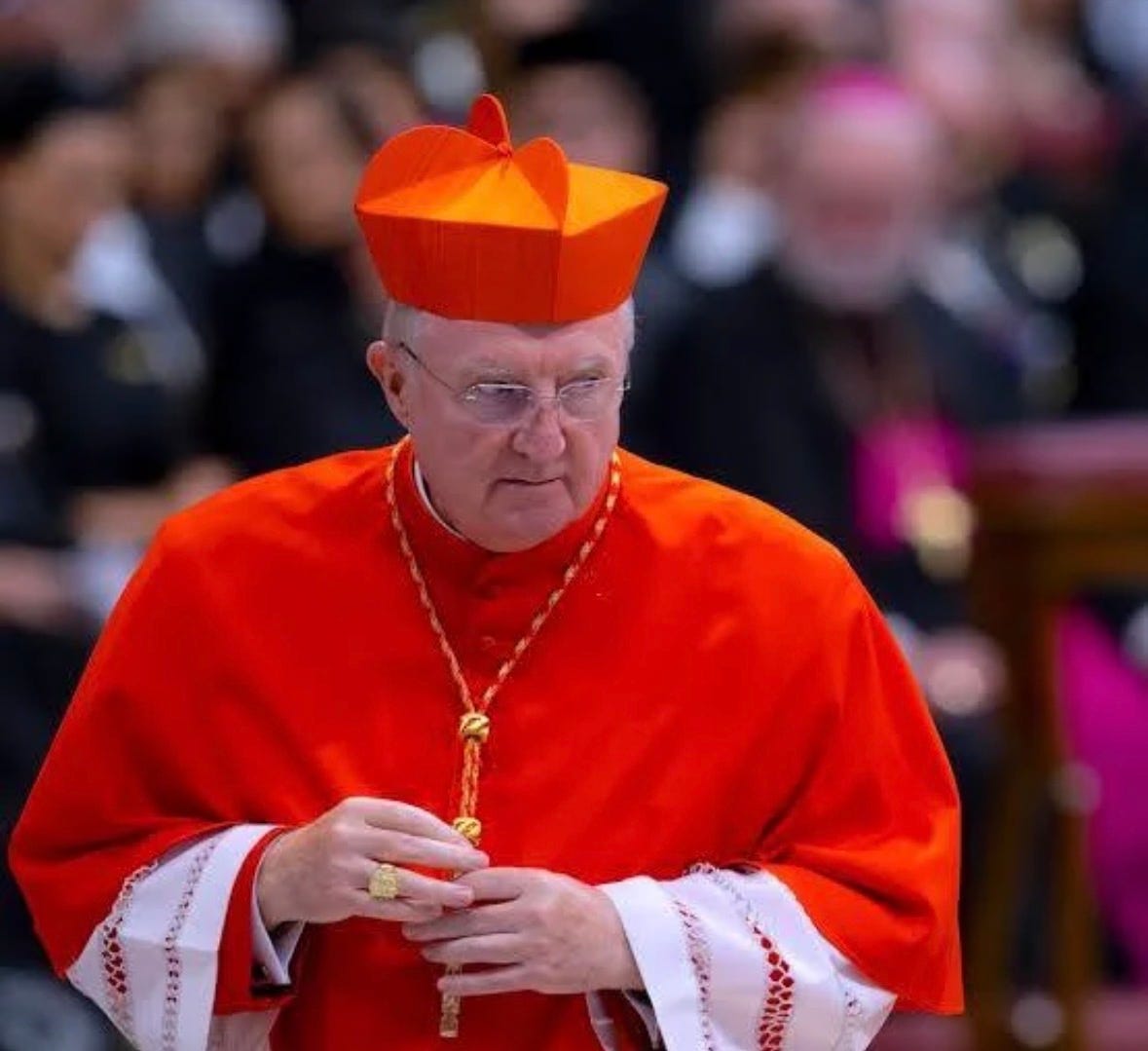
Traditional Catholics have abundant reasons to criticize Cardinal Arthur Roche.
He has been one of the central architects and defenders of the campaign against the traditional Roman Mass. Hiraeth has documented his arguments at length. Leo XIV retained him, commissioned his liturgical briefing, reviewed the case he presented to the cardinals, and continues enforcing the regime associated with Traditionis Custodes. (Big Modernism)
Yet Roche is plainly right about lay homilies. That makes the Mainz affair more useful. This is no dispute between traditionalists and progressive liturgists. The Vatican department responsible for the reformed liturgy has drawn a boundary inside the reformed liturgy itself.
Germany wants to cross it.
The line is hardly traditionalist nostalgia. It is current canon law, current Vatican policy, John Paul II’s explicit instruction, and the theological logic of the postconciliar Homiletic Directory. (Vatican News)
Even this line proves too much for the synodal Church.
That tells us where the movement is heading. Yesterday’s liberalization becomes today’s rigid clericalism. Yesterday’s revolutionary reform becomes today’s oppressive tradition.
There is always one more barrier to dismantle.
Traditionis Custodes Makes the Contrast Almost Painful
Francis’s Traditionis Custodes describes the diocesan bishop as the “moderator, promoter, and guardian of the whole liturgical life” of his diocese. It assigns him responsibility for regulating celebration of the traditional Roman rite according to directives from the Apostolic See. (Vatican)
Traditional Catholics have become intimately familiar with this episcopal responsibility.
Bishops scrutinize locations. Mass times. Priests. Permissions. Parish churches. Personal parishes. Holy Week. Sacraments. Bulletins. Announcements. Whether another church building is available. Whether a group is expanding. Whether young Catholics might be joining.
In Pittsburgh, Bishop Mark Eckman recently allowed a twenty-year-old traditional Mass community to end rather than seek another Roman extension. He explained that the Holy See expects these permissions eventually to cease and traditional Catholics to migrate toward the postconciliar rites. (Big Modernism)
That is episcopal governance in action.
A bishop possesses authority. Rome possesses expectations. The law has a destination. The bishop implements it.
Then cross the Atlantic.
Rome tells Mainz that lay homilies violate a norm arising from the nature of liturgy itself. The bishop discovers laissez-faire government.
Apparently the diocesan bishop is a mighty “guardian of the liturgical life” when a priest opens the 1962 Missal.
When a laywoman walks to the ambo in violation of a rule Rome says cannot even acquire the force of custom, the guardian becomes an anthropologist.
He observes the local custom.
He takes note.
Imagine the Principle Applied to Traditional Catholics
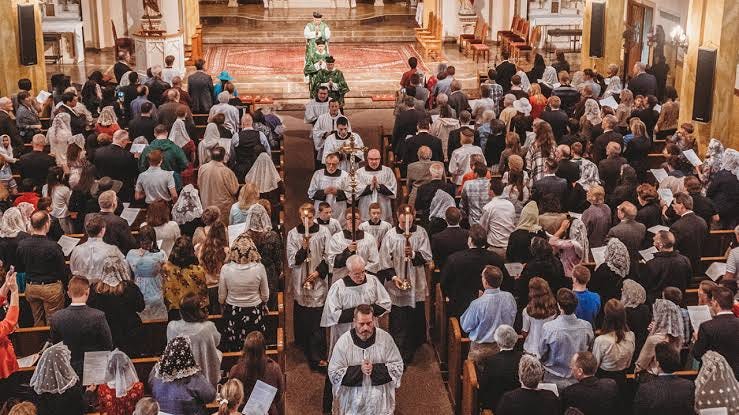
The simplest way to expose the absurdity is to borrow Kohlgraf’s own formula.
Suppose a German bishop said this:
According to Rome, I cannot authorize the traditional Mass in these parish churches. Canon law and the Roman directives remain our basis. Nevertheless, in several parishes priests have continued celebrating it and the practice has become established. If I learn that this is happening, I will neither intervene disciplinarily nor impose canonical sanctions. I do not encourage it. I simply take note.
How long would that arrangement survive?
Suppose an SSPX-friendly bishop said:
Rome considers these episcopal consecrations unlawful. I cannot authorize them myself. Nevertheless, there is an established practice in the Society. I will simply take note.
The Apostolic Nuncio would locate his telephone number before lunch.
This is why endless lectures about traditionalist “obedience” ring so hollow. The institutional Church tolerates enormous practical disobedience when the disobedience travels with history.
Move toward lay governance. Move toward female liturgical roles. Move toward liberalized sexual morality. Move toward synodal restructuring. Move toward the attenuation of sacerdotal distinctions.
Rome may object, delay, negotiate, request another study, or publish a contrary document. The innovators understand that time is on their side.
Move toward the traditional Roman liturgy, and history suddenly stops.
There is a permission system.
Vatican II Cannot Rescue Kohlgraf
There is an additional embarrassment.
The German trajectory is usually justified as the realization of Vatican II. Yet the Vatican’s own argument against lay homilies rests heavily upon postconciliar liturgical theology.
Sacrosanctum Concilium taught that liturgical ministers should perform those parts belonging to their office. The reformed Roman Missal reserves the homily to an ordained minister. The 1983 Code reserves it. John Paul II reinforced the prohibition. The 2014 Homiletic Directory explained its sacramental rationale. Francis retained it.
Leo XIV’s Dicastery for Divine Worship has now reaffirmed it and refused Germany an exception. (Vatican)
The Germans are already moving past the liturgical settlement created by Vatican II’s official interpreters.
This is what traditionalists have predicted for decades. Revolution possesses no natural stopping point. Once the governing principle becomes adaptation to contemporary expectations, every settlement ages rapidly.
The Novus Ordo itself becomes too clerical. The ministries created to encourage participation become insufficiently participatory. The expanded role of women becomes insufficient because the homily remains reserved.
Tomorrow the diaconate will become the problem.
Then priesthood.
The logic keeps going because equality understood as functional interchangeability can never make peace with a sacramental hierarchy.
The Bishop Who Refuses to Govern
There is a human temptation to find Kohlgraf’s position moderate. At least he admits the law. At least he refuses to issue an illegal permission. At least he openly acknowledges the limits of his authority.
Those concessions are preferable to outright falsehood.
They also reveal the central failure.
A bishop exists to govern.
Canon law does not appoint him as a commentator on rules issued elsewhere. He is neither a podcast host nor an ecclesiastical ombudsman. He received episcopal office to teach, sanctify and govern a particular Church in communion with the universal Church.
Canon 392 tells him exactly what this means when the common discipline is being violated.
Urge observance.
Exercise vigilance.
Prevent abuses, especially abuses concerning the ministry of the Word and the sacraments. (Vatican)
Kohlgraf instead has developed a model of episcopal government in which the bishop acknowledges that an act is forbidden, announces that he cannot permit it, and promises those committing it that they need not fear him.
That is more than weakness.
It empties law of meaning.
A prohibition whose enforcement is rejected in advance becomes advice.
The Church of Permission Has a Back Door
Traditional Catholics have spent years discovering that the postconciliar Church operates through permissions.
Can we have the Mass?
Ask the bishop.
Can the bishop allow it in this church?
Ask Rome.
Can this priest celebrate?
Check the rescript.
Can the old ritual be used?
Consult the latest responsum.
Can the parish continue after two years?
Apply again.
The old Catholic inheritance becomes an exception administered by bureaucrats.
Germany has discovered a faster method.
Do the prohibited thing.
Let it become established.
When Rome objects, acknowledge the rule.
Continue.
A generation later, request that the law catch up with pastoral reality.
This is the asymmetry traditional Catholics keep seeing and conservative Catholics keep explaining away as a collection of unrelated circumstances.
The pattern eventually explains itself.
The Real Crisis Is Authority Without a Common Faith
Kohlgraf’s interview points toward the deeper problem beneath almost every current Catholic dispute.
Law depends upon a community that believes the law expresses something real. If the bishop actually believes the homily is sacramentally connected to Holy Orders, habitual lay preaching will trouble him. If he sees the prohibition primarily as an outdated Roman restriction imposed upon gifted pastoral workers, enforcement will feel petty and cruel. His behavior follows his theology.
That is why administrative solutions continually fail in the postconciliar crisis. Rome writes another document. A bishop interprets it through another ecclesiology. The parish lives according to a third. Everyone recites “communion.”
The same institution contains people who no longer agree about what priesthood, liturgy, authority, mission, sexuality, marriage or even ecclesial membership mean.
Then traditionalists are told that institutional submission will heal the crisis.
Submission to what common belief?
That question has haunted the Church since Archbishop Lefebvre first recognized that the Roman authorities could possess jurisdiction while using it to impose the very reforms he believed were destroying the Faith.
Sedevacantism presses the question further: at what point does habitual opposition between office and the traditional ends of that office create an ecclesiological problem that “bad governance” can no longer adequately describe?
Mainz offers no final answer.
It supplies another piece of evidence.
Rome Can Still Surprise Us
There is one possibility worth watching. Leo XIV’s Vatican could intervene. The bishop’s words are public. The rule is unmistakable. The Dicastery for Divine Worship issued its answer less than two months ago. Redemptionis Sacramentum specifically orders correction of this practice. Canon 392 specifically charges the bishop with enforcing common discipline. (Vatican News)
Rome therefore has a clean test. No complicated doctrinal investigation is required. No anonymous source. No leaked memorandum. No disputed translation.
The bishop has said what he will do.
If the Vatican insists that the rule concerns the sacramental nature of ordained ministry, it can require Mainz to enforce it.
And if nothing happens, the silence will carry its own meaning.
Because after July 1 nobody can claim Rome has forgotten how to discipline disobedience.
The SSPX has the paperwork to prove otherwise.
If you value independent Catholic analysis and want to help keep this work going, you can make a contribution or subscribe below. Every donation and subscription directly supports the writing, research, and production of Hiraeth in Exile.
Thank you for helping preserve independent Catholic journalism rooted in truth and tradition.
Comments
Nothing yet. Say the first thing.
Sign in to join the conversation.