
…for wonder is the feeling of a philosopher, and philosophy begins in wonder.
—Plato, Theaetetus
Plato has Socrates tell us how philosophy begins. But how does it end?
Sometimes, you end up in Wittgenstein’s fly-bottle, trapped in a state of confusion by a mistake you didn’t even know you made. Other times, you get bored. But if all goes well, philosophy is supposed to have a happy ending—with your mind being irrevocably blown into a trillion cosmic shards of oh my GOD-ness.
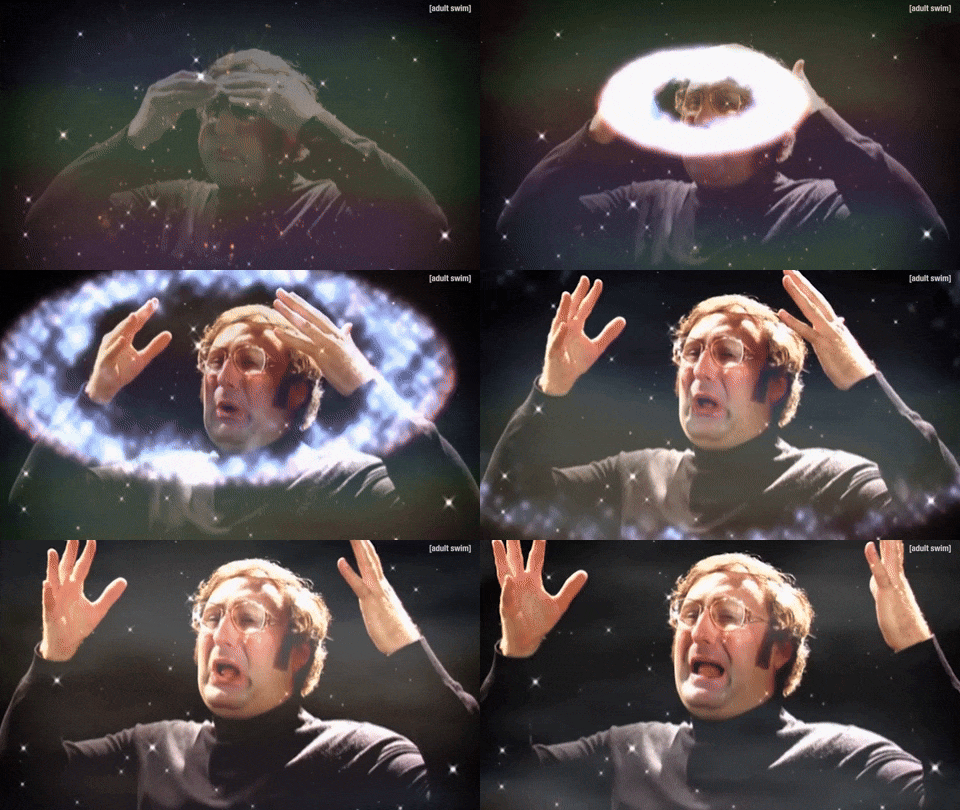
That’s the feeling I’m chasing. For me, it’s a spiritual pursuit—words like “devotion,” “longing,” and “higher purpose” come to mind. I know that sounds pretentious. But it’s how I actually feel!
What makes a theory mind-blowing is how profoundly and unexpectedly it recasts something you thought you already understood. It’s not every day you get your mind blown, but when it happens, it’s life-affirming—or better, life-redeeming. I will gladly crawl for weeks through a lifeless desert of boring journal articles, half-assed books, and zero-assed talks if at the end of it all I reach the oasis of mind-blowing ideas. Then I’ll do it again. And again. For however long I have it in me.1
Sometimes, the oasis may turn out to be a mirage. For those seeking revelation, it’s tempting to open your mind by switching off the part of it tasked with detecting bullshit. This can be dangerous for all the obvious reasons. I remember a guy at my high school—giant ego, way into psychedelics—who always had “theories” of everything. One day he let me in on his grand theory of human psychology. You see, quantum mechanics teaches us that every worldly object is vibrating, including the human brain. When you have a negative emotion—a “vibe,” if you will—that literally creates a dissonance with other people’s minds, spawning a cascade of pain and disruption. But if you have a positive mindset, the vibrations in your brain will resonate with those around you, as well as with the wider universe, as you sync your way into a cosmic harmony. Your reward for achieving quantum nirvana (my term) is that the world will begin responding favorably to your vibes, and your deepest longings will manifest in physical reality.
This is industrial-strength bullshit. Words like “irrational” and “foolish” don’t really do it justice. When you let yourself go like this, cognitively speaking, you are wronging yourself and besmirching the entire human race—or so I feel.
I think of the vituperative language of W. K. Clifford. The quantum vibe guy had no right to believe on such evidence as was before him, and therefore must be “held responsible” for whatever reckless behavior springs from his wishful thinking.
(Coda: after high school, Mr. Quantum did end up in what I’ll refer to here as “legal trouble.” Clifford was right that beliefs are intimately connected to actions, and even seemingly trifling beliefs can lead over time to deeper issues in one’s worldview and comportment—think of how a single botched line of code can be used to hack an entire network.)
Still, it won’t do to simply suspend judgment about all matters of potential controversy and believe only what can be infallibly known. What would there be left to believe? Not much! There is something cowardly about such intellectual reticence.
So the philosopher is in a bind. On the one hand, you want to open your mind to the deepest, most mind-blowing truths out there. On the other hand, you don’t want to believe in nonsense. (“Be open-minded—but not so much your brain falls out.”) This, for me, creates a lot of useful tension. I’m always going back and forth between trying to generate “eureka!” moments and trying to prove that my ideas don’t actually make any sense. (Though if I’m being honest, I spend more time on the “eureka!” side.)
If you zoom out to look at philosophy as a whole, you start to see the same tension on a more ecological level. Some philosophers are after the most mind-blowing theories—generating lots of “big if true” hypotheses. Other philosophers practice unrelenting skepticism, refusing to enjoy the entertaining of outlandish or unsupported hypotheses except insofar as they can be justified or rationalized—the motto here is “big only if true.”
Some examples of “big if true” philosophical views:
Nonreductive realism about consciousness, morality, color, and the self
Presentism and 3-dimensionalism in the philosophy of time
Pluralist deontology without aggregation
Naive realism about perception
Libertarianism about free will
To me, at least, these are all extremely mind-blowing views, on which the world is a kind of technicolor tapestry—what Wilfrid Sellars called the “manifest image.”
The “big only if true” approach, meanwhile, tends to favor views that are supported by clear arguments though they lead to consequences that are strange, radical, bleak, or otherwise counterintuitive:
Anti-realist theories of consciousness, morality, color, and the self
Eternalism and 4-dimensionalism
Consequentialism or even rational egoism
Indirect realism about perception
Skepticism about free will
These views (again, just me talking here) seem to drain the color from the world until all that is left is what can be captured in naturalist or empiricist terms—Sellars’s “scientific image.”
Some philosophers enjoy nothing more than to stick up for the manifest. Others are never happier than when they get to scold their colleagues for straying from the scientific. Personally, I tend to spend most of my career on the “manifest image” side. This makes me what the ancient Greeks would have called a dogmatist, as opposed to a skeptic—though as I said before, I think any respectable philosopher has to subject their own views to the hot light of skepticism at some point, on pain of lapsing into kookhood.
To be clear, I am hardly the only philosopher who goes back and forth. Judith Jarvis Thomson—best known for coining “the trolley problem” and writing “A Defense of Abortion”—defends all sorts of “big if true” views: three-dimensionalism about persistence, anti-aggregative deontology, objectivism about morality. But she can also be ruthlessly skeptical, sometimes for abstruse reasons.2 Robert Nozick apparently had trouble writing up any of his positive views because he was so naturally inclined towards objections.
My favorite line ever about the duality of philosophy—the tension between its productive and destructive forces—comes from Iris Murdoch.
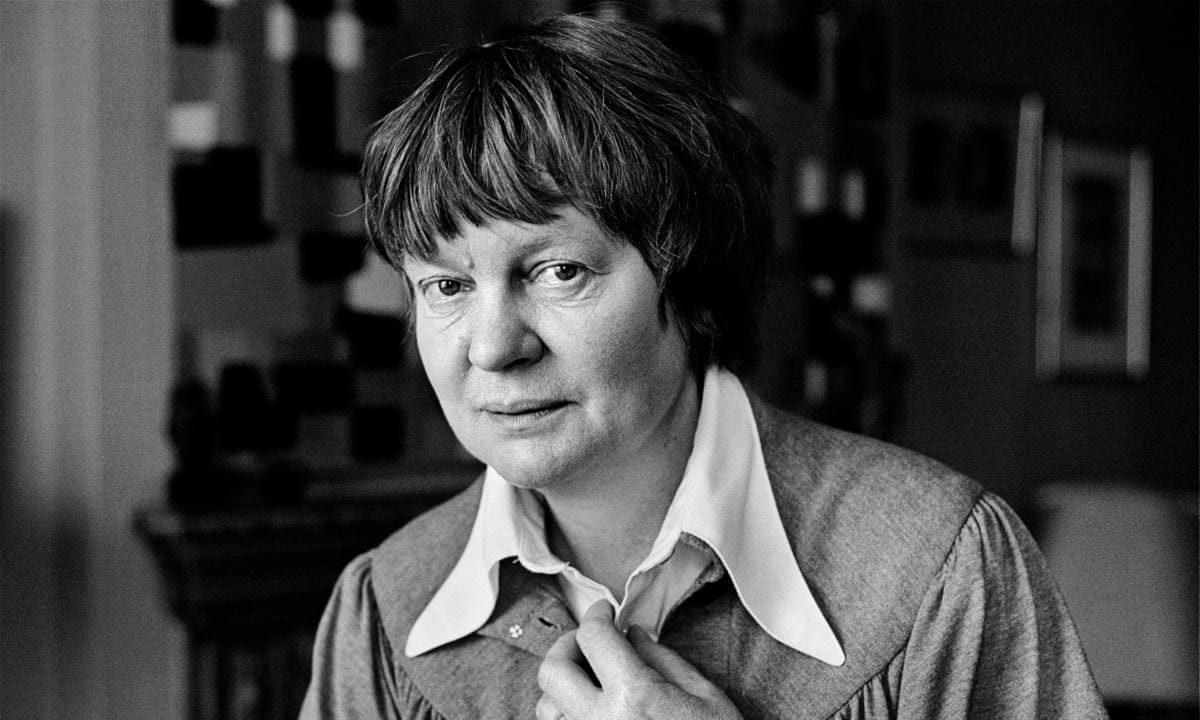
There is a two-way movement in philosophy, a movement toward the building of elaborate theories, and a movement back again toward the consideration of simple and obvious facts. McTaggart says that time is unreal, Moore replies that he has just had his breakfast. Both these aspects of philosophy are necessary to it.
Here McTaggart is attacking the manifest, but some might see his view as rather mind-blowing. McTaggart’s take on time is highly revisionary, whereas Moore (in Murdoch’s telling) is standing up for common sense. Murdoch’s duality is not quite the same as what I’m driving at with my distinction between “mind-blowing but risky” ideas and “boring but defensible” ones. And here I have to admit that arguments for the scientific image can seem mind-blowing, too, in their own way. Just as one can marvel at the manifest in its metaphysical richness, one can marvel at the scientific debunking of profound illusions—i.e. at the revelation that there is no freedom, no self, no time, no goodness, no color, nothing but atoms banging into one another in the void.3
Maybe there isn’t any theory-neutral way to say which theories are mind-blowing. The realist hopes to awe us with the improbable splendor of the manifest; the anti-realist wants to shock us with the austerity of the world revealed by science.4 Perhaps, when I tell you that the former type of view is “big if true,” I’m just reporting my own intellectual temperament. Well, while I’m at it, let me also report that I don’t mind it when someone shows me that so-and-so’s theory is more mind-blowing than I’d realized. In fact, I’m grateful. There’s really no better way to come to see a familiar view with fresh eyes.
So there you have it. “Big if true” theories are worth questing after, even though “big only if true” discipline is essential for warding off quackery.
If only there were some Hegelian synthesis of these two conditionals, which could elegantly summarize the ethos of adventurous philosophy…—even better, what if you could subscribe to said Hegelian synthesis, with an option to pay Substack’s lowest possible subscription fee as a way to show support for freely accessible, high-effort philosophy content?
David Foster Wallace was getting at this when he talked about the “click.”
For most of my college career I was a hard-core syntax wienie, a philosophy major with a specialization in math and logic. I was, to put it modestly, quite good at the stuff, mostly because I spent all my free time doing it. Wienieish or not, I was actually chasing a special sort of buzz, a special moment that comes sometimes. One teacher called these moments “mathematical experiences.” What I didn’t know then was that a mathematical experience was aesthetic in nature, an epiphany in Joyce’s original sense. These moments appeared in proof-completions, or maybe algorithms. Or like a gorgeously simple solution to a problem you suddenly see after half a notebook with gnarly attempted solutions. It was really an experience of what I think Yeats called “the click of a well-made box.” Something like that. The word I always think of it as is “click.”
One example that comes to mind is Thomson’s argument against “positive rights,” i.e. rights to have your life saved—as opposed to “negative rights” like the right not to be killed.
The argument in The Realm of Rights basically goes like this. Thomson thinks we need to have a systematic theory of rights, which has to include an account of which rights are more stringent than which. The only acceptable principle she can find is
The Aggravation Principle: a right is stringent to the extent that infringing it tends to harm the right-holder.
This principle, correctly, says that your right not to be killed is very stringent, whereas your right not to be pinched is not so stringent. Killing is more harmful than pinching. But notice that killing is not more harmful than allowing someone to die—either way, the harm is the same: a death. So a “positive right” to be saved must be just as stringent as a “negative right” not to be killed. But that would destroy the most basic datum in the theory of rights—namely, that you can’t kill one person (against their will) to save another. The negative right should be stronger! So, Thomson concludes that we must not have positive rights, after all. (Frances Kamm’s reply, which is quite natural, is just to deny the Aggravation Principle. Kamm would rather get the cases right even if that means ending up with a messier philosophical system.)
I’m also reminded of Tom Hurka’s distinction between “inherent explanations” and “external explanations.” An inherent explanation explains something using concepts that are continuous with one another—e.g. when W. D. Ross explains the duty to tell the truth as the keeping of a promise implicit in our practice of conversation. By contrast, an external explanation draws on concepts that from some distant, allegedly more fundamental part of reality—e.g. when John Rawls explains justice using the idea of a fair bargain. External explanations tend to be “big if true.”
No posts
Comments
Nothing yet. Say the first thing.
Sign in to join the conversation.