
Over the last decade, the public has been losing trust in higher education, and much of the decline has been our fault. To give just two examples:
In 2024, when a wave of protests over the Israel–Gaza War swept across campuses, we couldn’t convincingly tell the public that we were adhering to reasonable and impartial principles about on-campus speech.
This year, Jason Arday—formerly Professorial Chair in the Sociology of Education at Cambridge University—was exposed for having plagiarized huge amounts of his work and likely having faked quotations from interviewees; rather than take the allegations seriously, his employer first tried to dismiss them as a “vile campaign.”
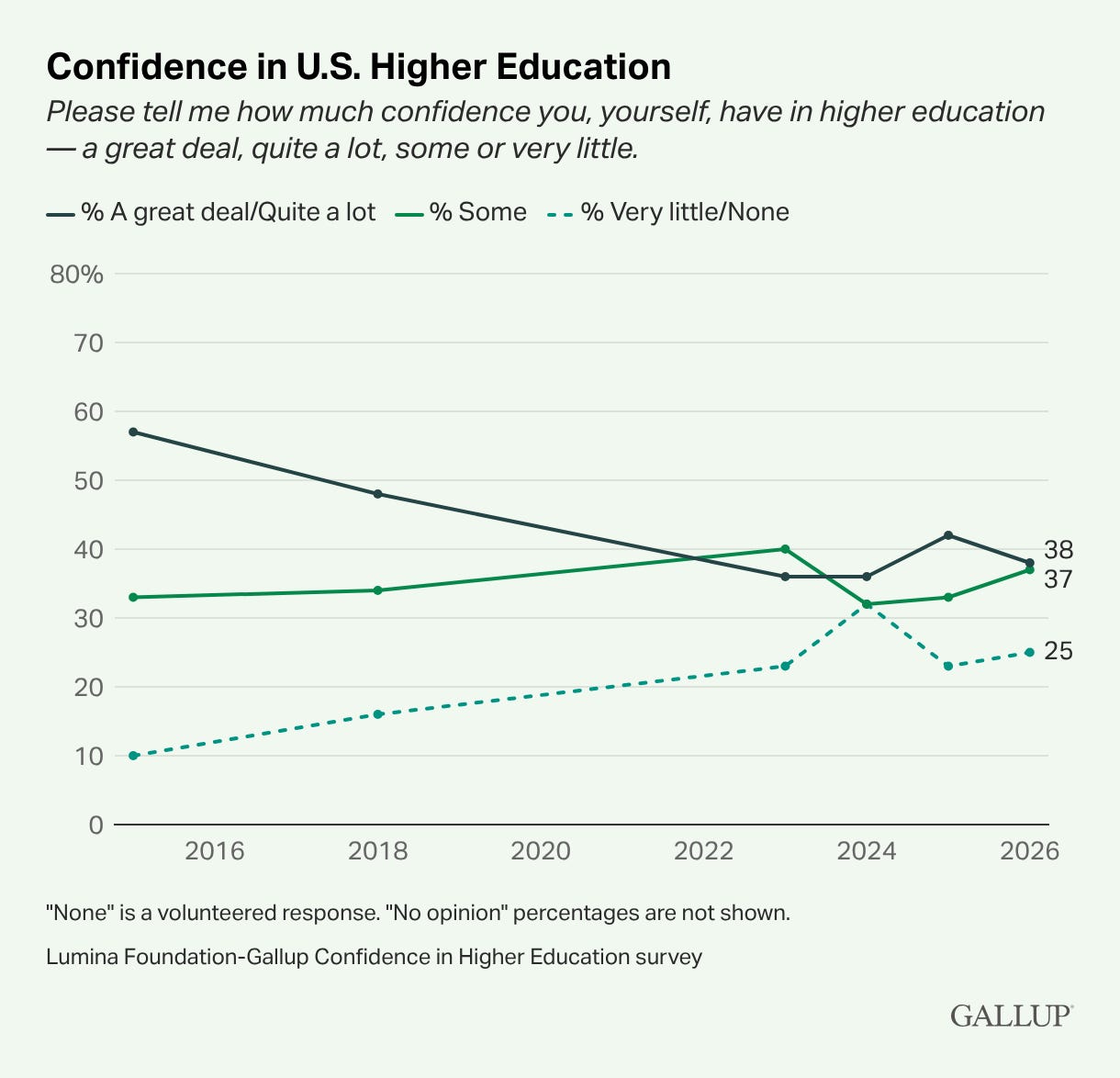
Now, academics are in the crosshairs. Governments are cutting funding and trying to seize control of curricula—as in the Trump Administration’s “breathtakingly intrusive” demands addressed to Harvard University. Administrators are trying to restrict what viewpoints may be taught in class—as at Texas A&M, where professors may not “advocate race or gender ideology, or topics related to sexual orientation or gender identity, unless the course and the relevant course materials are approved in advance by the member CEO.”
Some of the criticism of academia has been unfair. But it’s not enough to point this out: it won’t win back the public’s trust, nor will it address the public’s legitimate concerns.
Instead of complaining, we need to improve. To protect academic freedom, we need to have a conversation about academic responsibilities, the standards to which we hold ourselves as professionals.
To that end, here are four principles for your consideration.
The key qualification for an academic job is ability, not identity.
Universities cannot tolerate plagiarism and fraud.
The classroom is primarily for teaching.
Universities may not punish speech merely for being offensive or harmful.
Now let me explain why I see each of these as essential. I don’t claim that they are sufficient, only that they are necessary—vitally so.
Anybody who is qualified for academic jobs should have a fair shot at competing for them, and nobody who is unqualified should be given an academic job.
There is much room to debate what counts as “fair” competition. But there is no room in the academy for people who clearly can’t do their jobs. If your job involves research, you must be able to carry out research. If your job involves teaching, you must be competent to teach the relevant material. If the job involves certain administrative tasks, you must be able to do those tasks. These are the essential elements of the job, and failing to do them (e.g. not showing up for class) can be grounds for dismissal.
What about diversity? There is a legitimate debate to be had about the role of diversity in hiring, and it should be uncontroversial that certain kinds of diversity can be desirable (for example, everybody agrees that a department may wish to cover a diverse range of subfields). But nothing can justify hiring unqualified candidates. Without that bedrock principle, we can’t have universities. We should all agree, no matter our broader views about affirmative action, that those hired to do a job must be competent to do that job.
Of course, basic competence should not be the finish line. Every academic should aspire to excellence in what they do—be it mentoring, empirical research, or humanistic inquiry. We should also aspire to bring out the best in our students and colleagues, treating everyone with respect no matter their race, religion, gender, nationality, or political viewpoint. (Respect does not imply esteem or agreement. Mutual respect is what allows for useful conversation across deep and contentious disagreements.)
Fraud is a direct attack on academic integrity. If someone fakes their data, that undermines the trust we rely on to share knowledge with the world.
Plagiarism, meanwhile, undermines the system we use to reward academic excellence. If you take from someone else’s work without attribution, you are stealing credit for their work. That is triply wrong: it wrongs the victim; it gives the plagiarist an unfair advantage over others; and it corrupts the scholarly record.
Fraud and plagiarism are a profound abdication of academic responsibility. As such, they can be grounds for punishment and dismissal.
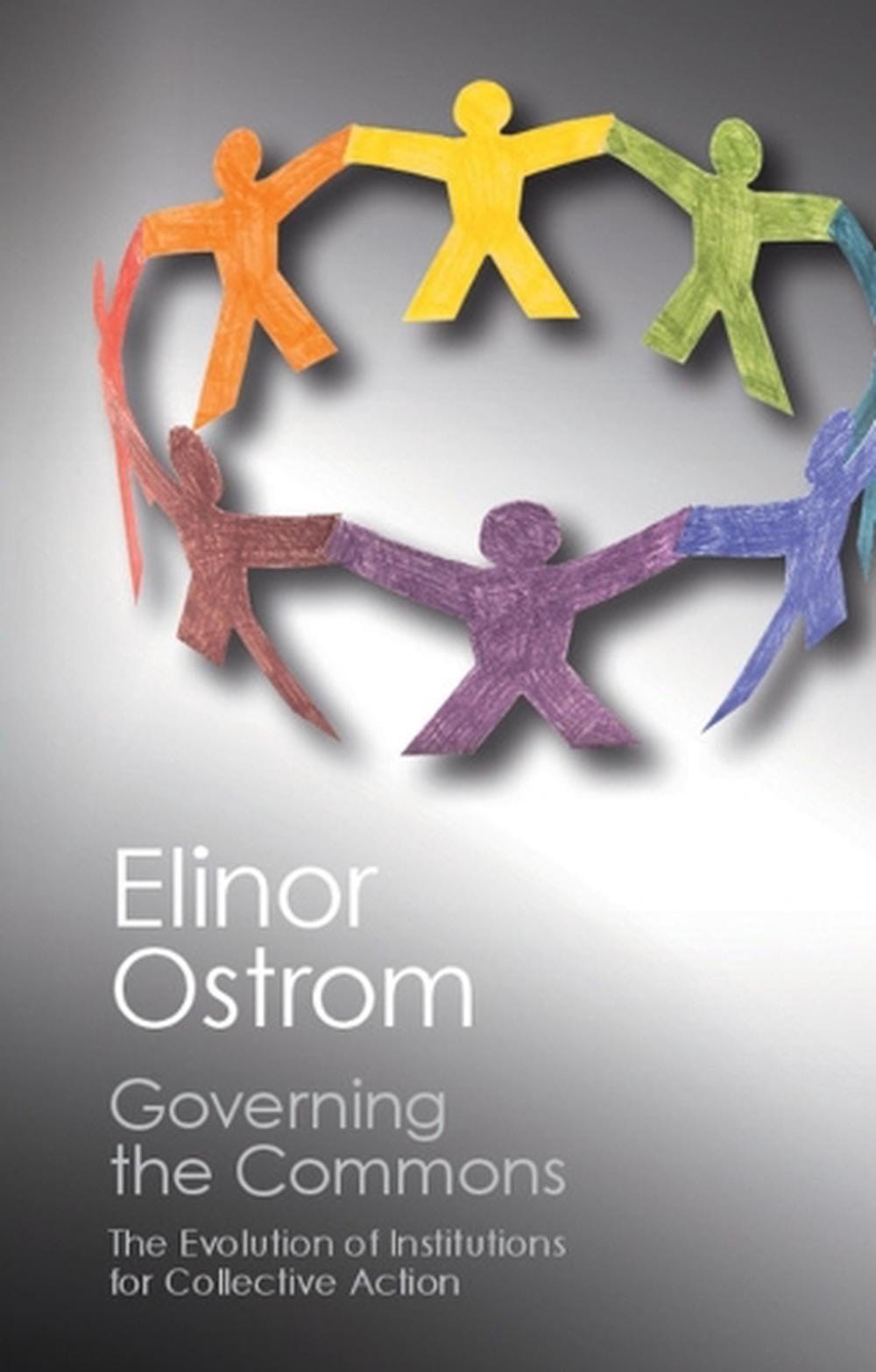
That does not mean that all violations of academic integrity are equally problematic. Forgetting a citation is not the same as stealing a paragraph. We should impose what the political scientist Elinor Ostrom called “graduated sanctions” for fraud and plagiarism. Small, first-time violations should be punished less harshly than extensive, repeated violations. Ignorance of the rules, however, can never be a full excuse: students should be taught from day one that there will be no tolerance for plagiarism or fraud. Leaders at a university, for their part, should never sweep credible accusations under the rug.
Academic freedom means that professors should, as much as possible, get to teach their classes in the way they think best, rather than being second-guessed by administrators and politicians.
That said, the classroom is primarily for teaching; so, being an instructor comes with a responsibility to teach the relevant skills and material. It’s not the instructor’s prerogative to use class time for their own purposes when these are unrelated to the course—for example, an instructor may not use an algebra class to advocate at length for a political cause that has nothing to do with algebra.
Not every minute of every class must be devoted purely to learning: there are other goods worth pursuing in the classroom. Icebreakers may help build a sense of community; in-class activities may engage students’ interest and build their self-confidence. But these are secondary goals, and instructors have a responsibility to balance them carefully against the primary goal of teaching their courses.1
A university may prohibit some forms of political speech and activism. For example, it may forbid protestors from disrupting classes, taking over buildings, camping indefinitely on campus, or heckling invited speakers in the middle of an event. It may also prohibit speech that constitutes a crime, or that incites lawless behavior in certain ways.
But no university should ever crack down on speech merely because it has judged that the the viewpoint is offensive, unpopular, or harmful.2
A university’s rules governing speakers and protestors should always be clearly stated and neutral with respect to both content and viewpoint. Universities also need to enforce their rules in an impartial way, making it clear that they are not “taking sides” against students with a disfavored view. For example, it would be illegitimate to punish pro-Palestine protestors for interrupting class while turning a blind eye to pro-Israel protestors who do the same. It would be equally illegitimate to punish pro-Israel protestors for heckling while turning a blind eye to pro-Palestine protestors who do the same.
If a university’s rules are vague, or if its enforcement of the rules is arbitrary, no one will be able to trust the university to let debates play out. But such trust is essential for universities to survive, since much of our value for society consists in the fact that we try to let the truth emerge from reasoned debate rather than from a power struggle over the levers of administration. If we give up on debate, we give up on being universities.
My introduction to academic philosophy was Jonathan Dancy’s particularism—the theory that morality doesn’t need principles because the right decision always depends on context. So it is against my nature to be publishing a list of principles, especially one so cruelly short. Obviously, there is no way to condense all of the wisdom needed for an academic ethos into just four sentences!
And yet, if we never try to set priorities, we’re never going to get anywhere. So I’ve decided to publish this even though I know I’m opening myself up to criticism. You could say my list is insufficiently nuanced; that it leaves out important values; that it puts the blame on academics rather than on our persecutors; that it fails to strike the right balance between competing goals.
Go ahead: criticize me. I can take it. You might even convince me that you’re right. There’s nothing inherently bad about receiving criticism, even when it’s harsh—which is, in a way, my entire point. We academics are on the path to becoming an endangered species. That’s why we need to be more self-critical. How else are we supposed to correct course and save ourselves from extinction?
If we don’t fix our own problems, the public will eventually pick someone else to “fix” them for us. Thankfully, it’s not too late to win back the public’s trust—but we’ll need the courage to admit where we’ve gone wrong.
None of this implies that instructors may be punished for their political speech outside of the classroom, whether in their personal capacities or in their published work.
Nor am I saying that professors need to be neutral in how they teach courses—that’s a legitimate view, but I think it’s too controversial to include here. Let me illustrate with a provocative example.
Years ago, a colleague in another department told me about how he would start the first class of the semester. He would tell students that he was a Chicano activist, and that his identity informed his teaching; if students didn’t like it, they could drop the class. Often they did, apparently.
This is (to put it mildly) not how I teach my own classes. But does it cross a line? I think it depends on the details. Suppose the professor creates a hostile environment for conservative students. Or suppose he punishes students for expressing conservative viewpoints (e.g. by giving lower grades to conservatives for equally good work). This is all obviously unacceptable. But what if the professor doesn’t do any of that? Suppose he advocates a certain view in class, but also scrupulously informs students of the reasons for taking the opposite view. His views nevertheless offend some conservative students, who feel less motivation to study, and who go on to write worse essays and earn lower grades. This may be unfortunate, but I don’t think the professor is failing to do his job.
By analogy, imagine a conservative philosopher of religion who teaches a course on Christian philosophy, in which she presents what she takes to be the many convincing arguments for the existence of God. As long as she grades fairly and teaches well, she is doing her job. Her job is to teach the material, not to avoid offending students (what if they’re just being sensitive?) or to pretend she’s agnostic. If devoted atheists find her teaching offensive and go on to do shoddy work in the course, that may be unfortunate, but it’s not the sort of thing for which the professor should be punished.
In sum, I don’t think it’s obvious that all teachers must adopt an ideologically neutral persona, nor do I think that offended students should have a veto against their professors. That’s why I’ve left value-neutral teaching off the manifesto.
In the US, public universities may punish speech that is (i) intended to directly incite lawless behavior, when such behavior is (ii) likely to occur—this is the “Brandenburg test.”
Notice that this is a high bar to clear. Merely alleging that some viewpoint is “harmful” is a far cry from showing that its advocates are intentionally trying to directly produce lawbreaking behavior, and that such behavior is likely to occur.
So while the prospect of harm is sometimes part of the rationale for a legitimate restriction on speech, it cannot by itself ground such a restriction.
No posts
Comments
Nothing yet. Say the first thing.
Sign in to join the conversation.