
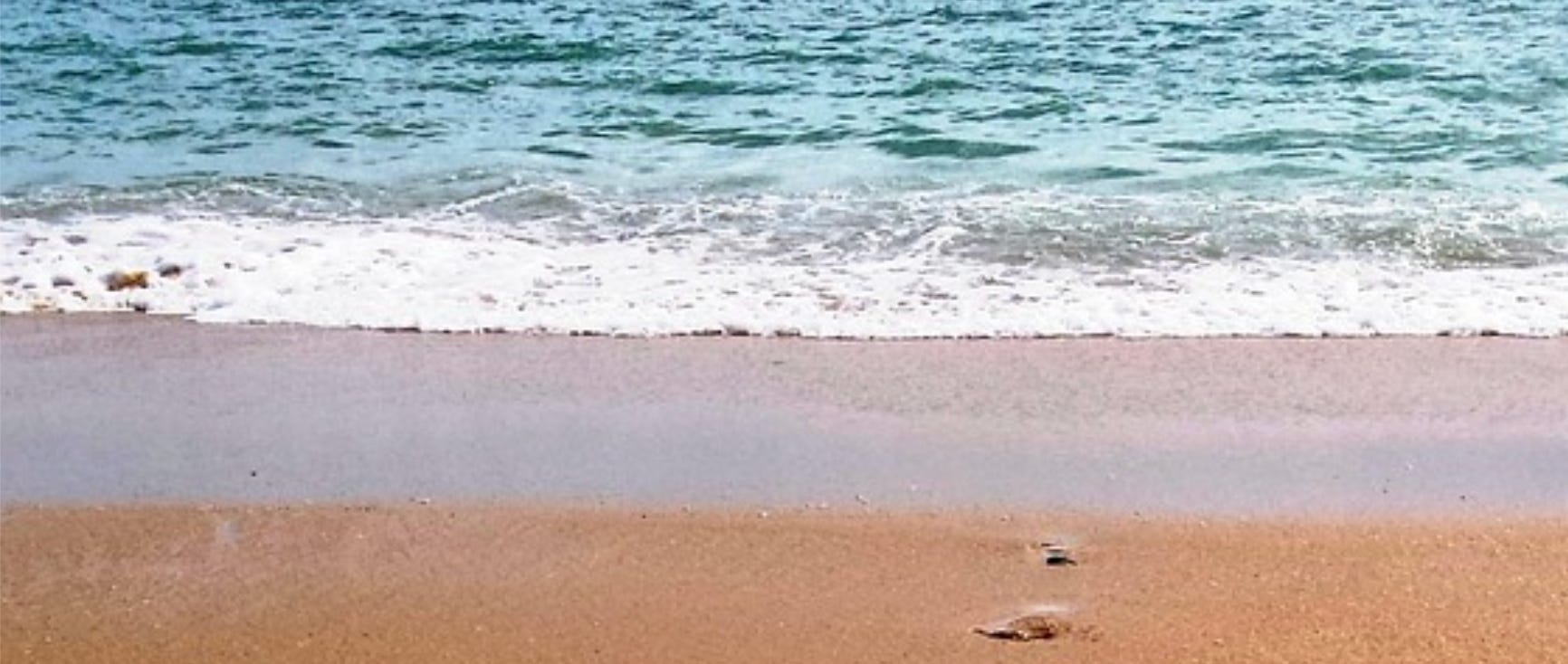
And as soon as the priests who carried the ark reached the Jordan and their feet touched the water’s edge, the water from upstream stopped flowing. — Joshua 3:15–16
Into the Word
Most of us are waiting for the water to part before we step in.
We are waiting for the circumstances to be right. For the fear to subside. For something to change, some sign that the way is clear before we commit to it. We stand at the edge and we wait for the river to move first.
But that is not what happened at the Jordan. The priests carried the ark of the covenant to the water’s edge, and the river did not move. They stepped in, and then it moved.
Notice the sequence. The river does not move first. The feet do.
Two Rivers, Two Crossings
Israel had crossed water before. Forty years earlier, at the Red Sea, God had parted the waters before the people walked through. The sea opened. They walked through on dry ground. The Egyptian army followed and drowned. It was a miracle of deliverance, sudden and complete.
The Jordan was different.
The Jordan crossing required something the Red Sea did not. It required the priests to step into a flowing river before anything changed. The text is specific about this: it was the harvest season, and the Jordan was overflowing its banks (Josh. 3:15). This was not a shallow stream. This was a river in full flood, moving fast and deep.
And God said: walk in.
Not wait until it parts. Not I will open it and then you cross. Walk in. Let the feet of the priests touch the water. And when they do, the river will stop.
These are two different kinds of faith. The Red Sea faith receives a miracle and walks through it. The Jordan faith walks into the obstacle and receives the miracle on the other side of obedience. Both are faith. But they are not the same.
Most of us have experienced the Red Sea. We have seen God open something for us, clear a path we could not have cleared ourselves, make a way where there was none. And we are grateful. But some of us have been standing at the Jordan ever since, waiting for it to part the same way, and it has not, because this crossing requires something different from us.
The Red Sea was the beginning. God parted the waters, and we stepped out of Egypt and into a life we could not have built for ourselves. But crossing the Red Sea does not get you to Canaan. There is one more river between the wilderness and the promised land, and it will not open the way the last one did. The Jordan is the final crossing. And it is waiting for us to step in.
What the Priests Carried
The priests were not carrying swords. They were not carrying tools or supplies. They were carrying the ark of the covenant, the sign of God’s presence, the dwelling place of His glory.
This is not an incidental detail. The crossing of the Jordan was not a military operation. It was an act of worship. The priests walked into the flood-stage river not because they had calculated how to cross it but because they were carrying God Himself into the hardest place.
The river did not respond to courage alone. It responded to the ark. And the ark was not simply a golden box. Inside it was the word of God, the law given to Moses on Sinai, the covenant that defined who Israel was and what He had promised them. When the priests stepped into the water, they were saying: this promise is more solid than this river. This word is more certain than this flood.
That is what the water yielded to. Not to human strength or strategy. To a promise, carried into the place that seemed impassable, held steady until the river had no choice but to stop.
When we carry His word into the river in front of us, not as a charm or a formula, but as the living promise of a God whose word has never failed, the waters move. They always have. They always will.
Twelve Stones
After the crossing, God told Joshua to do something that might seem unnecessary given the magnitude of what had just happened. He told them to set up twelve stones, one for each tribe, taken from the middle of the riverbed where the priests had stood (Josh. 4:3).
Why stones? Because God knows what we are like. He knows that we will forget. He knows that the generation that follows will not have been there. He knows that what feels permanently etched into us today will become faint and uncertain tomorrow.
So He said: mark it. Make it visible. Build something that your children can point to and ask about, and when they ask, tell them what happened here. Tell them that the Jordan was at flood stage and the priests walked in and the water stopped. Tell them that God brought you through. Tell them so they know what kind of God they serve.
When your children ask in time to come, “What do these stones mean to you?” then you shall tell them (Josh. 4:6–7).
The stones were not for God. He did not need to be reminded. They were for us. For the ones who will stand at their own Jordans and need to know that rivers have been stopped before, that this God has brought His people through impossible crossings, that the water does not have the final word.
Step In
There is a Jordan in front of you. Not the Red Sea. Not a miracle that opens before you step. A river at flood stage, a situation that is not going to move until faith moves first.
Most of us know exactly what it is. The conversation we have been putting off until the moment feels right. The step of obedience we have been waiting to take until we feel more certain. The commitment we have been circling for months, waiting for the fear to lift before we move.
The fear does not lift first. The river does not part first. The priests stepped in, and then the water stopped.
This is the pattern of Jordan-faith. It does not wait for confirmation before it moves. It moves, and confirmation comes in the moving. And what it carries into the river is not confidence in the outcome. It is confidence in the one who commanded the crossing.
Before We Move On
The water does not move until the priests step in. It never has. It never will. This is not cruelty on God’s part. It is the design of Jordan-faith, the kind that grows stronger with every step taken before the way is clear.
The priests walked in. The Jordan stopped. The people crossed. And twelve stones were set up in Gilgal, so that every generation after them would know what kind of God opens rivers.
Your Jordan is waiting. Your feet are the answer.
© 2026 Bible Portal. Share freely. Please keep the source and a link to Bible Portal intact. For other uses, contact us.
Comments
Nothing yet. Say the first thing.
Sign in to join the conversation.