
By faith Rahab the prostitute did not perish with those who were disobedient, because she had given a friendly welcome to the spies. — Hebrews 11:31
She had no right to be in this list.
Hebrews 11 is the hall of faith: Abel, Noah, Abraham, Moses, the great names of Israel’s story, people who walked with God, who led nations, who spoke for heaven. The chosen people. The ones who had been inside the covenant from the beginning.
And then there is Rahab.
A Canaanite woman. A prostitute. Someone who lived inside the walls of the city God had marked for destruction. She was not supposed to survive what was coming. She was not supposed to be remembered. She was certainly not supposed to appear in a list of the greatest acts of faith in the history of Israel.
And yet here she is. Right here in Hebrews 11, her name written beside Abraham’s as though it belongs there.
It does. That is the most staggering thing about her.
Before the Israelites crossed the Jordan, the news had already reached Jericho.
Forty years of stories had been traveling through Canaan. The Red Sea that parted and closed. Two Amorite kings, Sihon and Og, destroyed on the far side of the river. A God who moved through history like no other god the ancient world had ever seen.
Rahab tells the spies what the whole city felt: as soon as we heard it, our hearts melted, and there was no spirit left in any man because of you, for the Lord your God, he is God in the heavens above and on the earth beneath (Josh. 2:11).
The whole city heard. The whole city trembled. But only one person in Jericho heard those reports and decided that the right response was not to lock the gates more tightly but to open a window and lower a scarlet cord.
That one person was a Canaanite prostitute. And she is in Hebrews 11.
Here is what should stop us cold.
The people of Israel had not heard about the Red Sea. They had walked through it on dry ground. They had not heard about the manna. They had eaten it every morning for forty years. And an entire generation of them died without entering the land because they would not believe.
Rahab had none of that. She had never seen the sea part. She had never tasted the manna. She had no standing before the God of Israel, no inherited faith to fall back on. All she had was a rumor, carried across the desert by travelers, about what this God had done to Pharaoh and two Amorite kings. That was all. And it was enough to make her hang a cord in her window and stake her family’s lives on a promise from two strangers.
She believed what she had only heard more completely than Israel believed what they had seen. That is the truth that leaves us without excuse.
And Jesus, centuries later, put a name to exactly what she had done.
Blessed are those who have not seen and yet have believed. — John 20:29
The words were spoken on the other side of the resurrection. But they reach backward too, all the way to Jericho, to a woman who had already lived them out before Jesus ever said them.
This is the knife-edge of her story. It does not simply encourage us. It indicts us. We have heard more than Rahab ever heard. We have the cross, the resurrection, two thousand years of witnesses. The question she puts to us is not comfortable: what are we doing with it?
Rahab did not simply believe and move on. She acted on what she believed before she had any guarantee of the outcome.
When the king of Jericho demanded she hand over the spies, she hid them on her roof and sent the soldiers in the wrong direction. She had chosen sides before the battle began. There was no going back from what she did that night.
The sign the spies gave her was a scarlet cord hung in her window, marking her household when the army came. It echoes something older: the blood on the doorposts in Egypt, another household spared in the middle of judgment because someone had marked themselves as belonging to God.
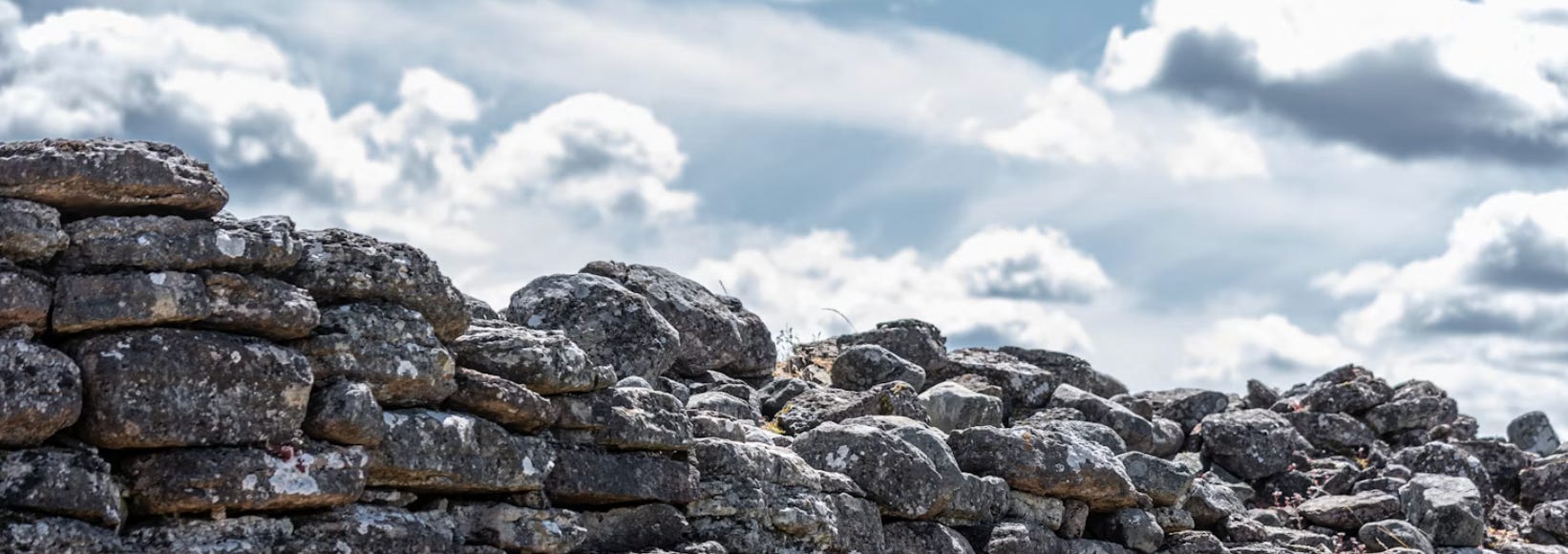
When the walls fell, they fell on every side. Every side except one. The section of wall where Rahab’s house stood remained. Her household walked out alive, every person she had called inside that roofline, every life she had gathered under the scarlet cord, brought through judgment by a faith that would not let go. Her faith became their salvation.
But the story does not end there. Matthew 1 records the genealogy of Jesus Christ, and in that list of names, there is Rahab. Salmon fathered Boaz by Rahab (Matt. 1:5). A Canaanite prostitute who heard the stories and believed them became the great-great-grandmother of David, and through that line, an ancestor of the one all those stories had always been pointing toward.
Rahab did not clean herself up and then believe. She heard, she believed, she hung the cord, and then everything changed. Her name is written there because faith does not ask for clean credentials. It asks for a willing heart. God does not wait for us to become worthy before He saves us. He saves us, and the becoming comes after.
Most of us know what it is to be on the outside of something, outside the kind of faith we wish we had, outside the certainty that the God we have heard about is actually for us.
Rahab was on the outside of everything. And she hung a cord in her window anyway.
She had what she had heard, and a decision to make. She made it before the walls fell, before she knew the spies would keep their word, on nothing but what she had heard and the God she had concluded those reports were pointing to.
There is someone reading this who has been waiting for more certainty before acting, more proof before trusting. Rahab had none of that. She had a cord and a window and a story she had decided to believe.
And she hung it anyway.
Rahab was not in Hebrews 11 because she had a clean record. She was there because she heard something true about God, believed what she had never seen but only heard, and acted on it at the cost of everything she held.
Her name in Matthew 1 became the sign of something larger: that grace has always had a way of finding the people no one expected, in the places no one was looking, and writing them into a story they had no right to be part of.
She only heard. She hung the cord. The walls came down.
And she was already on the right side of them.
© 2026 Bible Portal. Share freely. Please keep the source and a link to Bible Portal intact. For other uses, contact us.
No posts
Comments
Nothing yet. Say the first thing.
Sign in to join the conversation.